全球投资

Search documents
每日钉一下(红利指数基金,什么时候容易跑输大盘?)
银行螺丝钉· 2026-01-26 14:39
Group 1 - The article emphasizes that different stock markets do not move in unison, and understanding multiple markets can provide investors with more opportunities [2] - Global investment can significantly reduce volatility risk, allowing investors to share in the long-term gains of global markets [2] - A free course is offered to teach methods for investing in global stock markets through index funds, along with supplementary materials like course notes and mind maps for efficient learning [2][3] Group 2 - The article discusses the performance of dividend index funds, noting that they can outperform the market over the long term, with volatility typically being 60%-70% of the market [5] - However, the effectiveness of this strategy is not guaranteed to be consistent over time, as dividend indices may underperform the market in the short term [5] - Two main scenarios where dividend indices may lag include when bond interest rates are relatively high, as seen in 2024 when U.S. bond yields reached 4%-4.5%, while dividend index funds offered around a 4% yield, making them less attractive [6]


每日钉一下(家里的钱,投多少到股票上比较合适呢?)
银行螺丝钉· 2026-01-19 14:07
Group 1 - The article emphasizes that different stock markets do not move in unison, and understanding multiple markets can provide investors with more opportunities [2] - Global investment can significantly reduce volatility risk, suggesting that investors should consider diversifying their portfolios internationally [2] - A free course is offered to teach methods for investing in global stock markets through index funds, along with supplementary materials like course notes and mind maps [2][3] Group 2 - The article discusses how to allocate family funds into stock assets, suggesting a strategy based on the "target life cycle" approach [5] - It defines two types of funds: existing funds (savings) and incremental funds (future income), recommending that at least 30% of family assets should remain in stock assets [5][7] - The "target life cycle strategy" suggests allocating stock and bond assets based on the formula "100 - age," indicating that younger individuals can afford a higher percentage of stocks [5][6]

每日钉一下(锻炼和投资,如何更好的坚持下来?)
银行螺丝钉· 2026-01-12 14:00
Group 1 - The article emphasizes that different stock markets do not move in unison, and understanding multiple markets can provide investors with more opportunities [2] - Global investment can significantly reduce volatility risk, allowing investors to share in the long-term growth of global markets [2] - A free course is offered that introduces methods for investing in global stock markets through index funds, along with supplementary materials like course notes and mind maps for efficient learning [3] Group 2 - The article suggests that to maintain consistency in activities like exercise or investment, the tasks should be simple, easily understandable, and quantifiable [5][6] - It provides examples of setting clear and achievable goals, such as walking 5,000 steps daily or following a regular investment schedule [7] - The concept of incremental progress is highlighted, suggesting that consistent small efforts can lead to significant results over time [8]

每日钉一下(指数背后上市公司的盈利,为什么能长期增长?)
银行螺丝钉· 2026-01-05 14:15
Group 1 - The article emphasizes that different stock markets do not move in unison, and understanding multiple markets can provide investors with more opportunities [2] - Global investment can significantly reduce volatility risk, allowing investors to share in the long-term gains of global markets [2] - A free course is offered to teach methods for investing in global stock markets through index funds, along with supplementary materials like course notes and mind maps [2][3] Group 2 - The long-term returns from investments primarily stem from the profit growth of the underlying listed companies [5] - The net value of index funds is determined by the price-to-earnings (P/E) ratio multiplied by earnings plus dividends, with the P/E ratio fluctuating within a certain range [6] - While the P/E ratio has upper and lower limits, the profit growth of listed companies does not have a clear upper limit, driven by factors such as company size and inflation [6][7] Group 3 - Companies with pricing power can pass on inflation-related cost increases to consumers, which can lead to long-term profit growth [7] - Not all companies have the ability to transfer inflation costs, and some may incur losses; however, broad indices like the CSI 300 include sectors such as consumer goods, pharmaceuticals, and technology that are likely to outperform inflation [7]

仁桥资产投资备忘录2025:牛市如期而至,但这样的牛市似乎并不属于我们
Xin Lang Cai Jing· 2026-01-04 01:29
Core Insights - The bull market in 2025 has not benefited the company as expected, reflecting a lack of structural opportunities and strategic missteps [1][2][32] - The company acknowledges the need for continuous improvement and adaptation in investment strategies despite the cyclical nature of markets [1][2] Market Review - The global stock market in 2025 saw significant gains, with major indices in developed and emerging markets reaching historical highs, particularly in South Korea with a 76% annual increase [2][32] - The Chinese stock market also performed well, with both A-shares and Hong Kong stocks experiencing double-digit growth, yet the company's relative performance was disappointing [2][32] - The technology sector, especially in computing power, was identified as a missed opportunity, contributing to lower overall portfolio returns [2][33] Historical Context - The company reflects on past market conditions, particularly the extreme differentiation seen in 2013-2015 and 2020-2021, which led to significant investment challenges [3][34][35] - In 2013, the company faced difficulties due to a lack of adjustment in investment logic amidst changing economic conditions, resulting in poor performance [3][34] - The 2020-2021 period saw a focus on high-growth sectors, which, despite being viewed as overvalued, still yielded positive returns due to strategic positioning in certain stocks [3][35] Strategic Insights - The company recognizes the need to prioritize corporate governance in weak-cycle assets, particularly in state-owned enterprises, which may have lower efficiency compared to private firms [6][37] - A strategy to differentiate between strong and weak cycle assets is proposed, emphasizing the importance of governance in investment decisions [6][38] Overseas Investment - The company has made initial strides in overseas investments, particularly in Japan and Southeast Asia, although it acknowledges the need for deeper understanding of these markets [8][39] - Currency fluctuations are highlighted as a significant risk in overseas investments, necessitating careful consideration as investment scales increase [8][39] Future Outlook - The company anticipates a potential systemic revaluation of undervalued stocks in 2026, driven by ongoing liquidity support [10][42] - The AI computing bubble is expected to burst, with a focus on application and edge computing remaining crucial for future investment strategies [14][46][48] - The company emphasizes the importance of distinguishing between short-term market trends and long-term value creation, particularly in the context of consumer spending and economic recovery [19][21][43]
每日钉一下(中证800+1000+2000 = 中证全指吗?)
银行螺丝钉· 2025-12-29 14:05
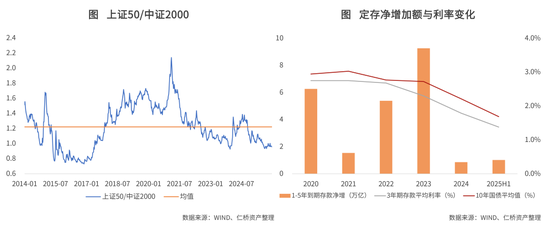
Group 1 - The article emphasizes that different regional stock markets do not move in unison, allowing investors to seize more investment opportunities by understanding multiple markets [2] - Global investment can significantly reduce volatility risk, highlighting the benefits of diversifying investments across different markets [2] - A free course is offered to teach methods for investing in global stock markets through index funds, aiming to share the long-term gains of global markets [2][3] Group 2 - The article discusses the composition of the CSI 800, CSI 1000, and CSI 2000 indices, explaining that they collectively cover over 90% of the market, making them similar to the CSI All Share Index [5][6] - The CSI 800 includes the largest 1-800 A-shares, the CSI 1000 includes the next 801-1800, and the CSI 2000 includes the next 1801-3800, providing a comprehensive view of the A-share market [5] - It suggests that once the number of index funds for CSI 2000 increases, a portfolio based on the combination of CSI 800, CSI 1000, and CSI 2000 could be considered for a full market index fund advisory [6][7]

全球股市波动加剧!新浪财经APP让你与全球资本同频呼吸
Xin Lang Cai Jing· 2025-12-17 07:13
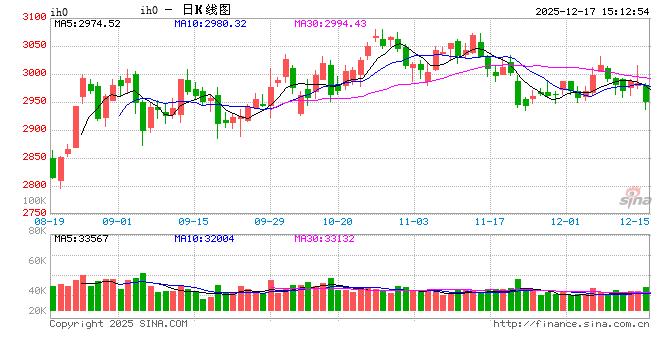
你是否经历过这种煎熬? 当普通投资者还在为国内A股涨跌揪心时,真正的玩家已经将视野扩展至全球24小时不打烊的金融市 场。美联储一个微妙表态、欧洲一场选举风云、中东一丝地缘波澜,都会在分秒之间掀起资本巨浪,而 你,是否总是后知后觉? 是时候,换一个能让你与全球同步呼吸的工具了。 热点栏目 自选股 数据中心 行情中心 资金流向 模拟交易 客户端 睡前欧美股市一片大好,起床港股却已跌穿底线——你永远不知道在安睡的几小时里,世界发生了什 么。朋友轻描淡写说起纳指期货的新动态,你却一脸茫然,仿佛听到外星语言。 信息差,正在无声地拉开财富差距。 新浪财经APP,让你的手机化身通往全球资本核心的任意门。这里没有时差,没有边界,只有与世界脉 搏同频的实时跳动。 1. 全球覆盖,零时差追踪 从道琼斯到富时100,从日经225到澳洲标普,全球近百个核心股指、数万只海外个股、外汇、债券、期 货行情一览无余。不再是割裂的碎片,而是一张完整、实时、连贯的全球资本地图。 2. 决胜"0.7秒",快过市场传言 依托强大的数据链与处理技术,关键行情推送快至0.7秒。当突发消息震动市场,你总能先人一步感知 风向,告别"看见已是过去式"的无奈。 ...
每日钉一下(什么是资产?辛苦攒下来的钱,算资产吗?)
银行螺丝钉· 2025-12-15 14:03
Group 1 - The article emphasizes that different stock markets do not move in unison, and understanding multiple markets can provide investors with more opportunities [2] - Global investment can significantly reduce volatility risk, suggesting that diversifying investments across different regions is beneficial [2] - A free course is offered to teach methods for investing in global stock markets through index funds, highlighting the potential for long-term gains from global market growth [2][3] Group 2 - The article discusses the importance of distinguishing between consumption and assets, using examples to illustrate how spending on non-productive items does not contribute to wealth accumulation [5][6] - It defines assets as items that can generate income, such as stocks, bonds, real estate, and funds, while emphasizing that cash is not considered an asset due to its depreciating value over time [9][10] - The concept of inflation is introduced, explaining how the purchasing power of cash diminishes, reinforcing the need to invest in appreciating assets rather than holding cash [9]

投资海外、港股等T+0 ETF大合集来了!
Sou Hu Cai Jing· 2025-12-14 08:30
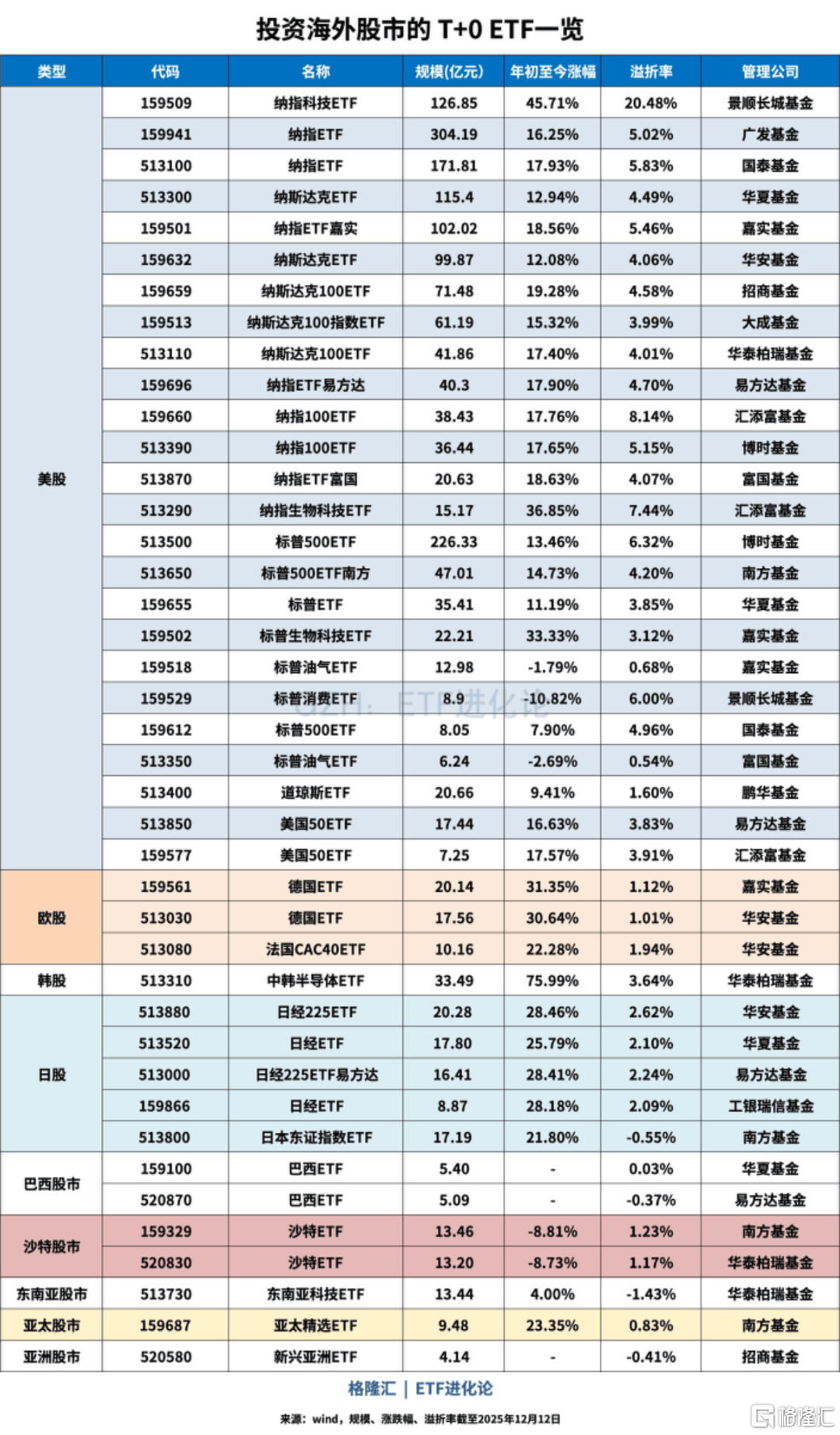
外资买入中国资产,国内投资者也在全球不同市场投资。 A股投资海外市场、港股、中概股等T+0 ETF大合集来了! 近几年以来,关于"全球投资"的话题越来越火热。 | 类型 | 44693 | 名称 | 规模(亿元) | 年初至今涨幅 | 溢折率 | 管理公司 | | --- | --- | --- | --- | --- | --- | --- | | | 605661 | 纳指科技ETF | 126.85 | 45.71% | 20.48% | 盖顺长城景等 | | | 159941 | 纳指ETF | 304.19 | 16.25% | 5.02% | 广发基金 | | | 513100 | 纳指ETF | 171.81 | 17.93% | 5.83% | 国泰基金 | | | 513300 | 纳斯达克ETF | 115.4 | 12.94% | 4.49% | 花直雷等 | | | 159501 | 纳指ETF嘉实 | 102.02 | 18.56% | 5.46% | 嘉实基金 | | | 159632 | 纳斯达克ETF | 99.87 | 12.08% | 4.06% | 华安基金 | | | ...
每日钉一下(定投和分批建仓有什么区别呢?)
银行螺丝钉· 2025-12-08 14:01
Group 1 - The article emphasizes that different regional stock markets do not move in unison, allowing investors to seize more investment opportunities by understanding multiple markets [2] - Global investment can significantly reduce volatility risk, highlighting the benefits of diversifying investments across different markets [2] - A free course is offered to teach methods for investing in global stock markets through index funds, aiming to share the long-term gains of global markets [2][3] Group 2 - The article discusses the difference between systematic investment (定投) and phased investment (分批建仓), clarifying that systematic investment involves regularly converting cash flow into financial assets [4][5] - Phased investment is a technique where investors divide their capital into smaller portions to mitigate risk, commonly used by fund managers during the initial stages of a new fund [5]