
动能转换

Search documents
全链式集群化发展三穗鸭产业
Xin Lang Cai Jing· 2025-12-24 22:54
Group 1 - The article emphasizes the significance of the 20th Central Committee's Fourth Plenary Session in shaping the economic and social development strategy for the "14th Five-Year Plan" period, providing fundamental guidelines for future work [1] - The county is committed to high-quality development, focusing on the integration of industry and wealth creation, and aims to implement the decisions made by the central and provincial governments effectively [1] Group 2 - The county is actively upgrading its clothing and apparel industry, developing a vanadium industry cluster, and establishing a light industry base in eastern Guizhou, aiming for a modern industrial system [2] - There is a strong emphasis on digital transformation in key industries such as clothing, duck farming, and health tourism, while also exploring new strategic emerging industries [2] - The county is enhancing its poverty alleviation monitoring system and focusing on employment and skills training to ensure stable income and improved living standards for its residents [2] Group 3 - The article highlights the importance of safety in production and social security, with initiatives aimed at improving safety standards and disaster response capabilities [3] - The county is working towards becoming a model for safe development, which is seen as essential for achieving high-quality growth [3]
宏观经济周报:年末放缓,质量上扬-20251221
Guoxin Securities· 2025-12-21 07:42
Economic Growth - In November, the domestic GDP growth rate was approximately 4.1%, a decrease of 0.2 percentage points from October, continuing the trend of moderation[1] - To achieve the annual growth target of around 5%, the GDP growth in December needs to rebound to above 5.0%, which is unlikely given the current policy focus on quality improvement rather than short-term growth[1] - The expected GDP growth rate for Q4 2025 is about 4.3%, further declining from Q3, with an annual growth estimate of approximately 4.9%, remaining within the target range[1] Sector Performance - The main drag on economic growth in November came from the service sector, with the service production index's year-on-year growth rate falling by 0.4 percentage points[2] - The financial sector saw a year-on-year decline of 0.5 percentage points, while the real estate sector's investment and sales figures also worsened, contributing to the pressure on services[2] - Emerging sectors like leasing and business services showed resilience, with growth accelerating by 0.2 percentage points compared to the previous month[2] Consumption and Trade - Consumer activity showed signs of weakening, with logistics delivery volume experiencing its first negative year-on-year growth of -1.3% this year[12] - The average daily box office for movies was approximately 100.4 million yuan, a year-on-year increase of 186%, driven by the release of popular films[18] - Export container freight rates slightly increased to 1124.73, indicating stable shipping supply and demand relationships[22] Real Estate Market - The price decline in the real estate market continued to expand, with the price index for 70 large and medium-sized cities showing increased year-on-year declines for both new and second-hand homes[48] - Despite seasonal increases in transaction volumes, the absolute levels remain low, marking the worst performance for the same period in recent years[48] - The inventory turnover pressure remains significant, with the sales-to-inventory ratio recorded at 89.1, the highest for the same period since 2019[48]
上海前10月经济指标呈现韧性定力
Sou Hu Cai Jing· 2025-12-10 01:52
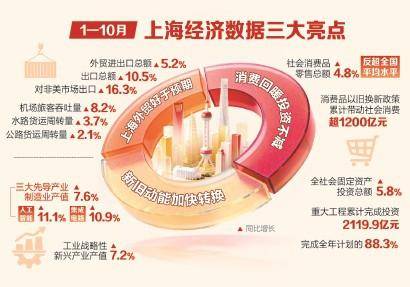
Core Viewpoint - Shanghai's economy demonstrates strong resilience amid complex external conditions, achieving a notable GDP growth of 5.5% in the first three quarters of the year [2]. Group 1: Trade and Transportation - Shanghai's foreign trade performance has exceeded expectations, with total import and export volume increasing by 5.2% year-on-year from January to October, and exports rising by 10.5%, particularly with a 16.3% increase in exports to non-US markets, showcasing the competitive edge of Chinese and Shanghai enterprises [3]. - Passenger throughput at airports has seen a significant increase of 8.2% during the same period, while waterway and road freight turnover grew by 3.7% and 2.1%, respectively [3]. - The financial sector also showed positive trends, with major financial markets in Shanghai recording a total transaction volume of 29.678 trillion yuan, a year-on-year increase of 12.7% [3]. Group 2: Economic Structure and Growth Drivers - The structural transformation of Shanghai's economy is accelerating, with the output of the three leading industries in manufacturing growing by 7.6% from January to October, including integrated circuits and artificial intelligence, which grew by 10.9% and 11.1%, respectively [5]. - The output of strategic emerging industries in the industrial sector increased by 7.2%, indicating the continuous strengthening of new productive forces [5][6]. Group 3: Consumer and Investment Trends - The total retail sales of consumer goods in Shanghai increased by 4.8% year-on-year, surpassing the national average for the first time, with the "old for new" consumption policy driving over 120 billion yuan in social consumption [8]. - Fixed asset investment in Shanghai grew by 5.8% year-on-year, with significant projects completing investments of 211.99 billion yuan, achieving 88.3% of the annual target [8]. - Urban renewal projects are accelerating, with the completion of various housing renovations and the initiation of 25 "urban village" transformation projects [8].

政企同心共谋发展| 江城区召开2025年“江商·区长面对面”协商座谈会
Sou Hu Cai Jing· 2025-10-28 12:57
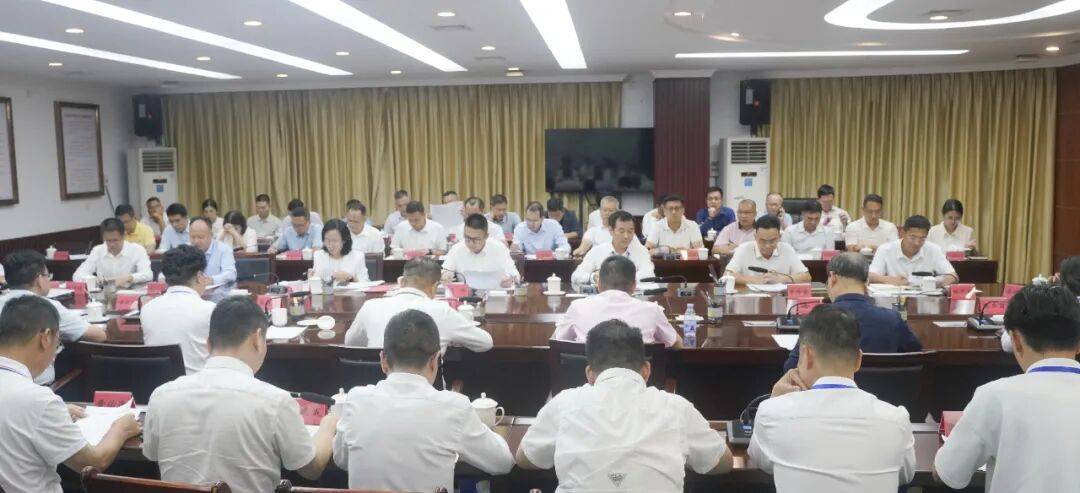
Core Insights - The meeting focused on optimizing the business environment to support high-quality development in Jiangcheng District, emphasizing the importance of government-enterprise communication [1][4]. Group 1: Meeting Overview - The Jiangcheng District government and the district CPPCC held a consultation meeting to discuss the theme of "optimizing the business environment" [1]. - The meeting was attended by district leaders and business representatives, highlighting the importance of listening to enterprise voices and discussing development strategies [1][6]. Group 2: Key Findings and Recommendations - The district is undergoing a critical period of industrial upgrading and transformation, with the business environment identified as a "lifeline" for high-quality development [4]. - The meeting revealed the need for further optimization of the business environment to stimulate market vitality and enhance regional competitiveness [4]. - Specific measures discussed include deepening "delegation, management, and service" reforms, strengthening element guarantees, and building a friendly government-business relationship [4][5]. Group 3: Action Plans - The district aims to improve government service efficiency by promoting "Internet + government services" and ensuring that administrative approvals are streamlined [5]. - There is a focus on accelerating key project implementation through a "one enterprise, one policy" support mechanism [5]. - The meeting emphasized the importance of ensuring that policies benefit enterprises directly and efficiently, with a platform for direct access to benefits [5]. Group 4: Entrepreneurial Responsibilities - Entrepreneurs are encouraged to maintain confidence in development, leverage innovation for traditional industry upgrades, and actively participate in community initiatives [6]. - The importance of quality control throughout production processes was highlighted, with a call for businesses to build strong brands through quality [6]. - The meeting concluded with a call for collaboration between government and enterprises to achieve mutual development goals [6].
中国2025经济最强省排名:广东,江苏,山东,浙江,经济最活跃,GDP10万亿左右,排头兵
Sou Hu Cai Jing· 2025-10-01 02:15
Group 1: Economic Landscape of the "Trillion-Level" Provinces - In 2025, the economic landscape of China's "first-tier" provinces is defined by Guangdong (68,725.4 billion), Jiangsu (66,967.8 billion), Shandong (50,046 billion), and Zhejiang (45,004 billion), collectively accounting for over 60% of the national GDP [1] - The internal differentiation within the "trillion-level" provinces is significant, with Zhejiang and Shandong leading in growth rates at 6%, followed by Jiangsu at 5.9%, and Guangdong at 4.1%, indicating a transition from scale expansion to quality improvement in Guangdong [1] Group 2: Economic Drivers of Each Province - Guangdong's economy is driven by a service-oriented model, with the tertiary sector accounting for 65.3% of its GDP in Q1 2025, and modern services like digital services and fintech growing over 8% [4] - Jiangsu showcases its manufacturing strength with an 8.2% growth in industrial output in Q1 2025, supported by a balanced regional development strategy [5] - Shandong's industrial growth is highlighted by an 8.2% increase in industrial output, with significant contributions from new energy sectors, reflecting a successful transition of old and new economic drivers [6] - Zhejiang's economy is characterized by a strong private sector, with an 8.9% growth in industrial output in Q1 2025, driven by innovation in industries like drones and robotics [8] Group 3: Development Models and Regional Coordination - Jiangsu's approach to regional balance through coastal development has led to GDP growth rates exceeding 7% in coastal cities, providing a model for coordinated regional development [9] - Zhejiang's governance model emphasizes the role of private enterprises in policy-making, resulting in a 10.5% increase in private investment, particularly in the digital economy [9] - Shandong's transformation strategy includes policies for green upgrades in traditional industries, with a 2.3 percentage point decrease in high-energy-consuming industries' output share [11] Group 4: Challenges and Future Directions - Guangdong faces challenges in addressing the disparity in GDP per capita between the Pearl River Delta and other regions, necessitating the diffusion of innovation resources [12] - Jiangsu's underperformance in marine economy, with only 7.3% of GDP from marine production, highlights the need for enhanced coastal industry integration [12] - Shandong's reliance on high-energy industries, contributing 30% to industrial output, requires innovation to enhance value-added production [12] - Zhejiang must overcome limitations in its private sector, particularly in high-tech fields, to foster a more competitive industrial ecosystem [12] Group 5: Overall Value of the "Trillion-Level" Provinces - The collective economic strategies of Guangdong, Jiangsu, Shandong, and Zhejiang illustrate diverse pathways to high-quality development, emphasizing the balance between scale and quality, government and market, and efficiency and equity [15] - The success of these provinces is attributed to their adaptive economic ecosystems and social structures, which align with their respective resource endowments and governance models [15]
投资1.9亿!枣庄高新区建成智能蒸汽管网,故障率远低自备锅炉
Qi Lu Wan Bao Wang· 2025-09-30 10:20
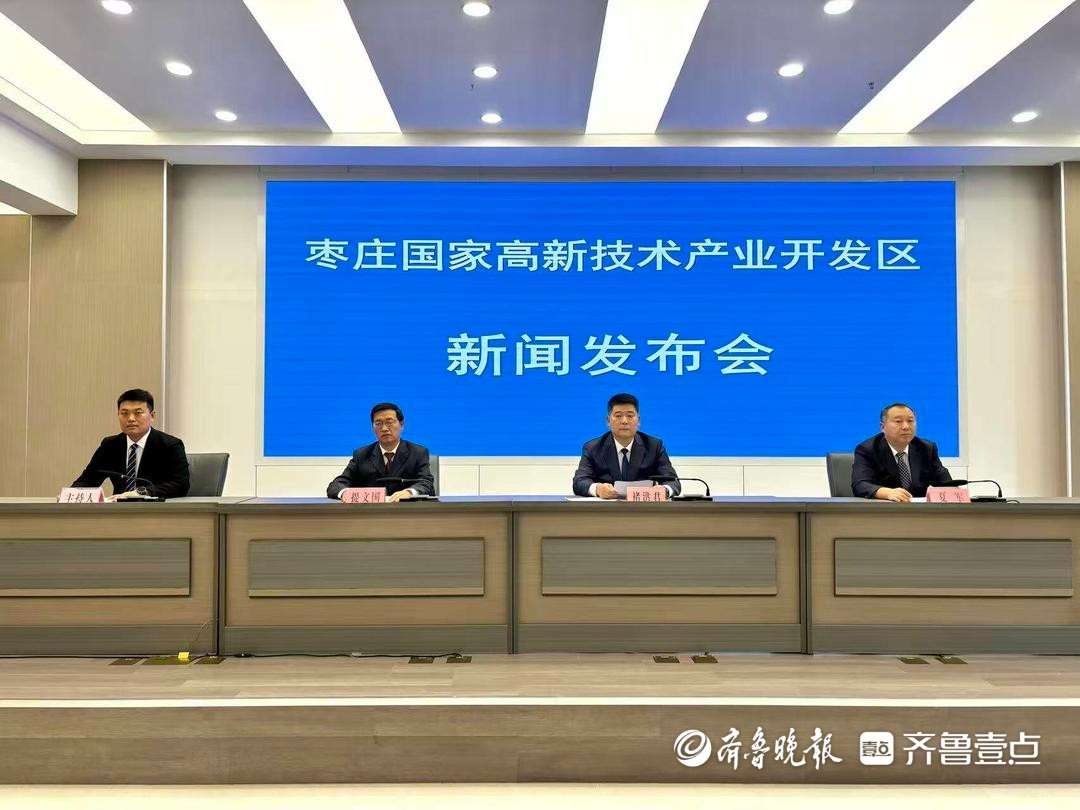
Core Viewpoint - The construction of the industrial steam pipeline network in Zaozhuang High-tech Zone is a significant infrastructure project aimed at promoting high-quality development and optimizing the business environment, which is essential for industrial transformation and upgrading [1][3]. Group 1: Project Overview - The industrial steam pipeline network project is a key initiative to enhance municipal infrastructure and is crucial for the high-quality development of the high-tech zone [4]. - The project aims to address issues such as insufficient heating capacity, unstable operation, and high operational costs, thereby establishing a safe and reliable industrial steam supply system across the zone [3][4]. Group 2: Economic and Environmental Impact - The project will significantly improve the infrastructure capacity of the park, providing a solid guarantee for industrial development and enabling centralized heating to achieve economies of scale [4]. - By replacing decentralized gas-fired small boilers with a centralized steam supply, the project will improve local environmental quality, enhance energy utilization efficiency, and effectively reduce pollutant emissions, contributing to carbon peak and carbon neutrality goals [4]. Group 3: Project Specifications - The project has a total investment of approximately 190 million yuan, with a steam main pipeline length of about 15 kilometers and a designed supply capacity of 150 tons per hour [5]. - The pipeline system will utilize advanced insulation materials and construction techniques to minimize heat loss during steam transmission, and it will be equipped with intelligent monitoring and adjustment devices for real-time monitoring of steam parameters [5].
前七个月长三角进出口9.59万亿元 同比增长5.4% 外贸“压舱石”凸显韧性与活力
Jie Fang Ri Bao· 2025-08-16 02:05
Core Insights - The Yangtze River Delta region has demonstrated strong foreign trade performance, with imports and exports reaching 9.59 trillion yuan in the first seven months of the year, a year-on-year increase of 5.4%, accounting for 37.3% of the national total [1] - The region's exports of electromechanical products amounted to 3.64 trillion yuan, growing by 9.4%, with significant increases in electric vehicles, integrated circuits, and high-end equipment [1] - Shanghai continues to play a leading role in the Yangtze River Delta's development, facilitating exports through its port, particularly for vehicles produced in neighboring provinces [1] Trade Partnerships - The ASEAN region has become the largest trading partner for the Yangtze River Delta, with trade reaching 1.51 trillion yuan, a growth of 17.5% [2] - Trade with countries involved in the Belt and Road Initiative reached 4.77 trillion yuan, increasing by 10.3%, while trade with RCEP member countries grew by 8.9% to 3.02 trillion yuan [2] - Exports to African countries also saw a significant rise, reaching 499.47 billion yuan, an increase of 15.2% [2]
31省经济成绩单!谁在裸泳?谁在闷声发大财?
Sou Hu Cai Jing· 2025-07-28 12:19
Group 1 - The core viewpoint of the article emphasizes that the economic half-year report of 31 provinces in China serves as a comprehensive assessment of the country's economic performance, influencing everything from national policy to local market prices [1] - The overall GDP growth rate for the first half of the year is reported at 5.5%, which is an increase of 0.5 percentage points compared to the first quarter, but the performance varies significantly among provinces [3] - High growth rates in provinces like Shaanxi and Inner Mongolia, exceeding 6.5%, are attributed to their strong energy resources, while provinces with lower growth rates must focus on sustainable development rather than just speed [3][4] Group 2 - The article discusses the importance of "new engines" for economic growth, highlighting that provinces with a high proportion of high-tech industries, such as Guangdong and Jiangsu, are better positioned for resilience against economic fluctuations [4][5] - The concept of "energy transition" is introduced, indicating a shift from traditional resource-based growth to technology and innovation-driven growth, with provinces adopting different strategies to achieve this [6] - Provinces like Zhejiang and Guangdong are leading the way in digital economy and manufacturing upgrades, while others like Shanxi and Hebei are transitioning from coal and steel to renewable energy and new technologies [6][7] Group 3 - The article emphasizes the significance of optimizing the business environment as a crucial economic catalyst, with various provinces implementing measures to streamline processes for businesses [9][10] - The focus on fairness in the business environment is highlighted, with examples of provinces ensuring equal treatment for all types of enterprises, which is essential for fostering a healthy economic ecosystem [10][11] - The need for stable policies is stressed, as frequent changes can deter investment and create uncertainty for businesses [11] Group 4 - Promoting consumption is identified as a key strategy for economic growth, with consumer spending contributing 77.2% to economic growth in the first half of the year [12] - The article argues that the root cause of low consumer spending is not merely a lack of incentives like coupons, but rather concerns about stable income and future security [12][13] - Strategies to increase consumer confidence include raising wages, reducing financial burdens, and creating new spending opportunities that align with changing consumer preferences [13][14] Group 5 - The article concludes that while there are challenges ahead, there is potential for economic improvement in the second half of the year, provided that local governments and businesses take proactive measures [15] - It emphasizes the importance of genuine efforts from businesses to innovate and adapt rather than relying solely on government support [15] - The overall message is one of resilience and collaboration, suggesting that with collective effort, economic conditions can improve significantly [15]
泰安一季度规上服务业营收增长7%,民营经济与重点行业成强力引擎
Qi Lu Wan Bao Wang· 2025-05-16 11:20
Group 1 - The overall performance of the service industry in Tai'an is stable, with a year-on-year revenue increase of 7.0% in Q1 2025, reaching 8.99 billion yuan [1] - Among the ten major industry categories, six sectors experienced double-digit growth, particularly the leasing and business services, and information transmission, software, and information technology services, which together accounted for 55.6% of total revenue [1] - The profitable service sector achieved a revenue of 5.82 billion yuan, representing 64.7% of the total service industry revenue, with a significant year-on-year growth rate of 14.9% [1] Group 2 - The private economy in the service sector demonstrated strong vitality, with 514 private service enterprises generating 6.01 billion yuan, which is 66.8% of the total service industry revenue, and a year-on-year growth of 15.0% [2] - The robust start in Q1 reflects the resilience of Tai'an's service industry amid complex conditions, showcasing structural optimization and positive momentum in transformation [2] - Continued policy effectiveness is expected to lead to further breakthroughs in the high-quality development trajectory of the service industry [2]