
双品牌战略

Search documents
时光淬炼匠心 双驱领航新消费——塞纳左岸二十一载深耕,解码咖啡连锁的“慢与快”哲学
Sou Hu Cai Jing· 2026-01-02 04:49
Core Insights - The article discusses the dual strategy of Sena Left Bank, balancing "slow craftsmanship" with "fast response to the times" in the evolving Chinese coffee market, which is entering a mature phase [1] Group 1: Brand Strategy - Sena Left Bank has adopted a dual brand strategy to meet new consumer demands, with its core brand focusing on larger coffee and dining spaces while the "New Left Bank Café" targets younger consumers with affordable quality coffee [3][4] - The core brand has over 900 stores, primarily located in key commercial areas like airports and universities, serving as a social hub for consumers [3] - The "New Left Bank Café" emphasizes a small store model and open production, catering to the younger generation's desire for fresh, visible quality [4] Group 2: Quality Control - Sena Left Bank maintains a strong focus on quality throughout its supply chain, from sourcing local Yunnan coffee beans to collaborating with global coffee-producing regions [6] - The brand has implemented various health-conscious product lines and innovative cooking techniques to enhance flavor while adhering to consumer preferences [6] Group 3: Franchise Support - The company has developed a comprehensive support system for franchisees, integrating talent development, data analytics, and operational assistance [8] - A three-dimensional talent model ensures that franchisees receive expert guidance, while digital tools enhance operational efficiency and reduce risks [8] Group 4: Market Adaptation - Sena Left Bank is innovating its consumer experience by creating diverse coffee shop formats and leveraging digital tools to enhance customer engagement [11] - The brand's strategy includes localized operations and partnerships to adapt to different market needs, thereby increasing its appeal [11] Group 5: Future Outlook - The chairman predicts that the Chinese coffee market will continue to evolve, with trends such as deep market penetration and local innovation shaping the future [13] - Sena Left Bank aims to strengthen its product development and digital capabilities while expanding into lower-tier markets, ensuring its brand remains relevant and competitive [13]

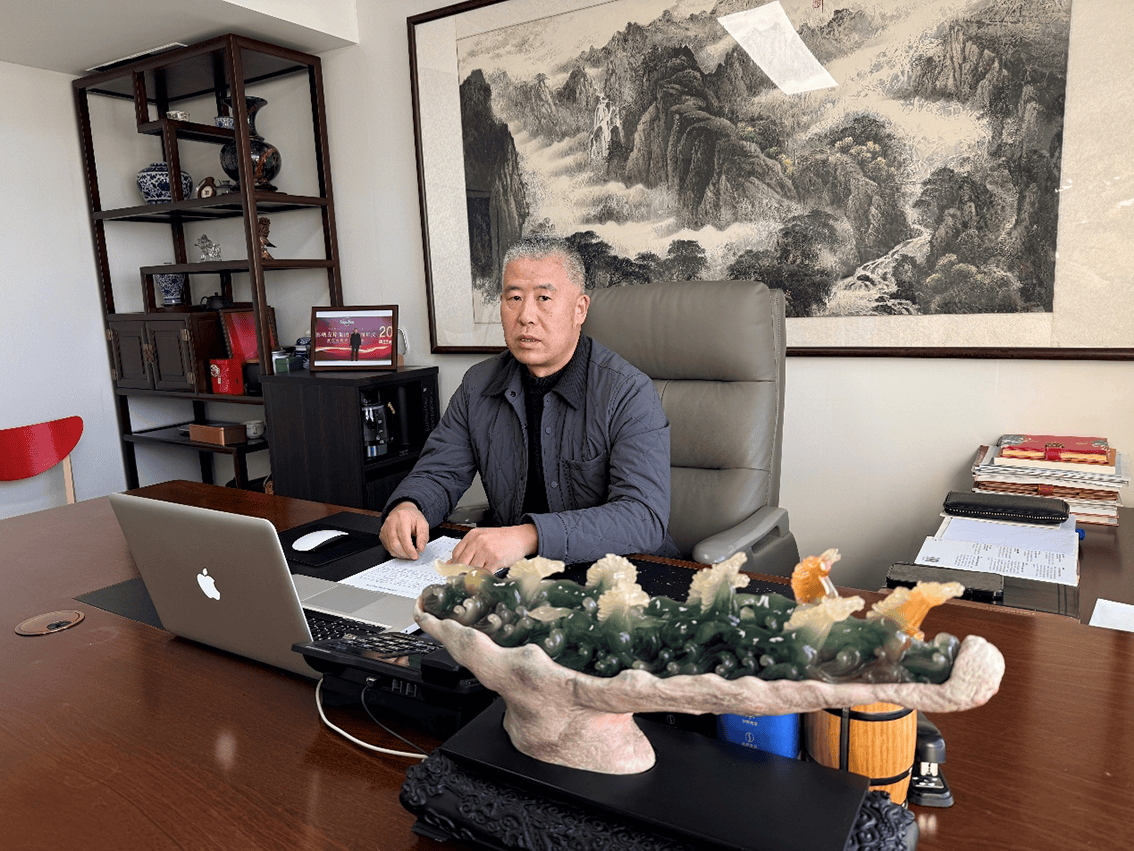
御纯金发布双品牌战略,以“御纯”高端线撬动黄金市场新机遇
Sou Hu Cai Jing· 2025-12-29 06:13
Core Viewpoint - The launch of the "Yuchun Gold" brand marks a strategic upgrade for the company, focusing on high-end market opportunities driven by tax policy reforms and consumer demand for cultural and emotional value in gold products [1][3]. Industry Transformation - The Chinese gold and jewelry industry is entering a critical transformation phase, shifting from scale expansion to value-driven differentiation, influenced by new tax policies and changing consumer preferences [3][5]. - High-end consumers are increasingly valuing cultural significance, craftsmanship, and brand identity over traditional investment attributes of gold [3]. Dual Brand Strategy - The company has introduced a new high-end brand line "Yuchun," which collaborates with its existing mass-market brand "Yuchun Gold" to achieve comprehensive market coverage [7]. - "Yuchun" targets high-net-worth individuals, emphasizing "ancient high-end gold" that combines traditional craftsmanship with modern aesthetics, enhancing its cultural and collectible value [9]. - "Yuchun Gold" aims to solidify its presence in the mass market by offering a diverse range of gold jewelry that meets the everyday needs of consumers, thereby reinforcing its market scale [11]. Brand Development - The company is integrating its brand strategy with national initiatives, including a high-speed rail naming partnership to enhance brand visibility and reach a broader audience [14]. - The dual-brand strategy is designed to meet varying consumer demands and create a complementary business model, with "Yuchun" representing cultural value and "Yuchun Gold" focusing on market scale [16]. Conclusion - The company aims to lead the industry towards a new ecosystem by leveraging cultural elements and a dual-driven strategy, promoting sustainable high-quality development in the Chinese gold sector [17].
黄金时间·企业:御纯金启动“双品牌战略”
Zhong Guo Jin Rong Xin Xi Wang· 2025-12-25 08:28
Core Insights - The article discusses the launch of the "Yuchun Gold" brand and its dual-brand strategy aimed at capitalizing on structural opportunities in China's gold and jewelry industry driven by tax policy reforms and consumer upgrades [1][2]. Industry Transformation - The Chinese gold and jewelry industry is entering a critical transformation phase, shifting from scale expansion to a focus on refined, differentiated, and value-driven approaches [2][3]. - The new tax policies are reshaping competitive rules and consumer preferences, with high-end consumers increasingly valuing cultural significance, craftsmanship, emotional value, and brand recognition over traditional investment attributes [2]. Dual-Brand Strategy - Yuchun Gold has launched a new high-end brand line "Yuchun," which will work in synergy with its existing mass-market brand "Yuchun Gold," aiming for comprehensive market coverage [5]. - The "Yuchun" brand targets high-net-worth individuals with a focus on "ancient method high-end gold," blending traditional craftsmanship with modern aesthetics to create culturally significant collectibles [6]. - The existing "Yuchun Gold" brand will continue to cater to the mass market, ensuring a diverse and fashionable product line to maintain market scale and consumer base [6]. Cultural Integration - Gold is positioned as a cultural carrier that transcends civilizations, evolving from a mere precious metal to a medium of cultural identity, artistic appreciation, and emotional expression [7]. - Yuchun Gold aims to lead the industry towards higher value dimensions through a dual-brand matrix, fostering collaboration with partners to promote sustainable and high-quality development in the gold sector [7].
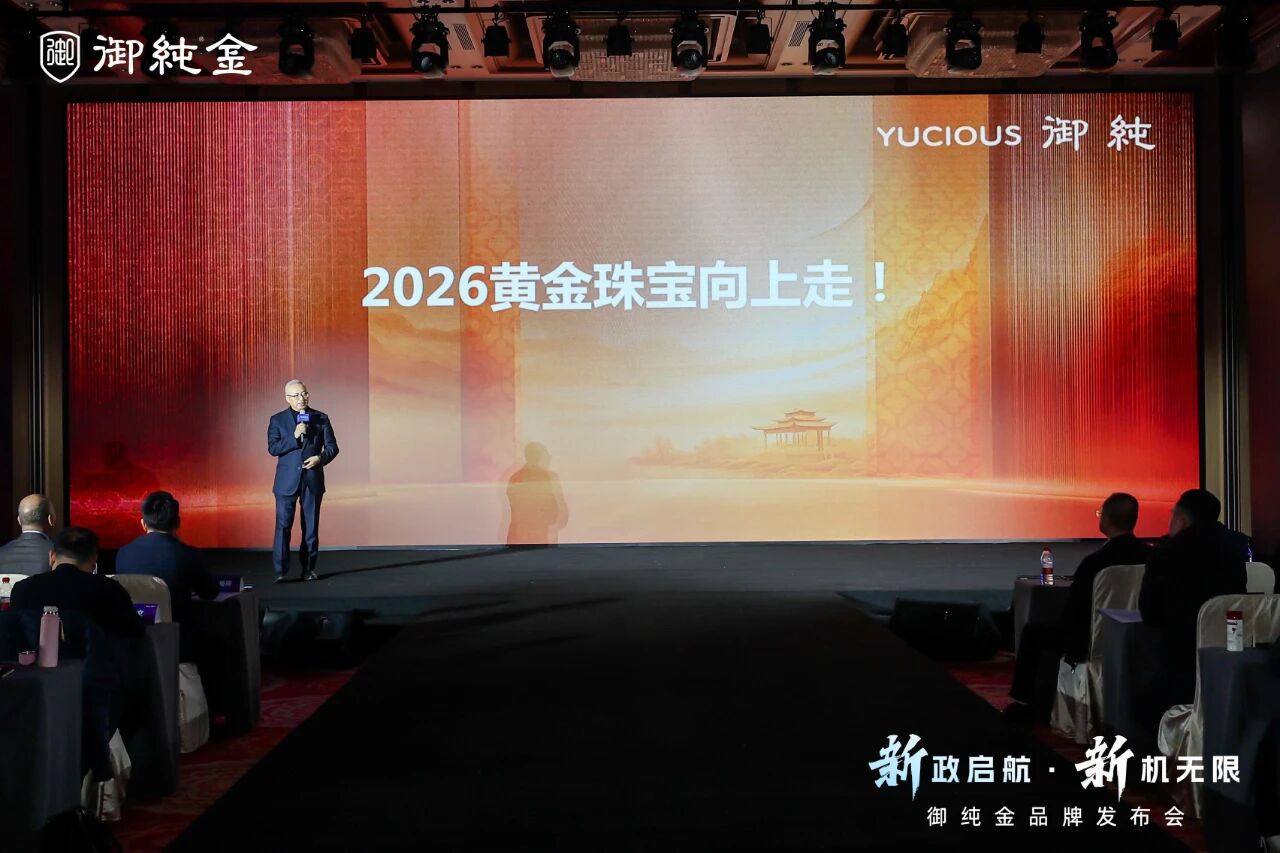
战略升维!御纯金双品牌战略破局行业新周期,高端线“御纯”引领黄金价值新赛道
Sou Hu Cai Jing· 2025-12-24 09:44
Core Viewpoint - The launch of the "Yuchun" brand at the press conference signifies a strategic upgrade for the Yuchun Gold brand, focusing on high-end market positioning and cultural value in response to evolving consumer demands and tax policy changes [1][3]. Industry Transformation - The Chinese gold and jewelry industry is entering a critical transformation phase, shifting from scale expansion to value-driven growth, influenced by new tax policies and changing consumer preferences [3][5]. - High-end consumers are increasingly valuing cultural significance, craftsmanship, and brand identity over traditional investment attributes of gold products [3]. Brand Strategy - Yuchun Gold has introduced a new high-end brand line "Yuchun," which collaborates with its existing mass-market brand "Yuchun Gold" to achieve dual coverage in the market [7]. - The "Yuchun" brand targets high-net-worth individuals, emphasizing "ancient high-end gold" that combines traditional craftsmanship with modern aesthetics, enhancing its cultural and collectible value [9]. - The "Yuchun Gold" brand will continue to cater to the mass market, offering a diverse range of gold jewelry to meet consumer demands for fashion and everyday wear [11]. Market Positioning - The dual-brand strategy aims to address different consumer segments, with "Yuchun" representing high-value cultural products and "Yuchun Gold" solidifying the market base through a comprehensive product line [15]. - Yuchun Gold is integrating its brand strategy with national initiatives, such as high-speed rail collaborations, to enhance brand visibility and reach a broader audience [13]. Conclusion - Yuchun Gold's strategic focus on cultural leadership and dual-brand development positions the company to drive the gold industry towards higher value dimensions, fostering sustainable growth and collaboration within the sector [15].
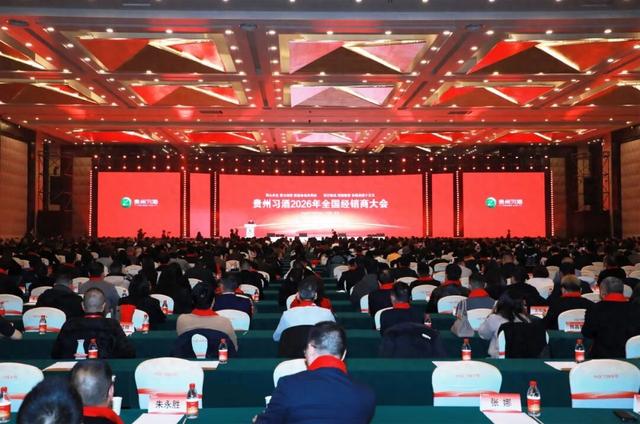
贵州习酒2026年全国经销商大会在贵阳召开,厂商同心谱写习酒全国化2.0新篇章
Xin Lang Cai Jing· 2025-12-21 04:15
Core Viewpoint - The Guizhou Xijiu 2026 National Dealer Conference emphasizes the importance of collaboration and strategic planning for the company's marketing efforts in the coming year, aiming to establish a new marketing framework and strengthen partnerships with distributors [1][19]. Group 1: Conference Overview - The conference gathered over 800 representatives from Xijiu's dealers and partners to review the marketing work of 2025 and plan for 2026 [1]. - Key leaders from Xijiu, including Chairman Wang Diqiang and General Manager Wan Bo, attended and addressed the attendees, highlighting the importance of unity and collaboration [3][5]. Group 2: Key Messages from Leadership - Wang Diqiang expressed confidence in overcoming challenges and achieving unexpected breakthroughs in the past year, attributing success to strong leadership and the support of consumers and partners [7]. - He emphasized the core values of the company, including confidence, respect, and long-term value, as essential for navigating industry cycles [8]. Group 3: Strategic Initiatives for 2026 - The company plans to implement a marketing 2.0 reform, focusing on separating "marketing" and "sales" to enhance market responsiveness and service levels [8]. - Xijiu aims to maintain market order by supporting compliant dealers and rewarding those who contribute positively to the market [9]. - The company will prioritize quality, product, and brand development as foundational elements for long-term success [10]. Group 4: Future Vision and Goals - Xijiu seeks to build a strong partnership with its distributors, emphasizing mutual growth and shared values as they pursue the "Xijiu Nationalization 2.0" blueprint [11][19]. - The conference concluded with a commitment to deepen marketing reforms and focus on seven key areas to ensure sustainable growth and market presence [13].
独家 | 习酒2026年规划曝光:君品习酒规模达百亿,全国布局金钻系列
Xin Lang Cai Jing· 2025-12-20 09:29
Core Insights - The article reports on the strategic plans of Xijiu for the year 2026, focusing on product and brand development initiatives aimed at enhancing market presence and sales growth [1][2]. Group 1: Product Strategy - Xijiu aims to promote Junpin Xijiu to exceed a sales scale of 10 billion, positioning it as a benchmark for high-end sauce liquor in the industry [1][2]. - The company plans to consolidate the status of Xijiu·Jiaocang 1988 as a 10 billion flagship product, innovating by pairing 5.2ml aged liquor with Jiaocang 1988 for customized mixing [1][2]. - There is an emphasis on accelerating the national expansion of the Jinduan series, targeting the creation of a 10 billion product line that caters to mass consumption [1][2]. Group 2: Brand Strategy - Xijiu is focused on building a product structure characterized by "Junpin standing tall, Jiaocang broadening horizons, and Jinduan covering the market" [1][2]. - The company will continue to advance the "Xijiu + Zhijiao" dual brand strategy to enhance brand recognition and market penetration [1][2].
Titan Machinery(TITN) - 2026 Q3 - Earnings Call Transcript
2025-11-25 14:30
Financial Data and Key Metrics Changes - Total revenue for Q3 fiscal 2026 was $644.5 million, a decrease of 4.8% from $679.8 million in the prior year period, primarily due to weaker demand in domestic ag, construction, and Australia segments, offset by strength in Europe [16][18] - Gross profit was flat at $111 million compared to $110.5 million in the prior year, with gross profit margin expanding to 17.2% from 16.3% [16][18] - Net income for Q3 was $1.2 million, or $0.05 per diluted share, down from $1.7 million, or $0.07 per diluted share in the same period last year [18] Business Line Data and Key Metrics Changes - Domestic ag segment revenue decreased by 12.3% to $420.9 million, with pre-tax income increasing to $6.1 million from $1.8 million due to improved equipment margins and lower operating expenses [18][19] - Construction segment same-store sales decreased by 10.1% to $76.7 million, resulting in a pre-tax loss of $1.7 million compared to a loss of $0.9 million in the prior year [19] - Europe segment saw same-store sales increase by 88% to $117 million, with pre-tax income rising to $3.5 million from a loss of $1.2 million, driven by EU subvention funds [19][20] - Australia segment same-store sales decreased by 40% to $29.9 million, with a pre-tax loss of $3.8 million compared to a loss of $0.3 million in the prior year [20] Market Data and Key Metrics Changes - Domestic farmers face challenges from depressed commodity prices and a government shutdown affecting cash flow, leading to low equipment demand [11][12] - European performance was bolstered by temporary EU funding, but underlying demand remains soft [13] - Australia is experiencing industry volumes below prior trough levels, with expectations for fourth-quarter revenues to align more closely with the previous year [14] Company Strategy and Development Direction - The company is focusing on inventory optimization, having reduced total inventory by $98 million, with a new target of $150 million for the full fiscal year [6][22] - The company is divesting underperforming operations in Germany and optimizing its footprint to enhance service delivery and shareholder returns [9][10] - The dual-brand strategy is being expanded, particularly in Australia, to improve market share and customer service [10][42] Management's Comments on Operating Environment and Future Outlook - Management expects equipment demand to remain at trough levels without significant improvements in commodity prices or government support [12][15] - The company is positioned to benefit from a recovery in equipment demand when market conditions improve, emphasizing customer care and service excellence [7][15] - Future revenue expectations for construction have been adjusted to a decline of 5%-10%, while Europe is expected to see an increase of 35%-40% [24] Other Important Information - The company has reduced aged inventory by $94 million over the last five months, which is critical for returning to normalized equipment margin levels [22][23] - A non-cash valuation allowance is expected to increase reported tax expense by approximately $0.35-$0.45 per share in Q4 [26][27] Q&A Session Summary Question: Service revenue was down 4%, is this normal seasonality? - Management noted that service revenue is influenced by new equipment deliveries and overall stability is expected despite a challenging environment [30] Question: Why is construction same-store sales not recovering? - Management explained that last year was significant for catching up on wheel loader deliveries, and current comparisons reflect that backlog [32] Question: What is the outlook for Europe post-subsidies? - Management anticipates a pullback in Romania's performance but expects stable growth in Bulgaria and Ukraine, with a potential decline of 30%-40% in Romania [35][36] Question: Will there be another year of decline in fiscal 2027? - Management indicated that while industry volume may decline, they expect to maintain improved margins due to inventory management [39][40] Question: What is the contribution of Germany to the Europe segment? - Germany averaged about $40 million in top line revenue with a pre-tax loss of $4 million-$6 million, and its divestiture will positively impact the bottom line [61]

外媒称大钲资本正考虑竞购Costa咖啡:中国连锁品牌成功经验进入全球验证期
3 6 Ke· 2025-11-12 07:48
Core Viewpoint - Luckin Coffee's major shareholder, Dazhong Capital, is considering acquiring Costa Coffee from Coca-Cola, which is in preliminary discussions to sell the brand, with an initial valuation of approximately £1 billion (around $1.3 billion) [1][2]. Group 1: Acquisition Interest - Dazhong Capital may choose to make an independent offer or acquire Costa Coffee through Luckin Coffee, potentially leading to a "dual-brand" coffee strategy for Luckin [1]. - The sale of Costa Coffee has attracted interest from multiple private equity funds and strategic investors [1]. Group 2: Coca-Cola's Coffee Strategy - Coca-Cola's CEO, James Quincey, highlighted the attractiveness of the coffee category, noting its large scale, strong profitability, and growth potential [1][2]. - Quincey acknowledged that Coca-Cola has explored various paths in the coffee sector, with Costa being the latest attempt, and mentioned that the business has shown good performance and sales recovery [2]. Group 3: Costa Coffee's Market Presence - Costa Coffee operates in over 50 countries, with more than 2,700 stores in the UK and Ireland, and over 1,300 stores in other global regions, including 341 stores in China [3]. - The potential appeal of Costa Coffee for Dazhong Capital and Luckin Coffee lies in its established presence in the UK and European markets, which could facilitate quicker market entry [3]. - Costa's strategic locations in high-traffic areas in China complement Luckin's focus on efficiency and lower price points, creating a balanced value proposition [3].


OPPO为百年建筑续写“新故事”
新华网财经· 2025-11-10 08:18
Core Viewpoint - The article highlights the opening of the first OPPO | OnePlus flagship store in North China, located in a historical building in Tianjin, showcasing a blend of technology and cultural heritage, while transforming the space into a dynamic cultural hub for the youth [2][11]. Group 1: Historical and Cultural Integration - The OPPO flagship store preserves the historical architecture of the former Shengxifu Hat Store while integrating modern technological elements, creating a dialogue between past and present [4][10]. - The restoration process adhered to the principle of "repairing the old as the old," maintaining the original design style and using traditional materials and techniques to restore the building's historical appearance [7][10]. - The store features a unique suspended OPPO sign that does not damage the original structure, emphasizing the respect for historical integrity [7][10]. Group 2: Youth Engagement and Experience - The flagship store is designed as a "city park for young people," combining local culture with gaming trends, providing a space for social interaction and leisure [9][10]. - The store includes product display areas, gaming interaction zones, and event spaces for activities like live broadcasts of esports, aiming to create a deeper emotional connection with the youth [10][11]. - OPPO's strategy involves transforming retail spaces from mere sales points to vibrant social environments, as evidenced by successful sales records in other flagship stores [10][11]. Group 3: Future Expansion Plans - OPPO plans to open 50 new OPPO | OnePlus flagship stores in core cities across China over the next three years, focusing on high-density commercial areas [11]. - The company aims to enhance its retail presence by adding 1,000 mall stores annually and optimizing the structure of street-side shops [11].

金钢山酒业战略新品“孟子之道”隆重发布
Qi Lu Wan Bao· 2025-11-07 07:53
Core Insights - The article highlights the strategic launch of the new product "Mengzi's Way" by Jingshan Distillery, which has received a five-star quality rating in the Shandong liquor industry, marking a significant step in the company's efforts to penetrate the mid-to-high-end market [1][2]. Group 1: Company Background and Challenges - Jingshan Distillery, with a history dating back to 1887, is recognized as a key grain liquor producer in Shandong and holds the intangible cultural heritage of "Steel Mountain liquor traditional brewing techniques" [2]. - The company faces significant challenges in a competitive "stock era," identifying three major bottlenecks: having resources but lacking premium pricing, possessing culture but lacking empowerment, and having quality but lacking benchmarks [2]. Group 2: Strategic Product Launch - The launch of "Mengzi's Way" is not merely a product introduction but represents a comprehensive strategic upgrade for Jingshan Distillery, focusing on three core aspects: cultural empowerment, quality assurance, and a dual-brand strategy [3]. - The brand name "Mengzi's Way" leverages cultural heritage, aiming to transform the brand from a regional product to a cultural icon, thereby capturing a higher value position in the market [3]. - The "Mengzi's Way" series utilizes aged liquor over ten years from the Sacred Spring Cave, introducing a unique "composite strong aroma" style that combines rich flavors with a refreshing finish, enhancing the drinking experience [3]. Group 3: Future Outlook - The recent government guidance on promoting historical classic industries, including liquor, presents new opportunities for growth in the white liquor sector [4]. - Jingshan Distillery plans to deepen its dual-brand strategy while embracing digital transformation and cross-industry integration, aiming to create diverse consumer experiences that reflect its rich cultural heritage [4]. - The introduction of "Mengzi's Way" not only signifies a rebirth for the company but also serves as a model for other traditional liquor enterprises facing transformation pressures, showcasing a dual-driven approach of technology and culture [4].