国家安全战略

Search documents
随着新版《国家安全战略》出台,美国决定先薅印度的“经济羊毛”
Xin Lang Cai Jing· 2025-12-15 07:32
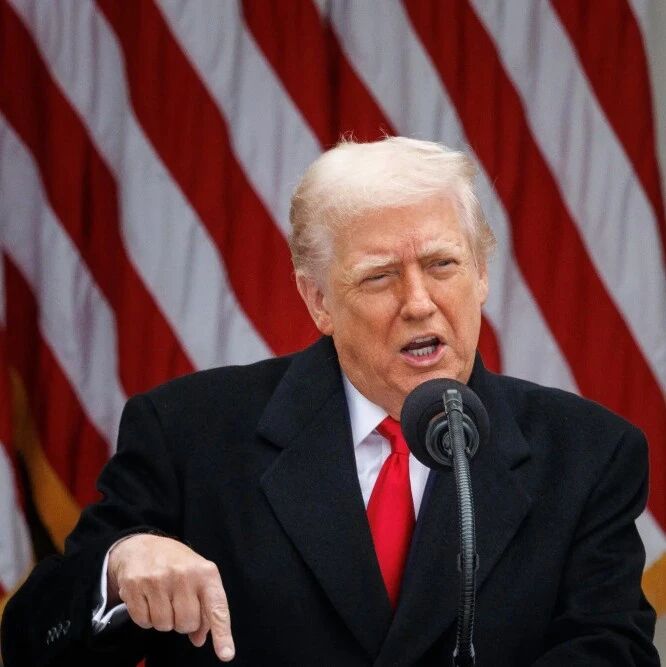
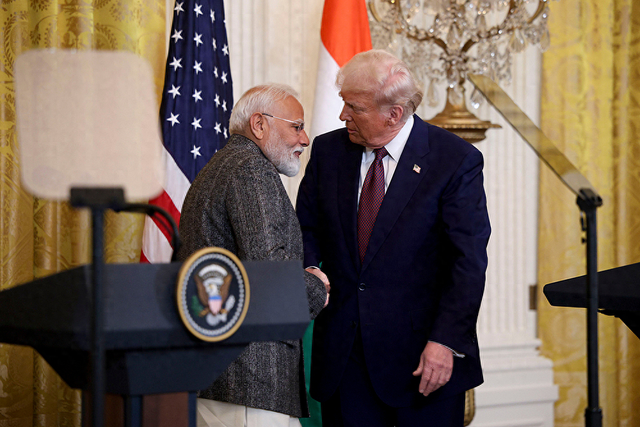
Core Viewpoint - The US-India trade negotiations are facing delays and complexities due to evolving interests and strategic considerations from both sides, indicating a trend towards prolonged discussions rather than a swift agreement [1][8][20]. Group 1: Current Status of Negotiations - The first phase of the US-India trade agreement was initially expected to be finalized by the end of this year, but this timeline now appears overly optimistic [8][18]. - The negotiations have largely concluded on most trade issues, with only a few contentious topics remaining, such as soybeans and dairy products [3][14]. - Both parties have not set a deadline for concluding the negotiations, suggesting a shift towards a more extended negotiation process [9][19]. Group 2: Strategic Context - The negotiations are now framed within a broader context of resetting bilateral relations, moving beyond mere economic discussions to include strategic partnerships [3][15]. - The US delegation's visit to India, led by Rick Switzer, focused on building rapport rather than solely on trade negotiations, indicating a shift in approach [4][15]. - The emphasis on cooperation in defense, energy, technology, and supply chains reflects a strategic realignment in US-India relations [4][15]. Group 3: India's Position and Strategy - India is actively softening its stance to negotiate concessions from the US regarding punitive tariffs and other trade issues [6][16]. - The Indian government has made significant overtures to the US, including presenting what it claims to be its best trade proposal [6][16]. - India's strategy includes leveraging perceived threats from other countries, particularly China, to enhance the urgency for the US to finalize trade agreements [6][16]. Group 4: US Policy Dynamics - The Trump administration's stance on India has evolved, reflecting a dual focus on maximizing economic benefits while recognizing India's strategic importance [7][17]. - The administration's approach has shifted from a focus on punitive tariffs to a more nuanced strategy that seeks to balance economic and geopolitical interests [7][17]. - The US's insistence on high tariffs indicates a strategy aimed at extracting economic value from India while also acknowledging its strategic role [10][20].

德总理:欧洲不接受美国家安全战略部分内容
Xin Hua She· 2025-12-09 13:37
Core Viewpoint - The recent U.S. National Security Strategy report contains elements that are deemed "unacceptable" for Europe, indicating a need for Germany and Europe to maintain a high degree of independence in security policy from the U.S. [1] Group 1 - German Chancellor Merz emphasized the necessity for Europe to develop its own security policies independent of the United States [1]
美国发布新版国家安全战略报告,19次提及中国
Zhong Guo Xin Wen Wang· 2025-12-09 01:32
Core Viewpoint - The recent U.S. National Security Strategy report emphasizes the need to rebalance U.S.-China economic relations, prioritizing mutual benefit and fairness, while viewing China as an economic competitor rather than a systemic challenge [1] Group 1: Economic Relations - The report mentions China 19 times, highlighting the importance of establishing a mutually beneficial economic relationship with Beijing [1] - The focus has shifted from geopolitical competition to an ideology-driven framework that prioritizes economic interests as the ultimate goal [1] Group 2: Regional Focus - The "Indo-Pacific" section of the new strategy centers around China, indicating that the value of other countries in the region is assessed based on their ability to assist the U.S. in economic competition with China and to mitigate conflicts with Beijing [1] - Notably, traditional U.S. treaty allies, such as the Philippines, are not mentioned in the context of this strategy [1] Group 3: Policy Evolution - The current report reflects a departure from the bipartisan consensus established during Trump's first term, which focused on great power competition with China and Russia [1] - The primary goal of Washington's policy towards China is now framed as establishing a win-win economic relationship [1]
克宫发言人:特朗普的国家安全战略在很多方面符合俄方愿景
Xin Jing Bao· 2025-12-08 08:27
Core Viewpoint - The Kremlin has praised U.S. President Trump's latest national security strategy as an encouraging policy shift that largely aligns with Russia's views [1] Group 1 - The Kremlin spokesperson welcomed the signals from the Trump administration regarding support for dialogue and the establishment of good relations [1] - The spokesperson warned that a so-called "deep state" in the U.S. may attempt to undermine Trump's vision [1]
宏观周周谈:日加息、美降息,还会引发全球风险吗?
2025-12-08 00:41
Summary of Key Points from Conference Call Records Industry or Company Involved - The discussion primarily revolves around the **Japanese Yen** and its impact on global financial markets, particularly in relation to **U.S. Treasury bonds** and **U.S. stock markets**. Core Points and Arguments 1. **Yen's Exchange Rate Dynamics**: The Japanese Yen's value is significantly influenced by global risk events and capital flows, with the Yen appreciating during risk-off scenarios and depreciating due to carry trades [1][3][4]. 2. **Shift in Investment Behavior**: Post-financial crisis, Japanese institutional investors have become the dominant force in overseas investments, replacing individual residents. This shift has been driven by negative interest rates prompting a search for higher yields abroad [1][4][7]. 3. **Carry Trade Mechanism**: Carry trades involve borrowing low-interest Yen and converting it into higher-yielding currencies like the U.S. Dollar. This practice has led to substantial capital outflows from Japan, impacting global financial markets [3][4][7]. 4. **Impact of U.S. and Japanese Monetary Policies**: The difference in yields between U.S. and Japanese bonds significantly affects arbitrage opportunities. A decrease in this yield spread can lead to shifts in investment strategies between the two countries [9][10]. 5. **Market Reactions to Rate Hikes**: The Bank of Japan's rate hikes since 2022 have led to temporary appreciation of the Yen and subsequent volatility in U.S. stock markets, with notable declines in indices following these announcements [10][11]. 6. **Future Monetary Policy Expectations**: There is a strong market expectation for further rate hikes by the Bank of Japan, which could lead to additional adjustments in U.S. stock markets, especially if new risk events arise [11][12]. Other Important but Possibly Overlooked Content 1. **Asset Price Volatility**: The influx and outflow of capital due to carry trades can lead to significant fluctuations in asset prices, particularly in U.S. equities and real estate markets [3][4][5]. 2. **Long-term Trends in Yen Valuation**: Since 2012, the Yen has been on a depreciating trend, contrasting with its previous status as a safe-haven currency. This change has been influenced by a shift towards long-term investment strategies by Japanese institutions [7][8]. 3. **Global Capital Market Implications**: The ongoing carry trade dynamics and potential shifts in monetary policy across major economies necessitate close monitoring of currency movements and their implications for global capital flows [13][14].
突发“黑天鹅”,股汇“双杀”!美国,重大转向→
Jin Rong Jie· 2025-12-07 02:16
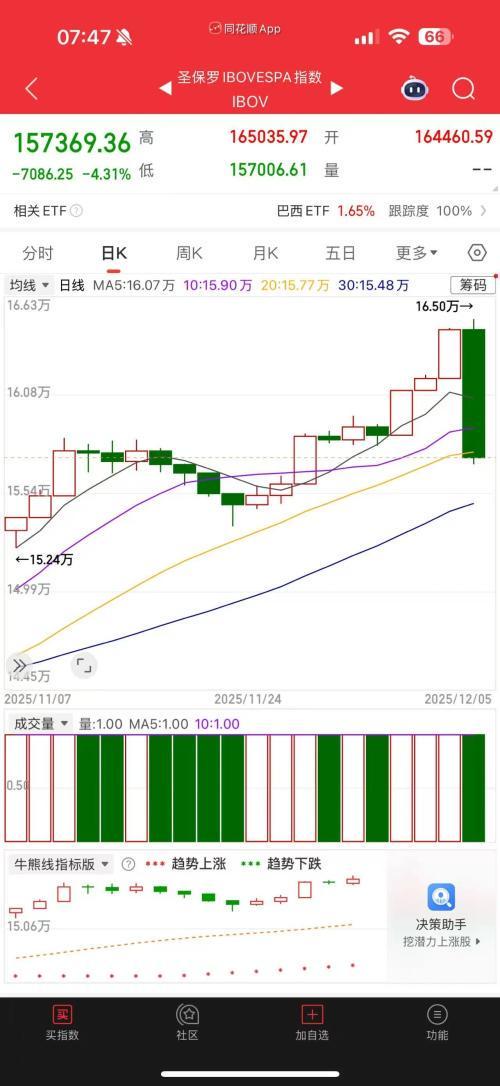
早上好,先来关注下海外市场。 突发"黑天鹅",巴西股汇"双杀" 本周五,巴西前总统长子、参议员弗拉维奥·博索纳罗表示,他的父亲、巴西前总统雅伊尔·博索纳罗已 表示将支持他2026年竞选总统。有关弗拉维奥的报道冲击了巴西市场,当日巴西雷亚尔兑美元汇率下跌 近3%,当地基准股指暴跌逾4%。 弗拉维奥参议员办公室对外证实,他将作为自由党的候选人挑战现任总统卢拉。 有分析师表示:"市场之前预期弗雷塔斯会成为博索纳罗钦点的候选人,而市场的技术面仓位在一定程 度上也反映了这种乐观情绪。相比之下,弗拉维奥对阵卢拉的竞争力更弱,而且在经济政策预期方面也 更差,这对巴西资产来说都是负面因素。" 美国白宫发布新版《国家安全战略》 据央视新闻消息,美国白宫于当地时间4日晚发布特朗普政府的新版《国家安全战略》。这份文件共33 页,阐述本届美国政府对其外交政策的调整。 据悉,该战略的核心是美国重新调整美国在西半球的军事存在,以应对移民、毒品走私等。该战略称, 这是提出并实施针对门罗主义的所谓"特朗普推论"。 在有关欧洲的部分,有分析认为该战略对欧洲展示出前所未有的对抗姿态。该战略警告称,欧洲面临着 经济衰退,并且从长远来看,北约某些成 ...
“美国将调整与中国的经济关系”
第一财经· 2025-12-07 01:37
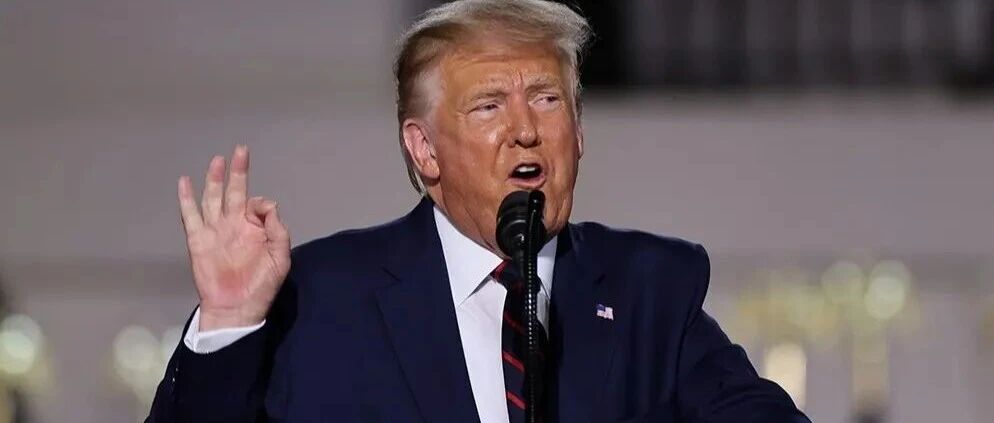
Core Viewpoint - The article discusses the release of the Trump administration's updated National Security Strategy, emphasizing a shift in U.S. foreign policy, particularly regarding military presence in the Western Hemisphere and relations with China and Europe [3][5][8]. Group 1: U.S. National Security Strategy - The new strategy prioritizes border security and combating drug trafficking as core defense tasks, reflecting a shift from terrorism to immigration as the primary threat [5]. - It outlines plans to enhance the U.S. Coast Guard and Navy presence in the region to ensure border safety and counter drug cartels, potentially using lethal force if necessary [3][5]. Group 2: Relations with Europe - The strategy adopts an unprecedented confrontational stance towards Europe, warning of economic recession and demographic shifts in NATO member states, raising questions about their alliance with the U.S. [7]. - It criticizes European officials for obstructing U.S. efforts to end the Russia-Ukraine conflict, highlighting the adverse effects of the conflict on European external dependencies [7]. Group 3: U.S.-China Relations - The strategy notes that the relationship between the U.S. and China has evolved from one of disparity to a near-equal status, prompting a reevaluation of economic relations based on mutual benefit [8]. - It indicates a shift in focus from Asia to Latin America, elevating the latter's importance on the U.S. agenda [8].
重磅!特朗普发布第二任期《国家安全战略》(全文&与以前有何不同&美国媒体评论)
美股IPO· 2025-12-06 23:00
Group 1 - The article emphasizes the need for a coherent and focused global engagement strategy for the United States to maintain its status as the world's strongest and most influential nation [3][4][5] - It critiques past U.S. strategies post-Cold War for failing to align with core national interests and for misjudging the American public's willingness to bear global burdens [4][5] - The article highlights the importance of prioritizing core national interests in U.S. foreign policy, focusing on security, economic stability, and the protection of American values [7][10] Group 2 - The article outlines the core objectives of U.S. strategy, including the protection of national sovereignty, economic interests, and the well-being of its citizens [7][8] - It stresses the need for a resilient national infrastructure capable of withstanding various threats, including military attacks and foreign influence [8] - The article advocates for a strong military presence and advanced defense systems to safeguard U.S. interests and deter potential adversaries [8][9] Group 3 - The article discusses the importance of maintaining a robust economy as the foundation of U.S. power, emphasizing the need for a strong industrial base and innovative energy sector [8][9] - It highlights the necessity of protecting intellectual property and fostering technological advancements to sustain economic leadership [9] - The article calls for a focus on re-industrialization and energy independence to bolster economic resilience and reduce reliance on foreign sources [12][18] Group 4 - The article outlines the U.S. approach to foreign relations, advocating for a pragmatic and principle-driven diplomacy that prioritizes American interests [11][13] - It emphasizes the need for burden-sharing among allies and partners, particularly in defense spending and regional security responsibilities [14][15] - The article critiques the past U.S. approach to China, calling for a rebalancing of economic relations to ensure fairness and protect American economic independence [25][26] Group 5 - The article identifies the strategic importance of the Western Hemisphere, advocating for a return to Monroe Doctrine principles to safeguard U.S. interests in the region [16][18] - It discusses the need for a proactive stance against foreign adversaries in the Western Hemisphere, emphasizing cooperation with regional allies to combat illegal immigration and drug trafficking [19][20] - The article highlights the importance of economic partnerships and investment opportunities in the region to strengthen U.S. influence and counter external threats [22][23]

纽约时报:特朗普的新国家安全战略侧重于盈利,而非传播民主
美股IPO· 2025-12-06 23:00
Trump's Security Strategy Focuses on Profit, Not Spreading Democracy 特朗普总统上个月在白宫发表讲话。他领导的政府发布的《国家安全战略》描绘了一个美国利益远比以往任何 一届政府——甚至包括他第一任期内——所描述的要狭隘得多的世界。 汤姆·布伦纳为《纽约时报》撰稿 2025年12月5日更新于美国东部时间晚上7:29 拉丁美洲国家必须向美国公司授予无需竞标的合同。华盛顿对富裕的海湾君主国的"颐指气使"必 须停止。 从白宫的角度来看,世界是美国可以利用其强大力量赚钱的地方。 特朗普总统今年以来一直表明,如果他连任,将会优先考虑向实力较弱的国家施压,以使美国企 业受益。但周四晚些时候,他的政府发布了期待已久的美国全球国家安全目标更新,将这种以利 润为导向的做法确立为官方外交政策的核心要素。 这份名为《国家安全战略》的文件描绘了一个美国利益远比以往历届政府——甚至包括特朗普第 一任期内——所描述的更为狭隘的世界。美国作为全球自由力量的形象已不复存在,取而代之的 是一个专注于减少移民、同时避免对独裁政权进行评判,而是将其视为经济来源的国家。 "我们寻求与 ...