
日元套息交易

Search documents
?日元强势回归! 财政担忧降温+避险盘涌入 日元即将创2024年11月以来最强周涨幅
Zhi Tong Cai Jing· 2026-02-13 03:20
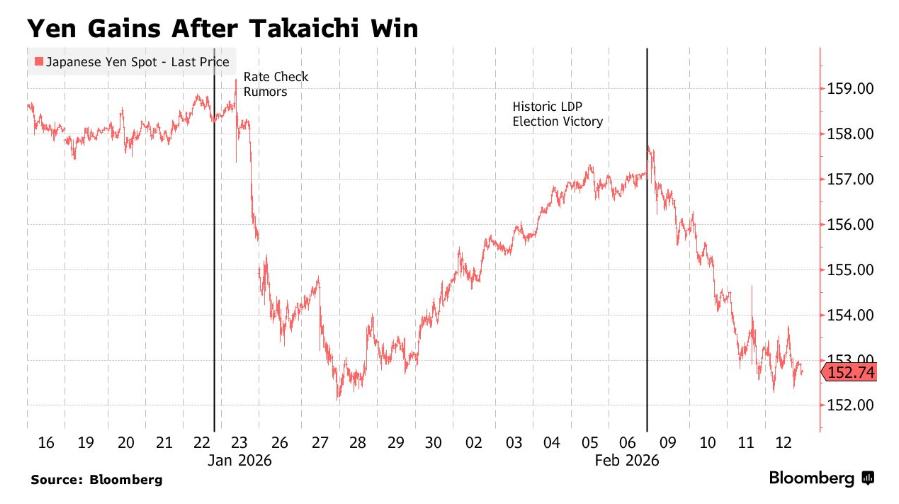
Core Viewpoint - The Japanese yen is experiencing significant appreciation, potentially achieving its largest weekly gain since November 2024, driven by reduced fiscal concerns and increased demand for safe-haven assets amid market volatility [1]. Group 1: Yen Appreciation Factors - The yen has strengthened approximately 2.8% against the US dollar this week, marking four consecutive days of appreciation [1]. - The market perceives Prime Minister Fumio Kishida's decisive victory as a reduction in political uncertainty, which has positively influenced the yen's value and led to a decline in long-term Japanese government bond yields from recent highs [1][2]. - Increased expectations for a Bank of Japan interest rate hike have also contributed to the yen's upward trend, with the probability of a rate increase in April rising to 78% [3]. Group 2: Market Reactions and Risks - The strong demand for the yen is partly due to significant sell-offs in the stock market and other risk assets, such as cryptocurrencies, which have heightened the appeal of safe-haven currencies [1]. - Concerns about the potential for large-scale unwinding of yen carry trades, which could lead to volatility across equity, bond, and currency markets, are emerging as the yen strengthens [1][4]. - The yen carry trade, a strategy that has been widely adopted due to low borrowing costs, poses systemic risks as it relies on stable interest rate differentials and a weak yen [5][6]. Group 3: Policy Implications - The Japanese government is cautious about foreign exchange fluctuations, with officials indicating a readiness to intervene if necessary to stabilize the yen [2]. - There is a potential for a unique policy combination of tax cuts without worsening the fiscal deficit, which could be supported by internal funding sources, but this may also lead to increased market volatility [2]. - The combination of rising interest rate expectations and fiscal stimulus could create conditions for significant market corrections if risk sentiment deteriorates [6].
日元强势回归! 财政担忧降温+避险盘涌入 日元即将创2024年11月以来最强周涨幅
智通财经网· 2026-02-13 03:06
Core Viewpoint - The Japanese yen is experiencing significant appreciation against the US dollar, driven by market confidence in Prime Minister Fumio Kishida's electoral victory, which is expected to reduce political uncertainty and fiscal risks, while also supporting the yen amid strong demand for safe-haven assets [1][4]. Group 1: Yen Appreciation and Market Reactions - The yen has strengthened approximately 2.8% this week, marking its largest weekly gain since November 2024, following Kishida's decisive victory [1]. - The appreciation of the yen is supported by strong demand for safe-haven assets as the stock market faces significant sell-offs due to AI disruption expectations and increased risk asset sell-offs [1]. - Investors interpret Kishida's victory as a reduction in political uncertainty, which has helped push down long-term Japanese government bond yields from recent highs [1][4]. Group 2: Fiscal Policy and Market Expectations - Following the election, there is a growing expectation of a potential interest rate hike by the Bank of Japan, which has contributed to the yen's strength [4][5]. - The Japanese government remains vigilant regarding foreign exchange fluctuations, with concerns about possible coordinated interventions to support the yen [4]. - Kishida's administration is expected to implement a rare policy combination of tax cuts without worsening the fiscal deficit, potentially supported by internal funding pools [4]. Group 3: Risks of Yen Carry Trade - The yen carry trade, a highly leveraged cross-market financing strategy, poses a significant risk to global financial markets, particularly if the underlying conditions change [6][7]. - Analysts warn that the carry trade could lead to large-scale unwinding, amplifying market shocks, especially in the context of rising long-term Japanese government bond yields and expectations of fiscal stimulus [6][8]. - The potential for a rapid collapse of the carry trade, similar to past financial crises, is heightened by the current market dynamics, including rising interest rate expectations and deteriorating risk sentiment [7][8].

宏观流动性系列一:日本央行加息短期影响有限
Hua Tai Qi Huo· 2025-12-23 09:23
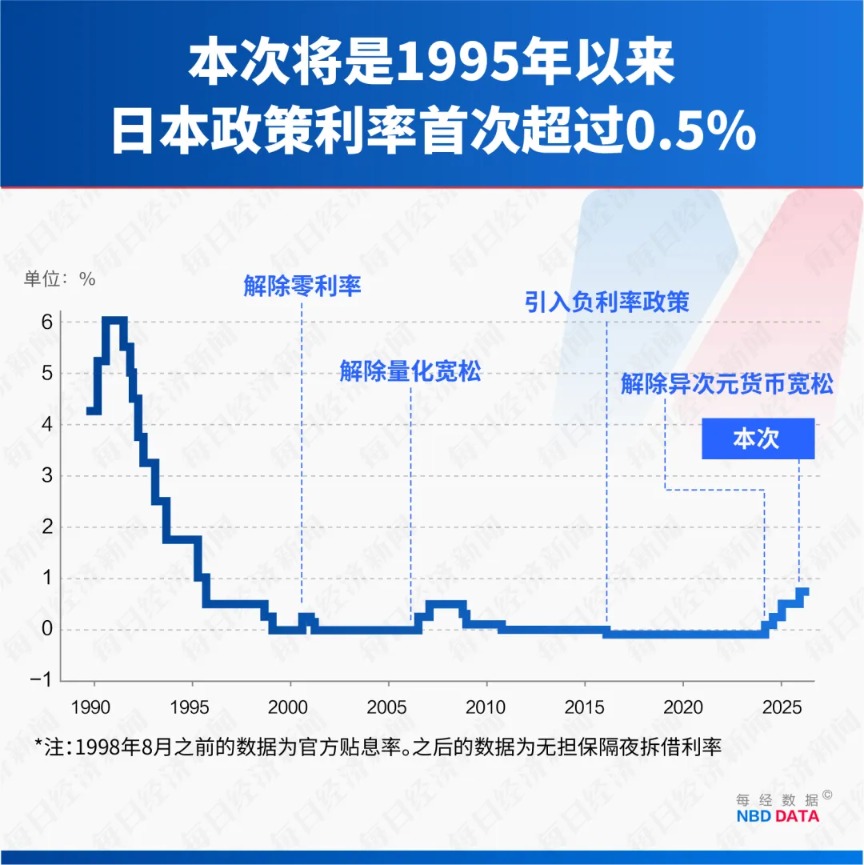
Report Industry Investment Rating - Not provided in the report Core Viewpoints - The current interest rate hike space in Japan mainly comes from the triple improvement of inflation, finance, and interest rate structure, allowing the benchmark interest rate to be slightly raised from 0.75% to about 1% in the next 1 - 2 years. The policy divergence of "US rate cuts and Japan rate hikes" will narrow the US - Japan interest rate spread from about 300bp to 200bp, reducing the profit space of yen carry trades and triggering a re - balance of global assets. Overall, this round of interest rate and spread convergence is more likely to bring about a mild repricing rather than a systemic shock [2]. - The core feature of yen carry trades lies in its large - scale hierarchical liability structure rather than a single - direction yen short position. The entire liability pool consists of three parts: the upper layer is a few billion dollars in futures shorts with limited volume but high volatility; the middle layer is a highly leveraged liability pool of over 10 trillion US dollars formed through foreign exchange swaps, forwards, and swaps, which is most sensitive to interest rate spreads and fluctuations; the bottom layer is over 10 trillion US dollars in long - term overseas assets of Japan, with a slower adjustment rhythm. The middle layer, which is the largest in scale and highest in leverage, truly affects systemic fluctuations [3]. - Although the reversal of yen carry trades will trigger market fluctuations, the conditions for triggering a global liquidity shock are not fully met: Japan's interest rate hike rhythm is moderate, high - leverage positions have been cleared in advance, and the Fed's liquidity has not tightened. In the short term, it is more likely to see a temporary repricing of high - valuation and long - duration assets rather than a systemic stampede; only in the extreme scenario of Japan's continuous and significant over - expected interest rate hikes and a strong policy divergence with the US can the cross - asset liquidity risk be significantly magnified [4]. Summary by Directory From the Cause of Inflation to See Japan's Interest Rate Hike Space - Combining economic, inflation, and fiscal dimensions, it can be roughly outlined that Japan's current interest rate hike space is from exiting extreme easing to returning to a normal and slightly loose state. That is, in the next 1 - 2 years, it is feasible to slowly raise the policy interest rate from 0.75% to about 1%. However, extending to 1.5% - 2% or higher requires stronger growth and nominal income support. Otherwise, with the existing debt stock, market concerns about fiscal sustainability will heat up sharply. This round is more like multiple small - step interest rate hikes to around 1%, allowing the long - end to be repriced gradually, rather than an American - style continuous and large - scale interest rate hike cycle [8]. Monetary Policy Divergence, Yen Depreciation, and Yen Carry Trades - In the past five years, Japan's monetary policy has shown an obvious divergence from the global trend. While major economies have aggressively raised interest rates under the constraint of high inflation, Japan did not exit negative interest rates until March 2024 and only slightly raised interest rates by 25bp in January 2025, with a policy rhythm much slower than the global average. The monetary policy divergence has led the US - Japan policy interest rate spread to reach nearly 560bp at its peak in 2023, resulting in a significant strengthening of the US dollar and an accelerated depreciation of the yen since 2022. Japan's low interest rates, a significantly enlarged US - Japan interest rate spread, and the yen's depreciation have provided an excellent profit environment for yen carry trades and released liquidity globally through the path of borrowing yen and buying high - interest - rate assets. This is also the reason for the continuous rise of assets such as technology - represented stocks, commodities, and digital currencies in the past [10]. Yen Depreciation Pushes Up Japan's Inflation Pressure, Leading to Passive Monetary Tightening - The side effects of the continuous depreciation of the yen are forcing the Bank of Japan to raise interest rates. On the one hand, the weakening yen has raised the prices of imported energy and food. Japan's high dependence on foreign countries means that imported inflation is inevitable. On the other hand, after 30 years of structural adjustment, changes in the labor market structure have led to a continuous increase in domestic wages. Japan's core CPI has been running above 2% since 2022, marking the end of the deflation era. In this context, the Bank of Japan's recent release of a clearer signal of interest rate hikes is a response to the rising inflation center and the risk of a wage - inflation spiral, aiming to stabilize the yen exchange rate and inflation expectations before the doubts about sovereign credit intensify [18]. Japan's High Fiscal Debt Reality Constrains the Upside Space of Interest Rates - Japan's "lost 30 years" is also the 30 years of large - scale fiscal stimulus. The fundamental reason why Japan has been able to maintain roughly controllable finances under the premise of a debt/GDP ratio exceeding 200% in the past two decades is the continuous decline in the average interest payment rate. With the recovery of the inflation environment, market concerns about Japan's fiscal sustainability are also increasing, further pushing down the yen and pushing up long - term interest rates, forming a "dual pressure of exchange rate and interest rate." Currently, driven by the Bank of Japan's interest rate hikes and the rise of long - term interest rates, the average fiscal interest payment rate has turned upward, and the proportion of interest payments has also begun to rise slightly. The fiscal tolerance for interest rate hikes has obviously decreased [27]. From the Monetary Policy Divergence to See the Compression Space of Interest Rate Spreads - In the next year, the policy divergence of "US rate cuts and Japan rate hikes" will dominate the profit structure and capital flow of yen carry trades. In the current environment of still high interest rate spreads, this divergence will drive the nominal interest rate spread to narrow slowly, and the narrowing rhythm determines whether carry positions will be moderately re - balanced or trigger concentrated liquidation in extreme scenarios. In the baseline scenario, the interest rate spread narrows but does not reverse, and the carry space still exists; while the stress scenario requires the resonance of both the rapid weakening of the US and the rapid interest rate hikes in Japan to possibly lead to a sharp decline or even an inversion of the interest rate spread. Overall, the probability of the extreme combination is low, but its potential disturbances need to be vigilant [33]. Dismantling the Scale and Structure of the Yen Carry Trade Liability Pool - Overall, yen carry trades have evolved from the traditional single - direction bet into a large and complex hierarchical liability system. The different sources of funds, leverage structures, and risk exposures at different levels determine their volatility patterns and vulnerability points. When interest rate spreads narrow and exchange rate fluctuations intensify, short - term price shocks are often triggered by leveraged funds in the upper and middle layers, while it is the global allocation of Japanese institutions at the bottom layer that truly affects the cross - cycle capital flow. Therefore, understanding the systemic risk of yen carry trades lies not in simply looking at the scale of speculative short positions, but in identifying the behavioral constraints and re - balance rhythms of different layers [37]. Yen Carry Trade Reversal and Global Liquidity Shock - Currently, the macro and policy conditions may cause fluctuations but are not sufficient to trigger a systemic liquidity shock. The market has already factored in Japan's interest rate hike path in advance, and high - leverage yen short positions have been significantly cleared in the previous round of shocks. The Fed is in a stage of slow interest rate cuts, and the US dollar liquidity has not tightened significantly, making potential de - leveraging more likely to manifest as asset re - pricing rather than a full - scale stampede. On this basis, the key risk of yen carry trades is gradually shifting from short - term event shocks to the adjustment of capital flow driven by long - term changes in the interest rate spread pattern [43].
创30年来最高水平 日本央行宣布加息!高市早苗推18.3万亿日元财政刺激 “渡边太太”提前撤离
Mei Ri Jing Ji Xin Wen· 2025-12-19 05:47
Group 1: Core Views - The Bank of Japan's interest rate hike is a response to inflation exceeding the 2% target for 44 consecutive months and the persistent weakness of the yen, which has led to imported inflation pressures [2][4][5] - The combination of "tight monetary policy" and "expansive fiscal policy" under Prime Minister Fumio Kishida raises concerns about the effectiveness of the rate hike and increases the government's debt financing costs [2][6] Group 2: Economic Indicators - Japan's core consumer price index (CPI) rose by 3.0% year-on-year in October and decreased to 2.9% in November, driven by service prices and wage increases [4] - The wage growth during Japan's "Shunto" negotiations reached 5.25%, contributing to a self-reinforcing inflationary spiral [4] Group 3: Fiscal Policy Concerns - The Japanese government approved a supplementary budget of 18.3 trillion yen for fiscal year 2025, primarily funded through new bond issuance, which will increase the government's debt burden [6][11] - The yield on 10-year government bonds reached 2%, the highest since May 2006, indicating rising borrowing costs for the government [6] Group 4: Global Market Implications - The shift in Japan's monetary policy is expected to impact global capital markets, particularly concerning the risks associated with yen carry trades [12][19] - Speculative funds have rapidly withdrawn from the market, with net positions in yen contracts shrinking by over 60% in a two-week period [19] Group 5: Political and Economic Context - The current economic environment is characterized by a contradiction between the government's fiscal stimulus and the central bank's tightening measures, which may lead to increased financial instability [11][12] - Japan's economy showed signs of contraction, with a 2.3% annualized decline in GDP for the third quarter, raising concerns about a potential technical recession [11]
日本加息风暴真的来了!你的投资还安全吗?
Sou Hu Cai Jing· 2025-12-17 09:18
Core Viewpoint - The era of "free leverage" in global financial markets, largely supported by Japan's ultra-low interest rates, is coming to an end as the Bank of Japan prepares to raise interest rates after more than two decades of monetary easing [1][3][10]. Group 1: Economic Factors - Japan's core inflation rate has risen for fifty consecutive months, indicating persistent inflationary pressure, while wage growth has not kept pace with rising prices, leading to a decrease in real purchasing power for consumers [3][4]. - The Japanese yen has depreciated significantly, from 110 yen per dollar to 160 yen, a decline of over 30%, exacerbating import-driven inflation for a country heavily reliant on energy and food imports [3][4]. - The Japanese government's extensive fiscal stimulus has increased inflation and created risks of fiscal imbalance, necessitating a shift in monetary policy to cool down the overheated economy [3][4]. Group 2: Financial Market Dynamics - The practice of yen carry trade, where investors borrow yen at low interest rates to invest in higher-yielding assets globally, has been a significant driver of capital flows into markets like the US and Europe, with over 90% of these funds directed there [4][6]. - A potential interest rate hike, even a modest increase from 0% to 0.5%, would disrupt this carry trade, leading to a significant outflow of capital from global markets as investors rush to close positions [7][10]. - The anticipated market reaction to Japan's interest rate hike could lead to a massive sell-off in assets such as US stocks and cryptocurrencies, as seen in August when a hint of a rate increase caused significant market declines [7][8]. Group 3: Global Market Implications - The interconnectedness of global capital markets means that a downturn in US and Hong Kong markets due to carry trade unwinding could negatively impact investor sentiment in the A-share market, despite its limited direct exposure to yen carry trades [8][9]. - The potential appreciation of the yen following an interest rate hike could create upward pressure on other Asian currencies, including the Chinese yuan, complicating the competitive landscape for exports [9][10]. - The upcoming interest rate changes in Japan are expected to have a prolonged impact on global markets, leading to a gradual revaluation of assets rather than a sudden market crash, which poses a challenge for investors [10][11].

警惕日元加息这头“灰犀牛”
Sou Hu Cai Jing· 2025-12-08 22:15
Core Viewpoint - The Bank of Japan's (BOJ) Governor Ueda Kazuo has ignited market expectations for interest rate hikes, indicating that the BOJ will assess the pros and cons of raising rates at the upcoming policy meeting on December 19, with an 80% market expectation for a rate hike by year-end [1] Group 1: Economic Context - Japan has maintained near-zero or negative interest rates since 1990 to stimulate the economy, leading to the yen being the cheapest financing currency globally [1][2] - The "Watanabe-san" group, representing Japanese housewives, has utilized low yen rates for carry trades, accounting for nearly one-third of Japan's retail forex market [2] - The yen's depreciation against the dollar has increased import costs and sustained imported inflation, while Japan's government debt exceeds 230% of GDP [3] Group 2: Market Implications - The potential for a rate hike raises borrowing costs for yen, creating pressure on carry traders who may need to liquidate overseas assets to repay yen-denominated debts, leading to a sudden contraction in global liquidity [3][4] - The reversal of carry trades is seen as a bellwether for changes in global market risk appetite, with high-value and high-leverage assets, such as tech stocks and cryptocurrencies, facing significant sell-offs [4]
宏观周周谈:日加息、美降息,还会引发全球风险吗?
2025-12-08 00:41
Summary of Key Points from Conference Call Records Industry or Company Involved - The discussion primarily revolves around the **Japanese Yen** and its impact on global financial markets, particularly in relation to **U.S. Treasury bonds** and **U.S. stock markets**. Core Points and Arguments 1. **Yen's Exchange Rate Dynamics**: The Japanese Yen's value is significantly influenced by global risk events and capital flows, with the Yen appreciating during risk-off scenarios and depreciating due to carry trades [1][3][4]. 2. **Shift in Investment Behavior**: Post-financial crisis, Japanese institutional investors have become the dominant force in overseas investments, replacing individual residents. This shift has been driven by negative interest rates prompting a search for higher yields abroad [1][4][7]. 3. **Carry Trade Mechanism**: Carry trades involve borrowing low-interest Yen and converting it into higher-yielding currencies like the U.S. Dollar. This practice has led to substantial capital outflows from Japan, impacting global financial markets [3][4][7]. 4. **Impact of U.S. and Japanese Monetary Policies**: The difference in yields between U.S. and Japanese bonds significantly affects arbitrage opportunities. A decrease in this yield spread can lead to shifts in investment strategies between the two countries [9][10]. 5. **Market Reactions to Rate Hikes**: The Bank of Japan's rate hikes since 2022 have led to temporary appreciation of the Yen and subsequent volatility in U.S. stock markets, with notable declines in indices following these announcements [10][11]. 6. **Future Monetary Policy Expectations**: There is a strong market expectation for further rate hikes by the Bank of Japan, which could lead to additional adjustments in U.S. stock markets, especially if new risk events arise [11][12]. Other Important but Possibly Overlooked Content 1. **Asset Price Volatility**: The influx and outflow of capital due to carry trades can lead to significant fluctuations in asset prices, particularly in U.S. equities and real estate markets [3][4][5]. 2. **Long-term Trends in Yen Valuation**: Since 2012, the Yen has been on a depreciating trend, contrasting with its previous status as a safe-haven currency. This change has been influenced by a shift towards long-term investment strategies by Japanese institutions [7][8]. 3. **Global Capital Market Implications**: The ongoing carry trade dynamics and potential shifts in monetary policy across major economies necessitate close monitoring of currency movements and their implications for global capital flows [13][14].
日本央行加息声响起 套息交易逆转风险上升
Shang Hai Zheng Quan Bao· 2025-12-02 18:09
Core Viewpoint - The Bank of Japan is signaling a potential interest rate hike in December, which has heightened market expectations for an increase, leading to rising bond yields and a stronger yen against the dollar [1][2]. Group 1: Interest Rate Expectations - Bank of Japan Governor Kazuo Ueda indicated that the central bank will assess domestic and international economic conditions, inflation, and financial market status to make a decision on policy rate adjustments [1][2]. - The probability of a 25 basis point rate hike in December has surged from 50% to 85% according to Polymarket [1]. Group 2: Market Reactions - Following Ueda's remarks, Japanese government bond yields rose sharply, with the 2-year yield reaching 1.033%, the highest since 2008, and the 30-year yield hitting a record high of 3.425% [2]. - The Nikkei 225 index fell by 1.89%, leading declines in Asian markets [2]. Group 3: Yen and Global Market Impact - The yen strengthened against the dollar, reaching 154.66, as expectations for a rate hike in Japan increased while the Federal Reserve's rate cut expectations also grew [3]. - Concerns about a potential reversal of yen carry trades due to narrowing US-Japan interest rate differentials could impact global markets, but analysts believe the spillover effects will be manageable [3][5]. Group 4: Risk Assessment - The International Monetary Fund (IMF) projects Japan's government debt-to-GDP ratio to reach 229.6% by 2025, the highest among developed economies, raising concerns about fiscal sustainability if interest rates rise [3]. - Analysts suggest that the current level of yen carry trade positions is lower than in the past, which may mitigate the impact of any potential unwinding of these trades on global markets [5][6].