
图灵测试

Search documents
中文屋提出者逝世,曾当众“调戏”Hinton被记了半辈子
3 6 Ke· 2025-11-30 06:10
Core Viewpoint - The article discusses the life and impact of philosopher John Searle, particularly focusing on his famous thought experiment "Chinese Room," which challenges the understanding of artificial intelligence and the nature of comprehension [1][3][35]. Group 1: John Searle's Contributions - Searle's "Chinese Room" thought experiment, proposed in 1980, is a significant philosophical argument against strong artificial intelligence, asserting that machines can simulate understanding without possessing true comprehension [35][38]. - The experiment illustrates that while a system can manipulate symbols (syntax), it does not equate to understanding their meanings (semantics), thus questioning the validity of the Turing Test [38][40]. - Searle's views emphasize that human understanding involves more than just processing symbols; it requires grasping the meanings behind them [39][40]. Group 2: Impact on AI Discourse - The "Chinese Room" continues to influence discussions around modern AI, such as large language models like GPT, which are often seen as simulating understanding rather than genuinely comprehending language [41][43]. - Critics of Searle, including AI pioneers, argue that the distinction he makes between understanding and simulation may overlook the complexities of cognitive processes in both humans and machines [44][46]. - Hinton, a key figure in deep learning, suggests that large language models do exhibit a form of understanding through the interaction of numerous features, aligning closely with human cognitive processes [47][48]. Group 3: Searle's Legacy and Controversies - Searle's career was marked by both significant philosophical contributions and controversies, including allegations of sexual harassment that led to the revocation of his honorary title at Berkeley [27][28]. - Despite the controversies, Searle's philosophical legacy remains influential, with his ideas continuing to provoke thought and debate in the fields of philosophy and artificial intelligence [31][32]. - The choice of "Chinese" in the "Chinese Room" serves as a metaphor for the complexities of understanding and the cultural perceptions surrounding language comprehension [50][52].


中文屋提出者逝世,曾当众“调戏”Hinton被记了半辈子
量子位· 2025-11-30 05:09
Core Viewpoint - The article discusses the legacy of philosopher John Searle, particularly his famous "Chinese Room" thought experiment, which challenges the notion of machine understanding in artificial intelligence [1][3][4]. Group 1: John Searle's Contributions - John Searle passed away at the age of 93, leaving behind a significant impact on the philosophy of artificial intelligence [1]. - The "Chinese Room" thought experiment, proposed in 1980, is considered a classic in the philosophy of AI, questioning whether machines can truly "understand" or merely simulate understanding [3][4]. - Searle's argument posits that while machines can manipulate symbols, they do not possess genuine understanding, emphasizing the difference between syntax (form) and semantics (meaning) [52][54]. Group 2: The Chinese Room Experiment - The experiment involves an English speaker in a room who uses a rulebook to respond to Chinese characters without understanding the language, illustrating that the person inside the room does not comprehend Chinese despite producing correct responses [49][52]. - Searle's conclusion is that computational processes do not equate to human understanding, as machines operate on a syntactical level without grasping the semantic content [53][56]. - The ongoing debate surrounding AI's ability to understand language continues, with the "Chinese Room" serving as a reference point for discussions about the nature of understanding in AI systems [57][59]. Group 3: Academic and Cultural Context - Searle's choice of Chinese for the thought experiment reflects cultural stereotypes and the idea of a language that is operationally complex yet difficult to understand for English speakers [70][73]. - The article highlights the philosophical tensions between Searle and other AI pioneers, such as Geoffrey Hinton, who later suggested that large language models do exhibit a form of understanding through their statistical processing of language [64][65]. - Searle's legacy is marked by both his intellectual contributions and the controversies surrounding his later years, including allegations of sexual harassment that affected his reputation [41][42].

浙大房汉廷:“无AI 无上市” 中国如何走出自身“AI+”路径?
Xin Lang Zheng Quan· 2025-11-29 01:59
Core Insights - The article emphasizes that AI will reshape the capital markets, becoming a core engine for development, influencing everything from listing selection to compliance and investment decisions [1][4][5]. Group 1: AI's Role in Capital Markets - AI is predicted to be essential for companies seeking to go public, with the phrase "no AI, no listing" highlighting its importance [5]. - The Chinese AI industry is in a rapid growth phase, with projections indicating that the core industry will exceed 700 billion yuan in 2024, with a compound annual growth rate of over 20% [4]. - The application layer of AI is expected to grow from 35% in 2023 to 52% by 2025, becoming the largest growth segment [4]. Group 2: Challenges in Traditional Capital Markets - Traditional capital markets face inefficiencies in information processing, relying heavily on manual and rule-driven methods, which are slow and struggle with unstructured high-frequency data [6]. - Decision-making in financial institutions has historically been experience-driven, leading to cognitive biases and ineffective data utilization [6]. - Regulatory frameworks are often reactive, lacking real-time monitoring and proactive compliance measures [6]. Group 3: AI as a Solution - AI can automate the verification of information disclosure, significantly reducing time and costs associated with traditional processes, which can take up to 180 hours and cost between 50,000 to 1 million USD [7]. - The "AI+" model in investment banking shows promise by automating tasks like material review and data verification, enhancing efficiency and accuracy [8]. - AI can transform regulatory practices from reactive to proactive, enabling early intervention and better compliance [9]. Group 4: Future Directions of AI in Finance - The evolution of financial AI will transition from "dialogue interaction" to "decision-making action," with AI expected to handle more complex financial tasks [10]. - AI's deep application will facilitate cross-border regulatory collaboration, breaking down information processing barriers [11]. - AI can enhance data privacy and security through techniques like privacy computing, allowing data to be usable without compromising confidentiality [11]. Group 5: Regulatory and Institutional Adaptations - Regulatory bodies need to embrace technological changes, integrating AI into capital market frameworks and encouraging innovation in compliance applications [14]. - Financial institutions should invest in AI infrastructure and focus on developing AI capabilities to enhance their operational efficiency [14]. - The article suggests that China's rich application scenarios can drive AI technology advancements, potentially establishing a competitive edge in the global AI landscape [15].

马斯克将用最强Grok 5,挑战LOL最强战队T1
3 6 Ke· 2025-11-26 12:15
Core Insights - The core idea revolves around Elon Musk's challenge to the legendary esports team T1, using the AI Grok 5 in a match of League of Legends, marking a significant shift in AI capabilities from traditional methods to a more human-like perception and reasoning approach [1][3][35]. Group 1: AI Capabilities and Limitations - Grok 5 is designed to operate under strict limitations, focusing on pure visual perception and human-like reaction times, moving away from previous AI methods that relied on direct data access [1][3][11]. - The AI must interpret the game visually, processing real-time pixel data rather than accessing game code, which simulates a more human-like understanding of the game environment [6][7][10]. - By restricting reaction speeds to human limits (approximately 200 milliseconds), Grok 5 is forced to rely on strategy and prediction rather than sheer speed, emphasizing cognitive skills over mechanical advantages [11][15]. Group 2: Strategic Learning and Understanding - Unlike traditional AI that learns through trial and error, Grok 5 has been pre-trained on extensive game data, including patch notes and gameplay videos, allowing it to build a comprehensive world model [18][19]. - This model enables Grok 5 to make logical inferences about opponents' actions, showcasing its reasoning capabilities in real-time strategy scenarios [19][20]. Group 3: The Challenge of Uncertainty - The choice of League of Legends as the battleground is significant due to its inherent uncertainties and incomplete information, requiring Grok 5 to develop intuition and teamwork skills [23][27]. - The AI must learn to collaborate effectively with its teammates, making split-second decisions in response to dynamic game situations, which tests its ability to predict and understand human-like strategies [28]. Group 4: Implications for Robotics and AI Development - The ultimate goal of Grok 5 is to enhance the capabilities of Tesla's Optimus robot, applying the visual-action model developed in gaming to real-world scenarios, such as navigating complex environments [33][34]. - Success in this endeavor could signify a major leap towards creating AI that not only computes but also perceives and interacts with the physical world in a human-like manner [39][40].


AI如何进行几何推理?北邮专家带学生探索人工智能的本质
Xin Jing Bao· 2025-10-21 12:11
Core Insights - The article emphasizes that artificial intelligence (AI) is both a significant opportunity and a controversial topic in the current global landscape, with major countries prioritizing AI as a key development strategy to gain competitive advantage [1] Group 1: Nature and Development of AI - AI is described as a new industrial revolution, differing from previous revolutions by offering lower production costs rather than transferring capacity to less developed countries [2] - The current centers of AI research are primarily in the United States and China, highlighting the global competition in this field [2] - Key historical figures in AI development include Alan Turing, who proposed the Turing Test, and Noam Chomsky, whose theories laid the groundwork for natural language processing [2] Group 2: Educational Initiatives - The article discusses an educational event aimed at inspiring students to explore AI, led by Wang Xiaoru, who encourages a scientific spirit among the youth [3] - The event is part of a broader initiative to promote scientific literacy and national sentiment among young people in Beijing, aligning with the city's goal of becoming a global innovation center [3]
OpenAI奥特曼认错:我天生不适合管理公司
量子位· 2025-10-09 07:03
Core Insights - OpenAI is pursuing three main goals: to become a personal AI subscription service, to build large-scale infrastructure, and to achieve a truly useful AGI (Artificial General Intelligence) [2][4][29] - The recent launch of Sora 2 and various investment collaborations, including partnerships with AMD and Nvidia, indicate a strategic shift towards aggressive infrastructure investment [1][29] Group 1: OpenAI's Strategic Goals - OpenAI aims to become a personal AI subscription service, necessitating the construction of vast infrastructure to support this vision [4][29] - The ultimate mission is to create AGI that is genuinely beneficial to humanity, which requires a multifaceted approach beyond traditional business models [4][8] - OpenAI's infrastructure is currently intended for internal use, with future possibilities for external applications remaining uncertain [5][29] Group 2: Sora's Role in AGI Development - Despite skepticism about Sora's relevance to AGI, OpenAI's CEO believes that developing a "truly outstanding world model" through Sora will be crucial for AGI [10][11] - The resources allocated to Sora are relatively small compared to OpenAI's overall computational capacity, emphasizing a balanced approach to innovation and research [13][29] - Sora is seen as a way to engage society with upcoming technological advancements, particularly in video models, which resonate more emotionally than text [16][29] Group 3: Future Interactions and AI Capabilities - OpenAI envisions future interaction interfaces that go beyond basic chat, incorporating real-time video rendering and context-aware hardware [19][21] - The concept of the Turing Test is evolving, with the new benchmark being AI's ability to conduct scientific research, which OpenAI anticipates will happen within two years [21][22] - OpenAI's confidence in its research roadmap and the economic value it can generate has led to a commitment to aggressive infrastructure investments [29][31] Group 4: Leadership and Management Philosophy - OpenAI's CEO acknowledges a preference for an investor role over management, citing challenges in handling organizational dynamics and operational details [41][42] - The transition from an investor to a CEO role has been described as both challenging and rewarding, providing insights into groundbreaking work in AI [41][43] - The future of AI development is closely tied to energy availability, with a call for more efficient energy solutions to support AI advancements [44]

奥特曼和量子计算奠基人讨论GPT-8
3 6 Ke· 2025-09-28 04:41
Core Viewpoint - The discussion between Sam Altman and David Deutsch revolves around the potential for AI to develop into a conscious superintelligence, with Altman suggesting that future iterations like GPT-8 could solve complex problems such as quantum gravity and explain their reasoning, while Deutsch remains skeptical about AI achieving consciousness [1][14]. Group 1: AI and Consciousness - The dialogue highlights a divergence in views on whether AI can evolve into a conscious superintelligence, with Deutsch arguing against it and Altman suggesting it is possible [5][7]. - Altman believes that future AI models, such as GPT-8, could demonstrate understanding and reasoning capabilities that resemble human-like consciousness [1][14]. Group 2: AI Capabilities - Deutsch acknowledges that while current AI, like ChatGPT, is not AGI, it can engage in meaningful conversations due to its extensive knowledge base [8]. - The conversation touches on the misconception of the Turing Test, clarifying that it was not intended as a benchmark for AGI but rather a thought experiment [9][10]. Group 3: Human Intelligence vs. AI - The discussion emphasizes that human intelligence involves a process of actively choosing motivations and storytelling, which current AI lacks [11][13]. - Altman argues that if future AI can articulate its problem-solving process, it may challenge existing perceptions of intelligence and consciousness [14]. Group 4: David Deutsch's Background - David Deutsch is a prominent figure in quantum computing, known for his foundational work in the field and contributions to quantum theory [15][17]. - He has received multiple awards for his research, including the ICTP Dirac Prize and the Breakthrough Prize in Physics [17].
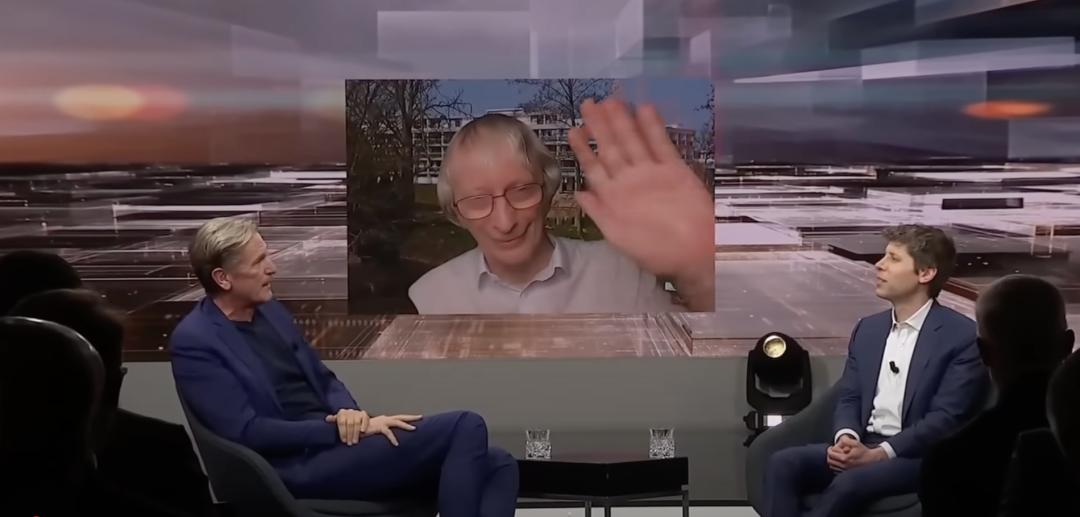
奥特曼和量子计算奠基人讨论GPT-8
量子位· 2025-09-28 03:39
Core Viewpoint - The dialogue between Sam Altman and David Deutsch highlights the ongoing debate about whether AI can evolve into a conscious superintelligence, with differing opinions on the definitions and standards of AGI (Artificial General Intelligence) and ASI (Artificial Superintelligence) [3][8]. Group 1: Discussion on AI and Consciousness - Altman believes that future iterations of AI, such as GPT-8, could potentially understand complex concepts like quantum gravity and explain their reasoning process, challenging Deutsch's skepticism about AI achieving consciousness [22]. - Deutsch argues that while AI can perform impressive tasks, it lacks the intrinsic qualities of human intelligence, such as intuition and the ability to create original ideas, which are essential for true AGI [11][12][18]. Group 2: Perspectives on Human Intelligence - The conversation emphasizes that human intelligence is characterized by the ability to narrate one's own story and actively choose motivations, contrasting with the mechanical processing of information seen in current AI systems [19][21]. - The notion that there is no definitive test for AGI is discussed, suggesting that existing methods cannot adequately measure the capabilities of a truly general intelligence [15][16]. Group 3: Contributions of David Deutsch - David Deutsch is recognized as a foundational figure in quantum computing and information theory, having proposed significant theoretical frameworks that underpin the field [23][24]. - His work includes the development of the Deutsch-Jozsa algorithm, which demonstrated the exponential speedup of quantum algorithms compared to classical ones, laying the groundwork for future advancements in quantum computing [26].
人工智能至今仍不是现代科学,人们却热衷用四种做法来粉饰它
Guan Cha Zhe Wang· 2025-05-21 00:09
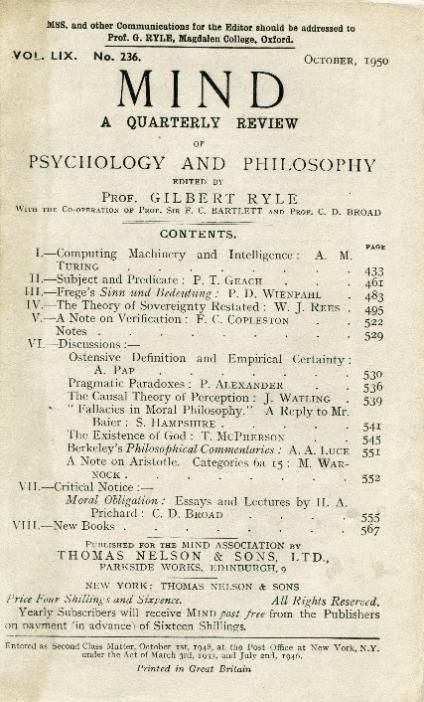
Group 1 - The term "artificial intelligence" was formally introduced at a conference in 1956 at Dartmouth College, marking the beginning of efforts to replicate human intelligence through modern science and technology [1] - Alan Turing is recognized as the father of artificial intelligence due to his introduction of the "Turing Test" in 1950, which provides a method to determine if a machine can exhibit intelligent behavior equivalent to a human [1][3] - The Turing Test involves a human evaluator interacting with an isolated "intelligent agent" through a keyboard and display, where if the evaluator cannot distinguish between the machine and a human, the machine is considered intelligent [3][5] Group 2 - The Turing Test is characterized as a subjective evaluation method rather than an objective scientific test, as it relies on human judgment rather than consistent measurable criteria [6][9] - Despite claims of machines passing the Turing Test, such as Eugene Goostman in 2014, there is no consensus that these machines possess human-like thinking capabilities, highlighting the limitations of the Turing Test as a scientific standard [6][8] - Turing's original paper contains subjective reasoning and speculative assertions, which, while valuable for exploration, do not meet the rigorous standards of scientific argumentation [8][9] Group 3 - The field of artificial intelligence has been criticized for lacking a solid scientific foundation, often relying on conjecture and analogy rather than empirical evidence [10][19] - The emergence of terms like "scaling law" in AI research reflects a trend of using non-scientific concepts to justify claims about machine learning performance, which may not hold true under scrutiny [16][17] - Historical critiques, such as those from Hubert L. Dreyfus in 1965, emphasize the need for a deeper scientific understanding of AI rather than superficial advancements based on speculative ideas [18][19] Group 4 - The ongoing development of AI as a practical technology has achieved significant progress, yet it remains categorized as a modern craft rather than a fully-fledged scientific discipline [20][21] - Future advancements in AI should adhere to the rational norms of modern science and technology, avoiding the influence of non-scientific factors on its development [21]
大模型:从单词接龙到行业落地
Zhejiang University· 2025-04-18 07:55
Investment Rating - The report does not provide a specific investment rating for the industry. Core Insights - The report discusses the evolution of large language models (LLMs) and their applications in various fields, emphasizing their ability to learn from vast amounts of unannotated data and perform tasks traditionally requiring human intelligence [48][49][50]. - It highlights the significance of pre-training and fine-tuning in enhancing model performance, with a focus on the advantages of using large datasets for training [35][56]. - The report also addresses the challenges faced by LLMs, including issues of hallucination, bias, and outdated information, and suggests that integrating external data sources can mitigate these problems [63][80]. Summary by Sections Section on Large Language Models - Large language models utilize vast amounts of unannotated data to learn about the physical world and human language patterns [48]. - The training process involves pre-training on diverse datasets followed by fine-tuning for specific tasks [35][56]. Section on Training Techniques - The report outlines various training techniques, including supervised fine-tuning (SFT) and instruction tuning, which help models generalize to unseen tasks [56][59]. - Reinforcement learning from human feedback (RLHF) is also discussed as a method to align model outputs with human preferences [59]. Section on Applications and Use Cases - The report emphasizes the versatility of LLMs in applications ranging from natural language processing to complex problem-solving tasks [48][49]. - It mentions specific use cases, such as in the fields of healthcare for predicting conditions like epilepsy [162][211]. Section on Challenges and Solutions - The report identifies key challenges such as hallucination, bias, and the need for timely information, proposing the use of external databases to enhance model accuracy and relevance [63][80]. - It suggests that addressing these challenges is crucial for the broader adoption of LLMs in various industries [63][80].