
基钦周期

Search documents
港股2025年下半年投资策略:港股业绩靓丽,进可攻,退可守
Guoxin Securities· 2025-06-20 03:32
Group 1 - The report highlights that Hong Kong stocks have shown strong performance, driven by impressive earnings and reasonable valuations, with a significant lead over global indices in the first half of the year [2][4]. - Key drivers for Hong Kong stocks include strong earnings from sectors such as technology, internet, pharmaceuticals, and new consumption, as well as increased share buybacks and a favorable IPO environment [2][4]. - The report suggests that the risks for Hong Kong stocks are primarily external, and despite these risks, it is expected that Hong Kong stocks will continue to generate excess returns [2][4]. Group 2 - The report identifies several sectors for investment: internet leaders, commodities, telecommunications and utilities, pharmaceuticals, and companies with upgraded earnings forecasts [2][4]. - Internet leaders are expected to perform well due to their stable competitive landscape and large user bases, while commodities are in an upward price cycle, providing a hedge against potential stagflation [2][4]. - The report emphasizes the importance of maintaining a balanced portfolio, particularly in the pharmaceutical and new consumption sectors, which may face valuation pressures due to rising U.S. Treasury yields [2][4].
什么是关税不确定性下的最佳决策?
2025-06-04 01:50
Summary of Conference Call Records Industry Overview - The records primarily discuss the tire industry and its relation to the automotive supply chain, particularly focusing on the impact of recent tariff policies in the United States and their effects on both domestic and international markets [1][2][10]. Key Points and Arguments 1. **Tariff Impact on Tire Industry**: - The operating rate of semi-steel tires was initially high in Q1 2025 but dropped to last year's levels after the implementation of equal tariffs in April and further declined with the introduction of tariffs on auto parts in May [1][2]. - This indicates a sustained negative impact from tariffs on the tire industry [2]. 2. **Consumer Behavior and Inventory Management**: - U.S. consumers showed a cautious approach to spending, with durable goods orders spiking in March but declining to the lowest growth rate of the year by April, reflecting increased uncertainty [1][3][4]. - Companies are advised to focus on inventory management and adjust production and sales strategies in response to changing demand [1]. 3. **U.S. Import Trends**: - In Q1 2025, U.S. imports accounted for nearly 13% of consumer spending, with industrial goods imports increasing by 53% year-over-year, while energy imports remained stable [5][6]. - There was a notable decline in imports of automobiles and parts, attributed to domestic price wars in the automotive sector [6]. 4. **Domestic Economic Conditions**: - The domestic economy entered a low season in May, with declines in asphalt and cement mill operating rates, and a drop in rebar demand [8]. - However, the issuance of government bonds and special bonds may support infrastructure development [8]. 5. **Economic Performance in Q2 2025**: - The overall economic performance has shown seasonal weakness, with a decline in operating rates and low PTA prices [9]. - New home sales have rebounded to last year's levels, but the second-hand housing market remains weak [9]. 6. **Manufacturing PMI Data**: - May's manufacturing PMI was reported at 49.5, indicating a slight increase but still below the growth threshold, reflecting the impact of tariffs and other uncertainties [12][18]. - The service sector showed resilience, with a business activity expectation index reaching 56.5, indicating strong performance in productive services [19]. 7. **Future Economic Predictions**: - The upcoming months are expected to be challenging due to seasonal factors and the uncertainty surrounding U.S. tariff policies, which may continue to impact manufacturing negatively [20]. - There is a need for potential policy measures to support domestic demand and stabilize production growth [20]. Other Important Insights - The records highlight the complex interplay between tariff policies, consumer behavior, and inventory management, emphasizing the need for companies to remain agile in their strategies [2][4][10]. - The discussion also touches on the broader economic cycles, indicating that the current tariff uncertainties are beginning to yield to cyclical economic pressures [10][21].
华泰证券今日早参-20250603
HTSC· 2025-06-03 11:56
Key Insights - The report highlights a recovery in the real estate sector, with a month-on-month sales increase of 17.0% for the top 100 real estate companies in May 2025, although year-on-year sales decreased by 7.9% [7][21] - The Robo X industry, including Robotaxi and Robovan, is experiencing accelerated commercialization, driven by policy and industry resonance, with significant growth in fleet size and order volume [5] - The insurance sector is expected to benefit from a potential reduction in preset interest rates, improving the cost structure of life insurance products and enhancing sales momentum [20] Group 1: Real Estate - In May 2025, the sales amount of the top 100 real estate companies increased by 17.0% month-on-month, indicating a narrowing decline compared to April [7] - The cumulative sales from January to May 2025 showed a year-on-year decrease of 9.9%, but the decline rate has narrowed [7][21] - The report suggests that the gradual implementation of financial policies will help stabilize the real estate market [7] Group 2: Robo X Industry - The commercialization of Robo X, represented by Robotaxi and Robovan, is accelerating, with major companies expanding their fleets and increasing order volumes [5] - The logistics potential of Robovan is highlighted, with a positive cycle of technology cost reduction and scenario validation [5] - The report emphasizes the investment opportunities across the entire Robo X industry chain, recommending focus on core operating platforms and high-growth hardware suppliers [5] Group 3: Insurance Sector - The expected adjustment in preset interest rates for life insurance products is anticipated to improve the cost-benefit situation, potentially enhancing sales dynamics [20] - The insurance sector's stock valuations are currently at historical lows, with the potential for recovery as liquidity and fundamentals improve [20] - The report recommends focusing on companies with strong asset-liability matching, such as China Pacific Insurance and Ping An Insurance [20]
美股反弹可能是在做双顶
HTSC· 2025-05-19 12:00
Group 1: US Stock Market Analysis - The report suggests that the current rebound in the US stock market may be forming a large double top, indicating a potential end to the rally [1][19][25] - From a cyclical perspective, the S&P 500 and Nasdaq 100 are in a downward phase similar to the period around 2008, suggesting comparable risks [1][19][21] - The valuation perspective shows that as of May 16, 2025, the difference between the US 10-year Treasury yield and the inverse of the S&P 500 P/E ratio has risen to 0.68%, indicating lower investment attractiveness in US equities compared to bonds [1][35][37] Group 2: A-Share Market Performance - The A-share market showed a preference for value styles, with strong performances in financial and consumer sectors [2][10][11] - The report highlights that various ETFs, particularly large-cap and value ETFs, outperformed during the week, while TMT-related sectors have not fully recovered from previous lows [2][10][11] - The analysis of industry indices since early April indicates that sectors like retail, banking, and agriculture have recovered well, while technology sectors still have room for recovery [2][10][11] Group 3: Genetic Programming Industry Rotation Model - The genetic programming industry rotation model has achieved an absolute return of 14.64% this year, outperforming the industry equal-weight benchmark by 13.79 percentage points [3][39][40] - The model currently favors sectors such as computers, electronics, machinery, media, and home appliances, while excluding telecommunications [3][39][40] - The model's strategy balances TMT-related growth sectors with traditional industries and consumer-related sectors to maintain a diversified portfolio [3][39][40] Group 4: Absolute Return ETF Simulation - The absolute return ETF simulation portfolio has seen a slight decline of 0.05% last week but has accumulated a total return of 3.70% year-to-date [4][43][44] - The portfolio's asset allocation is based on recent trends, with a balanced focus on resource sectors like steel and non-bank financials, alongside technology sectors [4][43][44] - The current holdings include energy and soybean ETFs, while gold ETFs have been excluded [4][43][44] Group 5: Global Asset Allocation - The global asset allocation simulation currently favors bonds and foreign exchange, with a predicted ranking of future returns showing bonds at the top [47][48] - The simulation has recorded an annualized return of 7.29% with a Sharpe ratio of 1.50, although it has faced a decline of 3.64% year-to-date [47][48] - The strategy emphasizes a higher risk budget for assets such as Chinese and US bonds [47][48]
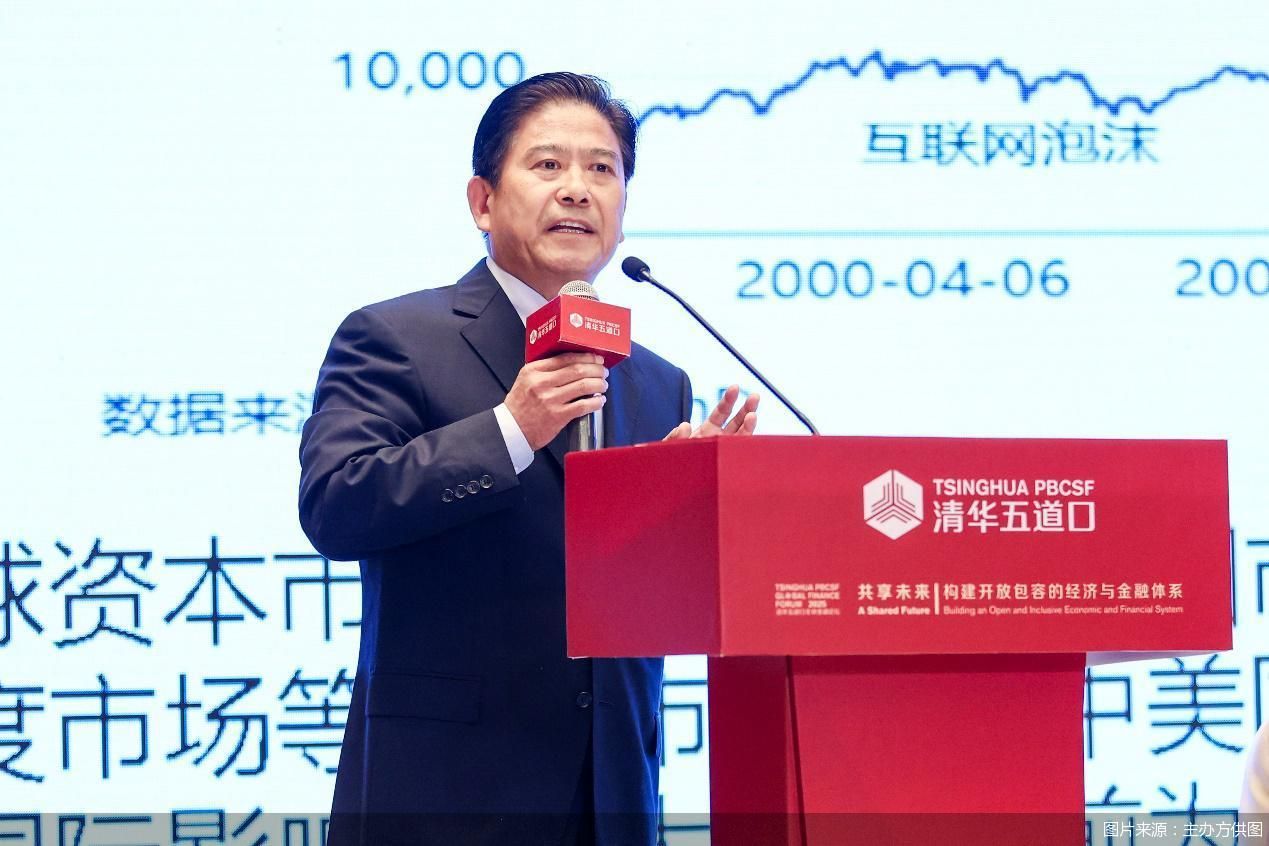
2025五道口金融论坛|中国贸促会原副会长张慎峰:对中国进一步扩大开放、拥抱全球化充满信心
Bei Jing Shang Bao· 2025-05-18 15:10
Group 1 - Recent policies aim to improve listing standards, enhance inclusivity and competitiveness, promote mergers and acquisitions, and attract long-term capital to support the development of quality companies while facilitating the exit of underperforming firms [1][6] - China has achieved significant success as an emerging market economy, with a strong momentum towards further opening up and embracing globalization [1][6] Group 2 - The Hong Kong Hang Seng Index has shown a strong performance recently, leading the mainland market, with an increasing correlation between the index and A-share market trends [3][4] - The A-share market has seen rapid development over the past 30 years, with approximately 5,400 companies listed [4] Group 3 - The current market is in a Kitchin contraction phase, which typically lasts around 11 to 12 months, with the U.S. market experiencing volatility and potential further declines [4][5] - Despite the trend of de-globalization, there is confidence that China's capital market will continue to thrive, supported by various measures aimed at stabilizing the market [5][6] Group 4 - The increasing number of companies listing in Hong Kong and the U.S. reflects China's ongoing integration into the global market, with a focus on enhancing market systems and regulatory frameworks [6]

华泰证券:美股或面临三周期共振下行
news flash· 2025-04-16 23:44
Core Viewpoint - Huatai Securities believes that the S&P 500 index is currently in a downward phase across three economic cycles: the Kitchin cycle (42 months), the Juglar cycle (100 months), and the Kuznets cycle (200 months) [1] Group 1: Economic Cycles - The Kitchin cycle is in a downward state, indicating short-term economic fluctuations [1] - The Juglar cycle is also in a downward phase, suggesting medium-term economic trends are weakening [1] - The Kuznets cycle is at the bottom, reflecting long-term economic patterns that are currently unfavorable [1] Group 2: Market Conditions - Since 2022, global asset correlation characteristics have changed, indicating a shift in market dynamics [1] - The long-term inflation issue is becoming more pronounced, affecting overall economic stability [1] - The gradual emergence of constraints on U.S. debt is confirming the entry into a downward phase of the Kondratiev wave, suggesting prolonged economic challenges [1] Group 3: Investment Implications - The simultaneous downward trends in the Kitchin, Juglar, and Kondratiev cycles indicate a resonant negative outlook for U.S. equities [1]

黄金:资产配置中的长期压舱石
HTSC· 2025-02-25 10:54
Quantitative Models and Construction Methods - **Model Name**: Huatai Three-Cycle Model **Model Construction Idea**: The model analyzes the price movement of COMEX gold settlement prices using three classic economic cycles: Kitchin, Juglar, and Kuznets cycles. It identifies the dominant cycle components influencing gold price trends[17] **Model Construction Process**: 1. The model decomposes the year-on-year sequence of COMEX gold settlement prices into three cycle components: Kitchin, Juglar, and Kuznets cycles 2. The amplitude of the extracted cycle components is ranked as Kuznets > Juglar > Kitchin 3. The current positions of the Kuznets and Juglar cycles are analyzed to predict future gold price trends[17][19] **Model Evaluation**: The model highlights that gold prices are more influenced by longer-term cycles (Kuznets and Juglar) compared to shorter-term cycles (Kitchin), providing insights into the strong cyclical positioning of gold in the current market[17] Model Backtesting Results - **Huatai Three-Cycle Model**: The model indicates that the Kuznets cycle is near its peak, and the Juglar cycle is in an upward phase, suggesting that gold prices are likely to remain strong in the near term[17][19] Quantitative Factors and Construction Methods - **Factor Name**: Gold as a Portfolio Stabilizer **Factor Construction Idea**: Gold is evaluated as a low-correlation asset with high long-term returns, making it a potential stabilizer in diversified investment portfolios[3][21] **Factor Construction Process**: 1. Historical performance of gold is compared with other major asset classes (e.g., equities, bonds, commodities) over different time horizons (1 year, 5 years, 10 years, 20 years) 2. Risk-return metrics such as Sharpe ratio, Calmar ratio, and maximum drawdown are calculated for gold and other assets 3. Correlation analysis is conducted to assess gold's relationship with other asset classes[21][23][24] **Factor Evaluation**: Gold demonstrates high returns, low volatility, and low correlation with other assets, making it a valuable addition to investment portfolios for risk diversification and return enhancement[21][23] - **Factor Name**: Gold in Asset Allocation Portfolios **Factor Construction Idea**: The impact of adding gold to a traditional stock-bond portfolio is analyzed to evaluate its contribution to portfolio performance[3][24] **Factor Construction Process**: 1. A baseline portfolio is constructed with 60% bonds (ChinaBond New Comprehensive Wealth Index) and 40% stocks (CSI A500 Index) 2. Two new portfolios are created by reallocating 10% of the baseline portfolio to gold (AU9999 spot gold): - Portfolio A: 50% bonds, 40% stocks, 10% gold - Portfolio B: 60% bonds, 30% stocks, 10% gold 3. Monthly rebalancing is applied, and backtesting is conducted over the period from January 3, 2005, to February 19, 2025 4. Risk-return metrics (e.g., annualized return, Sharpe ratio, maximum drawdown) are calculated for all portfolios[24][26] **Factor Evaluation**: Adding gold improves portfolio Sharpe ratios and reduces volatility, demonstrating its role as a stabilizing asset in diversified portfolios[26] Factor Backtesting Results - **Gold as a Portfolio Stabilizer**: - Sharpe Ratio: 0.59 (AU9999 spot gold), 0.57 (London spot gold), 0.56 (COMEX gold futures) - Maximum Drawdown: -44.88% (AU9999 spot gold), -44.62% (London spot gold), -44.52% (COMEX gold futures) - Annualized Return: 9.07% (AU9999 spot gold), 9.76% (London spot gold), 9.74% (COMEX gold futures)[23] - **Gold in Asset Allocation Portfolios**: - Portfolio A: Annualized Return 7.17%, Sharpe Ratio 0.72, Maximum Drawdown -35.47% - Portfolio B: Annualized Return 6.69%, Sharpe Ratio 0.88, Maximum Drawdown -26.86% - Baseline Portfolio: Annualized Return 6.63%, Sharpe Ratio 0.68, Maximum Drawdown -33.36%[26]