
多边体系

Search documents
国际观察|相向而行 继往开来——中欧人士解读中欧关系经验启示
Xin Hua She· 2025-07-22 14:22
Core Insights - The upcoming 25th China-EU leaders' meeting on July 24 marks the 50th anniversary of China-EU diplomatic relations, emphasizing the need for mutual understanding and cooperation to navigate future challenges [1][2][4] Economic Cooperation - China-EU trade has grown significantly from $2.4 billion at the time of diplomatic establishment to over $780 billion today, with bilateral investment stock reaching approximately $260 billion [2] - The China-Europe Railway Express has operated over 110,000 trains, connecting 229 cities across 26 European countries, highlighting the importance of trade logistics [2] Green Development - Both China and the EU are committed to low-carbon transformation and green development, with extensive cooperation in clean energy projects and environmental initiatives [3] - The collaboration spans various sectors, including renewable energy and smart manufacturing, indicating a strong potential for future partnerships in green technology [3] Cultural Exchange - Humanistic exchanges between China and Europe have flourished, with increasing cooperation in education and technology, fostering deeper mutual understanding [3] - The popularity of Chinese culture, such as giant pandas and Chinese animation films, has strengthened people-to-people ties [3] Strategic Importance - The stability of China-EU relations is deemed strategically significant in the context of global uncertainties, with both parties being major economic powers contributing to global economic stability [5][6] - The emphasis on mutual respect and seeking common ground while reserving differences is highlighted as a key lesson from the past 50 years [4][5]
清华五道口全球金融论坛在深举行 专家学者热议全球货币体系等焦点话题 中国已成全球科技重要制造者和出口者
Zheng Quan Shi Bao· 2025-05-18 17:26
Group 1: Global Trade and Investment - The ongoing US tariff policies are reshaping the global trade landscape, with experts suggesting that China should play a more significant role in international trade [1] - Former Polish Prime Minister Marek Belka highlighted that the biggest challenges facing the world are imbalance and instability, particularly due to the US's chronic trade deficit stemming from domestic economic imbalances [1] - Michael Spence emphasized that trade wars are mutually damaging and called for the establishment of a multilateral system supported by Europe, China, and other major emerging economies [1] Group 2: China's Market Attractiveness - Despite increasing pressures from US-China trade frictions, the attractiveness of the Chinese market remains strong, with low valuations for Chinese companies and a robust economic foundation [2] - The presence of a large, high-quality population and the world's largest pool of engineers provides China with unique advantages for foreign investment [2] - Continuous opening of economic and financial systems in China is expected to enhance its appeal to foreign investors, a trend that will not change due to US-China tariff disputes [2] Group 3: Global Monetary System - Experts at the forum noted a gradual decline in the dominance of the US dollar in the global monetary system, indicating a trend towards diversification [2] - Hu Xiaolian, former chairman of the Export-Import Bank of China, stated that the future international monetary system will be more diverse and inclusive, with more currencies joining the international monetary ranks [2] Group 4: Renminbi Internationalization - The internationalization of the Renminbi is gaining attention, with the need for a strong international financial center to support it, emphasizing the importance of opening domestic financial markets [3] - The release of the "China Financial Policy Report 2025" analyzed the challenges and opportunities facing China's financial development, including external complexities and the restructuring of international trade orders [3] - The report also addressed issues in financial security and regulation, highlighting the impact of regulatory reforms in various countries, particularly the US, on global financial stability [3]
迈克尔·斯宾塞:实行剔除美国之外的全球化体系是可能的
Cai Jing Wang· 2025-05-18 08:06
Group 1 - Michael Spence highlighted that the U.S. withdrawal from the WHO and climate agreements indicates a retreat from sustainable development agendas, leading to three potential scenarios for the future [1] - The most likely scenario is a mixed one, where a multilateral system is supported by Europe, China, and other major emerging markets, as the economic weight of emerging markets is gradually increasing [1] - Spence noted that the trade negotiations are showing positive changes, with the negative effects on consumer confidence in the U.S. economy being a significant concern [3] Group 2 - The uncertainty in the Federal Reserve's monetary policy is emphasized, with current inflationary pressures easing but ongoing tariff policies raising questions about necessary countermeasures [3] - Spence mentioned that the recent developments in AI technology, particularly the rise of open-source AI models, are having a positive impact on the global economy [3] - The report from Stanford indicates that the gap between the U.S. and China in AI technology is rapidly narrowing, with both countries focusing on smaller models that are more cost-effective [3]

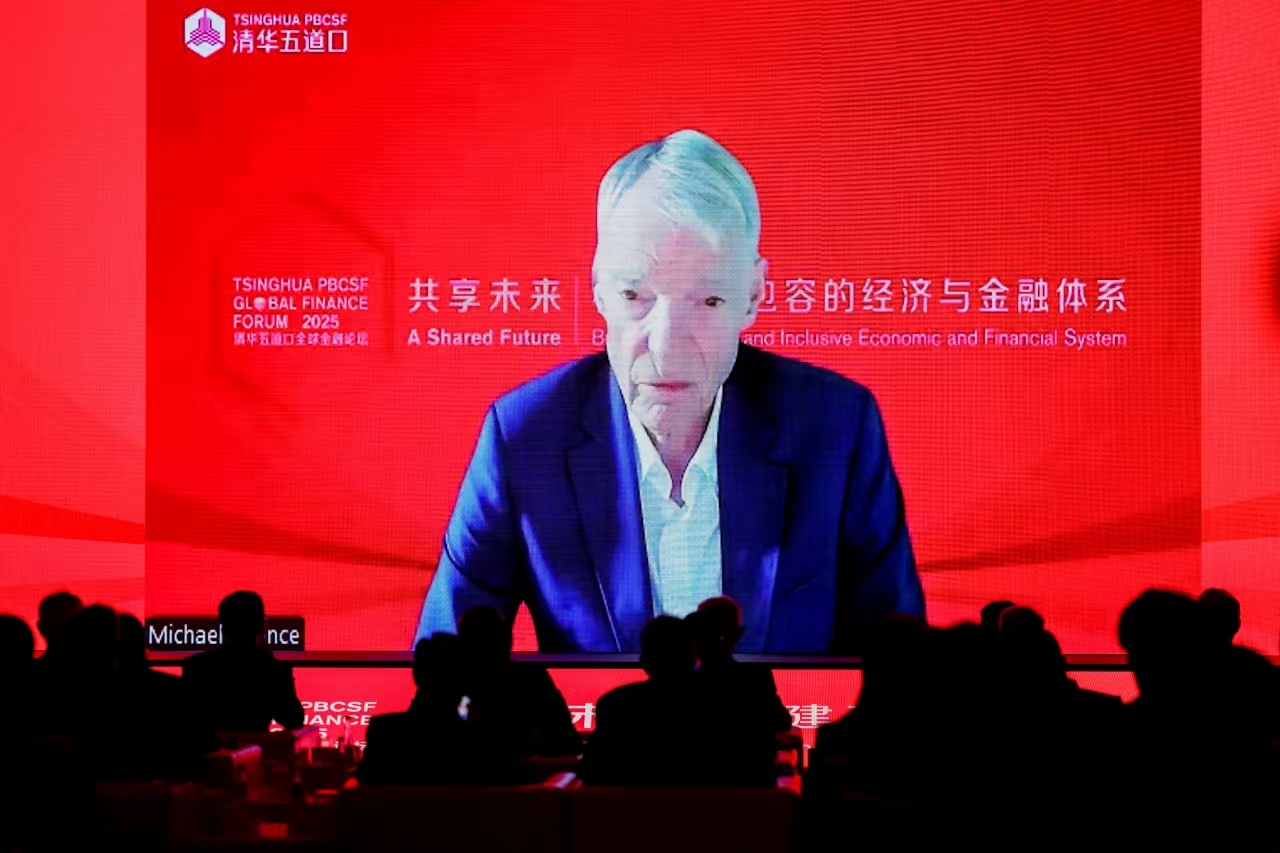
全球金融论坛| 诺贝尔经济学奖得主斯宾塞谈“关税战”:未来全球贸易或形成多边体系
Zhong Guo Jing Ying Bao· 2025-05-18 05:56
Core Viewpoint - The forum highlighted the positive changes in US-China trade negotiations, emphasizing the importance of bilateral talks and the potential for a more stable global economic environment [1][2]. Group 1: US-China Trade Relations - Michael Spence noted that the US accounts for 25% of global GDP, with 13% of its imports coming from China and 15% of China's exports going to the US, indicating significant interdependence [1]. - The ongoing trade war has negatively impacted consumer confidence in the US, which could lead to disastrous effects on the global economy if not addressed [1]. Group 2: Federal Reserve's Role - The Federal Reserve's primary tasks include managing employment and inflation, with current inflation pressures being influenced by supply and demand dynamics rather than just tariff impacts [2]. - Spence pointed out that while capital expenditures and tourism are declining, demand remains relatively stable, which could still contribute to inflationary pressures [2]. Group 3: Future of Global Trade System - Three potential scenarios for the future of the global trade system were discussed: a fragmented approach where countries act independently, a scenario where major powers exert their influence, and the most likely scenario where a multilateral system is supported by Europe, China, and other emerging markets [2]. - Despite the current US government's anti-multilateral stance, Spence believes that a multilateral system could persist and even thrive without the US, with the possibility of the US rejoining in the future [2].
迈克尔·斯宾塞发表演讲丨2025清华五道口全球金融论坛开幕
清华金融评论· 2025-05-17 10:30
Core Viewpoint - The article emphasizes the need for a multilateral trade system supported by major economies like Europe and China, as trade wars are mutually harmful and must be corrected [1][9]. Trade War and Global Economy - Trade wars are detrimental, and the current U.S. administration's approach is primarily bilateral, particularly with China, which accounts for 13% of U.S. imports and 15% of China's exports [5][6]. - The temporary suspension of certain tariffs has positively impacted global markets, indicating a potential shift towards more cooperative trade negotiations [4][5]. - The U.S. economy, which constitutes 25% of the global economy, is experiencing negative effects from trade tensions, leading to decreased consumer confidence [5][6]. Monetary Policy and Economic Stability - The Federal Reserve's monetary policy is a source of uncertainty, with its primary focus on managing employment and inflation [5][6]. - There is a possibility of easing cost pressures through negotiations, which could help stabilize the economy and mitigate inflation concerns [6][7]. - The Fed's response to economic changes will be crucial in maintaining economic health without triggering excessive inflation [6][7]. Future of Global Trade Systems - The article outlines three potential scenarios for the future of global trade: 1. Countries acting independently, which is unlikely due to historical failures [7]. 2. Major powers exerting influence, which may not be sustainable as emerging markets prefer balanced relations with both the U.S. and China [7]. 3. A multilateral system supported by Europe, China, and other emerging markets, which is deemed the most likely outcome [7][8]. AI Development and Global Impact - The rapid advancement of AI technology is highlighted, with significant developments in both the U.S. and China, narrowing the gap between the two nations [11][12]. - The emergence of open-source AI models and smaller models is making AI more accessible and cost-effective, positively impacting global economies [11][12]. - The integration of AI in various sectors, including healthcare and environmental predictions, is expected to drive innovation and productivity [13][14]. Education and AI Integration - The article discusses the importance of incorporating AI into education, emphasizing its potential as a research tool rather than a means for academic dishonesty [15][16]. - The need for educational institutions to adapt to the evolving landscape of AI and maintain global collaborations is stressed, particularly in light of changing international relations [17][18].
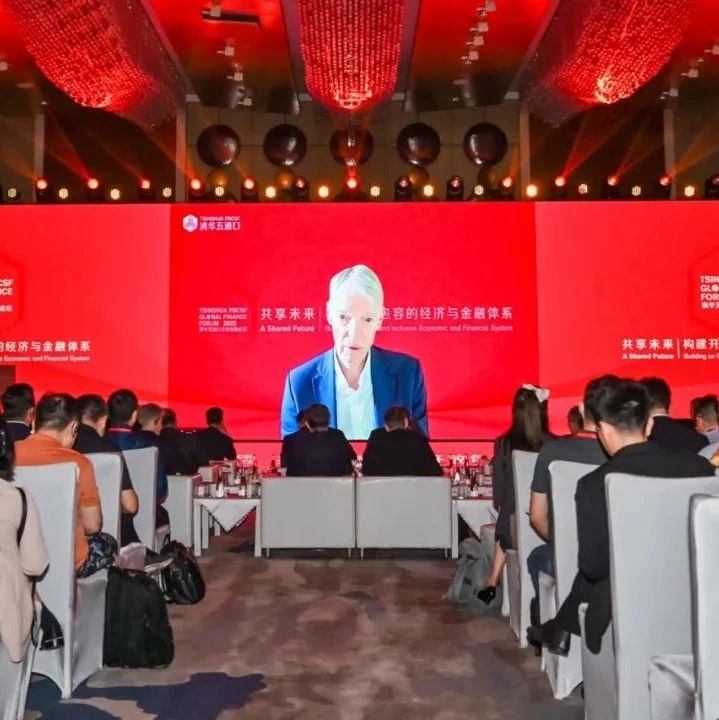
探寻新路径,注入新智慧! 清华五道口全球金融论坛开幕
Nan Fang Du Shi Bao· 2025-05-17 05:52
Group 1 - The 2025 Tsinghua Wudaokou Global Financial Forum opened in Shenzhen with the theme "Sharing the Future: Building an Open and Inclusive Economic and Financial System" [1][2] - The forum features 15 significant meetings and nearly 100 high-profile political and economic leaders and experts discussing global monetary systems, international trade and investment, and challenges of global economic fragmentation [2][5] - The forum aims to explore new paths for global economic and financial development and enhance the resilience of economic and financial systems in the face of uncertainty [2][5] Group 2 - Tsinghua Wudaokou Financial School Dean Jiao Jie emphasized that China has been a major contributor to global economic growth and is transitioning from a rule follower to a reformer in global governance [5][6] - Jiao Jie highlighted the importance of high-quality development in response to external uncertainties and mentioned five key areas of focus for China's financial development: technology finance, green finance, inclusive finance, pension finance, and digital finance [5][6] - Former Polish Prime Minister Marek Belka noted that European companies are eager to access the Chinese market more effectively [5][6] - Nobel Laureate Michael Spence suggested that a multilateral system supported by Europe, China, and other emerging economies is increasingly necessary as the economic weight of emerging markets grows [6]
总台记者专访丨巴巴多斯总理:各国应加强沟通 拥护多边体系
Yang Shi Xin Wen Ke Hu Duan· 2025-05-13 13:45
Group 1 - The core viewpoint emphasizes the importance of communication among countries during challenging global circumstances, with the upcoming China-Latin America and Caribbean Forum serving as a crucial platform for dialogue [1] - Barbados Prime Minister Mia Mottley reiterated her opposition to "decoupling" and emphasized the need to support a multilateral trading system centered around the World Trade Organization, especially in the context of a complex global economy [3] - Mottley highlighted that small and developing countries thrive due to a strong international order based on rules, which was established through their membership in the World Trade Organization, advocating for the strengthening of this multilateral framework to ensure fairness and transparency [5] Group 2 - The relationship between China and Barbados has been developing positively, with frequent high-level exchanges and enhanced cooperation across various fields, including the signing of a memorandum for the Belt and Road Initiative in 2019 [5] - Mottley mentioned numerous practical cooperation projects between China and Caribbean countries, particularly in education and sports, which foster trust and collaboration [5][7] - Specific examples of cooperation include ongoing projects in education, food security, and agricultural education, emphasizing that collaboration leads to synergistic benefits and closer partnerships [7]

南非国际问题研究所首席执行官:中国是多边体系重要支柱
Zhong Guo Xin Wen Wang· 2025-05-01 02:02
Group 1 - The relationship between South Africa and China is strong, with both countries sharing many common views on global governance, and China is seen as a crucial pillar in maintaining the multilateral system [1][2] - South Africa and China are deepening their cooperation within the BRICS framework and maintaining coordination on multilateral platforms [1] - South Africa emphasizes the need for reforming existing global governance systems rather than abolishing them, with a strong commitment to the United Nations as a key platform [1] Group 2 - South Africa is focusing on global issues such as climate change, equitable development, and financing accessibility, which are essential for achieving global stability [2] - The rise of global trade protectionism presents new opportunities for South Africa-China economic cooperation, with South Africa aiming to diversify its trade and increase exports to China [2] - South Africa seeks to enhance the value-added of its export products and reduce reliance on primary product exports, aligning with its industrialization strategy and aiming to rebuild manufacturing capacity [2]