
广义货币M2

Search documents
数据背后,一个比肩楼市的红利出现了?
大胡子说房· 2025-08-30 05:59
Core Viewpoint - The article highlights the paradox of increasing money supply (M2) without corresponding inflation or asset price increases, raising questions about the flow of this new money and its implications for the economy [1][3]. Group 1: Money Supply and Inflation - M2 balance reached 330.29 trillion yuan in the first half of the year, growing by 8.3% year-on-year, indicating an increase in the money supply [1]. - CPI rose slightly to 0.1%, while PPI fell to -3.6%, suggesting persistent low inflation despite the increase in money supply [1][3]. Group 2: Allocation of New Money - Approximately 30% of the new money flowed to the government through bond financing, used for debt repayment and infrastructure investments [4]. - About 60% of the new money went to enterprises, primarily for production expansion, leading to potential overproduction and price deflation [5]. Group 3: Export and Currency Dynamics - Trade surplus reached $586.7 billion in the first half of 2025, but foreign currency deposits hit a record high of $824.87 billion, indicating that much of the earnings from exports are not being converted back to RMB [7][8]. - Many export companies are retaining their foreign currency earnings overseas, investing in high-yield assets rather than bringing the funds back to China [10][12]. Group 4: Capital Market Strategy - The article suggests that attracting foreign and repatriated funds to the Hong Kong capital market is crucial for stabilizing the economy and enhancing wealth effects [11][13]. - The push for Hong Kong's capital market is seen as a strategy to create a favorable environment for investment, especially in light of anticipated interest rate cuts by the Federal Reserve and expectations of RMB appreciation [13].


数据背后,一个比肩楼市的红利出现了?
大胡子说房· 2025-08-23 04:51
Core Viewpoint - The article highlights the paradox of increasing money supply (M2) without corresponding inflation or asset price increases, raising questions about the flow of this new money and its implications for the economy [1][3]. Group 1: Money Supply and Inflation - M2 balance reached 330.29 trillion yuan in the first half of the year, growing by 8.3% year-on-year, indicating an increase in the money supply [1]. - CPI rose slightly to 0.1%, while PPI fell to -3.6%, suggesting persistent deflationary pressures despite the increase in money supply [1][3]. Group 2: Allocation of New Money - Approximately 30% of the new money has flowed to the government through bond financing, used for debt servicing and infrastructure investments [4]. - About 60% of the new money has gone to enterprises, primarily for production expansion, leading to potential overproduction and price deflation [5]. Group 3: Export and Currency Dynamics - Trade surplus reached 586.7 billion USD in the first half of 2025, while foreign currency deposits hit a record high of 824.87 billion USD, indicating a significant increase in foreign currency holdings by export enterprises [7][8]. - Many export companies are retaining their foreign currency earnings overseas instead of converting them to RMB, which limits domestic liquidity and complicates the inflation situation [10][12]. Group 4: Capital Market Strategies - The article suggests that enhancing the capital market, particularly in Hong Kong, is crucial for attracting foreign and repatriated funds, with measures like allowing mainland investors to buy Hong Kong stocks directly [11]. - The anticipated easing of monetary policy by the Federal Reserve and expectations of RMB appreciation may further incentivize capital to flow into Hong Kong's markets [13].

最新的金融数据说明了什么?
21世纪经济报道· 2025-08-15 00:37
Core Viewpoint - The article highlights the positive trends in China's financial data as of July, indicating a stable growth in social financing and improvements in credit structure, driven by effective financial policies and increased support for the real economy [1][3]. Group 1: Financial Data Overview - As of July, the year-on-year growth rates for social financing scale, broad money M2, and RMB loans were 9%, 8.8%, and 6.9% respectively, reflecting a stable growth in social financing and an optimized credit structure [1]. - The narrowing of the M1-M2 gap to 3.2 percentage points, down 11 percentage points from last September's peak, indicates enhanced liquidity and economic vitality, with M1 growing by 5.6% year-on-year [1][2]. Group 2: Factors Influencing M1 Growth - The recent increase in M1 is attributed to a lower base effect from previous negative growth and a trend of fund activation, driven by accelerated fiscal spending and improved efficiency in fund allocation [2]. - The active performance of the capital market and rising equity asset prices have encouraged entities to convert some fixed deposits into demand deposits for more flexible market participation [2]. Group 3: Social Financing and Credit Growth - The growth rate of social financing has outpaced that of RMB loans by 2.1 percentage points, primarily due to ongoing fiscal policy efforts, with government bond net financing significantly contributing to social financing [3]. - The RMB loan balance grew by 6.9% year-on-year as of July, with seasonal factors and regulatory measures impacting credit demand, particularly in the traditional off-peak season for credit issuance [3]. Group 4: Structural Changes in Financing - The diversification of corporate financing channels has made traditional loan metrics less reflective of financial support effectiveness, necessitating a broader analysis using indicators like social financing and M2 [4]. - The ongoing optimization of structural monetary policy tools has effectively enhanced financial support for key sectors, with significant growth in loans for technology, green initiatives, and small and micro enterprises [4][5]. Group 5: Policy Measures to Boost Consumption - Recent policies aimed at subsidizing personal consumption and service industry loans are designed to lower financing costs and direct credit towards key areas, thereby stimulating consumption and service sector recovery [5]. - The implementation of interest subsidy policies is expected to improve consumer repayment capacity and enhance the profitability of service industry entities, promoting credit demand and job creation [5].
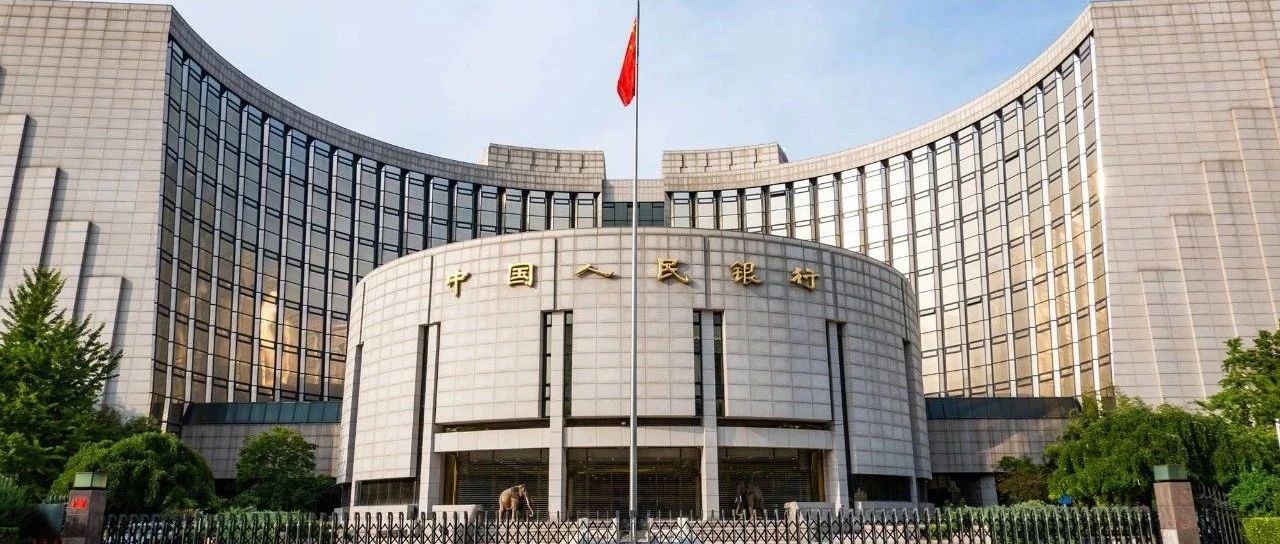
最新的金融数据说明了什么?
2 1 Shi Ji Jing Ji Bao Dao· 2025-08-14 22:34
Group 1 - The core viewpoint of the articles highlights the positive trends in China's financial data, indicating a stable growth in social financing and improvements in credit structure, driven by effective financial policies [1][3] - As of the end of July, the year-on-year growth rates for social financing scale, broad money M2, and RMB loans were 9%, 8.8%, and 6.9% respectively, reflecting enhanced financial support for the real economy [1] - The narrowing of the M1-M2 spread to 3.2 percentage points, down 11 percentage points from the previous year's high, indicates increased liquidity and economic vitality, with more "dormant deposits" being converted into demand deposits [1][2] Group 2 - The growth of M1, which includes cash and demand deposits, has been positively influenced by the acceleration of fiscal spending and the issuance of special bonds, leading to a significant increase in corporate demand deposits [2][3] - The divergence between social financing and loan growth, with social financing growth outpacing loan growth by 2.1 percentage points, is attributed to sustained fiscal policy efforts, including a notable increase in government bond net financing [3] - The issuance of new special bonds reached 2.16 trillion yuan in the first half of the year, a 45% year-on-year increase, with expectations for continued rapid issuance in August and September [3] Group 3 - The diversification of corporate financing channels has made traditional loan metrics less reflective of financial support effectiveness, necessitating a broader analysis using indicators like social financing and M2 [4] - Structural monetary policy tools have been optimized to enhance financial support for key sectors, with significant loan growth observed in technology, green, inclusive, and digital economy sectors [4] - By the end of July, inclusive small and micro loans reached 35.05 trillion yuan, growing 11.8% year-on-year, while medium to long-term loans in the manufacturing sector totaled 14.79 trillion yuan, up 8.5% year-on-year [4] Group 4 - Recent policies on personal consumption loans and service industry loan interest subsidies aim to strengthen fiscal and financial collaboration, directing more credit to key areas [5] - The interest subsidy policy is expected to lower repayment costs for residents, enhancing consumption capacity and willingness, while also alleviating financial pressure on service industry operators [5] - This initiative is anticipated to stimulate credit demand, expand business operations, and create more job opportunities [5]
社融规模431.26万亿元,贷款利率降至3.1%,资金循环效率显著提升
Sou Hu Cai Jing· 2025-08-14 01:58
Group 1 - The core viewpoint of the articles indicates that the financial support for the real economy remains strong, with significant growth in social financing and monetary aggregates [1][3][4] - As of the end of July, the total social financing stock reached 431.26 trillion yuan, reflecting a year-on-year growth of 9%, which is higher than the economic growth rate [1][3] - The broad money supply (M2) stood at 329.94 trillion yuan, with an annual increase of 8.8%, indicating robust liquidity in the market [1][3] Group 2 - The efficiency of fund circulation has improved significantly, with M1 growing by 5.6% year-on-year to 111.06 trillion yuan, and M0 increasing by 11.8% to 13.28 trillion yuan [3] - The net cash injection in the first seven months was 465.1 billion yuan, contributing to enhanced market confidence and economic activity [3] - The gap between M2 and M1 growth rates has narrowed, reflecting improved liquidity and circulation efficiency [3] Group 3 - The structure of loans has optimized, with the RMB loan balance growing by 6.9% year-on-year, influenced by seasonal characteristics and macroeconomic factors [4] - The balance of inclusive small and micro loans reached 35.05 trillion yuan, with an annual growth of 11.8%, indicating strong support for smaller enterprises [4] - The impact of local government debt replacement and the reform of small and medium banks has also contributed to the loan dynamics, with local debt replacement affecting loans by approximately 2.6 trillion yuan [4] Group 4 - The interest rates for newly issued corporate loans were around 3.2%, and for personal housing loans, approximately 3.1%, both showing a decline compared to the previous year [5] - This decline in loan rates reflects a relatively abundant credit supply and easier access to bank credit for borrowers [5] - The continued reduction in loan rates since 2018 has resulted in a favorable borrowing environment for both individuals and businesses [5]

7月末人民币各项贷款余额268.51万亿元 同比增长6.9%
Yang Guang Wang· 2025-08-14 01:29
Core Insights - The People's Bank of China reported that financial policies have effectively supported stable growth in credit and optimized its structure, enhancing financial support for the real economy [1] Group 1: Financial Statistics - As of the end of July, the total social financing stock was 431.26 trillion yuan, with a year-on-year growth of 9.0% [1] - The broad money supply (M2) reached 329.94 trillion yuan, growing by 8.8% year-on-year [1] - The balance of RMB loans was 264.79 trillion yuan, reflecting a year-on-year increase of 6.8% [1][2] Group 2: Loan Structure - The balance of various RMB loans stood at 268.51 trillion yuan, with a year-on-year growth of 6.9% [2] - Inclusive small and micro loans amounted to 35.05 trillion yuan, showing a year-on-year increase of 11.8% [2] - Medium to long-term loans in the manufacturing sector reached 14.79 trillion yuan, with a year-on-year growth of 8.5% [2] Group 3: Market Confidence - The narrowing gap between M1 and M2 indicates improved liquidity and efficiency in fund circulation, reflecting effective market stabilization policies [1]
数据背后,一个比肩楼市的红利出现了?
大胡子说房· 2025-08-02 04:14
Group 1 - The core viewpoint of the article is that despite an increase in the money supply (M2), there is no corresponding rise in consumer prices (CPI) or asset prices, leading to questions about the flow of this new money [1][3] - M2 increased by 8.3% year-on-year, reaching 330.29 trillion yuan, while CPI rose slightly to 0.1% and PPI fell to -3.6% [1][3] - The majority of the new money is not reaching consumers directly, as only 7% of the M2 increase is reflected in household loans, indicating a disconnect between money supply and consumer spending [4][5] Group 2 - Approximately 30% of the new money is directed towards government financing through bonds, which is used for debt servicing and infrastructure investments [4] - About 60% of the new money flows to enterprises, primarily for production expansion, but this leads to overproduction and price deflation, preventing price increases [5] - The phenomenon of "capital outflow" occurs as export companies do not convert their foreign currency earnings back to RMB, instead investing abroad, which further complicates domestic monetary conditions [9][11] Group 3 - The article emphasizes the need for these funds to return to the domestic market, suggesting that enhancing the capital market, particularly in Hong Kong, could attract these funds back [10][12] - The Hong Kong market is positioned as a key area for attracting both foreign investment and repatriated funds, especially with the anticipated easing of monetary policy by the Federal Reserve and expectations of RMB appreciation [10][12] - The article suggests that investors should consider allocating funds to quality assets in the Hong Kong market as a long-term investment strategy [12]

数据背后,一个比肩楼市的红利出现了?
大胡子说房· 2025-07-22 12:22
Group 1 - The core viewpoint of the article is that despite an increase in the money supply (M2) and a slight recovery in CPI, there is no corresponding rise in commodity and asset prices, leading to questions about where the excess money is going [1][2] - M2 increased by 8.3% year-on-year, reaching 330.29 trillion yuan, while CPI rose to 0.1% and PPI fell to -3.6%, indicating a disconnect between money supply and price levels [1][2] - The majority of the new money supply is not reaching households, as only 1.17 trillion yuan in new loans were taken by residents, representing about 7% of the M2 increase [2] Group 2 - Approximately 30% of the new money is directed to the government through bond financing, with some funds used for debt refinancing and infrastructure investments [2] - About 60% of the new money flows to enterprises, which primarily use it to expand production [2][3] - The current phase of production expansion is leading to overcapacity, causing price reductions and hindering price increases in both consumer goods and assets [3] Group 3 - The influx of new money is primarily directed towards production, resulting in supply exceeding demand, which contributes to deflationary pressures [3][4] - Exporting companies are retaining foreign currency earnings overseas instead of converting them to RMB, leading to a significant increase in foreign currency deposits in domestic banks [4] - The trade surplus reached 586.7 billion USD in the first half of the year, while foreign currency deposits increased by 146.3 billion USD, indicating that a substantial amount of foreign currency is not returning to the domestic economy [4] Group 4 - The challenge is to encourage the repatriation of these foreign funds, with past methods like mandatory currency conversion being less viable due to the large trade volume [4] - The strategy now focuses on enhancing the capital market, particularly the Hong Kong stock market, to attract these funds back [4][5] - The rise of digital assets and stablecoin regulations in Hong Kong aims to create a more attractive environment for both foreign and repatriated funds [4] Group 5 - Anticipation of interest rate cuts by the Federal Reserve and expectations of RMB appreciation may drive funds away from USD assets towards Hong Kong stocks, particularly quality enterprises [5] - For investors, there is a long-term opportunity in Hong Kong stocks, and it is advised to align asset allocation with market trends rather than against them [5]

数据背后,一个比肩楼市的红利出现了?
大胡子说房· 2025-07-16 12:25
Group 1 - The core viewpoint of the article is that despite an increase in the money supply (M2) and a slight recovery in CPI, there is no corresponding rise in commodity or asset prices, leading to questions about where the excess money is going [1][2] - M2 increased by 8.3% year-on-year, reaching 330.29 trillion yuan, while CPI rose to 0.1% and PPI fell to -3.6%, indicating a disconnect between money supply and price levels [1][2] - The majority of the new money supply is not reaching households, as only 1.17 trillion yuan in new loans were taken by residents, representing about 7% of the M2 increase [2] Group 2 - Approximately 30% of the new money is directed to the government through bond financing, with some funds used for debt refinancing and infrastructure investments [2] - About 60% of the new money flows to enterprises, which primarily use it to expand production, but this can lead to overproduction due to insufficient demand [3][4] - The phenomenon of "capital outflow" occurs when export companies do not convert their foreign currency earnings back to RMB, leading to a significant increase in foreign currency deposits in domestic banks [4] Group 3 - The increase in production without corresponding demand results in price deflation, making it difficult for commodity prices to rise [3][4] - The article suggests that a key task is to encourage the return of "outflowing" funds, with a focus on enhancing the capital market to attract these funds back [4] - The Hong Kong stock market is positioned as a primary destination for these funds, with measures being taken to facilitate capital inflow and create a wealth effect [4][5] Group 4 - The expectation of interest rate cuts by the Federal Reserve and the anticipated appreciation of the RMB may drive funds away from dollar assets towards new value assets, particularly in the Hong Kong market [5] - The article highlights the potential long-term investment opportunities in high-quality Hong Kong-listed companies, suggesting that investors should align their asset allocation with market trends [5]

4月社融数据点评:信贷投放有待回暖
Yong Xing Zheng Quan· 2025-05-19 06:07
1. Report Industry Investment Rating No relevant content provided. 2. Core Viewpoints of the Report - On May 15, 2025, the central bank announced the financial statistics for April 2025. M2 increased by 8.00% year - on - year, M1 increased by 1.50% year - on - year. The stock of social financing scale at the end of April 2025 increased by 8.7% year - on - year, and the cumulative increase in social financing scale in the first four months was 16.34 trillion yuan, 3.61 trillion yuan more than the same period last year [1][12]. - The accelerated implementation of existing fiscal policies and government financing supported the growth of April's social financing data. The year - on - year growth rate of social financing in April was 8.70%, and the initial value of new social financing was 115.85 billion yuan. Government bond net financing in April was 97.62 billion yuan, 106.99 billion yuan more than the same period last year [2][13]. - The low base and capital re - flow drove the rebound of M2 growth. At the end of April, the year - on - year growth rate of M2 rebounded by 1.0 percentage point compared with the previous value. The year - on - year growth rate of M1 was 0.1 percentage point lower than the previous value, indicating weak corporate investment willingness [3][23]. 3. Summary According to Relevant Catalogs 3.1 Government Financing Supports the Stable Growth of Social Financing - The implementation of existing fiscal policies accelerated, and government financing supported the significant rebound of April's social financing data. The year - on - year growth rate of social financing in April was 8.70%, up 0.3 percentage points from the previous value. The initial value of new social financing was 115.85 billion yuan, 135.72 billion yuan more than the same period last year. Government bond net financing in April was 97.62 billion yuan, 106.99 billion yuan more than the same period last year [13]. - Credit in the social financing caliber in April was weak. New RMB loans were 8.44 billion yuan, 24.65 billion yuan less than the same period last year. Direct financing: corporate bond net financing increased by 23.4 billion yuan in April, 6.33 billion yuan more than the same period last year; non - financial enterprise domestic stock financing was 3.92 billion yuan, 2.06 billion yuan more than the same period last year. Non - standard financing: new non - standard financing decreased by 28.73 billion yuan in April, 13.86 billion yuan less than the same period last year [13]. - New RMB loans in the financial institution caliber in April were 28 billion yuan, 45 billion yuan less than the same period last year. Corporate department: corporate loans increased by 61 billion yuan, 25 billion yuan less than the same period last year. Resident department: resident loans decreased by 52.16 billion yuan, 5 billion yuan more than the same period last year [2][14]. 3.2 Low Base and Capital Re - flow Drive the Rebound of M2 Growth - At the end of April, M2 increased by 8.00% year - on - year, up 1.0 percentage point from the previous value. The low base caused by the rectification of "manual interest compensation" and "squeezing water" in financial data last year, combined with the acceleration of deposit creation by government financing and the reduction of capital re - flow to wealth management products, pushed up the year - on - year growth rate of M2. M1 increased by 1.50% year - on - year, 0.1 percentage point lower than the previous value, indicating that corporate investment willingness needs to be improved. The M1 - M2 gap was negative, and the absolute value widened to 6.50 pct [23]. - In terms of deposit structure, non - bank deposits increased significantly year - on - year. Household deposits decreased by 139 billion yuan in April, 46 billion yuan less than the same period last year; non - financial enterprise deposits decreased by 132.97 billion yuan, 54.28 billion yuan less than the same period last year; non - banking financial institution deposits increased by 157.1 billion yuan, 190.1 billion yuan more than the same period last year; fiscal deposits increased by 37.1 billion yuan, 27.29 billion yuan more than the same period last year [3][23]. 3.3 Investment Advice - Credit supply needs to pick up. The social financing data in April verified the policy effect of the front - loaded fiscal policy. Government bonds became the core source of increment, and the credit structure may reflect the strengthened support for key areas of the real economy. Although the credit growth rate may be disturbed by debt replacement in the short term, the supporting role of finance in the economy will continue to appear under the synergistic effect of policies [4][30]. - April is a traditional "low - credit month", and combined with the uncertainty of foreign trade, credit demand may be under pressure in the short term. However, a package of financial policies introduced in May is expected to boost confidence. In the future, attention should be paid to the issuance rhythm of special treasury bonds and the marginal impact of changes in the foreign trade environment on the demand side. The central bank's monetary policy focus has shifted from "responding to shocks" to "structural breakthroughs" [4][30]. - There is adjustment pressure in the short - term bond market, and the yield curve of bonds becomes steeper. It is recommended that investors grasp the rhythm, trading accounts increase positions on adjustments, and allocation accounts pay attention to the opportunity to intervene when the supply of local bonds increases [4][30].