
开源鸿蒙生态

Search documents
AI视觉芯片双线布局见效 国科微第三季度营收同比增逾两成
Zhong Zheng Wang· 2025-10-28 03:04
Financial Performance - In the first three quarters of 2025, the company achieved revenue of 1.172 billion yuan, a year-on-year decrease of 2.5% [1] - The net profit attributable to shareholders was 7.4054 million yuan, while the adjusted net profit, excluding share-based payment expenses, was 25.8953 million yuan [1] - In Q3, the company reported revenue of 431 million yuan, a year-on-year increase of 22.6%, indicating a significant improvement trend [1] - The net profit attributable to shareholders in Q3 was -12.7173 million yuan, with the loss margin significantly narrowed [1] R&D Investment - The company maintained high investment in R&D, with R&D expenditure reaching 518 million yuan, a year-on-year increase of 0.09%, accounting for 44.24% of revenue [1] Product Strategy - The company has established a dual strategy in the AI vision field, focusing on both "high-end" and "affordable" products [2] - The affordable black light AOV vision processing chip GK7206V1 series has achieved mass production and entered the supply chain of leading companies in traditional security and consumer electronics [2] - The high-end GK7606V1 series chip supports 4K ultra-high-definition encoding and decoding, featuring a dual-core A55 architecture and a maximum of 2.5T computing power NPU [2] Ecosystem Development - The company has launched a new generation of lightweight multi-purpose IPC chip GK7203V1 series, suitable for various consumer applications, aiming to become a core engine for cost reduction and efficiency in the consumer IPC market [3] - The company has produced eight open-source HarmonyOS chip platforms for various fields, with several chips receiving "first" certification from HarmonyOS [4] - The company aims to enhance the open-source HarmonyOS ecosystem in collaboration with industry partners [5]

AI视觉芯片双线布局见效 国科微三季度营收同比增逾两成
Zheng Quan Shi Bao Wang· 2025-10-27 14:28
Core Insights - The company reported a revenue of 1.172 billion yuan for the first three quarters of 2025, a year-on-year decrease of 2.50%, with a net profit attributable to shareholders of 7.4054 million yuan, which, when excluding share-based payment expenses, amounts to 25.8953 million yuan [1] - In Q3, the company achieved a revenue of 431 million yuan, reflecting a significant year-on-year growth of 22.60, although it recorded a net loss of 12.7173 million yuan, indicating a substantial narrowing of losses [1] - The company maintained high investment in R&D, with R&D expenses reaching 518 million yuan, a year-on-year increase of 0.09%, accounting for 44.24% of total revenue [1] Product Strategy - The company has established a dual strategy in the AI vision sector, focusing on both "high-end" and "affordable" products [2] - The affordable black light AOV visual processing chip GK7206V1 series has been mass-produced and integrated into the supply chains of leading companies in traditional security and consumer electronics [2] - The GK7206V1 chip features low power consumption, a round owl AI ISP engine, and supports AOV and quick start functions, achieving impressive AI noise reduction performance [2] Product Development - The company has developed a differentiated matrix of 4K AI vision chips, including the GK7206V1 and GK7606V1, to provide comprehensive AI vision solutions [3] - The newly launched GK7203V1 series IPC chip features a dual-core architecture and is designed for various applications, including consumer cameras and drones, aiming to enhance cost-effectiveness in the consumer IPC market [3] - The company plans to deepen its "chip + algorithm + ecosystem" model to promote the widespread adoption of AI vision technology across various applications [3] Ecosystem Integration - The company has successfully mass-produced eight open-source HarmonyOS chip platforms, covering multiple fields such as smart home and commercial display [4] - Several chips have received "first" certification from HarmonyOS, with the GK7206V1 achieving a record of 70 days from chip return to OpenHarmony 5.1 certification [4] - The company aims to strengthen its role in the open-source HarmonyOS ecosystem and collaborate with industry partners to promote its development [4]
AI视觉芯片双线布局见效,国科微三季度营收同比增逾两成
Quan Jing Wang· 2025-10-27 13:14
Core Insights - Guokemicro (300672.SZ) reported a revenue of 1.172 billion yuan for the first nine months of 2025, a year-on-year decrease of 2.50%, with a net profit attributable to shareholders of 7.4054 million yuan, which, when excluding share-based payment expenses, amounts to 25.8953 million yuan [1] - In Q3 2025, the company achieved a revenue of 431 million yuan, reflecting a significant year-on-year growth of 22.60, while the net profit attributable to shareholders was -12.7173 million yuan, indicating a substantial narrowing of losses [1] - The company maintained high investment in R&D, with R&D expenses reaching 518 million yuan, a year-on-year increase of 0.09%, accounting for 44.24% of total revenue [1] Product Strategy - Guokemicro established a dual strategy in the AI vision sector, focusing on both "high-end" and "affordable" products [2] - The affordable black light AOV vision processing chip GK7206V1 series was mass-produced and launched in September 2025, successfully entering the supply chains of leading companies in traditional security and consumer electronics [2] - The GK7206V1 chip features low power consumption, integrates a 1.0T@INT8 NPU, and requires only 0.5T computing power to achieve 4M@15fps AI noise reduction, showcasing superior performance in AI noise reduction [2] Product Development - Guokemicro has developed a differentiated matrix of 4K AI vision chips, including the GK7206V1 and GK7606V1, providing comprehensive AI vision solutions for various industry applications [3] - The newly launched GK7203V1 series IPC chip features a dual-core architecture and is designed for multiple applications, including consumer cameras and drones, aiming to enhance cost-effectiveness in the consumer IPC market [3] - The company plans to deepen its "chip + algorithm + ecosystem" model to promote the widespread adoption of AI vision technology across various applications [3] Ecosystem Integration - Guokemicro has successfully mass-produced eight open-source HarmonyOS chip platforms, covering smart home, smart vision, and commercial display sectors [4] - Several chips have received "first" certification from HarmonyOS, with the GK7206V1 achieving a record of 70 days from chip return to OpenHarmony 5.1 certification [4] - The company emphasizes the importance of chip adaptation capabilities for the development of the open-source Harmony ecosystem [4] Future Outlook - Guokemicro aims to continue enhancing the open-source Harmony ecosystem in collaboration with industry partners to promote its prosperous development [5]
国泰海通:9月家空内销好于排产 双十一平台或迎新机遇
Zhi Tong Cai Jing· 2025-10-23 06:13
Core Insights - The report from Guotai Junan indicates that in September 2025, the production, domestic sales, and exports of household air conditioners experienced year-on-year declines of 13%, 3%, and 18% respectively, with domestic sales performing better than the previous production forecast of -7% [1][2] - The upcoming Double Eleven shopping festival emphasizes the integration of online and offline channels as a key strategy for future consumption growth, with significant increases in user engagement on platforms like Taobao [1][3] Group 1: Air Conditioning Market Performance - In September 2025, domestic sales of air conditioners showed a decline of only 3%, which is better than the forecasted drop of 7%, while production and exports fell short of expectations by 11% and 13% respectively [2] - Major brands such as Gree, Aux, and Haier outperformed the production forecasts in domestic sales, while export channels are still facing inventory reduction pressures [2] Group 2: Retail Trends and Pricing Strategies - Online sales of air conditioners are being led by brands like Haier, Gree, and Xiaomi, with Gree's online average price dropping by 11% year-on-year, marking a significant price adjustment [3] - The upcoming Double Eleven festival is expected to drive new growth opportunities through instant retail and AI applications, with Taobao's monthly DAU increasing by over 50 million since the launch of its flash purchase feature [3] Group 3: Strategic Collaborations - Haier has signed strategic cooperation agreements with Hikvision and Alibaba to enhance ecosystem construction and AI capabilities [4] - Midea has also formalized a strategic partnership with Huawei to collaborate on enterprise management and ICT infrastructure [4]

当前中国房地产市场仍处于深度调整周期,在买方主导格局下,社区作为资源核心聚集地,已成为房产经纪企业穿越周期的重要抓手。近日,头部企业我爱我家启幕了2025社区好邻节,以进一步深耕社区的动作,印证了这一
Cai Fu Zai Xian· 2025-10-10 06:46
Core Insights - The Open Source Harmony Technology Conference was held in Changsha, where the Open Source Harmony 6.0 Release version was officially launched, and the incubation ceremony for the embodied intelligence PMC was initiated [1] - Zhiyuan Robotics was invited to participate in the establishment of the Open Source Harmony ecosystem, contributing to the development of the robotics open-source ecosystem [1] Group 1 - Zhiyuan Robotics has developed Lingqu OS, the industry's first reference framework for embodied intelligence operating systems, which is based on high-performance middleware AimRT and provides a stable and efficient service framework [3] - Lingqu OS features an open intelligent agent service framework that lowers application barriers and offers a rich toolchain to help developers create a technical closed loop [3] - The collaboration between Lingqu OS and the OpenHarmony ecosystem allows for optimal performance inference of embodied intelligence models on robotic bodies, supporting the development of full-size humanoid robot industries [3] Group 2 - The "layered open-source, co-construction, and sharing" model of Lingqu OS complements the OpenHarmony ecosystem, addressing industry challenges such as system ecological fragmentation and high technical adaptation costs [3] - Zhiyuan Robotics' participation in the establishment of the Open Source Harmony embodied intelligence PMC is based on its strong foundation in embodied intelligent hardware research and scene implementation [3] - By Q4 2025, Lingqu OS will gradually be open-sourced, and the ongoing development of the Open Source Harmony embodied intelligence PMC will create a standardized reference framework for the entire industry chain [5] Group 3 - Zhiyuan Robotics is actively collaborating with various parties to promote the large-scale and ecological development of the embodied intelligence industry, aiming to usher in a future of human-machine symbiosis [5]


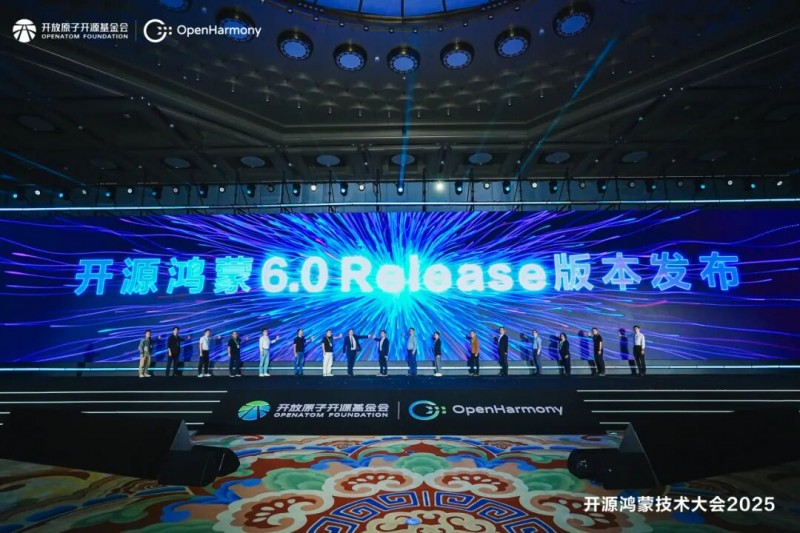
开源鸿蒙开放共建 与产业融合赋能千行万业
Zhong Guo Xin Wen Wang· 2025-09-27 13:54
Core Insights - The Open Source Harmony Technology Conference was held in Changsha, showcasing the achievements in technology innovation, ecosystem development, and talent cultivation related to the open-source Harmony operating system [1][2] - Changsha aims to leverage its digital economy, projected to reach a total of 500 billion yuan, to enhance collaboration between universities and enterprises, thereby fostering the open-source Harmony industry [1] - Huawei's Executive Director highlighted that the Harmony 5 operating system has surpassed 17 million terminals and over 30,000 applications and services have been launched as of September 20 this year [1] Group 1 - The Open Atom Open Source Foundation has been instrumental in the development of the open-source Harmony ecosystem, emphasizing the importance of collaboration among academia, industry, and research [1][2] - The release of Harmony 6.0 marks a significant upgrade in technical capabilities, indicating the rapid evolution of the open-source Harmony operating system [2] - The conference introduced the "Open Source Harmony Community Development Innovation Award Program," aimed at integrating community development tasks with a code review incentive mechanism [2] Group 2 - The open-source Harmony operating system is recognized as one of the fastest-growing smart terminal operating systems, with a focus on intelligence as the main trend for future development [2] - The conference called for more collaboration between industry and academia to strengthen the open-source Harmony community [2] - The open-source Harmony initiative aims to empower industrial transformation through technological breakthroughs and to build a solid digital foundation for a connected world [2]
多方共建!交通行业推动开源鸿蒙与智慧交通深度融合
Nan Fang Du Shi Bao· 2025-08-31 10:04
Core Insights - The 2025 Harmony Ecosystem Conference held in Shenzhen focused on the digital and intelligent transformation of the transportation industry, emphasizing the value of open-source Harmony [1][4] - The "Traffic Jia Hong" solution, based on open-source Harmony, has been implemented in over 10 provinces, with more than 45 types of transportation equipment deployed across various scenarios [2][6] - The initiative aims to create a reliable digital foundation for smart transportation, leveraging new technologies and business models to enhance collaboration among leading enterprises and developers [1][5] Group 1: Industry Development - The open-source Harmony ecosystem is rapidly flourishing in the transportation sector, with significant applications in subways, highways, and other areas, leading to improved experiences and benefits [2][6] - The "Traffic Jia Hong" operating system, based on OpenHarmony and openEuler, addresses challenges such as protocol fragmentation and high operational costs in smart transportation [6][7] - The initiative promotes a unified and efficient open-source ecosystem, focusing on technology co-creation, standard establishment, and scenario expansion [7][8] Group 2: Collaborative Efforts - Various organizations, including the Open Atom Open Source Foundation and the Ministry of Industry and Information Technology, are collaborating to deepen the integration of open-source Harmony with smart transportation [8] - The Guangdong Intelligent Transportation Association emphasizes the importance of a robust technical foundation provided by the Harmony ecosystem for the province's smart transportation development [1][5] - The industry is moving towards a more interconnected and intelligent system, with increasing demands for automation and efficiency in urban rail and road traffic [7][8]

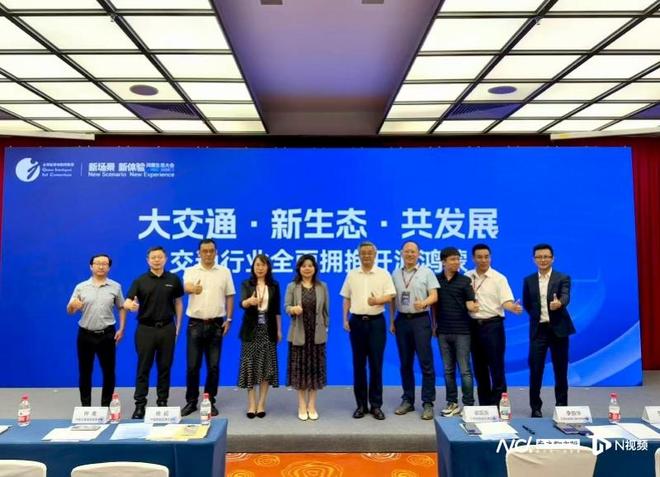
佳都科技亮相2025鸿蒙生态大会 助推交通行业全面拥抱开源鸿蒙
Zheng Quan Ri Bao Zhi Sheng· 2025-08-31 09:40
Core Viewpoint - The 2025 Harmony Ecosystem Conference held in Shenzhen focused on the digital and intelligent transformation of the transportation industry, emphasizing the value of the open-source Harmony system in various transportation sectors [1][2]. Group 1: Industry Developments - The open-source Harmony ecosystem is rapidly flourishing in the transportation sector, with the "Traffic Jia Hong" version already applied in over ten provinces and more than 45 types of transportation equipment developed [2]. - The conference highlighted the collaboration among government, enterprises, academia, and research institutions to promote the Harmony ecosystem, aiming to create a globally influential software and hardware ecosystem [1][2]. Group 2: Technological Innovations - "Traffic Jia Hong," an industry operating system based on open-source Harmony, has shown significant results in urban rail transit, focusing on safety, efficiency, and sustainability [3]. - The development of the Harmony operating system for highway systems has reached an internationally leading level, with applications demonstrated in 11 provinces across China [3]. Group 3: Collaborative Efforts - The Guangdong Intelligent Transportation Association aims to support leading enterprises in deepening the construction of the Harmony ecosystem in the transportation field through collaboration in technology, standards, and application scenarios [2]. - The conference called for all industry chain enterprises to embrace open-source Harmony to build a safe, reliable, and technologically advanced digital foundation for intelligent transportation [2].
新增“华为鸿蒙”概念,山东发展集团旗下这家上市公司发生了什么?
Sou Hu Cai Jing· 2025-08-26 10:00
Core Viewpoint - Shengyang Co., Ltd. (002580.SZ) is expanding into the "Huawei Harmony" ecosystem by establishing a joint venture named Open Source Harmony (Shandong) Digital Technology Co., Ltd. to enhance its presence in the open-source Harmony ecosystem [1][3]. Group 1: Joint Venture Details - The joint venture partners include Shandong Development Investment Holding Group Co., Ltd., Shandong Development Science and Technology Investment Co., Ltd., Shandong Expressway Bridge Investment Management Co., Ltd., and Shenzhen Kaihong Digital Industry Development Co., Ltd. [3] - The registered capital of the joint venture is 50 million yuan, with Shengyang contributing 5 million yuan for a 10% stake, while Shandong Development Group invests 15 million yuan for a 30% stake [3]. - Other partners, Shandong Development Science and Technology Investment, Shandong Expressway Bridge Investment, and Shenzhen Kaihong, each contribute 10 million yuan for a 20% stake [3]. Group 2: Strategic Importance - The establishment of the joint venture aligns with national strategic needs and policy directions, facilitating the intelligent upgrade of the energy industry [5]. - The collaboration is expected to leverage synergies among partners, effectively diversifying investment risks and enhancing resilience [5]. - Shengyang's existing market resources in energy infrastructure are well-suited to meet the development needs of the open-source Harmony ecosystem, promoting its application in the energy sector [5]. Group 3: Company Background and Financial Performance - Shengyang Co., Ltd. was founded in 1991 and listed on the Shenzhen Stock Exchange in 2011, primarily producing lithium-ion batteries and power systems [3]. - The company reported a revenue of 1.715 billion yuan for the first half of 2025, representing a year-on-year increase of 19.7%, and a net profit of 129 million yuan, up 12.61% year-on-year [5].

山东圣阳电源股份有限公司 关于投资设立开源鸿蒙(山东)数字科技有限公司暨关联交易的公告
Zhong Guo Zheng Quan Bao - Zhong Zheng Wang· 2025-08-23 17:56
Summary of Key Points Core Viewpoint - The company plans to establish a joint venture named "OpenHarmony (Shandong) Digital Technology Co., Ltd." to capitalize on opportunities in the digital economy and enhance its growth potential in the energy sector through intelligent upgrades [2][20]. Group 1: Investment Overview - The joint venture will have a registered capital of RMB 50 million, with the company contributing RMB 5 million for a 10% stake [2][21]. - Other investors include Shandong Development Investment Holding Group (30%), Shandong Development Sci-Tech Investment Co., Ltd. (20%), Shandong Expressway Bridge Investment Management Co., Ltd. (20%), and Shenzhen Kaihong Digital Industry Development Co., Ltd. (20%) [2][21]. Group 2: Related Party Transactions - The transaction constitutes a related party transaction as Shandong Development Group is the controlling shareholder of the company [3][9]. - The board of directors approved the investment with unanimous consent, and independent directors confirmed the fairness of the transaction [4][29]. Group 3: Joint Venture Details - The joint venture aims to leverage the OpenHarmony ecosystem, which is positioned as a core digital infrastructure for various industries, including energy, finance, and healthcare [20][23]. - The joint venture's business scope includes computer system services, information technology consulting, and the development of new energy technologies [22][23]. Group 4: Strategic Alignment - The investment aligns with national strategic needs and policies, enhancing the company's sustainable development capabilities and diversifying its growth [30][31]. - The company aims to build an intelligent energy ecosystem based on the OpenHarmony platform, contributing to the digital economy and smart manufacturing [30][31]. Group 5: Financial and Operational Impact - The investment will be funded through the company's own resources, ensuring no significant impact on its financial status [31]. - The company will monitor the joint venture's operations closely to mitigate potential risks associated with market and policy changes [30][31].