技术性衰退

Search documents
泰国央行:因美国关税,预计下半年出口大幅萎缩
news flash· 2025-07-09 03:33
Core Insights - The likelihood of a technical recession in Thailand remains low according to the central bank's meeting minutes [1] - A significant decline in exports is anticipated in the second half of the year due to U.S. tariffs [1] Economic Outlook - The central bank indicates that the risk of a technical recession is minimal, suggesting stability in the domestic economy [1] - The impact of U.S. tariffs is expected to lead to a substantial contraction in exports, which could affect overall economic performance [1]
泰国央行会议纪要:近期技术性衰退的可能性仍然很低。
news flash· 2025-07-09 02:08
Core Viewpoint - The Bank of Thailand's meeting minutes indicate that the likelihood of a technical recession in the near term remains low [1] Economic Outlook - The central bank noted that economic growth is expected to continue, supported by domestic consumption and tourism recovery [1] - Inflation is projected to stabilize, with the central bank maintaining its target range [1] Monetary Policy - The Bank of Thailand is likely to continue its gradual interest rate hikes to manage inflation while supporting economic growth [1] - The central bank emphasized the importance of monitoring global economic conditions and their potential impact on Thailand's economy [1]
经济学家:美国上月个人支出和收入走低,经济或已陷入技术性衰退
news flash· 2025-06-27 13:42
Core Viewpoint - The article highlights a concerning trend in the U.S. economy, indicating that personal income and spending have declined, suggesting a potential technical recession [1] Economic Indicators - Personal income was expected to grow by approximately 0.3%, but instead, it has shown negative growth [1] - Personal spending figures are also disappointing, reflecting a negative growth trend [1] Economic Outlook - The decline in personal income and spending raises the likelihood of an economic slowdown in the second quarter, potentially leading to negative economic activity [1] - Aside from the core PCE data being slightly above expectations, there were no other surprises in inflation, indicating a broader economic weakness [1] - Overall signs point to a weakening economy, with the possibility that it has already entered a technical recession [1]
今夜,暴涨!
中国基金报· 2025-06-26 16:08
Group 1 - Xiaomi's stock price surged over 10% following the launch of its first SUV, the Xiaomi YU7, which received over 289,000 pre-orders within an hour [3] - The standard version of the Xiaomi YU7 is priced at 253,500 yuan, while the Pro and Max versions are priced at 279,900 yuan and 329,900 yuan respectively [3] - Xiaomi's founder and CEO Lei Jun expressed excitement over the overwhelming demand for the SUV, emphasizing the importance of product quality and timely delivery [3] Group 2 - The U.S. stock market saw a collective rise, with the Dow Jones increasing by approximately 300 points and both the Nasdaq and S&P 500 rising by about 0.6% [4] - The S&P 500 index is nearing its historical high, hovering around 6,130 points, just shy of the record 6,144.15 points set on February 19 [4] - Economic data has shown mixed results, with a notable decline in consumer spending growth, leading to a downward revision of the U.S. GDP annual growth rate to -0.5% [4] Group 3 - Investors are optimistic about the upcoming earnings season, with expectations for profit growth to exceed forecasts and for GDP growth to return to positive territory [5] - The market is closely monitoring the Federal Reserve's potential interest rate cuts, with traders anticipating up to three rate cuts this year [4][6] - The core PCE price index, a preferred inflation measure by the Federal Reserve, is expected to show a modest increase, indicating low inflation levels [7]


公开:日本出口罕见下滑!对美国出口15140亿,对中国出口多少?
Sou Hu Cai Jing· 2025-06-22 00:46
Group 1 - Japan's economy is facing significant challenges, with exports dropping by 1.7% year-on-year to 81,350 billion yen, marking an eight-month low [1] - The trade deficit has widened to 637.6 billion yen, indicating a potential technical recession as it has recorded deficits for two consecutive months [2] - The first quarter GDP decreased by 0.2% quarter-on-quarter, translating to an annualized decline of 0.7%, raising concerns about economic confidence [2] Group 2 - The decline in exports is heavily influenced by the U.S. tariff policies, which have imposed a 25% tariff on imported cars and parts, and a 10% tariff on other Japanese goods [4] - Exports to the U.S. fell by 11.1%, while exports to China decreased by 8.8%, highlighting the adverse effects of these tariffs on Japan's export market [4] - The Japanese government attempted to negotiate a new trade agreement with the U.S. in June 2025, but these talks ended without success, leading to a restoration of the 10% tariff to 24% on July 9, 2025 [5] Group 3 - Japan's economic issues are compounded by structural weaknesses, including high inflation that erodes purchasing power and insufficient domestic demand [5] - The over-reliance on exports has left Japan vulnerable to international market fluctuations, exacerbated by global economic downturns such as U.S.-China trade tensions and a sluggish European economy [5] - The current economic situation reflects deeper contradictions in Japan's trade strategy and domestic economic structure, necessitating significant reforms to navigate future challenges [7]
瑞穗银行:泰国央行需要降息50至75个基点以稳住局势
news flash· 2025-06-20 03:31
Core Viewpoint - Thailand is facing a new political crisis that threatens its economy, which is already on the brink of a technical recession, necessitating a potential interest rate cut by the central bank to stabilize the situation [1] Economic Situation - Thailand's economy is at risk due to ongoing political instability and the impact of the global trade war [1] - The country experienced lower economic growth last year compared to neighboring countries such as Indonesia, Malaysia, the Philippines, and Singapore [1] Political Context - The current Prime Minister, Prayut Chan-o-cha, is facing internal divisions within the ruling coalition, which could lead to legislative stagnation and affect trade negotiations with the United States [1] - The previous Prime Minister was ousted by a court ruling, and her father was overthrown in a military coup, highlighting the political volatility [1] Recommendations - Mizuho Bank's macro research head for Asia, Vishnu Varathan, suggests that the Bank of Thailand may need to accelerate interest rate cuts by 50 to 75 basis points to boost economic confidence [1] - There is an urgent need for additional stimulus measures due to weakened business confidence and fragile market sentiment [1]

美国加征关税,日本出口暴跌
Huan Qiu Wang· 2025-06-19 03:45
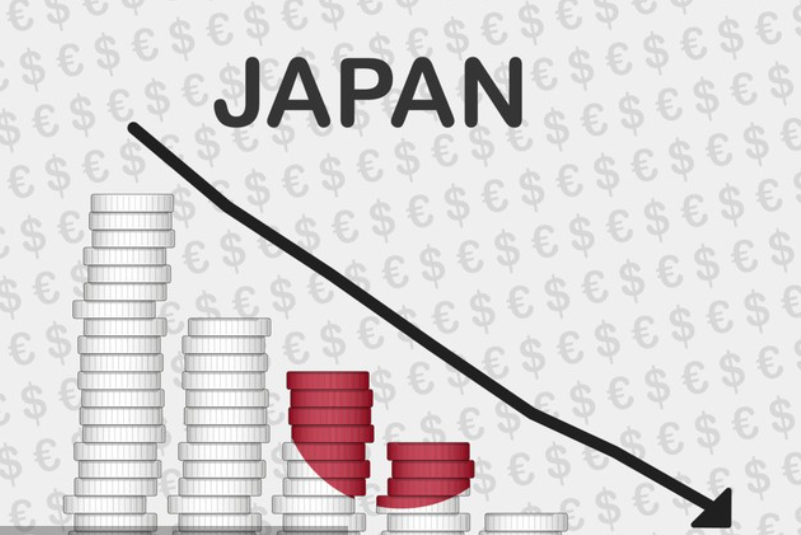
Group 1 - Japan's economy is facing significant challenges due to tariffs imposed by the United States, with May exports declining by 1.7% year-on-year, marking the first drop in eight months, and exports to the U.S. falling by 11.1% [1] - The trade deficit for Japan reached 637.6 billion yen in May, continuing a trend of deficits for the second consecutive month, with exports to the U.S. and China both experiencing notable declines [1] - The decline in exports, particularly in automobiles, steel, and mineral fuels, raises concerns about a potential technical recession in Japan's economy for the second quarter [1] Group 2 - Japan's government is under pressure to reach a trade agreement with the Trump administration by July 9, or face a 24% "reciprocal tariff" [3] - The automotive sector is crucial for Japan's export-driven economy, with automotive exports accounting for approximately 28% of the total goods exported to the U.S. last year [3] - The Bank of Japan is closely monitoring the economic impact of tariffs, with the first quarter showing a 0.2% contraction in real GDP, and there is uncertainty regarding future interest rate hikes due to the ongoing tariff situation [3][4]
突然崩了!日本,传出重大利空!
券商中国· 2025-06-18 12:40
Core Viewpoint - The article highlights the negative impact of U.S. tariffs on Japan's economy, indicating a potential technical recession due to declining exports and increasing trade deficits [1][3][5]. Group 1: Trade Data and Economic Impact - Japan's exports fell by 1.7% year-on-year in May, marking the first decline in eight months, primarily due to decreases in automotive, steel, and mineral fuel exports [1][3]. - Exports to the U.S. decreased by 11.1% in May, while exports to China dropped by 8.8% [3]. - Japan recorded a trade deficit of 637.6 billion yen in May, continuing a trend of trade deficits for the second consecutive month [2][3]. Group 2: Government and Central Bank Responses - Japanese Prime Minister Shinzo Abe has been seeking to negotiate the removal of automotive tariffs but has not yet succeeded [4]. - The Bank of Japan maintained its target interest rate at 0.5%, indicating a cautious approach amid economic uncertainties caused by U.S. tariffs [5][6]. - The Bank of Japan's economic outlook remains cautious, with a noted contraction in GDP of 0.2% in the first quarter of 2025 [5]. Group 3: Future Outlook and Negotiations - There is uncertainty regarding future interest rate hikes by the Bank of Japan, with some analysts suggesting a delay until the first quarter of next year due to the lack of strong inflationary pressures [6]. - The ongoing trade negotiations between Japan and the U.S. remain unresolved, with both sides agreeing to continue discussions without reaching a consensus [7][8].

关税大消息!重要数据公布!
Zhong Guo Ji Jin Bao· 2025-06-18 01:54
Group 1 - Japanese and South Korean stock markets opened lower but experienced a subsequent rally, with the Nikkei 225 index rising by 0.2% to its highest point since February 21 [3][5] - Notable individual stocks that performed well include Prince Holdings, Taisei Corporation, and Nintendo [4] - The KOSPI index in South Korea increased by 0.45%, reaching 2963.63 points [5] Group 2 - Japan's exports fell for the first time in eight months, with a year-on-year decline of 1.7% in May, impacted by tariffs and weak demand for automobiles, steel, and mineral fuels [7] - Imports also decreased by 7.7% year-on-year, with significant reductions in crude oil and coal imports [7] - Japan's trade balance showed a deficit for the second consecutive month, with the deficit amounting to 637.6 billion yen [7] - Exports to the U.S. dropped by 11.1% year-on-year, marking a 4.7% decline in Japan's trade surplus with the U.S. for the first time in five months [7] - Concerns are rising about a potential technical recession in Japan if the economy continues to contract in the second quarter, amid weak domestic consumption and inflation outpacing wage growth [7] Group 3 - Ongoing tariff negotiations between Japan and the U.S. have not reached a consensus, with both sides agreeing to further discussions [7] - The Bank of Japan is expected to maintain its policy interest rate at 0.5% and plans to slow down the pace of bond purchase reductions in the next fiscal year [7] - Ben Powell, Chief Investment Strategist for BlackRock in the Middle East and Asia-Pacific, indicated that the Bank of Japan is likely to keep interest rates unchanged due to global economic uncertainties [8] - The current economic environment is complicated by rising food prices, global trade tensions, and oil price fluctuations, although there is a positive cycle forming between wage increases and stable prices domestically [8]
关税大消息!重要数据公布!
中国基金报· 2025-06-18 01:38
Market Overview - Both Japanese and South Korean stock markets opened lower but subsequently experienced a rebound, with the Nikkei 225 index rising by 0.2%, reaching its highest point since February 21 [4][3]. Individual Stock Performance - Notable stock performances included: - Oji Holdings: Current price 722.2, up 4.12%, market cap 732.6 billion - Taisei Corporation: Current price 8280.0, up 3.37%, market cap 1516.6 billion - Nintendo: Current price 12850.0, up 3.30%, market cap 16.69 trillion - Tokyo Gas: Current price 4865.0, up 2.55%, market cap 1805.4 billion - Kajima Corporation: Current price 3746.0, up 2.52%, market cap 1980.3 billion - Subaru: Current price 2565.5, up 2.21%, market cap 1880.7 billion [6][7]. Trade and Economic Indicators - Japan's exports fell for the first time in eight months, decreasing by 1.7% year-on-year in May, with significant declines in automotive, steel, and mineral fuel sectors [9]. - Imports also saw a decline of 7.7% year-on-year, with notable reductions in crude oil and coal imports [9]. - Japan's trade balance showed a deficit for the second consecutive month, with the deficit amounting to 637.6 billion yen [9]. - Exports to the U.S. dropped by 11.1%, marking a 4.7% decrease in Japan's trade surplus with the U.S. for the first time in five months [9]. Monetary Policy and Economic Outlook - Ongoing negotiations between Japan and the U.S. regarding tariffs have not yet reached a consensus, with both parties agreeing to continue discussions [10]. - The Bank of Japan has decided to maintain its policy interest rate at 0.5% and plans to slow down the pace of bond purchase reductions in the next fiscal year [10]. - Economic uncertainty globally may lead the Bank of Japan to keep interest rates unchanged through the end of the year, despite rising food prices and inflation [10].