
教育科技人才一体化

Search documents
为培育新质生产力提供坚实支撑
Xin Lang Cai Jing· 2026-01-02 19:32
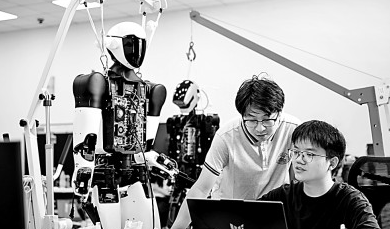
深刻把握教育科技人才一体发展内在逻辑 为培育新质生产力提供坚实支撑 作者:王君松(山东科技大学党委书记) 习近平总书记强调,要统筹推进教育科技人才一体发展,筑牢新质生产力发展的基础性、战略性支撑。 党的二十届四中全会站在中国式现代化建设全局的战略高度,统筹教育强国、科技强国、人才强国建 设,明确提出"加快高水平科技自立自强,引领发展新质生产力"。高等教育作为教育筑基、科技突破、 人才培养的核心交汇点,肩负着打破要素壁垒、构建协同生态的重要使命,唯有以一体化思维破解发展 难题,以系统观念整合创新资源,才能为培育新质生产力提供坚实人才支撑,为中国式现代化注入强劲 动能。 深刻把握教育科技人才一体化与新质生产力发展的内在逻辑 教育、科技、人才是相互依存、相互促进的有机整体,三者共同构成推动高质量发展的核心支撑。三者 一体发展既是应对全球竞争、夯实发展根基的战略之举,也是顺应新质生产力内在发展规律的必然选 择。 华中科技大学机械科学与工程学院学生对机器 人进行代码调试。新华社发 从国际竞争趋势看,当前新一轮科技革命和产业变革加速推进,全球竞争的焦点已从传统要素比拼转向 创新能力较量。发达国家普遍通过构建"教育—科技— ...

从“书本里”到产业里——江苏无锡探索教育、科技、人才一体化之路
Xin Lang Cai Jing· 2026-01-02 18:29
Group 1 - A research-oriented and application-based learning chain is rapidly forming in Wuxi, Jiangsu, bridging basic and higher education [1] - Students at Wuxi No. 1 High School are engaged in hands-on projects, such as designing electronic pets and building load-bearing structures, showcasing the integration of education and practical application [1] - The school collaborates with universities like Jiangnan University to enhance the educational experience through "dual high cooperation" [1] Group 2 - Wuxi's education authorities emphasize the importance of high-quality high school education and the cultivation of innovative talents through specialized science and engineering education [2] - The integration of industry and education is exemplified at Wuxi University, where classes are named after companies that contribute financially and participate in course design and internships [2] - Wuxi is optimizing its higher education layout to align academic disciplines with local industries, establishing ten key industry-education integration communities [2] Group 3 - Wuxi is implementing a talent recruitment and retention strategy, focusing on attracting high-level talents and training industry-adapted professionals [3] - The city has 17 universities with a total of 192,000 students, and it aims to increase the retention rate of graduates in Wuxi through various initiatives [3] - Wuxi's educational strategy is centered on the interconnection of education, technology, and talent, promoting a unified development framework [3]
锚定育人根本 书写时代答卷
Ren Min Ri Bao· 2025-12-28 05:27
Group 1 - The core focus of the education sector in 2025 is on practical implementation, with an emphasis on moral education and integrating various educational resources to enhance learning experiences [2] - The education system is adapting to technological advancements and industry changes, promoting interdisciplinary collaboration and integration between education and industry [3][5] - There is a strong emphasis on educational equity and quality, with initiatives aimed at providing quality resources to underprivileged areas and enhancing after-school services [2] Group 2 - Beijing Normal University is leading efforts to integrate education, technology, and talent development, establishing new colleges to foster innovation and collaboration [3][4] - The university is implementing a "strong teacher project" and exploring reforms in teacher education to better meet the needs of modern education [4] - Research initiatives are focused on digital transformation and optimizing educational resources, with a specific emphasis on artificial intelligence integration in higher education [5] Group 3 - The integration of ideological and social education is being promoted, with practical experiences being used to enhance students' understanding of national policies and environmental changes [6][7] - The government is gradually implementing free preschool education, significantly reducing financial burdens on families and improving access to quality early childhood education [8][10] Group 4 - There is a concerted effort to enhance employment opportunities for college graduates, with initiatives aimed at improving job matching and providing practical experiences through internships [11][12] - The engineering education reform is focused on practical outcomes, allowing students to apply their research in real-world settings, thus enhancing their employability [14][15] Group 5 - Vocational education is increasingly aligned with industry needs, with initiatives aimed at fostering practical skills and addressing specific challenges faced by industries [16][17] - The government is committed to enhancing the capabilities of vocational schools and ensuring that educational programs are closely tied to market demands [17]
锚定育人根本 书写时代答卷(深聚焦·年终特别报道)
Ren Min Wang· 2025-12-28 01:10
Group 1 - The core theme of the articles revolves around the strategic initiatives in education, emphasizing the integration of education, technology, and talent development to foster high-quality growth in the sector [3][5][12] - The "Fifteen Five" plan highlights the importance of educational equity and quality, with a focus on providing quality resources to underprivileged areas and enhancing after-school services [2][10] - The establishment of new educational institutions, such as the Future Technology College and Future Ocean College, aims to create an innovative ecosystem that merges education, research, and industry [3][5] Group 2 - The implementation of free preschool education is a significant policy change, expected to reduce family expenses by approximately 20 billion yuan in the first semester alone, benefiting over 12 million children [10][9] - The articles discuss the emphasis on integrating ideological and political education with practical experiences, enhancing students' understanding of national policies and environmental changes [6][7] - The focus on high-quality employment for college graduates is underscored, with initiatives to improve job matching and provide practical experiences through partnerships with industries [11][12] Group 3 - The articles detail the reform in engineering master's and doctoral programs, promoting a model where practical achievements can be recognized alongside traditional academic requirements [14][15] - The integration of vocational education with industry needs is highlighted, showcasing successful projects that address real-world challenges and enhance students' skills [16][17] - The emphasis on cultivating high-skilled talents and innovative professionals aligns with national strategies to boost technological advancements and economic development [17][18]
2025教育“实干年”,锚定育人根本
Xin Lang Cai Jing· 2025-12-28 00:55
Core Viewpoint - The year 2025 is designated as a "practical year" for education, focusing on the integration of moral education and practical learning to adapt to societal changes and technological advancements [3][4]. Group 1: Education Reform and Development - The education system is actively seeking change, with interdisciplinary collaboration and integration of education and industry becoming the norm, as artificial intelligence reshapes the learning ecosystem [3][4]. - The Ministry of Education has initiated a plan to promote the integrated development of education, technology, and talent, with significant investments in high-level research universities and the establishment of specialized training bases [6][12]. - The establishment of new colleges, such as the Future Technology College and Future Ocean College, aims to create an innovative ecosystem that merges education, research, and industry [4][5]. Group 2: Teacher Education and Quality Improvement - Continuous optimization of teacher training programs is underway, focusing on nurturing high-quality teachers to enhance basic education and support the development of a distinctive Chinese teacher education system [5][21]. - The integration of artificial intelligence into higher education is being emphasized, with initiatives to develop new majors and improve teaching methodologies [5][22]. Group 3: Early Childhood Education - The gradual implementation of free preschool education is expected to alleviate financial burdens on families, with significant reductions in childcare costs reported [10][12]. - The introduction of new regulations, such as the Preschool Education Law, aims to ensure the quality and accessibility of early childhood education [12]. Group 4: Higher Education and Employment - The education system is prioritizing the employment of college graduates, with initiatives to enhance job placement services and create more job opportunities [16][18]. - The integration of practical experience in engineering education is being emphasized, with students participating in real-world projects to enhance their employability [17][19]. Group 5: Vocational Education and Industry Needs - Vocational education is increasingly aligning with industry demands, with initiatives to enhance practical training and collaboration with enterprises [20][22]. - The focus on cultivating high-skilled talent through organized research and practical applications is expected to address key industry challenges and improve workforce readiness [21][22].
二〇二五—— 锚定育人根本 书写时代答卷(深聚焦·年终特别报道)
Ren Min Ri Bao· 2025-12-27 21:59
Group 1 - The Ministry of Education has designated 2025 as a "practical year," emphasizing the integration of education, technology, and talent development to enhance educational quality and equity [1] - Beijing Normal University (BNU) has established the Future Technology College and is planning the Future Ocean College to foster an innovative ecosystem that integrates education, research, and industry [2] - BNU is implementing a "double first-class" strategy to enhance research capabilities and align educational offerings with national strategic needs, promoting deep integration of industry and academia [2] Group 2 - BNU is focusing on educational reform and digital transformation to adapt to the profound changes in education brought about by the intelligent era, including the integration of artificial intelligence into higher education [3] - The "14th Five-Year Plan" suggests promoting the effective integration of ideological and political education with social education, enhancing students' understanding of national policies through practical experiences [6] - The gradual implementation of free preschool education is easing the financial burden on parents, allowing them to invest more in their children's development [7][8] Group 3 - The "14th Five-Year Plan" emphasizes the expansion and quality improvement of employment opportunities for college graduates, with universities enhancing career services and practical training [9][10] - The reform of engineering master's and doctoral programs aims to cultivate outstanding engineers through collaboration between universities and enterprises, focusing on practical outcomes [11][12] - Vocational education is being aligned with key industry needs, with initiatives to develop high-skilled talent through hands-on projects that address real-world challenges [13][15]
人才评价的最终标准是解决真问题的能力
Ke Ji Ri Bao· 2025-12-27 00:58
Core Viewpoint - The introduction of "practical doctorates" by seven domestic universities marks a shift towards diverse doctoral degree awarding methods, emphasizing practical achievements over traditional thesis-based evaluations [1][2]. Group 1: Reform and Its Implications - The reform addresses the disconnect between education and industry, as traditional doctoral training often leads to a focus on publishing papers rather than solving real-world problems [1]. - The new legal framework established by the "Degree Law of the People's Republic of China," effective January 1, 2025, allows "practical achievements" to be a core basis for degree applications, paving the way for a multi-faceted evaluation system [1]. - The eight new "practical doctors" achieved significant innovations without publishing top-tier papers, demonstrating that their contributions are valuable and impactful in real-world settings [1]. Group 2: Impact on Education and Industry Collaboration - The recognition of innovations in industrial settings by universities fosters a willingness among enterprises to accept research from academic institutions, thus activating a virtuous cycle of collaboration between academia and industry [2]. - The shift from an academic-centric approach to a more pragmatic one in engineering education reflects a broader trend in China, moving from the "Excellence Engineer Program" initiated in 2010 to the current implementation of "practical doctorates" [2]. - The significance of these doctoral degrees extends beyond their physical form, symbolizing a societal acknowledgment that the ultimate standard for talent evaluation is the ability to solve real problems [2].
中国10城入围全球200强,全球科创人才发展指数报告发布
Guo Ji Jin Rong Bao· 2025-12-26 07:25
Global Landscape - The report indicates a clear gradient distribution in global innovation city competition, forming a tri-polar structure of "traditional strengths in the US and Europe, rapid rise in Asia" [2] - New York ranks first with a score of 95.8, followed by London and Boston, while Beijing and Paris occupy the fourth and fifth positions with scores of 91.7 and 89.6 respectively [2] - The Americas account for 44% of the listed cities, Europe 37%, and Asia 16%, with 74 cities from the US leveraging top universities and corporate clusters to attract global talent [2] China's Performance - China shows significant progress in innovation talent, with 10 cities entering the global top 200, including Beijing, Shanghai, Hangzhou, Shenzhen, and Guangzhou in the global top 30 [3] - Beijing ranks first globally in talent resources, with a total talent pool of 8.029 million in 2023, supported by rich educational resources [3] - Shanghai ranks sixth globally in overall innovation talent evaluation, leading in talent environment indicators and showcasing significant advantages in various talent resource dimensions [3] Shanghai Insights - As of 2024, Shanghai has 66 unicorn companies concentrated in cutting-edge sectors such as integrated circuits, AI, and biotechnology, indicating rapid enhancement of its innovation capabilities [4] - Shanghai has made achievements in knowledge creation metrics, including publications in Nature and Science, and international patent applications [4] Challenges in Shanghai - Shanghai faces challenges, including a gap in advanced infrastructure compared to top international cities and a local technology achievement conversion rate of only 35.7% [5] - To address these challenges, Shanghai is enhancing "talent stickiness" through policies like "Hai Ju Ying Cai" and various talent service projects, aiming to provide comprehensive support for talent throughout their lifecycle [5] Future Outlook - The report emphasizes the need for global innovation cities to integrate education, technology, and talent, promoting deep integration of talent, industry, innovation, and capital chains [6] - Strengthening regional collaboration is highlighted as a crucial path to enhance innovation drive, with recommendations for strategies like the Yangtze River Delta integration to create a collaborative human capital market [6] - The report suggests that cities like Shanghai should leverage their competitive advantages to facilitate international talent circulation and resource allocation globally [6]
南京连续4年获评全国“最佳引才城市”
Nan Jing Ri Bao· 2025-12-22 03:00
Core Insights - Nanjing has been recognized as China's Best Talent Attraction City for four consecutive years, highlighting its strong appeal in the competitive talent landscape [1] - The city's success is attributed to its robust platform capabilities and sincere policies aimed at attracting talent [1] Group 1: Talent Attraction and Infrastructure - Nanjing boasts 54 universities, 34 national key laboratories, 5 major national technology innovation platforms, and over 10,000 high-tech enterprises, ranking fifth globally in the 2025 Nature Index for research cities [1] - The establishment of significant research institutions, such as the Industrial Artificial Intelligence Research Institute and the Future Network Experimental Facility, further enhances Nanjing's innovation landscape [1] Group 2: Policy Initiatives and Support - The city has implemented various policies, including "25 Measures for Talent Strengthening" and "7 Strategies for Key Industry Talent," to enhance the conversion efficiency of scientific achievements [2] - Nanjing's talent plans have broken down identity barriers, allowing citywide employment units to access talent services, with specific support for major innovation platforms [2] Group 3: Youth Engagement and Services - Nanjing has introduced initiatives like the Zijinshan Talent Card, providing services such as domestic help, park access, and transportation benefits, serving over 700,000 people [2] - The city has also launched housing rental subsidies and free accommodation for young talents, promoting a youth-friendly environment [2] Group 4: Talent Development and Future Plans - Nanjing is focused on attracting talent by enhancing the "Zijinshan Talent Plan," with an emphasis on policy innovation, platform upgrades, and service optimization [3] - The city aims to create a new talent ecosystem characterized by international vision, precise policies, market-oriented methods, and human-centered services, fostering a conducive environment for talent growth [3]
北京加紧培育壮大新动能
Ren Min Wang· 2025-12-21 22:29
Group 1 - Beijing's advantages lie in its education, technology, and talent, with 92 universities, 185 first-class disciplines, and approximately half of the country's academicians located in the city [1] - The city is prioritizing the integration of education, technology, and talent development as a key task for economic work by 2026, as emphasized by the central government [1] - Beijing has established a leadership group to oversee the integration of education, technology, and talent, with direct involvement from top municipal officials [1] Group 2 - In the past three years, Beijing has added 220 urgently needed majors in fields such as artificial intelligence and quantum technology, optimizing its academic structure [2] - A new technology innovation hub in Changping District will house over ten national key laboratories from Tsinghua University, aiming to foster new research organizational models [3] - The establishment of the Tsinghua Frontier Interdisciplinary Innovation Research Institute in 2024 will offer competitive salaries to attract high-level talent, with 837 researchers already gathered [3] Group 3 - A new technology developed by Ruimi Technology, which uses Bacillus as a chassis to produce microbial lipid products, has the potential to enhance oil recovery and improve soil quality [4] - Beijing is exploring new models for the full-chain integration of technology development, with the total value of technology contracts increasing from 631.62 billion yuan in 2020 to 915.33 billion yuan in 2024 [5] - The GDP of Beijing exceeded 3.84 trillion yuan in the first three quarters of the year, reflecting a year-on-year growth of 5.6% [5]