
数字人民币2.0

Search documents
数字人民币2.0来了!钱包余额能生息,绿色出行可变现
Di Yi Cai Jing· 2026-01-22 12:43
Core Viewpoint - The digital RMB has upgraded to version 2.0, introducing interest-bearing features for real-name wallets and integrating carbon credits into its ecosystem, enhancing its role as a comprehensive financial infrastructure rather than just a payment tool [1][3]. Group 1: Digital RMB Features - The digital RMB wallet now allows interest accumulation, marking a shift from its previous non-interest-bearing model, which limited user motivation for long-term holding [2][3]. - The new version categorizes digital RMB wallets into four types based on user authentication, with only real-name wallets eligible for interest, reflecting a principle of rights and responsibilities [2][3]. Group 2: Economic Impact - The adjustment in the digital RMB's classification to align with commercial bank liabilities enhances banks' profit potential, transforming them from cost centers to profit centers [2][3]. - The digital RMB is expected to evolve into a multi-functional financial product, expanding beyond retail payments to include savings, loans, and investment services, thus integrating more deeply with the economy [5]. Group 3: Ecosystem Expansion - The digital RMB's application scenarios have broadened significantly, with a total transaction amount of 19.5 trillion yuan and 2.3 billion personal wallets opened by the end of 2025 [4]. - Future developments may focus on wholesale payments, cross-border settlements, and enterprise financial services, particularly in supply chain finance and green finance, enhancing payment efficiency for businesses [5].

数字人民币升级2.0,对香港和区域金融有何意义?
Sou Hu Cai Jing· 2026-01-22 08:04
Core Viewpoint - The digital renminbi has transitioned from a digital cash era to a digital deposit currency era, with wallet balances now earning interest, marking a significant evolution in its functionality and implications for Hong Kong and the Greater Bay Area's financial ecosystem [1][3]. Group 1: Digital Renminbi 2.0 and Green Finance - Digital renminbi 2.0 enhances transparency and trust in green finance, providing a technological foundation for the issuance and monitoring of green bonds and carbon credits [3]. - The upgrade from digital renminbi 1.0 to 2.0 shifts its role from a retail payment tool to a comprehensive financial instrument with efficient payment and interest-earning capabilities, facilitating better management of overseas operational funds for enterprises [3][5]. Group 2: Hong Kong's Role in Digital Renminbi Development - Hong Kong has been examining the feasibility of central bank digital currencies since 2017 and is now a key player in the digital renminbi's cross-border payment infrastructure through the mBridge project [4][5]. - As the first cross-border pilot for digital renminbi outside the mainland, Hong Kong is positioned to attract multinational companies to use digital renminbi as a liquidity management tool, enhancing its offshore renminbi liquidity pool [5]. Group 3: Future Opportunities and Requirements - The upgrade to digital renminbi 2.0 presents new opportunities and requirements for Hong Kong, reshaping offshore renminbi business logic and extending applications into asset management and digital asset issuance [5][6]. - To achieve these functionalities, there is a need for enhanced risk prevention measures to ensure the security and stability of cross-border payment networks [6]. Group 4: Collaborative Innovation in the Greater Bay Area - The Greater Bay Area aims to innovate collaboratively in the digital renminbi space, focusing on regulatory cooperation, application scenarios, and platform integration [7]. - Key initiatives include optimizing user experiences for residents using digital renminbi wallets and exploring smart contract settlements in cross-border trade, leveraging the programmability of digital renminbi [7][8]. - The construction of major cooperation platforms in the Greater Bay Area, such as the Qianhai and He Tao areas, will facilitate cross-border applications and wallet interoperability [8].

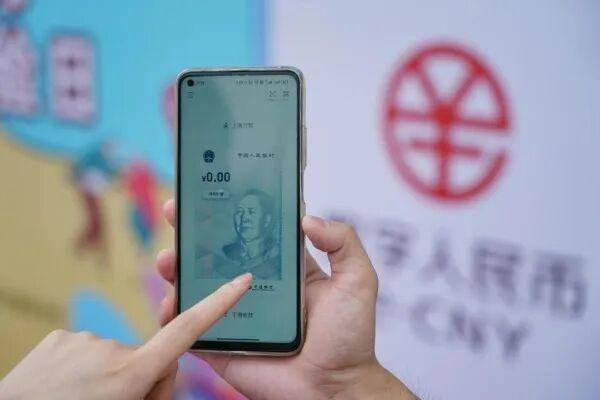
“存款” 数字人民币迈入2.0时代
Xin Hua Wang· 2026-01-12 23:38
Core Viewpoint - The People's Bank of China has launched the "Action Plan" to strengthen the management and service system of digital RMB, marking the transition to the 2.0 era of digital currency, with significant implications for individuals, businesses, and banks [1][2]. Group 1: Changes in Digital RMB - The "Action Plan" indicates a shift from digital cash to digital deposit currency, with digital RMB now having attributes of commercial bank liabilities and being based on accounts [2][3]. - Digital RMB will now accrue interest for users, enhancing its appeal for both individuals and businesses [3]. - The digital RMB has achieved full-scenario currency capabilities, applicable in various sectors including retail, education, and cross-border payments [3]. Group 2: Optimization of the Dual-Layer Architecture - The "Action Plan" optimizes the dual-layer operational system, where the central bank sets rules and standards while commercial banks manage user wallets and ensure compliance [4][5]. - This upgrade encourages commercial banks to actively promote digital RMB, aligning their responsibilities and benefits [4][6]. Group 3: Technological Advantages - China's digital RMB development integrates account-based management with blockchain efficiency, aiming for lower costs and higher efficiency in payment services [7]. - The use of blockchain technology enhances security and traceability, making it advantageous for various financial applications [7]. Group 4: Internationalization and Cross-Border Payments - The establishment of a digital RMB international operation center in Shanghai aims to improve cross-border payment efficiency, facilitating the internationalization of the RMB [8]. - As of November 2025, the multilateral central bank digital currency bridge has processed significant cross-border transactions, with digital RMB accounting for approximately 95.3% of the total transaction volume [8].
数字人民币“入表”与“出师”
Jing Ji Guan Cha Wang· 2026-01-09 12:19
Core Insights - Starting from January 1, 2026, digital renminbi (e-CNY) will begin to accrue interest, marking a significant shift in its functionality and regulatory status [1][2] - The introduction of interest on digital renminbi signifies its formal inclusion in the regulatory and banking asset framework, enhancing its credibility and usability in both domestic and international contexts [1][3] Group 1: Institutional Upgrades - The interest-bearing feature serves as an incentive mechanism, transitioning digital renminbi from a "cash-like" to a "deposit-like" asset, encouraging users to retain funds [2] - Digital renminbi's inclusion in the deposit insurance system provides a clear institutional backing for its safety, moving beyond mere verbal assurances [2] - The emergence of digital renminbi as a deposit-like asset will necessitate a re-evaluation of monetary statistics and reserve requirements, posing significant governance challenges [2] Group 2: Cross-Border Expansion - The cross-border strategy for digital renminbi relies on a combination of interfaces, rules, and scenarios, emphasizing the importance of clear settlement paths and compliance [3] - As of November 2025, digital renminbi has processed 3.48 billion transactions worth 16.7 trillion yuan, with a significant portion of cross-border payments facilitated through the mBridge project [3] - Despite the progress, the mBridge platform is not yet a viable alternative to the SWIFT system, indicating that its adoption will be gradual and context-specific [3][4] Group 3: Future Outlook - The digital renminbi is positioned to evolve into a systematic product that is replicable, governable, auditable, and accessible, moving beyond mere technological competition [5] - The internationalization of the renminbi is shifting from a theoretical discussion to a practical consideration for many institutions, as it becomes a credible infrastructure option [5] - The introduction of interest on digital renminbi represents a pivotal moment in its development, potentially transforming it into a fully functional currency with time-based incentives [6]
侃财邦|福利!你的数字人民币“钱生钱”了
Sou Hu Cai Jing· 2026-01-05 06:12
Core Viewpoint - The digital renminbi is evolving from a cash substitute to a deposit currency, allowing users to earn interest on their balances starting January 1, 2026, marking a significant upgrade to its functionality [2][5]. Group 1: Digital Renminbi Upgrade - Starting January 1, 2026, digital renminbi wallets will earn interest at the rate of 0.05% per annum, transforming the nature of digital currency from mere cash to a form of deposit [2][4]. - The new version of digital renminbi, referred to as 2.0, enhances its economic function beyond traditional cash, allowing users to earn interest, thus transitioning from "spending money" to "money generating money" [5][10]. - The digital renminbi will be treated as a liability for banks, subject to deposit insurance and legal protections similar to traditional bank deposits, but it will not be classified as savings deposits [5][10]. Group 2: User Experience and Benefits - Users will experience automatic quarterly interest accrual on their digital renminbi balances, simplifying the process and making it comparable to other financial products like Yu'ebao [10]. - The interest rate of 0.05% means that a balance of 100,000 yuan will yield an annual interest of 50 yuan, providing a tangible benefit for users [10]. - The transition to digital renminbi offers state-backed security for deposits, with a maximum compensation limit of 500,000 yuan in case of bank failure, ensuring the same safety as traditional bank deposits [10][12]. Group 3: Comparison with Other Payment Platforms - Digital renminbi is a legal digital currency issued by the People's Bank of China, while platforms like WeChat Pay and Alipay are merely payment tools that hold funds in commercial bank reserves [12]. - The relationship between digital renminbi and third-party payment platforms is not one of simple replacement but rather a complementary integration, enhancing the overall financial ecosystem [12].

中科江南20260104
2026-01-04 15:35
Summary of Conference Call on Digital Renminbi 2.0 by Zhongke Jiangnan Industry Overview - The conference call focused on the transition of Digital Renminbi from version 1.0 to 2.0, emphasizing its impact on government fund management and the integration of blockchain technology and smart contracts into the financial system [3][4]. Key Points and Arguments 1. **Transition from Cash to Account System**: The shift from a cash-based system to an account-based system in Digital Renminbi 2.0 resolves conflicts with existing fiscal systems, enhancing fund management efficiency [3][4]. 2. **Integration of Blockchain and Smart Contracts**: Digital Renminbi 2.0 incorporates blockchain technology and smart contracts, improving fund supervision, traceability, and precise disbursement capabilities [4][5]. 3. **Market Growth Potential**: The market size for Digital Renminbi applications is expected to multiply, driven by the integration of smart contracts in various government funding areas, including state investment funds and agricultural subsidies [4][6]. 4. **Revenue Generation**: Zhongke Jiangnan has generated approximately 6-7 billion in revenue from electronic payment projects since 2011, with expectations for significant growth as the Digital Renminbi ecosystem expands [6][13]. 5. **Collaboration with Banks**: The company collaborates with banks to implement smart contracts, enhancing the efficiency of fund management and ensuring compliance with fiscal regulations [6][19]. 6. **Implementation Timeline**: Starting January 1, 2026, large state-owned enterprises and banks will upgrade their wallets to accounts, with pilot cities like Suzhou aiming for a Digital Renminbi fund scale exceeding 500 billion [9][14]. 7. **AI Integration**: The company is actively integrating AI into fiscal data management, enhancing operational efficiency through automated processes like smart auditing and report generation [9][10]. 8. **Smart Auditing Mechanism**: Smart auditing utilizes historical and macroeconomic data to assess the necessity and compliance of fiscal operations, enabling precise fund disbursement and oversight [10][11]. 9. **Future Developments**: The Ministry of Finance shows a strong willingness to overhaul the centralized treasury payment system, integrating Digital Renminbi and smart contract technologies into existing frameworks [10][14]. 10. **Scalability of Digital Renminbi 2.0**: The implementation of Digital Renminbi 2.0 is expected to significantly increase the scale of electronic payments, with potential growth from 6-7 billion to several times that amount [13][15]. Additional Important Insights - **Exclusivity and Competitive Advantage**: Zhongke Jiangnan has established a secure and efficient platform for smart contracts, creating a natural competitive advantage in the market [7][8]. - **Role of Digital Renminbi in Government and Banking Collaboration**: The fiscal department leads the application of Digital Renminbi in government funding, determining which funds are managed through this system [19][21]. - **Long-term Market Opportunities**: The transition to Digital Renminbi 2.0 is expected to create sustained market opportunities, addressing previous inefficiencies in version 1.0 and promoting broader adoption [21][22].
保险负债端高景气度延续,建议关注春季躁动下低估值券商补涨机会
SINOLINK SECURITIES· 2026-01-04 12:04
Investment Rating - The report suggests a focus on three main investment lines: undervalued brokerages, companies in the biotechnology sector, and diversified financial firms with strong performance growth [2][4]. Core Insights - The People's Bank of China has introduced a plan to enhance the digital RMB management system, expected to optimize monetary policy transmission and support the internationalization of the RMB, creating opportunities in the payment sector [1][40]. - The China Securities Regulatory Commission has revised regulations on public fund sales fees, encouraging long-term holding by investors and benefiting the public fund industry [1][41][42]. - The insurance sector is expected to see stable net profits and net assets due to high tax-exempt income and deferred tax liabilities, with a low taxable income forecast for 2024-2025 [3][4]. Summary by Sections Securities Sector - The digital RMB is set to officially launch on January 1, 2026, with expectations to enhance monetary policy efficiency and broaden application scenarios, benefiting related industries [1]. - The new fund sales fee regulations are aimed at reducing costs for investors and promoting a healthier ecosystem for public funds [1][41][42]. Investment Recommendations - Focus on undervalued brokerages for potential gains, particularly recommending Guotai Junan and Haitong Securities [2]. - Highlighting Sichuan Shuangma's advantages in the technology sector and its investments in gene therapy, with a strong pipeline of projects [2]. - Recommend diversified financial firms like Yixin Group and Far East Horizon for their impressive performance growth [2]. Insurance Sector - The tax base switch is not expected to significantly impact insurance companies' net profits or net assets, with a high proportion of tax-exempt income [3]. - The report anticipates a favorable environment for insurance stocks driven by high demand in the liability sector and a supportive market for asset management [4]. Market Dynamics - The report notes a recent decline in the A-share market, with the non-bank financial sector underperforming compared to the broader market [10]. - The brokerage and insurance sectors have shown varied performance, with specific recommendations for companies based on their growth potential and market positioning [10][12].
财经态度丨数字人民币开启2.0时代!有何影响?专家解读→
Sou Hu Cai Jing· 2026-01-03 16:47
Core Viewpoint - The People's Bank of China has introduced an action plan to enhance the management and service system of digital RMB, marking a transition from cash-based version 1.0 to deposit currency version 2.0, effective January 1, 2026 [1][2] Group 1: Upgrades in Digital RMB - Monetary attribute upgrade: Digital RMB evolves from a mere payment tool to an interest-bearing, manageable currency that can be integrated into the financial safety net, significantly surpassing traditional cash functions [1][2] - Account relationship upgrade: While retaining the wallet form, the legal and economic attributes of the real-name wallet approach that resembles a special form of bank deposits [1][2] - Regulatory logic upgrade: The 2.0 phase of digital RMB transitions from technical trials to a long-term, rule-based operational phase, with a more mature and standardized regulatory framework [1][2] Group 2: Financial Infrastructure and Implications - Financial infrastructure upgrade: The measurement framework, clearing logic, and risk isolation mechanisms of digital RMB are aligning with deposit-like financial infrastructure, enhancing the overall system [2] - Interest payment on digital RMB wallets: Banks can pay interest on real-name digital RMB wallet balances, adhering to self-discipline in deposit rate pricing, marking a significant shift in the legal and economic attributes of digital RMB [2][3] - Impact on residents: The introduction of interest payment rules expands the functionality of digital RMB beyond a "pocket money" payment tool, potentially serving as a short-term fund parking tool, influencing users' fund allocation habits [2][3] Group 3: Regulatory Maturity - Maturity of regulatory thinking: The design of a controllable "deposit-like" development path through real-name management, interest rate self-discipline, and clear bank management responsibilities reflects a prudent monetary governance approach [3]
2025A股11连阳收官,2026新政密集启幕丨一周热点回顾
Xin Lang Cai Jing· 2026-01-03 03:48
Group 1: Digital Currency Development - The People's Bank of China has introduced a plan to transition digital renminbi from a cash-based system to a deposit currency system, effective January 1, 2026 [1] - Digital renminbi wallets will now earn interest, marking a significant shift in its role from cash to deposits, which is expected to enhance liquidity within the banking system [2] Group 2: National Subsidy Policy for 2026 - The National Development and Reform Commission and the Ministry of Finance have clarified the scope and intensity of the 2026 national subsidy policy for replacing old consumer goods, focusing on four categories: automobile scrapping, automobile replacement, home appliances, and digital products [3] - The subsidy for automobiles will shift from fixed amounts to a percentage of the new car price, while home appliance subsidies will be reduced in both scope and percentage [4] Group 3: VAT Law Implementation - The implementation regulations for the VAT Law will take effect on January 1, 2026, maintaining the current VAT system framework and tax burden while enhancing clarity and operability [5] - New regulations will address key issues in VAT taxation, including the scope of taxable transactions and the rules for tax deductions [6] Group 4: A-Share Market Performance - The A-share market closed the year with significant gains, with the Shanghai Composite Index rising 18.41% for the year, marking its largest annual increase in six years [7] - The total market capitalization of A-shares reached a record high of nearly 109 trillion yuan, with notable performance in sectors like CPO, storage chips, and commercial aerospace [7] Group 5: Manufacturing PMI Recovery - The manufacturing PMI rose to 50.1% in December 2025, indicating a return to expansion after eight months below 50%, driven by improved market expectations and demand [8] - Large enterprises showed a notable recovery, with their PMI reaching 50.8%, while small enterprises remained below the critical threshold [8] Group 6: Precious Metals Market Volatility - Gold and silver prices experienced significant declines at the end of 2025, with gold futures dropping 1.02% and silver futures falling 9.36% due to increased margin requirements [11] - Throughout 2025, gold prices rose approximately 70% and silver prices surged around 150%, driven by speculative buying and macroeconomic factors [12] Group 7: Meta's Acquisition of Manus - Meta announced a multi-billion dollar acquisition of Manus, an AI startup, marking its third-largest acquisition to date, aimed at enhancing its AI capabilities [13] - The acquisition reflects the competitive landscape in AI, with Meta seeking to address gaps in productization and commercialization in the general intelligence domain [14]
数字人民币跟踪:数字人民币迈入存款货币2.0新时代
国泰海通· 2025-12-31 05:56
Group 1: Digital Currency Transition - The digital renminbi is transitioning from a "digital cash" identity to a "deposit currency" status, marking the start of its 2.0 era[1] - The People's Bank of China (PBOC) will officially launch the new digital renminbi framework on January 1, 2026, enhancing its role as a deposit currency[7] - As of November 2025, the total transaction volume of digital renminbi reached 16.7 trillion yuan, with over 230 million personal wallets opened[8] Group 2: System Innovations - The new framework introduces interest payments and deposit insurance, bridging the gap between digital currency and traditional deposits[11] - Digital renminbi wallets will now earn interest, aligning them with traditional deposit security measures, thus enhancing user retention[11] - Non-bank payment institutions are required to maintain a 100% reserve requirement for digital renminbi, ensuring financial stability[12] Group 3: Cross-Border Settlement - The digital renminbi has achieved a dominant position in the mBridge project, accounting for 95.3% of transactions, enhancing its role in cross-border payments[15] - The new system significantly reduces the complexity and costs associated with traditional cross-border settlement methods, improving efficiency[16] - The integration of digital renminbi into the banking system allows for real-time value exchange, bypassing high fees and delays associated with traditional methods[16] Group 4: Risk Considerations - There are risks related to policy execution discrepancies among commercial banks, which could disrupt market competition[18] - The transition to deposit currency raises challenges for auditing and regulatory oversight of large-scale transactions[19]