
数字新基建

Search documents
中工国际(002051) - 2025年11月20日投资者关系活动记录表
2025-11-20 10:56
Group 1: International Business Advantages - The company has established over 70 overseas offices, operating in more than 100 countries, primarily along the "Belt and Road" initiative [4] - It has completed hundreds of large-scale turnkey projects and equipment exports, demonstrating strong international operational capabilities [4] - The company maintains a low asset-liability ratio and has diverse financing channels, supporting business development [4] - It has a strong technical and brand advantage in niche areas such as medical construction and solid waste handling [4] Group 2: Digital Infrastructure Achievements - The company has developed a comprehensive design system for intelligent computing centers, covering the entire lifecycle [5] - It has undertaken key projects like the National Supercomputing Center in Shenzhen and various data centers for major banks, contributing to the digital transformation of the financial sector [6] Group 3: Deep Earth Economy Initiatives - The company has successfully entered the high-value oil and gas sector, receiving accolades such as "Outstanding Contractor" from the Iraqi Prime Minister [7] - It has signed multiple contracts for projects in Iraq, including the central processing facility and gas field operations [7] Group 4: Overseas Business Orders and Growth - From January to September 2025, the company signed new international contracts worth $1.881 billion, a year-on-year increase of 19.58% [8] - The effective contract amount reached $1.621 billion, with a growth rate exceeding 90%, marking a recent high [8] Group 5: Shareholder Returns - The company has distributed a total of 3.24 billion yuan in dividends since its listing, maintaining a high dividend payout policy of at least 40% of distributable profits [9] - In 2025, the company initiated a share buyback program with a budget of 50 million to 100 million yuan to enhance shareholder value [9]

时空科技:计划通过集中竞价交易方式减持不超过约29万股的已回购股份
Mei Ri Jing Ji Xin Wen· 2025-11-16 07:52
Group 1 - The company, Shikong Technology, announced a share repurchase plan, allowing for the reduction of up to approximately 290,000 repurchased shares, which represents 0.29% of the total share capital, to be executed through centralized bidding within a specified timeframe [1] - As of the first half of 2025, Shikong Technology's revenue composition is as follows: 60.71% from nighttime economy, 39.14% from digital new infrastructure, and 0.15% from other businesses [1] - The company's market capitalization is currently valued at 7.6 billion yuan [2]

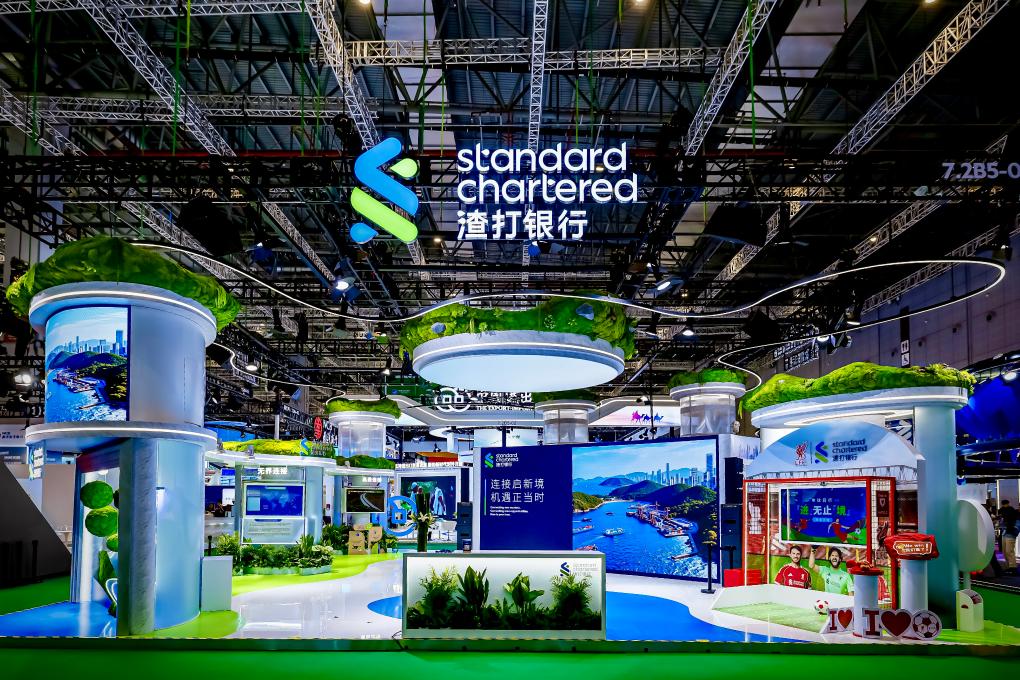
新华财经丨向新而行!进博会上的跨境金融创新趋势观察
Xin Hua Wang· 2025-11-08 06:19
Core Insights - The eighth China International Import Expo (CIIE) serves as a platform showcasing China's expanding openness to the world, with financial institutions presenting innovative cross-border financial solutions to meet the diverse needs of global exhibitors [1] Group 1: Financial Institutions' Participation - Standard Chartered Bank has evolved from a first-time participant to a regular attendee, showcasing products like the upgraded "Outreach" service for SMEs and the "Global Chain" one-stop cross-border financial solution [2] - The bank's support for Chinese enterprises going global is highlighted by its facilitation of a €800 million sustainable development bond for Bright Food Group [2] - Lixin Accounting Firm, participating for the second year, signed a strategic cooperation agreement with Frank Technology to support the latter's overseas business expansion [4] Group 2: Cross-Border Mergers and Acquisitions - Cross-border mergers and acquisitions are becoming essential for Chinese companies to expand markets, acquire technology, and enhance brand influence, with financial due diligence being a complex and critical process [4][6] Group 3: Digital Infrastructure and Financial Services - Financial institutions are focusing on digital RMB applications, upgraded cross-border financial services, and digital infrastructure to facilitate trade [7] - Shanghai Pudong Development Bank has launched an upgraded version of its comprehensive financial service plan, emphasizing "smart-driven, ecological integration, and full-chain coverage" [7] - The Bank of Communications introduced a one-stop cross-border financial service platform, "Jiaoyin Hangmaotong," aimed at supporting foreign trade enterprises [9] Group 4: Insurance Sector Innovations - Mitsui Sumitomo Insurance has been participating in CIIE for seven consecutive years, emphasizing the integration of digital platforms into trade insurance services [9] - The company aims to provide comprehensive, customized insurance and risk management services by linking various critical flows in the trade and shipping industry [9] Group 5: Overall Impact on Global Trade - The innovations in cross-border finance showcased at CIIE reflect the active role of financial institutions in supporting the real economy and global trade, highlighting China's commitment to financial market openness and deep integration with the world [10]



直通进博会|向新而行!进博会上的跨境金融创新趋势观察
Zhong Guo Jin Rong Xin Xi Wang· 2025-11-07 10:21
Group 1 - The China International Import Expo (CIIE) serves as a window showcasing China's increasing openness to the world, with finance playing a crucial role in global economic development [1] - The eighth CIIE highlighted the diverse cross-border financial service needs of global exhibitors, with many financial institutions presenting innovative solutions to empower global trade [2] - Standard Chartered Bank has transformed from a "first-time visitor" to a "returning customer" since its first participation in 2018, showcasing upgraded products and services at the eighth CIIE [3] Group 2 - The bank's support for the issuance of an 800 million euro sustainable development bond by Bright Food Group marks a significant milestone as the first euro sustainable bond in Asia's food industry [3] - Lixin Accounting Firm, participating for the second year, signed a strategic cooperation agreement with Frank Technology to promote overseas business expansion [5] - The firm emphasizes the importance of cross-border mergers and acquisitions as a means for companies to expand markets and enhance brand influence, highlighting the complexities and risks involved [5][7] Group 3 - Financial institutions actively showcased digital RMB applications, upgraded cross-border financial services, and digital new infrastructure at the CIIE, enhancing the efficiency of enterprises in both "bringing in" and "going out" [8] - Shanghai Pudong Development Bank introduced an upgraded comprehensive financial service plan, emphasizing a "smart-driven" strategy for cross-border financial services [8][9] - The Bank of Communications presented a one-stop cross-border financial service platform, "Jiaoyin Hangmaotong," aimed at supporting foreign trade enterprises [11] Group 4 - Mitsui Sumitomo Insurance (China) is exploring digital transformation and aims to integrate insurance services into the shipping trade industry chain [12] - The eighth CIIE's cross-border financial innovations reflect the active role of financial institutions in supporting the real economy and global trade, showcasing China's commitment to financial market openness and integration with the world [12]
四川“十四五”时期基础设施建设主要成就发布 “四张网”撑起高质量发展新格局
Si Chuan Ri Bao· 2025-11-01 01:24
Group 1: Infrastructure Achievements - Sichuan has made significant progress in infrastructure construction during the "14th Five-Year Plan" period, focusing on both traditional and new infrastructure, resulting in a comprehensive transportation network, modern water conservancy network, green energy network, and smart digital network [1] - The total length of the comprehensive transportation network in Sichuan has reached 443,000 kilometers, ranking first in the country, equivalent to the distance from Earth to the Moon [2] - The province's highway network has reached 425,000 kilometers, also ranking first nationally, with the high-speed railway mileage expected to reach 11,000 kilometers by the end of this year, ranking third in the country [2] Group 2: Investment in Transportation - Transportation has become a key driver of investment growth in Sichuan, with road and waterway construction investments exceeding 200 billion yuan in the first year of the "14th Five-Year Plan" and maintaining a high level of over 10% of the province's fixed asset investment [3] - Cumulatively, Sichuan has completed 1.2 trillion yuan in transportation investment during the "14th Five-Year Plan," ranking first in the country [3] Group 3: Water Resources Development - Sichuan's water resources development has seen significant advancements, with total water conservancy investment expected to exceed 70 billion yuan this year and a total investment of 280 billion yuan during the "14th Five-Year Plan," double that of the previous five-year period [4][5] - The province has diversified its investment sources, attracting social capital through various means, including government special bonds and financial credit funds [5] Group 4: Energy and Digital Infrastructure - Sichuan's total installed power capacity has reached 149 million kilowatts, with hydropower capacity expected to exceed 100 million kilowatts this year [5] - The province has established a comprehensive computing power system, with 128 data centers built and 49 under construction, achieving a significant increase in intelligent computing power from less than 10% to nearly 60% [6]
中工国际:近年来承接了包括国家超级计算深圳中心(二期)、鹏城云脑网络智能重大科技基础设施等国家级数据
Mei Ri Jing Ji Xin Wen· 2025-10-27 01:01
Core Viewpoint - The company, China Zhongyuan, maintains a leading position in the design consulting business for data centers and intelligent computing centers, having undertaken several key national projects, including the National Supercomputing Center in Shenzhen (Phase II) and the Pengcheng Cloud Brain network intelligence infrastructure [1] Group 1 - The company has successfully secured multiple significant projects in recent years, contributing to national-level data center initiatives [1] - Since 2025, the company has taken on design work for projects such as the China Minsheng Bank Zhengzhou Strategic R&D Service Base and the Pudong Development Bank and Linggel Data Center, supporting the digital transformation of the financial industry [1] - The company actively contributes to the national digital new infrastructure and the East Data West Computing strategy deployment [1]
福建福州:经济社会发展全面转型 绿意盎然
Zhong Guo Fa Zhan Wang· 2025-10-16 07:41
Group 1 - The "Fuzhou Coastal New City Sandy Coast Ecological Disaster Reduction Case" was selected and promoted globally at the first United Nations "Decade of Ocean" Marine Ecological Protection and Restoration Competition [1] - Fuzhou New Area is becoming a hub for entrepreneurship and livability, with significant projects like the second phase of the Intelligent Computing Center and the Tencent Cloud project accelerating construction [1] - The digital infrastructure in Fuzhou accounts for over 50% of the total in Fujian province, with national-level platforms such as the National Health Big Data Center and the National Land Resource Big Data Application Center being established [1] Group 2 - Fujian has implemented the "Implementation Opinions on Strengthening Ecological Environment Control" to enhance the management of ecological protection red lines and strictly control land use [1] - The province's clean energy installed capacity exceeds 65%, with plans to build 300 national-level green factories and 12 national-level green industrial parks [1] - The number of electric vessels built or under construction in Fujian accounts for 34.5% of the national total, and over 98% of new urban buildings are green [1] Group 3 - The "Fujian Province Forest 'Four Libraries' Linked Pilot Area Construction Plan" was introduced to promote the synergistic development of ecological, economic, and social benefits [2] - The total output value of Fujian's forestry industry is projected to reach 812.1 billion yuan by 2024, with over 3.1 billion yuan in provincial-level financial funds allocated this year [2] - Fujian aims to build a green, low-carbon, high-quality development pattern, with 46 provincial-level energy efficiency "leaders" and 10 national-level ones cultivated to date [2]
数字新基建释放强劲动能
Jing Ji Ri Bao· 2025-10-08 22:09
Core Insights - The 2025 China International Information and Communication Exhibition showcased the theme "Digital-Real Fusion New Engine to Empower Future New Momentum," emphasizing the importance of building a robust digital infrastructure and promoting technological innovation for a smarter and more sustainable digital future [1] Group 1: Industry Development - During the "14th Five-Year Plan" period, China's information and communication industry has made significant progress, with 5G base stations reaching 4.646 million and 5G mobile phone users totaling 1.154 billion, maintaining a global lead in key indicators such as 5G user penetration and gigabit optical network coverage [2] - The country has established a globally leading and largest-scale information and communication network, with two-thirds of prefecture-level cities meeting gigabit city standards and over 240,000 key locations achieving deep mobile network coverage [2] - New types of information infrastructure are developing in coordination, with 10.85 million standard racks of computing power facilities and an intelligent computing power scale of 788 EFLOPS [2] Group 2: Empowering the Real Economy - The integration of information and communication technology is deeply empowering the transformation of the real economy, with over 20,000 "5G + Industrial Internet" construction projects and the emergence of new models such as "unmanned mines" and "smart ports" [3] - The National Computing Power Internet Service Platform has registered over 1.02 million computing power identifiers and aggregated public computing resources exceeding 117 EFLOPS, marking a new phase in the construction of the computing power internet [3] Group 3: Artificial Intelligence Advancements - China's artificial intelligence innovation is rapidly advancing, with over 1,500 large models released, and AI applications are being quickly adopted across various industries, including electronics and consumer goods [4][5] - AI terminals such as AI phones and AI computers have exceeded 100 models, and the deployment of integrated infrastructure for IoT, vehicle networking, and industrial internet is accelerating [4] Group 4: 5G-A Development - 5G-A is a critical phase in the evolution of 5G towards 6G, showcasing new features such as ultra-low latency and high-speed capabilities, with over 300 cities in China initiating large-scale deployments [6][7] - 5G-A enhances network performance compared to 5G, supporting the growth of digital applications and innovation, with practical applications already seen in smart industrial management and information consumption [7] Group 5: Future Outlook - The industry is set to accelerate technological innovation and expand the 5G-A product system, while also advancing 6G technology research and development to foster a future-oriented application ecosystem [7]
“人工智能+”时代的数字新基建:解密中科曙光的“算力+数据”开放之路
Guan Cha Zhe Wang· 2025-09-26 05:40
Core Insights - The article discusses the transformative impact of artificial intelligence (AI) on various industries in China, positioning it as a core engine for high-quality economic development [1] - It highlights the challenges faced in achieving comprehensive intelligence, including fragmented computing infrastructure and isolated high-quality industry data [1] - The need for a new paradigm that transcends traditional product sales and focuses on ecosystem building is emphasized, with a call for a "architect" to integrate resources and drive collaborative innovation [1] Industry Overview - The current state of China's AI computing sector is characterized by a paradox of diverse innovations and rigid barriers, leading to inefficient resource utilization [2] - The "AI Computing Open Architecture" initiative, launched by Zhongke Shuguang in collaboration with over twenty partners, aims to create an "Android-like" ecosystem for China's AI industry [2] - This architecture promotes an open and collaborative approach, encompassing a five-layer system that standardizes interfaces and protocols, facilitating the integration of heterogeneous computing resources [2] Company Strategy - Zhongke Shuguang is transitioning from a hardware supplier to a builder and leader of the AI industry ecosystem, providing a platform for collaboration among algorithm companies, application developers, and research institutions [3] - The company’s strategy includes the release of high-quality data sets, such as the "High-Resolution Meteorological Data Sharing Program," which offers precise meteorological data to the public [4][5] - The synergy between top-tier computing power and high-quality data is expected to create significant ripple effects across various industries, enhancing innovation and application [5] Future Outlook - Zhongke Shuguang's strategic path involves creating a closed-loop ecosystem that integrates powerful computing infrastructure with high-quality data resources, supporting the "Artificial Intelligence+" initiative [6] - The company is positioned to play a crucial role in China's digital economy and technological self-reliance, contributing to the nation's leadership in the global digital landscape [6]

特斯拉发布“宏图计划”第四篇章,其中包含着哪些“秘密”?
Zhong Guo Qi Che Bao Wang· 2025-09-03 03:55
Core Insights - Tesla's "Master Plan" fourth chapter aims to integrate AI and autonomous driving technologies to accelerate the transition to sustainable abundance and human prosperity [2][3][4] - The plan emphasizes the creation of a safer, cleaner, and more enjoyable world through the unification of hardware and software [3][4] AI Empowerment - Tesla's innovations in electric vehicles, clean energy, and robotics lay the foundation for a technological renaissance aimed at eliminating scarcity [3][4] - The company believes that growth is limitless and that technological innovation can address resource shortages, similar to past industrial revolutions [3][4] Technological Integration - Tesla is building a collaborative network of AI and physical world technologies, including Full Self-Driving (FSD), Dojo supercomputer, and Optimus humanoid robots [5][6] - FSD is progressing towards full autonomy by continuously learning from millions of miles of road data, enhancing its ability to handle complex driving scenarios [5] - The Dojo supercomputer, with a processing power of 1.1 EFLOPS, supports AI model training and improves decision-making speed for vehicles [5] Robotics and Energy Solutions - The Optimus robot addresses labor shortages in repetitive and hazardous tasks, already being utilized in Tesla factories and service industries [6] - Tesla's Powerwall and Megapack are key components in energy transition, providing reliable energy storage solutions for homes and businesses [6][7] Virtual Power Plant Innovation - Tesla's Virtual Power Plant (VPP) connects dispersed battery systems to create a large energy buffer, effectively managing energy supply and demand [7] - The VPP model has shown significant success in pilot projects, indicating its potential as a critical infrastructure for renewable energy [7] Business Model Innovation - Tesla is transitioning to a data-driven business model, exploring innovations like the Robotaxi network and AI technology licensing to generate high-margin software revenue [8] - The Robotaxi service allows users to access autonomous vehicles through subscription or pay-per-use, projected to contribute 30% of Tesla's total revenue by 2030 [8] Industry Impact - The release of the fourth chapter of Tesla's "Master Plan" signifies a shift from product-focused innovation to a new stage of system capability integration [9] - The vision outlined in the plan is seen as forward-looking, but the path from concept to reality involves overcoming various challenges in technology and regulation [9][10] Societal Implications - Experts suggest that technology is not only a tool for economic development but also a key force in addressing global challenges like climate change and labor shortages [10] - The need for innovative companies to redefine future possibilities and contribute to a sustainable and prosperous society is emphasized [10]

