数智化转型

Search documents
陈春花:组织能力是自我造就的过程
Jing Ji Guan Cha Bao· 2026-02-26 01:08
(原标题:陈春花:组织能力是自我造就的过程) 企业之间的差异,正从"拥有什么",转向"能够持续形成什么样的能力";管理的重心,也从外部竞争, 回归到组织自身的成长方式。2026年,将是组织从"消耗战"迈向"能力构建战"的真正转折点。 在我接触的企业中,在组织能力建设上,常常面临不同的困境。 传统企业往往结构僵化、角色依赖,人们习惯于按照已有的角色岗位去思考,去理解承担的责任,并为 了守护住自己的角色,害怕调整,导致组织无法面对外部环境的变化。 新创企业借助于数智技术和创新顾客价值需求,实现倍数增长,甚至成为独角兽。但这些企业在快速成 长过程中,人员增长过快、组织问题层出不穷,组织能力成为瓶颈。 无论是传统企业还是新创企业,如何快速整合不同资源,高效协调配置资源以应对复杂环境,都是无法 回避的核心挑战。因此,打造企业的组织能力,一直是一个挑战性的话题。 一、组织能力的三个维度 对组织能力的理解,大家有很多不同看法:有人认为组织能力就是企业有一支过硬的队伍;有人认为组 织能力是一套机制;还有人认为组织能力是企业所具有的核心能力。 这些看法都有其合理之处。为了帮助大家更好地理解什么是"组织能力",我引用克里斯坦森的 ...
加强轻纺业高端供给能力建设
Jing Ji Ri Bao· 2026-02-24 22:12
加强与共建"一带一路"国家的合作。进一步完善顶层制度设计,推动国际产能合作政策加速落地,支持 有实力的轻纺企业到共建国家投资设厂。拓展贸易空间,扩大我国轻纺产品在共建国家的市场份额。共 建轻纺产业园区,打造区域轻纺产业集群,实现共同发展。 (作者分别系国家发展改革委产业经济与技术经济研究所研究员、副研究员) (文章来源:经济日报) 近期发布的数据显示,2025年中国轻纺城市场总成交额达4413.86亿元,同比增长10.07%,显示出我国 轻纺业的市场潜力。 轻纺产业是指以纺织行业为核心,涵盖纺织原料、服装服饰、家纺产品等多个领域的工业部门。其产品 不仅用于满足人民基本生活需求,还应用于国防、重工业及文教卫生等领域。放眼全球,我国拥有最为 完整且配套齐全的现代轻工纺织产业体系,具备强大的稳定性和自我调节能力。"十四五"期间,我国轻 工、纺织业在复杂环境下彰显强大韧性,全球竞争力稳步增强,正加速实现从规模领先到质量引领、从 低成本供应商到全球创新伙伴的跨越。 当前,在全球经济复苏乏力、地缘政治冲突加剧与贸易保护主义持续抬头的复杂外部环境下,全球供应 链呈现区域化重构态势,东南亚、南亚等新兴制造基地以低成本优势持续 ...
三部门联合推动 酒业“十五五”行动密码在哪儿
Bei Jing Shang Bao· 2026-02-24 13:45
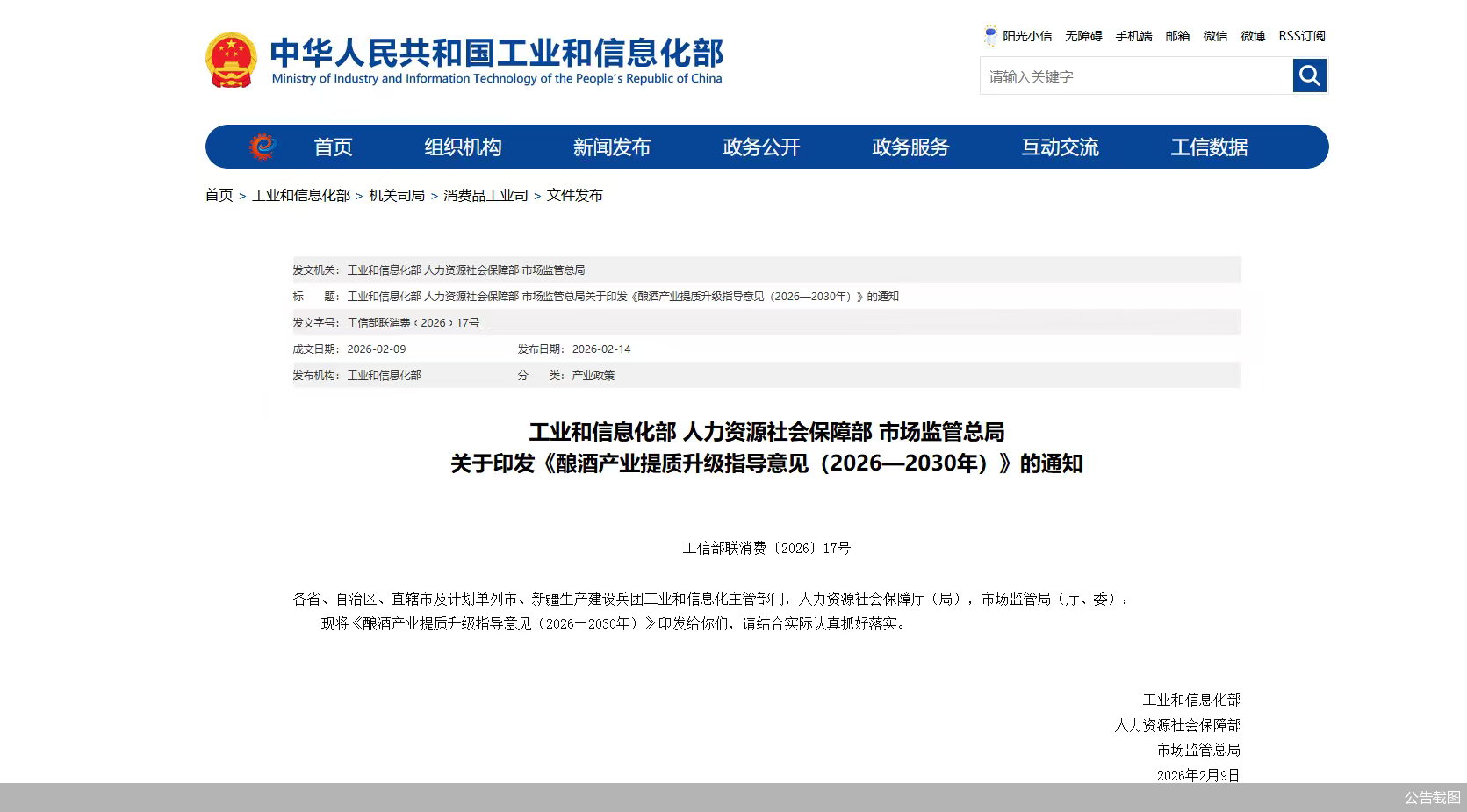
随着三部门联合印发《酿酒产业提质升级指导意见(2026—2030年)》(以下简称《指导意见》),中国酒业为期五年的高质量发展路径正式开启。2月24 日,北京商报记者从工业和信息化部官网获悉,工业和信息化部、人力资源社会保障部、市场监管总局三部门联合印发《指导意见》,从增强原料供给保障 能力、提升产业科技创新水平、调整优化产业结构、转变产业发展方式、发展新模式新业态、加强品牌文化赋能、完善产业支撑体系七大方面勾勒出21 项"重点任务"。当新技术、新理念、新模式从文本走向实践,中国酿酒产业正站在一个从"传统酿造"向"现代智造"跨越的历史关口。 筑牢上游"第一车间" 在酿造行业,品质的起点不在车间,而在田间。《指导意见》明确提出,丰富酿酒专用原料、强化原料种植基地建设以及完善联农带农机制,标志着酿酒产 业对上游产业链的掌控正在从"采购思维"转向"种植思维"。 《指导意见》显示,加强高粱、大麦、酿酒葡萄、酿酒青稞等特色酿酒原料品种培育推广,支持适宜酿酒的新原料种类拓展。鼓励高校、科研机构与企业联 合攻关,培育转化率高、风味物质富集、抗逆性强的专用原料品种。加强对本土酿酒微生物菌种的筛选与开发应用,提升生产菌株与加工工 ...


中航光电:公司已经将大宗原材料上涨作为价格谈判的因素
Zheng Quan Ri Bao· 2026-02-24 12:09
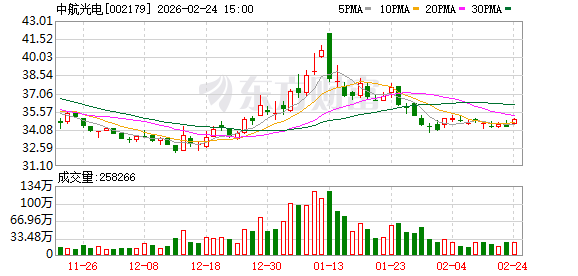
(文章来源:证券日报) 证券日报网讯 2月24日,中航光电在互动平台回答投资者提问时表示,公司产品遵循市场化定价,在与 客户沟通价格的过程中,已经将大宗原材料上涨作为价格谈判的因素。面对大宗原材料价格变动,公司 也将不断推进战略成本管控,坚持研发源头拉动,推动数智化转型,促进效率提升。 ...

连连支付重磅推出连连财智 开启企业全球收支数智化新征程
Sou Hu Cai Jing· 2026-02-24 10:43
Core Viewpoint - Lianlian Payment has officially launched a new global expense management platform, Lianlian Caizhi, aimed at addressing the digital expense management needs of enterprises, providing a one-stop solution for corporate payments, expense control, and fund management to support refined operations and global growth [1][3]. Group 1: Platform Features - The Lianlian Caizhi platform integrates various resources and services to facilitate corporate payment processes, automate employee reimbursements, and enhance financial management efficiency, ultimately helping enterprises reduce costs and increase efficiency [5][6]. - The platform covers diverse corporate payment scenarios, including deferred payments, global travel bookings, and corporate procurement, offering convenient and comprehensive value-added services [5][6]. - Lianlian Caizhi incorporates AI modules, utilizing advanced technologies such as natural language processing and enhanced search capabilities to provide intelligent, secure, and convenient support for enterprises [6][7]. Group 2: Business Potential - The platform has demonstrated strong business potential across different types of enterprises, showcasing three significant advantages: convenience through a dedicated corporate credit card for global travel, compliance with comprehensive traceability and classification of expenses, and increased efficiency through integrated financial management [7]. - The launch of Lianlian Caizhi marks a significant advancement in Lianlian's service system, paving the way for broader industry applications and deeper integration within the industrial chain, thus serving as a new engine for industrial transformation and high-quality development [7]. - Lianlian Payment aims to continue deepening its focus on enterprise-level payment and digital services, leveraging technological innovation to enhance the Lianlian Caizhi platform and streamline the entire expense management process for enterprises [7].
能源开新局 | 努力开创油气行业高质量发展新局面
Zhong Guo Dian Li Bao· 2026-02-24 07:10
Core Insights - The article emphasizes the importance of the oil and gas industry in ensuring national energy security and supporting economic development while transitioning to a green and low-carbon economy [1][3][6]. Group 1: Development Goals and Strategies - The "14th Five-Year Plan" has laid a solid foundation for the oil and gas industry, focusing on enhancing energy security and promoting green transformation [6][8]. - The "15th Five-Year Plan" aims to establish a new energy system and strengthen the energy security strategy, emphasizing the integration of fossil and renewable energy [2][3]. Group 2: Industry Positioning and Responsibilities - The oil and gas sector is crucial for national economic stability, tasked with ensuring supply, enabling transformation, and fostering collaborative development [3][4]. - The industry must enhance domestic supply capabilities and focus on technological advancements to meet core energy demands [3][6]. Group 3: Achievements and Infrastructure Development - During the "14th Five-Year Plan," the oil and gas industry saw significant investment, with an average annual investment of 387 billion yuan, a 48% increase from the previous plan [6]. - The construction of a comprehensive oil and gas infrastructure network has accelerated, with a total pipeline length reaching 200,000 kilometers and storage capacity increasing to 54 billion cubic meters [6][7]. Group 4: International Cooperation and Green Development - The industry has expanded international cooperation, with an average annual import of 540 million tons of crude oil and 167 billion cubic meters of natural gas during the "14th Five-Year Plan" [7]. - Green and low-carbon initiatives have been advanced, including the integration of oil and gas exploration with renewable energy sources [7][8]. Group 5: Future Planning and Key Tasks - The "15th Five-Year Plan" will focus on enhancing supply security, deepening reforms, and accelerating green transformation [8][9]. - Key tasks include improving oil and gas exploration, strengthening infrastructure connectivity, and enhancing international cooperation [9][10].
陈春花:以流程重构牵引组织成长
Jing Ji Guan Cha Bao· 2026-02-24 02:45
Core Viewpoint - The article emphasizes the necessity of transforming individual capabilities into organizational capabilities through effective processes, which are essential for long-term growth and stability in organizations [1]. Group 1: Organizational Transformation - The first change involves breaking existing organizational divisions to create new resource collaboration models, which is crucial for developing new processes and responding to external challenges [2]. - Organizations must establish a dual business model that includes both existing ("stock") and new ("incremental") businesses, as they follow different development logics [3]. Group 2: Value Distribution - The second change focuses on constructing value distribution processes rather than merely resource distribution processes, as traditional resource allocation often hinders innovation and transformation [4][5]. - A lack of effective resource distribution processes aligned with transformation needs is a significant barrier for many traditional enterprises [5]. Group 3: Data-Driven Process Reconstruction - Datafication is a prerequisite for effective organizational changes, requiring businesses to present their operations and value creation processes in quantifiable forms [6]. - The datafication process should center around experiences of employees, customers, and partners, ensuring that the transformation is accurately reflected and communicated [7]. - Establishing a smart technology platform to create data assets is essential for enhancing operational efficiency and fostering collaboration [8]. Group 4: Process Change and Organizational Growth - Process changes not only drive overall organizational growth but also determine the effectiveness of resource combinations and operational efficiency [10]. - Companies must learn from industry benchmarks and integrate best practices into their management systems to develop their unique processes and capabilities [10][11]. - Understanding that existing processes may severely hinder development is crucial for initiating effective process systems [11].
企业架构实践与创新观察报告(2025年)
Sou Hu Cai Jing· 2026-02-22 02:36
今天分享的是:企业架构实践与创新观察报告(2025年) 报告共计:60页 企业架构实践与创新观察报告(2025年)核心内容总结 中国信通院2026年2月发布的《企业架构实践与创新观察报告(2025年)》,立足我国企业数智化转型深水区的发 展现状,指出企业架构是破解转型痛点、实现战略与执行衔接的核心方法论,系统剖析了企业架构的理论体系、 实践路径与优秀案例,并提出未来发展建议。 报告指出,数字经济高质量发展、政府政策高位推动、技术资源日趋丰富及大型企业转型的体系化需求,四大因 素驱动各行业以架构方法深化数智化转型,而当前企业普遍面临战略与落地分离、业技双轨、数据与决策断层等 结构性矛盾,企业架构成为解决这些问题的关键方案。 在理论层面,报告梳理了企业架构从框架探索、机理优化到数智化动态创新的发展脉络,明确其是连接战略、业 务与技术的系统性管理框架,以TOGAF为代表的主流框架形成了业务、数据、应用、技术四层核心架构,具备 战略引领、业务牵引、数据贯通、技术支撑、治理护航五大特征,能为企业不同层级参与者提供标准化的沟通与 管理工具。 报告核心提出企业架构驱动数智化转型的"六步骤+两支撑"实践路径,即通过战略解码、 ...

用友:2025年ERP价值化国产替代方法、路径与实践报告
Sou Hu Cai Jing· 2026-02-18 15:14
Core Insights - The essence of ERP domestic replacement is value replacement, which requires the integration of digital transformation and domestic innovation to achieve high-quality development [1][16][39] - China's new generation of enterprise software has gained global competitiveness and is becoming the core support for domestic replacement [1][2] Group 1: Drivers and Barriers - ERP domestic replacement is driven by three main factors: national strategy, enterprise transformation, and technological innovation [1][19] - Large enterprises face four major barriers in ERP domestic replacement: existing application regression, significant resistance to change, difficulty in realizing new value, and the pain of system switching [1][32] Group 2: Value Upgrades - Successful replacement can achieve six value upgrades: business agility, data-driven management, lean management, intelligent operations, global operations, and self-control [1][36] Group 3: Replacement Strategies - The report outlines three replacement strategies based on different enterprise characteristics: 1. Enterprises with tightly coupled business applications should opt for overall ERP replacement to achieve full business collaboration through standardized processes and integrated supply chain [10][43] 2. Comprehensive enterprise groups can adopt a "strip" replacement strategy focusing on vertical integration and digital enhancement in finance and human resources [10][43] 3. Enterprises with self-developed peripheral systems should focus on core financial and operational replacements, leveraging new intelligent accounting platforms and massive data processing technologies [10][43] Group 4: Technological Integration - The report emphasizes that the domestic software, represented by the Yonyou BIP platform, supports value-based domestic replacement through its full-stack domestic innovation adaptation, super-converged databases, and efficient data migration capabilities [2][11] - AI and other digital technologies are crucial in driving enterprise digital transformation and enhancing competitiveness [23][25] Group 5: Industry Context - The rapid development of AI, big data, and cloud computing is reshaping industry dynamics and injecting strong momentum into industrial transformation [13][23] - The domestic replacement of ERP systems is not merely a system swap but a significant opportunity for enterprises to enhance operational performance and competitiveness [2][28]
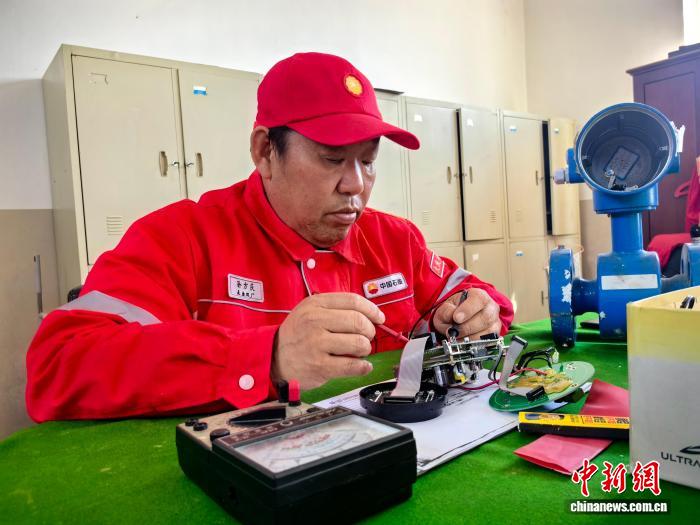
(新春走基层)大庆油田老采油工的第二十个春节:VR巡检15秒走完2万步路
Zhong Guo Xin Wen Wang· 2026-02-17 08:36
Core Insights - The Daqing Oilfield has implemented a VR inspection system that significantly reduces the time required for oil well inspections from 1.5 hours to just 15 seconds, allowing workers to complete tasks that previously required 20,000 steps in a fraction of the time [1][2]. Group 1: Digital Transformation - The "Tianyan, Numerical Control, and Geological Model Integration" management system has digitized the operations of 218 oil-water wells and 8 stations, allowing for precise control of water mixing at transfer stations, which can now be managed through a computer interface [2]. - The Daqing Oilfield has achieved full digital coverage in its oil extraction teams, marking a significant step in its digital transformation journey [2]. Group 2: Operational Efficiency - The new digital systems have not diminished the importance of manual inspections; instead, they complement the experience of veteran workers, ensuring that both technology and human expertise are utilized effectively [5]. - The AI model "Xingbei Xiaozhi" developed by the oil extraction plant can provide immediate troubleshooting solutions and safety protocol interpretations, maintaining a 100% equipment integrity and data accuracy rate [5]. Group 3: Future Developments - By 2024, the team plans to complete low-cost IoT upgrades for small stations, achieving a fully unmanned operation model that emphasizes centralized monitoring and intelligent diagnostics [4].