核聚变商业化

Search documents
观察 | 融资数亿!红杉高瓴抢投的核聚变,藏着你未来10年的财富密码
未可知人工智能研究院· 2026-01-08 10:03
Core Viewpoint - The article discusses the increasing investment in nuclear fusion technology, highlighting its potential as a solution to the energy demands of the AI era and the significant financial backing from top venture capital firms and government initiatives [2][8][20]. Group 1: Investment Trends - Dongsheng Fusion, a newly established nuclear fusion company, secured several hundred million yuan in its angel round funding [2]. - Major investors include Sequoia, IDG, Hillhouse, and Dinghui, indicating a strong interest from top-tier venture capital firms [3]. - The trend of investing large sums in early-stage, high-risk projects like nuclear fusion is unusual, as traditionally, venture capitalists avoid significant investments at the angel stage due to high risks [9][10]. Group 2: Energy Demand and AI - The demand for AI computing power is driving a shift in focus from acquiring more chips to securing sufficient electricity, as the operational costs of AI data centers are heavily influenced by electricity expenses [17][19]. - The capital expenditures of major tech companies like Microsoft, Google, and Amazon are projected to approach $400 billion, with a significant portion allocated to addressing energy shortages [19]. Group 3: Nuclear Fusion as a Solution - Nuclear fusion is being viewed as a "ultimate energy" solution due to the limitations of traditional energy sources and the safety concerns associated with nuclear fission [21][22]. - Notable investments in nuclear fusion include a $375 million investment by OpenAI's CEO in Helion and a power purchase agreement between Google and Commonwealth Fusion [24][25]. Group 4: Domestic Developments - In China, the establishment of the China Fusion Energy Company and significant funding rounds for various fusion startups indicate a strong governmental push towards fusion energy, with plans to invest over 300 billion yuan by 2030 [28][31]. - The timeline for fusion energy development includes milestones such as starting combustion experiments in 2027 and completing engineering experimental reactors by 2035 [35]. Group 5: Technological Advances - The article outlines three main approaches to nuclear fusion: Tokamak, FRC, and inertial confinement, each with its own advantages and challenges [41]. - Recent breakthroughs in high-temperature superconductors and AI technology are accelerating the development of nuclear fusion by making it more feasible and cost-effective [46][48]. Group 6: Opportunities for Individuals - The transition from laboratory to engineering in nuclear fusion presents numerous job and entrepreneurial opportunities across various fields, including engineering, materials science, and project management [57]. - Investment opportunities exist in the supply chain related to nuclear fusion, such as superconducting materials and precision manufacturing [58]. - Understanding the implications of nuclear fusion and energy transformation can provide individuals with a competitive edge in future investment opportunities [58]. Group 7: Dongsheng Fusion's Significance - Dongsheng Fusion is pursuing a unique "deuterium-helium-3" fusion route, which is considered safer and cleaner than traditional methods [61]. - The company is backed by a team from Fudan University and supported by significant funding from local government initiatives [62]. - The interest from top-tier VCs in Dongsheng Fusion is attributed to its differentiated technology, strong academic foundation, and robust policy support [63].

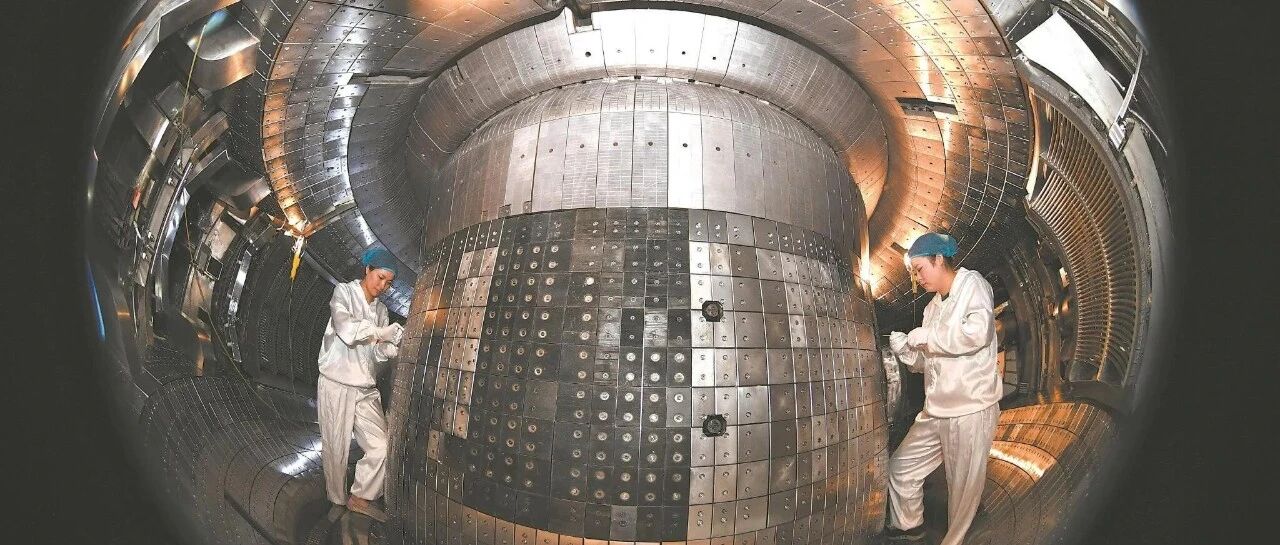
从特朗普跨界到中国超导突破,全球核聚变商业化竞赛全面升温
Hua Er Jie Jian Wen· 2025-12-23 12:32
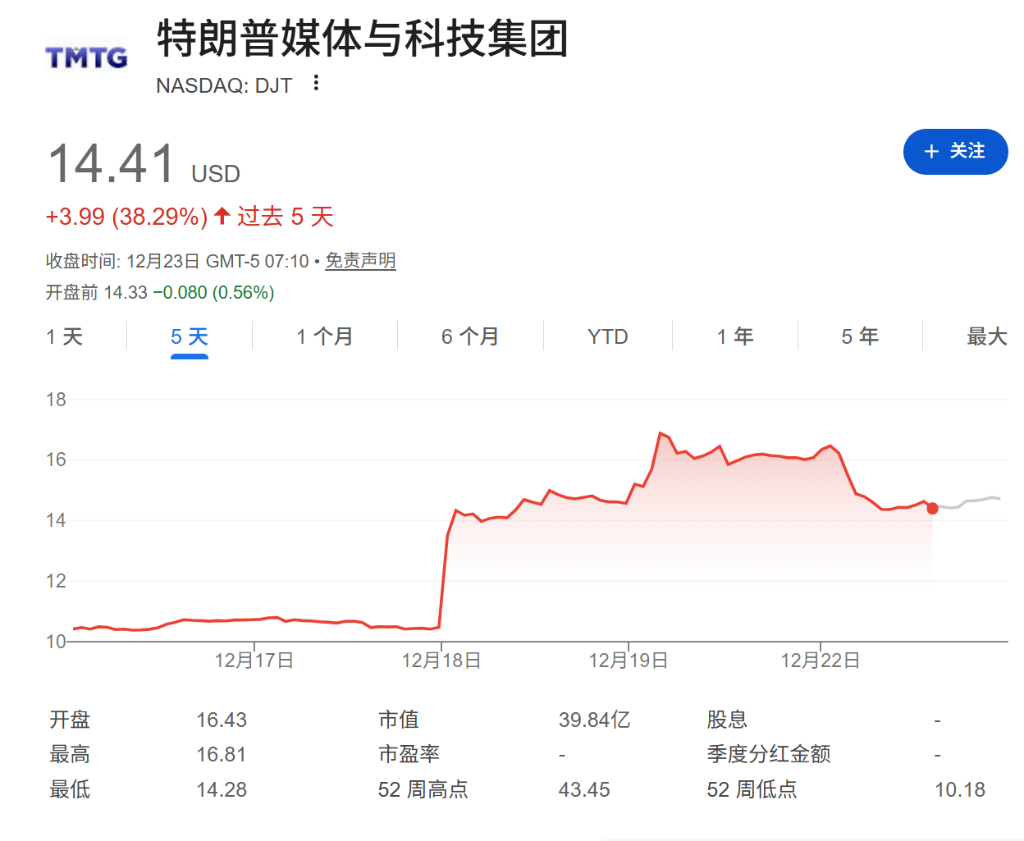
Core Insights - The commercialization of controlled nuclear fusion technology is accelerating due to surging energy demand and advancements in artificial intelligence computing power [1][3] - A significant merger involving Trump Media & Technology Group and TAE Technologies, valued at $6 billion, highlights the increasing investment interest in the nuclear fusion sector [1][3] - TAE Technologies, backed by major investors like Google and Goldman Sachs, plans to build its first commercial-scale fusion power plant by 2026 [3][4] Investment Landscape - The nuclear fusion investment landscape is heating up, with major players like Helion Energy and Commonwealth Fusion Systems (CFS) making strides in the U.S. [4][6] - Helion Energy has begun construction on its first commercial fusion power plant and has secured a power purchase agreement with Microsoft for electricity starting in 2028 [4][6] - CFS has raised approximately $3 billion and is collaborating with MIT to develop high-temperature superconducting magnets for its SPARC device [4][6] Technological Advancements - Chinese companies are rapidly advancing in nuclear fusion technology, holding the most patents globally and achieving significant milestones [6][7] - The Energy Singularity team in Shanghai has set a new record with a magnet strength of 21.7T, surpassing previous records held by MIT and CFS [6][7] - Other Chinese startups, like Hanhai Fusion and Xinghuan Fusion, are also making progress in fusion technology, with some exploring commercial applications in related fields [6][7] Challenges and Market Dynamics - Despite technological breakthroughs, nuclear fusion still faces challenges in achieving grid-level commercial application, with current operational times limited to seconds [7] - The funding landscape shows a stark contrast, with the U.S. investing approximately $5 billion in the last five years compared to China's $500 million, highlighting the scale of investment in the sector [7] - The long-term nature of nuclear fusion investments requires patience from investors, with timelines potentially extending 8 to 10 years [7]
国防军工行业周报(2025年第52周):基本面筑底,行业进入配置周期-20251222
Shenwan Hongyuan Securities· 2025-12-22 09:44
行 业 及 产 业 国防军工 2025 年 12 月 22 日 相关研究 证 券 研 究 报 告 证券分析师 韩强 A0230518060003 hanqiang@swsresearch.com 武雨桐 A0230520090001 wuyt@swsresearch.com 穆少阳 A0230524070009 musy@swsresearch.com 研究支持 达邵炜 A0230124030001 dasw@swsresearch.com 联系人 达邵炜 A0230124030001 dasw@swsresearch.com 基本面筑底,行业进入配置周期 看好 ——国防军工行业周报(2025 年第 52 周) 本期投资提示: ⚫ 上周申万国防军工指数上涨 1.53%,中证军工龙头指数上涨 4.05%,同期上证综指上 涨 0.03%,沪深 300 下跌 0.28%,创业板指下跌 2.26%,申万国防军工指数跑赢创业 板指、跑赢沪深 300、跑赢上证综指、跑输军工龙头指数。1、从细分板块来看,上周 国防军工板块 1.53%的涨幅在 31 个申万一级行业涨跌幅排名第 11 位。2、从我们构建 的军工集团指数变化来 ...


【投资风口】中医药赛道迎重磅利好;特朗普60亿美元跨界核聚变
第一财经· 2025-12-19 11:27
前言 投资信息如迷雾?市场节奏总踏空?那是你缺少利器!想精准捕捉研报价值?想抢占投资先机?《行研 精选》为你破局!覆盖每个交易日,从事件中发现机会,提炼研报精华,助力捕捉行业风口。 12月18日,香港特区政府发布首份《中医药发展蓝图》。《蓝图》就各主要范畴制定短、中和长期 目标及行动计划,涵盖五大领域,并提出8个目标及20个行动。 二、特朗普60亿美元跨界核聚变,商业化进程按下加速键 当地时间12月18日,特朗普媒体科技集团(DJT)发布公告称与一家获得Alphabet支持的核聚变能 源公司TAE Technologies签署最终合并协议,双方将通过全部股票交易合并,交易价值超过60亿 美元。 点击付费阅读,挖掘行业机会,把握投资风口! 【 精选快读 】 一、中医药赛道迎重磅利好,香港首份产业发展蓝图落地 ...

特朗普旗下公司60亿美元押注核聚变!A股板块应声爆发,宏微科技20CM涨停,中国一重、百利电气、雪人集团涨停
Jin Rong Jie· 2025-12-19 01:49
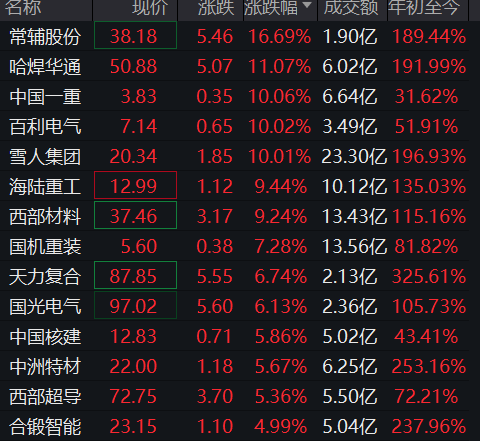
Core Viewpoint - The controllable nuclear fusion sector is experiencing significant market activity, driven by the merger between Trump Media Technology Group and TAE Technologies, which is expected to accelerate the commercialization of nuclear fusion technology [1][3]. Market Performance - Several companies in the controllable nuclear fusion sector saw substantial stock price increases, with Macro Micro Technology hitting a 20% limit up, Changfu Co. rising over 16%, and others like China First Heavy Industries and Baili Electric reaching their daily limit [1]. - Notable stock performances include: - Changfu Co.: 38.18, up 16.69% with a trading volume of 1.90 billion, a 189.44% increase [2] - TAE Technologies merger value exceeds $6 billion, leading to a 41.93% increase in DJT stock price, closing at $14.86 [3]. Industry Analysis - The merger is seen as a catalyst for the commercialization of nuclear fusion technology, which is increasingly viewed as a potential ultimate energy solution amid rising AI computational demands and limitations in traditional power grids [6]. - The political backdrop includes Trump's support for the nuclear energy sector, which has invigorated capital markets and led to significant stock price increases in nuclear energy-related companies [6]. Affected Sectors - **Superconducting Materials Sector**: Demand for superconducting materials is expected to rise as controllable nuclear fusion devices rely on them for plasma stability, benefiting companies with proprietary technologies [7]. - **Core Materials and Components Sector**: Companies producing key materials like copper-based superconducting powders and precision components are likely to gain market share as nuclear fusion projects commence [7]. - **Technical Services and System Integration Sector**: Firms with expertise in system integration for controllable nuclear fusion devices will find opportunities for business expansion as the industry accelerates [7].

招标风再起,核聚变再到配置节点
2025-12-11 02:16
Summary of Key Points from Conference Call Records Industry Overview - The nuclear fusion industry is expected to see a significant increase in bidding amounts, with projections for 2025 reaching approximately 160 to 180 billion RMB, marking a critical turning point for the sector [1][3][4]. - The transition from experimental reactors to engineering reactors in 2026 is anticipated to catalyze further growth, with the CFBDR project expected to launch large-scale projects valued between 800 to 1,000 billion RMB [1][6][7]. Core Insights and Arguments - The nuclear fusion process utilizes deuterium and tritium as fuel, which can be extracted from seawater, providing a nearly limitless resource. The energy density is extremely high, with one gram of deuterium-tritium reaction producing energy equivalent to burning several dozen kilograms of oil [2]. - Achieving controlled nuclear fusion presents significant challenges, including maintaining extremely high temperatures (over 100 million degrees) and strong magnetic fields for sufficient duration [2]. - The Q value, a critical performance metric for fusion reactors, must exceed 30 for commercialization. Currently, no deuterium-tritium reactions have commenced, but experimental activities starting in 2026 are expected to yield meaningful data [1][9]. Investment Strategies - Investment strategies should focus on leading and platform companies whose products or services are applicable across most reactor projects. Companies like Yongding and Hangyang are highlighted for their long-term growth potential, with market shares of 20-25% and 10-15%, respectively [1][5][17]. - Specific project-linked companies, such as Hezhuan in Hefei and Lianchuang in Jiangxi, are also recommended for short-term investment opportunities [5]. Market Trends and Projections - The cooling segment is identified as a new development direction for 2025, accounting for 12-15% of the cooling load, with companies like Hangyang leading the market with over 70% share in cooling technology [3][16]. - The market outlook for 2026 is optimistic, with expectations of significant order growth, potentially elevating companies like Yongding from hundreds of millions to billions in order volume [7][18]. Key Companies and Their Status - Major players in the nuclear fusion market include Shanghai Superconductor and Dongbu Superconductor, which are expected to dominate the market with substantial production capacities [15]. - Platform companies such as Yongding and Hengtong, along with chain companies like Hezhuan, Lianchuang, and Guoguang, are positioned to play crucial roles in upcoming projects [15][17]. Additional Important Insights - The magnetic confinement principle in fusion reactors necessitates the construction of large magnetic field systems, with low-temperature and high-temperature tokamak devices requiring significant investment in magnet technology [8]. - The importance of superconducting materials, particularly high-temperature superconductors, is emphasized due to their ability to provide higher magnetic field strengths essential for fusion processes [13][14]. This comprehensive overview captures the essential elements discussed in the conference call, providing insights into the nuclear fusion industry's current state and future potential.


十余家核聚变产业链企业在京路演,市场重点关注这些领域
Di Yi Cai Jing· 2025-12-03 13:21
Core Insights - The market is increasingly interested in exploring diverse routes in nuclear fusion technology beyond the mainstream Tokamak approach, with a focus on private startups showcasing their technologies and commercialization plans [1][2] Group 1: Investment and Market Trends - The recent nuclear fusion technology conversion event in Beijing attracted multiple investment institutions and 17 industry chain companies, highlighting the growing interest in private startups [1] - Investment in the global nuclear fusion sector has surged from $1.9 billion in 2021 to $9.7 billion currently, with the number of related companies increasing by 143% compared to 2023 [2] - Domestic investments are also on the rise, with significant funding rounds reported, including nearly 11.5 billion yuan for China Fusion and 500 million yuan for Nova Fusion [3] Group 2: Technological Developments - The diversification of technological routes is reshaping the nuclear fusion landscape, with new approaches like FRC showing cost advantages over traditional Tokamak systems [2] - The HHMAX-901 FRC device costs approximately 200 million yuan and can achieve electricity costs comparable to existing thermal power, with reusable key components for future iterations [2] - Medical applications of nuclear fusion technology are emerging, particularly in neutron therapy and isotope production, addressing market demands for targeted treatments [4] Group 3: Industry Opportunities - The nuclear fusion industry chain in China is developing clear investment opportunities, with significant funding directed towards core devices and supporting components [3] - The expansion of application scenarios, including medical fields, is opening new market possibilities, with a focus on boron isotope separation technology [3][4] - Investment firms are looking to support a variety of technological routes, including FRC and laser fusion, to foster innovative startups in the nuclear fusion sector [5]
板块三季报短期承压,航天强国新征程开启
ZHONGTAI SECURITIES· 2025-11-04 09:06
Investment Rating - The industry investment rating is maintained at "Overweight" [5] Core Views - The third quarter reports of the sector show a lackluster performance, but certain sub-sectors continue to exhibit sustained prosperity [8][24] - The successful launch of the Shenzhou 21 manned spacecraft marks the beginning of a new journey for China's space power [29][30] Summary by Relevant Sections Industry Overview - The defense and military industry consists of 142 listed companies with a total market value of approximately 2,937.05 billion yuan and a circulating market value of about 2,540.09 billion yuan [2] Market Performance - The defense and military industry index decreased by 0.07% in the past week, ranking 22nd among 31 first-level industries [7] - The current PE (TTM) for the defense and military industry index is 70.9 times, with various sub-sectors showing different PE ratios [7] Key Company Dynamics - Major manufacturers like AVIC Chengfei reported a revenue of 27.58 billion yuan in Q3 2025, with a year-on-year increase of 58.6% [25] - AVIC Shenyang's revenue increased by 62.8% year-on-year, while AVIC Xi'an maintained stable growth [24][25] Component and Electronics Sector - The passive components sector has shown significant year-on-year improvement, driven by increased orders related to missile production [10][28] - Companies like Torch Electronics and Hongyuan Electronics have seen their performance gradually improve since Q2 [10][28] Aerospace Developments - The "Fifteen Five" plan has officially included "building a space power" as an independent goal, indicating a significant policy shift towards the aerospace industry [30] - The successful launch of the Shenzhou 21 spacecraft is part of a broader strategy to enhance China's capabilities in space exploration and technology [29][30] Emerging Opportunities - The commercial space sector is expected to see rapid growth, with multiple private companies working on reusable rocket technologies [15][30] - The nuclear fusion project in Anhui is projected to be completed by 2027, with significant investments anticipated in the coming years [33][36] Recommendations for Attention - Focus on missile and military electronics, particularly companies like Zhenhua Technology and Hongyuan Electronics [21][32] - Monitor developments in the aerospace engine sector, including companies like AVIC Power [21][32] - Keep an eye on the commercial aerospace and low-altitude economy sectors, with companies like Aerospace Rainbow and Zongheng Co. [21][32]


西部超导(688122):看好公司多增长极驱动成长提速
HTSC· 2025-10-30 08:58
Investment Rating - The report maintains a "Buy" rating for the company with a target price of 99.18 RMB [6][5]. Core Views - The company reported Q3 revenue of 1.266 billion RMB, a year-over-year increase of 4.23%, but a quarter-over-quarter decrease of 23.22%. The net profit attributable to the parent company was 104 million RMB, down 59.44% year-over-year and 72.48% quarter-over-quarter. For the first three quarters of 2025, the company achieved a revenue of 3.989 billion RMB, up 23.30% year-over-year, and a net profit of 650 million RMB, up 7.62% year-over-year [1][2]. - The decline in Q3 net profit is attributed to a decrease in government subsidies, increased asset impairment provisions, and higher R&D expenditures [2]. - The company is optimistic about long-term growth driven by its three major segments: high-end titanium alloys, superconductors, and high-temperature alloys [1]. Summary by Sections Financial Performance - In Q3 2025, the company’s revenue was 1.266 billion RMB, with a year-over-year growth of 4.23% and a quarter-over-quarter decline of 23.22%. The net profit attributable to the parent company was 104 million RMB, reflecting a significant year-over-year decrease of 59.44% and a quarter-over-quarter decrease of 72.48% [1][2]. - For the first three quarters of 2025, the company reported a total revenue of 3.989 billion RMB, which is a 23.30% increase year-over-year, and a net profit of 650 million RMB, up 7.62% year-over-year [1]. R&D and Investments - The company is investing in R&D, with Q3 2025 R&D expenses reaching 113 million RMB, a year-over-year increase of 113.92%. This increase is part of the company's strategy to advance its R&D projects [2]. - The company announced a joint investment to establish Hefei Juneng, contributing 161.5 million RMB, which will enhance the development of high-performance superconducting materials for fusion engineering [3]. Market Position and Outlook - The company has a strong order backlog for superconducting products, benefiting from the acceleration of global nuclear fusion commercialization. As the sole domestic supplier of low-temperature superconducting wire for the ITER project, the company is well-positioned to capitalize on this trend [4]. - The company’s inventory as of Q3 2025 was 4.311 billion RMB, an increase of 11.68% from the beginning of the year, indicating strong demand for its products [4]. Profit Forecast and Valuation - The report maintains profit forecasts for the company, projecting net profits of 983 million RMB, 1.128 billion RMB, and 1.323 billion RMB for 2025, 2026, and 2027, respectively. The estimated EPS for these years is 1.51 RMB, 1.74 RMB, and 2.04 RMB [5][9]. - The company is assigned a PE ratio of 57 times for 2026, reflecting its unique market position and growth potential [5].

可控核聚变“升温”,上海迎来新的产业风口
财联社· 2025-10-23 08:54
Core Viewpoint - The article highlights the growing interest and investment in controlled nuclear fusion, referred to as the "ultimate energy," transitioning from research to industrial reality in China, particularly in Shanghai [4][5]. Industry Overview - The controlled nuclear fusion sector in China is approaching a turning point due to technological breakthroughs, capital influx, and local government support, with Shanghai emerging as a key hub [5]. - The commercial viability of nuclear fusion is projected to be achievable within 10 years for small-scale applications and 25 years for large-scale commercialization, according to experts [6]. Technological Advancements - Key technological advancements driving the commercialization of nuclear fusion include: 1. The combination of magnetic confinement and high-temperature superconductors, enabling a shift from experimental to engineering devices [6]. 2. The application of AI for real-time plasma stability control [6]. 3. Breakthroughs in critical materials, such as radiation-resistant materials and low-cost tritium fuel, which lower engineering barriers [6][9]. Challenges and Bottlenecks - The industry faces several challenges before achieving commercial viability: 1. The cost-to-energy yield ratio needs improvement, as current fusion experiments often require more energy input than output [8]. 2. The tritium fuel supply chain is underdeveloped, with global annual production below 20 kilograms, making it costly [8]. 3. The complexity of engineering and lack of industrial standards pose additional hurdles [8][9]. Investment Landscape - There is a notable increase in investment in the nuclear fusion sector, with a shift from government funding to market-driven investments from industry funds and venture capital [10][13]. - The Shanghai Future Industry Fund, with a scale of 15 billion yuan, is playing a significant role in promoting nuclear fusion investments and transitioning research into commercial operations [11][12]. Shanghai's Strategic Position - Shanghai has prioritized nuclear fusion as a key area for technological and industrial development, implementing action plans to foster innovation and talent in this field [15][16]. - The city aims to establish its first fusion power plant by 2045, with significant milestones set for technology development and engineering [17]. Key Companies and Projects - Several companies, including Dongsheng Fusion and Supermagnetic Energy, are emerging in Shanghai's nuclear fusion landscape, focusing on critical components like high-temperature superconducting magnets [18]. - Supermagnetic Energy is developing a large-scale superconducting magnet system, which is crucial for reducing costs in fusion devices [18].