深空探测

Search documents
科技向善凝共识!AI治理登顶“2025十大科技热词”榜首
Nan Fang Du Shi Bao· 2026-01-29 13:37
Group 1: AI Governance - The term "AI governance" ranks first among the "Top Ten Technology Buzzwords" for 2025, indicating a recognition within the Chinese tech community that technological excellence must align with governance wisdom for sustainable development [1] - The emphasis on AI governance reflects public concerns regarding AI ethics and safety, marking a global shift from "technology catching up" to "rule shaping" [1][2] - AI governance is described as a systematic project that integrates technological control, legal regulations, industry collaboration, and public education, aiming to guide AI development in alignment with human common interests [1] Group 2: Emerging Technologies - "Embodied intelligence" is included in the government work report for the first time in 2025, signaling a positive policy direction aimed at advancing AI technology and fostering new industrial development [4] - The International Thermonuclear Experimental Reactor (ITER) organization announced a milestone achievement in controlled nuclear fusion technology, with China playing a crucial role in this international collaboration [5] - Significant progress has been made in the brain-computer interface industry in 2025, with breakthroughs in core technologies and applications, laying a solid foundation for large-scale development [6] Group 3: Commercial Space and Deep Technologies - China's commercial space industry has gained attention, with operational capabilities established at various launch sites and a growing number of private rocket companies achieving successful launches [7] - "Deep-sea technology" is highlighted in the government work report as a new industry to be promoted, particularly in the context of the Hainan Free Trade Port [8] - The successful launch of the Tianwen-2 probe marks a significant step in China's deep space exploration efforts, following previous lunar and Mars missions [9] Group 4: Aging Population and Smart Technology - The intersection of aging population and technological revolution is driving innovation in "silver economy" technologies, with the establishment of a technology park in Shanghai aimed at enhancing elderly care services [10] - 2025 is projected to be the year of industrialization for "intelligent agents," with IDC predicting that by 2026, about 50% of data teams in China's top 500 companies will utilize intelligent agents for data preparation and analysis [11] Group 5: Innovation Recognition - "Chinese innovation" is recognized as a global buzzword in 2025, with China's innovation index ranking among the top ten worldwide, showcasing remarkable achievements in technology [12]
具身智能、深空探测、智能体等入选2025年度“十大科技热词”
Xin Jing Bao· 2026-01-29 10:03
Core Insights - The Chinese Society of Science and Technology Journalism released the "Top Ten Technology Buzzwords for 2025," highlighting key areas of technological advancement and innovation in China [1] Group 1: Technology Buzzwords - AI Governance: China is leading global AI governance and has proposed the establishment of a World AI Cooperation Organization, promoting a global governance action plan [2] - Embodied Intelligence: This term was included in the government work report for the first time, signaling a push towards AI technology innovation and industry development [3] - Controlled Nuclear Fusion: The ITER organization announced the completion of all components for its reactor, marking a significant milestone in controlled nuclear fusion technology [4] - Brain-Computer Interface: Significant advancements in core technologies and applications have been made, laying a solid foundation for the industry's growth [5] - Commercial Space: China's commercial space industry is rapidly developing, with multiple private companies achieving successful rocket launches and establishing satellite manufacturing capabilities [6] - Deep-Sea Technology: This sector was included in the government work report, emphasizing its importance in emerging industries, especially in the Hainan Free Trade Port [7] - Deep Space Exploration: The successful launch of the Tianwen-2 probe marks another significant step in China's exploration of outer space [8] - Silver Economy Technology: Innovations in elder care technology are being developed to address the challenges of an aging population, with the establishment of a technology park in Shanghai [9] - Intelligent Agents: 2025 is expected to be the year of industrialization for intelligent agents, with predictions that 50% of data teams in China's top 500 companies will utilize these technologies by 2026 [10][11] - Chinese Innovation: The term "Chinese Innovation" is gaining global recognition, with China ranking in the top ten for innovation indices, showcasing remarkable achievements in technology [12]
2025年度科技热词出炉
Xin Hua She· 2026-01-29 06:36
Core Viewpoint - The China Science and Technology News Society has released the "Top Ten Technology Buzzwords for 2025," highlighting key areas of technological advancement and innovation in the country [1]. Group 1: Technology Buzzwords - The selected buzzwords for 2025 include: AI governance, embodied intelligence, controllable nuclear fusion, brain-computer interfaces, commercial aerospace, deep-sea technology, deep space exploration, silver-haired technology, intelligent agents, and Chinese innovation [1]. Group 2: Selection Process - The evaluation process for the buzzwords involved a combination of big data screening and extensive collection of suggestions, leading to a candidate list that was finalized through the assessment of academicians, technology experts, media leaders, and science popularization experts [1].
【新华社】中国积极推进科技合作助力攻克全球难题
Xin Hua She· 2026-01-29 03:44
Group 1: International Collaboration in Science and Technology - China is actively promoting international cooperation in key scientific fields such as nuclear fusion, deep space exploration, and artificial intelligence, aiming to build a multi-level collaborative framework for global scientific governance [3][4][5] - The establishment of the International Lunar Research Station, led by China, has resulted in cooperation agreements with 17 countries and international organizations, showcasing China's leadership in international scientific projects [5][6] - The Chinese Academy of Sciences is opening multiple advanced fusion energy experimental facilities to global collaboration, emphasizing the importance of collective efforts to address energy challenges [4][7] Group 2: Advancements in Artificial Intelligence and Machine Chemistry - The Precision Intelligent Chemistry National Key Laboratory plans to establish an international organization for intelligent scientific standards, attracting attention from global research institutions [3][6] - The development of a machine chemist capable of conducting experiments autonomously has garnered interest from countries like Thailand and Singapore, with plans to share technology to assist in overcoming challenges in energy, medicine, and agriculture [6][7] - The initiative aims to democratize access to scientific research and innovation, breaking the monopoly of Western countries on AI data [6][7] Group 3: Global Governance and Rule Building - China is advocating for a fair and reasonable global scientific governance system, with the establishment of the International Society for Deep Space Exploration in Anhui [7] - The Hefei Fusion Declaration, signed by scientists from over ten countries, promotes the spirit of open sharing and collaborative win-win cooperation in fusion research [7] - The emphasis on building a new ecological system for global scientific collaboration reflects China's commitment to addressing common scientific goals for the benefit of humanity [7]

中国积极推进科技合作助力攻克全球难题
Xin Hua She· 2026-01-29 02:22
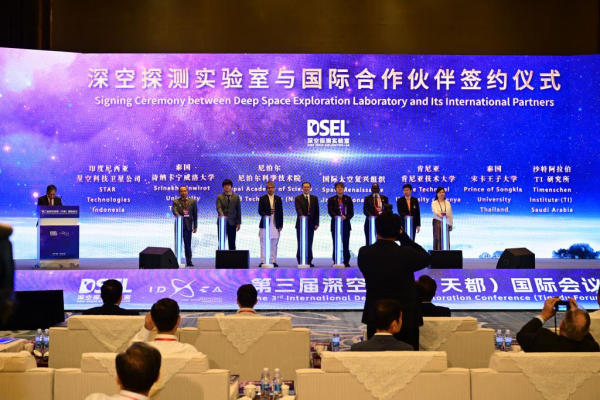
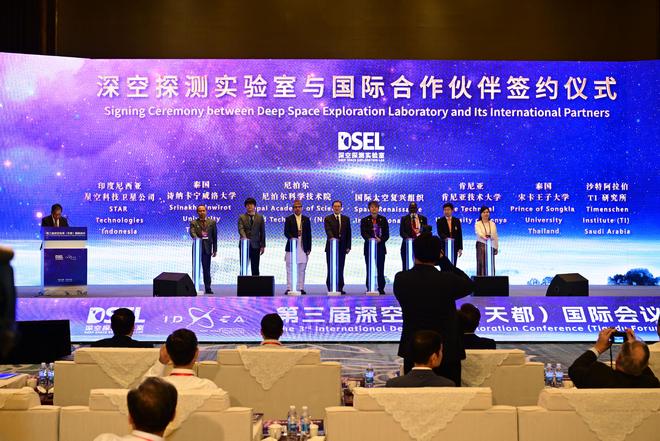
2025年9月5日,嘉宾在第三届深空探测(天都)国际会议上参加深空探测实验室与国际合作伙伴签约仪 式。新华社记者 周牧 摄 新华社合肥1月29日电 题:中国积极推进科技合作助力攻克全球难题 新华社记者刘菁、陈诺、何曦悦 今年1月,中国科学技术大学精准智能化学全国重点实验室向中国科学院提交了一份申请:计划于2026 年成立智能科学家生态联盟国际组织,与全球多国共建智能科研标准生态。这一实验室诞生的能自 己"看"论文、"想"方案、"做"实验的机器化学家,吸引了英国、新加坡、印度、泰国等国的高校科研院 所及专家的目光。 这样的国际合作,早已在中国科技前沿领域多点开花、成势见效。过去一年中,中国正以核聚变、深空 探测、人工智能等关键领域为支点,构建起大科学工程协同攻关、前沿技术成果普惠共享、全球科技治 理规则共建共商的多层次合作格局,在能源安全、深空探索、数字发展等事关人类未来的领域,探索协 同创新、共同攻克难题的新路径。 2025年12月末,国际热核聚变实验堆ITER的又一批重要部件——校正场线圈采购包在安徽合肥顺利竣 工,即将起运交付。总部位于法国的ITER是当今世界规模最大、影响最深远的国际大科学工程,被称 作 ...
我国首个星际航行学院成立!
Xin Lang Cai Jing· 2026-01-27 22:08
Core Viewpoint - The establishment of the Interstellar Navigation College at the University of Chinese Academy of Sciences aims to cultivate high-quality, innovative talents in the fields of interstellar propulsion, deep space communication and navigation, and space science, responding to national strategic needs in space exploration [1][2]. Group 1: College Establishment and Objectives - The Interstellar Navigation College was officially inaugurated on January 27, focusing on cutting-edge fields related to space exploration [1]. - The college aims to address the talent bottleneck in China's space industry by integrating education, technology, and talent development [1]. - The college is part of the "Science and Education Integration 3.0" strategy of the Chinese Academy of Sciences, emphasizing the cultivation of composite talents with solid foundations and strategic vision [1]. Group 2: Historical Context and Future Outlook - The foundation of the college is rooted in historical efforts dating back over 60 years, initiated by prominent scientists like Qian Xuesen and Zhao Jiu-Zhang, who held the first "Interstellar Navigation Symposium" [1]. - The next 10 to 20 years are seen as a critical window for leapfrog development in China's interstellar navigation field, with original innovation and technological breakthroughs expected to reshape deep space exploration [1]. - The college aims to become a high ground for basic research in aerospace, high-level talent cultivation, and international academic exchange, contributing to China's voice and wisdom in the global arena [2].
新建特色平台、人才专项培养 成立星际航行学院有何战略意义?
Yang Shi Xin Wen· 2026-01-27 17:17
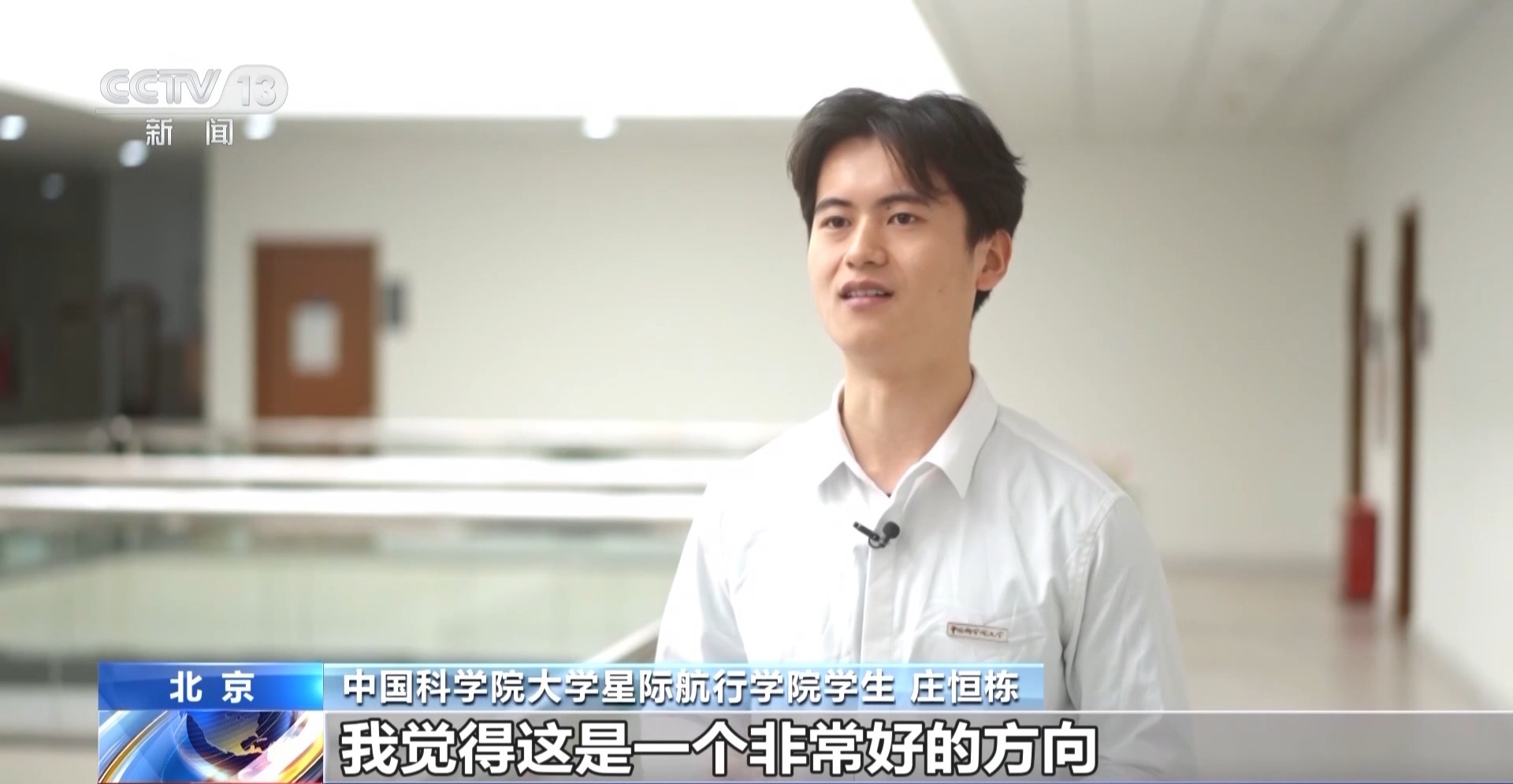
Core Viewpoint - China's deep space exploration is entering a new phase, with the establishment of the Interstellar Navigation College at the University of Chinese Academy of Sciences aimed at fostering innovative talent for space exploration and strengthening the country's position in global technological competition [1][8]. Group 1: Establishment of the Interstellar Navigation College - The Interstellar Navigation College was officially launched on January 27, with a focus on interdisciplinary education in space science and engineering [1][8]. - The college aims to cultivate composite talents who can address the changing demands of global situations, combining engineering skills with scientific literacy [7][10]. Group 2: Curriculum and Educational Approach - The college will implement a curriculum that breaks down traditional disciplinary barriers, promoting interdisciplinary learning and collaboration among students [12][22]. - New courses will cover various aspects of planetary science, including planetary physics, chemistry, geology, and astrobiology, emphasizing a comprehensive understanding of celestial bodies [11][12]. Group 3: Strategic Importance and Future Goals - The talent cultivation initiative is designed to meet national needs for interstellar exploration, focusing on training exceptional engineers and top scientists [10][19]. - The college plans to establish six specialized platforms for immersive training, including a drone simulation platform and a space science satellite teaching platform [22]. Group 4: Challenges in Interstellar Exploration - Significant technical challenges remain for humanity to achieve true interstellar travel, including advancements in propulsion technology and sustainable life support systems [16][19]. - Future breakthroughs are expected to come from innovative technologies that can enhance propulsion efficiency and enable long-term habitation in space [18][21].
国内首个!星际航行学院,正式成立
DT新材料· 2026-01-27 16:05
| 800+ | 200+ | 30+ 50.000m' | | --- | --- | --- | | 企业参展 | 科研院所 | 主题论坛 展览面积 | | 2026.06.10 ->06.12 | | 上海新国际博览中心(N1-N5)馆 | 【DT新材料】 获悉,据新华社,1月27日, 中国科学院大学星际航行学院 揭牌仪式在中国科学院与"两弹一星"纪念馆举行,标志该学院正式成立。 星际航行学院官网显示,中国科学院大学星际航行学院前身为航空宇航学院,由 中国科学院工程热物理研究所牵头,联合空间应用工程与技术中心 、 微小卫星创新研究院、国家空间科学中心、空天信息创新研究院等单位共同组建。 学院以航空宇航科学与技术为核心学科, 重点发展飞行器设计、推进与动力、飞行器智能控制等关键方向,下设4个系,研究领域包括空间科学,空气 动力学与推进,结构与材料力学,自主系统与控制等 。 师资力量方面, 星际航行学院现有6名院士及30余位国家高层次领军人才, 学院依托共建的五大航空航天类研究所,拥有航空发动机、空间科学、载 人空间站、北斗卫星等各类高精尖国家级实验平台,为学科建设与科研创新提供坚实基础。 中国科学院战略高 ...

在“两弹一星”纪念之地扬帆星际
Xin Hua She· 2026-01-27 10:56
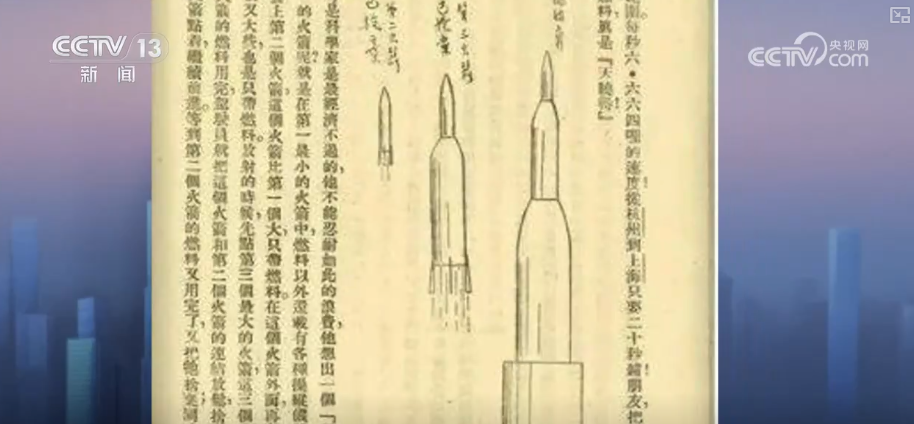
"这份使命,承载着代代相传的赤子之心。"中国科学院国家空间科学中心主任王赤院士的话语,将 人们的思绪拉回20世纪60年代。 清晨的寒意还笼罩在雁栖湖畔的山脚下。1月27日一大早,在中国科学院与"两弹一星"纪念馆前, 一群人炽热的目光已投向比远山更辽远的星空——这天,中国科学院大学星际航行学院在此正式揭牌成 立。 如同一场跨越时空的对话。这片土地,曾见证钱学森等先辈在困顿中起步,将"两弹一星"的梦想锻 造成现实;同样在这里,一个关于星辰大海的更遥远的梦想正式启航。 仪式结束,人群散去。纪念馆静立依旧,一个新的起点已然锚定。仰望星空,行则将至。从这里出 发的,将是新一批扎根大地、敢闯未知的年轻人。他们的征途,不仅关乎技术突破,更承载着一个国家 探索浩瀚宇宙的梦想——让文明的灯火,照亮更遥远的星空。 彼时,国家百业待兴,中国科学院在钱学森、赵九章等科学家的倡议下,召开首次"星际航行座谈 会",继而成立"星际航行委员会"。当前,面对从"近地轨道"迈向"深空探测"的新征程,人才培养成为 最迫切的课题。 作者:胡喆 星际航行学院首任院长朱俊强院士将学院定位为"三大高地":基础研究高地、创新人才高地、 国际交流高地。这不仅 ...
星际航行码头、行星际导航、火星通讯……奇思妙想逐步化作现实 | 全释硬科技一探究竟↓
Yang Shi Wang· 2026-01-27 09:17
Core Viewpoint - The establishment of the Interstellar Navigation College at the University of Chinese Academy of Sciences marks a significant step in advancing China's capabilities in deep space exploration, which is seen as a critical area of global technological competition [12][36]. Group 1: Significance of the College - The Interstellar Navigation College aims to cultivate comprehensive talents capable of addressing the multifaceted challenges of interstellar navigation, integrating knowledge from various disciplines such as engineering, space science, and artificial intelligence [10][20]. - The college serves as a "breakthrough station" to overcome research bottlenecks in interstellar navigation by leveraging the strengths of various institutes within the Chinese Academy of Sciences [12][18]. Group 2: Educational Approach - The college's curriculum emphasizes interdisciplinary learning, breaking down traditional academic barriers to foster innovation and adaptability among students [23][10]. - A unique mentorship model will be implemented, where a team of mentors will guide individual students, ensuring that the latest scientific and technological advancements are incorporated into the educational process [23][20]. Group 3: Technological Challenges - Achieving true interstellar navigation freedom requires significant technological breakthroughs, particularly in advanced propulsion systems, life support systems, and deep space communication technologies [30][31]. - The college will focus on developing high-energy density fuels and closed-loop life support systems to support long-duration space missions [8][31]. Group 4: Future Platforms and Initiatives - The college plans to establish six specialized platforms, including an intelligent drone simulation platform and a comprehensive teaching practice platform for space science satellites, to provide immersive training environments for students [33][35]. - These platforms will enhance practical learning and innovation, aligning with the college's mission to prepare students for the challenges of deep space exploration [33][12].