
火箭可重复使用技术

Search documents
重视火箭核心环节的投资机会
2025-12-29 01:04
Summary of Key Points from the Conference Call Industry Overview - The conference call focuses on the **rocket manufacturing industry**, detailing cost structures, key players, and investment opportunities in the sector. Cost Structure of Rocket Manufacturing - The total cost of a single rocket launch is approximately **$70 million** without considering reusability, with the breakdown as follows: - Rocket manufacturing cost: **$50-60 million** - First-stage booster cost: **$30-40 million** - Second-stage rocket cost: **$12-14 million** - Recovery and repair costs after launch: **$250,000 to $2 million** depending on damage severity - Assembly and transportation to launch site: **$1 million** - Fuel costs: **$350,000** - Personnel and equipment costs: **$2 million** [1][10][11] - The use of **reusable technology** can significantly reduce costs, bringing the total launch cost down to **over $20 million**, with a unit price of **6,000-7,000 RMB per kilogram** for payloads, which is substantially lower than traditional non-reusable options [1][12]. Key Components of Rocket Cost - The cost structure includes: - **Payload fairing**: Approximately **10%** of total cost - **Propellant storage tanks**: **15-25%** of total cost - **Liquid engines**: **40-60%** of total cost, representing a critical area for investment [2][3][6]. Major Players in the Industry - In China, significant companies include: - **Tianjin Yuefeng Aerospace**: Strong technical background linked to state-owned enterprises - **Jiu Tian Xing Ge** and **Huan Yu Technology**: Key suppliers for national large-scale rockets - **SpaceX**: Internationally recognized for its innovative use of materials and cost reduction strategies [4]. Types of Rocket Propellants - Rocket propellants are categorized into: - **Solid propellants**: Long storage life but non-reusable - **Liquid propellants**: High thrust and controllability, currently the only option for recovery [5]. Investment Opportunities - Key areas for investment include: - **Liquid engines**: Approximately **50%** of manufacturing costs - **Structural components**: About **25%** of costs, impacting manufacturing efficiency and economic benefits - **New materials**: Potential for performance enhancement and market value [6][14]. Current Production Capacity - China's current production capacity is insufficient to meet the projected demand of over **500 rockets annually**, with existing facilities unable to scale up quickly enough. The market is expected to grow at a rate of over **five times** [13]. Investment Segments in the Rocket Supply Chain - Investment opportunities exist in various segments, including: - **Engines**: Representing **50-60%** of costs - **Solid engines**: Although not reusable, they are still a market segment - **Core components**: Such as servos and 3D printing technologies - **Storage tank development**: Companies like Tianjin Yuefeng and Jiu Tian Xing Ge are involved [14][15]. This summary encapsulates the critical insights from the conference call, highlighting the cost structure, key players, and investment opportunities within the rocket manufacturing industry.
两次首飞回收失败,“炸火箭”的学费非交不可吗?
虎嗅APP· 2025-12-25 13:38
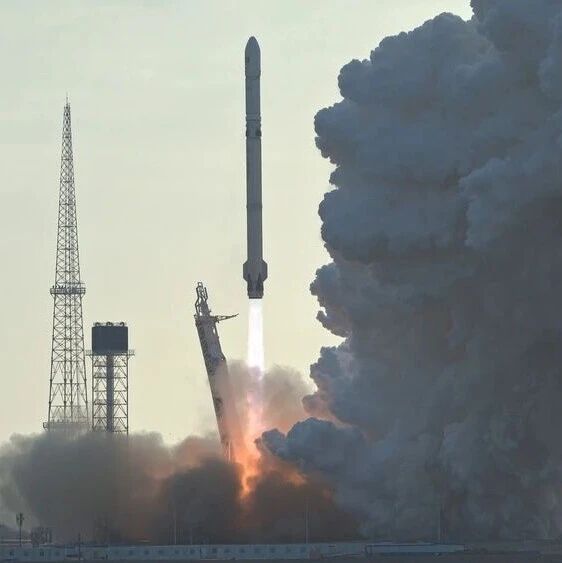
Core Viewpoint - The article discusses the challenges and developments in the field of reusable rocket technology, highlighting recent launches and the significance of failures in the learning process for future successes [4][18]. Group 1: Recent Developments - The Long March 12A rocket was successfully launched on December 23, 2023, marking China's second attempt at validating reusable technology in a rocket [4]. - The Long March 12A's first stage recovery was unsuccessful, while the second stage successfully reached its intended orbit [4]. - Blue Arrow Aerospace's Zhuque-3 rocket also faced challenges, failing to achieve a successful recovery during its launch on December 3, 2023 [4][18]. Group 2: Challenges of Reusable Rockets - Reusable rockets face significant technical challenges, including precise navigation, control systems, and the need for advanced landing technologies [13][14]. - The high costs associated with developing reusable rockets are a barrier, with initial investments starting at around 1 billion yuan [11]. - The integration of various technologies and the potential for human error during the development process contribute to the high risk of failure in rocket launches [16]. Group 3: Historical Context and Future Prospects - The concept of reusable rockets has been discussed since the 1960s, but significant advancements only began with SpaceX's initiatives in the 2010s [9]. - SpaceX's Falcon 9 has successfully completed over 500 booster recoveries, demonstrating the viability of reusable rocket technology [10]. - The future of China's commercial space industry is poised for growth, with several rockets, including the Tianlong-3 and Long March 12B, expected to undergo testing in the coming years [19][20].

推动形成商业航天产业发展的社会合力
Zheng Quan Ri Bao· 2025-12-03 16:12
Core Insights - The successful launch of the Zhuque-3 rocket marks a milestone in China's commercial space industry, being the first orbital reusable rocket developed by Blue Arrow Aerospace [1][2] - The core of the commercial space industry's growth is cost reduction, with reusable rockets being a key pathway to achieve this [1] - The successful development and testing of reusable rockets can significantly lower satellite launch costs and accelerate satellite networking processes [1] Summary by Sections - **Launch Success**: Zhuque-3 successfully completed its orbital mission, representing a significant advancement in China's capabilities for reusable liquid oxygen-methane rockets [1][2] - **Technical Validation**: Although the recovery of the rocket was not achieved, the proximity of the debris to the target recovery point indicates valuable technical validation. This mission integrated a nine-engine parallel liquid oxygen-methane propulsion system and demonstrated high-precision return navigation, guidance, and control technologies [2] - **Future Developments**: Two more domestic reusable rockets are set to make their maiden flights in December, with contributions from both state-owned and private enterprises, indicating a collaborative effort in advancing reusable rocket technology [2] - **Industry Outlook**: The progress of Zhuque-3 and other reusable rocket projects signifies a new promising phase for China's commercial space industry, aligning with the aspirations of the aerospace community [3]
朱雀三号首飞入轨、可回收失败,投资人称不会影响上市申报
第一财经· 2025-12-03 10:13
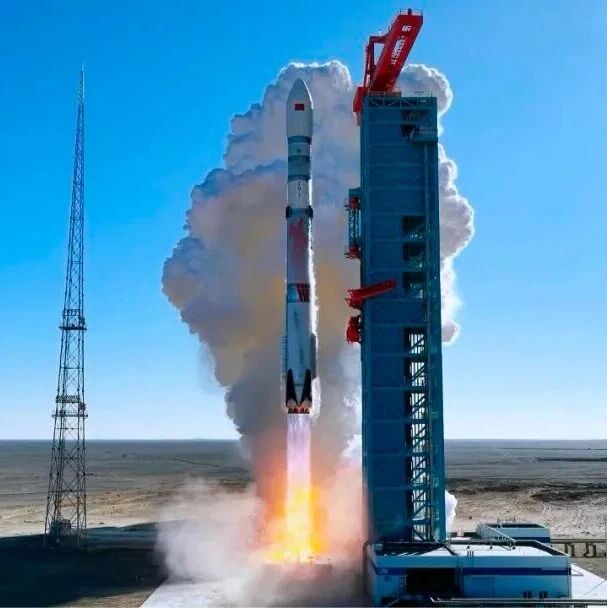
Core Viewpoint - The successful launch of the Zhuque-3 rocket marks a significant milestone in China's commercial space industry, despite the failure of the first stage recovery, which does not hinder the company's plans for an IPO [3][4]. Group 1: Launch Details - The Zhuque-3 rocket was launched on December 3, 2025, completing its flight mission with the second stage entering the designated orbit, while the first stage recovery failed due to an anomaly during landing [3]. - The rocket is designed for large constellation networking tasks, with a target of at least 20 reuses and a near-Earth orbit carrying capacity of no less than 18 tons [3]. Group 2: Industry Impact - The launch represents the first domestic integration of a nine-engine parallel liquid oxygen-methane propulsion system, showcasing advancements in technology [4]. - Despite the recovery failure, the successful launch is expected to accelerate satellite networking processes and alleviate previous pressures faced by satellite operators [4]. - The company plans to analyze the data from this mission to improve recovery technology and continue validating reusable rocket technology in future missions [4].
朱雀三号首飞入轨、可回收失败,投资人称不会影响上市申报
Di Yi Cai Jing· 2025-12-03 09:20
Core Viewpoint - The successful launch of the Zhuque-3 rocket marks a significant milestone in China's commercial space industry, despite the failure of the first stage recovery, which is considered a secondary aspect of the mission [1][2] Group 1: Rocket Launch and Performance - The Zhuque-3 rocket successfully completed its flight mission, achieving key milestones such as liftoff, stage separation, and payload deployment, demonstrating stable and reliable performance [1] - The rocket's first stage recovery failed due to an anomaly during the landing phase, with debris landing at the edge of the recovery area [1] - The Zhuque-3 is designed for a reusable capability of at least 20 times and aims to support large satellite constellation deployments with a near-Earth orbit capacity of no less than 18 tons [1] Group 2: Industry Impact and Future Prospects - The launch represents the first domestic integration of a nine-engine parallel liquid oxygen-methane propulsion system, showcasing advancements in technology [2] - Despite the recovery failure, the successful launch is not expected to hinder Blue Arrow Aerospace's plans for an IPO, as the rocket's capabilities position it as a leader in the private commercial space sector [2] - The successful flight alleviates pressure on satellite constellation operators, indicating significant implications for the industry [2] - Blue Arrow Aerospace plans to analyze data from this mission to improve recovery technology and continue validating reusable rocket capabilities in future missions [2]
朱雀三号重复使用运载火箭发射入轨
财联社· 2025-12-03 05:53
Core Viewpoint - The successful launch of the Zhuque-3 rocket marks a significant step for Blue Arrow Aerospace in developing a new generation of low-cost, high-capacity, and reusable launch vehicles, despite the failure of the first-stage recovery test [1] Group 1: Rocket Specifications and Features - Zhuque-3 is a new generation liquid oxygen-methane launch vehicle developed by Blue Arrow Aerospace, designed for low cost, high capacity, and frequent launches [1] - The rocket features a two-stage configuration with a diameter of 4.5 meters for both stages and a fairing diameter of 5.2 meters, with an overall length of 66.1 meters [1] - The propulsion system is based on the Tianque series liquid oxygen-methane engines developed by Blue Arrow Aerospace [1] Group 2: Launch and Recovery Test - The Zhuque-3 rocket successfully completed its flight mission, with the second stage entering the designated orbit [1] - A recovery verification for the first stage was conducted, but an abnormal combustion occurred, preventing a soft landing at the recovery site, resulting in a failed recovery test [1] - Despite the failure to achieve the recovery goal, the mission validated the correctness and rationality of the testing, launch, and flight processes, as well as the compatibility of various system interfaces [1] Group 3: Future Plans and Improvements - The development team plans to conduct a comprehensive review of the test process and identify the cause of the failure, aiming to optimize the recovery plan for future missions [1] - The data obtained from the flight will serve as a crucial foundation for subsequent launch services and the reliable recovery and reuse of the rocket's stages [1]

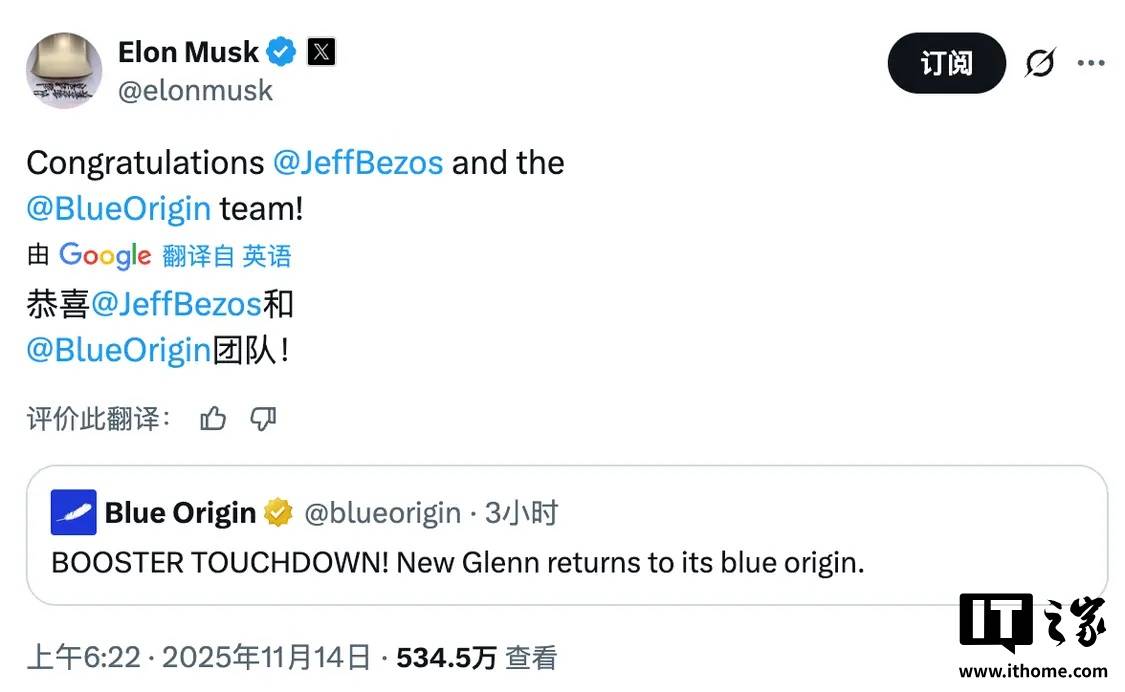
蓝色起源首次成功回收火箭,SpaceX 马斯克祝贺贝索斯
Sou Hu Cai Jing· 2025-11-14 01:12
Core Points - Blue Origin successfully launched the reusable "New Glenn" heavy-lift rocket, carrying a NASA Mars probe, on November 13 [1] - Elon Musk congratulated Jeff Bezos and the Blue Origin team on this achievement [1] Group 1: Launch Details - The launch occurred at 15:55 EST, with the rocket's first stage and boosters successfully recovered [2] - After the first and second stages separated, the second stage continued to its designated orbit with the Mars probe "ESCAPADE" [2] - The first stage landed as planned on a recovery ship platform in the Atlantic Ocean [2] Group 2: Previous Launch Attempts - The first flight of "New Glenn" took place in January, achieving partial success as the second stage reached orbit, but the first stage exploded during its return [3] - The company had initially planned a second launch in "late spring," but the schedule faced multiple delays [3]
星河动力智神星一号即将开展首飞发射
Zhong Guo Jing Ji Wang· 2025-11-04 14:34
Core Insights - The successful test of the first stage propulsion system for the Zhishen-1 reusable liquid launch vehicle marks a significant advancement for the company, indicating readiness for the upcoming maiden flight [1] - Zhishen-1 is designed for at least 25 reuse cycles, targeting the large satellite launch market with a lift-off mass of approximately 283 tons and a low Earth orbit capacity of 7 tons [1] - The company has developed several core technologies for the recovery and reuse of the first stage, including a unique seven-engine parallel scheme and advanced manufacturing techniques like 3D printing [1] Company Developments - The maiden flight of Zhishen-1 is planned to take place at the "Dongfeng Commercial Aerospace Innovation Experimental Zone" in Jiuquan, with the construction of the launch site nearing completion [2] - The launch site will enhance the company's capabilities in autonomous testing, fueling, and launching (recovery), thereby improving its core competitiveness [2]

星河动力智神星一号可重复使用运载火箭一子级动力系统海上试车圆满成功
Huan Qiu Wang Zi Xun· 2025-11-04 08:03
Core Insights - The successful test of the first stage propulsion system for the Zhishen-1 reusable liquid launch vehicle marks a significant milestone for the company, indicating readiness for its inaugural flight [1] - Zhishen-1 is designed for at least 25 reuse cycles, targeting the large satellite launch market and large constellation networking [1][2] Group 1: Technical Achievements - The propulsion system test validated the design rationality and system coordination during fueling and storage phases [1] - The test assessed the compatibility of the pressurized delivery system with the engine system and the correctness of the electrical system's timing control [1] - The test also confirmed the correct design of the ignition and shutdown processes for the seven engines, as well as the fault diagnosis capabilities of the propulsion system [1] Group 2: Innovative Technologies - The company has developed a pioneering seven-engine parallel configuration, enabling deep throttling and multiple start capabilities for precise vertical landing [2] - Key data for the recovery guidance control system design was provided through reverse jet wind tunnel tests [2] - Advanced manufacturing techniques, including extensive use of 3D printing, have been applied to support mass production and reusability of the rocket [2] Group 3: Future Plans - The Zhishen-1 is scheduled to begin orbital recovery test verification in 2026 alongside its launch missions [2]
蓝箭航天:研制并发射全球首枚液氧甲烷火箭
Xin Jing Bao· 2025-06-18 12:23
Core Insights - Blue Arrow Aerospace has established itself as the only domestic commercial rocket company in China with a complete capability chain of "research, manufacturing, testing, and launching" over the past ten years [1] Group 1: Liquid Oxygen Methane Era - The successful launch of the "Zhuque-2" rocket on July 12, 2023, marks it as the world's first liquid oxygen methane rocket to achieve orbit, filling a domestic gap [2] - Blue Arrow Aerospace chose liquid oxygen/methane as the propellant for its self-developed "Zhuque-2" rocket, believing it to be a bold yet rational choice due to methane's advantages over kerosene [2][3] - Methane's benefits include low cost, clean combustion with no carbon deposits, and easier maintenance for reusable engines compared to traditional propellants [3] Group 2: Engine Development - The "Tianque" 80-ton liquid oxygen methane rocket engine (TQ-12) is the first large thrust liquid oxygen methane engine developed by a private enterprise in China, ranking third globally and first in Asia in thrust levels [4] - The TQ-12 engine incorporates over ten key technologies, including efficient combustion and high-precision low-temperature regulators, which are domestic innovations [4] - The TQ-15A vacuum engine, developed in 2021, improved vacuum thrust by 11.8% and increased specific impulse by 126 m/s, showcasing advancements in engine design and efficiency [5] Group 3: Future Prospects - The "Zhuque-3" rocket, made from high-strength stainless steel, is set to be the first of its kind in China, with a planned maiden flight in 2025 [6] - The first-stage engine of the Zhuque-3 can be reused without disassembly after recovery, allowing for a significant reduction in launch costs by 80%-90% compared to single-use rockets [6]
