
现代化综合交通运输体系

Search documents
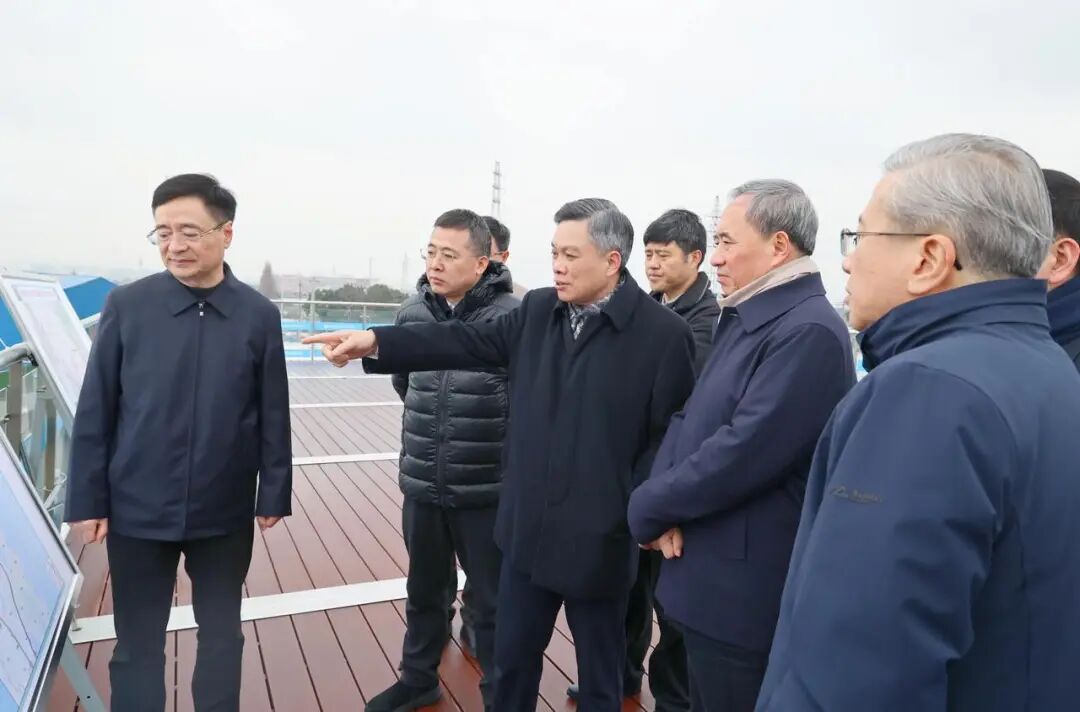
刘捷在宁波调研重大交通项目
Xin Lang Cai Jing· 2026-01-05 13:31
Core Viewpoint - The emphasis is on the importance of advancing major transportation projects in Ningbo to enhance the overall economic and social development of the province, aligning with the strategic goals set by the provincial leadership [3][4]. Group 1: Project Importance - Major transportation projects are crucial for stabilizing investment, expanding domestic demand, and adjusting the economic structure [4]. - The construction of these projects is significant for the high-quality development of Ningbo and the entire province [4]. Group 2: Strategic Planning - The provincial government aims to implement a world-class strong port and transportation province initiative, focusing on high-level planning for the "14th Five-Year Plan" comprehensive transportation framework [3]. - There is a call for a systematic approach to planning and integrating various transportation projects, including railways, highways, airports, and ports, to create a modern comprehensive transportation system [4]. Group 3: Project Management and Execution - The government stresses the need for effective lifecycle management of projects, setting clear goals and timelines, and utilizing coordination mechanisms to address challenges during project execution [3]. - Emphasis is placed on accelerating project progress while ensuring safety and quality, with a focus on early commencement, production, and effectiveness of major projects [4].

精伊高速公路打破遇雪封路“魔咒”
Xin Lang Cai Jing· 2026-01-03 23:23
Core Viewpoint - The Jingyi Expressway, connecting Urumqi and the Ili River Valley, has successfully completed its final major construction phase, breaking the "snow closure curse" in Xinjiang by providing a reliable all-weather transportation route [1][3]. Group 1: Project Overview - The Jingyi Expressway (G577) spans 92.545 kilometers, featuring a significant bridge-tunnel ratio of 49.1%, indicating that nearly half of the route consists of bridges and tunnels [2]. - The project includes the construction of the North Tianshan Tunnel, which is 11.88 kilometers long, overcoming challenging geological conditions [2]. Group 2: Engineering Challenges and Innovations - The construction team employed innovative techniques such as short advance drilling, weak blasting, and strong support to ensure safety during the tunnel's construction, which took over four years to complete [2]. - The Bo'erbosong Grand Bridge, a key structure of the expressway, measures 938 meters in length and has a maximum pier height of 144 meters, setting a new height record for bridges in Xinjiang [4]. Group 3: Safety and Resilience Features - The expressway incorporates advanced disaster prevention designs, including a snow protection system at the tunnel entrance, enhancing its resilience against severe winter weather [2]. - The construction team utilized real-time dynamic measurement and total station re-measurement to maintain precision in the bridge's foundation, achieving a positional deviation of within ±2 centimeters [4][5]. Group 4: Strategic Importance - The completion of the Jingyi Expressway is expected to significantly reduce travel time between Urumqi and Ili by one hour, making it the most convenient interstate route in the region [1][3]. - The project aligns with national transportation strategies aimed at improving modern comprehensive transportation systems and enhancing connectivity in underdeveloped areas [5].
对外联通、市内畅通!烟台发布综合交通体系规划
Qi Lu Wan Bao· 2025-12-30 13:54
Core Viewpoint - The Yantai Comprehensive Transportation System Plan (2023-2035) aims to address shortcomings in strategic layout, operational efficiency, and service guarantees in the transportation sector, focusing on creating a modern, safe, convenient, efficient, green, and economical transportation system [1] Group 1: Regional Level Focus - The plan emphasizes four key areas: aviation, ports, railways, and highways, to enhance Yantai's status as a transportation hub in China and Northeast Asia [2] - Upgrading the aviation hub includes developing a regional hub airport and enhancing connectivity with Japan and South Korea, with plans for a second runway at Yantai Penglai International Airport and a comprehensive "air-land intermodal" system [2] - Port optimization aims to create an international logistics hub by improving the functionality of various port areas and enhancing "rail-water intermodal" channels to reduce logistics costs [2] - The railway network is projected to reach 1,200 kilometers by 2035, with plans to strengthen regional connectivity and establish Yantai as a key hub in the eastern coastal corridor [2] Group 2: Urban Level Focus - The urban transportation plan includes developing a high-efficiency road network, with a total of 180 kilometers of rapid roads and improvements to the main road network to enhance traffic flow in the old urban area [4] - Public transportation upgrades will create a comprehensive system supported by regional railways and conventional buses, with plans for 500 kilometers of dedicated bus lanes and multiple bus hubs [5] - The plan includes enhancing slow-moving and tourism transportation to improve the travel environment, with a focus on creating high-quality leisure pathways and a tourism transport system that connects major scenic spots [6] - Parking management strategies will be implemented to alleviate parking difficulties, including differentiated management zones and improved parking facility standards [6]
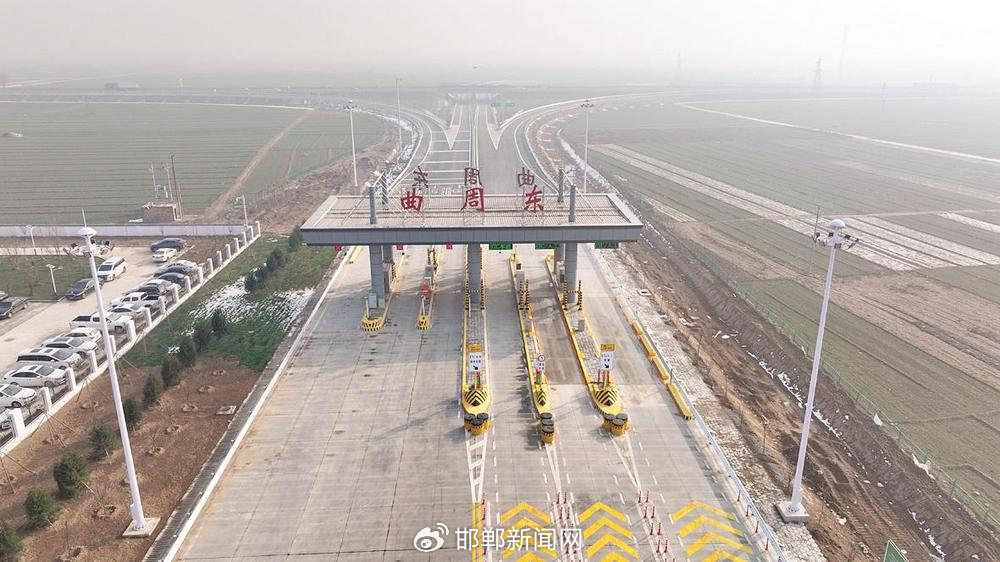
大广高速曲周东互通助东部县域经济高质量发展
Xin Lang Cai Jing· 2025-12-29 06:53
Core Viewpoint - The opening of the Daguang Expressway Quzhou East Interchange marks a significant development in Quzhou County's transportation infrastructure, transforming it from a "traffic dead end" to an "open frontier" and enhancing connectivity with major cities in the Beijing-Tianjin-Hebei region and beyond [3][6]. Transportation Infrastructure - The Quzhou East Interchange features a dual six-lane design, allowing for future traffic growth and improving service quality, while also serving as a landmark for the county [5][6]. - The interchange facilitates seamless connections between the Daguang Expressway and local transportation, significantly reducing travel times and enhancing logistics efficiency [5][6]. Economic Impact - The improved transportation conditions are expected to attract foreign investment, support industrial transfer, and expand external openness, providing new opportunities for economic development in Quzhou [6][10]. - The opening of the interchange has injected strong momentum into local industries such as children's vehicles, seedling cultivation, health products, and egg production, aligning with the vision of "road connectivity leading to financial connectivity" [7][10]. Agricultural Sector Development - Quzhou County is a significant egg production base, with a stock of 15 million hens producing approximately 9 million eggs daily. The new interchange has reduced transportation time, ensuring fresher products reach markets more quickly [7][10]. - The "One Product, One Broadcast" e-commerce initiative in Quzhou has gained momentum, leveraging efficient logistics to enhance the distribution of local specialty products, including eggs and handicrafts, through online platforms [8][10]. Logistics and Supply Chain Optimization - The interchange has led to a nearly 30% reduction in logistics costs, optimizing the supply chain for e-commerce and enhancing the efficiency of product delivery [8][10]. - The improved logistics framework allows for better collaboration with external e-commerce resources, increasing trust and facilitating partnerships for local producers [8][10]. Future Transportation Plans - Quzhou County aims to establish a regional comprehensive transportation hub, with ongoing projects to enhance the highway network, including the upcoming construction of the Hanjizhi Expressway and the planned Beijing-Wu Expressway [9][10]. - The county's transportation strategy includes integrating national and provincial highways with rural roads to ensure comprehensive connectivity, supporting the growth of local industries [9][10].

高速通衢启新程——大广高速曲周东互通助东部县域经济高质量发展
Xin Lang Cai Jing· 2025-12-28 09:12
Core Viewpoint - The opening of the Daguang Expressway Quzhou East Interchange marks a significant development in the transportation infrastructure of Quzhou County, transforming it from a "traffic dead end" to an "open frontier" and enhancing connectivity with major cities in the Beijing-Tianjin-Hebei region and beyond [4][5]. Group 1: Transportation Infrastructure - The Daguang Expressway Quzhou East Interchange features a dual six-lane design, allowing for future traffic growth and improving travel efficiency and service quality [4]. - The interchange facilitates seamless connections between the Daguang Expressway and local transportation, significantly reducing travel times and enhancing logistics efficiency [4][5]. - The project is part of a broader plan to establish a comprehensive transportation hub in eastern Handan, integrating highways, trunk roads, rural roads, and logistics systems [8]. Group 2: Economic Impact - The improved transportation network is expected to boost local industries, particularly in sectors such as children's vehicles, seedling cultivation, biomedicine, and egg production [5]. - Quzhou County is a major egg production base, with a stock of 15 million hens producing approximately 9 million eggs daily. The new interchange allows for faster transportation, ensuring better freshness and market reach for local products [5][6]. - The "One Product, One Broadcast" e-commerce initiative in Quzhou has gained momentum, leveraging improved logistics to enhance the distribution of local specialty products through online platforms [6]. Group 3: Logistics and Supply Chain - The opening of the interchange has reduced logistics costs by nearly 30%, optimizing the supply chain for e-commerce and enhancing the efficiency of product delivery [6]. - The integration of the expressway with local logistics nodes has improved the overall logistics chain, facilitating better connections with external markets and increasing cooperation with e-commerce partners [6][8]. - The transportation advantages are translating into competitive benefits for local industries, particularly in the egg production sector, which is now able to deliver products more efficiently to major urban markets [8].
完善现代化综合交通运输体系——访交通运输部党组书记、部长刘伟(权威访谈·学习贯彻党的二十届四中全会精神)
Ren Min Ri Bao· 2025-12-25 22:27
Core Viewpoint - The construction of a sustainable transportation system is essential for supporting high-quality economic and social development in China, as emphasized by General Secretary Xi Jinping and the 20th Central Committee's recommendations for the 15th Five-Year Plan [1][2]. Group 1: Modern Transportation System Significance - The modernization of the comprehensive transportation system is a strategic task to support China's modernization, building on the breakthroughs achieved during the 14th Five-Year Plan [2]. - The 15th Five-Year Plan aims to enhance the comprehensive capacity, service quality, and operational efficiency of transportation, which is crucial for achieving decisive progress in socialist modernization [2][3]. - The transportation system is foundational for strengthening domestic circulation and constructing a new development pattern, with significant adjustments in transportation structure and services during the 14th Five-Year Plan [2][3]. Group 2: Principles and Focus Areas for Development - The 15th Five-Year Plan will see a shift in the approach to building the transportation system, focusing on cross-regional coordination, integration of various transportation modes, and deep fusion across sectors [4]. - Key principles include serving the people, ensuring economic suitability, promoting innovation and green transformation, and ensuring safety and openness [4][5]. - The focus will be on building a modern, high-quality national comprehensive transportation network, with a target of achieving 95% completion of the main framework by the end of the plan [4]. Group 3: Infrastructure and Service Enhancements - The plan emphasizes optimizing the comprehensive transportation network, enhancing interconnectivity, and improving the quality and efficiency of transportation infrastructure [6][7]. - There will be a push for urban transportation integration, promoting diverse public transport options, and enhancing logistics efficiency through structural adjustments [7]. - The development of new transportation services and technologies will be prioritized, including the integration of travel and logistics services [7][8]. Group 4: Technological and Governance Innovations - The focus will be on advancing core technologies in smart transportation and promoting the integration of AI and big data in the transportation sector [8]. - The governance framework will be enhanced through reforms, establishing a unified and open transportation market, and improving legal regulations [8][9]. - Safety and stability in the transportation industry will be prioritized, with measures to strengthen safety oversight and disaster response capabilities [8].
为基本实现社会主义现代化取得决定性进展提供有力保障——访交通运输部党组书记、部长刘伟
Jing Ji Ri Bao· 2025-12-24 22:57
Core Viewpoint - The article emphasizes the importance of transportation as a foundation for national strength and modernization in China, highlighting the achievements and future plans for building a strong transportation system as outlined in the 14th and 15th Five-Year Plans [1]. Achievements in Transportation - Over the past five years, China has completed a transportation fixed asset investment of 18.8 trillion yuan, marking the fastest network construction period [2]. - The main framework of the national comprehensive three-dimensional transportation network has achieved over 90% completion, with high-speed rail covering approximately 97.2% of cities with populations over 500,000 [2]. - The efficiency of comprehensive transportation hubs has significantly improved, with major cities in key urban agglomerations achieving two-hour connectivity [2]. Efficiency and Capacity - China ranks among the top globally in various transportation metrics, including port cargo throughput, which accounts for about one-third of the global total, and civil aviation passenger transport, which represents about 15% of the global market [3]. - The adjustment of transportation structure has led to a growth of approximately 20% in railway and 40% in waterway cargo turnover [3]. Technological Advancements - Breakthroughs have been made in domestic large aircraft, cruise ships, and LNG vessels, with automated terminals leading in scale and technology [3]. - The application of drones, unmanned vehicles, and unmanned ships is being piloted safely and orderly [3]. International Cooperation - Major projects such as the China-Laos Railway and the China-Peru Chancay Port have been completed, enhancing international connectivity [3]. - The stable operation of the China-Europe Railway Express and the opening of new routes have strengthened trade links [3]. Governance and Reform - The transportation sector has made significant progress in reforming its governance structure, with the completion of 141 laws and regulations, and the implementation of over 1,200 standards [3]. - The establishment of a unified and open transportation market is accelerating, with comprehensive administrative law enforcement reforms nearing completion [3]. Future Development Pathways - The 15th Five-Year Plan emphasizes the need to build a modern comprehensive transportation system, focusing on high-quality development and the integration of various transportation modes [4][5]. - Key initiatives include enhancing the national comprehensive three-dimensional transportation network, promoting integrated transportation, and advancing safety, digitalization, and green transformation [6][7]. Infrastructure and Service Improvements - The plan includes accelerating the construction of modern transportation infrastructure and services, enhancing urban transportation integration, and promoting multi-modal transport systems [8][9]. - The development of smart transportation technologies and the promotion of clean energy vehicles are also prioritized [9][10].
完善现代化综合交通运输体系为基本实现社会主义现代化取得决定性进展提供有力保障
Xin Lang Cai Jing· 2025-12-24 20:50
Core Viewpoint - The article emphasizes the importance of enhancing the modern comprehensive transportation system in China to support the country's goal of achieving significant progress in socialist modernization, as outlined in the 20th National Congress of the Communist Party of China [1]. Group 1: Achievements in Transportation Sector - Over the past five years, the transportation sector has made significant achievements, completing all 17 major indicators set in the 14th Five-Year Plan, with a total fixed asset investment of 18.8 trillion yuan [2]. - The national comprehensive transportation network has seen over 90% completion of its main framework, with high-speed rail covering approximately 97.2% of cities with populations over 500,000 [2]. - The efficiency of transportation hubs has improved significantly, with major urban areas in key city clusters achieving two-hour connectivity [2]. Group 2: Future Development Paths - The 15th Five-Year Plan period is crucial for achieving the strategic goal of becoming a transportation powerhouse, focusing on high-quality development and a modern comprehensive transportation system [5]. - The plan includes the construction of a high-quality national comprehensive transportation network, aiming for a completion rate of over 95% for the main framework [6]. - The strategy emphasizes four key areas: integration of transportation modes, safety enhancement, digital transformation, and green transition [7]. Group 3: Infrastructure and Service Improvements - The plan aims to accelerate the construction of modern transportation infrastructure, including major corridors and urban transportation hubs, while enhancing interconnectivity [8]. - There will be a focus on improving transportation services, promoting integrated public transport systems, and enhancing accessibility for all demographics [9]. - The development of advanced transportation technology and equipment is prioritized, with an emphasis on smart transportation and the integration of cutting-edge technologies [10]. Group 4: Governance and Regulatory Framework - The transportation sector will undergo reforms to optimize toll road policies and enhance regulatory frameworks, ensuring a unified national market [10]. - A new regulatory mechanism based on credit will be established, alongside the revision of key transportation laws to improve safety and efficiency [10].
贯彻落实党的二十届四中全会精神权威访谈丨完善现代化综合交通运输体系 为基本实现社会主义现代化取得决定性进展提供有力保障——访交通运输部党组书记、部长刘伟
Xin Hua Wang· 2025-12-23 23:40
Core Viewpoint - The article emphasizes the importance of improving the modern comprehensive transportation system in China as a key factor in achieving decisive progress towards socialist modernization, as outlined in the 14th Five-Year Plan [1]. Group 1: Achievements in Transportation Sector - Over the past five years, China has completed a total fixed asset investment of 18.8 trillion yuan in transportation, marking it as the most investment-intensive and fastest network construction period [2]. - The main framework of the national comprehensive three-dimensional transportation network has been built to over 90%, with high-speed rail covering approximately 97.2% of cities with populations over 500,000 [2]. - The efficiency of comprehensive transportation hubs has significantly improved, with major cities in key urban agglomerations achieving two-hour connectivity [2]. Group 2: Future Development Strategies - The 14th Five-Year Plan aims to enhance the modern transportation infrastructure system, focusing on the construction of major corridors and the integration of various transportation modes [6][8]. - The strategy includes promoting safety, digital upgrades, and green transformation in transportation, with an emphasis on carbon neutrality and the use of clean energy [7][9]. - The development of a modern transportation service system will prioritize urban transportation integration and the promotion of multi-modal transport facilities [9]. Group 3: Governance and Regulatory Framework - The article highlights the need for deepening reforms in the transportation sector, including optimizing toll road policies and enhancing regulatory mechanisms based on credit [10][11]. - It stresses the importance of improving safety regulations and ensuring the rights of new employment groups within the transportation industry [11].
交通运输部:谋划建设一批重大工程项目
Xin Lang Cai Jing· 2025-12-23 23:14
Core Insights - The Ministry of Transport expects to complete over 3.6 trillion yuan in fixed asset investment this year, with significant expansions in high-speed rail, highways, and civil transport airports [1] - The projected cross-regional passenger flow is expected to exceed 66 billion trips, with a freight volume of over 5.8 billion tons, both showing a year-on-year growth of approximately 3.5% [1] - The growth in port foreign trade container throughput is around 9.6%, while international air freight has increased by 20%, and express delivery services have grown by about 13.5% [1] Investment and Infrastructure Development - By 2026, the Ministry of Transport plans to accelerate the improvement of a modern comprehensive transportation system and initiate several major engineering projects [1] - The Ministry will also explore new consumption scenarios and models, particularly in yacht and cruise consumption, which are expected to become growth points [1] - The Ministry aims to develop measures to expand yacht consumption and support local areas in developing cruise services and products [1] Vehicle Rental and Charging Infrastructure - The total number of small and micro passenger car rentals in China has reached 4 million and is in a rapid development phase [2] - The Ministry plans to enhance vehicle supply during peak rental times and optimize the development of small micro car rental services by leveraging transportation hubs [2] - A nationwide upgrade action for highway service areas is planned, including the construction of over 10,000 charging stations, with at least 25% being high-power chargers [2] Major Engineering Projects - Key projects expected to be completed during the 14th Five-Year Plan include the Lion's Mouth Channel, Zhangjingao Yangtze River Bridge, and the Eastern Hub Shanghai East Station [3] - The construction of several significant projects, such as the G219 and G331 border corridors and the G318 improvement of the Sichuan-Tibet Highway, will be accelerated [3] - The Ministry will also expedite preliminary work on major projects like the G0412 Deep Pearl Channel and the new Guangzhou Airport [3]