
交通运输服务

Search documents
汽车早餐 | 交通运输部要求深入实施“人工智能+交通运输”行动;吉利汽车辅助驾驶系统获欧盟认证;宝马德国工厂启用AI机器人“打螺丝”
Zhong Guo Qi Che Bao Wang· 2026-03-16 01:06
Domestic News - The State Council's Work Safety Committee has decided to supervise the investigation of four recent major accidents, including two incidents in automotive parts companies that resulted in three deaths each [2] - The Ministry of Transport emphasizes the need to implement the "Artificial Intelligence + Transportation" initiative to address challenges in high-quality transportation development and promote green and low-carbon transitions [3] - The Qiongzhou Strait saw record transportation volumes during the 2026 Spring Festival, with a total of 4,663,725 passengers and 1,162,748 vehicles transported, including a 61.66% increase in new energy vehicles [4] - Zhejiang Province and Geely Holding Group signed a new strategic framework agreement to promote the high-end, intelligent, and green transformation of the automotive and parts industry [5] - A working group has been established in Linyi, Shandong, to investigate illegal dismantling of scrapped vehicles, with strict enforcement measures planned [6] International News - BMW Group has introduced a new generation of humanoid robots at its Leipzig plant in Germany, marking the first use of "Physical AI" technology in its European factories [7] - San Francisco plans to add 100 new public electric vehicle charging stations to meet growing demand, particularly for renters without home charging options [8] - Tesla is constructing the largest public electric vehicle fast-charging hub in Michigan, which will include 32 DC fast charging spots and is expected to be completed by summer [9] Corporate News - Geely's advanced driver assistance system has received UNR171 regulatory certification, allowing vehicles equipped with the system to be sold across European markets without individual country certifications [10] - BYD is evaluating entry into top-tier motorsport, including F1, aligning with its technology-first strategy, and is considering acquiring an existing team or building a new one [11] - Li Auto reported a recall completion rate of over 97.5% for its MEGA battery, with 11,128 out of 11,411 vehicles having completed the replacement [13] - MOGOX and autonoma launched the "Qin-Ao Medical Line" autonomous bus service in the Hengqin Guangdong-Macao Deep Cooperation Zone, marking the first autonomous micro-circulation line for cross-border medical services in China [14]







必看!增值税进项抵扣六大关键变化
蓝色柳林财税室· 2026-03-14 02:29
Core Viewpoint - The article discusses recent changes in tax regulations affecting transportation service companies and real estate projects, particularly focusing on the deductibility of input tax for specific services and losses incurred due to legal violations [4][10][12]. Group 1: Transportation Service Companies - A transportation service company is mandated to provide emergency public transport services during specified periods and regions, charging a fixed administrative fee, which allows for the deduction of input tax on fuel purchases [3]. - The fixed administrative fee collected by the company is classified as a non-taxable transaction under the VAT law, enabling the company to deduct the corresponding input tax on fuel used for providing these services [4]. Group 2: Real Estate Projects - Changes in the definition of "abnormal loss projects" allow for the deduction of input tax related to design services used in real estate projects that are forcibly demolished due to violations of local planning regulations [5][6]. - The input tax related to design services for a real estate project that is ordered to be demolished can be deducted, despite the project being classified as an abnormal loss due to legal violations [8][9]. Group 3: Specific Service Resale - Hotels purchasing meal vouchers from restaurants to resell to guests can deduct the input tax on these purchases, as this is considered an intermediate step in their business operations [10][12]. Group 4: Indivisible Input Tax - General taxpayers unable to accurately allocate input tax between taxable and non-taxable projects must calculate the non-deductible input tax based on sales revenue proportions and summarize it in the following year's tax declaration [13][15]. Group 5: Long-term Asset Management - The management of input tax deductions for mixed-use long-term assets is differentiated based on asset value, with assets valued under 5 million yuan fully deductible, while those over this threshold require subsequent adjustments for mixed-use periods [16][19].

权威发布|服务消费发展将迎重要战略机遇期
Ren Min Ri Bao· 2026-02-08 02:57
Core Viewpoint - The Chinese government is implementing a comprehensive plan to accelerate the growth of service consumption, which is expected to play a crucial role in enhancing economic quality and driving consumer spending [2][3]. Group 1: Policy Framework - The State Council has issued a "Work Plan" aimed at optimizing and expanding service supply, fostering new growth points in service consumption, and enhancing the quality of service consumption [2]. - The Ministry of Commerce will establish a "1+N" policy system to support various sectors, including home services, automotive aftermarket, and performing arts, with over ten specific support policies to be introduced [2][3]. Group 2: Service Consumption Growth - From 2020 to 2025, per capita service consumption expenditure is projected to grow at an annual rate of 8.5%, with the share of service consumption in total household expenditure increasing to 46.1%, up by 3.5 percentage points [2]. - The focus of consumer demand is shifting from mere availability to quality, with increasing demand for personalized, diverse, and high-quality service consumption products [2]. Group 3: Infrastructure and Support Initiatives - The Ministry of Transport plans to cultivate new growth points in transportation service consumption, including the development of a high-quality car rental service network and the expansion of yacht and cruise consumption [4][6]. - Plans are in place to construct over 10,000 charging stations on highways by 2026, with at least 25% being high-power charging stations to enhance service capacity [4]. Group 4: Sports and Entertainment Consumption - The sports sector is expected to see significant growth, with ski resorts projected to attract 118 million visitors and generate a total consumption of 69.15 billion yuan during the 2025-2026 winter season [7]. - The network audiovisual sector is anticipated to reach a market size of nearly one trillion yuan by 2025, driven by the popularity of micro-short dramas and a user base of 1.09 billion [7][8]. Group 5: International Consumption - The Ministry of Commerce is focusing on enhancing the international consumption environment, with a target of 82.04 million inbound travelers by 2025, representing a 26.4% increase [8]. - The sales of tax refund goods for outbound travelers are expected to grow by 95.9%, with nearly 13,000 tax refund stores established by the end of 2025 [8].
这场消费主题的重要发布会,含“新”量拉满
Sou Hu Cai Jing· 2026-02-07 10:40
Core Viewpoint - The recently released "Work Plan for Accelerating the Cultivation of New Growth Points in Service Consumption" aims to stimulate growth in key service sectors and enhance support measures for emerging consumption trends [1][3]. Group 1: Key Areas of Focus - The Work Plan emphasizes three main areas: invigorating key sectors, nurturing potential growth areas, and strengthening support measures [3]. - The focus is on "new" initiatives that align with changing consumer preferences towards quality and personalized services [3]. Group 2: Service Consumption Trends - From 2020 to 2025, China's per capita service consumption expenditure is projected to grow at an annual rate of 8.5%, with the share of service consumption in total household expenditure increasing by 3.5 percentage points, reaching 46.1% by 2025 [4]. - There is a notable shift in consumer focus from mere availability to quality, leading to a rising demand for emotional and experiential services [4]. Group 3: Transportation and Tourism Services - The plan includes developing self-driving tour services, enhancing the quality of car rental services, and promoting night cruise economies [6][7]. - The growth of yacht consumption is highlighted, with a projected increase in registered yachts to 9,850 by the end of 2025, and measures to support the expansion of cruise services [7]. Group 4: Micro Short Dramas - The micro short drama sector is experiencing rapid growth, with an expected 33,000 new episodes and a market size exceeding 100 billion yuan by 2024 [9][10]. - The government aims to support this sector through policy frameworks, creative guidance, and integration with various industries to enhance service consumption [10]. Group 5: Automotive Aftermarket Services - The automotive sector, with a vehicle ownership of 366 million, presents significant growth potential in aftermarket services such as modifications, rentals, and events [11][12]. - The plan includes pilot programs for automotive consumption reforms and the establishment of standards for vehicle modifications to stimulate market growth [11][12].
交通运输部:春运期间新能源汽车充电排队可根据指引到对向服务区充电
Xin Hua She· 2026-01-29 05:38
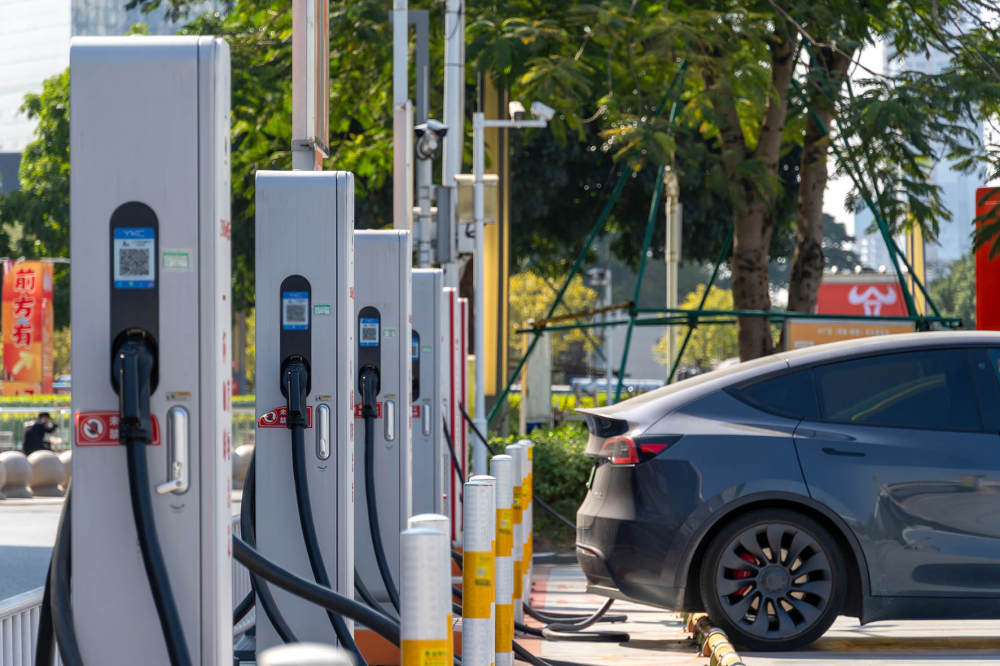
Group 1 - The core viewpoint of the article is the introduction of measures to support electric vehicle (EV) owners during the 2026 Spring Festival travel period, including the installation of mobile emergency charging devices and optimizing charging times [2] - The Ministry of Transport plans to enhance charging infrastructure by utilizing charging facilities near highway entrances and exits to meet the charging needs of EV owners [2] - In case of charging queues, EV owners will be guided by service area staff to charge at opposite service areas, ensuring a smoother travel experience during the holiday [2]
4000万辆新能源汽车春节充电怎么办?交通运输部:重点保障!
2 1 Shi Ji Jing Ji Bao Dao· 2026-01-29 05:21
Group 1 - The core point of the article highlights the increasing demand for charging infrastructure for electric vehicles (EVs) during the 2026 Spring Festival travel period, with a significant rise in the number of registered EVs in 2025 [1][2] - By the end of 2025, the total number of electric vehicles in China reached 43.97 million, with 12.93 million new registrations in 2025 alone [1] - The Ministry of Transport has emphasized that charging support for EVs is a key focus for holiday transportation services, especially during peak travel times [1][2] Group 2 - The expansion of the charging network on highways has been notable, with 71,500 charging stations established by the end of 2025, including 20,000 new stations added in that year [2] - During the Spring Festival, the proportion of EV travel is expected to increase, prompting targeted arrangements to enhance service capabilities, including the creation of a list of busy service areas and tailored support plans [2] - Upgrades to the "e Road Smooth" app will allow drivers to check the status of charging stations in real-time, while dynamic updates will be provided through various platforms [2]
“警醒自己不成‘案中人’”
Xin Lang Cai Jing· 2026-01-06 22:38
Core Viewpoint - The importance of integrity in transportation projects is emphasized, highlighting the need for accountability and ethical conduct in the industry [1] Group 1: Integrity and Accountability - The experience of attending a court hearing related to job-related crimes left a profound impact, showcasing the consequences of corruption in engineering projects [1] - The necessity for transportation officials to learn from past cases to avoid becoming part of similar issues is stressed, promoting a culture of integrity [1] - Every transportation project should be regarded as a clean and people-oriented initiative, reinforcing the commitment to public trust [1]
消费维权该去哪里?一份清晰的投诉渠道指南
Xin Lang Cai Jing· 2026-01-06 10:29
Core Official Channels - The "12315" platform is the most authoritative official channel for consumer rights protection in China, integrating website, app, mini-program, and phone services to facilitate complaints [2][10] - The platform allows consumers to submit evidence such as text, images, and videos, and is recommended for its comprehensive service [2][12] - The market supervision department has the authority to conduct administrative mediation and investigations for complaints related to false advertising, product quality issues, and other violations of consumer protection laws [5][10] Industry-Specific Complaint Channels - Various industries have their own regulatory bodies or associations that provide specialized complaint channels, which may offer higher efficiency due to their familiarity with industry rules [3][13] Social Supervision and Third-Party Mediation Platforms - Third-party platforms, such as the "Black Cat Complaint" platform, leverage media and internet technology to facilitate consumer-business dialogue and utilize public opinion to resolve issues, despite lacking administrative enforcement power [4][14] - These platforms are characterized by their convenience and social oversight, becoming increasingly popular among consumers [4][14] Summary and Recommendations - A "ladder-style" strategy for consumer rights protection is suggested, starting with direct negotiation with the merchant, followed by third-party complaints, administrative or industry complaints, and finally judicial resolution if necessary [8][17] - Specific channels for different sectors include financial services, telecommunications, transportation, and tourism, each with designated complaint mechanisms [15][17]
完善现代化综合交通运输体系——访交通运输部党组书记、部长刘伟(权威访谈·学习贯彻党的二十届四中全会精神)
Ren Min Ri Bao· 2025-12-25 22:27
Core Viewpoint - The construction of a sustainable transportation system is essential for supporting high-quality economic and social development in China, as emphasized by General Secretary Xi Jinping and the 20th Central Committee's recommendations for the 15th Five-Year Plan [1][2]. Group 1: Modern Transportation System Significance - The modernization of the comprehensive transportation system is a strategic task to support China's modernization, building on the breakthroughs achieved during the 14th Five-Year Plan [2]. - The 15th Five-Year Plan aims to enhance the comprehensive capacity, service quality, and operational efficiency of transportation, which is crucial for achieving decisive progress in socialist modernization [2][3]. - The transportation system is foundational for strengthening domestic circulation and constructing a new development pattern, with significant adjustments in transportation structure and services during the 14th Five-Year Plan [2][3]. Group 2: Principles and Focus Areas for Development - The 15th Five-Year Plan will see a shift in the approach to building the transportation system, focusing on cross-regional coordination, integration of various transportation modes, and deep fusion across sectors [4]. - Key principles include serving the people, ensuring economic suitability, promoting innovation and green transformation, and ensuring safety and openness [4][5]. - The focus will be on building a modern, high-quality national comprehensive transportation network, with a target of achieving 95% completion of the main framework by the end of the plan [4]. Group 3: Infrastructure and Service Enhancements - The plan emphasizes optimizing the comprehensive transportation network, enhancing interconnectivity, and improving the quality and efficiency of transportation infrastructure [6][7]. - There will be a push for urban transportation integration, promoting diverse public transport options, and enhancing logistics efficiency through structural adjustments [7]. - The development of new transportation services and technologies will be prioritized, including the integration of travel and logistics services [7][8]. Group 4: Technological and Governance Innovations - The focus will be on advancing core technologies in smart transportation and promoting the integration of AI and big data in the transportation sector [8]. - The governance framework will be enhanced through reforms, establishing a unified and open transportation market, and improving legal regulations [8][9]. - Safety and stability in the transportation industry will be prioritized, with measures to strengthen safety oversight and disaster response capabilities [8].
权威发布丨国家综合立体交通网主骨架基本贯通
Ren Min Ri Bao· 2025-12-24 07:43
Core Viewpoint - The transportation sector in China has shown stable growth and significant improvements in service capabilities, with a focus on enhancing consumer demand and expanding domestic markets during the "14th Five-Year Plan" and moving into the "15th Five-Year Plan" period [2][3]. Economic Performance - The overall economic operation of the transportation sector has been stable, achieving key targets for the year. Fixed asset investment in transportation is expected to exceed 3.6 trillion yuan, maintaining a high level of activity [2]. - The volume of commercial freight is projected to surpass 580 million tons, reflecting a year-on-year growth of approximately 3.5%. Port foreign trade container throughput has increased by about 9.6%, while international air freight has surged by 20% [2]. Service Capability Enhancement - The total inter-regional personnel flow is expected to exceed 66 billion person-times, with urban rail transit service capabilities significantly improved. The operational mileage of urban rail transit in 54 cities has surpassed 11,000 kilometers, with an average daily passenger volume exceeding 90 million [2]. - The integration of digital technologies in transportation infrastructure has progressed, with approximately 1,700 kilometers of expressways and over 2,200 road and waterway facilities undergoing digital transformation [2]. Safety Improvements - The safety production situation has improved, with a year-on-year decrease of 18.4% in railway traffic accidents and a 25.8% reduction in road and waterway accidents during the first eleven months [2]. Future Development Plans - The focus for the "15th Five-Year Plan" includes accelerating the integration of the national comprehensive transportation network, enhancing cross-regional and cross-basin channel construction, and developing a multi-level, integrated transportation hub system [3]. - Key initiatives will also target improving transportation services in underdeveloped areas, optimizing passenger service supply, and advancing the digital and green transformation of transportation infrastructure [3]. Consumer Demand and Market Expansion - The transportation sector aims to boost consumption and expand domestic demand by enhancing cruise and yacht services. The number of cruise passengers reached 1.265 million from January to November, marking a year-on-year increase of 27.8% [4]. - The small and micro car rental market is projected to grow significantly, with an expected annual growth rate of 15% during the "15th Five-Year Plan" period [4]. Infrastructure Investment - Major infrastructure projects have been completed during the "14th Five-Year Plan," with total transportation fixed asset investment reaching 18.8 trillion yuan, significantly enhancing operational capacity and efficiency [6]. - The "15th Five-Year Plan" will see the completion of key projects such as the Lion's Gate Channel and the Zhangjinggao Yangtze River Bridge, alongside accelerated construction of other significant projects [6]. Equipment Modernization - The transportation sector is actively promoting the modernization of equipment, with over 450 old railway diesel locomotives replaced and 114,000 old urban buses and power batteries updated [7]. - The sector is also focusing on the replacement of outdated vessels and vehicles across various modes of transport, including support for the scrapping of over 12,000 old operating ships [7].