
私募信贷市场风险

Search documents
华尔街大佬喊现金防崩盘 COMEX金避险光环褪色?
Jin Tou Wang· 2025-11-18 02:05
Group 1: Market Overview - COMEX gold futures closed down on November 17, with December delivery gold futures reported at $4070.6 per ounce, a decrease of $23.6 [1] - Spot gold prices also experienced a slight decline during the early trading session in the U.S. [1] Group 2: Economic Data Release - The U.S. Bureau of Labor Statistics announced that the delayed September employment report will be released on November 20, and the inflation-adjusted wage data for September will be published on November 21, both at 7:30 AM Central Time [3] - These reports are expected to provide insights into the U.S. economic conditions, although they may be more lagging than usual [3] Group 3: Market Risks and Warnings - Bond investment giant Jeffrey Gundlach issued a stern warning about significant risks lurking in the stock and financial markets, citing rampant "junk bonds" and severe valuation distortions [3] - Gundlach, known as the "Bond King" of Wall Street, emphasized the need for investors to hold cash and avoid private credit, suggesting that 20% of investment funds should be allocated to cash to prepare for potential market crashes [3][4] - He expressed deep concerns about the $1.7 trillion private credit market, likening it to "junk loans" and warning it could trigger the next global market collapse [4] Group 4: Technical Analysis of Gold Futures - The next upward target for December gold futures is to break the key resistance level of $4398.00 per ounce, while the recent downward target is to push prices below the key support level of $4000.00 per ounce [4] - Initial resistance levels are identified at the overnight high of $4107.60 per ounce and then at $4150.00 per ounce; initial support levels are at the overnight low of $4051.10 per ounce and last Friday's low of $4032.60 per ounce [4]
科技股、币圈、黄金“三杀”,美股跌破关键支撑位,美国市场遭遇“全面抛售”
华尔街见闻· 2025-11-18 00:45
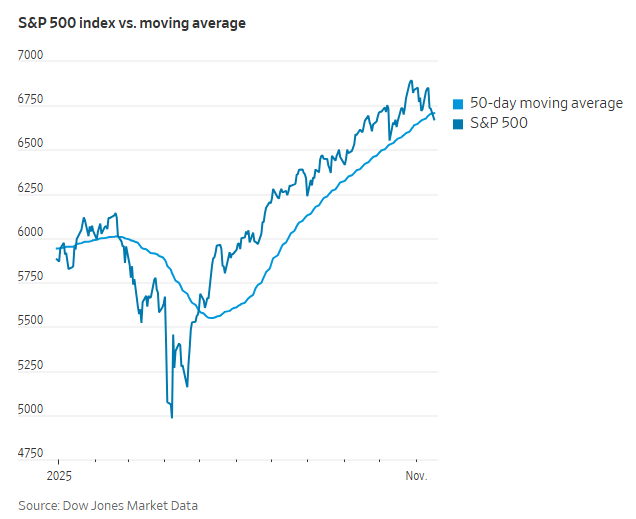
Core Viewpoint - A significant sell-off has swept through the U.S. financial markets, affecting nearly all asset classes, driven by concerns over the sustainability of the AI boom and economic outlook [1][2]. Market Performance - Major stock indices, including the S&P 500 and Nasdaq, closed below their 50-day moving averages for the first time in 138 trading days, breaking the longest consecutive rise since May [2][3]. - The Dow Jones Industrial Average experienced its worst three-day performance since April, closing down 1.2% or 557 points [3]. - The S&P 500 index fell below the critical level of 6725 points, raising concerns of a potential 10% market correction [13][16]. Sector Analysis - Technology stocks were heavily impacted, with most of the "Big Tech" companies, including Nvidia and Meta, seeing declines. Despite Berkshire Hathaway increasing its stake in Alphabet, it did not uplift the overall sector sentiment [12]. - The "most shorted stocks" index has dropped to a two-month low, indicating waning confidence in previously popular stocks [15]. Credit Market Concerns - The widening credit spreads for investment-grade and high-yield corporate bonds reflect increasing investor concerns over default risks [19]. - Amazon's $15 billion bond issuance faced higher risk premiums despite strong demand, signaling caution in the credit market [21]. - Credit default swap spreads for AI-related companies, including Oracle and CoreWeave, have widened, indicating rising credit concerns [22][24]. Cryptocurrency and Gold Market - Bitcoin's price fell below $92,000, erasing its gains for the year and forming a "death cross" technical pattern [8][26]. - Gold prices dropped to around $4,000 per ounce, losing its status as a safe-haven asset, with silver also declining below $50 [6][27]. Macroeconomic Environment - The current market pessimism is rooted in high uncertainty regarding macroeconomic conditions and monetary policy, with the Federal Reserve's path remaining unclear [31][32]. - Concerns over the private credit market have emerged, with warnings about potential "junk loans" reminiscent of the pre-2008 financial crisis [35].



科技股、币圈、黄金“三杀”,美股跌破关键支撑位,美国市场遭遇“全面抛售”
Hua Er Jie Jian Wen· 2025-11-18 00:21
Market Overview - A significant sell-off swept through the U.S. financial markets on November 17, affecting nearly all asset classes, including tech stocks, cryptocurrencies, and gold, amid growing concerns over the sustainability of the AI boom and economic outlook [1][2] - The S&P 500 and Nasdaq Composite indices closed below their 50-day moving averages for the first time in 138 trading days, breaking the longest consecutive rise since May [1][5] - The Dow Jones Industrial Average experienced its worst three-day performance since April, closing down 1.2% or 557 points [1] Technology Sector Impact - The tech sector was particularly hard hit, with major stocks like Nvidia, Meta, and Amazon declining, despite Berkshire Hathaway increasing its stake in Alphabet, which saw a 3.1% rise [7] - The index tracking large tech stocks fell to its lowest closing point in nearly a month, indicating a weakening market sentiment [8][10] Credit Market Concerns - The sell-off in equities coincided with increasing pressure in the credit market, as credit spreads for investment-grade and high-yield corporate bonds widened, indicating rising concerns over corporate default risks [15][17] - Amazon's $15 billion bond issuance faced scrutiny, with the final pricing reflecting higher risk premiums, highlighting investor caution regarding tech giants' heavy borrowing for AI infrastructure [17][18] Cryptocurrency and Gold Performance - The cryptocurrency market was also severely impacted, with Bitcoin dropping below $92,000, erasing its gains for the year and forming a "death cross" technical pattern [3][22] - Gold prices fell to around $4,000 per ounce, losing its status as a safe-haven asset, while silver also dropped below the critical $50 mark [1][27] Economic Indicators and Investor Sentiment - Investor sentiment is clouded by macroeconomic uncertainties, with the Federal Reserve's policy path remaining unclear, leading to reduced expectations for a rate cut in December [26][30] - Mixed economic data, including a decline in non-residential construction spending and better-than-expected manufacturing surveys, have contributed to the cautious market outlook [28]
“次贷危机”再现?华尔街“捉蟑螂”论战:PE与银行互相指责
华尔街见闻· 2025-10-16 13:36
Core Viewpoint - A fierce debate is unfolding on Wall Street regarding loan risks, particularly following the bankruptcies of Tricolor Holdings and First Brands Group, highlighting tensions between traditional banks and private equity firms over accountability in the credit market [1][2][3]. Group 1: Bank and Private Equity Tensions - The recent bankruptcies have intensified the conflict between traditional banks and private equity firms, with banks blaming private equity for systemic risks in the $1.7 trillion private credit market [2][3]. - Apollo Global Management's CEO Marc Rowan attributes the bankruptcies to banks' long-standing pursuit of high-risk borrowers, suggesting that the failures reflect deeper issues within banking practices [3][4]. - The International Monetary Fund has called for regulatory scrutiny of banks' exposure to private credit, noting that banks are increasingly lending to private credit funds due to higher net asset returns compared to traditional loans [3][8]. Group 2: Responses from Key Industry Figures - Jamie Dimon, CEO of JPMorgan Chase, warned of potential systemic issues, stating that the sight of one failure may indicate more problems ahead, while acknowledging that the Tricolor incident revealed flaws within the bank [5][6]. - Blue Owl Capital's Marc Lipschultz criticized the linking of private credit to the bankruptcies as a panic-inducing narrative, suggesting that banks should examine their own practices instead [2][7]. - Blackstone's Jonathan Gray echoed the sentiment that the responsibility lies with banks, emphasizing that the bankruptcies were part of bank-led processes [4][5]. Group 3: Market Reactions and Implications - The bankruptcies have triggered a chain reaction in the credit market, leading to significant losses for major investment firms and banks, with JPMorgan Chase reporting a $170 million loss due to Tricolor's collapse [5][6]. - The complex financial structures between banks and private equity firms have obscured the true holders of underwriting risks, complicating the accountability landscape in the credit market [5][7].



私募信贷危机再现华尔街?汽车配件商First Brands破产搅动市场
Di Yi Cai Jing· 2025-10-13 07:37
Core Insights - The rapid rise of the U.S. private credit market has become a significant financing channel for companies unable or unwilling to access public bond markets, attracting global institutional interest due to impressive returns [1][3] - The recent bankruptcy of auto parts supplier First Brands has exposed potential risks within the private credit market, highlighting issues of opacity and complex structures that often accompany financial risks [1][6] Group 1: First Brands Bankruptcy - First Brands filed for bankruptcy on September 28, leaving behind $5.8 billion in leveraged loan debt and a total debt close to $12 billion, with CEO Patrick James claiming nearly $2 billion is unaccounted for [3][4] - The company heavily relied on off-balance-sheet financing, particularly through loans secured by receivables from clients like AutoZone, which can inflate financial metrics and lead to liquidity crises when defaults occur [3][4] - James has a history of lawsuits from business partners alleging misleading and fraudulent behavior in financing arrangements, yet he managed to secure over $10 billion in loans from major institutions [5][6] Group 2: Impact on Financial Institutions - The bankruptcy has affected numerous hedge funds and banks globally, with Jefferies Financial Group revealing that its Leucadia Asset Management fund holds $715 million in receivables related to First Brands, representing nearly a quarter of its $3 billion portfolio [6][7] - UBS reported approximately $500 million in receivables tied to First Brands, constituting 30% of its fund's assets, indicating widespread exposure among financial institutions [7][8] - Major asset management firms like BlackRock and Morgan Stanley have requested redemptions due to their exposure to First Brands, while other institutions are reassessing their positions in light of the unfolding situation [6][7] Group 3: Market Concerns and Risks - The incident has raised alarms about the private credit market becoming bubble-like and not adequately reflecting borrower risks, reminiscent of the 2008 financial crisis [8][9] - The rapid growth of private credit has led to weakened lending standards, with evidence suggesting that the current environment is marked by aggressive financing structures [10][11] - The inherent opacity of private credit models allows companies to operate outside regulatory scrutiny, increasing the potential for high-risk lending activities [11]

华尔街遭遇私募信贷危机:First Brands破产引发连锁反应
Sou Hu Cai Jing· 2025-10-12 02:55
Core Insights - The bankruptcy of First Brands Group has triggered a financial storm on Wall Street, particularly affecting Jefferies' Point Bonita Capital fund due to its significant exposure to First Brands' receivables [1][2] - Major investors, including BlackRock and Morgan Stanley, have begun to withdraw their investments from the Point Bonita fund, highlighting the widespread impact of First Brands' collapse [2] - The complex financial structure of the investments, which involved receivables from high-rated clients like Walmart, has come under scrutiny, revealing potential risks similar to those seen before the 2008 financial crisis [3][4] Group 1 - First Brands filed for bankruptcy protection on September 28, 2025, revealing nearly $12 billion in complex debt and off-balance-sheet financing [1][2] - Jefferies' Point Bonita Capital fund holds $715 million in receivables related to First Brands, representing nearly a quarter of its $3 billion investment portfolio [2] - The crisis has led to significant withdrawals from Point Bonita, with BlackRock and the Texas Treasury Safekeeping Trust Company being the first to request redemptions [2] Group 2 - The financial structure involved a "factoring" operation where receivables were supposed to transfer credit risk to buyers, but funds were controlled by First Brands, leading to a failure in risk mitigation [3] - Investigations have revealed potential misconduct in First Brands' factoring business, including allegations of "multiple factoring" of the same receivables, with $2.3 billion in third-party financing reportedly unaccounted for [3] - Jim Chanos has warned that the private credit market exhibits risk patterns reminiscent of those before the 2008 financial crisis, indicating a lack of transparency and potential hidden risks [4]
“次贷危机”的味道?华尔街投行旗下信贷基金暴雷,大摩等同业开始撤资
美股IPO· 2025-10-11 05:48
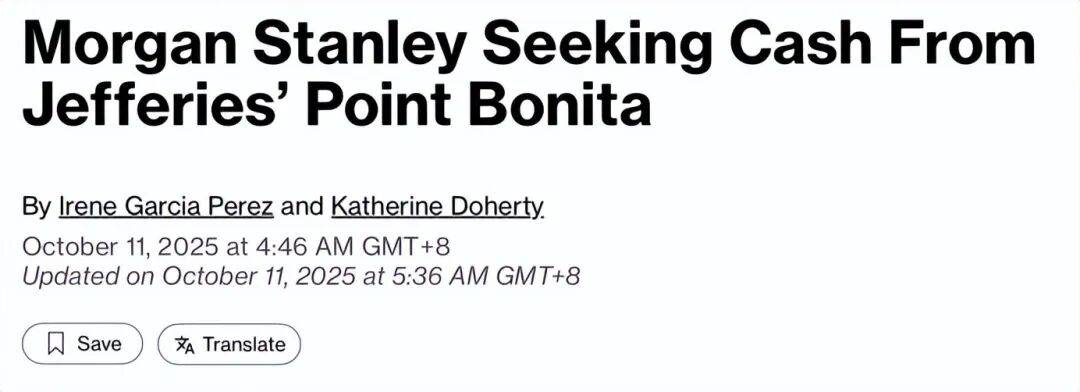
Core Viewpoint - The collapse of First Brands Group has exposed significant systemic risks within the $2 trillion private credit market, reminiscent of the 2008 subprime mortgage crisis, as highlighted by Jim Chanos [1][3][17]. Group 1: Incident Overview - Point Bonita Capital, a fund under Jefferies, is facing urgent redemptions from top Wall Street investors due to its exposure to First Brands, which recently filed for bankruptcy [2][6]. - First Brands' bankruptcy revealed nearly $12 billion in complex debt and off-balance-sheet financing, triggering a liquidity crisis among major financial institutions [3][6]. - The fallout from First Brands' collapse has led to a "run on the bank" scenario, with major investors like BlackRock and Morgan Stanley initiating withdrawal requests [7][11]. Group 2: Financial Implications - Point Bonita Capital holds $715 million in receivables related to First Brands, representing nearly a quarter of its $3 billion portfolio, creating a significant risk exposure [6][7]. - The fund's structure, which involved First Brands acting as a servicer for receivables from high-credit clients like Walmart, has proven to be deeply flawed, as funds were never directly received from these clients [13][14]. Group 3: Regulatory and Market Reactions - The U.S. Department of Justice has initiated a preliminary investigation into the circumstances surrounding First Brands' collapse, adding uncertainty to the situation [11]. - Other financial institutions, including UBS and Cantor Fitzgerald, are also facing repercussions due to their exposure to First Brands, with UBS reporting a 30% risk exposure in one of its funds [8][9]. Group 4: Broader Market Concerns - Jim Chanos has warned that the private credit market's operational model mirrors that of the subprime mortgage crisis, with hidden risks masked by complex financial structures [17][18]. - The First Brands incident has raised alarms about the transparency and stability of the private credit market, prompting concerns about undisclosed risks that may still exist within this sector [21].



“次贷危机”的味道?华尔街投行旗下信贷基金暴雷,大摩等同业开始撤资
Hua Er Jie Jian Wen· 2025-10-11 05:37
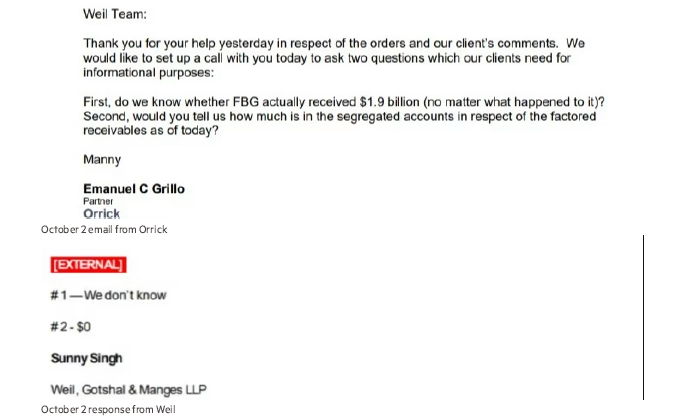
Core Insights - The bankruptcy of First Brands Group has triggered a significant crisis affecting major financial institutions on Wall Street, particularly impacting Jefferies' Point Bonita Capital fund, which faces urgent redemptions from top institutional investors [1][3] - The event has exposed the vulnerabilities within the $2 trillion private credit market, drawing parallels to the 2008 financial crisis, as highlighted by investor Jim Chanos [1][9] Group 1: Impact on Financial Institutions - Jefferies' Point Bonita Capital fund holds $715 million in receivables related to First Brands, representing nearly 25% of its $3 billion portfolio, creating a substantial risk exposure [3] - Major investors, including BlackRock and Morgan Stanley, have initiated redemption requests, indicating a loss of confidence in Jefferies [3][4] - UBS and Cantor Fitzgerald are also affected, with UBS's fund reportedly having a 30% exposure to First Brands [4] Group 2: Regulatory and Legal Implications - The U.S. Department of Justice has begun a preliminary investigation into the circumstances surrounding First Brands' bankruptcy [4] - Legal documents reveal potential fraudulent activities, including the possibility of "double pledging" receivables, raising concerns about the integrity of the financial practices involved [6][8] Group 3: Structural Vulnerabilities in Private Credit - The collapse of First Brands has revealed a fragile structure within the private credit market, where risks are often obscured by complex financial arrangements [1][9] - Chanos warns that the high returns promised by private credit funds may be masking hidden risks, similar to the subprime mortgage crisis [9][10] - The lack of transparency in private companies like First Brands complicates the assessment of financial health, as their financial documents are not publicly available [10][11] Group 4: Broader Market Concerns - The First Brands incident has raised alarms about the potential for similar undisclosed risks within the private credit market, likening it to a "Pandora's box" that could lead to further financial instability [13] - The current economic environment and tightening credit conditions may exacerbate these vulnerabilities, posing challenges for both investors and regulators [13]
美国企业债“大暴雷”震惊华尔街!市场的疑问是:这是孤立事件,还是冰山一角?
Hua Er Jie Jian Wen· 2025-10-06 08:47
Core Viewpoint - The sudden bankruptcy of First Brands has raised concerns about potential deeper risks in the private credit market, questioning whether it is an isolated governance failure or a warning signal for the financial system [1] Group 1: Bankruptcy Details - First Brands filed for Chapter 11 bankruptcy on September 28, leaving behind $5.8 billion in leveraged loan debt, with total debt and off-balance-sheet financing potentially nearing $12 billion [1] - The company's collapse was rapid, with a refinancing plan initiated in July, but halted in August due to accounting concerns, leading to a downgrade by S&P and Moody's from B+/B2 to CCC+/Caa1 on September 22 [2] - Following the downgrade, loan prices plummeted from over 80% of face value to the low 30% range within days, culminating in the bankruptcy filing just six days later [2] Group 2: Market Reactions - Morgan Stanley analysts view the bankruptcy as an "isolated misstep," maintaining a constructive outlook on the overall credit market, citing stable leverage and interest coverage ratios among public companies [3][4] - In contrast, Michael Hartnett from Bank of America expresses caution, noting cracks in the subprime consumer credit sector and suggesting tactical dollar exposure to hedge against potential credit events [5][7] Group 3: Broader Implications - Jim Chanos warns that the bankruptcy reveals dangers in the opaque private credit market, comparing it to the Enron scandal, and highlighting the risks associated with the $2 trillion market's multi-layered structure [8][10] - Investigations into First Brands indicate potential conflicts of interest and lack of transparency, with reports suggesting that its founder controlled both the company and certain off-balance-sheet entities [10]
秃鹫闻到了血腥味!对冲基金做空美国私募信贷巨头
Hua Er Jie Jian Wen· 2025-05-04 04:26
Core Insights - Hedge funds in the U.S. have aggressively shorted private lending institutions, earning $1.7 billion in paper profits this year [1] - The largest direct lending institutions are facing significant pressure from short-sellers amid economic slowdown and deteriorating borrower conditions [1][2] Group 1: Borrower Financial Health - The credit quality of borrowers in the private credit sector is deteriorating, raising concerns about the valuation of loans held by these institutions [2] - The International Monetary Fund (IMF) has warned that the decline in borrower credit quality has not yet been reflected in the loan valuations of these institutions [2] - Increased competition among private credit funds is compressing loan returns, with many funds lending to weaker companies that are more vulnerable during economic downturns [2] Group 2: Valuation Concerns - There are significant concerns regarding the overvaluation of direct loans, with only 40% of private credit funds using third-party assessments [3] - Evidence suggests that direct lending institutions may be concealing problem loans and delaying defaults, leading to inflated loan valuations and fund returns [3] - The rise of Payment-in-Kind (PIK) loans, where borrowers pay interest with equity or debt instruments instead of cash, is contributing to inflated valuations [3]