算力网络

Search documents
三大运营商定调2026:继续战略收缩 聚焦AI转型
Zhong Guo Jing Ying Bao· 2026-01-20 13:24
Core Insights - The three major telecom operators in China are shifting their strategies towards "strategic contraction and focused transformation," moving away from a "large and comprehensive" approach to concentrate resources on core business areas such as computing power, AI applications, and enterprise markets [1][4] Financial Performance - In 2024, the total revenue of the three operators approached 2 trillion yuan, with a year-on-year growth rate slowing to approximately 3%, a significant decline compared to previous years. The combined net profit was about 192 billion yuan, reflecting a year-on-year increase of approximately 6.1%. The combined EBITDA was around 574 billion yuan, showing a slight decline of about 0.7%, indicating a fatigue in profitability [2] Strategic Focus - China Telecom is upgrading its strategy from "cloud transformation" to "intelligent and beneficial cloud transformation," emphasizing AI empowerment and security in enterprise construction. In 2024, the revenue from digitalization in its industry is expected to increase, with a 22% year-on-year growth in capital expenditure for computing power [3] - China Unicom is focusing on four core areas: connectivity, computing power, services, and security, moving away from a comprehensive coverage model. Its investment in computing power is expected to rise by 19% in 2024, with plans to build a multi-layered computing supply system [3] - China Mobile aims to strengthen its three main businesses: communication services, computing services, and intelligent services, with a focus on technology leadership and scale synergy. The planned investment in computing power for 2025 is 37.3 billion yuan, maintaining the same level as 2024 but increasing its share in capital expenditure to 25% [4] Embracing AI - All three operators are sending a clear signal of "fully embracing AI." China Unicom is focusing on the synergy between AI and its core areas, while China Telecom is integrating AI throughout its operations. China Mobile is also prioritizing intelligent services and plans to develop 15 million AI terminals by 2026 [5][6] Capital Expenditure Trends - The capital expenditure of the three operators is showing a trend of "overall contraction with localized increases," with a total planned capital expenditure for 2025 reduced by 9.1% to 289.8 billion yuan. The focus is shifting towards "intelligent computing centers" and "massive card clusters" [7]



打破壁垒,畅通“算力高速路”(快评)
Ren Min Wang· 2026-01-11 22:43
Core Viewpoint - The article highlights the transformation of Guizhou into a core node of the national computing power network, facilitated by a new high-bandwidth, low-loss cable that connects Guizhou to Guangzhou, breaking geographical barriers and enhancing data transmission efficiency [1] Group 1: Infrastructure Development - A new cable has been established that allows for the rapid transmission of massive amounts of data from the Guangdong-Hong Kong-Macao Greater Bay Area to Guizhou, enabling effective computing power coordination and scheduling [1] - The "East Data West Computing" project has led to the creation of a "computing power highway" that connects Guiyang directly to Guangzhou, overcoming previous inefficiencies and cost barriers associated with data transmission [1] Group 2: Resource Allocation - The combination of the cable's physical connectivity and the "Xirang" platform's intelligent scheduling allows for precise matching of computing power resources from the West with the demand in the East [1] - This integration of "hard connectivity" and "soft scheduling" facilitates a rational distribution of computing power across regions [1] Group 3: Economic Impact - Guizhou is transitioning from a traditional support role to becoming a central hub for computing power in the country, fostering collaborative development and regional advantages [1] - The accessibility of computing power, akin to utilities like water and electricity, is expected to support various industries and drive high-quality economic development [1]
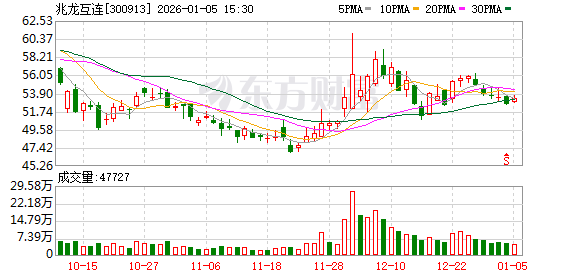
兆龙互连:公司光产品主要聚焦数据中心应用场景,目前未涉及光纤棒相关业务
Mei Ri Jing Ji Xin Wen· 2026-01-05 13:33
Core Viewpoint - The company focuses on innovations in optical products primarily for data center applications, emphasizing a complete product matrix from basic transmission to terminal connections [2] Group 1: Business Innovations - The company has developed a comprehensive product matrix that includes optical cables, optical fiber jumpers, MPO/MTP pre-terminated components, LC optical connectors, and optical distribution frames [2] - The company provides optical connection solutions for high-end clients in sectors such as finance [2] Group 2: Research and Development - The company is increasing its R&D investment in the optical product field to enhance its core technological competitiveness [2] - The company is aligning its product development with trends in computing networks and artificial intelligence [2] Group 3: Market Focus - Currently, the company does not engage in the optical fiber rod business [2]

2025年度央企十大超级工程,正式揭晓!
Bei Jing Ri Bao Ke Hu Duan· 2026-01-02 00:16
Core Viewpoint - The article highlights the completion and significance of ten major engineering projects initiated by central enterprises in China, showcasing their capabilities and contributions to national development and energy security [1][22]. Group 1: Major Engineering Projects - The Longdong-Shandong ±800 kV UHVDC project, completed on May 8, 2025, is a key energy artery for China's "West-to-East Power Transmission," with a total investment of 20.2 billion yuan and a transmission capacity of 8 million kW over a distance of 915 kilometers [3][4]. - The Hainan 500 kV main grid project, fully operational by December 15, 2025, enhances the island's energy security and supports the development of clean energy and digital economy [6]. - The Tianyi IoT platform, launched in December 2025, is the world's largest public utility smart IoT platform, supporting over 700 million users and facilitating the digital transformation of various sectors [8]. - The world's largest computing power network, launched by China Mobile in August 2025, integrates advanced technologies to support national computing power network construction and digital economy development [10]. - The world's first megawatt-level compressed CO₂ thermal energy storage pilot system was completed on September 25, 2025, showcasing advancements in energy storage technology [12]. - The first 700 MW ultra-supercritical circulating fluidized bed boiler, operational since April 17, 2025, represents a significant achievement in clean coal technology [13]. - The Boao Zero Carbon Demonstration Zone, established in March 2025, is China's first region to achieve zero carbon operation through innovative projects [15]. - The Qinling North Slope integrated protection and restoration project, completed on November 30, 2025, focuses on ecological restoration and biodiversity enhancement [18]. - The Urumqi to Yuli Expressway, opened on December 26, 2025, significantly reduces travel time and is a key project in China's transportation strategy [19]. - The first pile foundation fixed offshore photovoltaic project in Yantai, completed on May 27, 2025, is expected to generate 694 million kWh annually, contributing to carbon reduction efforts [21]. Group 2: Future Outlook - Central enterprises are expected to continue their momentum into 2026, planning and initiating more super engineering projects to drive economic development and enhance the quality of life for citizens [22].
1分钟,暴涨1128%!A股,牛股来袭!
券商中国· 2025-12-31 05:54
Core Viewpoint - The recent surge in new stocks, particularly on the Beijing Stock Exchange, has attracted significant attention and investment interest, indicating a robust market environment for new listings [1][5]. Group 1: New Stock Performance - The new stock N Hengdongguang opened with a rise of over 1000%, reaching a price of 350 yuan, and later surged to over 1100%, with potential profits exceeding 35,000 yuan per hand [1][2]. - Another new stock, N Xinguangyi, saw its price increase by 285% before triggering a trading halt, eventually rising over 330%, with a trading volume surpassing 1.2 billion yuan [1][2]. Group 2: Company Insights - N Hengdongguang specializes in passive optical devices for the optical communication sector, recognized as a "specialized and innovative" small giant enterprise in Guangdong [2]. - The company reported expected revenues of 1.315 billion yuan and a net profit of 148 million yuan for 2024, with projected growth for 2025 indicating revenues between 2.11 billion and 2.2 billion yuan, representing a year-on-year increase of 60.45% to 67.30% [2]. Group 3: Market Trends and Strategies - The macroeconomic environment is showing positive changes, supporting the development of the Beijing Stock Exchange, with new policies aimed at enhancing the market for specialized and innovative enterprises [4]. - Analysts suggest a "steady layout, dual-line advancement" strategy for the upcoming spring market, focusing on high-dividend stocks and technology growth sectors, particularly in AI applications and digital economy [4][5]. - The new stock issuance is expected to increase in 2026, providing more opportunities for investors, with the potential for significant returns as liquidity improves [5].

并行科技赵鸿冰:如何最大化发挥算力效益?丨GAIR 2025
雷峰网· 2025-12-24 04:56
Core Viewpoint - The article emphasizes the rapid growth and evolution of the computing power market, highlighting the importance of building a robust computing service system from the user's perspective and the need for efficient resource integration and scheduling through computing networks [3][4][18]. Group 1: Computing Power Market Overview - The computing power market has experienced explosive growth across multiple scenarios and business types, evolving from supercomputing to intelligent computing forms, and from computing power leasing to computing networks [3][4]. - The current computing power market is characterized by four core business types: computing power leasing, computing power services, computing power operations, and computing power networks [3][22]. Group 2: User-Centric Computing Services - The company has developed a "factory-network integration" model, combining heavy asset investments in computing clusters with light asset expansion to connect various computing centers across the country [4][27]. - The computing power network can schedule over 2 million CPU cores and more than 50,000 GPU cards, serving over 160,000 users, with commercial output exceeding 20 billion core hours and nearly 200 million card hours [4][27]. Group 3: Key Trends and Future Directions - The compound annual growth rate of computing power is projected to reach 52.3%, driven by significant capital investments in AI infrastructure, despite concerns about a potential "computing power bubble" [5][6]. - The demand for inference capabilities is expected to drive the next wave of growth in the computing power market, with major clients already entering the stage of implementing inference business [11][12]. Group 4: Technological Innovations and Competitive Edge - The company has established a mature standard system for integrating computing resources, allowing for rapid access and networked output of computing power [7][8]. - A performance prediction model has been developed, achieving prediction errors of less than 2% in small-scale scenarios and single-digit errors in medium to large-scale scenarios, supporting user resource selection decisions [35][36]. Group 5: Market Position and Client Base - The company serves a diverse client base, including top universities and research institutions, with significant partnerships established to provide computing support for AI research [43][45]. - The computing power index is likened to essential utilities like water and electricity, indicating its foundational role in the digital economy, with a 1% increase in computing power expected to boost GDP by hundreds of billions [45].

专家解读:长三角发展的“四重机遇”与一体化密码
Zhong Guo Xin Wen Wang· 2025-12-23 09:25
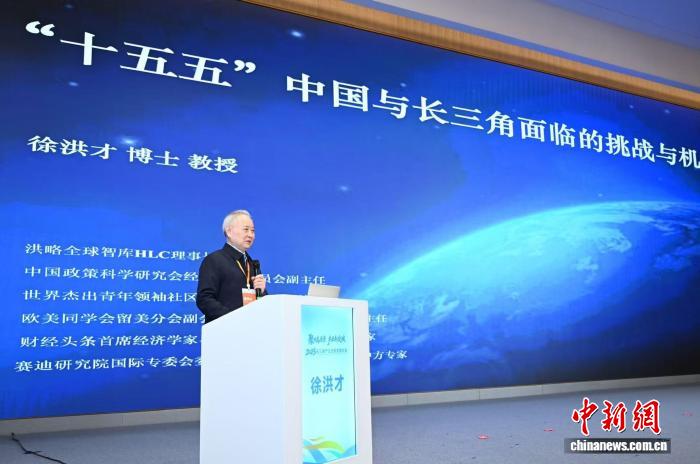
Core Insights - The Yangtze River Delta (YRD) is entering a period of "fourfold opportunities" as it approaches the 14th Five-Year Plan, emphasizing the need for collaborative innovation ecosystems, institutional openness, infrastructure improvement, and innovative regional cooperation mechanisms [1][3]. Group 1: Fourfold Opportunities - The YRD is experiencing a convergence of national strategic initiatives, industrial cluster development, rich scientific and technological resources, and accelerated open economy growth [3]. - The region's strategic position is increasingly prominent as it leads China's economic development while balancing regional growth [1]. Group 2: Collaborative Innovation - There is a strong emphasis on leveraging the YRD's technological innovation resources to establish cross-regional collaborative innovation mechanisms [3]. - Initiatives include the joint development of major scientific infrastructure and a collaborative plan focusing on key sectors such as integrated circuits, artificial intelligence, and biomedicine [3][4]. Group 3: Institutional Openness - The YRD provinces and cities are encouraged to pioneer institutional openness in areas such as rules, regulations, management, and standards, aligning with international high-standard trade rules [4][5]. - Efforts to eliminate hidden barriers to the free flow of resources are essential, particularly in technology transactions and talent evaluation [5]. Group 4: Infrastructure Development - Infrastructure connectivity is identified as a foundational element for YRD integration, with a call to accelerate the construction of a world-class port and airport network [5]. - The development of digital infrastructure and collaborative platforms for computing power is also highlighted as a priority [5]. Group 5: Shared Benefits and Cost Mechanisms - The establishment of various forms of benefit-sharing and cost-sharing mechanisms is recommended to promote collaborative advantages in the YRD [5]. - The success of collaborative industrial funds should be leveraged to create a metropolitan area industrial innovation fund [5].
AI WAN:从智算互联到智能体互联,开启IP广域网创新之路
Sou Hu Cai Jing· 2025-12-17 03:15
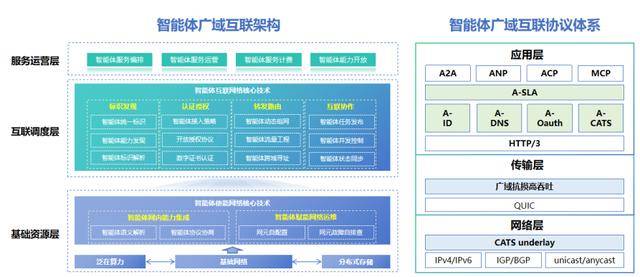
Core Insights - The rapid development of artificial intelligence (AI) technology is driving the emergence of innovative applications, which pose new challenges for computing power and network infrastructure [1][2] - The transition from "connection empowerment" to "computing power empowerment" and now to "AI empowerment" in IP wide area networks (WAN) is being facilitated by national policies supporting the development of computing power and AI technologies [1][2] Group 1: AI WAN Development - AI WAN is emerging as a high-intelligence, high-reliability, and high-security IP wide area network, integrating computing power networks with AI [2] - The need for a new type of AI network infrastructure is driven by the demand for intelligent services and applications, such as AI model training and inference [2] Group 2: Network Requirements for Intelligent Computing - Intelligent computing networks require lossless, ultra-high throughput, and ultra-low latency networks to address the challenges of large-scale GPU cluster interconnection [3] - The construction of a lossless network connection is essential, as even a 2% packet loss can significantly reduce throughput [3] - High throughput transmission mechanisms are necessary to handle the petabyte-scale data transmission in intelligent computing networks [3] Group 3: Transformation of Internet Paradigms - The advent of AI agents represents a paradigm shift in the development of wide area networks, enabling proactive demand discovery and resource collaboration [4] - The concept of an "intelligent agent internet" is proposed, which focuses on efficient connections and interactions among users, agents, and tools [4] Group 4: New Interaction Paradigms - The intelligent agent internet will give rise to a new interaction paradigm, termed multi-modal user interface (MUI), which integrates various sensory modalities for more natural human-machine interaction [5] - The collaboration model will shift from human operation to human decision-making, with intelligent agents executing tasks autonomously [5] Group 5: Protocol Innovations - Innovations in the transport layer are necessary to enhance throughput performance in wide area intelligent computing networks, as traditional TCP protocols face limitations [6] - The introduction of computing power routing technology aims to optimize network and computing resource states for low-latency scheduling [7] - G-SRv6 technology addresses the limitations of native SRv6, enhancing transmission efficiency and scalability for intelligent computing networks [8][9] Group 6: Physical Layer Innovations - Hollow-core fiber technology is identified as a core technology for AI wide area interconnection, offering significant advantages in reducing transmission latency and increasing capacity [10] Group 7: Application Layer Protocol Innovations - The intelligent agent internet will require new application layer protocols to manage diverse traffic types and enhance operational efficiency [11] - Key components include identity resolution, authentication, and routing mechanisms to ensure secure and efficient interactions among agents [13][14][15] Group 8: Network Management Enhancements - The integration of intelligent agents into network management can significantly improve efficiency and reliability by automating the translation of user intentions into network actions [16] Conclusion - The AI technology landscape is entering a phase of continuous business model evolution, necessitating further development of wide area networks to fully realize their potential [17] - The focus should be on integrating new productivity factors, enhancing performance metrics, and fostering new business models centered around AI training and intelligent agent interconnection [17] - The global landscape for intelligent computing networks and intelligent agent internet technology is evolving, with a need for continued development of autonomous AI WAN technologies [18]
5300亿!中国移动2025全年采购额,寒风凛凛
Xin Lang Cai Jing· 2025-12-15 13:34
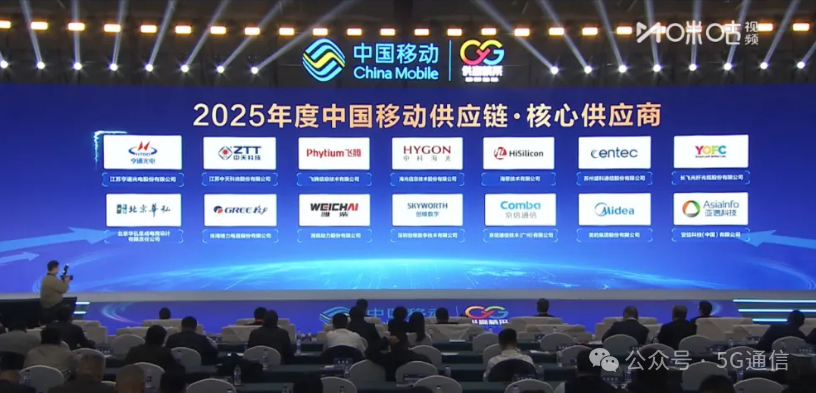
Core Insights - China Mobile disclosed an annual procurement exceeding 530 billion yuan, with over 17,000 signed suppliers, indicating a shrinking market [1][20] - The capital expenditure (CAPEX) trend shows a decline from 92 billion yuan in H1 2022 to 58.4 billion yuan in H1 2025, a decrease of over 30% [4][22] - The CAPEX for H1 2025 is projected to account for 51.8% of the total investment by the three major operators [4][9] Procurement Scale - Annual procurement amount exceeds 530 billion yuan, with over 17,000 suppliers [1][20] - The supplier classification includes 10 strategic suppliers, 14 core suppliers, and 299 excellent (A-level) suppliers [1][20] CAPEX Trends - CAPEX is expected to decrease from 151.2 billion yuan in 2024 to 138.5 billion yuan in 2025, a decline of 8.5% [4][22] - Despite the overall decline, CAPEX remains a significant portion of the three operators' total investment [4][22] Supplier Classification - The core suppliers list includes notable companies such as Haiguang Information, HiSilicon, and Feiteng, indicating a push towards a self-controlled supply chain [5][23] - Strategic suppliers like FiberHome are recognized for their deep collaboration with China Mobile, emphasizing future technological advancements [5][24] Investment Logic - China Mobile plans to invest 37.3 billion yuan in computing power, representing 25% of its capital expenditure, with no upper limit on investment based on market demand [6][25] - The focus on computing power investment reflects its importance as a core competitive weapon for the future [6][25] Domestic Supply Chain Acceleration - The supplier classification highlights a clear trend towards domestic suppliers, with many core suppliers being key players in the domestic innovation industry [7][25] - The domestic AI chip's procurement success indicates strong support for local manufacturing [6][27] Industry Restructuring - The classification system aims to reshape the entire industry chain, focusing on technology, security, and efficiency [11][28] - Companies in the "strategic" tier will collaborate with China Mobile on cutting-edge technologies like 6G and AI [11][29] Future Game Rules - The emphasis on specialization means companies with technical advantages in niche areas will be favored [12][30] - Stricter domestic requirements will continue to strengthen, favoring local suppliers [13][30] - Innovation capabilities will become a critical criterion for companies aiming for the "strategic" tier [14][30] Survival Guide for Suppliers - Suppliers aiming for a larger share in the existing market should strive to meet the standards of core suppliers [15][31] - Those looking to capitalize on new market opportunities should focus on becoming strategic suppliers in emerging technologies [16][31] - Enhancing domestic capabilities will be essential for suppliers seeking international support [17][31]
直真科技:定增申请获审核通过 拟募资6.62亿元加码自智网络与算力网络布局
Sou Hu Cai Jing· 2025-12-12 11:59
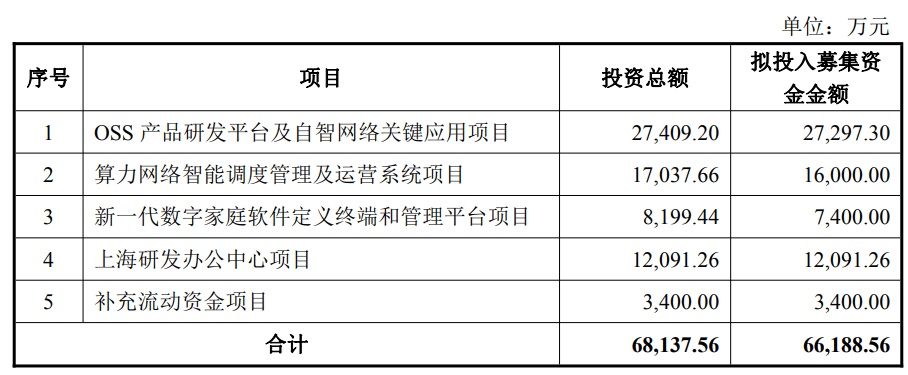
Core Viewpoint - The company plans to raise up to 662 million yuan through a targeted stock issuance, focusing on the development of OSS product platforms and intelligent network applications, aiming to strengthen its core business competitiveness and explore new growth opportunities in line with the digital transformation trend in the telecommunications industry [1]. Fundraising Details - The total investment amount for the projects is 6.813756 billion yuan, with the raised funds allocated as follows: 2.73 billion yuan for OSS product R&D and intelligent network applications, 1.6 billion yuan for intelligent scheduling management systems, 740 million yuan for next-generation digital home software-defined terminals, 1.21 billion yuan for the Shanghai R&D office center, and 340 million yuan for working capital [3][4]. - The issuance will target no more than 35 qualified investors, with a maximum of 31.2 million shares to be issued, accounting for 30% of the company's total share capital before issuance [3]. Project Allocation - 2.73 billion yuan will enhance 15 existing OSS products to improve automation and intelligence in network operations [4]. - 1.6 billion yuan will develop nine product modules, including a computing controller, to support the "East Data West Computing" strategy [4]. - 740 million yuan will introduce SDN technology for home gateway management, aiding telecom operators in upgrading their digital home services [4]. - 1.21 billion yuan will be used for the construction of the Shanghai R&D office center to improve the working environment and attract talent [4]. - 340 million yuan will optimize the capital structure and support business expansion [4]. Company Position - As a core supplier in the OSS field for telecom operators, the company has a strong foothold in the ICT management sector, serving major operators like China Mobile and China Telecom, with software development and technical services accounting for over 95% of revenue from January to September 2025 [4].