
绿色产品认证

Search documents
事关122种产品 我国绿色产品认证新规出台
Zhong Guo Jing Ji Wang· 2026-01-04 09:07
Group 1 - The core viewpoint of the article is the release of the revised "Management Measures for Green Product Certification and Labeling," marking a significant shift in China's approach to green product certification from a single-label management system to a comprehensive certification chain regulation [1] Group 2 - The revised measures establish principles of "unified product catalog, unified evaluation standards, unified certification rules, and unified product labeling," focusing on the entire regulatory process of green product certification [1] - The management framework clarifies the classification and grading of the certification system, defining the applicable scenarios for both full and partial certifications of green products [1] - Detailed regulations on certification implementation, certificate management, labeling usage, and supervisory responsibilities are provided, outlining the responsibilities of all relevant parties and offering clear guidance for related work [1] Group 3 - Currently, the green product certification catalog covers 122 types of products closely related to consumers, including electronics, furniture, building materials, express packaging, and textiles [1] - Nearly 40,000 effective certification certificates have been issued, involving over 8,000 certified enterprises [1]
中国首次对绿色产品认证活动作出全面统一规范
Zhong Guo Xin Wen Wang· 2026-01-04 06:00
Core Viewpoint - The Chinese National Market Supervision Administration has revised and released the "Management Measures for Green Product Certification and Labeling," marking a significant shift from single-label management to comprehensive regulation of the entire certification chain for green products [1] Group 1: Regulatory Changes - The revised "Management Measures" establishes a unified framework for product catalog, evaluation standards, certification rules, and product labeling [1] - It focuses on the full-process supervision of green product certification activities and clarifies the management approach for different levels and categories [1] - The measures detail the responsibilities of all parties involved, providing clear guidance for certification implementation, certificate management, labeling usage, and supervisory responsibilities [1] Group 2: Certification Scope and Impact - The green product certification directory currently covers 122 types of products closely related to consumers, including electronics, furniture, building materials, express packaging, and textiles [1] - Nearly 40,000 effective certification certificates have been issued, involving over 8,000 certified enterprises [1] Group 3: Future Directions - The National Market Supervision Administration plans to continue improving policies to support green transformation and enhance market mechanisms [1]
从单一标识管理向认证全链条监管转变!我国绿色产品认证新规出台
Xin Hua Wang· 2026-01-04 03:25
Core Viewpoint - The revision of the "Green Product Certification and Labeling Management Measures" signifies a shift in China's green product certification system from a single-label management approach to a comprehensive regulatory framework covering the entire certification process [1] Group 1: Regulatory Changes - The new measures are based on principles of "unified product catalog, unified evaluation standards, unified certification rules, and unified product labeling" [1] - The framework focuses on the entire process of green product certification, establishing a clear classification and management approach [1] - Specific regulations regarding certification implementation, certificate management, labeling usage, and supervisory responsibilities have been detailed [1] Group 2: Certification Statistics - The green product certification catalog currently includes 122 types of products closely related to consumers, such as electronics, furniture, building materials, express packaging, and textiles [1] - Nearly 40,000 effective certification certificates have been issued, involving over 8,000 certified enterprises [1]
涉及电子电器、快递包装……我国绿色产品认证新规出台
Xin Lang Cai Jing· 2026-01-04 02:26
Core Viewpoint - The recent revision of the "Management Measures for Green Product Certification and Labeling" marks a significant shift in China's approach to green product certification, moving from a single-label management system to comprehensive regulation of the entire certification chain [1] Group 1: Regulatory Framework - The revised measures establish a unified framework for product cataloging, evaluation standards, certification rules, and product labeling [1] - The management approach focuses on the entire process of green product certification, with a clear classification and grading system [1] - The measures specify the applicable scenarios for both full and partial certifications of green products [1] Group 2: Implementation and Oversight - Detailed regulations on certification implementation, certificate management, labeling usage, and supervisory responsibilities have been outlined [1] - The responsibilities of all relevant parties have been clearly defined, providing explicit guidance for related activities [1] Group 3: Current Status and Future Directions - The green product certification directory currently includes 122 types of products closely related to consumers, such as electronics, furniture, building materials, express packaging, and textiles [1] - Nearly 40,000 effective certification certificates have been issued, involving over 8,000 certified enterprises [1] - The market regulatory authority plans to further implement ecological civilization principles, promote green and low-carbon economic development, and enhance market mechanisms to support high-quality development in green products [1]
市场监管总局:有序扩展绿色产品认证范围
Yang Shi Xin Wen Ke Hu Duan· 2025-10-31 11:17
Core Viewpoint - The State Council Information Office held a press conference on October 31, highlighting the importance of green product certification in promoting green, low-carbon, and circular development, as well as cultivating a green market [1] Group 1: Green Product Certification Overview - The green product certification and labeling system in China currently covers 122 types of products closely related to consumers, including electrical appliances, electronics, furniture, and building materials [1] - Nearly 40,000 green product certification certificates have been issued, involving over 8,000 certified enterprises, making green product certification an effective means to implement the concept of green development and promote high-quality green development [1] Group 2: Future Plans for Certification Expansion - The Market Supervision Administration plans to select priority areas and key regions to systematically expand the certification scope based on the green development needs of various industries [1] - The initiative aims to extend certification from products to the entire industrial chain and supply chain, while promoting industry and regional development in parallel to effectively expand the supply of green products [1]
如何破解调节服务类生态产品价值实现“四难”问题?
Zhong Guo Huan Jing Bao· 2025-10-21 00:22
Core Viewpoint - The article discusses the challenges and solutions related to the valuation and monetization of ecological products, particularly focusing on regulatory services that are public goods and face difficulties in measurement, collateralization, trading, and realization of value. Group 1: Measurement Challenges - The core issue of "difficulty in measurement" arises from the intangible nature, public attributes, and hidden value of regulatory services, making them hard to quantify and recognize in traditional market systems. Solutions include enhancing localized parameter databases and dynamic monitoring capabilities, integrating "3S" technologies (Remote Sensing, GIS, GPS) with IoT sensor networks for real-time ecological monitoring [2] Group 2: Collateralization Challenges - The "difficulty in collateralization" stems from ambiguous property rights, high value uncertainty, and lack of effective risk mitigation mechanisms, preventing regulatory services from being qualified as financial collateral. Solutions involve establishing a legal basis for the capitalization of ecological assets, clarifying operational and income rights, and innovating diverse green financial tools such as "ecological asset mortgage loans" and "green bonds" [3] Group 3: Trading Challenges - The "difficulty in trading" is characterized by the absence of trading platforms for regulatory services, poor supply-demand matching, and high transaction costs. Solutions include developing multi-tiered market models, optimizing government ecological compensation methods, and innovating horizontal trading models for pollution rights and carbon emissions [4] Group 4: Realization Challenges - The "difficulty in realization" focuses on promoting industrial operations and precise market demand alignment. Solutions involve fostering "ecological+" industry integration, implementing origin-based ecological labeling systems, and guiding the development of new business models that rely on high-quality regulatory services [5]
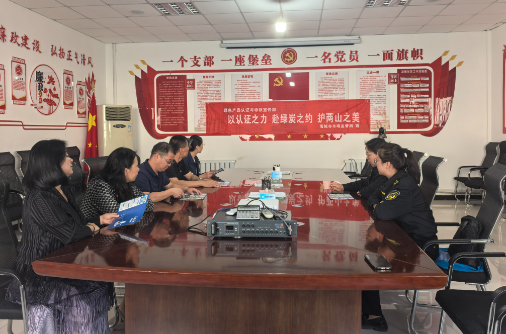
塔城市市场监督管理局:进广场、入企业!绿色产品认证宣传周活动“接地气、见实效”
Zhong Guo Shi Pin Wang· 2025-09-18 07:37
Core Viewpoint - The article emphasizes the importance of green product certification and its role in promoting consumer awareness and supporting enterprise development during the "Quality Month" activities in Tashkent City [1]. Group 1: Public Awareness and Education - The Tashkent City Market Supervision Administration organized a green product certification and labeling promotional week, focusing on integrating certification knowledge into daily life and enterprise production [1]. - At the cultural square, staff set up dedicated booths and distributed over 300 promotional materials, engaging with more than 20 individuals to enhance public understanding of green consumption [3]. - The event addressed common questions about distinguishing genuine green products and the energy savings of green appliances compared to regular ones, using practical shopping scenarios for illustration [3]. Group 2: Enterprise Support and Engagement - The Market Supervision Administration conducted one-on-one support sessions with key enterprises, particularly in the food processing sector, to explain the green product certification process and available policy support [3]. - Through specialized discussions, the administration highlighted the critical role of certification in enhancing product value and accessing green markets, aiming to shift the perception of certification from a burden to an opportunity for production optimization [3]. Group 3: Future Initiatives - The Tashkent City Market Supervision Administration plans to continue tracking enterprise certification progress and maintain regular green certification promotions to foster high-quality development in the city's green industry [5].

宁通信B: 2025年半年度报告
Zheng Quan Zhi Xing· 2025-08-04 16:35
Core Viewpoint - Nanjing Putian Telecommunications Co., Ltd. reported a decline in revenue and net profit for the first half of 2025, indicating challenges in the communication industry and a need for strategic adjustments to maintain competitiveness [1][2]. Company Overview and Key Financial Indicators - The company operates under the stock code 200468 on the Shenzhen Stock Exchange, focusing on telecommunications solutions and products [1]. - The total revenue for the reporting period was approximately CNY 306.31 million, a decrease of 12.23% compared to the previous year [2]. - The net loss attributable to shareholders was CNY 7.15 million, an improvement of 24.37% from a loss of CNY 9.46 million in the same period last year [2]. - The company reported a net cash flow from operating activities of approximately -CNY 132.27 million, a decline of 8.22% year-on-year [2]. Business Analysis - The company focuses on product innovation and service solutions in the information communication sector, emphasizing a strategy of "products + solutions + services" [3]. - Key business areas include communication network infrastructure, multimedia communication products, smart lighting, and precision manufacturing [3][4]. - The company aims to enhance its capabilities in smart wiring, data centers, and multimedia communication through continuous R&D investment [3][5]. Financial Performance - The company's operating costs decreased by 8.19% to CNY 242.78 million, reflecting improved cost control measures [2][9]. - Sales expenses were reduced by 33.02% to CNY 26.95 million, indicating a focus on optimizing sales channels [9]. - The company’s total assets decreased by 17.45% to approximately CNY 691.78 million compared to the end of the previous year [2]. Market Position and Competitive Advantage - The company has established a strong market presence, serving major clients in sectors such as government, finance, and healthcare [8]. - It has developed a mature marketing network and emphasizes innovation in product development to maintain its competitive edge [8][9]. - The company has received multiple certifications for its products, enhancing its reputation in the market [9]. Strategic Initiatives - The company is actively pursuing opportunities in high-end markets, particularly in sectors like finance and healthcare, to replace imported products with domestic alternatives [5][6]. - It is focusing on technology empowerment to enhance product competitiveness and customer satisfaction [6][7]. - The company plans to strengthen its internal management and cost control to achieve high-quality development [7][8].
宁通信B: 2025年半年度报告摘要(英文版)
Zheng Quan Zhi Xing· 2025-08-04 16:35
Core Viewpoint - Nanjing Putian Telecommunications Co., Ltd. reported a decline in operating revenue and net profit for the first half of 2025, indicating challenges in its business performance while also highlighting efforts to optimize operations and explore new business directions [1][14]. Financial Performance - Operating revenue for the reporting period was 306.31 million yuan, a decrease of 12.23% compared to the previous year [1][14]. - Net profit attributable to shareholders was -7.15 million yuan, showing a year-on-year improvement of 24.37% from a loss of 9.46 million yuan [1][14]. - Net profit after deducting non-recurring gains and losses was -7.41 million yuan, a decrease of 37.72% from -11.90 million yuan in the previous year [1]. - Net cash flow from operating activities was -132.27 million yuan, a decline of 8.22% from -122.22 million yuan [1]. - Total assets at the end of the reporting period were 691.78 million yuan, down 17.45% from 838.02 million yuan the previous year [1]. Business Strategy and Development - The company focused on its principal responsibilities in the cyberspace information sector, emphasizing basic communication networks, multimedia communication products, and intelligent lighting products [1][5]. - It aimed to optimize its industrial layout and strengthen core capabilities while exploring new business directions for high-quality development [1][5]. - The company achieved significant results in green product certification and low-carbon applications, obtaining the Product Carbon Footprint Certificate for its optical cable assemblies [7]. Key Projects and Collaborations - In the intelligent cabling business, the company secured high-end market positions and won bids for projects with NR Electric Co., Ltd. and the China-Europe Freight Train Assembly Center [7]. - For intelligent conferencing, the company collaborated with Huawei to develop a tri-screen product for high-end customers and successfully implemented projects for major financial institutions [8]. - In the intelligent lighting sector, the company expanded its customer base and won bids for projects with State Grid and Beijing Fortune Lighting System Engineering Co., Ltd. [9]. Technological Innovation - The company focused on core technology innovation, enhancing its competitive advantages in communications, multimedia solutions, and smart lighting [10]. - It developed high-performance cabling products and optimized its conferencing systems for better integration with mainstream platforms [11][12]. Organizational and Operational Improvements - The company reinforced its Party-building leadership and optimized its organizational structure by closing loss-making divisions [13]. - It intensified efforts for cost control and efficiency improvement to enhance operational performance [13].
宁通信B: 2025年半年度报告摘要
Zheng Quan Zhi Xing· 2025-08-04 16:35
Core Viewpoint - The company reported a decline in revenue and net profit for the first half of 2025, indicating challenges in its operational performance while focusing on strategic development and innovation in core business areas [6][8]. Financial Performance - The company's operating revenue for the reporting period was 306.31 million yuan, a decrease of 12.23% compared to 348.99 million yuan in the same period last year [6][8]. - The net profit attributable to shareholders was -7.15 million yuan, showing an improvement of 24.37% from -9.46 million yuan in the previous year [6][8]. - The net cash flow from operating activities was -132.27 million yuan, a decline of 8.22% from -122.22 million yuan year-on-year [6][8]. - Basic earnings per share were -0.03 yuan, an improvement of 25% from -0.04 yuan in the previous year [6][8]. Asset and Equity Position - Total assets at the end of the reporting period were 691.78 million yuan, down 17.45% from 838.02 million yuan at the end of the previous year [2]. - The net assets attributable to shareholders decreased by 28.21% to 10.30 million yuan from 14.35 million yuan [2]. Strategic Focus and Business Development - The company is focusing on core technology innovation and enhancing its competitive edge in the fields of communication, multimedia solutions, and smart lighting [7][8]. - The company aims to optimize its industrial layout and explore new business directions while maintaining traditional industry scales [4][8]. - Significant progress has been made in smart wiring and lighting products, with successful applications in various key projects [5][7]. Corporate Governance and Management - The company has maintained its commitment to high-quality development and strategic alignment with national policies [3][8]. - There were no changes in the controlling shareholder or actual controller during the reporting period [3].