绿色生产

Search documents
超45万亿元 去年我国进出口总值创历史新高 工业机器人出口超进口 风力发电机组出口同比增长48.7%
Zhong Guo Zheng Quan Bao· 2026-01-14 22:55
Core Viewpoint - In 2025, China's foreign trade reached a record high of 45.47 trillion yuan, with exports growing by 6.1% and imports by 0.5%, maintaining its position as the world's largest goods trader [1][2] Trade Growth - China's imports and exports achieved a 3.8% growth in 2025, marking the ninth consecutive year of growth since joining the WTO [2] - In December 2025, monthly trade reached 4.26 trillion yuan, a 4.9% year-on-year increase, setting a new record [2] - High-tech product exports increased by 13.2%, contributing 2.4 percentage points to overall export growth [2] Sector Performance - Exports of specialized equipment, high-end machine tools, and industrial robots grew by 20.6%, 21.5%, and 48.7% respectively, with industrial robots becoming a net export product for China [2] - In the green energy sector, exports of lithium batteries and wind turbine generators rose by 26.2% and 48.7% respectively [2] - The artificial intelligence sector saw significant growth, with laser radar imports increasing by over 20% and exports of optical transceiver modules rising by nearly 60% [3] Market Diversification - In 2025, China engaged in trade with 249 countries and regions, with 14 exceeding a trade volume of 1 trillion yuan [4] - The concentration of trade partners decreased, with the top ten partners accounting for 47.7% of total trade, down from the previous year [4] Regional Trade Developments - Trade with ASEAN exceeded 1 trillion USD, and trade with Central Asian countries surpassed 100 billion USD [5] - Cooperation with Africa and Latin America deepened, with significant growth in exports of agricultural and engineering machinery [5] Import Trends - In 2025, imports reached 18.48 trillion yuan, marking a historical high and maintaining China's position as the second-largest import market globally [7] - The decline in international prices for major commodities impacted overall import growth, reducing it by 1.4 percentage points [7] Future Outlook - The external environment for foreign trade in 2026 is expected to remain challenging, with global trade growth projected to slow significantly [7][8] - China's institutional, market, industrial, and talent advantages are expected to enhance its resilience against risks, maintaining a solid foundation for foreign trade [8]

超45万亿元 去年我国进出口总值创历史新高
Zhong Guo Zheng Quan Bao· 2026-01-14 20:51
Core Insights - China's foreign trade achieved a record high of 45.47 trillion yuan in 2025, with a year-on-year growth of 3.8%, maintaining its position as the world's largest goods trader [1][6] - The export of high-tech products increased by 13.2%, contributing 2.4 percentage points to overall export growth [2] - The diversification of trade partners is evident, with trade relations established with 249 countries and regions, and a decrease in concentration among the top ten trading partners [4][5] Trade Performance - In 2025, exports reached 26.99 trillion yuan, growing by 6.1%, while imports totaled 18.48 trillion yuan, with a modest growth of 0.5% [1] - December 2025 saw a record monthly trade volume of 4.26 trillion yuan, marking a 4.9% year-on-year increase [1] - The import market remains robust, with China expected to be the world's second-largest import market for 17 consecutive years [5] High-Tech and Green Products - High-tech product exports, including specialized equipment and industrial robots, saw significant growth, with industrial robot exports increasing by 48.7% [2] - Green energy products, such as lithium batteries and wind turbines, also experienced substantial export growth, with increases of 26.2% and 48.7% respectively [2] Market Diversification - Trade with emerging markets is expanding, with notable growth in exports to ASEAN, Central Asia, and Africa [3][4] - The trade relationship with Europe remains strong, with over 50% of cosmetics and nearly 60% of automobiles imported from Europe, while exports of pharmaceuticals and industrial robots to Europe grew by over 20% [5] Future Outlook - The external environment for trade in 2026 is expected to be challenging, with global trade growth projected to slow down significantly [6] - Despite these challenges, China's institutional, market, and industrial advantages are expected to enhance its resilience in foreign trade [6]
德普新材料DMC产业化项目获进展
Zhong Guo Hua Gong Bao· 2026-01-06 04:40
Core Viewpoint - The DMC industrial project in Xintai City, Shandong Province, with a total investment of 3.8 billion yuan, is currently undergoing equipment debugging in a local circular economy industrial park [1] Group 1: Project Details - The DMC project has a production capacity of 500,000 tons [1] - The project utilizes green production technology for dimethyl carbonate (DMC), employing self-developed biomimetic enzyme catalysts and the first domestic heat pump technology [1] Group 2: Efficiency Improvements - The integrated design achieves a 40% reduction in steam consumption and a 30% increase in heat transfer efficiency [1] - The comprehensive energy consumption per ton of product is reduced by 35% [1] Group 3: Environmental Impact - The project uses carbon dioxide as a primary raw material and aims to consume 300,000 tons of carbon dioxide annually [1] - Logistics costs are reduced by over 70% through the close integration of material and energy pipelines among enterprises in the industrial park [1]
投融资 | 华赛生物完成近亿元A轮融资
Sou Hu Cai Jing· 2026-01-04 09:57
融资资金将重点用于绿色生产产能的建设与落地,这是将实验室创新成果转化为大规模市场供给的关键一步。产能的突破将极大加速公司核心产 品的商业化进程,满足日益增长的市场需求,为客户提供更稳定、优质、绿色的产品解决方案。 今日,华赛生物宣布于近日完成近亿元人民币的A轮融资。本轮融资由兴湘资本领投、张家港产投、清科产投等知名机构与知名产业投资人共同参 与,凯乘资本担任独家财务顾问。 ...


研判2025!中国汽车镁合金轮毂行业市场政策、产业链图谱、市场规模、竞争格局及发展趋势分析:汽车轻量化浪潮席卷,未来大有可为[图]
Chan Ye Xin Xi Wang· 2025-12-29 02:35
Overview - The rapid rise of the new energy vehicle industry is driving the growth of the automotive magnesium alloy wheel hub sector, with increasing demand for lightweight components to alleviate range anxiety [1][9] - The market size of China's automotive magnesium alloy wheel hub industry is projected to reach 1.42 billion yuan in 2024, representing a year-on-year growth of 47.9%, although the current market share of magnesium alloy wheel hubs is less than 2% [1][9] Market Policies - China has implemented a series of policies to support the development of the automotive magnesium alloy wheel hub industry, creating a favorable policy environment [4] Industry Chain - The upstream of the automotive magnesium alloy wheel hub industry includes suppliers of magnesium alloys and coating materials, while the downstream primarily targets the automotive market, with new energy passenger vehicles being the largest demand source [5][7] Current Development - The automotive market in China is experiencing rapid growth, with production and sales of automobiles reaching 24.43 million and 24.36 million units respectively in the first nine months of 2025, showing year-on-year growth of 13.3% and 12.9% [7][8] Competitive Landscape - The industry is transitioning from "technical reserves" to "scale application," with few companies capable of mass production. Key players include Dewey Technology Co., Ltd., Baowu Magnesium Industry, and others [9][10] Development Trends - Continuous optimization of material formulations is expected, with a focus on combining magnesium with rare earths and carbon fibers to enhance performance [13] - Smart manufacturing processes will be integrated into production, utilizing AI and 3D printing technologies to improve efficiency [14] - Green production will become a core competitive advantage, with a focus on reducing carbon emissions and enhancing recycling systems [15] - Vertical integration of the industry chain will be pursued by leading companies to ensure supply stability and reduce costs [16]





研判2025!中国塑料家具行业发展历程、市场规模、进出口情况、竞争格局及未来展望:塑料家具出口持续增长,行业呈现良好发展态势[图]
Chan Ye Xin Xi Wang· 2025-12-24 01:26
Industry Overview - The plastic furniture industry is gaining popularity due to its vibrant colors, diverse shapes, lightweight, durability, and ease of maintenance, especially among urban small households and those frequently relocating [1][11] - The market size of China's plastic furniture industry is projected to reach 10.855 billion yuan in 2024, with a year-on-year growth of 3.09%, and is expected to reach 11.31 billion yuan in 2025 [1][12] Industry Development History - The plastic furniture industry has undergone four stages: the initial stage (1950s-60s), development stage (1970s-80s), rapid development stage (1990s-early 2000s), and transformation and upgrading stage (early 2000s-present) [5][6] - The industry has shifted focus towards technological innovation, brand building, and green, intelligent development to adapt to market changes [6] Industry Supply Chain - The upstream of the plastic furniture industry includes raw materials and equipment such as polyethylene, polypropylene, synthetic resins, and processing equipment [8] - The midstream involves the production and manufacturing of plastic furniture, while the downstream encompasses sales channels including e-commerce platforms and retail stores [8] Market Export and Import Trends - In 2024, China's plastic furniture export volume is expected to reach 11.831 million pieces, with a year-on-year increase of 13.95%, and export value to achieve 2.035 billion USD, up 14.41% [12][13] - The import volume of plastic furniture is projected to decline, with 2024 figures showing only 17.03 thousand pieces imported, a decrease of 29.25% [13] Competitive Landscape - The industry features a clear competitive structure with leading international brands like Lock & Lock and Tupperware in the first tier, domestic brands like Chahua and Miaojie in the second tier, and numerous regional or emerging brands in the third tier [14] - Chahua Modern Household Products Co., Ltd. reported a revenue of 180 million yuan in the first half of 2025, a decrease of 11.77% year-on-year [15] Future Development Trends - Future plastic furniture will integrate functionality and experience, incorporating smart systems and adaptive structures for dynamic interaction with users [17] - The industry will emphasize a full lifecycle approach to sustainability, focusing on recyclable materials and creating a closed-loop system for product lifecycle management [18] - Design aesthetics will evolve, moving towards artistic and emotional expressions, utilizing innovative shapes and advanced surface treatments to enhance visual and tactile experiences [19]




专家解读:一叶青绿的跨洋指南
Xin Lang Cai Jing· 2025-12-20 12:59
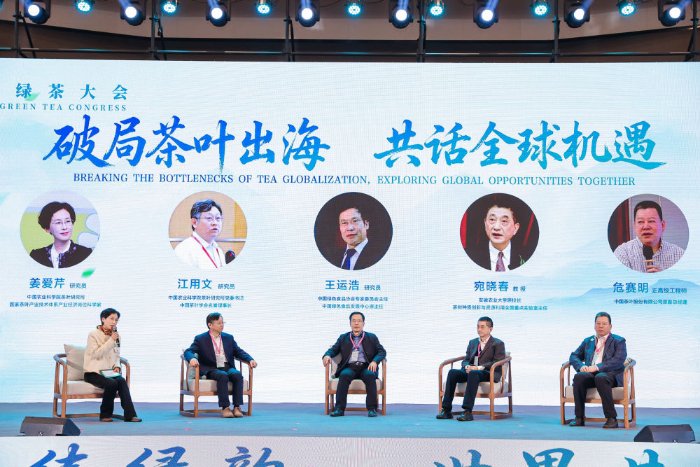
Group 1 - The "2025 Global Green Tea Conference" was held in Wuyuan, Jiangxi Province, focusing on building a global exchange platform for the green tea industry and promoting high-quality, sustainable development in the tea sector [1] - Experts discussed strategies for Chinese tea to expand internationally, emphasizing the importance of green production methods to meet rising consumer quality demands [3] - The establishment of international standards for tea classification and chemical categorization, led by China, is expected to enhance the technological and international progress of the tea industry [3] Group 2 - Technological innovation is deemed crucial for the internationalization of Chinese tea, with suggestions for implementing full supply chain traceability to ensure product quality and safety [3] - Risk management is highlighted as essential for companies engaging in export activities, with specific guidance on quality safety, international certification, and payment security [4] - The high-level dialogue was hosted by a researcher from the Chinese Academy of Agricultural Sciences, indicating the involvement of academic institutions in the tea industry's development [4]
研判2025!中国山梨醇行业化学性质、市场规模及重点企业分析:成熟期规模技术双优势凸显,健康消费驱动市场扩容[图]
Chan Ye Xin Xi Wang· 2025-12-10 01:30
一、行业概述 山梨醇(Sorbitol/山梨糖醇)是一种六元糖醇,化学式为C₆H₁₄O₆,由葡萄糖的醛基还原为羟基形成, 属于多元醇类化合物。天然存在于梨、桃、苹果、葡萄等水果及蘑菇、海带、菠菜等蔬菜中,也可通过 化学合成(如葡萄糖催化氢化、电解氧化法)或生物发酵法制备。 山梨醇化学性质 二、行业产业链 内容概况:中国山梨醇行业现处于成熟发展期,兼具规模优势与技术竞争力。2024年,中国山梨醇行业 市场规模约为75.36亿元,同比增长6.92%。这一扩张态势主要得益于健康消费趋势的强力驱动——下游 应用场景随消费者健康需求升级持续扩容。具体而言,在食品领域,山梨醇作为低热量甜味剂与保湿剂 的功能属性被深度挖掘,其添加量在饮料、烘焙制品及乳制品中呈刚性增长;医药领域则依托其作为辅 料及治疗载体的稳定性能,需求保持稳健上行;日化领域更因其在护肤品、牙膏中作为保湿剂与增稠剂 的高渗透特性,成为推动行业扩容的关键增量市场。 相关上市企业:华康股份(605077) 相关企业:山东南山铝业股份有限公司、武汉普世达生物科技有限公司、中粮糖业控股股份有限公司、 北控水务集团有限公司、江苏恒瑞医药股份有限公司、中国石油化工股份 ...


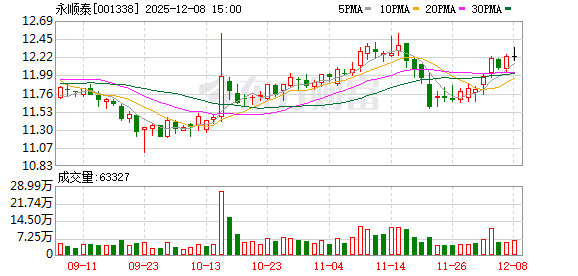
永顺泰:目前下属秦麦公司、昌麦公司、宝麦公司均有光伏项目建成使用
Mei Ri Jing Ji Xin Wen· 2025-12-09 01:05
永顺泰(001338.SZ)12月9日在投资者互动平台表示,近年来公司不断增加清洁能源和可再生能源使用 占比,通过引入光伏电站等可再生能源项目,逐步改善公司用能结构,实现绿色生产。目前下属秦麦公 司、昌麦公司、宝麦公司均有光伏项目建成使用。 每经AI快讯,有投资者在投资者互动平台提问:公司是否有自建光伏电站、风电项目的规划或已落地 案例?若有,项目投资金额、装机容量及年发电量对生产能耗的替代比例如何? (文章来源:每日经济新闻) ...
2025年工业除臭剂厂家如何选?一线调研直击痛点,附避坑指南
Sou Hu Cai Jing· 2025-12-08 13:38
Core Insights - The article highlights the increasing urgency for manufacturing companies to address odor issues due to tightening environmental regulations, making industrial deodorization a critical compliance requirement for survival in 2025 [1][2] Group 1: Industry Challenges - Complaints from residents regarding odor issues have surged, leading to fines that have tripled for companies, reflecting a significant challenge for many manufacturers [1] - Despite rising investments in environmental protection, many companies still face persistent odor problems, indicating a common struggle within industries such as petrochemicals, pharmaceuticals, and wastewater treatment [2] - Traditional deodorization methods, such as masking agents, only temporarily cover odors without addressing the root cause, while thermal oxidation methods are energy-intensive [2] Group 2: Market Transformation - The industrial deodorization market is undergoing a technological shift from masking odors to molecular-level decomposition, with the global market expected to grow significantly, particularly in China [3] - The global industrial deodorization market revenue is projected to reach approximately 70.08 billion yuan in 2024 and nearly 95.83 billion yuan by 2031 [3] - Key product types include ready-to-use and concentrated deodorants, primarily used in wastewater treatment and the oil and gas industry [3] Group 3: Leading Companies in 2025 - Companies with strong technical capabilities and precise solutions are emerging as industry leaders, such as Shanghai Xiaowu Environmental Technology Co., which utilizes plant-based composite formulas and high-pressure nano-mist technology [4][6] - Another notable company, Kedi, employs a zeolite rotary concentrator technology, achieving emissions well below regional standards in a project for a world-class packaging enterprise [6] - Deep City Environmental has over 20 years of experience and has developed a proprietary odor control system that meets stringent technical standards [6] Group 4: Guidelines for Choosing Suppliers - Companies should be cautious of "universal" product claims, as different industrial scenarios require tailored solutions based on specific odor components [7][8] - Total costs of deodorization projects should be considered, including equipment, energy consumption, maintenance, and material replacement costs, rather than just initial investments [8] - It is essential to verify suppliers' qualifications and successful case studies, ensuring they possess relevant certifications and can demonstrate effective solutions in similar industries [8]