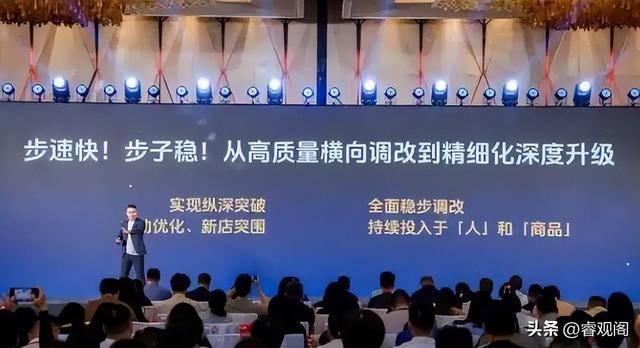
胖东来模式

Search documents
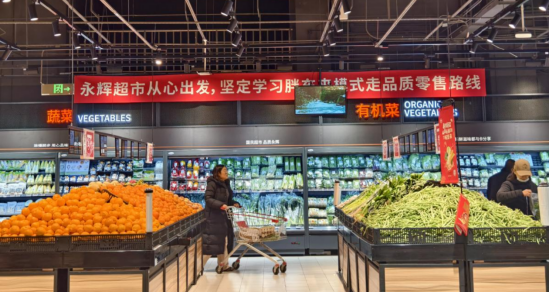
学胖东来反亏21亿? 永辉调改店实探:人少价高,标语满天飞!专家称只学表皮
Xin Lang Cai Jing· 2026-01-23 11:40
Core Viewpoint - Yonghui Supermarket is expected to incur a net loss of 2.14 billion yuan in 2025, marking its fifth consecutive year of losses, primarily due to store adjustments and related costs exceeding 1.2 billion yuan [2][8]. Group 1: Financial Performance - In 2024, Yonghui Supermarket reported a revenue of 67.574 billion yuan, a year-on-year decline of 14.07%, and a net loss of 1.465 billion yuan, which expanded by 10.26% compared to the previous year [8]. - The anticipated net loss of 2.14 billion yuan for 2025 is attributed to three main factors: store adjustments, supply chain reforms, and external investments leading to asset impairment [8][9]. Group 2: Store Adjustments - In 2025, Yonghui Supermarket undertook deep adjustments to 315 stores and closed 381 stores that did not align with its strategic direction, resulting in significant losses from asset write-offs and other related costs [8][9]. - The adjustments included approximately 910 million yuan in asset write-offs and one-time costs, along with an estimated 300 million yuan in lost gross profit due to store closures for renovations [8][9]. Group 3: Learning from the "Pang Donglai" Model - Yonghui Supermarket has adopted elements of the "Pang Donglai" business model, focusing on high salaries, long-term strategies, and regional deep cultivation, but has only superficially implemented aspects such as store decoration and service [2][9]. - Experts suggest that the failure to fully grasp the essence of the "Pang Donglai" model, combined with the challenges of replicating it across a large number of stores, has contributed to ongoing losses [2][9][11]. Group 4: Customer Experience and Market Response - Following the store adjustments, customer feedback indicated that prices for some products had increased, and while there was an initial surge in customer traffic, it later returned to normal levels [7][8]. - The introduction of a dedicated area for "Pang Donglai" branded products did not lead to the anticipated issues of hoarding or reselling, as customer flow remained stable [7][9].


胖东来第一批学徒已挂科
投资界· 2026-01-23 01:01
Core Viewpoint - The article discusses the challenges and complexities faced by traditional supermarkets in China, particularly in the context of learning from the successful model of "胖东来" (Pang Donglai), highlighting the difficulties in replicating its success and the inherent issues within the retail industry [1][3]. Group 1: Industry Challenges - The retail industry is undergoing significant changes, with major players like 永辉超市 (Yonghui Supermarket) facing substantial losses and operational difficulties, including a projected annual loss and a significant drop in revenue [5][6]. - The traditional supermarket model relies heavily on channel fees from suppliers, which has created a complex and often corrupt procurement system that hampers operational efficiency [10][11]. - The shift towards a new model, as exemplified by 胖东来, involves reducing reliance on key account (KA) fees and focusing on direct consumer sales, which requires a fundamental change in operational strategy [10][12]. Group 2: Learning from 胖东来 - Many supermarkets are attempting to emulate 胖东来’s success, but the process has proven difficult, with many struggling to understand and implement the necessary changes [5][6]. - 胖东来 has achieved remarkable sales growth, completing its 200 billion sales target ahead of schedule, which has drawn attention from competitors [5][6]. - The key to 胖东来’s success lies in its ability to redefine the relationship between supermarkets and suppliers, emphasizing product customization and direct consumer engagement [10][12]. Group 3: Management and Organizational Issues - The restructuring efforts at 永辉超市 have led to significant changes in management, including the departure of key executives, indicating the challenges of implementing a new operational model [11][12]. - The complexity of managing a large supermarket chain is exacerbated by the need to maintain effective procurement practices while also ensuring compliance with new operational standards [19][20]. - 胖东来’s approach to employee compensation and management practices, including high salaries and strict performance standards, is a critical aspect of its operational success, but poses challenges for scalability [13][19]. Group 4: Market Dynamics - The retail market in China is characterized by a large number of small companies operating within a vast market, making it difficult for traditional supermarkets to adapt to changing consumer preferences and competitive pressures [22][24]. - The historical context of retail in China shows that many once-dominant players have struggled to maintain their positions, highlighting the transient nature of success in the industry [23][24]. - The article emphasizes that successful business models are often context-specific and may not be easily replicated, as evidenced by the challenges faced by companies attempting to adopt 胖东来’s strategies [26][27].

胖东来的第一批学徒,已经挂科了
商业洞察· 2026-01-22 09:38
Core Viewpoint - The article discusses the challenges and complexities of learning from the "胖东来" (Pang Donglai) retail model, highlighting the struggles of various supermarket chains in adapting to this model and the inherent difficulties in transforming traditional retail practices into a more efficient and profitable system [2][4][14]. Group 1: Industry Challenges - The retail industry is facing significant challenges, with major players like 永辉超市 (Yonghui Supermarket) reporting substantial losses, including a projected annual loss and a nearly 20% revenue decline for 中百 (Zhongbai) [5][10]. - The article notes that while some companies like 步步高 (Bubugao) have shown revenue growth, they still face operational challenges, including a significant drop in net profit [5]. - The difficulties in replicating the success of 胖东来 are emphasized, as many companies struggle to understand and implement the key aspects of its operational model [7][14]. Group 2: Learning from 胖东来 - The essence of learning from 胖东来 lies in fundamentally changing the survival strategies of traditional supermarkets, moving away from a reliance on key account (KA) sales to a model that prioritizes direct consumer engagement and product selection [14][20]. - 胖东来’s model emphasizes the importance of self-owned brands and a direct relationship with suppliers, which contrasts sharply with traditional practices that often involve significant fees for shelf space and product placement [16][19]. - The article highlights the difficulty of changing entrenched procurement practices within traditional supermarkets, which often leads to resistance against adopting new operational models [22][24]. Group 3: Management and Employee Relations - 胖东来 is noted for its generous employee compensation and benefits, which are designed to foster loyalty and reduce corruption within the procurement process [33][39]. - The management practices at 胖东来 are characterized by strict rules and high expectations, which can lead to challenges in maintaining quality as the company scales [44][45]. - The article discusses the complexities of managing a large organization while trying to implement a detailed and rigorous management system, indicating that as companies grow, the effectiveness of such systems may diminish [48][50]. Group 4: Market Dynamics and Future Outlook - The retail landscape is evolving, with traditional supermarkets facing competition from e-commerce and new retail formats, making it essential for them to adapt quickly to changing consumer preferences [56][60]. - The article suggests that the success of 胖东来 may not be easily replicable due to its unique context and the personal leadership style of its founder, indicating a potential "survivor bias" in attempts to emulate its model [62][63]. - The future of retail may require a reevaluation of existing business models, as companies navigate the complexities of modern consumer behavior and market conditions [58][61].
学胖东来的第二年,永辉超市又亏了21亿,市值却增长230亿,“924行情”股价一度暴涨2倍
Jin Rong Jie· 2026-01-22 01:32
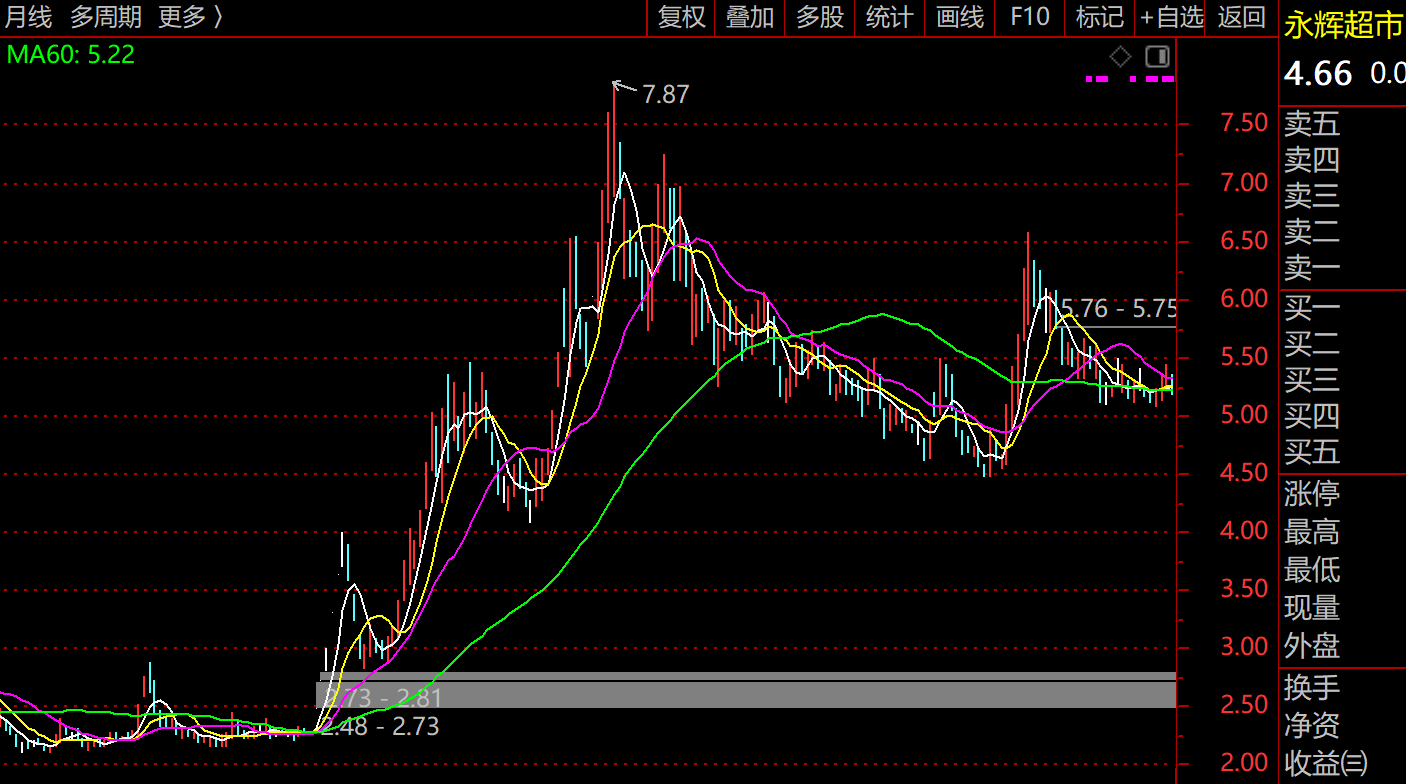
学胖东来的第二年,老牌零售巨头永辉又亏了21亿。日前,永辉超市发布业绩预告,公告显示,预计2025年度归母净利润亏损21.4亿元,上年同期亏损14.7 亿元;归属于上市公司股东扣除非经常性损益后的净亏损29.4亿元,上年同期净亏损为24.1亿元。 这意味着,永辉超市在经历20个月的胖东来模式学习后,在业绩层面尚未扭转颓势,这家老牌零售龙头连续第五年出现经营亏损。 不过在二级市场,永辉超市的股价却表现强势,2024年第四季度一波行情曾暴涨2倍,胖改以来涨幅亦达到约110%,市值增长约230亿元。 门店调改过程中产生的各项费用对公司利润造成重大影响。资产报废及一次性投入合计约9.1亿元,门店停业装修导致的毛利额损失预估约3亿元。关闭381 家门店同样产生了较大损失,主要包括资产报废损失、人员优化离职补偿以及租赁相关的违约赔偿等费用。 供应链改革也在短期内对公司经营造成压力。永辉超市推行"阳光供应链、裸价直采、核心聚焦、冷链升级、门店协同"五大方向的系统性变革,破解传统供 应链痛点。这一改革使公司短期面临缺货及毛利率下滑的压力,对营业收入产生一定影响。 对外投资方面的损失进一步加重了公司的财务负担。永辉超市持有的境 ...
胖东来的第一批学徒,已经挂科了
远川研究所· 2026-01-21 13:03
Core Viewpoint - The article discusses the challenges and complexities faced by companies in the retail sector, particularly in learning from the successful model of "胖东来" (Pang Donglai), highlighting the difficulties in replicating its success due to deep-rooted operational and management issues within traditional supermarket structures [9][14][73]. Group 1: Industry Challenges - The retail industry is undergoing significant adjustments, with companies like 美特好 (Meitehao) announcing plans to learn from Pang Donglai while struggling with operational issues, including store closures and financial instability [3][6]. - Major players in the supermarket sector, such as 永辉超市 (Yonghui Supermarket), are facing severe financial challenges, including projected annual losses and significant revenue declines [6][11]. - The traditional supermarket model relies heavily on fees from brands and suppliers, which can create conflicts and inefficiencies in operations [16][20]. Group 2: Learning from Pang Donglai - Companies attempting to adopt the "Pang Donglai model" often fail to grasp its core principles, which emphasize a fundamental shift in how supermarkets operate, moving away from reliance on key accounts (KA) to focusing on direct consumer sales [15][21]. - The success of Pang Donglai is attributed to its ability to redefine product offerings and supplier relationships, allowing for greater control over inventory and pricing [22][23]. - The challenges of implementing such a model include overcoming entrenched procurement practices and the complexities of managing supplier relationships [24][27]. Group 3: Management and Employee Dynamics - Pang Donglai's approach includes high employee compensation and generous benefits, which are seen as strategies to reduce corruption and improve operational integrity [35][43]. - The management practices at Pang Donglai are characterized by strict performance standards and a focus on efficiency, which may be difficult to maintain as the company scales [49][50]. - The article highlights the importance of aligning employee incentives with company goals to foster a culture of accountability and performance [46][47]. Group 4: Historical Context and Market Dynamics - The evolution of the retail market has seen many once-dominant players fade, illustrating the challenges of sustaining success in a rapidly changing environment [60][62]. - The article emphasizes that successful business models are often context-specific and may not be easily replicated across different markets or conditions [73]. - The historical perspective on retail evolution suggests that many companies may fall into the trap of believing that they can easily replicate the success of others without understanding the underlying factors that contributed to that success [64][66].

永辉超市亏损暴增45%,转型阵痛还是生存危机?
3 6 Ke· 2026-01-21 12:18
Core Viewpoint - Yonghui Supermarket is facing significant financial challenges as it transitions from "scale expansion" to "quality growth," with projected net losses for 2025 expected to reach -2.14 billion yuan, a 45.58% increase in losses compared to the previous year [1] Financial Performance - Yonghui Supermarket announced a projected net profit loss of -2.14 billion yuan for 2025, worsening from a loss of 1.47 billion yuan in the previous year [1] - The company plans to close 381 stores that do not align with its future strategic positioning, while also undergoing deep adjustments to 315 stores [1] - The financial impact of store adjustments includes approximately 910 million yuan in asset write-offs and one-time costs, along with an estimated 300 million yuan in gross profit losses due to store closures [3] Strategic Adjustments - In response to its financial crisis, Yonghui Supermarket has initiated a supply chain reform focused on transparency, quality, and efficiency, aiming to address traditional supply chain pain points [6] - The company is undergoing a significant restructuring, which includes closing underperforming stores and implementing a "surgical" approach to clear risks and prepare for future profitability [7][10] - The leadership changes, including the appointment of a new CEO, signal a shift towards a more youthful and dynamic management style, with a focus on product quality and customer experience [18][20] Market Position and Challenges - Yonghui Supermarket's traditional advantages in fresh produce supply chains have been diluted by competitors like Hema and Sam's Club, leading to a decline in store productivity [1] - The company is experiencing a structural decline in its large supermarket model due to competition from e-commerce and community group buying, which has eroded its market share in lower-tier cities [11][15] - The ongoing adjustments and reforms are seen as necessary but may not be sufficient to address deeper systemic issues such as low traffic, inefficient supply chains, and lagging digital transformation [16] Future Outlook - Analysts suggest that Yonghui Supermarket's ability to focus on core areas and develop a high-density, efficient store network could lead to regional profitability [10] - The company is expected to face a challenging 2026, with potential for a "loss reduction year" before possibly achieving profitability in 2027, contingent on stabilizing gross margins and reducing debt levels [10][20]
学习胖东来的第二年,永辉超市又亏了21亿
Guan Cha Zhe Wang· 2026-01-21 12:05
Core Viewpoint - Yonghui Supermarket is expected to report a net loss of 2.14 billion yuan for 2025, marking a significant increase in losses compared to previous years, indicating the challenges of its ongoing transformation [1][4] Financial Performance - Yonghui Supermarket has experienced continuous losses for five consecutive years, with total losses exceeding 10 billion yuan over this period [4] - The projected net profit for 2025 is -2.14 billion yuan, with a net profit excluding non-recurring items of -2.94 billion yuan, compared to -1.47 billion yuan in the previous year [1][4] Strategic Transformation - The core reason for the anticipated losses is the major operational strategic transformation initiated in 2025, shifting from "scale expansion" to "quality growth" [4][6] - The company has adjusted 315 stores and closed 381 underperforming stores, which has intensified short-term profit pressures [4][6] Impact of Store Adjustments - The financial impact of store adjustments includes asset write-off losses and one-time expenses totaling 910 million yuan, with an estimated gross profit loss of approximately 300 million yuan during store renovations [4][7] - The closure of 381 stores has led to additional costs, including asset write-offs and employee compensation [4][7] Learning from Industry Models - Yonghui Supermarket is adopting the "Fat Donglai" model as a transformation strategy, focusing on enhancing product categories with strong profitability [5][6] - The first store to implement this model opened in June 2024, marking a significant step in the transformation process [6] Supply Chain Reforms - The company is reforming its supply chain to address traditional pain points, which has temporarily led to stock shortages and declining gross margins [7] - The company has also faced losses from its overseas equity investments, with a fair value loss of 236 million yuan expected [7] Future Outlook - Despite the current challenges, there are positive signs from the adjusted stores, with increased customer traffic and sales in some locations [7] - The transformation represents a shift from scale-oriented to value-oriented retailing, which will require time and patience to fully realize [8]

投资者称永辉超市亏损在预期内永辉超市发预亏公告
Xin Lang Cai Jing· 2026-01-13 11:32
来源:@智通财经APP微博 来源:@智通财经APP微博 【#投资者称永辉超市亏损在预期内##永辉超市发预亏公告#】 1月12日晚间,永辉超市发布公告称,经公司财务部门初步测算,预计2025年度归母净利润为负值, 2025年度经营业绩将出现亏损。永辉表示,最终财务数据以正式披露的2025年年度报告为准。#永辉超 市2025净利润为负# 有投资者告诉蓝鲸记者,"永辉超市预亏是预期内的事情,只是亏多少的问题。"然而,永辉超市并未在 今日的公告中,发布具体的亏损数据。 永辉超市自2024年5月启动"胖改",至今已有1年半时间,从公司2026年1月9日公布情况看,全国调改门 店已经突破300家。2025年10月,永辉CEO王守诚曾公开表示,学习胖东来模式仍处于初级阶段,坚持 长期主义,希望用2到3年走出生死线,5到10年真正成为一个国民超市品牌。@蓝鲸新闻 有投资者告诉蓝鲸记者,"永辉超市预亏是预期内的事情,只是亏多少的问题。"然而,永辉超市并未在 今日的公告中,发布具体的亏损数据。 永辉超市自2024年5月启动"胖改",至今已有1年半时间,从公司2026年1月9日公布情况看,全国调改门 店已经突破300家。2025年 ...
“胖东来模式”延安再结硕果,永辉吾悦广场店1月10日焕新开业
Sou Hu Cai Jing· 2026-01-07 12:37
Core Insights - The reopening of Yonghui Supermarket in Yan'an marks the implementation of the "Learning from Pang Donglai" model, indicating a significant step in enhancing quality retail in the Shaanxi region [1][3] Group 1: Sales Performance - The first "Pang Reform Store" in Yan'an achieved impressive results, with a nearly 220% year-on-year increase in sales and over 170% growth in customer traffic in its first month [3] - Key products such as cherries, strawberries, South American shrimp, fresh pork, and Yonghui's private label items performed exceptionally well, demonstrating the strong market appeal of the "quality and affordable" concept [3] Group 2: Product and Structural Optimization - The store underwent a significant product restructuring, removing 4,299 items from the original 9,596 and introducing 4,416 new products, resulting in a 45.5% increase in new items [4] - The overall product structure now aligns with 80% of Pang Donglai's offerings, with imported goods making up 10% of the inventory, enhancing quality and customer experience [4] Group 3: Fresh Food and Dining Experience - The store introduced a diverse range of "table goods" with a professional chef team, including various seafood and local delicacies, enhancing the dining experience [6] - Local specialties and benchmark products were prominently displayed, including well-known local brands and Yonghui's private label offerings, showcasing the company's supply chain capabilities [6] Group 4: Seasonal Promotions and Customer Experience - The store is well-prepared for the Lunar New Year with a variety of festive products, including premium fruits and meats, aimed at meeting customer needs for family gatherings [8][10] - Enhanced customer service features include a rest area with amenities and free processing services for meat and seafood, emphasizing a focus on customer convenience and safety [11] Group 5: Strategic Goals and Community Engagement - The reopening of the store is part of Yonghui's strategy to deepen its presence in Yan'an, aiming to provide quality products and a comfortable shopping environment to earn consumer trust [13] - The company aims to become the preferred choice for local families during the festive season, enhancing the overall shopping experience for the community [13]
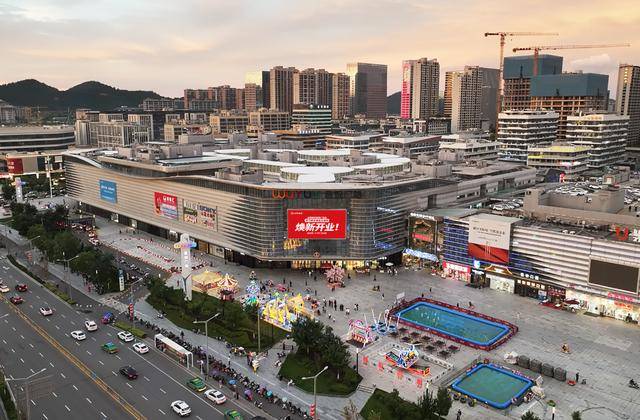
旺季反失血,永辉幻营业,硬闯转型生死线,董事长精准套现离场
Sou Hu Cai Jing· 2026-01-05 11:21
Core Viewpoint - Yonghui Supermarket is undergoing a significant transformation amidst a backdrop of substantial financial losses and cash flow challenges, raising questions about the effectiveness of its strategy to revive the business [1]. Group 1: Transformation Efforts - As of September 2025, 222 out of 450 stores have completed renovations, with some locations achieving profitability [3]. - The new store formats, inspired by the "Fat Donglai" model, have attracted significant customer traffic, particularly in cities like Shanghai and Wuxi [1][3]. - The stock price surged in December, reflecting market optimism, with the market capitalization reaching 47 billion [3]. Group 2: Financial Challenges - Yonghui's operating cash flow for the first three quarters of 2025 was only 1.14 billion, a nearly 70% decline year-on-year, with a negative cash flow of 68 million in Q3 [5]. - The company's debt pressure is increasing, with an asset-liability ratio of 88.96% and a current ratio of only 0.63, indicating high short-term repayment risks [5]. - Cash flow has been on a long-term decline, shrinking by 75% over four years [5]. Group 3: Asset Liquidation and Cost Management - To maintain cash flow, Yonghui has resorted to asset sales, including a significant reduction in shareholdings by major stakeholders, raising over 1 billion through these measures [7]. - The company has closed 227 unprofitable stores, incurring a loss of 612 million in Q3 alone [9]. - The planned investment for store renovations in 2026 is 5.597 billion, with an average investment of over 18.65 million per store, adding to the financial strain [9]. Group 4: Competitive Landscape and Industry Trends - The shift towards a user-centered value creation model, as seen in the "Fat Donglai" approach, requires long-term commitment and cannot be achieved through short-term financial investments [13]. - The retail industry is experiencing a transformation, with 75% of supermarket enterprises attempting renovations, yet less than half achieved year-on-year sales growth in the first half of 2025 [13]. - Yonghui's challenges are compounded by its presence in high-rent, competitive urban areas, making it difficult to replicate the success of models like "Fat Donglai" [11].