能源投资

Search documents
White House gathers oil majors, traders, drillers on Venezuela
Reuters· 2026-01-09 11:03
Core Viewpoint - The White House is organizing a meeting with major U.S. and international oil companies to explore potential investments in Venezuela's energy sector, aiming to revive crude oil production in the country affected by sanctions [1] Group 1 - The meeting is scheduled for Friday and involves significant stakeholders in the oil industry [1] - The administration is considering various strategies to increase crude output in Venezuela [1] - The focus is on addressing the challenges posed by existing sanctions on Venezuela's energy sector [1]


外媒:日本警惕阿拉斯加天然气项目“陷阱”
Huan Qiu Shi Bao· 2026-01-07 22:31
Group 1 - The core viewpoint of the articles highlights that the U.S. is set to become the world's largest exporter of liquefied natural gas (LNG) by 2025, with exports exceeding 100 million tons annually, driven by new production facilities [1] - The U.S. is targeting Japan for investment in the Alaska gas project, with Japan previously committing to a $550 billion investment in exchange for reduced tariffs [1] - The Alaska gas project, which involves a 1,300-kilometer pipeline, is projected to be the largest energy investment in U.S. history, with construction costs estimated between $10.8 billion and $14.9 billion [1] Group 2 - Japan is seeking to reduce its reliance on Russian energy imports, but there is skepticism within the industry regarding the economic viability of importing LNG from the U.S. due to high initial infrastructure costs [2] - Concerns have been raised that if the project is not completed before the end of Trump's second term, it may face cancellation by a new administration, leading to financial losses for investors [2] - Japan plans to increase its LNG imports from the U.S. by an additional $7 billion annually, with expectations that imports from North America will double by 2030, accounting for over 20% of Japan's long-term LNG contracts [2] Group 3 - A Japanese editorial expressed concerns that the high construction costs of the Alaska project could lead to financial losses for government-affiliated financial institutions, potentially burdening the Japanese public [3] - The editorial concluded that the risks of participating in the Alaska energy project may outweigh the benefits, necessitating careful examination to protect Japan's national interests [3]
沙特阿美拟入股印度新炼厂
Zhong Guo Hua Gong Bao· 2026-01-06 04:14
Core Viewpoint - Saudi Aramco plans to acquire a 20% stake in a new refinery being built by Bharat Petroleum Corporation Limited (BPCL) in India, with a total investment of approximately $11 billion [1] Group 1: Investment Details - The refinery is located at the Ramayapatnam port on the southeastern coast of India and is designed to process between 180,000 to 240,000 barrels per day [1] - BPCL intends to sell 30% to 40% of its stake to external investors, with Saudi Aramco and Oil India Limited (OIL) being key participants [1] - BPCL has secured 6,000 acres of land necessary for the project, which is required to commence commercial operations by January 2029 as per the Andhra Pradesh government's stipulations [1] Group 2: Market Context - BPCL is the second-largest state-owned refiner in India and is actively expanding its crude processing and petrochemical capacity to meet the growing domestic demand [1] - For Saudi Arabia, this investment aims to secure long-term sales channels for its crude oil in key Asian markets [1] - Saudi Aramco is also in discussions with Oil and Natural Gas Corporation (ONGC) regarding another planned refinery in Gujarat [1]
2025年能源重点项目预计完成投资3.54万亿元
Ren Min Ri Bao· 2025-12-25 08:40
Core Insights - The energy investment in China is expected to show strong growth and transition towards greener and newer sources, with a projected completion investment of 3.54 trillion yuan in key energy projects for the year, representing an 11% year-on-year increase [1] Investment Trends - Significant investments are noted in nuclear power, onshore wind power, distributed photovoltaic, and power grids, while new energy storage, charging and swapping infrastructure, and hydrogen investments are growing rapidly [1] - Private enterprises are actively participating in energy investments, with a year-on-year increase of 15% in completed investments [1] Policy and Mechanisms - The National Energy Administration and relevant departments are establishing and improving mechanisms for private enterprises to participate in nuclear power projects, with all 10 newly approved nuclear power units in 2025 expected to attract private capital, with a maximum shareholding of 20% [1] - Initiatives are being taken to encourage private investment in hydropower projects like Danba and to support market-oriented participation in oil and gas pipeline projects, along with the approval of four large private coal mine projects [1]
非洲原油日需求量预计将跃升至2050年每日450万桶
Shang Wu Bu Wang Zhan· 2025-12-23 16:39
Core Insights - Africa's daily crude oil consumption is projected to surge from 1.8 million barrels in 2024 to 4.5 million barrels by 2050, positioning the region as a significant frontier for energy investment globally [2] Investment Needs - To meet future demand and reverse the current dependency on imports, Africa requires over $100 billion in investments in the refining sector by 2050 for upgrading existing facilities, expanding capacity, and developing new clean fuel projects [2] Challenges - The investment landscape faces two main obstacles: 1. Fragmented fuel standards across 46 countries, leading to multiple specifications that hinder regional trade and economies of scale [2] 2. Underdeveloped infrastructure, with logistics costs adding an extra $20-30 per ton of fuel, diminishing market competitiveness [2] Strategic Recommendations - The African Refining and Distribution Association (ARDA) has proposed a systematic transformation blueprint that includes unifying fuel standards, rebuilding end-to-end supply chains, enhancing the regulatory environment, and creating a bankable project portfolio [2] Market Potential - The downstream energy sector in Africa is identified as the last major high-growth investment frontier globally, necessitating industrial modernization to convert demographic dividends into tangible development momentum [2]
媒体报道丨今年能源重点项目预计完成投资3.54万亿元
国家能源局· 2025-12-22 01:40
Core Viewpoint - Energy investment in China has shown strong growth this year, focusing on safety and transformation, with a projected completion investment of 3.54 trillion yuan, representing an 11% year-on-year increase [2] Investment Trends - Significant investments are observed in nuclear power, onshore wind power, distributed photovoltaic, and power grids, with rapid growth in new energy storage, charging infrastructure, and hydrogen energy [2] - Private enterprises have actively participated, with their investment completion amount increasing by 15% year-on-year [2] Policy and Mechanisms - The National Energy Administration has established mechanisms to facilitate private enterprise participation in nuclear power projects, with all 10 newly approved nuclear units this year involving private capital, with the highest share reaching 20% [2] - Support for private enterprises to invest in hydropower projects and oil and gas pipeline projects is being promoted under market principles, along with the approval of four large private coal mine projects [2]
今年能源重点项目预计完成投资3.54万亿元
Ren Min Ri Bao· 2025-12-20 21:56
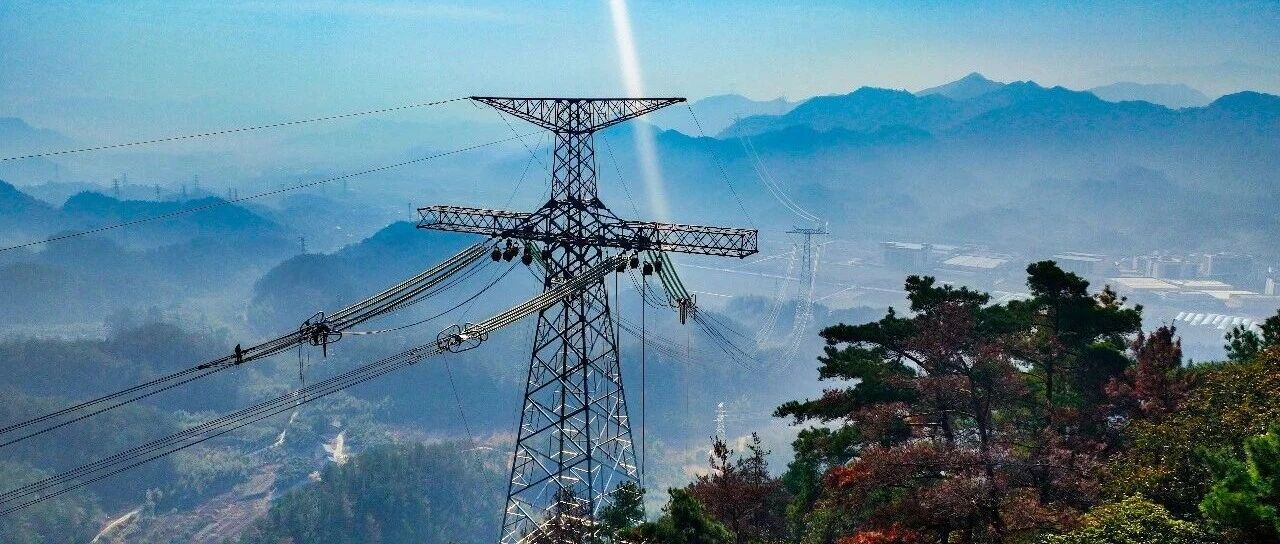
Core Insights - Energy investment in China has shown strong growth this year, focusing on safety and transformation, with an expected completion of 3.54 trillion yuan in key energy projects, representing an 11% year-on-year increase [1] Investment Trends - Significant investments are noted in nuclear power, onshore wind power, distributed photovoltaic, and power grids, with rapid growth in new energy storage, charging and swapping infrastructure, and hydrogen [1] - Private enterprise investment has increased by 15% year-on-year, indicating a robust participation from various investment entities [1] Policy and Mechanisms - The National Energy Administration has established mechanisms to facilitate private sector participation in nuclear power projects, with all 10 newly approved nuclear units this year involving private capital, with the highest share reaching 20% [1] - Support for private enterprises to invest in hydropower projects and oil and gas pipeline projects is being promoted under market-oriented principles, along with the approval of four large private coal mine projects [1]
“十四五”能源成就·投资篇丨比增11%!增势强劲向绿向新
Zhong Guo Dian Li Bao· 2025-12-17 06:51
Core Insights - The energy investment in China is experiencing strong growth, with a projected investment of 3.54 trillion yuan in key energy projects by 2025, representing an 11% year-on-year increase [1] - The "14th Five-Year Plan" has led to significant increases in energy investment, with annual investments surpassing 4 trillion, 5 trillion, and 6 trillion yuan, providing robust support for China's modernization efforts [1][2] Investment Trends - Energy investment accounts for nearly 10% of total fixed asset investment in China, highlighting its critical role in economic stability [2] - Investment in key sectors such as electricity and heat production has seen growth rates exceeding 20%, contributing significantly to overall economic growth [2] - Despite a decline in overall fixed asset investment from January to November 2025, investment in key energy projects has continued to rise, particularly in nuclear power, onshore wind, distributed solar, and grid infrastructure [2] Supply Security - Since 2021, state-owned energy enterprises have been responsible for approximately 80% of crude oil, 70% of natural gas, and 60% of electricity supply, increasing China's energy self-sufficiency from around 80% to over 84% [3] - The coal supply has been reinforced, and oil and gas production has reached historical highs, effectively managing peak electricity loads [3] Technological Advancements - New energy storage capacity has surpassed 100 million kilowatts, making China the world leader in this area [4] - China holds over 40% of global renewable energy patents, with continuous improvements in solar conversion efficiency and offshore wind turbine capacity [4] Green Investment - The "14th Five-Year Plan" marks the fastest transition to green and low-carbon energy in China's history, with renewable energy investments becoming the dominant force in power generation [6] - By 2024, over 80% of investment in power generation will be directed towards renewable energy projects, contributing to a significant reduction in carbon emissions [6] Private Sector Involvement - The threshold for investment in the energy sector has been lowered, leading to a double-digit growth rate in private sector participation in energy projects [8] - Private enterprises are increasingly involved in major energy projects, with significant participation in nuclear power and hydropower projects [8][9] - Recent policies have been implemented to enhance the investment environment for private capital in the energy sector, including support for participation in key projects [8][10]
黑石集团40亿美元能源豪赌可能重塑美国电网
Xin Lang Cai Jing· 2025-12-10 20:47
Core Viewpoint - Blackstone Group has completed a significant $4 billion acquisition that may reshape the U.S. power network by purchasing Retail Opportunity Investments Corp (ROIC) for $4 billion, including debt [1] Group 1 - Blackstone's stock rose by 0.5% in the market following the announcement of the acquisition [1] - The acquisition will be conducted in cash, with Blackstone Real Estate Partners X agreeing to buy ROIC's common stock at a price of $17.50 per share [1]

两位科技大佬的对话,AI到底是泡沫还是未来?
大胡子说房· 2025-12-02 08:45
Core Viewpoint - The dialogue between Musk and Huang Renxun at the Saudi-US Investment Forum highlights the significant impact of AI on the future of work and the economy, raising questions about whether AI represents a bubble or a transformative future narrative [1][2]. Group 1: AI and Work - Musk envisions a future where work becomes optional and money loses its importance as AI and robots take over most jobs, leading to a scenario where basic material production is no longer scarce [3][4][5]. - The idea is that households will have humanoid robots to assist with daily tasks, and factories will be filled with robots producing goods continuously, resulting in lower prices for essential items [6]. - In this future, individuals will work not for survival but for personal fulfillment, choosing to work based on passion rather than necessity [7][8]. Group 2: The Concept of Money - Musk suggests that in an AI-driven world, the concept of money will gradually lose its significance, as machines will handle all production, potentially leading to a scenario where essential goods are free [11][13]. - Huang Renxun offers a more pragmatic view, stating that while AI will not eliminate jobs, it will change the nature of work, making low-value jobs obsolete and allowing individuals to focus on more valuable tasks [14][15]. Group 3: AI as Infrastructure - Huang Renxun argues that AI is fundamentally an infrastructure shift, moving from retrieval-based computing to real-time generative computing, which minimizes the space for a potential bubble [19][20]. - This transition indicates that AI is continuously evolving and optimizing, suggesting that concerns about an AI bubble may be premature [20]. Group 4: Investment Opportunities - The dialogue emphasizes the importance of identifying investment opportunities in AI, suggesting that individuals can either participate directly in the industry or invest financially [21][24]. - The tech giants in the US have seen significant market value, and the recent performance of tech stocks in both the US and Hong Kong indicates a strong trend towards technology investments [28][29]. - The ongoing technological advancements, particularly in humanoid robots, suggest that there will be substantial investment opportunities as these technologies become more widely implemented [32]. Group 5: Energy and AI - Both Musk and Huang Renxun agree that energy is a critical bottleneck for AI development, with increasing energy demands as AI technologies advance [36]. - This presents investment opportunities in energy sectors, particularly in regions upgrading their infrastructure to support AI, such as Saudi Arabia's plans to transform oil refineries into AI factories [39].