自有品牌战略

Search documents
“平移”山姆经验,沃尔玛再造沃尔玛
Jing Ji Guan Cha Bao· 2025-12-01 07:20
Core Insights - Walmart China is revitalizing its brand by focusing on product offerings and store formats, drawing inspiration from its Sam's Club experience [1][9][10] Group 1: Brand Strategy - Walmart China has upgraded its private label "沃集鲜" (Wojixian), launching nearly 1,000 new products in the past year, covering key categories such as fresh food, groceries, and beverages [1][2] - The company has consolidated its private brands, integrating some products from "惠宜" (Huayi) into the Wojixian brand, while Huayi now focuses on home goods [2][4] - Wojixian products are prominently displayed in stores and online, with significant SKU representation in key categories like snacks and cooking oils [3][4] Group 2: Supply Chain and Partnerships - Walmart is adopting a collaborative approach with suppliers, allowing for various partnership models, including OEM arrangements, to ensure quality and competitive pricing [4][5] - The company has established strict criteria for suppliers, ensuring that only those meeting quality standards can partner with Wojixian [6] Group 3: Store Format Innovation - Walmart is exploring new store formats, including community stores in Shenzhen, which focus on convenience and a curated selection of around 2,000 products [7][8] - The community store model emphasizes a "10-minute walk" concept, catering to high-density urban areas [7] - Walmart is also renovating existing stores to enhance the shopping experience, utilizing data analytics to optimize product offerings and introduce new sections [8] Group 4: Competitive Landscape - Walmart's traditional hypermarket format has faced challenges, leading to store closures, while Sam's Club has seen growth, prompting Walmart to adopt strategies from Sam's [9][10] - The company is differentiating its product offerings from Sam's Club by adjusting pricing and promotional strategies while maintaining a focus on quality [11][12]

“平移”山姆经验,沃尔玛再造沃尔玛
经济观察报· 2025-12-01 07:10
Core Viewpoint - Walmart China is not giving up on its brand and is focusing on product and store type innovations to revitalize its presence, including leveraging experiences from Sam's Club [2][3]. Group 1: Brand Strategy - Walmart China has upgraded its private label "沃集鲜" (Wojixian), launching nearly 1,000 new products in the past year, covering core categories like fresh food, beverages, and snacks [2][5]. - The brand restructuring has integrated some products from the "惠宜" (Huayi) brand into "沃集鲜," while "惠宜" now focuses on home goods [5]. - "沃集鲜" products are prominently displayed in stores and online, indicating a strategic emphasis on this private label [6][7]. Group 2: Store Format Innovation - Walmart has opened community stores in Shenzhen, with five locations established, focusing on a "10-minute walk" concept to cater to urban communities [11]. - The community stores offer around 2,000 selected products, including hundreds of "沃集鲜" items, aligning with the trend of near-field retail [11][12]. - Walmart is also exploring new store formats, including the opening of "龙泉店" and "正大店" in Kunming, which feature a more open layout and a focus on customer experience [12][13]. Group 3: Learning from Sam's Club - Walmart is adopting strategies from Sam's Club, which has been expanding while Walmart's traditional stores have been closing [15][16]. - The company is implementing similar product selection logic as Sam's Club but with differentiated execution, such as varying pricing strategies for similar products [16][17]. - Recent personnel changes indicate a closer alignment between Walmart and Sam's Club operations, with key positions remaining stable to ensure strategic continuity [18].

沃尔玛再造沃尔玛
Jing Ji Guan Cha Wang· 2025-11-30 03:51
Core Insights - Walmart China is upgrading its private label brand "沃集鲜" (Wojixian) with nearly 1,000 new products launched in the past year, focusing on fresh food, beverages, and other core categories [2][3] - The company is facing challenges such as declining foot traffic and revenue, leading to a reduction in the number of Walmart Supercenters from 442 in 2019 to 334 by April 2025 [2][3] - Walmart is shifting its strategy by integrating successful elements from its Sam's Club model into its Walmart Supercenters [10][11] Brand Strategy - Wojixian was launched in 2019, initially focusing on fresh food, and has since integrated some of the packaging food from the 惠宜 (Huayi) brand into its offerings [3] - The brand is prioritized in marketing efforts, with significant promotion through Walmart's official channels, while other brands like Huayi and George have seen reduced visibility [5][6] - Wojixian emphasizes "simple ingredients, collaboration with leading brands, and stable quality-price ratio" as its core principles [5][6] Product Placement and Performance - Wojixian products are prominently displayed in stores and have dedicated sections on Walmart's app, indicating a strategic focus on enhancing visibility and sales [4][5] - In key categories like snacks and cooking oils, Wojixian holds a significant share of the product offerings, showcasing its leading position in core food categories [4] Store Format Innovation - Walmart is exploring new store formats, including community stores in Shenzhen, which focus on convenience and a curated selection of around 2,000 products [8][9] - The community store model aims to cater to urban lifestyles with a "10-minute walk" concept, reflecting a shift towards proximity retailing [8][9] Learning from Sam's Club - Walmart is adopting successful strategies from Sam's Club, which has seen growth while Walmart Supercenters have closed several locations [10][11] - The company is implementing differentiated pricing and promotional strategies based on Sam's Club's product selection logic, while maintaining its unique market positioning [11][12]
万辰集团(300972) - 福建万辰生物科技集团股份有限公司投资者关系活动记录表
2025-11-26 12:24
Group 1: Business Performance and Strategy - The company maintains a balance between store quality and quantity, focusing on steady development and improving single-store performance gradually [2] - The consumer demand-driven model effectively addresses profit loss from traditional distribution channels, enhancing product quality and store experience [2] - The company aims for sustainable growth by continuously improving its operational system and integrating supply chains [3] Group 2: Store Improvement and Customer Engagement - The company emphasizes food safety and product innovation, enhancing core competitive advantages through product iteration and the introduction of popular self-owned products [3] - Efforts to refine the membership system have successfully increased customer loyalty and repurchase rates [3] - The company is committed to building a strong trust relationship with consumers to convert it into stable foot traffic [4] Group 3: Product Development and Market Adaptation - The company focuses on consumer needs in its self-owned brand strategy, introducing products like natural water and sugar-free beverages that meet market demands [5] - Future product development will be guided by a flexible mechanism rather than rigid quantitative targets, ensuring responsiveness to consumer insights [5] Group 4: Inventory Management and Profitability - The core business model relies on efficient turnover, with a focus on precise product selection and rapid response to consumer needs [6][7] - The company prioritizes dynamic balance in product categories, avoiding the introduction of high-margin but slow-turnover items that could jeopardize sustainable growth [7] Group 5: Organizational Structure - The core management team for the snack business remains stable, with ongoing enhancements to the overall structure and active recruitment of talent across all levels [7]
立达信(605365):公司事件点评报告:短期出口承压,自有品牌与海外产能布局增强中长期韧性
Huaxin Securities· 2025-11-25 08:41
Investment Rating - The report assigns a "Buy" rating for the company, marking it as the first recommendation [1]. Core Views - The company's short-term export performance is under pressure, but its own brand and overseas capacity layout are strengthening its long-term resilience [5][6]. - The lighting industry is experiencing overall export pressure, with significant deceleration in growth during the third quarter [5]. - The company has seen a notable decline in performance, with a third-quarter revenue of 1.907 billion yuan, down 2.74% year-on-year, and a net profit of 58 million yuan, down 55.18% year-on-year [4][5]. Summary by Sections Financial Performance - For the first three quarters of 2025, the company achieved a revenue of 4.947 billion yuan, a year-on-year increase of 0.13%, while net profit was 127 million yuan, a year-on-year decrease of 54.35% [4]. - The third quarter alone saw a revenue of 1.907 billion yuan and a net profit of 58 million yuan, indicating a significant decline in profitability [4][5]. Market Conditions - The overall export of the lighting industry is under pressure, with a reported 6% year-on-year decline in total export value for lighting products in the first half of 2025 [5]. - Approximately 90% of the company's revenue comes from overseas markets, making it vulnerable to weak export demand and pricing pressures from clients [5]. Strategic Initiatives - The company has been enhancing its own brand strategy, which is expected to become a key growth driver in the medium to long term [8]. - The company has established a manufacturing base in Thailand to mitigate risks associated with U.S. tariff policies, with production capacity expected to ramp up in the coming years [6]. Earnings Forecast - Despite short-term profitability pressures, the company is expected to see a gradual improvement in operational quality as overseas capacity ramps up and brand business share increases [9]. - Revenue projections for 2025-2027 are estimated at 6.882 billion, 7.242 billion, and 7.752 billion yuan, respectively, with corresponding EPS of 0.39, 0.54, and 0.69 yuan [9].

亏了1.27亿,大润发计划3年「调改」500店
3 6 Ke· 2025-11-20 03:36
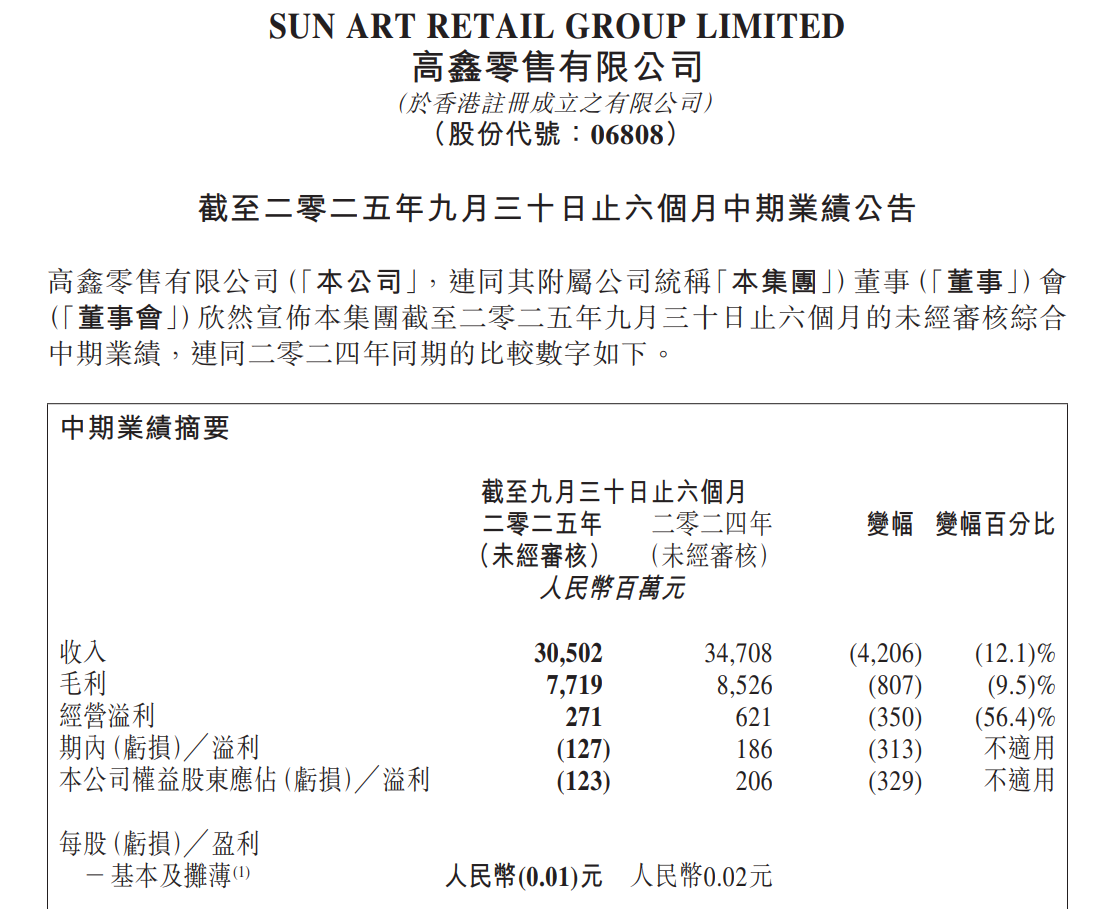
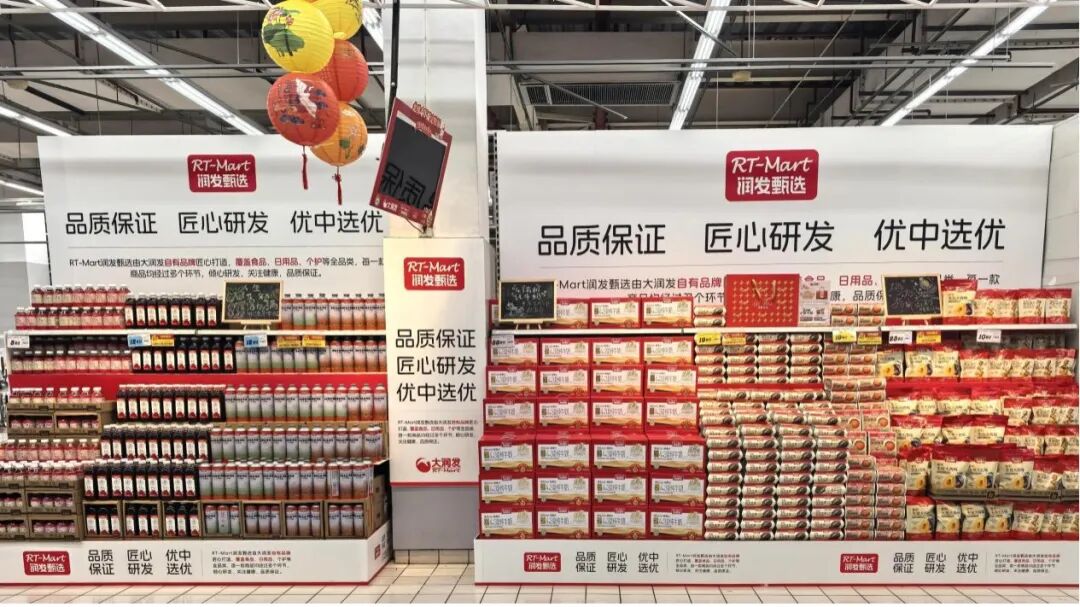
Core Insights - The article discusses the transformation of RT-Mart, highlighting its position as the second-largest supermarket in China, facing challenges in adapting to market changes and consumer preferences [1][2] - Despite efforts to showcase confidence in its transformation, RT-Mart's financial performance remains under pressure, indicating a need for strategic adjustments [2][14] Group 1: Transformation Strategy - RT-Mart plans to accelerate the renovation of 500 stores over the next three years, focusing on a model that combines health products, enjoyable experiences, and attentive service [3][4] - The company aims to shift from a "destination hypermarket" to a "community center" model, requiring a complete restructuring of its product offerings and operational logic [3][11] - A key strategy involves reducing the size of stores from over 10,000 square meters to between 6,000 and 7,500 square meters, and halving the number of SKUs from 16,000-20,000 to streamline product offerings [8][9] Group 2: Financial Performance and Challenges - In the latest financial report, RT-Mart's parent company, Gao Xin Retail, reported a revenue of 30.502 billion yuan, a year-on-year decline of 12.1%, and a net loss of 127 million yuan [1][14] - The B2C business saw a same-store order growth of 7.4% and a sales increase of 2.1%, but a decline in average transaction value poses a challenge to profitability [14] - The company has a cash reserve of 11.958 billion yuan, providing a buffer for operational and strategic initiatives [13] Group 3: Innovations and Opportunities - RT-Mart has initiated a nationwide joint procurement project for pork, which has led to a nearly 20% increase in sales volume and a 4 percentage point rise in gross margin [10][11] - The company is also expanding its private label strategy, with nearly 500 SKUs across over 50 categories, although this currently represents less than 3% of total sales [17][18] - The establishment of front warehouses aims to enhance online sales, with plans to increase the proportion of online sales to 40%-50% over the next three years [14][15] Group 4: Market Position and Future Outlook - RT-Mart's strategic focus on low-tier cities, where 75.8% of its stores are located, provides a favorable environment for its transformation efforts [11][12] - The company faces significant challenges in overcoming the inertia of traditional hypermarket operations while addressing declining revenues and weak core product offerings [18] - The transformation journey is expected to be long and arduous, with the next three years serving as a critical starting point for RT-Mart's revival [18]
药师帮:第三季度收入同比增长15%,致力于推出高质量自有品牌产品
Cai Jing Wang· 2025-11-17 14:35
Core Insights - The company announced a 15% year-on-year revenue growth for the three months ending September 30, 2025, surpassing the revenue growth rate of the first half of 2025 compared to the first half of 2024 [1] - The group's flagship business, including its proprietary brand operations, saw a transaction volume increase of over 120% year-on-year, with proprietary brand transactions growing over 350% in the same period [1] - The flagship business is a key strategic initiative under the "Upward Mobility" plan, significantly contributing to profitability [1] - The company is strategically expanding its proprietary brand product offerings to meet diverse market demands and drive continuous business growth [1]
药师帮:第三季度收入同比增长超过15%
Zhi Tong Cai Jing· 2025-11-16 10:29
Core Viewpoint - The company reported a revenue growth of over 15% year-on-year for the three months ending September 30, 2025, surpassing the revenue growth rate for the first half of 2025 compared to the first half of 2024 [1] Group 1: Financial Performance - The total transaction volume for the company's flagship brand promotion business increased by over 120% year-on-year in October 2025 [1] - The transaction volume for the company's own brand business saw a significant increase of over 350% during the same period [1] Group 2: Strategic Initiatives - The flagship brand promotion business is a key strategy in the company's "upward movement" plan and is crucial for enhancing profitability [1] - The company is strategically advancing the expansion of its own brand products, aiming to launch a diverse range of high-quality products that closely align with market demands [1]
药师帮(09885):第三季度收入同比增长超过15%
智通财经网· 2025-11-16 10:26
Core Viewpoint - The company reported a revenue growth of over 15% year-on-year for the three months ending September 30, 2025, surpassing the revenue growth rate for the first half of 2025 compared to the first half of 2024 [1] Group 1: Financial Performance - The total transaction volume for the company's flagship brand promotion business, including its own brand business, increased by over 120% year-on-year in October 2025 [1] - The transaction volume for the company's own brand business saw a year-on-year increase of over 350% during the same period [1] Group 2: Strategic Initiatives - The flagship brand promotion business is a key strategy in the company's "upward movement" plan and is crucial for enhancing profitability [1] - The company is strategically advancing the expansion of its own brand products, aiming to launch a diverse range of high-quality products that closely align with market demands to meet the varied needs of downstream users [1]
高鑫零售中期营收305亿元 未来聚焦三大核心方向
Zhong Guo Jin Rong Xin Xi Wang· 2025-11-12 04:35
Core Viewpoint - Gao Xin Retail's interim performance report for the six months ending September 30, 2025, shows a decline in revenue and profit, but the company is focusing on online growth and operational efficiency to drive future performance [1][2][3] Financial Performance - The company reported revenue of RMB 30.502 billion, a decrease of 12.1% compared to RMB 34.708 billion in the same period last year [2] - Gross profit was RMB 7.719 billion, down 9.5% from RMB 8.526 billion year-on-year [2] - Operating profit fell significantly by 56.4% to RMB 271 million from RMB 621 million [2] - The company recorded a net loss of RMB 127 million, compared to a profit of RMB 186 million in the previous year [2] Business Operations - Online B2C business showed robust performance with a same-store order growth of approximately 7.4%, contributing to a same-store sales increase of about 2.1% [2][3] - The company initiated a front warehouse project aimed at exploring new growth points in online business, leveraging existing resources for efficient local delivery [3] - The self-owned brand strategy was upgraded with the launch of a "1+1 dual brand matrix," contributing over 2% to overall performance [3] Strategic Focus - The company plans to focus on three core areas: streamlining and differentiating products, enhancing store modifications to improve customer experience, and accelerating the front warehouse network expansion to capture online market growth [3] - Following the sale of Gao Xin Retail to Dehong Capital, which now holds a 79.16% stake, the company is entering a new phase of transformation away from Alibaba [3]