
跨境业务

Search documents
渣打集团(02888)公布第三季度业绩 母公司股东应占溢利13亿美元 同比增长13%
Zhi Tong Cai Jing· 2025-10-30 04:21
Core Viewpoint - Standard Chartered Group reported a strong performance for Q3 2025, with significant year-on-year growth in both revenue and profit metrics [1] Financial Performance - Operating income reached approximately $5.11 billion, reflecting a 3% increase year-on-year [1] - Profit attributable to shareholders was $1.3 billion, marking a 13% year-on-year growth [1] - Profit attributable to ordinary shareholders stood at $1.028 billion, showing a 10% increase compared to the previous year [1] Strategic Focus - The CEO, Bill Winters, indicated an expectation to achieve a tangible return on equity of approximately 13% by 2025, one year ahead of schedule [1] - The company is enhancing its focus on cross-border and wealth banking services to meet customer demands, which is yielding positive results [1] - Revenue from wealth solutions and global banking businesses experienced strong double-digit growth, while recurring income in global markets also showed good momentum [1]
渣打集团公布第三季度业绩 母公司股东应占溢利13亿美元 同比增长13%
Zhi Tong Cai Jing· 2025-10-30 04:12
Core Insights - Standard Chartered Group reported Q3 2025 results with operating income of approximately $5.11 billion, a year-on-year increase of 3% [1] - Profit attributable to shareholders reached $1.3 billion, reflecting a 13% year-on-year growth [1] - Profit attributable to ordinary shareholders was $1.028 billion, up 10% year-on-year [1] Financial Performance - The group achieved a return on tangible equity of approximately 13%, ahead of the planned timeline by one year [1] - Strong double-digit growth was observed in both wealth management and global banking segments [1] - The recurring income in the global markets business showed positive momentum [1] Strategic Focus - The CEO, Bill Winters, emphasized the strategy of enhancing focus on cross-border and wealth banking services to meet client needs [1] - The group's broad business progress indicates effective implementation of its strategic initiatives [1]
实探香港“内地大厂一条街”!巨头为何扎堆落子香港
Zheng Quan Shi Bao· 2025-10-28 10:10
Core Insights - The article highlights the increasing presence of mainland internet giants in Hong Kong, transforming the area into a tech hub and enhancing its innovation landscape [1][3][4]. Group 1: Company Activities - Mainland internet companies like Xiaohongshu, Alibaba, and Meituan are establishing a significant presence in Hong Kong, with Xiaohongshu opening its first overseas office in June 2023 [2][3]. - Alibaba has consolidated multiple core business teams in Hong Kong and recently invested 6.6 billion RMB to acquire a commercial building, indicating a long-term commitment to the market [2][3]. - ByteDance has also rented office space in the area, while other companies like Xiaomi and JD.com are expanding their operations in Hong Kong [3]. Group 2: Market Dynamics - The Hong Kong government has launched a clear innovation and technology development blueprint, focusing on strategic industries such as health tech, AI, and advanced manufacturing [3][4]. - Hong Kong's open capital market and mature legal system attract mainland companies looking to expand internationally, positioning the city as a multi-dimensional resource hub [4][11]. Group 3: Talent Acquisition - There is a noticeable increase in recruitment activities by mainland companies in Hong Kong, with a focus on candidates who are proficient in Mandarin and English [5][8]. - Companies like Xiaohongshu and ByteDance are actively hiring for various positions, reflecting the growing demand for tech talent in the region [5][8]. Group 4: Industry Impact - The influx of mainland tech firms is expected to create numerous job opportunities for local talent, bridging the gap between academia and industry [8][10]. - The establishment of these companies in Hong Kong is seen as a catalyst for the local tech ecosystem, enhancing collaboration between universities and the industry [10][12]. Group 5: Challenges and Opportunities - Despite the growth, challenges remain in attracting and retaining tech talent due to the high cost of living and competitive salaries compared to traditional sectors like finance [12][13]. - The article suggests that addressing these challenges through policy support and industry collaboration is crucial for Hong Kong to realize its potential as a global innovation center [14].

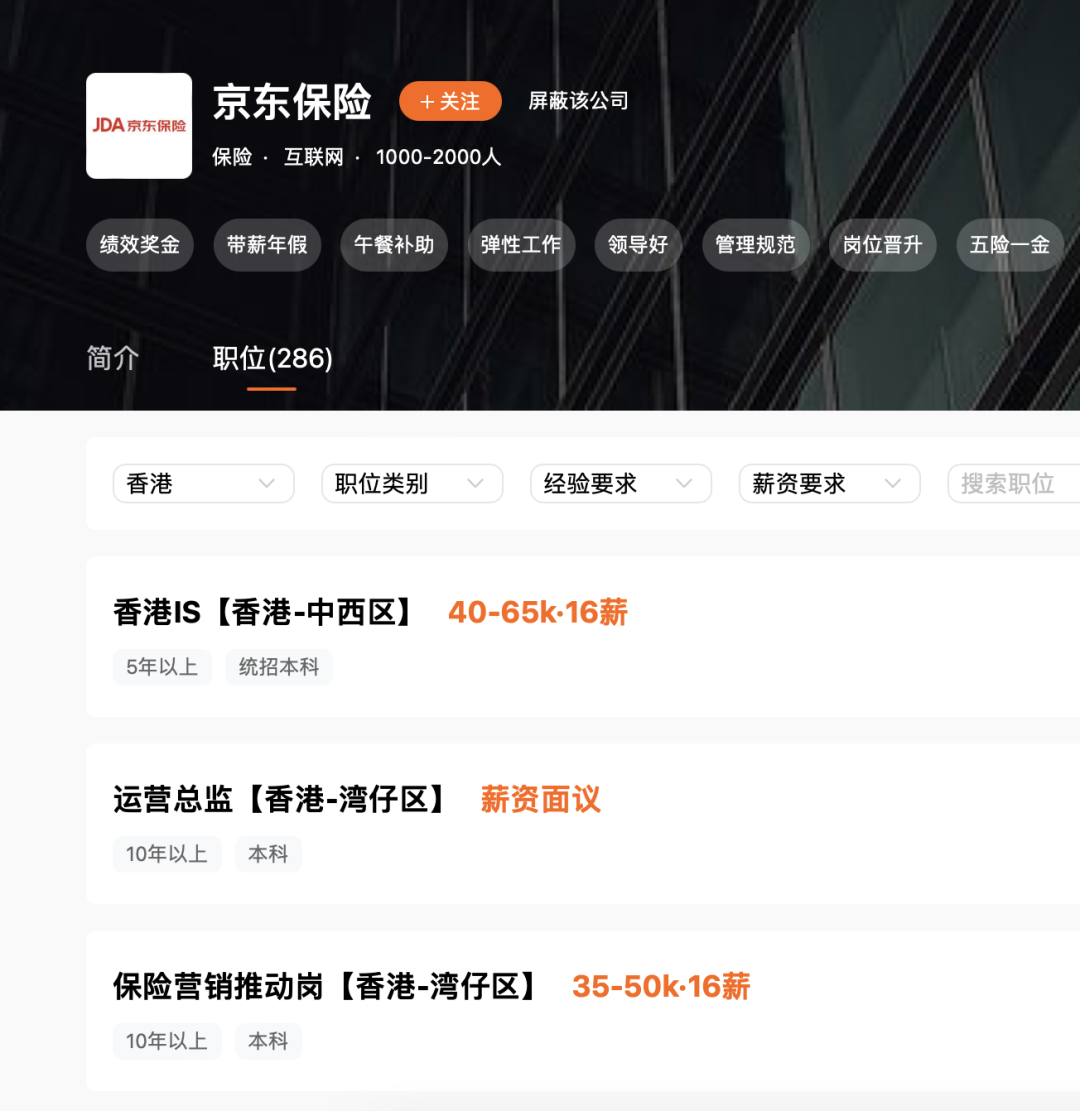
实探香港“内地大厂一条街”!巨头为何扎堆落子香港
证券时报· 2025-10-28 09:57
Core Viewpoint - The article highlights the increasing presence of mainland internet giants in Hong Kong, indicating a shift towards a more technology-driven environment in the region, with companies like Alibaba, Meituan, and Xiaohongshu establishing significant operations there [1][2]. Group 1: Mainland Giants' Expansion in Hong Kong - Mainland internet companies are clustering in Hong Kong's core business districts, enhancing the local tech atmosphere and positioning Hong Kong as a new tech hub [1][6]. - Xiaohongshu has opened its first overseas office in Hong Kong, focusing on overseas business expansion and supporting cross-border operations for both local and mainland brands [5][3]. - Alibaba has consolidated multiple core business teams in Hong Kong and recently acquired a commercial building, demonstrating a long-term commitment to the market [5][6]. Group 2: Talent Acquisition and Recruitment Trends - There is a noticeable acceleration in recruitment by mainland companies in Hong Kong, attracting tech talent from the mainland [9][12]. - Companies like Xiaohongshu and ByteDance are actively hiring for various positions, emphasizing the importance of Mandarin and English language skills [9][10]. - The entry of these companies is creating job opportunities for local tech talent, bridging the gap between academia and industry [12][14]. Group 3: Supportive Ecosystem and Government Initiatives - The maturation of Hong Kong's tech ecosystem is supported by government policies aimed at fostering innovation and technology development [7][14]. - The Hong Kong government has introduced a clear innovation and technology development blueprint, focusing on strategic industries such as health tech and AI [7][14]. - The presence of mainland tech giants is seen as a catalyst for enhancing local talent pools and fostering collaboration between universities and industries [14][15]. Group 4: Challenges and Future Outlook - Despite the influx of talent, challenges remain in terms of salary competitiveness and the high cost of living in Hong Kong, which may hinder talent retention [16][18]. - The article suggests that addressing these challenges through policy adjustments and creating a supportive ecosystem for tech innovation is crucial for Hong Kong's transformation into a global tech center [18][19]. - The integration of mainland and Hong Kong's innovation ecosystems is expected to enhance cross-border technology transfer and collaboration [15][19].


提升港股美股研究覆盖面加大前瞻性战略性布局
Zhong Guo Zheng Quan Bao· 2025-10-16 20:12
Core Insights - The report highlights the operational status of the securities research business in 2024, indicating a significant decline in commission income from institutional clients and an increase in industry concentration [1][2][3] Group 1: Industry Overview - In 2024, 83 securities firms published a total of 96,156 research reports on domestic listed companies, while 60 firms published 14,732 reports on Hong Kong and other overseas listed companies, and 93 firms published 29,441 macro and strategy reports [1][2] - The number of analysts in the industry reached 5,628, marking a 20.69% increase despite an overall decline in the number of securities practitioners [1][2] Group 2: Client Services - The number of securities firms serving institutional clients remained stable, with 92 firms providing services to public fund companies, 59 to insurance companies, and 37 to QFII and RQFII institutions [2][3] - Commission income from public funds decreased by 31.67% year-on-year, with the top 10 firms accounting for 47.38% of total industry commission income, indicating a rise in industry concentration [2][3] Group 3: Key Trends - The report identifies five major trends in the securities research business: 1. A significant decline in commission income due to public fund fee reduction reforms, with institutional client commission income dropping by 22.48% to 19.865 billion yuan [2][3] 2. Increased industry concentration as resources are directed towards leading firms for better research services [3] 3. Enhanced research coverage of Hong Kong and US stocks, with a growth in the number of reports published on overseas companies [3] 4. Rising standards for compliance and quality in research reports, with an increase in the number of compliance personnel [3] 5. Development of industry and policy research platforms by securities firms to support national and local industrial upgrades [3][4] Group 4: Recommendations - The China Securities Association suggests three key actions for the industry: 1. Enhance the independence and professionalism of research to fulfill social responsibilities and deepen research in key sectors like AI and new energy [4][5] 2. Clarify the positioning of research institutions to promote healthy competition and diversify revenue sources beyond commission [5] 3. Adapt to the needs of cross-border business development and strengthen global comparative analysis and asset pricing capabilities [5]
迪士尼全年IP授权消费品零售额 620 亿美元,秘诀是“它不只是一家IP公司”
3 6 Ke· 2025-09-13 02:15
Core Insights - Disney has achieved a global licensing revenue of $62 billion, ranking first in the industry, significantly ahead of its competitors such as Authentic Brands Group ($32 billion) and Hasbro ($16.1 billion) [1][4] - The company emphasizes its ability to generate new consumer products through a continuous stream of new movie IPs, maintaining a stable profit from film IP licensing [1][4] - Disney positions itself not just as an IP company but as a consulting firm that provides comprehensive support to its partners, including market insights and operational assistance [5][8] Group 1: Licensing Revenue and Market Position - Disney's licensing revenue of $62 billion is substantially higher than its closest competitor, Authentic Brands Group, which generated $32 billion [1] - The company has maintained a strong market position by leveraging its extensive portfolio of movie IPs to create a variety of consumer products [1][4] Group 2: Consulting and Support for Partners - Disney's approach includes offering consulting services to partners, helping them navigate market challenges and optimize product launches [5][8] - The company provides a one-stop service that includes product development, marketing, and retail channel support, which enhances the commercial value of its IPs [5][8] Group 3: Focus on Emerging Markets - Disney's cross-border business in the Asia-Pacific region has seen a year-on-year growth of approximately 45%, indicating strong market potential [8] - The company aims to leverage its understanding of the Chinese market to expand its presence in Southeast Asia and beyond [9][8] Group 4: Trends in Consumer Products - Disney is closely monitoring the rapid growth of popular toy categories in China, such as trading cards, blind boxes, and plush toys, which are increasingly appealing to younger consumers [17][18] - The company has recognized the shift in the target demographic from children to young adults, indicating a strategic pivot in its product offerings [17][18] Group 5: Collaboration with Local Brands - Disney has praised local Chinese companies like Miniso and Pop Mart for their understanding of Disney's brand DNA and their ability to create global trends [16] - The company is actively working with over 70 partners in cross-border business development, exceeding its initial growth expectations [16]

迪士尼全年IP授权消费品零售额 620 亿美元,秘诀是“它不只是一家IP公司”
36氪未来消费· 2025-09-12 14:49
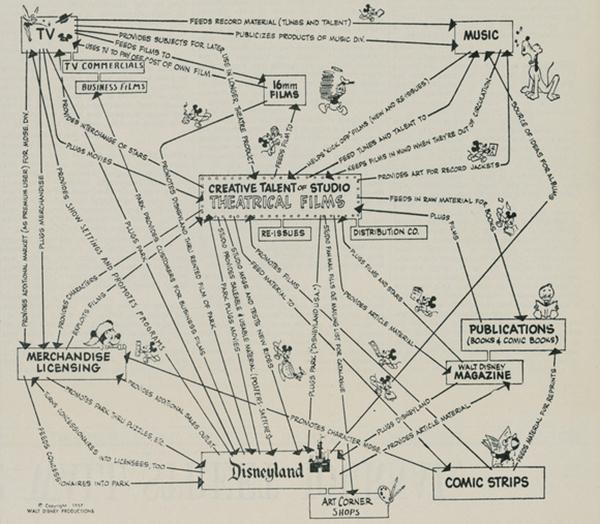
Core Viewpoint - Disney has established itself as a leader in the global licensing business, achieving an annual retail revenue of $62 billion, significantly surpassing its competitors [3][4]. Group 1: Licensing Business Performance - Disney's licensing revenue of $62 billion is the highest globally, compared to Authentic Brands Group at $32 billion, Hasbro at $16.1 billion, Warner Bros at $15 billion, and Pokémon at $12 billion [3]. - The company continues to benefit from its strong movie IP licensing, despite discussions in the toy industry about the potential for original IPs to thrive independently of content licensing [4]. Group 2: Business Model and Strategy - Disney's business model, established by Walt Disney in 1957, centers around leveraging successful movie IPs to generate a wide range of related products and services [5]. - The company maintains a consistent approach by showcasing new movie trailers followed by related consumer products at events, emphasizing the continuous flow of new films to drive consumer interest [6][7]. Group 3: Consulting Services - Disney positions itself not just as an IP company but as a consulting firm, providing comprehensive support to partners, including product development, marketing, and retail channel strategies [7][9]. - The company offers insights and forecasts to partners, sharing market trends and consumer preferences up to 18 months in advance, which enhances its collaborative efforts [9][11]. Group 4: Market Expansion and Cross-Border Business - Disney's cross-border business in the Asia-Pacific region has seen a year-on-year growth of approximately 45%, with a focus on leveraging local market knowledge for expansion [11][12]. - The company aims to capitalize on the large population base in the Asia-Pacific region, which is crucial for its growth strategy [11]. Group 5: Focus on Emerging Trends - Disney is actively monitoring and investing in popular toy categories in China, such as trading cards, blind boxes, and plush toys, which have seen significant growth [17]. - The trading card market in China has grown from 2.8 billion yuan in 2019 to an estimated 26.3 billion yuan by 2024, with a compound annual growth rate of 56.5% [17]. Group 6: Collaborations and Innovations - Disney has collaborated with various brands, including F1, to create exclusive products, tapping into the growing market of high-net-worth consumers [19]. - The company is committed to innovation in product design, as seen in the development of toys that blend traditional concepts with modern consumer interests [19][21].

林家文:迪士尼亚太区消费品跨境业务今年同比增长约45%
Di Yi Cai Jing· 2025-09-11 07:23
Core Insights - Disney's consumer products division is focusing on cross-border business, with significant growth in the Asia-Pacific region, particularly in China, which is one of the best-performing markets for Disney globally [1][4]. Group 1: Business Performance - Disney's global consumer products retail revenue is approximately $62 billion annually, with a year-on-year growth of about 45% in cross-border business within the Asia-Pacific region [1]. - The launch of over 7,000 new Stitch-themed licensed products in 2024 is expected to make "Lilo & Stitch" the second-largest licensed character series after Mickey Mouse [1]. - The "Zootopia" licensed product series has seen a threefold increase in authorized business in the Greater China region since December 2023, with over 2,000 related products expected to be released by the end of 2025 [1]. Group 2: Strategic Initiatives - Disney aims to leverage its experience in the Chinese market to assist local companies in expanding their cross-border business [1][4]. - The company is adopting a consulting approach, providing one-stop services to partners, including product development, marketing, and retail channel solutions [4]. Group 3: Market Trends - The target audience for toys has expanded to include adults, indicating a growing consumer base and increasing market competition [5]. - The rise of brands like Pop Mart highlights the importance of emotional value in products, suggesting that more IPs will emerge in the market to drive overall consumption growth [5].

中金公司(601995):自营经纪驱动利润高增 国际影响力不断提升
Xin Lang Cai Jing· 2025-09-05 00:27
Core Insights - The company reported a significant increase in revenue and profit for the first half of 2025, with operating income reaching 12.83 billion yuan (up 44.0% year-on-year) and net profit attributable to shareholders at 4.33 billion yuan (up 94.4% year-on-year) [1] - The company maintains a leading position in cross-border influence and actively expands its derivatives business [1] Business Performance - Brokerage, investment banking, asset management, credit, and proprietary trading segments reported net revenues of 2.7 billion yuan, 1.7 billion yuan, 700 million yuan, -900 million yuan, and 7.3 billion yuan respectively, with year-on-year growth rates of +50%, +30%, +22%, -5%, and +71% [1] - The asset management department's business scale reached 586.71 billion yuan, a 6.3% increase from the end of 2024, with a total of 848 managed products [2] - The company achieved a record high in wealth management product holdings, nearing 400 billion yuan, and the number of clients reached 9.39 million [2] Market Position - The company ranked first in the Hong Kong IPO market, serving 21 Chinese enterprises with a total financing scale of 11.144 billion USD in the first half of 2025 [2] - In the bond underwriting segment, the domestic bond underwriting scale was 415.78 billion yuan (up 33.7% year-on-year), while the overseas bond underwriting scale was 2.57 billion USD (up 16.5% year-on-year) [3] Future Outlook - The company is expected to benefit from its position as a leading brokerage in a competitive industry, with projected EPS of 1.26 yuan, 1.51 yuan, and 1.72 yuan for 2025 to 2027 [3]

上半年,湖南唯一证券公司净利润同比增长76.43%
Chang Sha Wan Bao· 2025-09-02 08:30
Group 1: Industry Performance - The securities industry in A-shares achieved revenue of 251.036 billion yuan in the first half of the year, a year-on-year increase of 23.47% [1] - The net profit for the securities industry reached 112.280 billion yuan, reflecting a year-on-year growth of 40.37%, with nearly 85% of securities firms reporting profits [1] - The industry facilitated 33 companies to go public on the Sci-Tech Innovation Board, Growth Enterprise Market, and Beijing Stock Exchange, raising a total of 19.7 billion yuan [1] Group 2: Bond Financing and Market Role - The securities industry supported the real economy with bond financing amounting to 2.84 trillion yuan, a year-on-year increase of 17.65% [1] - A total of 380 technology innovation bonds were underwritten, amounting to 381.391 billion yuan, which is a significant increase of 56.48% compared to the same period last year [1] Group 3: Wealth Management and Market Strategies - The balance of client trading settlement funds in the brokerage business reached 28.2 trillion yuan, providing custody services for 86.8 trillion yuan in assets [2] - The average net commission rate for securities trading was 2.15 ‰, continuing a downward trend [2] - Listed securities firms distributed a total of 12.7 billion yuan in cash dividends, actively returning value to investors [2] Group 4: International Expansion - By the end of the first half of the year, mainland securities firms established 36 overseas subsidiaries, with total assets reaching 1.64 trillion Hong Kong dollars, a year-on-year increase of 20.45% [2] - Overseas subsidiaries participated in financing for 40 companies listed on the Hong Kong Stock Exchange, raising 108.1 billion Hong Kong dollars [2] Group 5: Company-Specific Developments - Fangzheng Securities reported a net profit of 2.384 billion yuan in the first half of the year, with a year-on-year growth rate of 76.43% [2] - The company announced a shareholder return plan for the next three years, committing to distribute at least 45% of the average annual distributable profit in cash [3] - Fangzheng Securities declared a cash dividend of 0.61 yuan per 10 shares, totaling 502 million yuan [3]
