
金融素养

Search documents
高金和嘉信理财发布第九年度《中国新富人群财富健康指数》
Zheng Quan Ri Bao Wang· 2025-09-18 08:46
Core Insights - The "Wealth Health Index" for China's new affluent population shows a slight decline in 2025, indicating a decrease in wealth confidence, financial planning, and investment participation, while asset management awareness is improving [1][2] Group 1: Wealth Health Index - The Wealth Health Index for new affluent individuals in China decreased from 70.51 to 70.35 in 2025, with sub-indices for wealth confidence, financial planning, and investment participation declining by 0.26, 2.47, and 0.14 points respectively [1] - The asset management sub-index, after four years of decline, has shown an upward trend, indicating a maturation in wealth management and asset allocation behaviors among this demographic [1] Group 2: Investment Behavior - The average allocation of cash and fixed deposits in the asset configuration of new affluent individuals has dropped to 52.5%, marking the first decline in this category [2] - The participation rate in fund investments has reached a five-year high, with the average allocation to funds increasing to 12.4% [2] - Nearly 40% of respondents expressed interest in overseas asset allocation, reflecting a growing inclination towards diversified investment paths [2] Group 3: Risk Preferences and Financial Literacy - Despite an increase in the allocation to high-risk financial assets, the subjective risk preference of new affluent individuals remains conservative [2] - There is a noted shortfall in understanding the relationship between risk and return, highlighting the need for improved financial literacy [2] Group 4: AI in Financial Services - The study also focused on the new affluent population's attitudes towards AI-enabled financial services, revealing a significantly higher trust in AI-generated investment advice compared to overseas markets, with nearly 70% expressing strong or moderate trust [2] - More aggressive investors showed higher trust levels in AI, while those with over 15 years of investment experience preferred human services [2]

央行报告:“一老一少”仍是金融教育持续关注的重点对象
Ren Min Wang· 2025-09-16 07:04
Core Insights - The People's Bank of China released the "Consumer Financial Literacy Survey Analysis Report (2021)", indicating a national consumer financial literacy index of 66.81, an increase of 2.04 compared to 2019 [1] Financial Knowledge - Overall, consumers have a good grasp of credit knowledge and understand the importance of maintaining a good credit record; however, there is still a lack of understanding regarding basic financial concepts such as diversified investment and investment return expectations [3][2] - There has been a noticeable improvement in knowledge related to credit, insurance, loans, and deposit insurance since 2019, but there are still gaps in understanding commercial insurance and investment knowledge [3] Financial Behavior - Mobile payments are the preferred method for daily transactions, but cash is still used for small payments; there has been a significant improvement in credit card repayment behavior, with full repayment rates increasing by 8.2 percentage points since 2019 [4][2] - Consumers primarily invest in savings, bank wealth management products, funds, and stocks, and they prefer to obtain financial product information through bank branches and online channels [4] Financial Attitude - Consumers generally recognize the necessity of cash in daily life and are cautious about debt consumption; there is an increased emphasis on the importance of financial education, particularly for youth, with a 14.04 percentage point increase in those who consider financial education very important since 2019 [5][2] Financial Skills - Consumers demonstrate good management of daily income and expenses, with sufficient emergency savings to cover unexpected expenses equivalent to three months' income; however, there is a need for improvement in debt management skills [6][2] - There has been a noticeable improvement in understanding contract terms and emergency savings since 2019, but traditional skills such as ATM password protection have seen a decline [6]
5角硬币中真的有黄金?银行人员道出真相,不少人还蒙在鼓里
Sou Hu Cai Jing· 2025-09-13 06:23
Core Viewpoint - The claim that the five-cent coin contains gold is a misconception, as all versions of the coin are made primarily of steel and copper, with no gold content [19]. Material Composition - The five-cent coins in circulation in China are made of two main materials: copper-clad steel (1991-2000) and steel core with copper alloy (post-2000) [4][5]. - The copper content in the 1991-2000 version is approximately 3.5%, while the post-2000 version has about 2.8% copper [4]. Misconceptions and Origins - The belief that five-cent coins contain gold stems from their color, as some copper-clad coins exhibit a gold-like sheen, leading 32% of surveyed individuals to mistakenly think they contain precious metals [3]. - Special editions or coins from certain years can fetch high prices in the collector's market, which may mislead people into thinking the coins contain valuable metals [3][8]. - The term "gold" is often used loosely in common language, contributing to misunderstandings about the coin's material [3]. Economic Principles - The production of circulating currency must adhere to economic principles, where the material cost must be significantly lower than the face value; incorporating gold would violate this principle [4][5]. - The material cost of a five-cent coin is estimated to be between 0.08 to 0.12 yuan, well below its face value of 0.5 yuan [5]. Collectible Value - Certain five-cent coins, particularly those from 1992 and 1999, have collectible values that can reach 20 to 50 yuan and 100 to 300 yuan respectively [8][9]. - The value of coins in the collector's market is more dependent on rarity and condition rather than the presence of precious metals [10]. Psychological Factors - The spread of the "golden coin" rumor can be attributed to people's natural inclination towards the idea of unexpected wealth, making them more likely to believe and share such claims [11]. Importance in Currency System - Despite not containing gold, five-cent coins play a crucial role in China's currency system, with approximately 15 billion coins in circulation, totaling a value of about 7.5 billion yuan [19]. Recommendations for Public Awareness - It is advised for the public to maintain a skeptical approach towards claims of unexpected wealth, seek authoritative information, and understand the basic principles of currency production to discern the truth behind such rumors [12][13][14].


中国养老危机报告:超半数人退休准备不足,你的养老金够花吗?
首席商业评论· 2025-09-01 04:12
Group 1 - The core viewpoint of the article highlights the concerning state of retirement preparedness in China, with the retirement preparation index at a low 5.53 for two consecutive years, indicating a lack of readiness amidst an aging population [2] Group 2 - The pension dilemma reveals that while the basic pension insurance coverage exceeds 80%, the urban employee pension replacement rate is only 36.7%, and the average monthly pension for urban and rural residents is merely 226 yuan [4] - There is a significant disparity in retirement preparation between income groups, with low-income individuals showing a notable decline in their retirement preparation index, while high-income groups are experiencing an upward trend [4] Group 3 - The profile of individuals well-prepared for retirement includes those aged 36-45, with a bachelor's degree, working in state-owned enterprises, and earning over 170,000 yuan annually. Financial literacy is a critical factor, as those with high financial literacy save 47% more for retirement and are 2.3 times more likely to purchase commercial pension insurance compared to those with low financial literacy [6] Group 4 - Despite over 60 million personal pension accounts being opened, the average annual contribution is only 5,145 yuan, significantly below the 12,000 yuan cap. Interestingly, the middle-income group (earning 160,000-350,000 yuan) shows the strongest willingness to contribute, while 72% of individuals earning less than 100,000 yuan are in "ineffective insurance," missing out on tax benefits [7][8] Group 5 - The average expected retirement age is 62.5 for men and 56 for women, but behavioral experiments indicate that showing total pension amounts can increase the willingness to retire early by 20%. Conversely, shortening the retirement choice window can increase the proportion of individuals retiring on time by 15% [10] - A survey of the 18-35 age group reveals that parents with daughters are more inclined to delay retirement by an average of 1.8 years compared to those with sons. Additionally, higher-income youth tend to choose later retirement, with each point increase in financial literacy pushing the expected retirement age back by 0.7 years [11] Group 6 - Recommendations for addressing the retirement crisis include a combination of policy measures, such as pension adjustments and economic transformation, which could raise the retirement index by 1.18. The private sector's pension coverage is significantly lower than that of state-owned enterprises, indicating a need for enhanced tax incentives [15] - Individuals are encouraged to master basic financial knowledge, such as compound interest calculations, which could directly improve their retirement preparation index by 32%. With the old-age dependency ratio at 22.5% (five young people supporting one elderly person), relying solely on government pensions is insufficient [15]

新刊速读 | 通货殖之理 明财用分置:金融素养与家庭养老金融资产配置
Xin Hua Cai Jing· 2025-08-11 17:04
Core Viewpoint - The aging issue in China has become a significant challenge, leading to immense pressure on the pension security system, highlighting the importance of financial literacy in optimizing household pension asset allocation [1][3]. Group 1: Research Data and Methodology - The research utilizes data from the 2019 China Household Finance Survey (CHFS), covering 29 provinces and 31,079 households, focusing on individuals aged 30 and above [2]. - The study analyzes the impact of financial literacy on the scale of pension financial assets, the proportion of risky financial assets, and the degree of risk diversification [2]. Group 2: Main Conclusions - Financial literacy significantly promotes pension financial asset allocation, leading to an increase in the scale of pension financial assets held, a higher likelihood of holding risky pension financial assets, and enhanced diversification of these assets [3]. - The mechanism analysis indicates that financial literacy influences the ability to access financial information and risk attitudes, which in turn affects household pension asset allocation [3]. - Age heterogeneity analysis shows that the impact of financial literacy on asset allocation varies across age groups, with the highest effect observed in younger individuals [3]. Group 3: Policy Recommendations - A nationwide financial literacy enhancement plan should be implemented, focusing on community outreach and online courses to educate on pension financial knowledge [4]. - The financial information dissemination system should be optimized through collaboration between financial institutions and media to simplify terminology and improve the efficiency of information sharing [4]. - Emphasis should be placed on educating the youth about pension finance in educational institutions, designing products that align with their income characteristics to encourage early planning for pension assets [4].
轮到银行坐不住了!利息缩水一半,很多人都在考虑存款转理财风险
Sou Hu Cai Jing· 2025-08-01 00:47
Core Insights - A significant wealth transfer is occurring in 2025, with bank deposit rates falling below 2%, leading to a shift of funds into wealth management products, which have reached a scale of 31.3 trillion yuan, a year-on-year increase of 9.7% [1] - The risks associated with wealth management products are rising, as many contracts are now filled with uncertainties, and funds are often locked in for short periods, creating "paper wealth" that is difficult to access in emergencies [1][3] - Traditional savings accounts offer more security, as deposits under 500,000 yuan are fully protected by the national deposit insurance system, contrasting sharply with the risks of wealth management products [3] Group 1: Wealth Management Trends - Wealth management products are gaining popularity, with an average of 1.5 billion yuan moving daily from bank deposits to these products [1] - Some banks are employing strategies like offering high-interest short-term deposits and promotional gifts to attract deposits, but these often come with hidden costs [5][7] - The financial pressure on banks is increasing, as evidenced by a certain bank's report showing a deposit interest rate of 1.98% against a loan yield of 3.1%, compressing the interest margin to historical lows [5] Group 2: Risks and Consumer Experiences - Consumers are facing significant risks with wealth management products, as illustrated by cases where individuals were misled into high-risk investments under the guise of safe products [3][4] - The volatility in the bond market has led to substantial losses for investors in supposedly stable products, highlighting the importance of understanding the underlying assets [3] - Many individuals are now seeking safer investment alternatives, such as government bonds and money market funds, which offer more liquidity and lower risk [7][9] Group 3: Financial Literacy and Strategies - There is a growing awareness among consumers regarding the importance of financial literacy, with individuals actively seeking to diversify their investments and protect their assets [7][9] - Strategies such as splitting assets into different investment vehicles and utilizing tax-advantaged accounts are becoming more common among savvy investors [9] - The demand for financial education is increasing, as individuals recognize the need to navigate the complexities of modern financial products and risks [9]

金融素养越高,被骗风险越大?中国老人养老钱困局
Hu Xiu· 2025-07-29 01:58
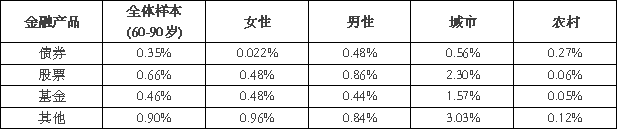
Group 1: Importance of Financial Behavior of the Elderly - The aging population in China is increasing, with 21.1% of the population aged 60 and above by 2024, and life expectancy nearing 80 years. However, the pension replacement rate is below 50%, necessitating reliance on personal savings and asset appreciation to cover 20-30 years of retirement [1][2] - The current asset structure dominated by precautionary savings and over 70% in real estate is inadequate to cope with medical inflation (approximately 8% annual growth) and long-term care costs, leading to a risk of "longevity poverty" [1][2] - The shift in traditional support systems for the elderly, influenced by urbanization and declining birth rates, is creating a more complex network of social capital for elder care [2] Group 2: Financial and Psychological Health - Financial and financial health are closely linked to the psychological well-being of the elderly in China. The life cycle theory suggests that rational decision-making regarding savings and consumption is influenced by expected lifetime income [3][6] - Studies indicate that a higher expenditure-to-income ratio increases the risk of depression among the elderly, while a higher ratio of financial assets provides protective benefits [3][4] - Economic conditions significantly affect the self-worth of older adults, with better financial status correlating with lower feelings of uselessness [3][4] Group 3: Financial Resilience and Emergency Funds - The financial resilience of the elderly needs improvement, as the probability of facing major health issues or loss of independence increases with age. Approximately 32.8% of seniors in China struggle to raise emergency funds within 30 days [6] - This figure, while better than many developing countries, still lags behind developed nations like Norway and Sweden [6] Group 4: Financial Status and Asset Allocation - The financial status of the elderly in China is characterized by a focus on precautionary savings and reliance on pensions and intergenerational transfers. However, participation in financial markets is notably low, with ownership of various financial products below 1% among those aged 60-90 [7][8] - Urban elderly have significantly higher participation rates in risk assets compared to their rural counterparts, highlighting a stark urban-rural divide [7][8] - The asset allocation is heavily concentrated in bank deposits and real estate, which, while providing psychological comfort, poses risks such as low inflation resistance and poor liquidity [9][10] Group 5: Financial Literacy and Fraud Vulnerability - Financial literacy among the elderly in China is significantly lower than in developed countries, with an average score of 0.97 out of 3 for those aged 50-70, compared to 2.16 in the U.S. [12][13] - High financial literacy may paradoxically increase the risk of fraud victimization, as those with basic financial knowledge may become targets without adequate fraud prevention education [14][15] - The phenomenon of overconfidence in financial literacy can lead to susceptibility to scams, emphasizing the need for targeted anti-fraud education alongside financial literacy training [15][16]
《金融史》面世
Jin Rong Shi Bao· 2025-05-30 03:14
Core Viewpoint - The launch of the academic resource "Financial History" by the Financial Museum aims to disseminate knowledge about both Chinese and global financial history, emphasizing the importance of financial literacy and its impact on society [1][2]. Group 1: Content Overview - "Financial History" focuses on significant historical events, key figures, and evolving financial concepts, highlighting the close relationship between finance and everyday life [1]. - The publication will particularly address the financial empowerment of youth, women, and the elderly, promoting financial literacy and independence [2]. - The Financial Museum plans to collaborate with government and financial institutions to establish educational centers and conduct various financial history educational activities [3]. Group 2: Educational Initiatives - The electronic version of "Financial History" will be provided for free to Financial Museum members, aiming to enhance financial literacy among the public [3]. - The museum intends to integrate financial history knowledge into classrooms and businesses through diverse educational formats such as exhibitions and academic discussions [3].
搭建“长钱长投”生态 金融机构和投资者怎么做?
Zhong Guo Jing Ying Bao· 2025-04-28 10:51
Group 1 - The core viewpoint of the articles emphasizes the need for long-term investment strategies and the role of various financial institutions in promoting this approach [1][2][5] - Regulatory measures have been introduced to encourage long-term capital inflow into the market, including the promotion of diverse investment products and investor education [1][2][3] - The capital market is undergoing reforms to enhance quality and provide clearer rules for long-term investments, with a focus on standardized and low-cost investment tools like ETFs and index funds [2][3] Group 2 - The implementation plan for attracting long-term capital includes measures such as guiding companies on dividends and buybacks, expanding the scope of strategic investors, and optimizing new stock subscription processes [3][4] - Financial institutions are innovating to create a diversified asset management system, which includes a range of products across different asset classes such as stocks, bonds, and cryptocurrencies [4] - The importance of improving financial literacy among investors is highlighted, as higher financial literacy correlates with longer holding periods and better risk management strategies [5][6]
上海交通大学上海高级金融学院与嘉信理财联合发布第三年度《中国居民金融素养报告》
Zheng Quan Ri Bao Wang· 2025-04-20 08:27
Group 1 - The report titled "China Residents Financial Literacy Report" was jointly released by Shanghai Jiao Tong University and Charles Schwab, marking the third year of their collaboration aimed at assessing the financial knowledge and skills of Chinese residents across six dimensions [1] - The report indicates a continuous increase in the participation of Chinese residents in financial activities, with higher financial literacy observed among those engaged in more financial behaviors [1] - This year's report includes a new survey targeting active securities investors, confirming the positive feedback loop between financial literacy and financial practice [1] Group 2 - Financial literacy improvement is essential for rational financial practices, and targeted financial education is necessary for different groups, particularly for those involved in complex securities investments [2] - Higher financial literacy is linked to greater engagement in retirement planning, with financial planning being a primary driver for residents' financial health [2] - The industry is encouraged to focus on the financial planning needs of younger demographics to enhance their planning awareness, with ongoing collaboration between Charles Schwab and Shanghai Jiao Tong University aimed at providing insights for improving residents' financial literacy [2]