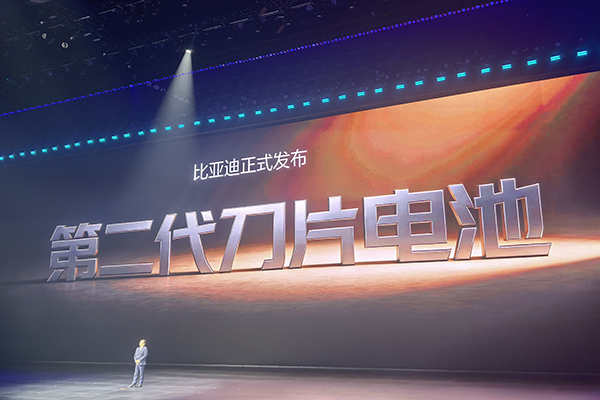
闪充技术

Search documents
比亚迪和蔚来,争的不止是高下
Zhong Guo Jing Ji Wang· 2026-03-13 02:58
Core Viewpoint - The competition between BYD and NIO centers around charging technologies, with BYD promoting its "flash charging" technology as a faster alternative to NIO's battery swapping model, which emphasizes reliability and user experience [1][6][9] Group 1: BYD's Flash Charging Technology - BYD has improved its charging speed, reducing the time to charge from 10% to 97% to just 9 minutes, which poses a significant challenge to NIO's battery swapping model [1][3] - The company has released multiple technical videos to address concerns regarding battery lifespan and safety associated with flash charging, asserting that it will not negatively impact battery performance [2][5] - BYD's second-generation blade battery has a 5% increase in energy density compared to the first generation, and it features advanced thermal management systems to ensure safety during rapid charging [5] Group 2: NIO's Battery Swapping Model - NIO's founder, Li Bin, has publicly criticized flash charging, arguing that it could harm battery health over time, while emphasizing the reliability of battery swapping as a core competitive advantage [1][6] - NIO has invested heavily in its battery swapping infrastructure, with over 3,753 stations built, representing a significant financial commitment to establish a unique market position [8] - The company views its battery swapping service as a crucial differentiator in a competitive market, and any shift towards flash charging could undermine its established business model and user base [6][9] Group 3: Industry Dynamics - The competition between BYD and NIO reflects broader industry trends where companies are pushing the limits of technology and resource allocation to secure market survival [2][9] - Both companies are navigating a challenging market landscape, where technological advancements and cost management are critical for maintaining competitive advantages [9] - The outcome of this technological rivalry will significantly influence the future of electric vehicle charging solutions and the sustainability of each company's business model [9]



6年能量密度仅提升5%,比亚迪能否靠第二代刀片电池翻身?
Xin Lang Cai Jing· 2026-03-13 01:15
Core Viewpoint - BYD's second-generation blade battery has been launched, but its energy density improvement of only 5% over six years raises concerns about its ability to maintain a competitive edge in the electric vehicle market [1][12]. Group 1: Battery Technology - The first-generation blade battery from BYD was a significant innovation, enhancing consumer confidence in electric vehicles and establishing BYD as a leader in the industry [1]. - The second-generation blade battery's energy density increase is minimal, averaging less than 1% per year over six years, which may not be sufficient to regain market leadership [1][12]. - Traditional lithium batteries have reached a density ceiling of 140-180 Wh/kg, limiting advancements in energy density for major players like BYD and CATL [3][13]. Group 2: Flash Charging Technology - BYD's second-generation blade battery supports flash charging, allowing for 70% charge in 5 minutes and 97% in 9 minutes, even in low temperatures [4][13]. - The flash charging technology is seen as a potential game-changer, especially compared to the battery swap model promoted by competitors like NIO [4][13]. - BYD plans to build 20,000 flash charging stations by 2026, which is a significant commitment but still limited compared to the existing infrastructure of over 30 million home charging points [6][15]. Group 3: Market Challenges - Despite the technological advancements, BYD faces challenges in reversing its declining sales, with recent figures showing a drop from peak monthly sales of 510,000 to around 190,000 [1][12]. - The limited number of models compatible with the second-generation blade battery may hinder the widespread adoption of flash charging technology [7][15]. - The current charging infrastructure's low utilization rates pose a challenge for BYD's vision of making electric vehicle charging as fast as refueling gasoline cars [6][15]. Group 4: Future Outlook - BYD's CEO indicated that the second-generation blade battery and flash charging represent the culmination of the first phase of electric vehicle technology, suggesting a need for new innovations to address future challenges [19][20]. - Solid-state batteries are anticipated to be the next major advancement, with BYD planning to start mass production around 2027, which could significantly enhance energy density and safety [19][20]. - The company aims to leverage flash charging as a transitional technology while preparing for the introduction of solid-state batteries in the coming years [20][22].
背负千亿负债,“最惨”的李斌终于赚钱了
阿尔法工场研究院· 2026-03-12 11:34
Core Viewpoint - NIO achieved its first quarterly profit in Q4 2025, but still faces significant challenges, including a net loss of 14.9426 billion yuan for the year and a debt exceeding 100 billion yuan, raising concerns about its financial stability and future growth prospects [3][4][28]. Financial Performance - In Q4 2025, NIO reported a net profit of 282.7 million yuan, marking its first quarterly profit since going public. The total revenue for the quarter was 34.6502 billion yuan, a year-on-year increase of 75.9% [7][9]. - For the full year 2025, NIO's total revenue reached 87.4875 billion yuan, up 33.1% from the previous year, while the net loss narrowed by 33.3% compared to 2024 [8][9]. - The gross margin for Q4 2025 was 17.5%, an increase of 5.8 percentage points year-on-year, attributed to higher sales volume and cost control measures [9][10]. Sales and Delivery - NIO delivered 124,807 vehicles in Q4 2025, a year-on-year increase of 71.7% and a quarter-on-quarter increase of 43.3% [7][8]. - The ES8 model has been a key driver of sales, maintaining a leading position in the market for large SUVs priced above 400,000 yuan [10][11]. Product Strategy - NIO plans to launch three new models in 2026, including the flagship ES9, which is expected to enhance overall gross margins and support sustained profitability [28]. - The ES8's competitive pricing and upgraded features, including a new high-voltage platform and advanced driver assistance systems, have contributed to its strong market performance [12][13]. Cost Management - NIO has successfully reduced R&D expenses by 44.3% and sales, general, and administrative expenses by 27.5% in Q4 2025, saving over 2 billion yuan compared to the previous year [14][15]. - However, there are concerns about potential manipulation of expenses to achieve profitability targets [14]. Debt and Financial Health - NIO's total liabilities exceeded 111.7 billion yuan, with an asset-liability ratio of 89.8%, indicating significant financial pressure [28][33]. - The company has seen a substantial increase in debt, with liabilities rising from 22.78 billion yuan in 2020 to over 111.7 billion yuan in 2025, while shareholder equity has decreased significantly [33]. Market Response - Following the announcement of its financial results, NIO's stock price surged by 14% on March 11, reflecting positive market sentiment towards its first quarterly profit [19]. Executive Compensation - NIO introduced a substantial stock incentive plan for CEO Li Bin, linking his compensation to the company's market value and net profit, which could drive long-term performance but also presents significant challenges [22][24].

单季扭亏,股价大涨19%!蔚来刚出“病房”,又要被比亚迪推回“ICU”?李斌回应
Xin Lang Cai Jing· 2026-03-11 09:37
Core Viewpoint - NIO has achieved a significant milestone by reporting its first quarterly profit, leading to a surge in its stock price and market capitalization, while also facing competitive challenges from BYD's new fast-charging technology [1][4][10]. Financial Performance - NIO reported a net profit of 283 million yuan for Q4 2025, marking its first quarterly profit since its IPO [4][13]. - The company's revenue reached 34.65 billion yuan, a year-on-year increase of 75.9%, with 124,807 vehicles delivered, up 71.7% year-on-year [4][13]. - For the full year 2025, NIO's net loss narrowed to 14.943 billion yuan, a reduction of 33.3% compared to the previous year [4][14]. - NIO's guidance for Q1 2026 includes vehicle deliveries of 80,000 to 83,000 units, representing a year-on-year growth of 90.1% to 97.2%, and revenue guidance of 24.48 billion to 25.18 billion yuan, exceeding 103% year-on-year growth [4][14]. Competitive Landscape - BYD's recent announcement of its second-generation blade battery and fast-charging technology has raised concerns about the viability of NIO's battery swapping model, with fears that it may become obsolete [3][6][12]. - NIO's CEO, Li Bin, defended the battery swapping model, emphasizing its efficiency and the potential drawbacks of frequent fast charging on battery health [6][15]. Strategic Initiatives - NIO plans to open 1,000 new battery swapping stations in 2026, aiming for a total of 4,600 stations by the end of the year, and is pushing for open standards in battery swapping [7][16]. - The company is also addressing cost pressures from rising raw material prices, such as copper and lithium carbonate, which could impact its cost control efforts [5][14]. Technological Developments - BYD claims its new battery technology allows for rapid charging, with the ability to charge from 10% to 70% in 5 minutes and nearly full in 9 minutes, even in extreme weather [6][15]. - NIO's fourth-generation battery swapping stations can complete a swap in about 3 minutes, maintaining a competitive edge in efficiency [6][15]. Safety and Reliability - BYD's second-generation blade battery has demonstrated safety in various tests, including maintaining normal temperatures during short-circuit scenarios [7][17]. - NIO's battery swapping model is positioned as a cost-effective solution for long-term battery maintenance, potentially saving significant costs for consumers [7][16].

比亚迪:两万多座闪充站,将能满足城区90% 的区域
3 6 Ke· 2026-03-11 08:29
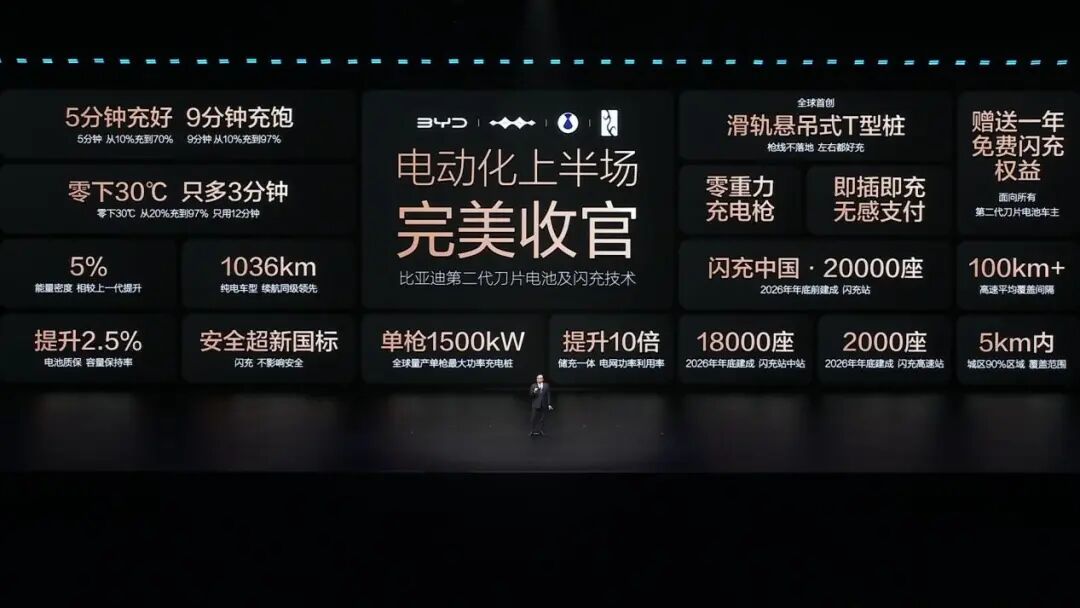
Core Viewpoint - BYD has launched its second-generation blade battery and fast charging technology, significantly improving charging speed and infrastructure development to enhance user experience and market competitiveness [1][2][3]. Group 1: Battery Technology - The second-generation blade battery can charge from 10% to 70% in 5 minutes and from 10% to 97% in 9 minutes, even in extreme cold conditions [1]. - Improvements in battery design include optimizing ion pathways and addressing local ion deposition during fast charging [5]. Group 2: Infrastructure Development - BYD plans to build 20,000 fast charging stations across the country by the end of the year, focusing on first- and second-tier cities [2][6]. - The fast charging stations will utilize existing charging infrastructure, requiring minimal modifications, and aim to achieve a target of one station every 5 kilometers in urban areas [2][6]. Group 3: Market Strategy - The deployment of fast charging stations is expected to increase the utilization rate of existing public charging stations, which currently average only 5% usage [3][4]. - BYD anticipates that the new models equipped with the second-generation blade battery will generate significant market impact starting from April [4]. Group 4: Competitive Position - BYD has been a pioneer in battery technology since 2002, focusing on lithium iron phosphate as a core technology and leading in energy storage solutions [7]. - The company aims to provide a range of battery options, including both first and second-generation blade batteries, to cater to diverse consumer preferences [8].
比亚迪弗迪电池CEO何龙:二代刀片电池在不影响安全寿命前提下开发
Sou Hu Cai Jing· 2026-03-11 06:55
Core Viewpoint - BYD has launched its second-generation blade battery and fast-charging technology, achieving the fastest charging speed in mass production globally, with significant improvements in charging efficiency and safety [1][3]. Group 1: Charging Technology - The second-generation blade battery can charge from 10% to 70% in just 5 minutes and from 10% to 97% in 9 minutes, setting a new record for charging speed [1]. - Concerns have been raised about the potential damage to the battery from frequent fast charging, as the industry generally believes that ultra-fast charging can harm battery longevity [1]. Group 2: Safety and Reliability - BYD's Executive Vice President and CEO of Fudi Battery, He Long, stated that the development of the second-generation blade battery prioritized safety and lifespan, ensuring that the fast charging does not compromise these factors [1]. - In safety tests, the second-generation blade battery showed no signs of smoke, fire, or explosion after 500 fast charge cycles, even under extreme conditions such as simultaneous charging and puncturing [3]. - BYD has upgraded the warranty terms for the second-generation blade battery, offering a replacement service if the battery pack's capacity retention falls below 77.5% within 6 years or 150,000 kilometers [3].

招商证券:比亚迪股份(01211)二代刀片电池实现5分钟快充 维持“增持”评级
智通财经网· 2026-03-09 09:44
Core Viewpoint - BYD has launched its second-generation blade battery and fast-charging technology, significantly enhancing charging speed and efficiency for electric vehicles [1][2] Group 1: Battery Technology - The new battery allows charging from 10% to 70% in 5 minutes and from 10% to 97% in 9 minutes, setting a new record for mass-produced vehicles [1] - The BYD Seal 07 EV takes approximately 8 minutes and 44 seconds to charge from 10% to 97% [1] - The battery's performance has improved in low-temperature environments, charging from 20% to 97% in about 12 minutes at -20 degrees Celsius [1] Group 2: Vehicle Models - The new battery will be featured in 10 models, including the BYD Dynasty series, Ocean series, and Tengshi, with the Tengshi Z9GT achieving a range of 1,036 kilometers [1] Group 3: Safety and Testing - The battery has passed rigorous safety tests, including a 10-fold impact test without catching fire or exploding, and has undergone 500 fast-charging cycles [1] Group 4: Charging Infrastructure - The company plans to build approximately 20,000 fast-charging stations by the end of 2026, including 18,000 urban stations and 2,000 highway stations, with 4,239 already completed [1] - The first batch of 1,000 highway fast-charging stations is expected to be operational before the May Day holiday [1] Group 5: Competitive Advantage - The significant technological advancements are expected to strengthen BYD's competitive edge, enhancing charging efficiency and narrowing the gap with fuel vehicles [2] - The vertical integration in battery technology, vehicle platforms, and charging networks is likely to reinforce BYD's technological moat and accelerate the launch of high-end models [2]

比亚迪李云飞:第一代刀片电池不会停产 新一代技术有望推动市场回暖
Xin Lang Cai Jing· 2026-03-09 09:39
Core Insights - BYD has officially launched its second-generation blade battery and fast-charging technology, achieving record charging speeds that allow for a 5-minute charge to 70% and a 9-minute charge to 97% in normal conditions [1] - The new technology addresses global challenges in electric vehicle charging, particularly slow charging and difficulties in low-temperature environments [1] - The first-generation blade battery will continue to be produced alongside the new version, providing customers with more options [1] Charging Infrastructure - BYD plans to build 20,000 fast-charging stations by the end of the year, with a focus on a "fast-charging station within a station" model in collaboration with national charging network operators [2] - The fast-charging stations will cover nearly one-third of highway service areas, with 2,000 stations expected to be completed by year-end [2] - An innovative solution for urban public charging stations has been introduced, requiring only three parking spaces to set up a system that includes a storage host and charging piles [2] Market Outlook - The release of the second-generation blade battery and fast-charging technology is expected to have a profound impact on the industry, with a potential market rebound anticipated in the second quarter as new technologies and charging infrastructure are deployed [3] - Despite a decline in overall sales due to subsidy reductions and policy adjustments, there is confidence in the future performance of the market [2]
21记者实测比亚迪低温充电,零下20度大唐10分26秒充饱
2 1 Shi Ji Jing Ji Bao Dao· 2026-03-08 15:29
Core Insights - BYD's second-generation blade battery addresses the critical issue of low-temperature charging, which has been a significant challenge in the electric vehicle (EV) sector, particularly in northern regions during winter [1][2] Group 1: Charging Performance - In a real-world test conducted in Harbin at -20°C, the BYD Tang charged from 20% to 97% in just 10 minutes and 26 seconds, while the Tengshi Z9GT achieved the same charge in 10 minutes and 23 seconds [2][3] - All ten vehicles tested in extreme cold conditions completed charging within 12 minutes [3] - In Beijing, at 4°C, the charging speed improved further, with the Tang charging from 20% to 97% in 10 minutes and 1 second, and the Tengshi Z9GT in 10 minutes and 19 seconds [3] Group 2: Charging Infrastructure - BYD's flash charging station features a unique sliding rail suspension T-type design, achieving a single-gun power output of 1.5 megawatts, which is three times the power of Tesla's current V4 supercharging stations [3] - The advancements in the second-generation blade battery and flash charging technology signify a breakthrough in the electrification field, potentially making charging as convenient as refueling in the near future [2][3]
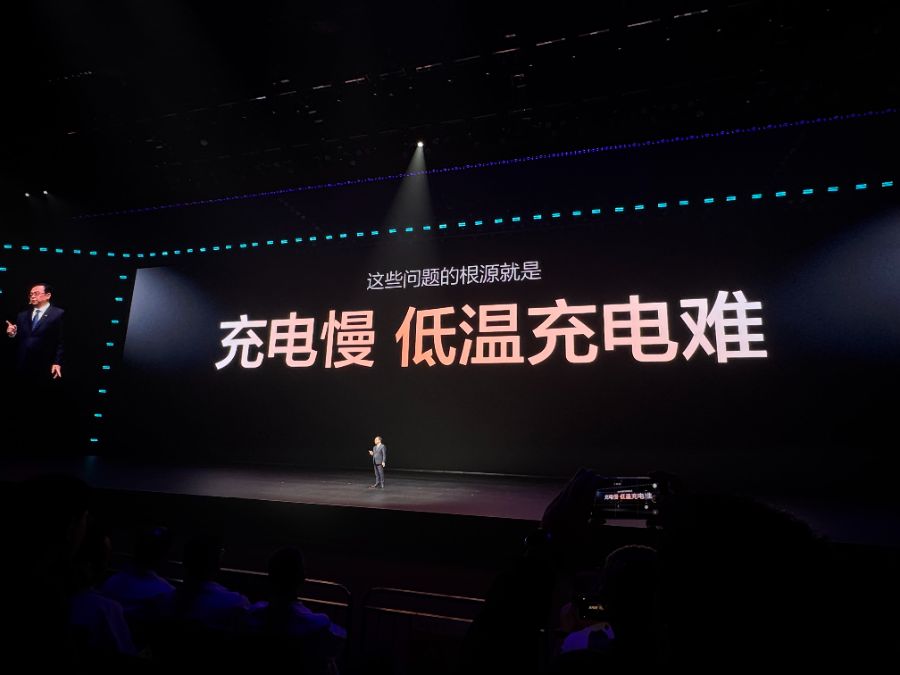
“5分钟充好,9分钟充饱”比亚迪闪充技术亮相 计划年底前建设2万座闪充站
Zhong Guo Jing Ji Wang· 2026-03-06 08:37
Core Viewpoint - BYD unveiled its "disruptive technology" during the "Waking of Insects" solar term, introducing the second-generation blade battery and flash charging technology, aiming to enhance its position in the electric vehicle market [1][3]. Group 1: Product Launch and Technology - On March 5, BYD held a launch event for its second-generation blade battery and flash charging technology, showcasing 10 models across its four brands equipped with this technology [3]. - The second-generation blade battery allows for "normal temperature charging in 5 minutes to 80%, and 9 minutes to full," and can charge in low temperatures with only a slight increase in time [3][9]. - The new battery technology has improved energy density by over 5% compared to the first generation, while also achieving a pure electric range of 1,036 kilometers for the Tengshi Z9GT model [11]. Group 2: Market Strategy and Sales Performance - BYD's sales have grown significantly, from over 700,000 units in 2021 to over 4.6 million units in 2023, placing it among the top five global automakers [5][6]. - Despite this growth, BYD faces challenges with declining domestic sales and increased competition, leading to a projected sales growth rate of only 7.73% in 2025 [6][8]. - The company plans to build 20,000 flash charging stations across China by the end of the year, enhancing its infrastructure to support the new technology [15][19]. Group 3: User Experience and Safety - The flash charging technology addresses user pain points such as slow charging speeds and range anxiety, which have been significant barriers to electric vehicle adoption [8][13]. - BYD has conducted extensive safety tests on the second-generation battery, demonstrating its safety under various conditions, including puncture tests and short-circuit tests [15]. - The new charging stations will feature a design that allows for easy user interaction and payment through the BYD flash charging app, promoting a seamless charging experience [17].