非典型复苏

Search documents
2026年经济目标怎么设定?宏观与微观“温差”成关键考量
Jing Ji Guan Cha Wang· 2025-12-18 04:18
Group 1 - The central economic work conference emphasizes "domestic demand as the main driver" for the upcoming year, focusing on building a strong domestic market [1] - There is a growing discussion about the "temperature difference" between macroeconomic performance and microeconomic sentiment, with macro indicators showing strength while micro experiences remain subdued [1][2] - The "involution" phenomenon in enterprises is linked to this temperature difference, where companies prioritize cash flow stability, leading to increased production but declining profit margins [2] Group 2 - Suggestions for boosting consumption include increasing income, ensuring leisure time, improving consumption scenarios, and providing quality products [2] - The central economic work conference proposes enhancing counter-cyclical and cross-cyclical adjustments, with a focus on demand-side policies and structural supply-side improvements [3] - Economic growth targets for 2026 are suggested to be set between 4.5% and 5.0%, slightly lower than the previous year's target, aligning with long-term GDP growth trends [4] Group 3 - The macroeconomic policy direction is expected to lean towards easing, with one interest rate cut and one reserve requirement ratio reduction anticipated [5] - The average economic growth rate during the 14th Five-Year Plan period is projected to be around 4.5%, with 2026 GDP growth expected at 4.8% [6] - A modern industrial system is highlighted as a key focus for cross-cyclical policies, emphasizing the transformation of traditional industries and the development of strategic emerging industries [6]
申万宏源赵伟:非典型复苏将至,“资金再平衡”重塑A股价值
2 1 Shi Ji Jing Ji Bao Dao· 2025-12-15 05:32
Group 1 - The core viewpoint emphasizes that the technological revolution is irreversible, supported by China's vast market, which allows for multiple rounds of trial and error, forming a complete industrial and supply chain that is resilient to external fluctuations [1] - In 2026, the economy is expected to enter a "non-typical recovery" phase characterized by "stable volume and rising prices," with a shift from a downward spiral in prices to a moderate recovery, leading to improved corporate profits and micro confidence [1] - Structural differentiation will continue, with significant disparities in policy support across different economic sectors, resulting in an uneven recovery [1] Group 2 - Regarding the current discussion on the revaluation of A-shares, the focus should shift from "value revaluation" to "capital rebalancing," as the market has been overly pessimistic about fundamentals since 2022 [2] - Four key events have reversed market expectations: changes in the policy environment post-September 2024, the emergence of DeepSeek shifting investment thinking from macro to micro, concerns over U.S. policy stability due to "reciprocal tariffs," and discussions on "anti-involution" leading to a shift of fixed-income funds towards equity assets [2] - The scale of "fixed income + products" has more than doubled in a few months, reflecting this context [2] Group 3 - The outlook on the AI bubble is optimistic, with the belief that the fourth technological revolution will not be halted by short-term market fluctuations, highlighting China's unique advantages in consumer market size and the ability to develop substantial industrial and supply chains through iterative innovation [2] - Geopolitical factors are noted as a potential risk, with the possibility of new changes in international relations leading to unexpected global inflation, which could become a risk point in 2026 [2] - The market's ups and downs will not affect the onset of this new era, and as the "capital rebalancing" process deepens, opportunities in the A-share market are expected to emerge continuously [3]

头部券商最新研判!牛市远未结束,经济或将“非典型”复苏
券商中国· 2025-11-19 05:28
Core Viewpoints - The year 2026 marks the beginning of a new phase of high-quality development for China's economy and capital markets, as highlighted by Liu Jian, Chairman of Shenwan Hongyuan [3][5]. Economic Outlook - The economy is expected to experience a "non-typical" recovery in 2026, driven by the retreat of the "scar effect" and ongoing domestic demand expansion policies. Key factors contributing to export resilience include fiscal expansion in developed economies, easing of China-U.S. tariff conflicts, and improvements in China's industrial competitiveness [4][11]. - The "14th Five-Year Plan" emphasizes the importance of technological innovation and original breakthroughs, with R&D expenditure projected to exceed 3.6 trillion yuan in 2024, representing about 2.69% of GDP, surpassing Japan and South Korea in scale [5][10]. Capital Market Development - The capital market is set to enter a new stage of high-quality development, with a focus on direct financing and reforms in the Sci-Tech Innovation Board, Growth Enterprise Market, and Beijing Stock Exchange. This will enhance the market's inclusiveness and adaptability [5][8]. - The formation of a healthy market ecosystem is expected to significantly increase the attractiveness of the market, with institutional investors' share of the market value projected to exceed 20% by the end of 2024 [8]. Bull Market Analysis - The bull market is far from over, with the potential for a two-phase bull market structure. The first phase, termed "Bull Market 1.0," occurred in 2025, while the second phase, "Bull Market 2.0," may begin in the second half of 2026 [4][15]. - The cyclical improvement in fundamentals, the strengthening of emerging industries, and the shift of residents' asset allocation towards equities are expected to support a comprehensive bull market [15].

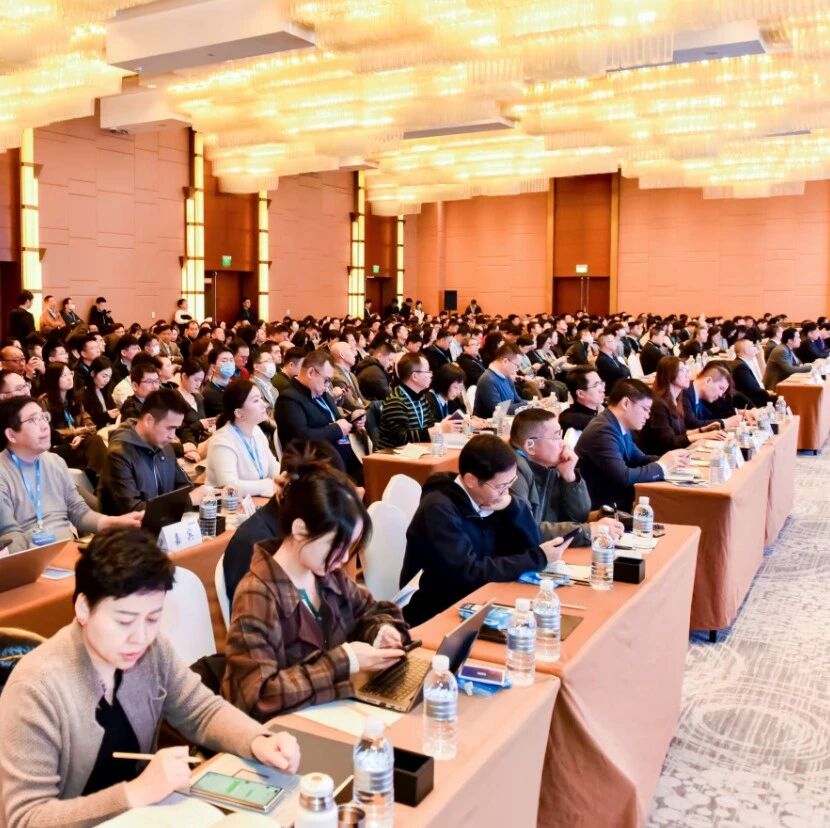
向“改革”要红利——2026年宏观形势展望(申万宏观·赵伟团队)
赵伟宏观探索· 2025-11-16 16:03
Group 1 - The article emphasizes the importance of "reform" as a source of dividends for the economy, particularly in the context of the 14th Five-Year Plan, which is expected to accelerate reform processes and enhance domestic demand policies [3][67][83] - The domestic economic environment has undergone three significant changes: the retreat of the "scar effect," the weakening impact of tariff conflicts on the economy, and the gradual formation of a new supply-side reform framework [2][8][21] - The article discusses the "non-typical recovery" of the economy, driven by improved consumer confidence and the effects of ongoing domestic demand policies, which are expected to lead to a recovery in investment growth and corporate profitability [4][5][55] Group 2 - The article highlights the need for a clear industrial adjustment strategy, focusing on advanced manufacturing as a backbone while upgrading traditional sectors and accelerating the opening of the service industry [67][74] - It points out that the structural changes in exports are evident, with a shift towards high value-added products and a decrease in low value-added goods, indicating a robust export resilience [21][22] - The article stresses the importance of addressing the "internal competition" within industries, which has led to a decline in profit margins and necessitates policies aimed at enhancing corporate profitability and operational vitality [15][41][55]