非典型复苏

Search documents
赵伟:2026 年经济政策底色与周期复苏新特征
申万宏源宏观· 2026-03-05 16:04
Group 1 - The article emphasizes a "proactive and pragmatic" approach to economic policy as reflected in the details from local two sessions, highlighting the shift in focus from physical consumption to a balanced emphasis on both goods and services consumption [4][6] - Investment growth targets show a notable divergence, with western regions setting more aggressive targets while eastern regions prioritize optimizing investment structure and efficiency [5] - The concept of new productive forces has become a focal point in local discussions, with regions tailoring their strategies based on local endowments [5] - Multiple local governments are beginning to set quantifiable targets for green development, such as Beijing's aim to control PM2.5 annual average concentration around 29 micrograms per cubic meter [5] Group 2 - Many regions have lowered their economic growth targets for 2026, with an increasing number of provinces and cities setting range targets, prompting discussions about whether the national two sessions will also adjust growth targets [6][7] - Historical context shows that setting range targets has occurred during periods of significant external and internal economic uncertainty, providing necessary policy flexibility for structural reforms [6][7] - Current conditions mirror past instances of uncertainty, with external political and economic factors increasing and internal economic transitions entering critical phases, necessitating more policy flexibility [7][8] Group 3 - The article discusses the characteristics of economic recovery cycles, noting that the past few years have seen a trend of "involution" in competition among enterprises, leading to declining profit margins [9][10] - A K-shaped recovery has emerged since the third quarter of 2025, characterized by structural differentiation in various economic sectors, with some areas showing strong resilience in consumer behavior [9][10] - The recovery is described as "atypical," primarily driven by price increases rather than significant volume growth, with notable structural differences among industries [10] Group 4 - The article argues against the simplistic view that real estate market adjustments will negatively impact consumption, citing that consumption growth often improves several years after real estate adjustments begin [11] - It highlights the importance of understanding the expected differences in domestic demand, particularly in 2026, where actual economic lows have passed but market expectations remain overly pessimistic [12] - The core issue of economic circulation stagnation is identified, suggesting that macroeconomic research should incorporate micro-level concerns to enhance policy effectiveness [12][13]


赵伟:扩内需看服务消费 增活力靠服务业开放
Xin Lang Cai Jing· 2026-02-06 16:48
Group 1 - The core viewpoint emphasizes the need to understand the economy in 2026 through the dual guidance of "consolidating the foundation" and "comprehensive efforts" [2][3] - "Consolidating the foundation" refers to the deepening and solidification of the industrial system, market foundation, and institutional framework established during the 14th Five-Year Plan [3] - "Comprehensive efforts" indicates an acceleration in policy implementation and advancement in development and reform-related areas [3] Group 2 - The three key directions for investment include continuous investment in emerging industries, "new" infrastructure, and green transformation [4][5] - Continuous investment in emerging industries such as artificial intelligence, commercial aerospace, high-end equipment, and biomanufacturing is expected to bring new growth points [5] - "New" infrastructure focuses on enhancing economic system efficiency, including digitalization to reduce logistics costs and improving transportation hubs [5] Group 3 - The release of service consumption is crucial, especially as per capita GDP surpasses $10,000, leading to a shift from goods consumption to service consumption [4][6] - The government has been increasing budget expenditures in public service areas since 2025, creating foundational conditions for service consumption [6] - The opening of the service industry is expected to stimulate consumption, drive investment, promote employment, and foster innovation [6] Group 4 - The aging population creates a significant demand for services related to healthcare, elderly care, and companionship, while younger generations seek quality life experiences [6]

赵伟:扩内需看服务消费 增活力靠服务业开放
赵伟宏观探索· 2026-02-06 16:04
Core Viewpoint - Understanding the economy in 2026 requires grasping the three guiding principles of "solidifying the foundation, comprehensive efforts, and strategic initiative" [2] Group 1: Solidifying the Foundation and Comprehensive Efforts - "Solidifying the foundation" refers to consolidating and deepening the industrial system, market foundation, and institutional framework established since the 14th Five-Year Plan [3] - "Comprehensive efforts" indicates an acceleration in policy implementation and advancement in development and reform-related areas [3] - The strategic initiative will enhance the country's proactive stance in economic work and international trade, with a focus on two aspects: coordinating domestic economic work with international trade struggles and increasing openness in relevant fields [3] Group 2: Service Consumption and Emerging Investments - The two main supports for economic growth in 2026 are the continuous release of service consumption demand and the intensified push for "new" infrastructure and green transformation investments [4] - Service consumption is expected to grow as GDP per capita surpasses $10,000, leading to a shift from goods consumption to service consumption [4] - Investment in three key areas is crucial: 1. Continuous investment in emerging industries such as artificial intelligence, commercial aerospace, high-end equipment, and biomanufacturing, where China has established global advantages [5] 2. "New" infrastructure focusing on enhancing economic system efficiency, such as digitalization to reduce logistics costs and improving transportation hubs [5] 3. Green transformation investments aligned with carbon neutrality goals, including carbon tracking and upgrades to power grids for renewable energy [5] Group 3: Opportunities from Service Sector Opening - The service sector is becoming a significant "investment blue ocean" and innovation platform, distinct from goods consumption due to its need for face-to-face interactions [6] - The government is increasing budget expenditures in public services, which will create foundational conditions for service consumption [6] - The opening of the service sector is expected to stimulate consumption, drive investment, promote employment, and foster innovation, particularly in areas addressing basic human needs such as healthcare and quality of life experiences [6]

赵伟:扩内需看服务消费 增活力靠服务业开放
申万宏源宏观· 2026-02-05 16:03
Core Viewpoint - Understanding the economy in 2026 requires grasping the three guiding principles of "solidifying the foundation, comprehensive efforts, and strategic initiative" [2] Group 1: Solidifying the Foundation and Comprehensive Efforts - The term "solidifying the foundation" refers to the consolidation and deepening of the industrial system, market foundation, and institutional framework established since the 14th Five-Year Plan [3] - "Comprehensive efforts" indicates an acceleration in the implementation of policies related to development and reform [3] - The strategic initiative will enhance the proactive nature of national policies, particularly in coordinating domestic economic work with international trade dynamics and increasing openness in relevant fields [3] Group 2: Service Consumption and Emerging Investments - The two main supports for economic growth in 2026 are the continuous release of service demand on the consumption side and the acceleration of "new" infrastructure and green transformation investments on the investment side [4] - Service consumption is expected to expand significantly as GDP per capita surpasses $10,000, leading to a shift from goods consumption to service consumption [4] - Investment in three key areas is crucial: 1. Continuous investment in emerging industries such as artificial intelligence, commercial aerospace, high-end equipment, and biomanufacturing, where China has established global advantages [5] 2. "New" infrastructure focusing on enhancing economic system efficiency, such as digitalization to reduce logistics costs and improving transportation hubs [5] 3. Green transformation investments aligned with carbon neutrality goals, including carbon tracking and upgrades to power grids to adapt to new energy systems [5] Group 3: Opportunities from Service Sector Opening - The service sector is not only a growth engine but also a vast "investment blue ocean" and innovation platform [6] - The release of service consumption requires physical scene support, with significant room for improvement in public facilities like sports and cultural venues [6] - The opening of the service sector can stimulate consumption, drive investment, promote employment, and foster innovation, particularly among the younger generation [6] - Specific industry opportunities include addressing the needs arising from demographic changes, such as healthcare and wellness services for the elderly and quality lifestyle experiences for the younger generation [6]

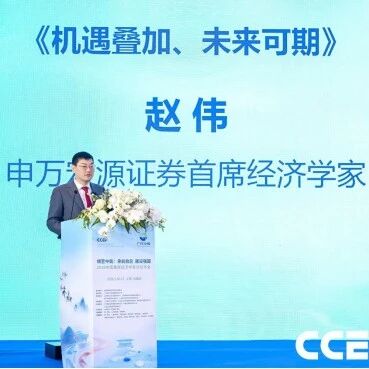
赵伟:机遇叠加、未来可期
申万宏源证券上海北京西路营业部· 2026-01-14 02:07
Economic Outlook - The core theme of the speech is the economic outlook for 2026, emphasizing a "non-typical recovery" and the importance of the "15th Five-Year Plan" as a key period for policy and economic environment understanding [3][4] - The phrase "comprehensive efforts" indicates that policy implementation in development and reform areas will accelerate, while "strategic initiative" suggests an increase in proactive policy measures [3][4] Policy and Market Dynamics - Since 2025, there have been significant reforms aimed at accelerating service trade openness, which may further enhance domestic reform and development [4] - The fiscal policy remains positive, ensuring necessary fiscal spending and debt levels, while monetary policy emphasizes flexible and efficient use of tools like interest rate cuts [5][6] - The "cross-cycle" concept has returned, but it does not imply a reduction in growth stabilization efforts; instead, it indicates a commitment to maintaining strong fiscal policies [5][6] Structural Changes and Recovery - The "post-epidemic scar effect" is weakening, with indicators showing improved mobility and a recovery in certain sectors, suggesting a natural bottoming out of the economy [6][7] - The impact of tariff conflicts on the economy has diminished, with China's export structure improving and high-value-added goods gaining a larger share [7][8] - The recovery in 2026 is characterized by limited volume elasticity, with prices returning to normal levels, leading to a nominal GDP increase from approximately 4% in 2025 to around 5% in 2026 [8][9] Capital Market Insights - The relationship between the ten-year government bond yield and A-share dividend yield reflects market sentiment, which has shifted since 2022 due to concerns about China's long-term economic issues [10][11] - A significant change in investment behavior is noted, with overseas investors showing renewed interest in Chinese assets, driven by a shift in macroeconomic narratives and structural policies aimed at restoring corporate profitability [12][14] - The nominal GDP recovery is expected to continue influencing the "funds rebalancing" process, with the A-share market poised for potential gains as dividend yields align with bond yields [14][15] Currency and Investment Outlook - The worst economic pressures are believed to have passed, with expectations of a gradual appreciation of the RMB by 2-3% annually over the next few years, potentially attracting foreign investment [16][18] - The anticipated currency appreciation, combined with attractive interest rates, may lead to significant changes in foreign investment behavior towards Chinese markets [16][18]
赵伟:机遇叠加、未来可期
申万宏源宏观· 2026-01-13 09:21
Economic Outlook - The core viewpoint emphasizes that 2026 marks the beginning of the "15th Five-Year Plan," which is crucial for understanding future policies and economic environments. The focus will be on "comprehensive efforts" and "strategic initiative" in various sectors [3][4] - "Comprehensive efforts" suggests an acceleration in policy implementation across development and reform areas, while "strategic initiative" indicates an increase in proactive policy measures, particularly in domestic economic management and international trade [3][4] Policy Framework - The central economic work conference has highlighted an increased frequency of terms like "reform" and "opening up," indicating a shift in focus for 2026. The concept of "cross-cycle" has returned, but this does not imply a reduction in growth stabilization efforts [5][6] - Fiscal policy will remain proactive, ensuring necessary spending and debt levels, while monetary policy will emphasize flexibility and efficiency in using tools like interest rate cuts [6][5] Market Dynamics - The analysis of 2025 reveals three significant shifts: the weakening of post-pandemic scars, reduced impact from tariff conflicts, and the establishment of a coherent new policy framework since late 2024 [7][8][9] - The economic recovery in 2026 is characterized as "atypical," with limited volume elasticity and a focus on price normalization, leading to a nominal GDP recovery from approximately 4% in 2025 to around 5% in 2026 [9] Capital Market Insights - The relationship between the ten-year government bond yield and A-share dividend yield illustrates the emotional cycles in the capital market, which have been disrupted since 2022 due to long-term concerns about the Chinese economy [10][11] - Key events influencing market behavior include a policy shift in late 2024 and the introduction of DeepSeek, which has redirected investment thinking from macro to micro perspectives [12][11] Investment Behavior - The new tariff war initiated by the Trump administration has led to a reevaluation of investment strategies, with non-U.S. funds increasingly seeking opportunities in China as the perception of risk shifts [13] - The "anti-involution" policy has gained attention, indicating a structural approach to restoring corporate profitability and nominal GDP growth, which has initiated a domestic "funds rebalancing" process [13] Future Projections - The nominal GDP recovery is expected to continue driving the "funds rebalancing" process into 2026, with a potential rise in bond market interest rates and support for traditional sectors' profitability and valuation [14] - The RMB is anticipated to enter a period of appreciation, with a projected annual increase of 2-3%, which could attract foreign investment and positively impact the stock market [15]

赵伟:2025年经济运行的转折性变化与政策思考——基于宏微观温差视角的分析
申万宏源宏观· 2025-12-20 16:03
Core Viewpoint - The article discusses the significant turning points in China's economy for 2025, highlighting the weakening of the "scar effect" post-pandemic, the diminishing impact of tariff conflicts, the reduced marginal drag from real estate adjustments, and the improved integration of short-cycle frameworks with long-term reform directions [4][5][8]. Group 1: Turning Points in Economic Operation - The impact of the post-pandemic "scar effect" is significantly weakening, as evidenced by improved travel data and a divergence between core CPI and PPI trends [5][6]. - The influence of tariff conflicts on China's economy is diminishing, with exports showing resilience and an improved structure of export goods, indicating a new phase of domestic transformation and upgrading [6][7]. - The marginal drag from real estate adjustments on economic growth is expected to weaken, with new construction leading investment growth and a shift in the housing market dynamics favoring new homes [7][8]. - The integration of short-cycle frameworks with long-term reform directions has improved, with a robust policy system focusing on high value-added production and human-centered demand management [8][9]. Group 2: Recent Economic Indicator Weakness - The decline in investment growth since mid-year is not attributed to a single industry but shows significant regional differentiation, partly due to the "crowding out effect" from accelerated debt reduction efforts [10][11]. - The implementation of "debt clearance" policies has also affected investment funds, creating a similar "crowding out effect," although this is expected to strengthen the microeconomic foundation in the long run [11][12]. - Some regions report insufficient project reserves, which has impacted current investment performance, but this is anticipated to improve in the upcoming planning year [12]. Group 3: Policy Recommendations Based on Macro-Micro Temperature Difference - The phenomenon of "macro-micro temperature difference" has become more pronounced, indicating a disconnect between macroeconomic indicators and micro-level experiences, which is essential for understanding policy directions [13][14]. - Restoring corporate profitability and increasing household income levels are critical policy directions to address the economic cycle issues, emphasizing the need for policies that consider micro-level incentives [15][16]. - Recommendations include focusing on improving residents' income, increasing leisure time, creating favorable consumption environments, and providing quality products, rather than relying solely on leveraging consumption [16].

每周推荐 | 流动性“顺风”(申万宏观·赵伟团队)
申万宏源宏观· 2025-12-20 04:29
Core Viewpoint - The article discusses the concept of "deposit migration" and highlights three common misconceptions in the market regarding excess savings and their implications for investment behavior [2][3][4]. Summary by Sections Misunderstanding One: Underestimating Excess Savings - The market's discussion on "excess savings" often focuses on fixed deposits while neglecting the scale of wealth management funds. The excess savings calculated based on deposits is less than 4 trillion, but when considering all types of funds, the total excess savings approaches 10 trillion, indicating that the market may underestimate the funds available for investment [2]. Misunderstanding Two: Underestimating the Speed of Investment - "Non-bank deposits" are commonly tracked to gauge the scale of "migration," but this metric includes interbank business disturbances. By using "non-bank net liabilities," which excludes such disturbances, two rounds of high growth have been observed since September 24, suggesting that residents are experiencing two rounds of "deposit migration," with a more pronounced effect expected in the second half of this year [3]. Misunderstanding Three: Underestimating Investment Sensitivity - Since 2021, residents have excessively allocated their excess savings to fixed-income assets, which have seen a significant decline in excess returns. This situation makes it challenging to meet residents' reinvestment intentions amid a backdrop of accelerating declines in housing prices. The process of "rebalancing" funds may continue into 2026 as nominal GDP gradually recovers [4].

赵伟:非典型复苏将至,“资金再平衡”重塑A股价值
赵伟宏观探索· 2025-12-18 16:03
Core Viewpoint - The article emphasizes that the technological revolution is irreversible, supported by China's vast market, which allows for multiple rounds of trial and error, forming a complete industrial and supply chain that external fluctuations cannot shake. This perspective was shared by Zhao Wei, Chief Economist at Shenwan Hongyuan Securities, during the Southern Finance Forum 2025 [4]. Economic Outlook - Zhao Wei predicts that the economic trend in 2026 will enter a "non-typical recovery" phase characterized by "stable volume and rising prices," where prices shift from a downward spiral to a moderate recovery, leading to improved corporate profits and micro-level confidence [4]. - Structural differentiation will continue, with significant disparities in policy support across different economic sectors, resulting in an unbalanced recovery [4]. A-share Market Insights - Regarding the current discussions on the revaluation of A-shares, Zhao Wei suggests focusing on "capital rebalancing" rather than "value revaluation." He notes that after 2022, the market was overly pessimistic about fundamentals, with the overall A-share dividend yield exceeding the national bond yield by 100 basis points, indicating a severe mispricing of the market [5]. - Four major events have reversed market expectations: changes in the policy environment post-September 2024, the emergence of DeepSeek shifting investment thinking from macro to micro, concerns over U.S. policy stability due to "reciprocal tariffs," and discussions on "anti-involution" leading to a shift of fixed-income funds towards equity assets [6]. Technological Revolution and Investment Opportunities - Zhao Wei maintains an optimistic view on the AI bubble, asserting that the fourth technological revolution will not end due to short-term market fluctuations. He highlights China's unique advantage of a large consumer market that allows for extensive trial and error, ultimately leading to a robust industrial and supply chain [6]. - As the process of "capital rebalancing" deepens in 2026, opportunities in the A-share market are expected to emerge continuously, encouraging investors to seize investment opportunities arising from the non-typical recovery and the new technological revolution [7].

赵伟:非典型复苏将至,“资金再平衡”重塑A股价值
申万宏源宏观· 2025-12-18 06:51
Core Viewpoint - The article emphasizes that the technological revolution is irreversible, supported by China's vast market, which allows for multiple rounds of trial and error, forming a complete industrial and supply chain that is resilient to external fluctuations [6][8]. Economic Outlook - In 2026, the economy is expected to enter a "non-typical recovery" phase characterized by "stable volume and rising prices," where prices shift from a downward spiral to a moderate recovery, leading to improved corporate profits and micro-level confidence [6]. - Structural differentiation will continue, with significant disparities in policy support across different economic sectors, resulting in an unbalanced recovery [6]. A-Share Market Insights - Instead of focusing on "value re-evaluation," it is more pertinent to discuss "capital rebalancing." The market has been overly pessimistic about fundamentals, with the overall A-share yield exceeding government bond yields by 100 basis points, indicating a severe mispricing [7]. - Four key events have shifted market expectations: changes in the policy environment post-September 2024, the emergence of DeepSeek shifting investment focus from macro to micro, U.S. tariff policies raising concerns about non-U.S. capital stability, and discussions on "anti-involution" leading to a shift of fixed-income funds towards equity assets [8]. Technological Revolution and Investment Opportunities - The article expresses optimism regarding the AI bubble, asserting that the fourth technological revolution will not be halted by short-term market fluctuations. China's large consumer market allows for extensive trial and error, leading to substantial industrial and supply chain development [8][9]. - As the "capital rebalancing" process deepens in 2026, opportunities in the A-share market are expected to emerge, driven by the non-typical economic recovery and the new wave of technological revolution [9].