
食品安全抽检

Search documents
截至11月中旬,完成抽检570万批次——全链条抽检守护“舌尖安全”
Xin Hua Wang· 2025-12-01 23:41
Core Insights - Food safety inspections are crucial for identifying issues and mitigating risks in the food supply chain, with a total of 5.7 million batches inspected and a non-compliance rate of 2.74% as of mid-November 2023 [1] Group 1: Inspection Coverage and Effectiveness - The food safety inspection system has expanded its reach from production to consumption, covering various sales channels and food types, resulting in a nearly 50% decrease in the number of non-compliant enterprises since 2020, with a 57.47% year-on-year decline in the first three quarters of 2023 [2] - Inspections now encompass 39 categories of food, including fruits, vegetables, and processed products, with 2,066 testing indicators to ensure accurate and reliable results [2] Group 2: Collaborative Regulatory Efforts - Multiple government departments, including the Market Regulation Administration and the Ministry of Agriculture, are collaborating to enhance inspection efforts, particularly for bulk food and school canteen products, leading to over 60,000 batches of non-compliant food identified this year [3] Group 3: Targeted Risk Focus - Inspections are strategically focused on high-risk areas, such as infant formula and school food services, with 100% coverage of production enterprises for infant formula and bi-weekly inspections of school canteens [4] - The inspection strategy also targets previously high non-compliance food categories and responds to public complaints and concerns [4] Group 4: Quality Control and Monitoring - The Ministry of Agriculture conducts quarterly risk monitoring in key regions and products, ensuring comprehensive coverage of production bases and markets, with adjustments made based on social concerns and actual production practices [5] Group 5: Technological Advancements in Inspections - The regulatory body is addressing challenges in food safety inspections by developing 106 supplementary testing methods to detect adulteration in various food categories, significantly enhancing detection capabilities [7] - A total of 1,725 national standards have been established to support the inspection process, ensuring that regulations are based on solid guidelines [7]
截至11月中旬 完成抽检570万批次——全链条抽检守护“舌尖安全”
Jing Ji Ri Bao· 2025-12-01 22:17
Core Insights - Food safety inspections are crucial for identifying issues and mitigating risks in the food supply chain, with a total of 5.7026 million batches inspected and a non-compliance rate of 2.74% as of mid-November this year [1] - The number of non-compliant enterprises has significantly decreased, with a nearly 50% reduction expected in 2024 compared to 2020, and a 57.47% decrease in the first three quarters of this year [2] - The regulatory framework has expanded to cover all aspects of food production and sales, including traditional and online platforms, ensuring comprehensive oversight [2][3] Inspection Coverage - Inspections now encompass 39 categories of food, including various agricultural products and processed foods, achieving near-total coverage of daily consumer food items [2] - The inspection process includes 2,066 indicators related to pesticides, veterinary drugs, microorganisms, and food additives, ensuring reliable and precise results [2] Collaborative Efforts - The State Administration for Market Regulation collaborates with multiple departments to enhance inspection efforts for key products, resulting in over 60,000 batches of non-compliant food identified this year [3] Targeted Risk Focus - Inspections are strategically focused on vulnerable groups and high-risk areas, such as infant formula and school canteen food, with 100% coverage of production enterprises for infant formula [4] - Specific attention is given to problematic food categories and previous high non-compliance rates, with increased inspection frequency for these items [4] Agricultural Monitoring - The Ministry of Agriculture conducts quarterly risk monitoring in key regions, ensuring comprehensive coverage of production bases and markets for various agricultural products [5] Technological Advancements - The regulatory body is addressing challenges in food safety inspections through technological innovations, including the development of 106 supplementary testing methods for detecting adulteration [7] - A total of 67 rapid testing methods have been introduced to enhance efficiency in identifying issues in key locations like markets and school canteens [7] Standardization and Innovation - A robust standard system has been established, with 1,725 national standards published to support inspection and regulation processes [7] - The "reveal and take charge" model has been adopted to leverage societal research capabilities for breakthroughs in detection technology [8]
市场监管总局:今年已完成食品安全抽检570万批次 不合格率2.74%
Ke Ji Ri Bao· 2025-11-26 08:12
Core Points - The National Market Supervision Administration held a press conference on food safety, highlighting the completion of 5.7026 million food safety inspections, with 156,000 non-compliant samples, resulting in an overall non-compliance rate of 2.74% [1] - Food safety inspections are crucial for identifying issues and risks, focusing on pesticide residue, food additive abuse, and microbial contamination [1] - The administration has expanded its inspection coverage to include all aspects of food production and sales, encompassing various enterprises and new business models [1] Group 1 - The total number of food safety inspections conducted is 5.7026 million, with 156,000 samples found to be non-compliant, leading to a non-compliance rate of 2.74% [1] - Risk monitoring has also been conducted, with 234,400 samples tested and 10,200 samples identified as risky, resulting in a risk detection rate of 4.36% [1] - The inspection scope covers 39 categories of food and includes 2,066 testing indicators, achieving comprehensive coverage of daily consumer food inspections [1] Group 2 - The administration has developed 106 supplementary testing methods to address challenges in detecting food adulteration, covering nearly 1,000 substances [2] - A collaborative approach is being promoted to enhance food safety regulation, shifting from reactive measures to proactive prevention [2] - The focus on key areas such as infant formula and school meals has led to monthly inspections, ensuring 100% coverage of production enterprises in these sectors [1][2]
全国食品安全抽检不合格率不到3%
Chang Jiang Shang Bao· 2025-11-26 06:05
Core Insights - Food safety is a critical concern for public welfare, and food safety sampling is an essential method for ensuring food safety and implementing regulatory measures [1] Group 1: Food Safety Sampling and Regulation - As of mid-November this year, the national market regulatory system has completed 5.7026 million batches of food safety sampling, with a non-compliance rate of only 2.74% [1] - The risk monitoring detection rate is controlled at 4.36%, and during the "14th Five-Year Plan" period, 1.07 million cases of non-compliant food have been verified and dealt with, with a penalty amounting to 4.3 billion yuan [1] - The number of enterprises with multiple non-compliance cases has significantly decreased, with a nearly 50% reduction in 2024 compared to 2020, and a year-on-year decrease of 57.47% in the first three quarters of this year [1] Group 2: Technological Innovation in Food Safety - Technological innovation is leading to more precise food safety sampling, with 106 supplementary testing methods developed to detect nearly 1,000 substances across various key food categories [2] - The introduction of rapid testing methods for agricultural products has improved the efficiency of problem detection, with 67 rapid testing methods published this year [2] - A total of 1,725 national standards have been published to continuously improve the "farm to table" full-chain standard system [2] Group 3: Import Food Regulation - The customs authority has established a comprehensive regulatory system for imported food, ensuring strict control at the source, port, and subsequent processing stages [3] - In the first ten months of 2025, customs completed supervision sampling of 97,793 imported agricultural products, with 7,138 batches of non-compliant products returned or destroyed [3] - A total of 745 cases of smuggling food crimes were investigated, with a case value of 8.17 billion yuan [3]
市场监管总局:食品安全抽检已覆盖食品生产、经营各类主体和各种业态
Yang Guang Wang· 2025-11-26 01:52
Core Points - The National Market Supervision Administration of China has reported that food safety inspections now cover all types of food production and operation entities, addressing public concerns about food safety [1] - In 2023, over 170,000 cases of food safety inspection violations were handled, resulting in fines totaling approximately 420 million yuan [1] - The food safety inspection includes a wide range of entities, including supermarkets, convenience stores, and various food service providers, as well as new business models like food delivery and live-streaming sales [1] - The inspection covers 2,066 indicators as per food safety standards, including pesticides, veterinary drugs, microorganisms, and food additives [1] Group 1 - The inspection of infant formula production companies has achieved 100% coverage, with monthly inspections for infant formula milk powder [2] - Provincial market supervision departments are conducting bi-weekly inspections of campus meals and centralized procurement platforms, aiming for full coverage of all school canteens within a two-year cycle [2]
全国市场监管系统食品安全抽检不合格率为2.74%
Ren Min Ri Bao· 2025-11-25 22:42
Core Insights - The national market regulatory system has completed food safety inspections of 5.7026 million batches, with 156,000 non-compliant samples, resulting in a non-compliance rate of 2.74% [1] - Risk monitoring has been conducted on 234,400 batches, identifying 10,200 problematic samples [1] Group 1: Food Safety Inspections - The primary goal of food safety inspections is to identify issues, focusing on three key areas: children's food, problematic food products, and uncertain food safety [1] - 100% coverage of inspections for infant formula production enterprises is being implemented, with monthly inspections of all active infant formula producers [1] - Key problematic areas include campus food, counterfeit rural food products, misuse of food additives, and issues with edible vegetable oils [1] Group 2: Risk Monitoring - Special inspections are being conducted for live-streaming sales, fresh e-commerce, and food delivery services to address concerns about adulteration and misrepresentation [1] - Increased risk monitoring efforts are being directed towards socially concerning issues [1]
截至今年11月中旬 全国市场监管系统食品安全抽检不合格率为2.74%
Ren Min Ri Bao· 2025-11-25 22:17
Core Insights - The national market regulatory system has completed food safety inspections of 5.7026 million batches, detecting 156,000 non-compliant samples, resulting in a non-compliance rate of 2.74% [1] - A total of 234,400 risk monitoring batches were completed, with 10,200 problematic samples identified, primarily related to pesticide residue, food additive abuse, and microbial contamination [1] Group 1: Food Safety Inspections - The focus of food safety inspections is to identify issues, particularly emphasizing "food for children" with 100% coverage of inspections for infant formula production enterprises, conducting monthly inspections of all active infant formula production companies [1] - Inspections are also concentrated on "problematic" areas, targeting school food, counterfeit rural food products, food additive abuse, and issues with edible vegetable oils as part of this year's key rectification efforts [1] Group 2: Risk Monitoring - The regulatory body is prioritizing inspections in areas of high public concern, such as live-streaming sales, fresh e-commerce, and food delivery services, to address issues like adulteration and misrepresentation [1]
全国已完成食品安全抽检570多万批次
Ren Min Ri Bao· 2025-11-25 20:49
Group 1 - The core viewpoint of the articles emphasizes the comprehensive food safety inspection efforts undertaken by the market regulatory authorities, highlighting the significant number of inspections and the focus on various food categories [2][3][4] - During the "14th Five-Year Plan" period, a total of 1.07 million cases of non-compliant food were verified and dealt with, with a penalty amounting to approximately 4.3 billion yuan [4] - As of mid-November, the national market regulatory system completed 5.7026 million batches of food safety inspections, detecting 156,000 non-compliant samples, resulting in a non-compliance rate of 2.74% [2] Group 2 - The inspection efforts have expanded to cover 39 categories of food, including various agricultural products and processed foods, ensuring that most food items available to the public are included in the inspection scope [2] - The focus on infant formula production has led to a 100% inspection coverage of all production enterprises, with monthly inspections conducted [3] - The regulatory authorities are prioritizing inspections based on previous non-compliance rates and public concerns, enhancing the precision of risk detection [3][4] Group 3 - The introduction of 106 supplementary testing methods allows for the detection of nearly 1,000 substances across key food categories, addressing public concerns regarding food adulteration [4] - The establishment of a technical expert database has supported 11,525 food enterprises, aiming to promote high-quality development in the food industry [4] - The number of enterprises with multiple non-compliance cases has significantly decreased, with a nearly 50% reduction expected in 2024 compared to 2020, and a 57.47% decrease in the first three quarters of this year [4]

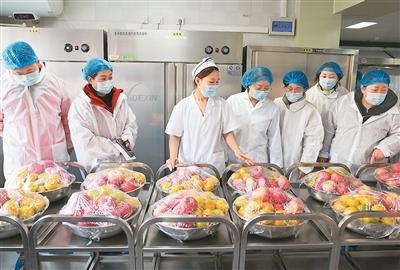
覆盖39大类食品、2066项指标 市场监管总局介绍食品安全抽检最新情况
Xin Hua She· 2025-11-25 13:57
Core Insights - The article discusses the recent developments in food safety inspections in China, highlighting the comprehensive measures taken by the State Administration for Market Regulation to enhance food safety oversight and inspection coverage [1][2]. Summary by Sections Food Safety Inspection Overview - As of mid-November, the national market regulation system has completed 5.7026 million food safety inspections, identifying 156,000 non-compliant samples, resulting in a non-compliance rate of 2.74%. Additionally, 234,400 risk monitoring inspections were conducted, with 10,200 problematic samples found, leading to a risk detection rate of 4.36% [1]. Coverage of Food Types and Inspection Items - The food safety inspections cover 39 categories of food, including various agricultural products like vegetables and fruits, processed foods such as rice and oil, and food from restaurants. The inspections encompass 2,066 indicators as per food safety standards, including pesticides, veterinary drugs, microorganisms, and food additives [1][2]. Focus Areas for Inspections - The inspections prioritize children's food, achieving 100% coverage for infant formula manufacturers and conducting bi-weekly inspections for school canteens. The focus also includes problematic areas such as counterfeit food products and excessive use of food additives, with increased inspection frequency for previously non-compliant food types [2][3]. Technological Advancements in Inspections - To address challenges in food safety inspections, the market regulation authority has developed 106 supplementary testing methods for detecting adulteration in food, covering nearly 1,000 substances. Additionally, 67 rapid testing methods have been released to enhance efficiency in identifying issues in key locations like farmers' markets and school canteens [3]. Enforcement and Compliance Measures - The regulatory body has intensified efforts to address non-compliant food products, completing 1.07 million cases of non-compliant food disposal during the 14th Five-Year Plan period, with fines totaling approximately 4.3 billion yuan. The number of companies with multiple non-compliance cases has significantly decreased, with a nearly 50% reduction expected in 2024 compared to 2020, and a 57.47% decrease in the first three quarters of this year [4].
今年全国已完成食品安全抽检570余万批次,不合格率2.74%
Xin Jing Bao· 2025-11-25 10:25
Core Viewpoint - The National Market Supervision Administration has reported significant progress in food safety inspections, with a focus on comprehensive coverage and addressing key issues in food safety regulation [1][2][3] Group 1: Food Safety Inspections - As of mid-November, the national market supervision system completed 5.7026 million food safety inspections, identifying 156,000 non-compliant samples, resulting in a non-compliance rate of 2.74% [1] - The inspections cover the entire food supply chain, including production, circulation, and catering, with specific attention to supermarkets, farmers' markets, school canteens, and emerging business models like live-streaming sales and food delivery [1] Group 2: Risk Monitoring and Key Issues - During the same period, 234,400 risk monitoring samples were completed, with 10,200 problem samples identified, leading to a risk detection rate of 4.36%. Major issues included pesticide residue exceeding limits, misuse of food additives, and microbial contamination [1][2] - The focus on children's food has intensified, with 100% inspection coverage for infant formula production enterprises and monthly inspections for infant formula milk powder [1] Group 3: Regulatory Innovations and Enforcement - The administration has prioritized inspections of problematic areas, including school food, counterfeit rural food products, and misuse of food additives, while increasing inspection frequency for previously high non-compliance food categories [2] - A "Blue Army" team has been established to conduct special inspections in new business models like live-streaming sales and fresh e-commerce, alongside a mechanism to leverage societal scientific resources for tackling detection challenges [2] - During the 14th Five-Year Plan period, 1.07 million cases of non-compliant food were addressed, with fines totaling approximately 4.3 billion yuan, and a significant reduction in the number of non-compliant enterprises [2]