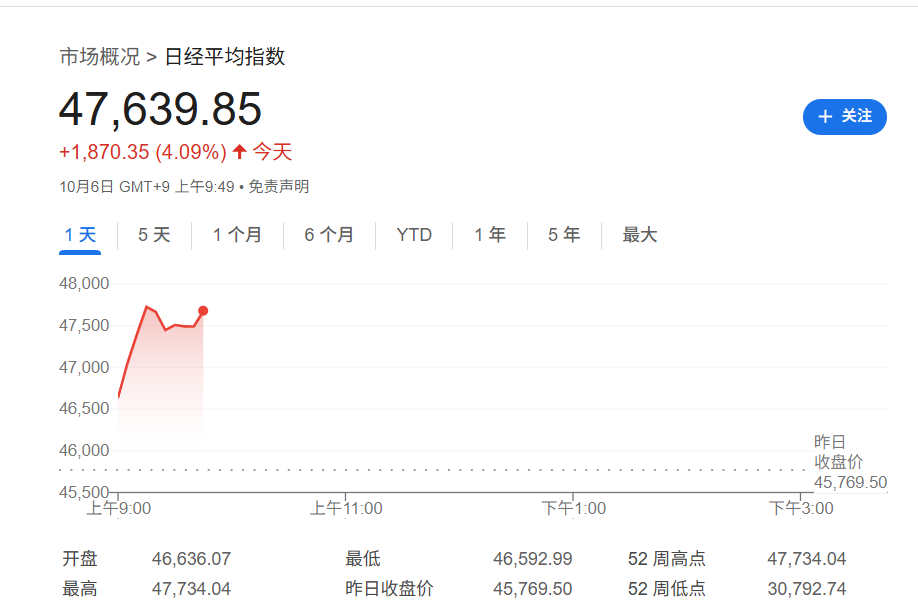
高市早苗交易

Search documents
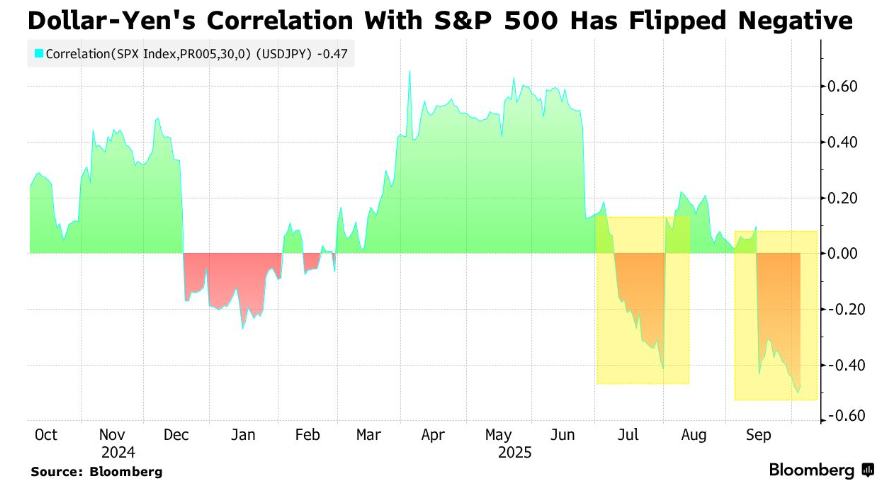
黄金与白银领跑 瑞郎与比特币上位 日元“避险光环”褪色
智通财经网· 2025-10-09 02:32
Core Viewpoint - The Japanese yen is increasingly losing its status as a reliable safe-haven asset amid rising skepticism in the market, leading to a significant depreciation trend against the US dollar, reaching an eight-month low [1][2]. Group 1: Yen's Current Status - The yen's traditional role as a safe-haven currency is being questioned due to Japan's unique financial environment and political uncertainties, prompting investors to seek alternative hedging options like gold, silver, and the Swiss franc [1][2][5]. - The recent political developments, including the unexpected victory of a conservative candidate in Japan's ruling party election, have further exacerbated the yen's depreciation, with the exchange rate surpassing the critical 150 mark against the dollar [2][5]. - Historical patterns of yen appreciation during market turmoil are no longer reliable, as the yen has shown a negative correlation with the S&P 500 index during periods of risk asset sell-offs [2][5]. Group 2: Market Sentiment and Investment Strategies - Investors are increasingly reducing their net long positions in the yen, with a nearly 40% cut in net long positions by global asset managers since late April, while hedge funds are predominantly shorting the yen [6][8]. - Alternative hedging options, such as the Swiss franc, are gaining traction among professional traders, with the franc showing more reliable and cost-effective hedging properties compared to the yen [8]. - Gold has surged over 54% this year, driven by global uncertainties, and is viewed as a more favorable investment compared to the yen, with top investment firms predicting further increases in gold prices [8][9]. Group 3: Long-term Outlook for the Yen - Despite the current challenges, the yen's long-term appeal as a defensive asset is not entirely diminished, as market expectations regarding the Bank of Japan's interest rate policies continue to influence its value [9][10]. - The recent "Kishida trade" reflects market speculation on renewed fiscal stimulus and monetary easing under the new leadership, which has led to increased volatility in the financial markets [9][10]. - The yen's reliability as a safe-haven currency is being undermined by its increasing susceptibility to speculative capital flows, indicating a shift away from its historical role [9][10].

日元重挫、日股大涨!市场开启“高市早苗交易”,应对“安倍经济学”回归
华尔街见闻· 2025-10-06 12:13
Core Viewpoint - The potential return of "Abenomics" is being priced into the Japanese financial markets following the election of Sanae Takaichi, a protégé of the late Prime Minister Shinzo Abe, as the new leader of the ruling party [1][12]. Market Reactions - The Nikkei 225 index surged over 4.7%, marking the largest single-day gain in months, while the Topix index rose by 3% [2]. - The Japanese yen weakened significantly against the US dollar by 1.9%, reaching the critical level of 150, and the yen also hit a historical low against the euro [4]. Bond Market Dynamics - The bond market experienced volatility, with long-term interest rates rising due to concerns over future fiscal expansion, as the yield on 40-year Japanese government bonds surged by 15 basis points to 3.54% [7]. Investor Sentiment - Investors are actively engaging in the "Takaichi trade," anticipating that Takaichi's policies will lead to fiscal expansion and a rightward political shift, which may further weaken the yen and boost the stock market [10]. - Analysts predict that Takaichi's victory could lead to a weaker yen and a steeper yield curve for Japanese government bonds [10]. Economic Policy Outlook - Takaichi's economic policy proposals are heavily influenced by "Abenomics," focusing on large-scale fiscal stimulus and ultra-loose monetary policy [12]. - She has committed to addressing inflation through measures such as increasing subsidies to local governments and potentially lowering consumption tax [12]. - Takaichi advocates for close coordination between the government and the Bank of Japan to achieve demand-driven economic growth [13]. Market Expectations - The market is preparing for potential fiscal expansion, with Takaichi's election seen as a surprise for investors who expected a more fiscally conservative candidate [15]. - A strategist from VanEck Australia noted that this could be a positive surprise for the stock market [16]. - However, there are concerns that increased fiscal spending may lead to a higher debt burden and potential bond market sell-offs if not managed with appropriate safeguards [19].

突然飙升!单日暴涨2000点
Ge Long Hui· 2025-10-06 04:30
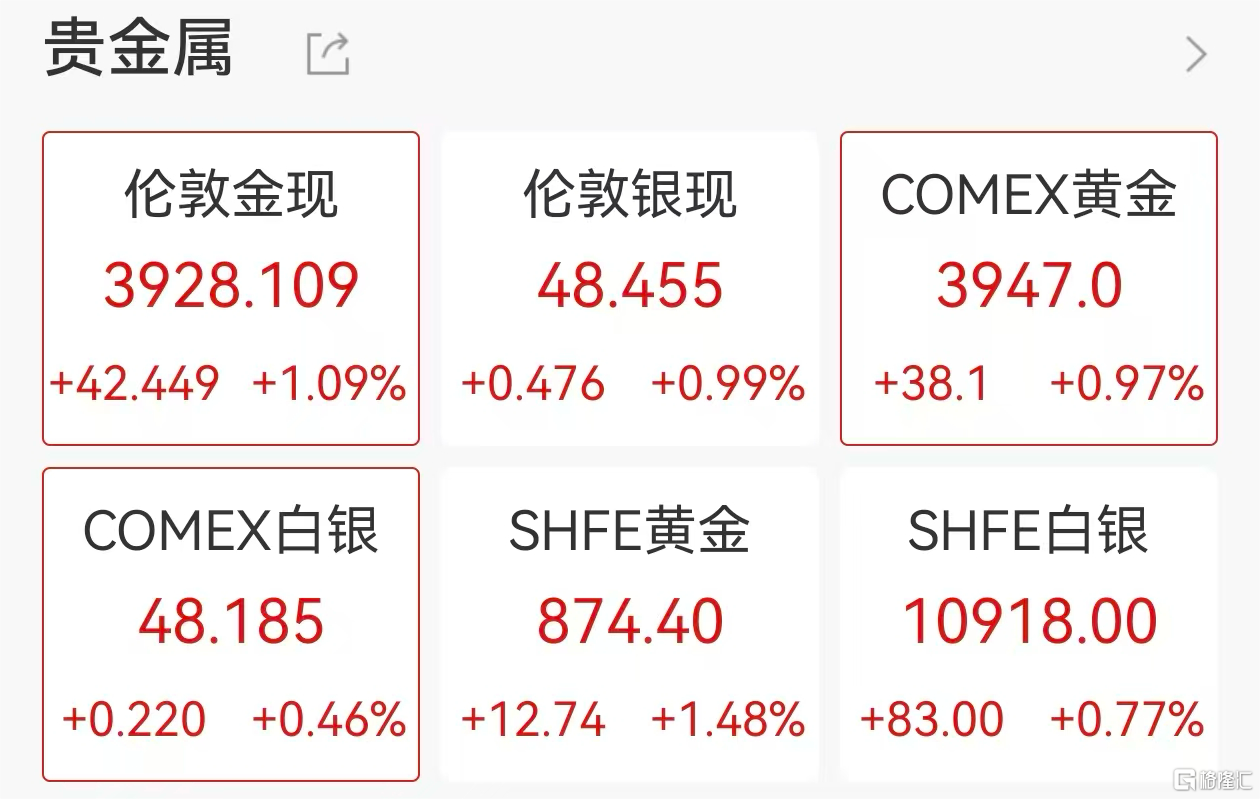
Group 1 - The core viewpoint of the articles highlights the contrasting market reactions to the U.S. government shutdown and employment data delays, with risk assets like U.S. stocks and Bitcoin reaching historical highs, while safe-haven assets like gold also surged, breaking the $3900 per ounce mark [1][3][4] - Gold prices have increased nearly 50% this year, driven by geopolitical risks, anticipated interest rate cuts by the Federal Reserve, a weakening dollar, and ongoing global central bank purchases of gold [3][4] - The U.S. government shutdown has entered its fifth day, delaying the release of significant economic data, including the September non-farm payroll report, which has contributed to market optimism despite the lack of concrete economic indicators [4][5] Group 2 - The Japanese stock market experienced a significant surge, with the Nikkei 225 index rising over 4% in a single day, gaining more than 2000 points and reaching a historical high above 47800 [5][7] - The bond and currency markets in Japan also showed volatility, with the 40-year Japanese government bond yield rising by 14 basis points to 3.52%, and the yen depreciating by 1.7% against the dollar, reaching a critical level of 150 [7][11] - The market's reaction is linked to the election of Sanae Takaichi as the new president of the ruling Liberal Democratic Party, who is expected to become Japan's first female prime minister, with her economic policies seen as a continuation of "Abenomics" but with a focus on fiscal expansion [11][12][13] Group 3 - Takaichi's economic policies include significant tax cuts and subsidies, as well as a shift away from strict fiscal discipline, allowing for increased government borrowing to stimulate the economy [13][14] - Analysts predict that Takaichi's fiscal stance will boost market confidence and positively impact the stock market, although there are concerns about the sustainability of this "Takaichi trade" and the need for clarity on policy specifics [14][15]
日元重挫、日股大涨!市场开启“高市早苗交易”,应对“安倍经济学”回归
Sou Hu Cai Jing· 2025-10-06 02:05
Core Viewpoint - The Japanese financial market is rapidly pricing in the potential return of "Abenomics" following the election of new Prime Minister Kishi Takaichi, who is expected to implement large-scale fiscal stimulus and ultra-loose monetary policy [1][9]. Group 1: Market Reactions - The Nikkei 225 index surged over 4%, marking its largest single-day gain in months, while the Topix index rose by 3% [1]. - The Japanese yen weakened significantly against the US dollar by 1.5%, approaching the critical level of 150, and the yen also hit a historical low against the euro [3]. Group 2: Economic Policy Expectations - Takaichi's economic policies are closely aligned with "Abenomics," emphasizing fiscal expansion and a right-leaning political stance, with a commitment to maintaining loose monetary policy [8][9]. - Takaichi has proposed measures to address inflation, including increased subsidies to local governments and the possibility of lowering the consumption tax [9]. Group 3: Market Sentiment and Predictions - Investors are preparing for potential fiscal expansion under Takaichi, with expectations that her policies will favor stocks but may introduce volatility in the bond and foreign exchange markets [12]. - The victory of Takaichi was unexpected for many investors who anticipated a more fiscally conservative approach from her competitor, Kizuna Koizumi [10]. Group 4: Bond Market Implications - Despite the positive sentiment in the stock market, the bond market faces pressure due to concerns over increased government debt from larger fiscal spending [13]. - Analysts warn that without a "safety net" for the issuance of additional Japanese government bonds, there could be selling pressure in the bond market, leading to a steeper yield curve [13]. Group 5: Future Considerations - The ascension of Takaichi opens a new trading paradigm, with market participants closely monitoring how she balances growth stimulation with long-term government debt control and her influence on the Bank of Japan's future policy direction [14].
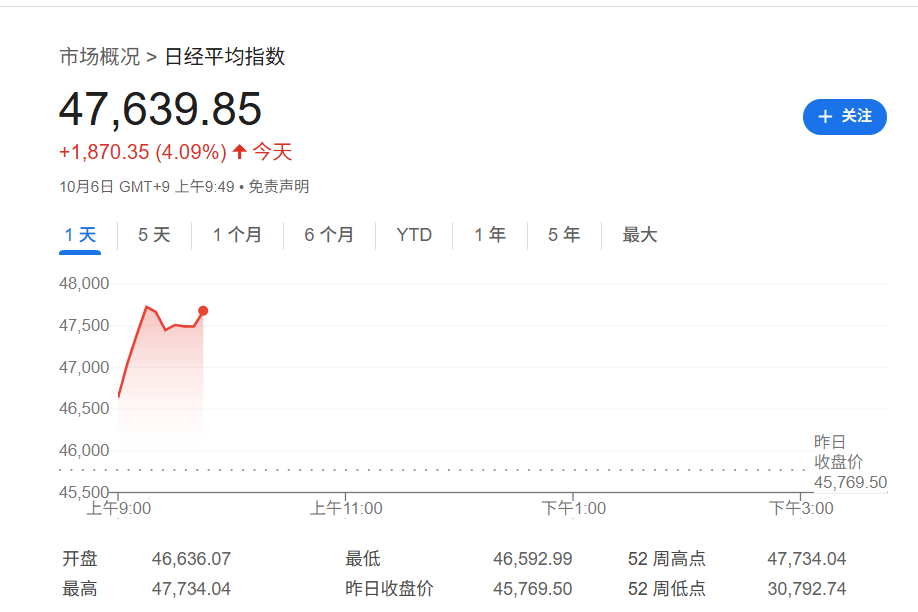
日元日债重挫、日股大涨!市场开启“高市早苗交易”,应对“安倍经济学”回归
Hua Er Jie Jian Wen· 2025-10-06 01:13
Core Viewpoint - The election of Sanae Takaichi, a protégé of the late former Prime Minister Shinzo Abe, is leading to expectations of a return to "Abenomics," characterized by large-scale fiscal stimulus and ultra-loose monetary policy, which is rapidly influencing Japan's financial markets [1][9]. Group 1: Market Reactions - Following Takaichi's election, the Nikkei 225 index surged over 4%, marking its largest single-day gain in months, while the Topix index rose by 3% [1]. - The Japanese yen weakened significantly against the US dollar by 1.5%, approaching the critical level of 150, and the yen also hit a historical low against the euro [3]. Group 2: Economic Policy Expectations - Takaichi's economic policy is heavily influenced by "Abenomics," advocating for fiscal expansion and a close alignment between government and the Bank of Japan, with a focus on demand-driven economic growth [9][10]. - She has expressed strong opposition to interest rate hikes by the Bank of Japan, which has led analysts to revise their expectations regarding potential rate increases in October [9]. Group 3: Investment Strategies - Investors are actively engaging in the "Takaichi trade," anticipating that her policies will weaken the yen, boost the stock market, and lead to a significant rise in long-term Japanese government bond yields [8][12]. - The market is preparing for potential fiscal expansion, with expectations that Takaichi will prioritize economic growth over strict fiscal discipline [10]. Group 4: Bond Market Implications - Despite the positive stock market response, the bond market faces pressure due to concerns that increased fiscal spending will necessitate more government bond issuance, raising Japan's debt burden [11]. - Analysts warn that without a "safety net" accompanying the issuance of new Japanese government bonds, there could be selling pressure on bonds, leading to a steeper yield curve [12].