
AI生态

Search documents
2月6日早餐 | 海外市场连续下挫;OpenAI推出新产品
Xuan Gu Bao· 2026-02-06 00:13
Market Overview - US employment data shows weakness, leading to a decline in the stock market, with the S&P 500 down 1.23%, Dow Jones down 1.20%, and Nasdaq down 1.59% [1] - Software stocks ETF fell by 5%, with Oracle down nearly 7% and Microsoft down nearly 5% [2] - Gold prices dropped by 4%, silver plummeted by 19%, and cryptocurrencies faced significant losses, with Bitcoin down 12% and Ethereum down 11% [4] AI and Technology Developments - Amazon unexpectedly raised its spending guidance for AI to $200 billion, causing a post-market drop of over 10% [3] - Anthropic launched a new AI model, Claude Opus4.6, focused on financial research, while OpenAI introduced GPT-5.3-Codex, touted as the strongest programming agent to date [5] - Nvidia announced a delay in the release of new gaming chips due to a shortage of storage chips [6] - Apple plans to launch a "budget version" MacBook using iPhone chips, priced below $799 [7] Chinese Market Movements - Chinese concept stocks index rose against the market trend, with Baidu up 0.73% and Meituan acquiring Dingdong Maicai, which saw Meituan rise over 2% while Dingdong Maicai fell 15% [8] Sector Insights - Semiconductor sector: Infineon announced a price increase for power switches and related chips starting April 1, 2026, due to ongoing supply shortages and rising costs [11] - Huawei's HarmonyOS version of WeChat app surpassed 40 million installations, marking significant growth in its ecosystem [12] - Gas turbine manufacturers like GE, Siemens Energy, and Mitsubishi Heavy Industries are seeing increased orders due to a surge in natural gas power generation capacity in the US [13] Company Announcements - Jiangfeng Electronics plans to acquire 15.6424% of Kaide Quartz, with stock resuming trading [17] - Guoxuan High-Tech intends to raise no more than 5 billion yuan for a 20GWh power battery project [17] - Lixun Precision is set to engage in foreign exchange derivatives trading for up to one year, with a total not exceeding $4.9 billion [17] - Southeast Network Engineering won a joint bid for a 9.94 billion yuan EPC project [18]

阿里千问成为奥运首个官方大模型,AI生态推进加速
Xuan Gu Bao· 2026-02-05 14:56
Group 1 - The International Olympic Committee (IOC) has launched the first official large model in Olympic history, developed based on Alibaba's Qianwen model, marking a significant advancement in AI applications for the Olympics [1] - Alibaba's Qianwen App has introduced over 400 AI service functions, including shopping, food delivery, and travel planning, fully integrating with Alibaba's ecosystem services such as Taobao, Alipay, and Fliggy, indicating a shift to an "AI service era" [1] - The acceleration of AI ecosystem development by major domestic companies, combined with advancements in domestic AI computing power technology, is driving the domestic AI infrastructure into a phase of "advanced construction" [1] Group 2 - DataPort provides three main services: IDC business, IDC solutions, and cloud service sales, making it one of the few cloud data center service providers in China that serves major internet companies like Alibaba, Tencent, Baidu, and NetEase [2] - Guangyun Technology offers SaaS products and value-added services across major e-commerce platforms such as Taobao, Tmall, JD.com, Pinduoduo, Douyin, Ele.me, and Kuaishou, establishing a strong reputation and brand effect in the industry [2]

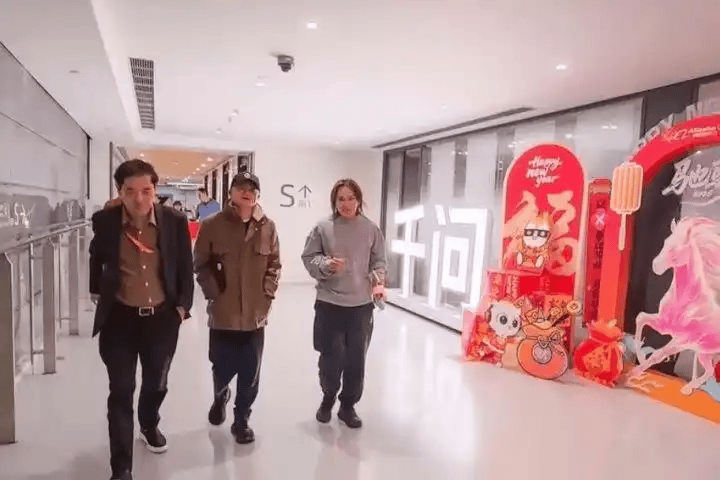
马云现身阿里总部为千问春节项目打气,30亿AI消费战打响
Sou Hu Cai Jing· 2026-02-05 07:46
Core Viewpoint - The unexpected appearance of Jack Ma at Alibaba's headquarters has sparked discussions about the launch of the "30 billion Spring Festival invitation plan" by the Qianwen APP, highlighting a strategic shift towards AI services in the competitive landscape of the internet industry [1][6]. Group 1: Qianwen APP and Spring Festival Plan - The Qianwen APP, an AI product under Alibaba, will launch a "30 billion Spring Festival invitation plan" starting February 6, offering benefits across various consumption scenarios, significantly exceeding the budgets of competitors like Tencent and Baidu [1][2]. - The Qianwen project team, part of the newly established "C-end Business Group," integrates key resources such as Quark Search and AI hardware, positioning itself as a crucial player in the AI era [2]. Group 2: Strategic Implications and Industry Context - The substantial investment of 30 billion reflects Alibaba's anxiety and ambition regarding the commercialization of AI, especially as traditional marketing strategies decline [4]. - The competition's focus is shifting from mere cash giveaways to the practical application of AI in understanding deeper consumer needs, such as planning family dinners [4]. - Jack Ma's presence at the headquarters signifies a change in public perception and indicates a fundamental transformation in the competitive logic of tech companies, emphasizing technology as a service rather than a gimmick [6].
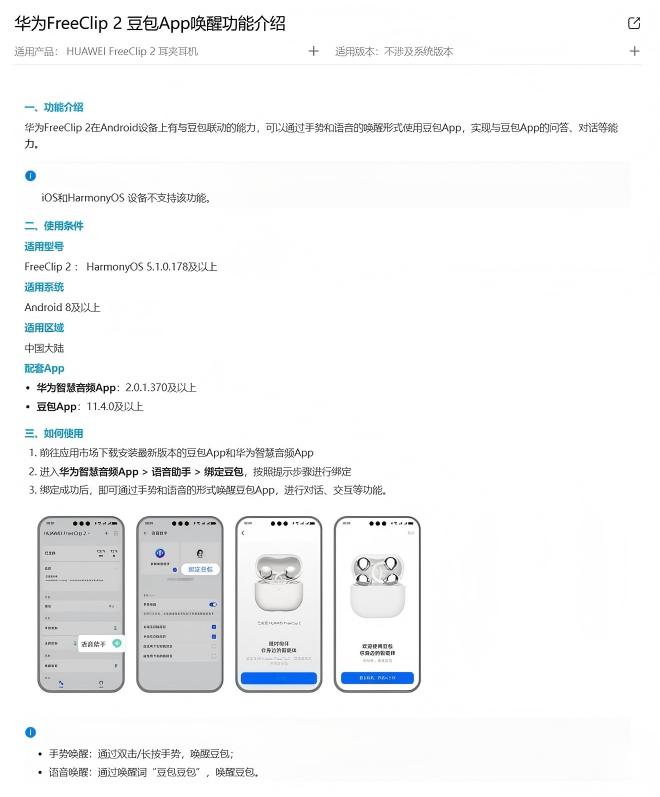
华为耳机牵手豆包,FreeClip 2成首个硬件入口,“真AI耳机”终于来了?
3 6 Ke· 2026-02-02 13:00
Core Viewpoint - The integration of third-party AI applications, specifically the collaboration between Huawei and Doubao, marks a significant shift in the TWS (True Wireless Stereo) earphone market, allowing for a more seamless user experience and direct interaction with AI models [2][10][14]. Group 1: AI Integration in TWS Earphones - Many TWS earphones have recently adopted AI features, but most implementations rely on smartphone apps, leading to a lack of true integration [1]. - Huawei's FreeClip 2 allows users to directly invoke the Doubao app through the earphones, representing a departure from traditional AI assistant models [2][3]. - This direct access to third-party AI enhances user experience by reducing latency and enabling a more natural interaction with AI applications [7][10]. Group 2: Competitive Landscape - The collaboration signifies a potential shift in the competitive landscape, as it allows Doubao to penetrate the hardware market, which has been a challenge for AI applications previously limited to mobile platforms [13][14]. - The move indicates that Huawei acknowledges the limitations of its in-house AI assistant, suggesting a broader trend where companies may prioritize user experience over maintaining exclusive AI ecosystems [15][16]. - The partnership could lead to a more competitive AI ecosystem, where companies that successfully integrate third-party AI solutions may gain a significant advantage [14][18]. Group 3: User Experience and Market Implications - The ability to use Doubao directly through Huawei's earphones enhances the user experience, making it more intuitive and efficient compared to traditional methods [7][10]. - Doubao's rapid growth, with over 137 million downloads and 50 million monthly active users by the end of 2024, positions it as a strong competitor in the AI space, second only to ChatGPT [10]. - The collaboration may set a precedent for other smartphone manufacturers to follow suit, potentially leading to a more open and collaborative AI ecosystem in the future [14][18].
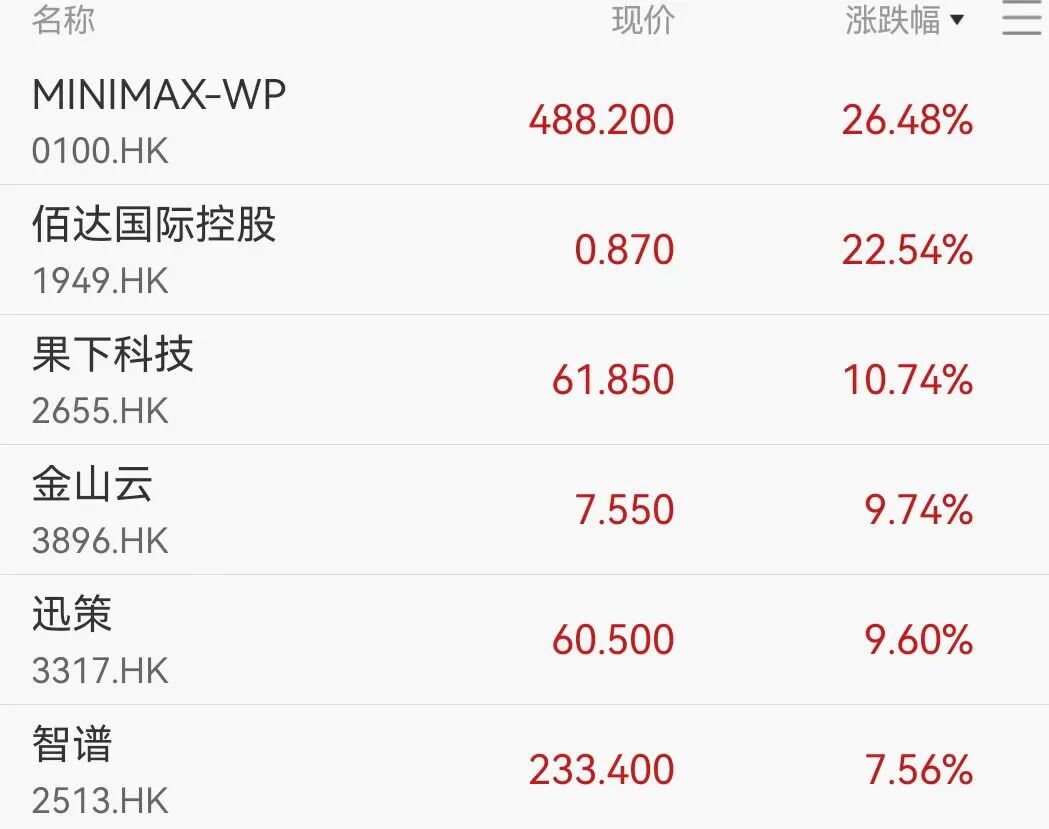
港股AI大涨,MINIMAX飙升26%,智谱涨逾7%,阿里涨近3%,千问推出最强模型
2 1 Shi Ji Jing Ji Bao Dao· 2026-01-27 09:24
Core Insights - The AI application concept has seen significant growth in the Hong Kong stock market, with MINIMAX-WP rising by 26.48%, Zhizhu by 7.56%, and Alibaba by nearly 3% [1][2] - Major tech companies are intensifying their competition in the AI sector, with each adopting different strategies [5][17] Group 1: Company Developments - Alibaba has released its strongest model, Qwen3-Max-Thinking, which is claimed to be the largest and most capable reasoning model, outperforming competitors like GPT-5.2 and Gemini 3 Pro in several benchmark tests [4][5] - Tencent's CEO, Ma Huateng, acknowledged the slow pace of AI development and emphasized the integration of large models and AI products [3] - Baidu has increased its AI-related revenue growth forecast for 2026 to 200%, aiming to lead the AI cloud market [3] Group 2: Model Innovations - Qwen3-Max-Thinking features over one trillion parameters and has set new records in 19 authoritative benchmark tests, focusing on reasoning technology innovations [5][8] - The model employs a new Test-time Scaling mechanism that enhances reasoning performance while being more economical, allowing for more efficient and intelligent reasoning results [7][8] - The model has significantly improved its autonomous tool-calling capabilities, enabling it to perform complex tasks like planning trips and analyzing data [8][9] Group 3: Strategic Moves - Alibaba is integrating Qwen into its ecosystem while also planning to spin off its chip company, Pingtouge, to transform it from a cost center to a revenue center [10][11] - The integration of Qwen into Alibaba's ecosystem aims to create a "super entrance" for AI applications, connecting various services like e-commerce, local life, and entertainment [13][15] - Other tech giants like Tencent and Baidu are also enhancing their AI strategies, with Tencent focusing on integrating AI into its social products and Baidu targeting B2B solutions [17][18]
换帅一年,荣耀沦为“Others”
Xin Lang Cai Jing· 2026-01-27 09:18
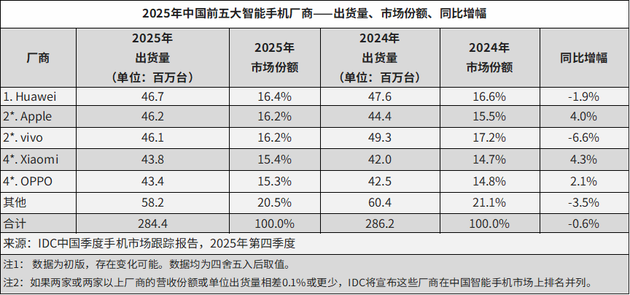
文 | 山上 何简 编辑 | 蒋浇 中国智能手机市场格局多年来一直都没有太大变化,除了华为的崛起。但随着华为遭遇美方制裁,华为一度暂别,剥离独立旗下荣耀品牌。 现在,5年之后,华为手机终于重回中国智能手机市场第一。三家主流市场研究机构 IDC、Omdia 以及 Counterpoint 公布的统计数据均显示,在 2025 年中 国智能手机全年出货量同比微降的趋势下,华为超越苹果拿下市场第一。 但 2025 年榜单中失落最大的并不是苹果,而是一度被视作华为平替的荣耀。三家市场研究机构的统计数据均显示,荣耀在 2025 年已经掉出中国前五大智 能手机厂商榜单,沦为 Others 阵营。这是荣耀自独立以来首次未能位列中国前五。 | IDC 统计数据 | | --- | 过去一年,荣耀经历了自独立以来的最大调整。去年初,公司灵魂人物、原 CEO 赵明卸任离开。新任 CEO 李健上台之后,荣耀管理团队大幅换血,多名 核心高管离职,中层洗牌调整。去年第一季度,荣耀市占率下降至 13.7%,跌出前五名。 李健彼时对外强调,"荣耀没死,反而是重生了。"针对自管理层换血后荣耀销量承压的窘境,他称销量并不是一个特别大的挑战,"因 ...
重构“生态野心”:解码荣耀全球化下半场的护城河
Feng Huang Wang· 2026-01-23 06:18
Core Insights - Honor has successfully transformed from a Chinese market brand to a global technology enterprise, achieving a global shipment of over 71 million units in 2025, with overseas sales increasing by 47% and surpassing 50% of total shipments for the first time [1] - The company has established a clear product roadmap focusing on the mid-to-high-end market, particularly in the $300-$499 price range, which has become a significant portion of its overseas shipments [2] - Honor's technological advancements, including the "Qinghai Lake battery" technology and AI capabilities, have created a competitive edge in user experience and positioned the company for future growth in human-machine interaction [3] Product Strategy - Honor's market resilience is rooted in its commitment to creating an irreplaceable experience barrier in the mid-to-high-end market, particularly in overseas expansion [2] - The company has adopted a comprehensive strategy combining product, channel, and marketing to penetrate various regions, such as leveraging partnerships with carriers in Latin America and the Middle East [2] Globalization Strategy - Honor's overseas business now accounts for over 50% of its total revenue, marking a strategic shift where globalization is a core pillar of growth rather than an optional market [4] - The company has structured its global strategy to focus on high-end breakthroughs in Europe, stable output in Latin America and the Middle East, and future growth in Southeast Asia through local manufacturing [4] Challenges and Future Outlook - Despite its successes, Honor faces challenges such as uncertainties in the global semiconductor supply chain, slowing growth in key markets, and the difficulty of transitioning from a hardware to an ecosystem company [5] - The company aims to expand in emerging markets while deepening user value in established high-end markets through AI services and ecosystem development [5] - The future success of Honor will depend on maintaining organizational vitality during rapid growth, solidifying local roots amid globalization, and balancing technological ideals with commercial realities [6]
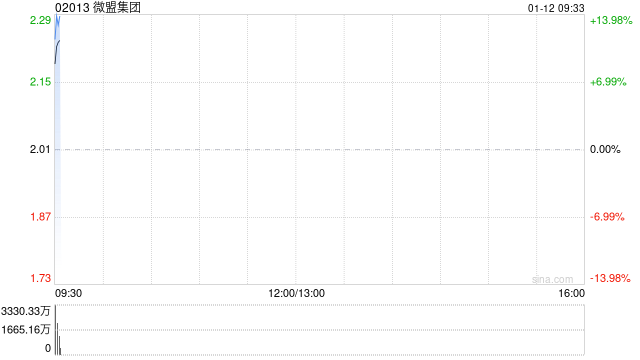
微盟集团早盘大涨近14% 近日宣布正式上线GEO解决方案微盟星启
Xin Lang Cai Jing· 2026-01-12 01:34
Core Viewpoint - Weimob Group has launched its GEO solution, Weimob Star Start, which aims to enhance brand visibility in the AI ecosystem and drive brand exposure and performance growth in the AI search era [2][6]. Group 1 - Weimob Group's stock opened high, increasing by 13.93% to HKD 2.29, with a trading volume of HKD 125 million [6]. - The Weimob Star Start solution utilizes self-developed Generative Engine Optimization (GEO) technology to systematically improve brand visibility [6]. - The solution employs a non-linear logic based on AI search intent, integrating full-link data monitoring, intelligent content generation, and smart distribution [6]. Group 2 - Weimob Star Start helps brands execute a full marketing loop consisting of "Catch, Monitor, Strategy, Execute" [6]. - The solution aims to enhance brand visibility in AI dialogues, ensuring brands are prioritized and recommended by AI in the AGI era [6].
CES 2026见证AI生态变局 中国厂商跻身全球核心阵营
2 1 Shi Ji Jing Ji Bao Dao· 2026-01-07 23:14
Core Insights - The competition among major chip manufacturers is intensifying around the foundational computing power for AI, with native AI hardware accelerating its large-scale implementation, transitioning from laboratory settings to consumer and industrial applications [1][2] - Chinese manufacturers are playing an increasingly significant role at global tech events, showcasing their advancements in AI hardware and capabilities, which are supported by their supply chain and R&D strengths [2][11] Group 1: Computing Power and AI Development - The rapid evolution of underlying computing infrastructure is crucial for the accelerated development of AI large models, with chip leaders emphasizing the exponential growth of computing power and the new application opportunities it creates [3][4] - NVIDIA's CEO highlighted the arrival of the "ChatGPT moment" for physical AI, indicating that machines are beginning to understand and act in the real world, with autonomous taxis being one of the first applications to benefit [3] - AMD's CEO noted that the floating-point computing power for training AI models is growing fourfold annually, with inference token consumption increasing by 100 times over the past two years, necessitating new product offerings to meet Yotta-scale infrastructure demands [4] Group 2: Emerging AI Applications - The potential of edge AI is significant, with advancements in smart wearable devices being highlighted as a new category of mobile terminals that will coexist with smartphones [5][6] - Qualcomm's CEO projected that the market for personal AI devices could reach 100 million units in the coming years, emphasizing the importance of edge data for providing highly relevant user services [6] Group 3: Robotics and Physical AI - The maturity of physical AI was showcased at CES, with Chinese manufacturers presenting advanced robots that demonstrate improved capabilities compared to previous years [7][8] - The introduction of humanoid robots and their increasing commercial viability was noted, with companies achieving substantial progress in motion control and operational precision [9][10] - The integration of hardware, sensors, and environmental perception into scalable systems is seen as essential for advancing physical AI applications across various industries [10] Group 4: Chinese Manufacturers' Competitive Edge - Chinese companies are leveraging their supply chain efficiencies and R&D capabilities to drive rapid iterations and cost optimization in the robotics sector, significantly outpacing European competitors in product development cycles [11][12] - The shift from simple manufacturing to innovative solutions reflects a broader transformation in the perception of "Made in China" to "Created in China," highlighting the technological advancements and better solutions being offered [12]


AI生态新棋局
2 1 Shi Ji Jing Ji Bao Dao· 2026-01-07 23:05
Core Viewpoint - Major chip manufacturers are engaged in intense competition around the foundational computing power for AI, marking a shift from experimental AI hardware to large-scale deployment in consumer and industrial applications [1] Group 1: Industry Dynamics - The competition in the AI ecosystem reflects a significant restructuring of computing power foundations, indicating a deeper level of competition in the AI landscape [1] - Chinese manufacturers are leveraging their supply chain and research capabilities to transition from "manufacturing" to "creation," showcasing their evolving role in the global AI market [1] Group 2: Technological and Capital Integration - The convergence of technology, capital, and industrial forces is reshaping the competitive landscape of global intelligent technology [1] - The ongoing developments signify a critical moment in the AI ecosystem, where the integration of various elements is pivotal for future advancements [1]