XR(扩展现实)

Search documents
镜像世界、手机消失、人类爱上AI:“硅谷精神之父”凯文·凯利的2049预言
创业邦· 2025-07-14 09:57
Core Viewpoint - The article discusses Kevin Kelly's new book "2049: The Possibilities of the Next 10,000 Days," which envisions a hopeful future shaped by technology and human agency, emphasizing the importance of imagining and actively working towards a desirable future [5][10][12]. Group 1: Future Scenarios and Technology - Kelly's book outlines optimistic scenarios for the future, including advancements in transportation, employment, the internet, and entertainment, while also considering China's role in the global landscape [9][10]. - The concept of "scenario building" is introduced, where multiple potential futures are imagined, encouraging proactive steps to achieve a positive outcome [12][13]. - The dual nature of technology is highlighted, where it can bring both positive and negative impacts, necessitating a balanced perspective [6][15]. Group 2: Education and Learning - The future of education is discussed, emphasizing the need for lifelong learning and the integration of AI as a core component of the educational experience [17][19]. - Kelly suggests that the focus should shift from acquiring specific knowledge to mastering the ability to learn effectively, as future careers may not yet exist [20][22]. - The importance of teaching students how to ask good questions is emphasized, as this skill will be crucial in a world where AI can provide answers [20][22]. Group 3: AI and Content Creation - The article explores the impact of AI on the content industry, suggesting that while AI will generate content, human journalists will still be needed to manage and take responsibility for the output [26][28]. - Kelly predicts that the role of journalists will evolve, with a greater emphasis on accountability and quality assurance in the age of AI-generated content [28][29]. Group 4: The "Mirror World" Concept - Kelly introduces the idea of a "mirror world," where augmented reality (AR) and virtual reality (VR) technologies will blend the physical and digital realms, fundamentally changing how people interact with their environment [35][37]. - The realization of this mirror world depends on the affordability and efficiency of AI technologies integrated into smart glasses [40]. Group 5: Future Technologies - Five key technologies are identified for future exploration: robotics, autonomous driving, space travel, life sciences, and brain-computer interfaces, each with the potential to revolutionize various aspects of life [50][51]. - Kelly expresses skepticism about the widespread adoption of humanoid robots in households, suggesting they will first be utilized in controlled work environments [52]. - The future of autonomous vehicles is discussed, with the expectation that driving will become less common as AI takes over more driving tasks [56]. Group 6: Population Dynamics and Longevity - Kelly predicts a demographic shift towards an aging population, which will pose challenges for innovation and societal structure [68]. - The potential for advancements in life sciences, including vaccines for major diseases, is seen as a way to extend healthy lifespans, but the overall impact on societal dynamics remains complex [66][68]. Group 7: The Future of Silicon Valley - The article concludes with reflections on the future of Silicon Valley, suggesting that while established companies may decline, new startups will emerge, potentially changing the landscape of innovation and competition [74][75].


康耐特光学(02276.HK):业绩盈喜 产品结构优化
Ge Long Hui· 2025-07-11 03:00
Core Viewpoint - The company expects a significant increase in net profit for the first half of 2025, driven by strong sales growth in high refractive index and functional products, leading to an increase in average selling prices [1] Group 1: Financial Performance - The company forecasts a net profit of no less than 271 million yuan for H1 2025, representing a year-on-year increase of at least 30% [1] - The revenue growth rates for standard lenses, functional lenses, and customized lenses in 2024 are projected to be 8.8%, 32.4%, and 11.8% respectively, indicating ongoing optimization of the product structure [2] Group 2: Product Development and Innovation - The company is one of the few manufacturers capable of producing 1.74 refractive index resin lenses, with a focus on high refractive and customized products [2] - The company is actively developing an XR (Extended Reality) R&D center and is engaged in collaborations with leading global technology and consumer electronics companies to prepare for potential mass production of AR or AI glasses [3] Group 3: Global Strategy and Supply Chain - The company plans to invest approximately 4 million USD in a new automated resin lens production line in Japan, aimed at enhancing supply chain resilience and production capacity for high-end customized lenses [2] - The establishment of the Japanese production line is expected to mitigate risks associated with US-China trade tensions and improve response times for customers in the Asia-Pacific region [3] - The diversified production base, including facilities in Japan, Jiangsu, and Shanghai, is anticipated to lower overall production costs and enhance the company's ability to navigate geopolitical uncertainties and currency fluctuations [3] Group 4: Earnings Forecast - The company has adjusted its profit forecast, projecting net profits of 560 million, 670 million, and 790 million yuan for 2025-2027, with corresponding P/E ratios of 31X, 26X, and 22X [4]
更名不到一年,“星纪魅族科技”改回原名“魅族科技”
Guo Ji Jin Rong Bao· 2025-07-01 14:41
Core Viewpoint - The recent rebranding of "Starry Meizu Technology" back to "Meizu Technology" raises questions about potential strategic adjustments within the company, occurring less than a year after a previous major rebranding effort [1] Group 1: Company Changes - The official accounts related to Meizu Technology have removed the "Starry" prefix, indicating a shift back to the original branding [1] - Personnel changes have been noted, with Huang Zhipan taking over as the legal representative and CEO of Zhuhai Starry Meizu Information Technology Co., Ltd., succeeding Su Jing [2] - The company structure shows that Zhuhai Meizu Technology Co., Ltd. and Hubei Starry Meizu Technology Co., Ltd. each hold a 50% stake in the company, with Huang Zhipan being the brother of the founder, Huang Zhang [2] Group 2: Strategic Developments - The rebranding coincides with the third anniversary of Geely's acquisition of Meizu Technology, which has led to significant structural changes and strategic investments [4] - The establishment of the Starry Meizu Group aimed to integrate various technologies, including automotive systems and XR technology, alongside traditional smartphone offerings [4] - The Flyme Auto system has achieved over 1.16 million sales in collaboration with various automotive brands, indicating a successful entry into the automotive technology market [4] Group 3: Product Focus and Market Position - Meizu has launched several AR smart glasses, but the domestic market for smart glasses remains underdeveloped, with no standout products achieving significant sales [5] - The company aims to regain a top position in the domestic mid-to-high-end smartphone market within three years, with plans to establish 1,000 integrated offline experience stores [6] - The upcoming Meizu 22 series is positioned as a flagship product focusing on AI capabilities and compact design, with a strategic shift towards enhancing camera performance [7]
研发水平处于全球第一梯队 中国6G,迈向全域智能(瞰前沿·@科学家)
Ren Min Ri Bao· 2025-06-27 21:48
Core Viewpoint - The development of 6G technology in China is progressing rapidly, with expectations for standardization by 2029 and commercial use by 2030, emphasizing its potential to transform various industries beyond traditional communication [1][8]. Group 1: 6G Characteristics - 6G is expected to achieve transmission speeds exceeding 100 Gbps, with latency under 1 millisecond, supporting a vast number of devices, particularly complex IoT devices and smart terminals [1][2]. - The concept of "three integrations" is introduced: communication-sensing integration, air-space integration, and communication-intelligence integration, indicating that 6G will serve as a new generation of mobile information networks [2][4]. Group 2: Current Development Status - China is leading globally in 6G research and patent applications, with significant advancements in foundational exploration and engineering technology innovations [2][3]. - The establishment of the first international outdoor test network for 6G communication and intelligent integration marks a significant milestone in the field [3]. Group 3: Future Applications and Industry Impact - 6G will unlock new application scenarios, enhancing digital and intelligent transformations across industries, such as optimizing drone designs and improving the performance of XR devices [4][5]. - The technology is expected to facilitate seamless connections in smart transportation and urban infrastructure, promoting innovations like autonomous driving and intelligent traffic management [5]. Group 4: Challenges in Development - Global disparities in 5G deployment and understanding of 6G technology pose challenges for standardization and industrial development, necessitating enhanced communication and consensus among international stakeholders [7][8]. - The need for a collaborative approach to address the diverse requirements and challenges faced by different regions is emphasized to ensure a unified path for 6G development [7]. Group 5: Standardization Efforts - China has initiated the research for 6G standards, with a focus on establishing a new information infrastructure standard system, aiming for commercial capabilities by 2030 [8]. - Global standardization efforts are underway, with significant events like the 3GPP 6G standard seminar and the 2025 Global 6G Technology and Industry Ecosystem Conference in China [8].
三展联动升级全城“次元”生态 预计吸引超百万观众 首届上海国际动漫月七月四日开启
Jie Fang Ri Bao· 2025-06-21 01:53
Core Viewpoint - The first Shanghai International Animation Month will integrate three major animation and gaming exhibitions: CCG EXPO, Bilibili World, and ChinaJoy, under the theme "Manga City, High Summer" from July 4 to August 10, aiming to create a vibrant two-dimensional culture experience [1][2] Group 1: Event Overview - The event will showcase the grandeur of the three major animation festivals and will offer a limited "Three Exhibition Linkage" ticket called "Magic City Dimension Pass" [1] - The event will issue "Dimension Digital Consumption Coupons" and collaborate with 15 major shopping districts, themed hotels, and unique venues to launch immersive activities [1] - The integration of the three top exhibitions represents not only a scale increase but also an ecological integration and upgrade, showcasing Shanghai's ambition to become a "new global cultural landmark" for two-dimensional culture [1] Group 2: Economic Impact - The event is expected to attract over one million domestic and international visitors, boosting consumption in the city's shopping districts and cultural tourism spots [2] - The first CCG EXPO aims to discover new potential animation IPs through its incubation efforts, leveraging the popularity and consumer potential gathered from the three major exhibitions [2] Group 3: Technological Integration - The event will utilize advanced technologies such as XR (Extended Reality), holographic projection, and immersive theater to create a "dream space" that blurs the line between virtual and reality [2] - The event will feature multiple original Shanghai-produced animation IP works and will connect participants to various cultural landmarks through a designated route [2]
工信部:5G应用融入86个国民经济大类,将加速推进5G-A及6G研发
Sou Hu Cai Jing· 2025-05-17 14:16
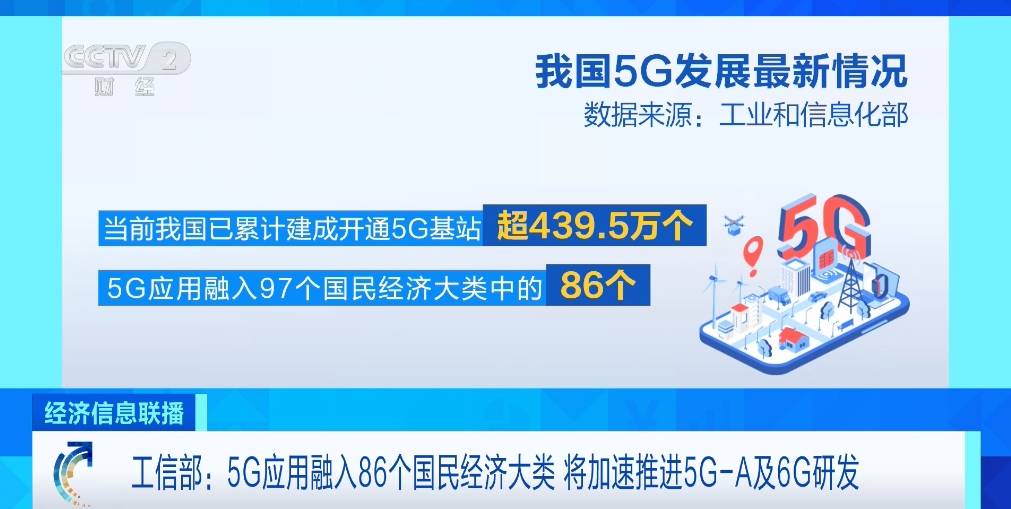
Core Insights - China has established the world's largest and technologically advanced information and communication network, with plans to accelerate the development of 5G-A and 6G technologies [1] Group 1: 5G Infrastructure and Applications - China has built and opened over 4.395 million 5G base stations, integrating 5G applications into 86 out of 97 categories of the national economy [3] - The world's first 5G-A open-pit mine has been launched in Inner Mongolia, featuring the operation of a hundred unmanned electric mining trucks, enabled by upgraded 5G-A networks [3] - The application of 5G-A can reduce data transmission latency to less than 20 milliseconds, enhancing overall operational efficiency in mining by 20% with the aid of artificial intelligence [5] Group 2: Expansion and User Experience - Users in cities like Beijing and Shanghai have started to notice their mobile signals indicating 5G-A, with no additional costs for usage; the pilot cities for 5G-A are expected to expand to over 300 key scenarios nationwide by the end of the year [7] - The connection speed and latency of 5G-A are projected to achieve a tenfold improvement compared to the initial phase of 5G, supporting the proliferation of immersive applications such as XR (extended reality), holographic communication, and cloud gaming [9]
5G-A走进大众生活“解锁”更多应用新场景 “新速度”带来新机遇
Yang Shi Wang· 2025-05-09 02:31
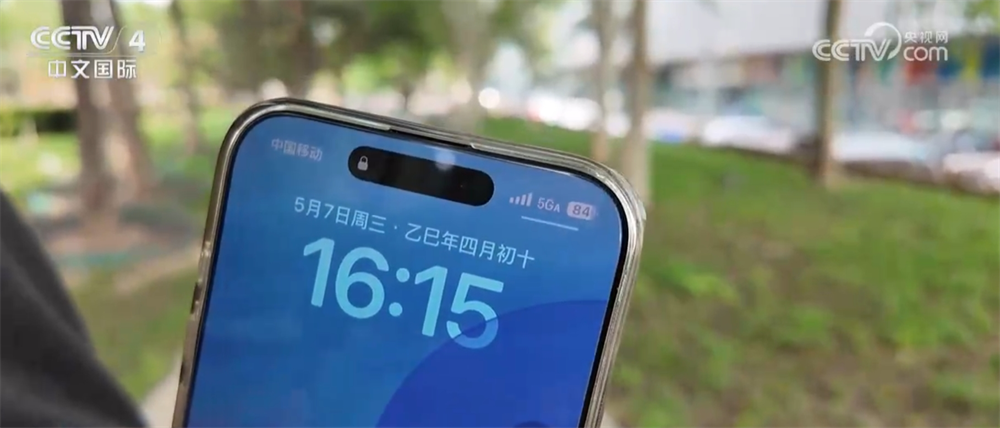
Core Viewpoint - The emergence of 5G-A signals in Beijing indicates a significant upgrade in mobile network capabilities, promising enhanced communication experiences and broader applications across various industries [1][3]. Group 1: 5G-A Overview - 5G-A offers substantial improvements over 5G in terms of capacity, speed, latency, positioning, and reliability, potentially supporting 500 million IoT devices [3]. - The technology is currently being tested across 31 provinces in China and has been validated in regions such as Europe, Latin America, and the Middle East [3]. Group 2: Operator Strategies - Major telecom operators are rapidly advancing their 5G-A initiatives, with China Mobile planning to invest nearly 10 billion yuan to upgrade over 400,000 base stations [7]. - China Telecom aims to implement 5G-A applications across various industries and scenarios, collaborating with the supply chain for innovative pilot projects [7]. - China Unicom intends to launch 5G-A in 39 key urban areas and over 300 significant city scenarios this year [7]. Group 3: Applications and Opportunities - The robust communication capabilities of 5G-A will enhance traditional industries by enabling more efficient device connectivity and data transmission, leading to smarter and more automated production processes [9]. - The integration of 5G-A with AR technology is expected to mature spatial computing platforms and support advanced technologies like brain-computer interfaces [9]. - 5G-A's capabilities will facilitate immersive applications such as XR (extended reality), holographic communication, and cloud gaming, while significantly improving response times for emergency communications and telemedicine [10].