人工智能泡沫

Search documents
AI泡沫警告声四起,继华尔街之后,相关企业高管们也承认了……
Feng Huang Wang· 2025-11-14 08:07
现如今,不仅仅是华尔街关于人工智能(AI)泡沫的警告声此起彼伏,就连AI企业高管也承认,他们 担心人工智能领域正在形成泡沫。这突显出该行业对估值飙升的担忧正日益加剧。 近段时间以来,市场一直在考虑这样一种观点,即太多的资本涌入人工智能热潮,导致收入和实际利润 前景不明朗,高估值也因此受到质疑。 事实上,到目前为止,有关估值过高的警告大多来自投资者和金融界领袖。高盛CEO所罗门(David Solomon)和摩根士丹利CEO泰德•匹克(Ted Pick)警告称,随着一些主要科技公司的估值达到历史高 点,可能出现回调。 然而,本周在里斯本举行的网络峰会科技大会上,那些自己也在开发人工智能的公司的首席执行官们也 表达了类似的担忧。德国AI企业DeepL的首席执行官Jarek Kutylowski在接受采访时表示:"我认为这些 评估在某些地方被夸大了,我认为有迹象表明泡沫即将出现。" Picsart首席执行官Hovhannes Avoyan也表达了同样的观点。他一针见血地指出,"我们看到很多人工智 能公司在没有任何收入的情况下,估值却非常高",并补充说这是一个"令人担忧的问题"。 他表示,市场重视那些"只有一些噪音和 ...
大空头披露做空英伟达细节
财联社· 2025-11-13 10:42
Core Viewpoint - Michael Burry, known for his successful bet against the 2008 subprime mortgage crisis, has recently terminated the registration of his Scion fund with the SEC, drawing significant market attention due to his public challenges to the valuations of leading AI stocks [2][7][8]. Group 1: Fund Management and Market Position - Burry's Scion fund had previously disclosed holdings in put options for AI stocks like Palantir and Nvidia, indicating a bearish outlook on these companies [7][11]. - The fund's termination is interpreted by some analysts as a strategic exit from a market perceived to be in a bubble, reflecting Burry's historical caution against market excesses [14]. Group 2: Investment Strategy and Market Commentary - Burry has criticized technology giants for allegedly manipulating depreciation schedules of their hardware to obscure the true impact of capital expenditures on their financial statements [7]. - He has publicly shared details of his put options, including 50,000 contracts for Palantir and 10,000 for Nvidia, highlighting a total investment of approximately $9.2 million in these positions [11][13]. Group 3: Future Outlook and Speculation - Burry has hinted at revealing more details about his investment strategy on November 25, suggesting that significant insights may be forthcoming [8]. - His recent social media activity, including a reference to the film "The Big Short," implies a belief that current market conditions mirror those leading up to the 2008 financial crisis [9].



软银“调仓”机器人+AI,孙正义卖掉的不止英伟达
阿尔法工场研究院· 2025-11-13 00:07
Core Viewpoint - SoftBank's recent strategic moves, including the sale of its entire stake in NVIDIA and significant investments in OpenAI, indicate a shift towards prioritizing AI investments, positioning the company as a key player in the AI market [3][12][15]. Financial Performance - SoftBank reported a net profit of 2.5 trillion yen (approximately 162 billion USD) for the second quarter of fiscal year 2025, exceeding market expectations [8]. - For the first half of fiscal year 2025, SoftBank's net sales reached 3.74 trillion yen, a year-on-year increase of 7.7%, while net profit soared to 2.92 trillion yen, up 190.9% [9]. - The surge in performance was largely attributed to the Vision Fund's profit of 2.38 trillion yen in a single quarter, driven by investments in OpenAI and PayPal [10]. Strategic Asset Management - SoftBank's CFO stated that the sale of NVIDIA shares was part of an "asset monetization" strategy, aimed at maintaining financial stability while providing investment opportunities [8]. - The company sold its NVIDIA shares for 5.83 billion USD, marking a significant cash inflow [4][5]. - Following the sale, SoftBank's stock price increased significantly, rising over 338% since April, with a market capitalization exceeding 38 trillion yen (approximately 1.7 trillion RMB) [10]. Investment Focus - SoftBank is committing to invest an additional 22.5 billion USD in OpenAI, as part of its AI strategic layout [14]. - Since September 2024, SoftBank has been heavily investing in OpenAI, with a total planned investment of 40 billion USD, of which approximately 30 billion USD has already been contributed [14]. - The company is also diversifying its AI investments, including a 5.375 billion USD acquisition of ABB's robotics business and holding significant shares in Arm [14]. Market Sentiment and Concerns - The timing of SoftBank's divestment from NVIDIA coincides with rising concerns about a potential AI investment bubble, as market sentiment shifts [17][20]. - Despite strong performance from AI companies like NVIDIA, there are contrasting views on the sustainability of current valuations, with some analysts warning of parallels to the dot-com bubble [22]. - OpenAI's valuation has surged from 300 billion USD in March 2025 to 500 billion USD by October, raising questions about its profitability, as it reported annual revenues of only 12 billion USD against losses of 8 billion USD [23][24].


澳洲联储副主席豪泽回应AI泡沫论:市场恐已进入“新范式”
Ge Long Hui A P P· 2025-11-12 03:27
Core Viewpoint - The Deputy Governor of the Reserve Bank of Australia, Lowe, expressed uncertainty about whether the market is in an artificial intelligence bubble, emphasizing that a market crash is not his baseline prediction [1] Group 1 - Lowe highlighted the need for caution as some financial indicators are at historical extremes, which may signal risks to the outlook or suggest a new paradigm [1]
史诗级调仓!软银割肉英伟达(NVDA.US)全面豪赌OpenAI, AI泡沫临界点将至?
Zhi Tong Cai Jing· 2025-11-12 00:36
但此次出售的时机,让部分投资者进一步质疑AI行业的估值可能已脱离基本面。英伟达股价在早盘交 易中下跌逾2%,拖累了标普500指数。雪上加霜的是,AI云服务提供商CoreWeave(CRWV.US)因合同延 迟下调营收预期,其股价暴跌9%,加剧了市场恐慌情绪。 近几周,AI泡沫的议论声愈发高涨。摩根士丹利和高盛的CEO均警告股市可能面临回调,而因在2008 年金融危机前做空美国房地产市场闻名的对冲基金经理迈克尔·伯里,已对英伟达和Palantir(PLTR.US)发 起做空。 多位分析师指出,作为科技行业最大胆的投资者之一,孙正义此次出售股票,或许意味着他认为英伟达 的暴涨行情已开始降温。过去三年,英伟达股价累计飙升逾1200%,并于上月成为首家市值突破5万亿 美元的公司。 日本科技投资巨头软银集团周二披露,已出售所持全部3210万股英伟达股票,套现58亿美元。这一举措 震动了股市,加剧了市场对人工智能热潮可能已达顶峰的担忧,此前华尔街银行高管和知名卖空者已发 出相关警告。 周二,这家日本公司公布2025财年第二季度财报,季度销售净额 1.92 万亿日元,净利润达2.5万亿日元 (约合162亿美元),远超分析师 ...
买得到芯片的美国科技巨头,买不到电了
3 6 Ke· 2025-11-11 04:31
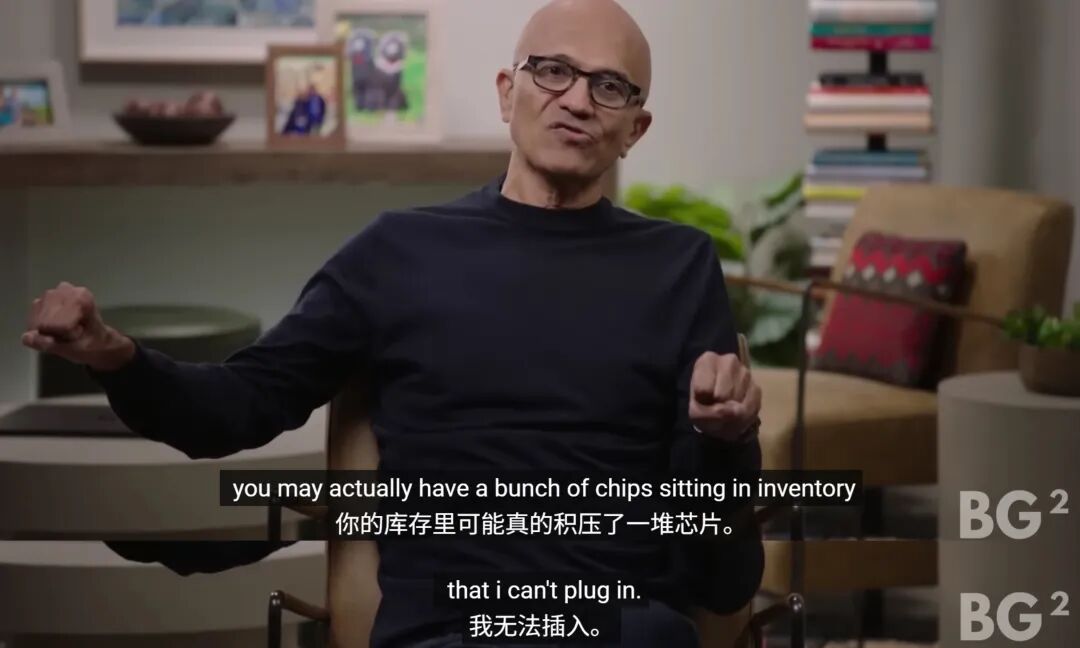
Core Insights - OpenAI has been aggressively investing in AI infrastructure, including a $300 billion partnership with Oracle for data centers and a $100 billion chip purchase from NVIDIA, amidst a growing AI bubble driven by GPU sales [1][3] - Microsoft CEO Satya Nadella highlighted a critical issue: the lack of electricity is hindering AI development, despite the abundance of chips [3][5] Energy Consumption and Efficiency - In 2023, U.S. data centers consumed 176 terawatt-hours (TWh) of electricity, accounting for 4.4% of the national total, with projections to double by 2028 [5][8] - The average Power Usage Effectiveness (PUE) globally in 2024 is 1.56, indicating that only two-thirds of electricity is used for GPU computing, while one-third is wasted on cooling, power systems, and lighting [7][8] Challenges in Power Supply - The aging U.S. power grid is struggling to meet demand, leading to increased electricity costs for consumers, which has risen significantly from 2021 to 2022 [8][10] - The shift in energy policy under the Trump administration, including cuts to renewable energy projects, has exacerbated the situation, making it difficult for tech companies to secure sufficient power for their operations [10][12] Chip Lifecycle and Market Dynamics - Current AI chips like the H100 and A100, released in 2022, may soon be outdated as newer models (H200, B200, B300) are set to dominate the market by 2025, potentially rendering existing inventory obsolete [12][14] - The valuation of AI companies is closely tied to GPU availability and demand, meaning that unutilized chips could negatively impact stock prices [14][16] Strategies for Mitigation - Companies are exploring options to build new power plants, such as OpenAI and Oracle's joint natural gas facility in Texas, but face challenges including supply shortages for necessary equipment [16][18] - Some firms are considering relocating data centers to countries with less developed power infrastructure, which could further strain local resources [18][19] Global Comparison - In contrast to the U.S., China's data centers consumed 166 TWh in 2024, representing about 2% of total electricity usage, with a focus on green energy and carbon reduction [22][24] - The future of high-tech companies may hinge less on chip quantity and more on their ability to secure reliable electricity supply for their operations [24]
10万亿算力订单根本hold不住?Altman偷递11页“要钱申请”,还嘴硬 “不求联邦”,白宫直拒:谁都不救
3 6 Ke· 2025-11-11 04:02
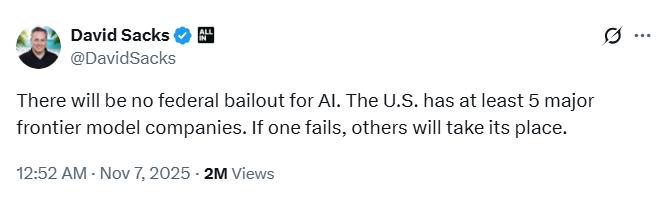
Core Viewpoint - OpenAI is facing scrutiny and accusations of dishonesty regarding its financial strategies and public statements, particularly concerning its requests for federal support and its ambitious revenue projections [1][2][3]. Financial Projections - OpenAI CEO Sam Altman stated that the company expects to reach an annual revenue of $20 billion by the end of the year and potentially several hundred billion by 2030 [1][8]. - The company has signed infrastructure agreements exceeding $1.4 trillion to secure the computational power needed for future models [7]. Federal Support Controversy - CFO Sarah Friar's comments about seeking federal support for funding significant investments in chips and infrastructure sparked backlash, with critics arguing against taxpayer funding for a high-risk private enterprise [2][3]. - Following the controversy, Altman clarified that OpenAI does not seek government guarantees for its data centers, attempting to distance the company from the contentious remarks made by Friar [4][5]. Public Relations Response - OpenAI leadership quickly moved to control the narrative, with Friar issuing a clarification that her comments were misinterpreted and intended to emphasize the need for strong public-private partnerships [3][5]. - The White House AI director David Sacks reiterated that the government would not provide federal aid for AI, emphasizing competition over intervention [3]. Strategic Partnerships and Contracts - OpenAI's recent agreements include a $38 billion cloud services deal with Amazon Web Services and a renegotiated partnership with Microsoft involving an additional $250 billion in Azure services [7][8]. - The company is under pressure to manage its substantial commitments and may need to renegotiate contracts with cloud service providers to ensure financial viability [9].
“每年这个时候的波动是正常现象,而非异常”:高盛交易员认为股市存在“上涨尾部”_ZeroHedge
Goldman Sachs· 2025-11-11 01:01
Investment Rating - The report upgrades India's stock market rating to "Overweight" (OW) due to supportive economic growth policies, earnings recovery, and reasonable valuations [24]. Core Insights - The artificial intelligence cycle is still in its early stages, with institutional positions not fully allocated, and capital flows are expected to become favorable before year-end [5][6]. - The report suggests that the stock market has a potential upside of 5-10% before the end of the year, driven by broad market participation [6]. - Concerns about credit markets are impacting alternative asset management stocks, particularly those with significant private credit exposure, but the overall impact on the credit market remains limited [21]. - The report highlights the significant investment opportunities in the electricity and water sectors due to increasing demand and aging infrastructure [18]. Summary by Sections Market Trends - The report notes that the current market volatility is typical for this time of year, rather than abnormal [1][19]. - There is a comparison of the current NDX with past technology bubbles, indicating that while some characteristics are similar, the current valuations are still below historical peaks [10][11]. Economic Indicators - The report estimates that AI investments will create $20 trillion in GDP economic value, with $8 trillion flowing into U.S. companies as capital income [13]. - The labor market is showing signs of weakness, with expectations of potential salary cuts in December [31]. Emerging Markets - India's stock market has underperformed compared to other emerging markets, but recent trends suggest a potential recovery driven by earnings and foreign investment [23][24]. - The report indicates that emerging markets have seen strong performance overall, with a 30% increase this year, while India's market has only seen a 3% increase [23]. Consumer Behavior - There are signs of cracks in the U.S. consumer market, with hedge funds reducing their holdings in consumer service stocks to a five-year low [26]. - The report discusses the impact of inflation and economic conditions on different income groups, suggesting a mixed outlook for consumer spending [28][29].

8000亿美元蒸发!美股暴跌背后,最后一个接盘侠已入场
Sou Hu Cai Jing· 2025-11-10 17:53
一位曾经活跃于社交媒体的美股散户,过去一个月亏损了20万美元。 他在论坛上写道:"之前卖房炒美股的FIRE计划,现在看起来像个笑话。 " 他的账户截 图显示,重仓的特斯拉和英伟达股票,让他在短短一个多月内损失了整整一年的生活费。 他的故事并非个例。 本周,美股市场经历了近半年来最惨烈的下跌。 仅仅前八大科技公司,市值就蒸发了约8000亿美元,整个AI板块单周市值缩水近1万 亿美元。 以科技股为主的纳斯达克指数全周下跌超过3%,创下自4月以来最大单周跌幅。 美联储的常备回购便利工具(SRF)使用规模在10月31日飙升至503.5亿美元的历史峰值,但这并未能阻止担保隔夜融资利率(SOFR)飙升18个基点至 4.22%。 这种"越救越慌"的局面暴露出流动性危机的深度。 SRF作为流动性危机的"最后防线",设计上存在致命缺陷。 它仅在市场利率超过其上限时被动启动,属于"事后补救",无法进行"事前预防"。 当所有机构都 涌向美联储求助,SRF的巨额资金不过是杯水车薪。 美国政府停摆已进入第39天,创下历史最长纪录。 为应对危机,财政部在三个月内将现金余额从3000亿美元增至1万亿美元,硬生生从市场吸走约7000亿美 元 ...
10万亿算力订单根本hold不住?Altman偷递11页“要钱申请”,还嘴硬 “不求联邦”,白宫直拒:谁都不救!
AI前线· 2025-11-10 06:54
Core Viewpoint - OpenAI is facing scrutiny and controversy over its financial strategies and statements regarding federal support for its infrastructure investments, amidst claims of potential dishonesty from its leadership [2][3][4]. Financial Statements and Projections - OpenAI CEO Sam Altman projected that the company's revenue will reach $20 billion by the end of the year and could grow to hundreds of billions by 2030 [2][10]. - The company has signed over $1.4 trillion in infrastructure agreements to secure the computational power needed for future models [9]. Controversial Statements and Reactions - CFO Sarah Friar's comments about seeking federal support for funding raised concerns about taxpayer money being used for a private enterprise [4][5]. - Following backlash, Friar clarified her statements, emphasizing the need for strong public-private partnerships rather than direct government aid [5]. Government Response - White House AI director David Sacks stated that the government would not provide federal aid for AI companies, reinforcing a belief in competition over intervention [5][6]. - Altman later denied seeking government guarantees for OpenAI's data centers, attempting to distance the company from the controversy [6]. Internal Conflicts and Contradictions - A letter from OpenAI's Chief Global Affairs Officer revealed requests for federal support, contradicting Altman's public denials [6][8]. - The letter outlined specific policy proposals for government assistance, including grants and loan guarantees to enhance the AI industry [7][8]. Financial Viability and Future Outlook - OpenAI's ambitious financial commitments raise questions about its ability to sustain such expenditures without federal assistance or significant revenue growth [10][11]. - Analysts suggest that OpenAI must achieve substantial revenue increases to justify its infrastructure investments, with projections indicating a need for a nearly 2900% revenue growth by 2029 [10].