区块链

Search documents
两会之声 | 山东省政协委员王静怡:以数字赋能文化创新,推动山东省文化产业高质量发展
Xin Lang Cai Jing· 2026-01-27 09:35
Core Viewpoint - Shandong Province aims to enhance its cultural industry through digital technology integration, as outlined in the "Shandong Province Cultural Industry Technology Innovation Action Plan (2025-2027)" which emphasizes improving cultural technology innovation capabilities to lead high-quality development in the cultural sector [1][3] Group 1: Current Challenges and Opportunities - Compared to advanced regions like Zhejiang and Guangdong, Shandong's cultural industry faces issues of being "large but not strong" and "rich but not vibrant," primarily due to insufficient integration of digital technology [3] - The province's strategy to transition from a "cultural resource province" to a "cultural industry powerhouse" involves leveraging digital empowerment as a key pathway for innovation and industry upgrade [3] Group 2: Proposed Initiatives - Implementation of five major projects to promote digital empowerment and industry upgrade, establishing a "Shandong model" for cultural innovation [3] - Creation of a "Cultural Resource Digital Decoding and IP Database Construction" project to digitize cultural resources and establish a unified "Shandong Cultural Digital Resource Database" [3][4] Group 3: Digital Content and Experience - Establishment of a "Shandong Cultural IP Super Symbol Library" to modernize and stylize key cultural symbols like Confucius and Mount Tai into a digital IP material library [4] - Development of a "Qilu Cultural Gene Digital Platform" using AI and knowledge graph technology to visualize the internal logic and spiritual lineage of Shandong's cultural resources [5] Group 4: Digital Creative Industry - Launch of a "Digital Cultural Content Creation and Industry Aggregation" project to establish a "Shandong Digital Cultural Content Creation Center" in key areas like Jinan and Qingdao, focusing on original content production based on Shandong cultural IP [6] - Encouragement of "Cultural + Manufacturing" digital integration by creating a platform for cultural design and smart manufacturing, enhancing the cultural connotation of "Shandong manufacturing" [6] Group 5: Digital Tourism and Consumption - Implementation of a "Digital Cultural Tourism Scene Integration and Consumption Upgrade" project to create a comprehensive digital cultural tourism service network through the "Good Guest Shandong" platform [7] - Development of immersive digital tourism experience landmarks in key scenic areas, utilizing VR/AR/MR technologies for enhanced visitor engagement [7] Group 6: Globalization of Cultural IP - Execution of a "Digital Communication and Cross-Border Expansion" project to globalize Shandong cultural IP through a multi-faceted digital communication matrix [8] - Support for digital creative products to reach global markets via overseas distribution platforms and cross-border e-commerce channels [8] Group 7: Ecosystem Optimization - Initiation of a "Market Entity Cultivation and Ecosystem Optimization" project to stimulate private sector vitality and encourage collaboration between state-owned cultural units and private digital tech companies [9] - Establishment of the "Qilu Digital Cultural Talent" program to attract and retain high-end interdisciplinary talent through partnerships with universities [9]

OSL集团现涨逾4% 公司预计全年由盈转亏 业务仍展现强劲增长势头
Zhi Tong Cai Jing· 2026-01-27 06:40
Core Viewpoint - OSL Group (00863) has issued a profit warning, expecting a net loss of approximately HKD 370 million to HKD 430 million for the fiscal year 2025, marking a shift from profit to loss [1] Group 1: Financial Performance - The company anticipates revenue from its digital asset and blockchain platform business to be between HKD 450 million and HKD 530 million, representing a year-on-year growth of 20.0% to 41.3% [1] - Adjusted revenue for the digital asset and blockchain platform business is expected to be between HKD 490 million and HKD 570 million, reflecting a significant year-on-year increase of 129.0% to 166.4% [1] Group 2: Market Reaction - OSL Group's stock has risen over 4%, currently trading at HKD 18.02, with a trading volume of HKD 25.0942 million [1]
港股异动 | OSL集团(00863)现涨逾4% 公司预计全年由盈转亏 业务仍展现强劲增长势头
智通财经网· 2026-01-27 06:32
智通财经APP获悉,OSL集团(00863)现涨逾4%,截至发稿,涨4.04%,报18.02港元,成交额2509.42万 港元。 消息面上,OSL集团发布盈警,预期2025年度取得净亏损约3.7亿港元至4.3亿港元,同比由盈转亏。公 司同时表示,尽管预计取得净亏损,本集团业务仍持续展现强劲增长势头,预期期内数字资产及区块链 平台业务收入4.5亿至5.3亿港元,同比增长20.0%至41.3%;预期期内经调整数字资产及区块链平台业务 收入4.9亿至5.7亿港元,同比大幅增长129.0%至166.4%,反映本集团核心业务活动持续增长。 ...
拧紧生态环境监测法治“阀门”
Jing Ji Ri Bao· 2026-01-27 00:02
Group 1 - The core viewpoint of the articles highlights the continuous improvement of ecological environment quality in China, with a notable decrease in PM_2.5 concentration and an increase in the proportion of good air quality days [1] - In 2025, the average PM_2.5 concentration was reported at 28 micrograms per cubic meter, a year-on-year decrease of 4.4%, while the proportion of good air quality days reached 89.3%, an increase of 1.9 percentage points [1] - The implementation of the "Ecological Environment Monitoring Regulations" marks a significant step towards the legalization and standardization of ecological environment monitoring in China [1] Group 2 - China has established a comprehensive ecological environment quality monitoring network that covers air, surface water, groundwater, marine, and ecological factors, ranking first globally [2] - The monitoring process for surface water has achieved full automation, enhancing the efficiency of data collection and analysis [2] - Despite advancements, there are still gaps in core technologies and high-end equipment compared to international standards, particularly in data processing and integration [2] Group 3 - The articles emphasize the need for legal safeguards and a robust regulatory framework to enhance ecological environment monitoring, including the establishment of a complete system covering monitoring, data, regulation, and accountability [2] - The promotion of new information technologies such as IoT, blockchain, and AI in environmental regulation is crucial for improving monitoring accuracy and foresight [3] - There is a call for market vitality and support for enterprises with core independent R&D capabilities, alongside measures to eliminate entities involved in data fraud [3]
江苏数硕大数据科技有限公司成立,注册资本10000万人民币
Sou Hu Cai Jing· 2026-01-26 19:46
Core Viewpoint - Jiangsu Shushuo Big Data Technology Co., Ltd. has been established with a registered capital of 100 million RMB, fully owned by Binhai Changda Holdings Co., Ltd. [1] Company Information - The legal representative of Jiangsu Shushuo Big Data Technology Co., Ltd. is Sun Yuzhong [1] - The company is registered with a capital of 100 million RMB [1] - The business scope includes various services such as value-added telecommunications, construction engineering, technical services, internet data services, big data services, and blockchain technology-related software and services [1] Shareholding Structure - Binhai Changda Holdings Co., Ltd. holds 100% of the shares in Jiangsu Shushuo Big Data Technology Co., Ltd. [1] Business Scope - The company’s operations cover a wide range of services including: - Value-added telecommunications services (both first and second categories) - Technical services, development, consulting, and promotion - Internet data and big data services - Information system integration and maintenance services - Cloud computing and 5G communication technology services - Software development and sales, including security software and commercial password products [1] Registration Details - The company is classified as a limited liability company (non-natural person investment or holding) [1] - The business registration is valid until January 26, 2026, with no fixed term thereafter [1] - The registration authority is the Binhai County Administrative Service Management Office [1]
涉老金融诈骗新剧本:AI造假成“诱饵” 虚伪关心为“收割”
Shang Hai Zheng Quan Bao· 2026-01-26 19:16
Core Insights - The article highlights the increasing trend of financial scams targeting the elderly, particularly through the use of AI technology and deceptive investment schemes [1][4][5] Group 1: Nature of Scams - Scammers are exploiting elderly individuals' lack of understanding of advanced technologies like blockchain and digital currencies, presenting them as low-risk, high-reward investment opportunities [3][4] - The "An Wo Gu Bao" investment product is a prime example, falsely marketed as a collaboration between Hong Kong An Wo Insurance and CITIC Securities, promising full compensation for losses without upfront fees [2][3] - The scams often incorporate a multi-level marketing structure, encouraging victims to recruit others, thereby creating a Ponzi scheme-like environment [2][3] Group 2: Trends in Elderly Scams - New scams are characterized by the use of advanced technology, emotional manipulation, and complex concepts, making them more difficult to detect [5][6] - The elderly demographic, particularly those over 50, is increasingly targeted, with 40% of scam victims falling into this age group [4][5] - The scams are evolving to include both online and offline strategies, utilizing community outreach and digital platforms to lure victims [5][6] Group 3: Preventive Measures - The government is taking steps to combat these scams by promoting awareness and education among the elderly, as well as enforcing stricter regulations on fraudulent investment schemes [6][7] - Financial institutions are encouraged to develop compliant financial products tailored to the needs of the elderly, enhancing their financial literacy and security [6][7] - Collaboration among regulatory bodies, internet platforms, and community organizations is essential to create a comprehensive defense against these scams [7]
区块链基础设施公司 Zerohash 正在洽谈以 15 亿美元估值融资 2.5 亿美元
Xin Lang Cai Jing· 2026-01-26 14:55
Core Viewpoint - Zerohash, a blockchain infrastructure company, is negotiating to raise $250 million at a valuation of $1.5 billion, having recently exited acquisition talks with Mastercard while still considering strategic investment from the company [1] Group 1: Company Overview - Zerohash was founded in 2017 and provides APIs and development tools related to crypto assets, stablecoins, and tokenization for financial institutions and fintech companies [1] - Notable clients of Zerohash include Interactive Brokers, Stripe, BlackRock's BUIDL fund, and Franklin Templeton [1] Group 2: Financial Activities - The company is in discussions to secure $250 million in funding at a valuation of $1.5 billion [1] - Zerohash has chosen to remain independent after withdrawing from acquisition negotiations with Mastercard [1]
推出22项任务96条举措 上海徐汇持续营造一流营商环境
Zhong Zheng Wang· 2026-01-26 14:01
Core Viewpoint - The Xuhui District of Shanghai is committed to enhancing its business environment through the "Action Plan for Accelerating the Creation of an International First-Class Business Environment (2026)", which includes 22 tasks and 96 detailed measures aimed at fostering a supportive ecosystem for enterprises and promoting high-quality regional development [1][2]. Group 1: Economic Performance - In 2025, Xuhui District achieved a GDP of 415.308 billion yuan, reflecting a year-on-year growth of 5.5% [2] - The district's fiscal revenue reached 30.925 billion yuan, with a year-on-year increase of 9.71% [2]. Group 2: Investment and Projects - A total of 16 key projects were signed at the conference, covering various sectors such as artificial intelligence, biomedicine, marketing technology, beauty care, and pet economy [2]. - Xuhui District is home to 175 regional headquarters of multinational companies and foreign R&D centers, with foreign enterprises constituting 17% of the total number of companies in the district and contributing nearly 50% of the economic output [2]. Group 3: Corporate Development - The global precision instrument leader, Mettler-Toledo, has established its presence in the Xuhui District, evolving from a startup team to a core enterprise that independently develops and supplies leading products for laboratory and industrial analysis [2]. - Mettler-Toledo plans to increase its investment in Xuhui District, indicating a strong partnership and commitment to the "Industrial Upgrading" strategic cooperation [2].
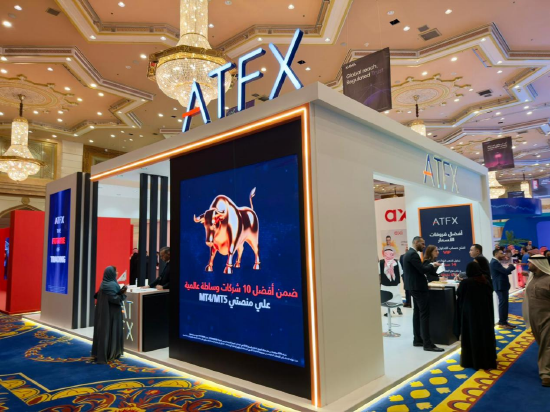
中东金融科技盛宴启幕:ATFX携前沿技术亮相 深化全球市场影响力
Xin Lang Cai Jing· 2026-01-26 11:33
Core Insights - The Jeddah Fintech Week, a major event in the Middle East fintech sector, was held in Jeddah, Saudi Arabia, sponsored by Crown Prince Saif Al Islam Bin Saud Bin Abdulaziz Al Saud, attracting significant industry attention [1][12] - ATFX participated as a strategic partner, showcasing its commitment to the Middle East and North Africa market and emphasizing its innovative approach to providing high-quality financial products and services [1][12] Group 1: Event Participation - ATFX's Middle East and North Africa team made a strong impression at the event, highlighting the brand's leading position in the global fintech sector [1][12] - The company engaged in a roundtable forum titled "Fintech Innovation and the Future of Financial Markets: Opportunities, Challenges, and Strategic Pathways," where CEO Khaldoun Sharaiha shared insights on the transformative impact of technologies like AI, big data, and blockchain on the fintech industry [4][15] Group 2: Brand Engagement - ATFX utilized an interactive booth to introduce its brand, financial products, and services, allowing attendees to experience the company's fintech capabilities firsthand through demonstrations and case studies [6][18] - Attendees praised ATFX's performance at the event, expressing interest in future collaborations and recognizing the brand's innovative concepts and quality services [9][20] Group 3: Global Strategy - Since its inception, ATFX has strategically expanded its global presence, participating as a gold sponsor at the Dubai Contracts for Difference Expo in 2024 and 2025, and as a platinum sponsor at the iFX Dubai Financial Expo [10][20] - The company has also formed a media partnership with CNBC Arabia, sponsoring a new financial program and providing expert insights to enhance investor knowledge and engagement in the Middle East [21][11]
FF EAI机器人首款产品已完成认证!局部设计图曝光!
Xin Lang Cai Jing· 2026-01-26 11:09
Core Viewpoint - The founder of FF, Jia Yueting, announced that the first product of the FF EAI robot has completed certification related to U.S. regulations and is about to officially launch for sale [1][6]. Group 1: Product Launch and Strategy - The FF EAI robot's first product is set to be sold soon after passing U.S. regulatory certification [1][6]. - The company's robot strategy aims to create real use cases and user value, addressing unmet needs in the current robotics industry by integrating Web3 and blockchain technology [3][8]. - The goal is to become the first company in the U.S. to deliver humanoid robot products with positive gross margins, accelerating towards becoming a leading EAI robotics company in the U.S. through rapid scaling of deliveries [3][8]. Group 2: Upcoming Events and Innovations - A major product launch event for the FF EAI robot is scheduled for February 4, focusing on the "Human-Vehicle+" theme, where the company will detail how it leverages its "dual flywheel, dual bridge, and dual listing system" to address industry pain points [5][10]. - The event will showcase how the company plans to systematically solve issues related to application scenarios, costs, user experience, and ecosystem challenges, leading to the arrival of a new era in EAI [10].