区域经济一体化

Search documents
共建高水平最大自由贸易区(环球热点)
Ren Min Ri Bao Hai Wai Ban· 2025-05-30 21:31
扫码观看视频 得益于《区域全面经济伙伴关系协定》(RCEP)关税减免政策及冷链物流效率提升,进入中国市场的 东南亚榴莲价格越来越"亲民";RCEP成员国之间的一般进口货物在48小时内即可实现清关,易腐产品 清关速度更是提至6小时内;中国新能源汽车成为东盟多国街头的绿色风景线,让低碳发展的理念更加 深入人心……近日,2025RCEP区域发展媒体智库论坛在海南省海口市举办,中外代表讲述身边鲜活的 RCEP故事,彰显区域合作的蓬勃生机。 本次论坛以"共建高水平最大自由贸易区"为主题,来自14个国家以及东盟秘书处等多个国际组织的代表 约300人参会,围绕RCEP相关议题展开交流。论坛由中国日报社、中国(海南)改革发展研究院、中国 海洋发展基金会主办,得到博鳌亚洲论坛研究院、海南自由贸易港研究院、海南改革发展研究基金会支 持。 红利释放—— RCEP成为推进区域经济一体化新引擎 在全球贸易环境迅速演变的背景下,RCEP是推动区域经济一体化的关键支柱。要在RCEP框架下,维 护一个基于规则、开放、可预测的贸易体系,并与世界贸易组织原则保持一致。 2024年,RCEP区域内贸易流量总额达到5.7万亿美元;2023年RCEP ...


政策高频|制造业是国民经济的重要支柱(申万宏观·赵伟团队)
申万宏源宏观· 2025-05-30 14:20
报告正文 2. 政策跟踪:制造业是国民经济的重要支柱 2.1 总书记河南考察:制造业是国民经济的重要支柱 5月19-20日,习近平总书记对"十五五"规划编制工作作出重要指示并赴河南进行考察调研。习近平总书 记指出,"十五五"规划编制要坚持科学、民主、依法决策,企业要根据规划调整战略,把握政策红利,推动 产业结构优化升级。在河南考察时,总书记强调,制造业是国民经济的重要支柱,推进中国式现代化必须保 持制造业合理比重,同时,现代制造业离不开科技赋能,要大力加强技术攻关,走自主创新的发展路子。 2.2 商务部例行发布会:做强国内市场、促进消费 5月22日,商务部召开例行新闻发布会,剔除做强国内市场,促进消费,更好发挥消费对经济循环的牵 引带动作用。发布会上,商务部剔除将加快实施提振消费专项行动,推进促消费政策落实;加快完善现代商 贸流通体系,支持再生资源回收和二手商品流通,推进电商高质量发展;加快推进内外贸一体化,帮扶企业 有效应对外部冲击。对于刚刚结束的APEC第三十一届贸易部长会议,发言人表示中方愿与各方深化经济合 作,加快区域经济一体化。 | 时间 | 事件 | 内容概要 | 主要内容 加快实施提振消费专项行 ...

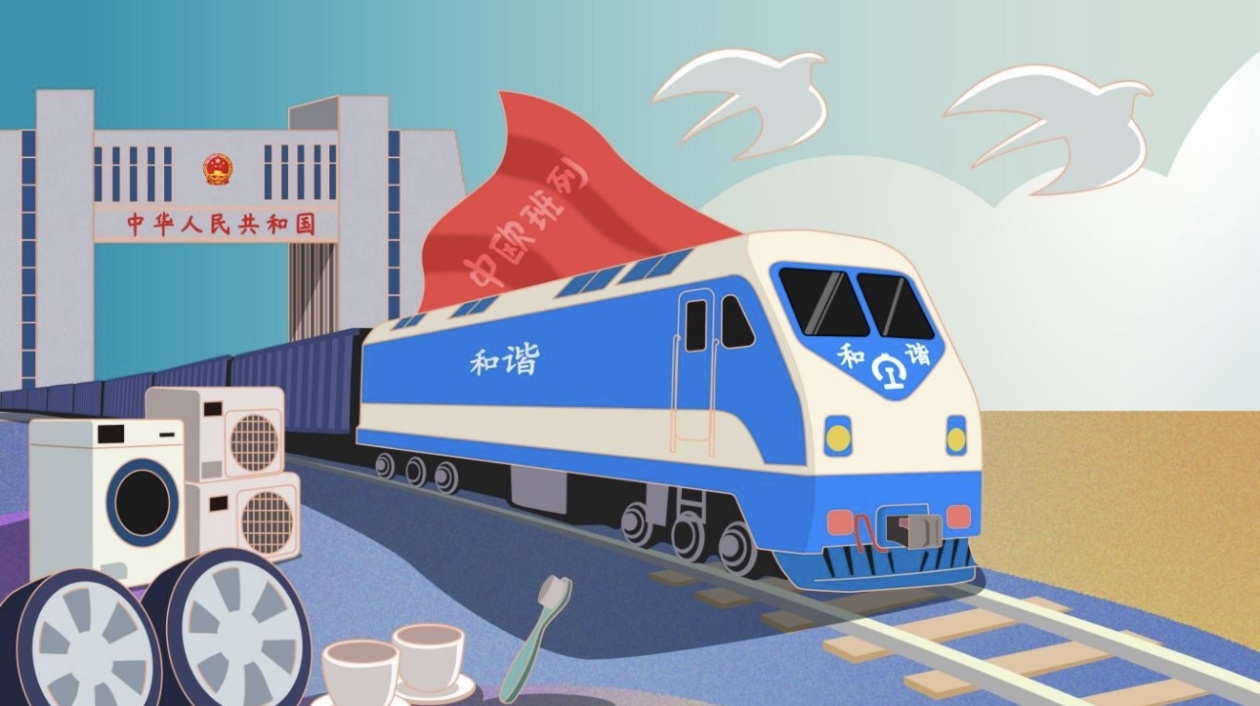
漫评|阿拉山口铁路口岸:为国际物流大通道建设注入强劲引擎
Huan Qiu Wang· 2025-05-29 10:15
Group 1 - The core point of the news is the significant role of the Alashankou Railway Port in facilitating the stable operation of China-Europe (Central Asia) freight trains, marking a milestone with over 3,000 trains passing through this year [2][3] - The Alashankou Railway Port serves as a crucial node in the New Eurasian Land Bridge Economic Corridor, enhancing connectivity between China, Central Asia, and Europe through optimized transportation organization and efficient customs processes [2][3] - The rapid development of the China-Europe freight trains has led to the establishment of 813 enterprises in the Alashankou Comprehensive Bonded Zone, creating five major industry clusters, including food processing and cross-border e-commerce [3] Group 2 - The stable operation of the China-Europe freight trains at Alashankou is a reflection of China's transportation optimization and economic development, showcasing its strength in international logistics [4] - The ongoing Belt and Road Initiative has prompted railway authorities to enhance the capacity of ports and logistics systems, implementing innovative models for rapid customs clearance [3][4] - Currently, the Alashankou Railway Port has 123 operational routes covering 21 countries, transporting over 200 types of goods, including new energy vehicles and electronic products [3]
商务部:推进中国-东盟更宽领域、更深层次区域经济一体化合作
news flash· 2025-05-29 07:40
5月29日,商务部新闻发言人何咏前在例行新闻发布会上表示,5月20日,中国和东盟十国经贸部长共同 宣布全面完成中国—东盟自贸区3版谈判,这是双方历经两年多的密集磋商,取得的重大标志性成果。 中国—东盟自贸区3版包含数字经济、绿色经济、供应链互联互通、标准技术法规与合格评定程序等9个 新增章节,有利于全面拓展中国与东盟间新兴领域和新质生产力合作,促进双方产供链深度融合,推动 构建中国—东盟超大市场,具有重要的开创性意义。下一步,双方将通过自贸区3版建设,共同扩大相 互开放,推进更宽领域、更深层次区域经济一体化合作,为建设中国—东盟命运共同体,促进双方共同 繁荣与发展提供持久动力。(智通财经) ...
非洲开发银行行长阿金武米·阿德希纳总结任期成果
Shang Wu Bu Wang Zhan· 2025-05-28 09:34
在能源领域,肯尼亚"最后一英里连接"电力项目成效尤为突出。该项目使接入国家电网的家庭数量从 2014年的242万户激增至2024年的970万户,全国电力普及率从36%跃升至76%。图尔卡纳湖风电项目作 为非洲最大运营风电场,以及连接赞比亚、马拉维和纳米比亚的卡尊古拉大桥,都成为区域经济一体化 的典范。 毛里塔尼亚消息报报道称,5月27日,在科特迪瓦阿比让举行的非洲开发银行2025年年会开幕式上,即 将离任的行长阿金武米·阿德希纳致辞表示,在其任职的十年(2015-2024)内,该行累计向非洲提供 1020亿美元资金支持,占该行自1964年成立以来融资总额的46%,创下历史性纪录。 在基建领域,超过550亿美元资金用于基础设施建设,涵盖交通、能源、数字通信等关键领域。其中, 32亿美元投资的坦桑尼亚标准轨距铁路项目,成功连接坦桑尼亚、刚果民主共和国和布隆迪三国;亚的 斯亚贝巴-内罗毕-蒙巴萨交通走廊将跨境运输时间从3天压缩至1天,并推动双边贸易额增长400%。科特 迪瓦作为本届年会东道国,十年间获得非洲开发银行支持增长157%,首都阿比让的城市基础设施建设 多数得到该行资助。 阿德希纳在回顾其2020年以100 ...
做强国内大循环·破壁丨申兵:以改革为牵引建设更高水平的全国统一大市场
Sou Hu Cai Jing· 2025-05-28 02:23
Core Viewpoint - The construction of a unified national market is essential for strengthening domestic circulation and better integrating international circulation, with significant progress made at both national and local levels through policy improvements and practical measures [4][5][6]. Group 1: Achievements in Building a Unified National Market - A series of detailed policies have been introduced to provide actionable measures for the construction of a unified national market, including the issuance of the "Opinions on Accelerating the Construction of a Unified National Market" in March 2022 and the "Guidelines for the Construction of a Unified National Market (Trial)" set to be released by the end of 2024 [5]. - Key areas such as market access, fair competition, and investment promotion have seen continuous policy enhancements, including a reduction in the number of items in the "Negative List for Market Access (2025 Edition)" from 117 to 106, indicating a further relaxation of market access restrictions [5][6]. - Actions have been taken to eliminate market access barriers, with the establishment of a complete work loop for collecting, verifying, rectifying, and reporting issues related to improper interventions in the construction of a unified national market [6]. Group 2: Local Level Implementation - Local governments have improved regulations and foundational systems, such as the implementation of the "Zhejiang Province Fair Competition Review Measures" in April 2024, which is the first provincial-level regulation of its kind in the country [7]. - Regions have actively cleaned up policies that contradict the spirit of unified market construction, leading to the repeal and revision of several measures that hinder fair competition [7]. - Efforts to create a favorable business environment have been exemplified by Zhejiang's introduction of a monitoring index system for the business environment, which includes 300 specific indicators to reduce administrative intervention [7]. Group 3: Future Directions and Reforms - To address the complexities of economic circulation and local protectionism, reforms are needed to dismantle systemic barriers and enhance cooperation between central and local governments [9][10]. - Key reforms include optimizing the fiscal and tax system to reduce local protectionism, improving statistical accounting systems, and enhancing the evaluation and assessment of government performance [10]. - Local mechanisms should be innovated to facilitate regional economic integration, including the establishment of unified management mechanisms for land use and shared human resources [12].
印尼专家:中国-东盟自贸区3.0版谈判完成将为区域内各国发展带来福祉
news flash· 2025-05-26 08:30
金十数据5月26日讯,近日,中国-东盟自贸区3.0版谈判在线上完成。印尼专家表示,这将有力促进中 国—东盟命运共同体建设,为区域内各国发展带来福祉。印度尼西亚经济改革中心执行主任穆罕默德· 费萨尔表示,升级后的自贸协定有利于在新形势下推进更宽领域、更深层次的区域经济一体化,促进各 方产供链深度融合,实现共同繁荣,具有重要开创性意义。中国-东盟自贸区3.0版中对于绿色经济的提 法最能体现中国-东盟经贸合作的"升级"特征,值得期待。 (央视新闻) 印尼专家:中国-东盟自贸区3.0版谈判完成将为区域内各国发展带来福祉 ...
自贸区3.0版谈判全面完成——中国与东盟经贸合作迈入新阶段
Jing Ji Ri Bao· 2025-05-25 21:48
Core Viewpoint - The completion of the China-ASEAN Free Trade Area 3.0 negotiations marks a significant milestone in economic cooperation, enhancing trade efficiency and reducing costs, which is expected to lead to a substantial increase in bilateral trade volume in the coming years [1][5][6] Group 1: Economic Impact - The bilateral trade volume between China and ASEAN reached 6.99 trillion RMB in 2024, with a growth rate of 9%, accounting for 15.9% of China's total foreign trade [1] - The successful negotiation of the Free Trade Area 3.0 is anticipated to facilitate trade processes, making them more efficient and cost-effective, potentially leading to a trade volume exceeding 1 trillion USD in the future [1][2] - The Free Trade Area 3.0 will create unified rules and standards, reducing trade barriers and investment obstacles, thus enhancing overall regional economic competitiveness [2][3] Group 2: Global Trade Context - The completion of the Free Trade Area 3.0 negotiations sends a strong signal of support for free trade and open cooperation amidst challenges to the multilateral trade system [2] - The cooperation between China and ASEAN is expected to inject certainty into global trade, boosting market confidence and contributing to global economic recovery and sustainable development [2] Group 3: Strategic Importance - The Free Trade Area 3.0 is a priority for both parties, serving as a hallmark of their commitment to free trade and providing institutional support for building a China-ASEAN community of shared destiny [3][5] - Increased trade and investment will lead to more frequent exchanges of personnel, fostering better social and cultural ties between the two regions [3] Group 4: Sectoral Focus - The negotiations emphasized digital and green economies, with plans for collaboration in digital technology innovation, e-commerce, and clean energy development [3][4] - Both parties aim to explore trade and investment rules in the digital economy, contributing to global governance in this sector [3] Group 5: Benefits for ASEAN - Small and medium-sized enterprises in ASEAN will gain more opportunities to enter the Chinese market, supported by government policies aimed at enhancing competitiveness [4] - Economic growth will promote cooperation in education, culture, and tourism, enriching cultural exchanges and improving the quality of life for citizens [4]
报告:RCEP成为推进区域经济一体化的新引擎
Zhong Guo Xin Wen Wang· 2025-05-25 15:58
报告显示,RCEP正式生效以来,区域内货物贸易规模稳步增长,其中对老挝、柬埔寨、印度尼西亚、 越南、马来西亚等新兴市场的贸易促进效果最为明显。上述东盟成员2024年区域内贸易规模与2021年相 比,分别增长72.4%、22.6%、19.2%、17.4%和12.1%。 (文章来源:中国新闻网) 报告还显示,RCEP所涵盖的区域已成为全球投资活动增长最强劲的区域之一。东盟是RCEP成员中最 大的外商直接投资(FDI)流入地,2023年吸引全球FDI占区域比重达49.2%。 研究可见,RCEP持续促进区域产业链、供应链网络融合发展。RCEP生效实施后,区域内中间品贸易 占贸易总额比重由2021年的65%上升至2024年的68.3%。2024年中国、越南、老挝、印度尼西亚区域内 中间品贸易规模较2021年分别增长5.5%、39.7%、65.6%和20.4%。 中新网海口5月25日电(记者王子谦)25日在海口举办的2025 RCEP区域发展媒体智库论坛发布 《2025RCEP发展报告》显示,《区域全面经济伙伴关系协定》(RCEP)生效实施三年多来,在贸易、投 资、产业链、价值链融合等多方面呈现出促进效应,成为推进区域经 ...
关键时刻,中国东盟谈妥了!美国12州结盟,开始对特朗普发难
Sou Hu Cai Jing· 2025-05-25 14:39
特朗普(资料图) 特朗普(资料图) 中国-东盟自贸区3.0版谈判自2022年11月启动,历经近两年时间,经过9轮正式谈判,于2024年10月实质性结束。谈判的圆满完成,不仅为签署升级议定书 奠定了坚实基础,也为区域和全球贸易注入了更大的确定性。中国-东盟自贸区3.0版在原有合作基础上新增了数字经济、绿色经济、供应链互联互通、标准 技术法规与合格评定程序、海关程序与贸易便利化、卫生与植物卫生措施、竞争和消费者保护、中小微企业以及经济技术合作等9大领域。这些新增内容旨 在推动双方在更宽领域、更深层次上实现区域经济一体化。 中国与东盟互为第一大贸易伙伴和重要投资伙伴,互为彼此主要市场,在反对保护主义、维护自由贸易方面有着共同立场。"在当前个别国家实行单边主 义、贸易保护主义和破坏多边贸易规则的背景下,中国—东盟自贸区3.0版谈判全面完成更显意义重大。"马建春认为,中国与东盟国家以合作的确定性应对 外部环境不确定性给国际贸易造成的不利影响,树立了经济全球化和区域经济一体化发展的合作典范。 据新华社报道,商务部对外发布,中国—东盟经贸部长特别会议以线上方式举行,双方经贸部长共同宣布全面完成中国—东盟自贸区3.0版谈判。 ...