
基因编辑

Search documents
“始终保持对问题的好奇心”——青年学者对话资深专家
Huan Qiu Wang Zi Xun· 2025-07-08 10:56
Group 1 - The core viewpoint emphasizes the importance of basic research in driving scientific and technological progress, while highlighting the challenges faced by young researchers in this field [1] - Young researchers should focus on finding intersections between academic hotspots and practical issues, particularly in fields like artificial intelligence and healthcare [2] - The strategy of "cold spots within hot topics" can be beneficial, allowing researchers to explore under-explored areas within popular fields [2] Group 2 - A "dual-track" research model is recommended, where researchers can pursue both short-term projects with immediate outputs and long-term core issues [3] - Breaking down long-term goals into smaller, manageable objectives can help maintain progress and yield periodic results [3] - Establishing a personal academic label in a specific niche can enhance a researcher's reputation over time, even in the absence of immediate breakthroughs [3] Group 3 - Effective cross-disciplinary collaboration requires overcoming barriers such as disciplinary silos, communication challenges, and issues related to benefit distribution [4] - Creating a "common language" among collaborators is essential for smooth communication and understanding of different disciplines [4] - Focusing on specific interdisciplinary scientific problems rather than general discussions can lead to more productive collaborations [5]
痛经药物的春天还要再等等
3 6 Ke· 2025-07-07 23:11
Core Viewpoint - The recent failure of Organon's candidate drug OG-6219 in Phase II clinical trials highlights the challenges in developing effective treatments for endometriosis, a condition affecting approximately 190 million women globally, with significant implications for the company's innovation pipeline and the broader market for pain management in women’s health [1][2][9]. Group 1: Market Demand and Supply - Endometriosis is a high-prevalence disease that causes severe pelvic pain and can lead to infertility, affecting about 1 in 10 women of reproductive age [1]. - Despite the significant treatment demand, there is a scarcity of new drugs, primarily due to the unclear underlying mechanisms of the disease, which complicates research and development [2][4]. - The complexity of individual patient factors, such as hormonal levels and inflammation, further complicates the development of effective treatments, leading to a low conversion rate for new mechanism drugs [2][4]. Group 2: Challenges in Drug Development - Existing treatments, such as NSAIDs, provide temporary relief but do not address the root cause of endometriosis, creating a high barrier for new drugs to demonstrate superior efficacy [2][3]. - High costs and side effects associated with approved drugs, such as AbbVie’s Orilissa and Pfizer’s Myfembree, have limited market acceptance [3][4]. - The failure of Organon’s OG-6219, which was expected to be a breakthrough treatment, underscores the difficulties in drug development within this therapeutic area [7][8]. Group 3: Organon's Position - Organon, formed from Merck's spinoff, aimed to innovate in women's health through acquisitions, including the purchase of Forendo Pharma for $750 million, which included OG-6219 [6]. - The failure of OG-6219 has significantly impacted Organon's innovation pipeline, leaving it with limited options for future development in endometriosis treatment [7][8]. - Despite the setback, Organon has expressed intentions to explore new treatment options for endometriosis, although the high difficulty and long timelines in this field pose significant challenges [8][12]. Group 4: Future Outlook - While the failure of OG-6219 is disappointing, the potential for innovation in endometriosis treatment remains, with ongoing research into alternative pathways and new compounds [10][11]. - Current research efforts are primarily focused on traditional pathways, but there are emerging explorations into novel approaches, such as cannabinoid therapies and inflammation-targeting strategies [11]. - A significant shift in the treatment landscape may require breakthroughs in technology and a renewed commitment from the industry to address the unmet medical needs of millions of women suffering from endometriosis [12].

好医生集团连续14年登上“中国医药工业主营业务收入前100企业”名单
Zhong Guo Jing Ji Wang· 2025-07-07 10:39
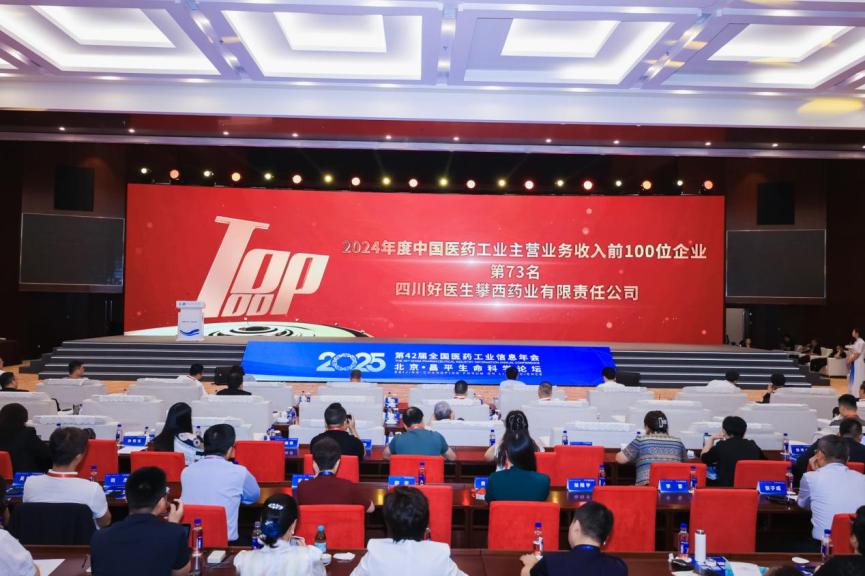
Group 1 - The 42nd National Pharmaceutical Industry Information Annual Conference and the 2025 Beijing-Changping Life Science Forum were held in Beijing, focusing on the future development of the pharmaceutical industry through insights, ecosystem building, and resource integration [1][3] - The list of "Top 100 Enterprises in China's Pharmaceutical Industry by Main Business Revenue for 2024" was released, with Sichuan Good Doctor Panzhihua Pharmaceutical Co., Ltd. making the list for the 14th consecutive year, showcasing its sustained comprehensive strength [1][3] - Good Doctor Pharmaceutical Group Co., Ltd. received the "2025 China Pharmaceutical Industry Growth Potential Enterprise Map" award, reflecting industry recognition of its future development potential [1][3] Group 2 - The annual conference has been a significant event since its inception in 1959, witnessing the growth and technological innovation of China's pharmaceutical industry [3] - The conference aims to promote the integration of cutting-edge technological innovation concepts with resources from top pharmaceutical companies, driving innovation and transformation in the industry [3] - The global biopharmaceutical industry is undergoing profound changes, with advancements in AI, synthetic biology, gene editing, and cell therapy accelerating China's pharmaceutical industry's shift towards innovation and high-end development [3] Group 3 - In 2024, Good Doctor Group will invest over 800 million yuan to establish a digital intelligent factory for the production of biological raw materials and large-scale traditional Chinese medicine, enhancing production efficiency and product quality [4] - The construction of the second phase of the digital intelligent factory not only improves the production capacity and level of traditional Chinese medicine but also serves as a model for digital projects, promoting high-quality development in the pharmaceutical production sector in Xichang and Liangshan [4]


美诺华20250701
2025-07-02 01:24
Summary of Menohua's Conference Call Company Overview - **Company**: Menohua - **Industry**: Biotechnology, specifically focusing on probiotics and health products Key Points and Arguments G389 Project Development - Menohua has innovatively utilized genetically edited probiotics (such as lactic acid bacteria) to efficiently express GLP-1 analog G389, which is expected to be used for glucose reduction and fat loss [2][5] - The G389 project has completed animal testing and is collaborating with an Italian probiotic company for European registration, with a patent application submitted [2][6] - The commercialization plan for G389 includes two paths: registering it as a non-drug product with the Italian partner, expected to launch in 2026, and using it as a food additive across various products [2][9] Market Potential and Strategy - Menohua aims to cover 10% of the rebound population from GLP-1 drug usage, targeting approximately 750,000 individuals, with a potential market size of 5 billion RMB [3][15] - The company is cautiously optimistic about the market potential, focusing on technology and registration [3][15] - In the U.S. market, Menohua plans to register G389 as a formula and then as a new food ingredient, with a strategy to ensure compliance by registering it as a genetically modified food [13][14] Collaboration with Italian Partner - The Italian partner is a well-established probiotic company with annual sales of around 200 million euros, providing Menohua with necessary expertise and market access [11][10] - The collaboration includes technical exchanges, production process optimization, and market promotion strategies [10][11] Competitive Advantages - Menohua's core competitive barriers include patent protection and technical design, making it difficult for competitors to enter the market [19] - The unique expression of sufficient and effective GLP-1 analogs through probiotics presents a significant challenge for potential competitors [19] Financial Performance and Future Outlook - In the first half of 2025, Menohua reported good overall performance despite a 20% year-on-year decline in API prices, with significant growth in new products and contract manufacturing [23] - The company expects to achieve a net profit margin of 8%-10% and good revenue growth for the year [23] - Menohua anticipates a dual growth in revenue and profit in 2025, with a breakthrough phase starting in 2026 [27][28] Future Product Development - Besides G389, Menohua plans to develop new products such as hangover relief probiotics and anti-inflammatory targets, aiming for differentiation in the market [21][28] - The company is exploring new directions in health and innovative drugs to achieve rapid returns for shareholders [28] Regulatory and Market Entry Strategies - Menohua is considering entering the domestic market through cross-border e-commerce, with plans for compliance and registration in the future [26] - The strategy for non-drug product launches focuses on technical development and finding partners for commercialization [26] Conclusion - Menohua is positioned to leverage its innovative G389 project and strategic partnerships to capture market opportunities in the probiotic and health product sectors, with a focus on compliance, safety, and effective commercialization strategies [2][3][11][27]

择安静一隅 探索生命奥秘
Ren Min Ri Bao Hai Wai Ban· 2025-06-26 01:02
Core Viewpoint - Strengthening fundamental research is an urgent requirement for achieving high-level technological self-reliance and is essential for building a world-class scientific power [1][4] Group 1: Research Achievements - Huang Zhiwei's team discovered the structure of the HIV virus virulence factor, which had not been resolved for over 30 years, providing a foundation for developing anti-HIV drugs [2][4] - The research on the working mechanism of DNA molecular scissors Cpf1 was revealed in 2016, allowing for more efficient and precise gene editing [3] - In April 2024, a new family of RNA-guided DNA endonucleases was discovered, contributing to advancements in enzyme engineering for gene editing [3] Group 2: Research Environment and Philosophy - The establishment of the Life Sciences Center in 2016 provided a research environment that encourages free exploration, allowing previously overlooked researchers to develop their ideas [3][4] - Huang Zhiwei emphasizes the importance of hands-on involvement in experiments and detailed record-keeping to ensure reproducibility and high-quality research outcomes [2][4] - The center has nurtured many emerging researchers, some of whom have become independent scientific leaders [4] Group 3: Future Aspirations - Huang Zhiwei maintains a beginner's mindset, aiming to tackle significant scientific questions and explore the mysteries of life, contributing to the advancement of fundamental research in life sciences on a global scale [4]
FDA细胞与基因治疗监管层集体停职 基因编辑股再遭冲击
智通财经网· 2025-06-20 14:00
Core Insights - The recent personnel changes at the FDA's CBER have caused fluctuations in the stock prices of gene editing companies, with a notable decline in Capricor Therapeutics due to its association with the suspended officials [1][2] Group 1: Personnel Changes - The CBER's cell and gene therapy department experienced significant personnel changes, with the director Nicole Weldon and her deputy Rachel Anatol being placed on administrative leave [1] - These changes occurred shortly after the appointment of the new CBER director, Vinay Prasad, who replaced the previously departed Peter Marks [1] - The HHS spokesperson indicated that there were management philosophy disagreements between the suspended officials and Prasad [1] Group 2: Market Reactions - Despite the turmoil at CBER, leading gene editing companies such as Editas Medicine, Intellia Therapeutics, Beam Therapeutics, and CRISPR Therapeutics saw their stock prices rise initially [2] - Conversely, Capricor Therapeutics, which is advancing the cell therapy deramiocel for Duchenne muscular dystrophy, experienced a stock price drop of over 10% due to the involvement of the suspended officials in its drug application process [2]




KO细胞全场¥4980,CRISPR文库质粒¥199起
生物世界· 2025-06-19 03:07
Core Viewpoint - Yuanjing Biotechnology is an international high-tech enterprise focused on cell gene editing research and production, aiming to simplify gene editing for global scientific and industrial clients [1]. Group 1: Company Overview - Yuanjing Biotechnology has provided gene editing technology services and related products to over 40 countries worldwide [1]. - The company emphasizes a pragmatic, efficient, honest, and trustworthy approach to serving its clients [1]. Group 2: Promotions and Activities - A customer appreciation lottery event is being held, offering prizes for both new and existing customers [3]. - The grand prize includes 3 SKG neck massagers and customized backpacks, with additional prizes such as umbrellas and desktop fans [4][6]. Group 3: Product Offerings - The CRISPR library offers a coverage rate of over 99% and uniformity of less than 10, facilitating easy screening [8]. - The company provides a full-service package from library construction to bioinformatics data analysis [9]. - Customizable knockout (KO) cell solutions are available, with a rapid construction time of as little as 4 weeks [15]. - The company boasts over 300 cell lines and 6000 successful cases, utilizing its proprietary CRISPR-U™ gene editing technology [17]. Group 4: Special Offers - Various promotional offers include half-price access to the whole genome screening-ready cell pool and discounted functional screening services [10][22]. - Special pricing for wild-type cell culture packages and single clone identification kits is also available [19][22].

南农晨读 | 良田沃野
Nan Fang Nong Cun Bao· 2025-06-19 01:04
Group 1 - The Greater Bay Area Agricultural Trade Fair, the first B2B agricultural exhibition in China, will take place from December 12-14, 2025, at the Guangzhou Import and Export Fair Complex [6][7][8] - Over 10,000 global buyers and more than 200 local specialty products will be showcased in a 30,000 square meter exhibition area [5][6] - The event aims to establish itself as a benchmark industry event in the agricultural sector, akin to the Canton Fair [7][8] Group 2 - The National Intellectual Property Administration has recognized 224 products as geographical indication products, with 60 from Guangdong, including Yangshan chicken and Enping lettuce [13][14] - The successful conversion of Lianzhou crystal pear and Lianzhou vegetable heart into protected geographical indication products marks a significant step in brand building and intellectual property protection for Lianzhou [23][24][27] Group 3 - A rural technology team from South China Agricultural University is assisting in the revitalization of the tea industry in Chaozhou Phoenix Town [29][30] - The "Hundred Million" rural technology special commissioner program was officially launched in Phoenix Town, involving local government and agricultural representatives [30][31][33] Group 4 - A meeting for distributors of Zhenning honey peaches was held in Guangzhou, marking the beginning of a new promotional season for the product in the Greater Bay Area [34][37]

华尔街到陆家嘴精选丨鲍威尔又让特朗普失望了?中概互联网板块下半年拼什么?智能体AI引领企业软件变革有哪些机会?
Di Yi Cai Jing· 2025-06-19 00:59
Group 1: Federal Reserve and Economic Outlook - The Federal Reserve maintains the federal funds rate target range at 4.25%-4.5% and anticipates two rate cuts by the end of the year [2] - Economic growth forecast for this year has been downgraded to 1.4%, while inflation expectations have been raised to 3% [2] - The labor market remains strong, with no signs of economic weakness, but uncertainties regarding trade and fiscal policies persist [2][4] Group 2: AI and Internet Sector Insights - UBS reports that the KWEB China Internet ETF has risen 18% year-to-date, driven by valuation, particularly in AI stocks [5] - Key focus areas for the second half of the year include AI monetization, overseas expansion, and profit margin restructuring [5] - The transition from commission to advertising revenue is expected to enhance profit margins for e-commerce platforms [5] Group 3: Global Market Sentiment - A Bank of America survey indicates that 54% of fund managers favor international stocks over U.S. stocks for the next five years [8] - Concerns about trade wars and potential global recession are highlighted as significant tail risks [8] - Investor sentiment has improved, with 66% believing in a soft landing for the global economy in the next 12 months [8] Group 4: AI Transformation in Software Industry - Goldman Sachs predicts that "intelligent AI" will transform the enterprise software ecosystem, with a market size expected to grow by at least 20% by 2030 [10] - The customer service software market is projected to grow at a rate of 45%, with intelligent AI expected to capture over 60% of the software industry [10] - Companies like Microsoft, Google, and Adobe are recommended for investment due to their potential in the new AI ecosystem [10] Group 5: Gene Editing Sector Developments - Eli Lilly's acquisition of Verve Therapeutics for up to $1.3 billion signals a positive outlook for the gene editing industry [11] - Verve's stock surged by 81.5% following the acquisition announcement, indicating strong market interest in gene therapy [11] - The investment logic in gene editing is shifting towards specific targets and clear payment models, moving beyond platform potential [12]

从实验室到餐桌,全球基因编辑动物食品监管困局|解码基因编辑②
Nan Fang Nong Cun Bao· 2025-06-18 08:32
Core Viewpoint - The article discusses the regulatory challenges and market acceptance of gene-edited animal products, highlighting the contrast between technological advancements and regulatory frameworks across different countries [11][24][61]. Regulatory Landscape - Global regulatory policies for gene-edited foods generally fall into two categories: either treating them as conventional foods with lighter regulations or applying strict standards similar to those for genetically modified organisms (GMOs) [18][30]. - Countries like the US, Japan, and Argentina have adopted a more lenient approach, equating gene-edited foods without foreign gene insertion to regular foods, thus facilitating their market entry [31][39][42]. - In contrast, the EU, China, and New Zealand maintain stricter regulations, treating gene-edited products similarly to GMOs, which has led to significant debates and controversies [47][51][61]. Market Dynamics - The global market for gene editing is projected to reach $15.79 billion by 2027, with a significant portion attributed to agricultural applications, including animal breeding [89]. - Despite the promising market potential, the actual commercialization of gene-edited animal products remains limited, with many countries still in the discussion phase regarding regulatory frameworks [75][106]. Public Perception and Acceptance - Public attitudes towards gene editing are mixed, with a general acceptance for medical applications but more skepticism regarding food safety and ethical implications [68][81]. - In the US, a survey indicated that about 51% of the population remains doubtful about gene-edited foods, with over 75% desiring clear labeling to ensure informed consumer choices [80][81]. Industry Developments - Recent advancements in gene editing technology have led to significant improvements in fish growth rates and disease resistance, which are seen as vital for the future of aquaculture [46][97]. - Companies in China are beginning to invest heavily in gene editing technologies, as evidenced by a major investment by a leading aquaculture firm in proprietary gene editing techniques [103][105].