
大语言模型

Search documents
大语言模型2025这一年
Zhong Guo Jing Ying Bao· 2025-12-30 09:40
Core Insights - The large language model (LLM) industry has seen significant development by 2025, with companies like DeepSeek emerging as strong competitors through open-source strategies and advanced reasoning capabilities [1] - Major players such as OpenAI, Google, Tencent, Alibaba, and ByteDance continue to compete in technology, application, and ecosystem development, leveraging their advantages in user acquisition and problem-solving [1] Group 1: Company Developments - DeepSeek has made notable advancements with its DeepSeek-V3 model, which features a total of 671 billion parameters and excels in mathematical reasoning and code generation, competing with closed-source models like GPT-4o [2] - The introduction of DeepSeek-V3.2 aims to balance reasoning capabilities and output length, while DeepSeek-V3.2-Speciale pushes the limits of reasoning ability [3] - ByteDance's Doubao model has achieved a daily token usage exceeding 50 trillion, making it the leading AI model in China and the third globally [3] Group 2: Technological Innovations - Tencent's mixed Yuan model has progressed from technical breakthroughs to comprehensive ecosystem applications, showcasing a clear path from technology to practical implementation [2] - The Qwen2.5-VL-32B-Instruct model utilizes a unified Transformer architecture, improving cross-modal generation accuracy by over 40% [4] - Zhizhu AI has doubled its parameter scale from 5 trillion to 10 trillion, achieving a reasoning accuracy of 98.5%, nearing international standards [4] Group 3: Future Trends - The future of LLMs is characterized by becoming "smarter, more vertical, and closer to life," transitioning from technical breakthroughs to deep applications across various fields [7] - The rise of localized intelligent agents, such as Anthropic's Claude Code, allows for low-latency interactions by deploying directly on user devices [8] - The industry is expected to see significant advancements in embodied intelligence applications, which combine physical AI with large models, aligning with national development goals [9]


智谱(02513):IPO点评
国投证券(香港)· 2025-12-30 07:58
Investment Rating - The report assigns an IPO-specific score of 6.1, suggesting a recommendation for subscription to the financing [10] Core Insights - The company, Zhipu (2513.HK), is a leading general large model company focused on achieving AGI, having launched its pre-trained model framework GLM and commercialized its MaaS platform [1] - Zhipu's revenue for the first half of 2025 reached 190 million yuan, a year-on-year increase of 325%, with localization deployment revenue accounting for 85% of total revenue [2] - The enterprise-level large language model market is expected to grow at a compound annual growth rate (CAGR) of 60% over the next five years, with Zhipu holding a 6.6% market share, ranking second in China [3] Company Overview - Zhipu was established in 2019 and has released over 50 large models, with a cumulative download exceeding 45 million times [1] - The company has over 8,000 institutional clients as of June 30, 2025 [1] Financial Performance - In the first half of 2025, Zhipu's total revenue was 190 million yuan, with localization deployment revenue at 160 million yuan, reflecting a 504% year-on-year increase [2] - R&D expenses for the same period were 1.6 billion yuan, representing an 86% increase year-on-year [2] Industry Status and Outlook - The Chinese AI market is projected to reach 218.9 billion yuan in 2025, growing by 36% year-on-year, with the large language model market expected to grow by 81% to 9.6 billion yuan [3] - By 2030, the enterprise-level large language model market is anticipated to reach 904 billion yuan, with 76% of this being localized deployment [3] Strengths and Opportunities - The enterprise-level scenario is a crucial commercial application for large language models in China, indicating a broad industry outlook [4] - Zhipu possesses a comprehensive model matrix and a one-stop MaaS platform that facilitates model commercialization [4] - The company has strong R&D capabilities, with a team of 657 members, including leading figures in the AI field [4] Weaknesses and Risks - The development of AGI is still in its early stages, with uncertainties regarding its future realization [5] - The competition in the large model space is intense, and technological iterations are rapid, which may affect Zhipu's competitive advantage [5] - The company has a concentrated customer base, with the top five clients accounting for 40% of total revenue in the first half of 2025 [5] Fundraising and Use of Proceeds - The company aims to raise approximately 4.173 billion HKD, with 70% allocated to AI large model R&D [7][9]
英伟达收购Groq核心资产,补齐算力芯片架构版图 | 投研报告
Zhong Guo Neng Yuan Wang· 2025-12-29 04:02
Core Insights - Nvidia has announced a non-exclusive licensing agreement to acquire core assets from Groq for $20 billion, marking its largest investment to date [3] - The acquisition focuses on Groq's LPU architecture, which offers advantages in inference processing, enabling high-speed token generation that surpasses traditional GPUs [3] - Nvidia plans to begin exporting H200 chips to China in mid-February 2024, with an expected initial shipment of 5,000 to 10,000 modules, totaling approximately 40,000 to 80,000 H200 chips [4] Industry Performance - The electronic sector has seen significant recovery, with the Shenwan Electronics Secondary Index showing year-to-date performance: Semiconductors (+46.46%), Other Electronics II (+53.70%), Components (+106.98%), Optical Electronics (+9.42%), Consumer Electronics (+47.50%), and Electronic Chemicals II (+53.90%) [1] - Weekly performance for the electronic sector includes: Semiconductors (+4.84%), Other Electronics II (+7.46%), Components (+7.40%), Optical Electronics (+0.86%), Consumer Electronics (+5.14%), and Electronic Chemicals II (+6.19%) [1] Stock Performance - Notable stock movements in North America include: Apple (-0.10%), Tesla (-1.25%), Broadcom (+3.46%), Qualcomm (-0.25%), TSMC (+4.81%), Micron (+7.10%), Intel (-1.68%), Marvell Technology (+2.68%), Nvidia (+5.27%), Amazon (+2.27%), Oracle (+3.14%), Applied Optoelectronics (+18.68%), Google A (+2.07%), Meta (+0.69%), Microsoft (+0.37%), and AMD (+0.73%) [2]

Science发布2025十大科学突破 | 红杉爱科学
红杉汇· 2025-12-29 00:05
Group 1 - The 2025 Science Breakthroughs list highlights significant advancements in various fields, including renewable energy, gene editing, and new medical treatments [3] - Renewable energy, primarily solar and wind, has surpassed fossil fuels in new electricity generation, with China leading the transition through large-scale solar and wind projects [4] - Customized gene editing therapies have shown promise for rare genetic diseases, exemplified by a case involving a child with a severe condition treated with a lipid nanoparticle delivery system [5] Group 2 - New antibiotics for gonorrhea, gepotidacin and zoliflodacin, have been approved by the FDA, providing new treatment options against antibiotic-resistant strains [8] - Research has revealed that neurons can donate mitochondria to cancer cells, enhancing their ability to metastasize, presenting new targets for cancer treatment [10] - The Vera C. Rubin Observatory in Chile aims to revolutionize astronomy by continuously scanning the sky, generating vast amounts of data to create a 3D map of the universe [12] Group 3 - A study successfully linked ancient DNA from a "Dragon Man" skull to Denisovans, enhancing understanding of human evolution and diversity in East Asia [15] - Large language models (LLMs) have demonstrated exceptional capabilities in scientific research, solving complex problems and significantly improving research efficiency [17][18] - Breakthroughs in lattice gauge theory have allowed precise calculations of muon magnetic properties, marking a significant advancement in particle physics [21][22] Group 4 - Milestones in xenotransplantation have been achieved, with genetically modified pig kidneys functioning in human patients for extended periods, addressing organ shortages [23] - Research on a natural gene switch in rice has improved heat tolerance, enhancing crop quality and yield, which is crucial for adapting to climate change [26]


邱震海:2026年两大洞察,将彻底颠覆你我生活
Xin Lang Cai Jing· 2025-12-28 01:28
Core Insights - The year 2025 is viewed as a transitional period for artificial intelligence (AI), with significant disruptions expected in 2026 as intelligent agents become more integrated into various sectors [1][3][10] Group 1: AI Development and Impact - The emergence of AI tools like ChatGPT marks 2025 as the year AI truly enters daily life and professions, but the real transformation will occur in 2026 with the introduction of intelligent agents [3][5] - Intelligent agents are expected to perform specific tasks such as booking flights and negotiating deals, moving beyond the capabilities of current large language models [3][5] - In the U.S., companies utilizing AI employees have demonstrated the potential to generate revenues between $50 million to $100 million [3] Group 2: Labor Market Disruption - The introduction of intelligent agents is anticipated to significantly impact the labor market, potentially displacing jobs and creating social challenges [5][10] - Historical patterns suggest that technological revolutions often lead to initial destruction before constructive outcomes emerge, with AI posing a unique challenge to the workforce [5][6] Group 3: Global Competition and Regulation - The competition between the U.S. and China in AI development is intensifying, while Europe is facing decline due to regulatory challenges and talent shortages [10][11] - The need for effective management and regulation of AI development is critical, as current approaches may lead to uncontrolled advancements [7][11] - The interplay between U.S.-China competition and European regulatory frameworks presents a complex challenge that requires thoughtful consideration [11]

对于2026年,这是高盛顶级科技交易员最关心的10个问题
美股IPO· 2025-12-26 00:24
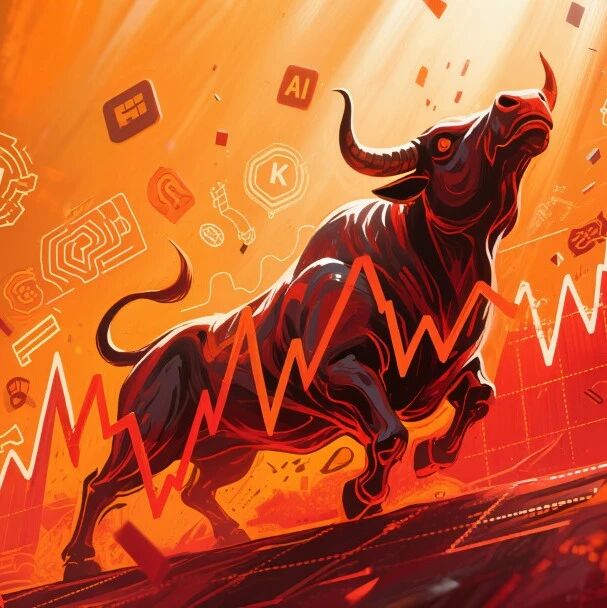
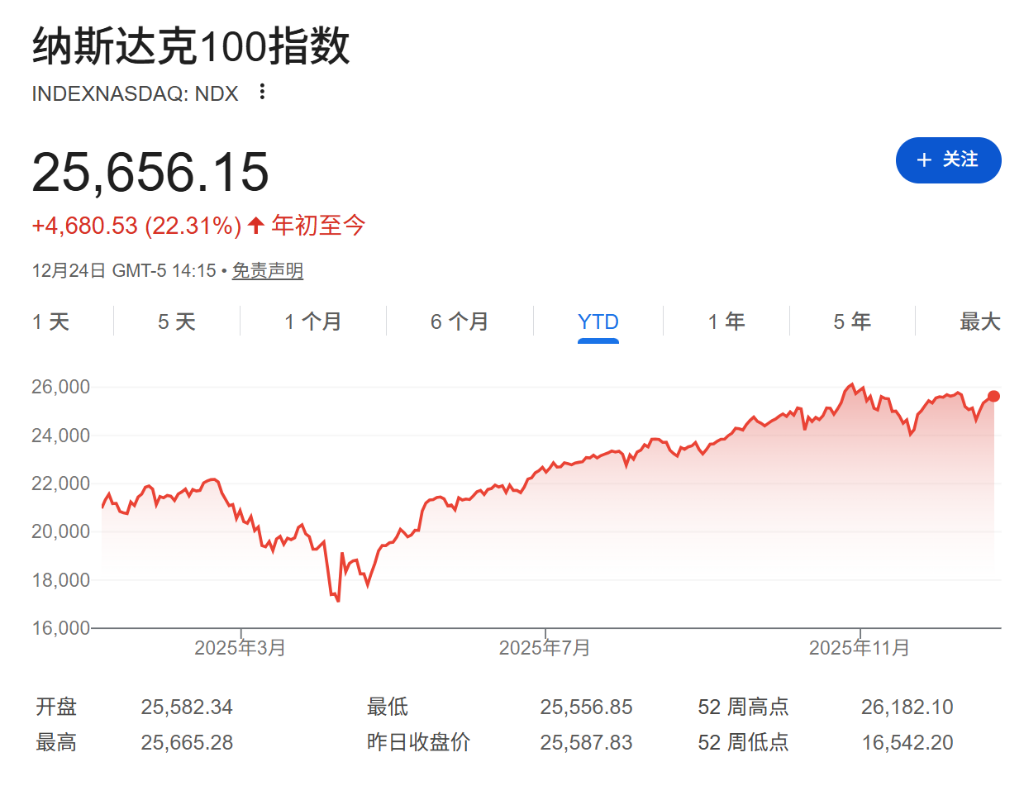
Core Viewpoint - The focus of technology stocks is shifting from hardware speculation to a deeper examination of AI investment returns and market breadth as 2026 approaches, according to Goldman Sachs trader Callahan [1][3]. Group 1: Market Trends and Performance - Despite the Nasdaq 100 index rising over 20% in 2025, it was not an easy year, with the "Magnificent 7" contributing approximately $3.5 trillion to market cap growth, a slowdown from $5.4 trillion in 2024 and $4.8 trillion in 2023 [3]. - Over 30% of the Nasdaq 100 components ended 2025 in decline, indicating significant internal market differentiation [3]. Group 2: AI Investment and Sustainability - Investors are increasingly focused on whether generative AI (GenAI) can deliver on its high capital expenditure promises over the next 12 months, with discussions centering on the sustainability of AI infrastructure spending, which could reach $3 trillion to $4 trillion annually by 2030 according to Nvidia [5] [6]. - Callahan outlined ten key questions that will dominate the technology stock narrative in 2026, addressing both sector rotations and fundamental macroeconomic and technological cycles [6]. Group 3: Key Questions for 2026 - The ten core questions include the direction of AI debates, the potential shift towards "physical AI" (robots, autonomous vehicles, smart glasses), and which companies will emerge as productivity winners [7]. - Other questions involve how software companies will repair valuations, the implications of GenAI-driven efficiency, and the potential cyclical turning points in housing and commercial real estate [7][8]. - The report also questions the future of large language models (LLMs) and their market dynamics, including the role of Chinese models and the potential for productization versus remaining in the "primitive intelligence" competition [8]. Group 4: Investment Strategies and Outlook - Callahan suggests that the Nasdaq 100 index's return outlook remains robust, with potential gains skewed towards the first half of 2026 due to recent market consolidation and low expectations surrounding AI spending sustainability [9]. - The investment theme for 2026 should focus on "expansion trades," where capital flows from crowded AI infrastructure stocks to other sectors, seeking "second derivatives" of AI that leverage cost reductions and new revenue streams [9].

对于2026年,这是高盛顶级科技交易员最关心的10个问题
Hua Er Jie Jian Wen· 2025-12-25 13:45
Core Insights - The focus on Wall Street is shifting from hardware speculation to a deeper examination of AI investment returns and market sustainability as 2026 approaches [1][4] - Despite a projected 20% increase in the Nasdaq 100 index in 2025, the growth rate is slowing compared to previous years, with over 30% of its components ending the year in decline [1] - The debate centers around the sustainability of AI infrastructure spending, which could reach $3 trillion to $4 trillion annually by 2030, and when this investment will translate into productivity gains [4] Key Questions for 2026 - The report outlines ten critical questions that will shape the market narrative in 2026, including the direction of AI discussions, software company valuations, and the impact of commodity cycles [5][6] - Specific areas of focus include the potential for "physical AI" applications, the future of software pricing models, and the implications of generative AI on employment and productivity [5][6] Market Trends and Predictions - The market is characterized by significant differentiation, with semiconductor and network infrastructure sectors outperforming while telecom, payment, and application software lag [7] - The Nasdaq 100 index is expected to maintain a solid return outlook, particularly in the first half of 2026, as low expectations may favor market gains [7] - Investors are encouraged to seek "second derivatives" of AI, focusing on undervalued stocks that leverage AI for cost reduction and new revenue streams, rather than solely hardware suppliers [7]
展望2026:AI从狂热走向现实的N个关键预判
Jin Shi Shu Ju· 2025-12-25 06:52
Core Insights - The article discusses the evolving landscape of AI technology and its implications for various sectors, predicting significant changes by 2026 [2] Group 1: AI and Robotics - Major tech conferences are expected to showcase AI-driven robots capable of performing household tasks with improved accuracy and less training [3] - Google has demonstrated robots that can classify waste based on voice commands, indicating advancements in AI integration into robotics [3] - The next frontier for large language models is expected to be the physical world, enhancing robots' capabilities [3] Group 2: Market Adjustments - After a period of rapid growth, leading AI companies may need to recalibrate their strategies, potentially leading to layoffs and restructuring [4] - OpenAI's workforce has grown fivefold to approximately 4,500 employees, but there are concerns about whether the right people are in the right positions [4] - The IPO landscape for 2026 is anticipated to be robust, with companies like Discord and Stripe expected to go public [5] Group 3: Employee Monitoring and AI - Companies are increasingly using monitoring software to train AI agents for automating tasks, raising concerns about employee privacy and job security [6] - The emergence of AI tools that can automate complex tasks may lead to heightened fears of job loss among employees [6] Group 4: Privacy and Legal Concerns - AI software that records meetings without participants' knowledge is gaining traction, raising ethical and legal questions about privacy [7] - The potential for significant data breaches or privacy lawsuits related to AI usage is expected to increase by 2026 [7] Group 5: Autonomous Vehicles - The expansion of autonomous taxi services is projected for 2026, with Waymo planning to increase its weekly rides to over 1 million [9] - Despite concerns about accidents, data suggests that autonomous taxis are rarely the direct cause of incidents, indicating a safer operational environment compared to human drivers [9]

苹果重组AI团队冲手机买气 有助抵抗存储器涨价冲击 台链有望受惠
Jing Ji Ri Bao· 2025-12-24 23:32
外电指出,原苹果AI负责人John Giannandrea交棒后,有部份业界人士认为,这是苹果推进AI战略遇到 阻碍。不过,最新报导指出,苹果并未因高层变动而改变其核心方向。尽管过去一年有关于AI团队成 员离职的报导,但这些变动更多反映了内部架构的优化而非战略失误。 苹果目前依然坚定执行既定的"端侧AI"路线,并未出现任何向纯云端转移的迹象。相反地,所有迹象都 表明,苹果正集中精力兑现先前的承诺,重点打磨安全、隐私且高效的AI生态系统。 Appleinsider报导,针对外界关于苹果AI人才"大量流失"的唱衰论调,实际数据给出了有力反击。虽然 苹果素以保密著称,但在AI领域仍保持着稳定的论文产出。据统计,仅在苹果近期发布的96页研究文 档的前四页中,就列出了近200名内部贡献者。 存储器价格飙涨,苹果明年可能调涨iPhone 18系列新机售价之际,公司仍持续冲刺AI布局,传出深度 重组AI团队,规划在大语言模型的基础上,重构全新的Siri,扩大iPhone的AI应用与体验。 业界认为,苹果相关策略有助抵抗存储器涨价冲击,借由"以软带硬",刺激2026年iPhone买气,对台积 电、鸿海与大立光等供应链有利。 ...

这些字词,为2025“画像”
Ren Min Ri Bao· 2025-12-24 22:25
新的词语不断涌现,新的表达持续诞生:"人形机器人"聚焦科技创新力量;"情绪价值"体现情感需 求;"票根经济""新大众文艺"彰显文化实践活力……每一个"年度字词",都如同一枚浓缩的"时代芯 片",存储着国家发展的铿锵足迹,映照出社会变迁的生动图景,也凝聚着国人的情感共鸣。 (据新华社电) (文章来源:人民日报) "汉语盘点2025"活动12月19日揭晓"年度字词","韧""深度求索(DeepSeek)"分别当选年度国内字、国 内词。 "韧"字的核心要义,是面对困难时百折不挠的精神底色与行动力量;2025年1月,国产标志性大语言模 型"DeepSeek"推出,宣示中国在AI领域的技术主权。 ...