数字经济

Search documents
春节“日历效应”如何发挥?机构:港股先涨,A股可期
Di Yi Cai Jing· 2026-02-23 04:36
Group 1 - The core viewpoint is that the technology sector is expected to be the main focus of A-share market performance after the Spring Festival, supported by factors such as ample liquidity, calendar effects, policy support, and industry trends [2][5][7] - Historical data shows that the probability of the Shanghai Composite Index rising in the first five trading days after the Spring Festival is 75%, with an average increase of 1.2% [2][3] - The liquidity environment is favorable, with M2 growing by 9.0% year-on-year and social financing stock increasing by 8.2% in January, indicating a robust macroeconomic backdrop [4][7] Group 2 - The "calendar effect" indicates that trading volume typically shrinks before the Spring Festival and expands afterward, as investors return from the holiday and risk appetite improves [3][5] - The technology sector has historically outperformed in the days following the Spring Festival, with significant gains in industries such as computers, electronics, and communications [5][6] - Positive signals from overseas markets, particularly in the technology sector, are expected to influence A-share performance, with strong performances in Hong Kong's technology stocks providing a clear mapping for A-share trends [3][6] Group 3 - The recent performance of Hong Kong stocks, particularly in the technology sector, has been strong, with notable gains in semiconductor and hardware sectors, indicating a favorable environment for A-share technology stocks [6][7] - The upcoming policies from local governments focusing on "domestic demand" and "industry" are expected to support technology innovation and consumption, further enhancing the outlook for the technology sector [7]

前十大重仓股行业地位透视,汇添富恒生科技ETF联接发起式(QDII)C(013128)核心资产一览!
Sou Hu Cai Jing· 2026-02-23 03:37
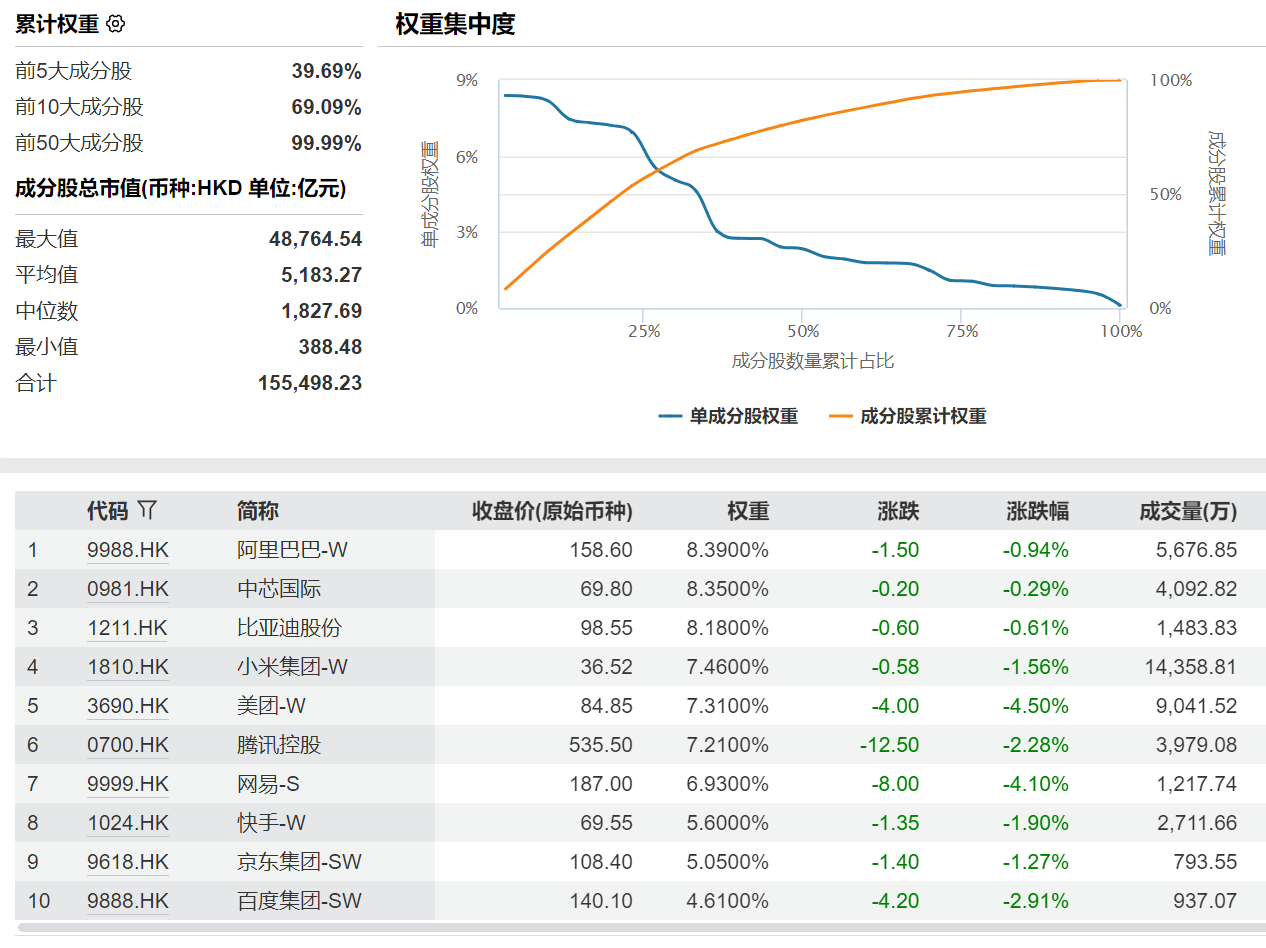
Core Insights - The Hang Seng Tech Index tracked by the Huatai-PineBridge Hang Seng Tech ETF (QDII) exhibits a highly concentrated weight structure, with the top ten constituent stocks accounting for nearly 70% of the total weight [1][6] - The index reflects a significant market capitalization distribution disparity, indicating a power-law distribution characteristic dominated by leading firms [1][6] Weight Distribution and Market Capitalization - The cumulative weight of the top five constituent stocks is 39.69%, while the top ten stocks account for 69.09%, and the top fifty stocks cover 99.99% of the index [2][6] - The total market capitalization of the constituents is notably diverse, with the largest stock (Alibaba) valued at 48,764.54 billion HKD, the smallest at 388.48 billion HKD, an average of 5,183.27 billion HKD, and a median of 1,827.69 billion HKD [6] Analysis of Top Constituents 1. **Alibaba (9988.HK)**: Belongs to the consumer discretionary and internet platform sector, with core businesses in retail, cloud computing, and digital media, demonstrating strong platform attributes and resilience across cycles [6] 2. **SMIC (0981.HK)**: Part of the information technology and semiconductor sector, as a leading foundry in mainland China, it benefits from domestic substitution and AI computing demand [6] 3. **BYD (1211.HK)**: Associated with consumer discretionary and the electric vehicle sector, it has a comprehensive layout across the new energy supply chain, including vehicles, batteries, and semiconductors [6] Overall Index Characteristics - The Hang Seng Tech Index is characterized by a concentration of leading firms, distinct technological attributes, and high growth potential, with the top ten stocks focusing on internet platforms, semiconductors, new energy, and consumer electronics, covering the core assets of China's digital economy [7]

潮涌西山再出发
Xin Lang Cai Jing· 2026-02-22 21:01
转自:云南日报 在"十四五"收官、"十五五"开局的重要历史节点上,昆明市西山区围绕建设"充分凸显云南政治中心服 务承载、山水都市品质和现代服务业活力特质的区域性中心城市中枢门户区"目标,找准在云南省、昆 明市发展大局中的战略定位,持续提升产业能级,加快构筑新质生产力,勇于开辟新领域、新赛道,推 动经济社会高质量发展迈出坚实步伐。 "抓住城市经济、文化旅游、工业振兴、改革创新四个关键,夯实城乡建设、生态环境、民生福祉、社 会稳定四个基础,持续巩固齐头并进良好发展态势。"西山区委书记张攀介绍,全区干部群众坚定信 心、苦干实干,坚定不移推进高质量发展迈上新的台阶。 更新旧动能 培育新动能 新年伊始,西山区处处涌动着昂扬奋进的发展热潮。 来到云南云天化福石科技有限公司,首先映入眼帘的是控制中心大屏,主控操作员章银雁紧盯实时跳动 的电压、电极数据,精准调试。"2024年,公司启动'数字工厂'建设,围绕黄磷生产中的设备管理、生 产管控、物资采购三大核心模块,落地26项子功能应用场景。"该公司总经理符宗国介绍,"实时数据采 集、视频全程监控、人员精准定位、厂区三维建模等数智化管控体系让产能提升了38%,2025年实现利 润 ...
【勇挑大梁 实干争先】数字经济赋能江苏制造业高质量发展
Xin Lang Cai Jing· 2026-02-22 11:46
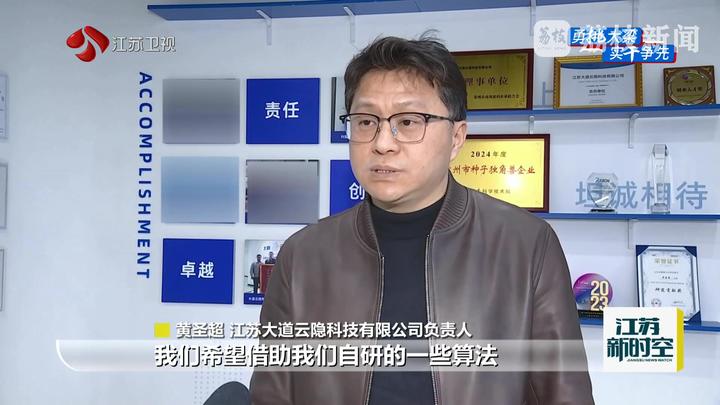
Core Insights - The article highlights the rapid development of the artificial intelligence (AI) industry in Jiangsu, aiming to create a new competitive advantage for high-quality economic growth by 2025 [1] Industry Development - By 2025, the core industry value added of Jiangsu's digital economy is projected to reach 1.61 trillion, accounting for 11.8% of the regional GDP [1] - The value added of the digital core product manufacturing industry is expected to grow by 10.2%, outpacing the overall industrial growth by 3.7 percentage points [1] - Jiangsu has introduced policies to support the development of AI terminal industries and brain-computer interface innovations, leading to the establishment of several collaborative innovation bodies [1] Company Focus - Jiangsu Dadao Cloud Hidden Technology Co., Ltd. specializes in AI and unstructured data security, aiming to solve data security challenges through technological innovation [1] - The company is currently working on market insight models for a German enterprise, utilizing self-developed data shadow technology to ensure data security while maintaining model functionality [1] Economic Transformation - Jiangsu's economy has been undergoing continuous transformation, with five cities in southern Jiangsu concentrating most of the province's digital enterprises, and Nanjing's software business revenue surpassing 100 billion for the first time [5] - The province is promoting the application of industrial software and has established new industrial software innovation platforms in Nanjing, Wuxi, and Suzhou [5] - Jiangsu has identified industrial chain weaknesses and is supporting enterprises to gather innovation resources along the supply chain, resulting in 31 products recognized as first-version software [5] Technological Advancements - The provincial government has conducted free diagnostics for over 60,000 enterprises, with 35% of major industrial projects being "smart transformation and digital networking" projects [7] - Jiangsu has added two leading smart factories and 43 excellent smart factories, totaling 67, with 91 5G factories, leading the nation in these categories [7] - The integration of information technology in manufacturing has led to a significant increase in digital R&D tool usage and automation rates, enhancing competitiveness and profitability in the industrial sector [7]
广东省高质量发展大会正月初八召开
Xin Lang Cai Jing· 2026-02-22 02:32
Core Viewpoint - The Guangdong Province High-Quality Development Conference will be held on February 24, focusing on various themes related to industrial integration and policy innovation [1] Group 1: Conference Overview - The conference will take place in Guangzhou and will last for one day, featuring a general assembly in the morning [1] - Afternoon sessions will cover topics such as industrial integration and policy innovation, technology innovation empowering industrial integration, financial innovation, smart manufacturing and industrial internet, digital economy and new trade formats, and the "Hundred Million Project" for county-level industrial integration and high-quality development [1] Group 2: Publications and Policy Support - A press conference will follow the event, where the Provincial Development and Reform Commission will release a white paper on the coordinated development of manufacturing and service industries in Guangdong [1] - Relevant provincial departments will interpret supportive policies related to the coordinated development of manufacturing and service industries and answer questions from the press [1]
制造业“硬实力”遇上服务业“软实力”,会激荡出怎样的能量? 广东给出答案:融则强 合则胜
Xin Lang Cai Jing· 2026-02-22 01:29
Core Insights - Guangdong is focusing on the "coordinated development of manufacturing and service industries" at the high-quality development conference, signaling a strong push for industrial transformation through deep integration of these sectors [1][2]. Manufacturing Industry - Guangdong's manufacturing base is robust, with the super high-definition video display industry cluster recently surpassing 1 trillion yuan in revenue, marking it as the first in the nation to achieve this milestone [2]. - By 2025, the added value of high-tech manufacturing in Guangdong is expected to account for 34.7% of the industrial output, while equipment manufacturing will represent 59.6%, exceeding national averages by 17.6 and 22.8 percentage points respectively [2]. - The province is home to ten trillion-yuan industrial clusters, including electronics, textiles, and new energy, which are crucial for supporting its economic backbone [2]. Service Industry - The modern service industry is positioned as a core engine for high-quality development, with its added value projected to reach 8.5 trillion yuan by 2025, making up 58.3% of GDP [3]. - There is a notable gap in the proportion of productive service industries compared to developed economies, indicating a need for Guangdong to transition from being a "world factory" to a "global service hub" [3][4]. Policy and Strategy - The Guangdong government has initiated measures to promote deep integration between manufacturing and productive services, focusing on 12 dimensions to create a systematic framework for collaboration [4][5]. - The province aims to establish 100 clusters for productive services by 2027, moving from isolated breakthroughs to comprehensive collaboration across regions [4]. Innovation and R&D - Guangdong leads the nation in innovation capabilities, with significant investments in R&D and a high number of high-tech enterprises [6]. - The province has implemented reforms to facilitate the transformation of scientific achievements into practical applications, significantly reducing costs for SMEs [6]. Case Studies - Zhijing Technology is transforming the garment industry in Guangzhou by integrating digital technology into the entire manufacturing process, enhancing efficiency and collaboration among small and medium-sized enterprises [10][11]. - Shugen Internet is pioneering digital maintenance services in the shipbuilding sector, creating a new industrial model that combines manufacturing with high-end services [12][14].
广东给出答案:融则强 合则胜
Xin Lang Cai Jing· 2026-02-22 00:25
Core Viewpoint - Guangdong is focusing on the "coordinated development of manufacturing and service industries" to drive industrial transformation and enhance economic growth, as highlighted in the recent high-quality development conference [1][2]. Group 1: Manufacturing Strength - Guangdong's super high-definition video display industry cluster has achieved over 1 trillion yuan in revenue, marking it as the first in the country to reach this milestone [2]. - The province is home to ten trillion-level industrial clusters, including new-generation electronic information and advanced materials, which are crucial for supporting its economic backbone [2]. - By 2025, the added value of high-tech manufacturing in Guangdong is expected to account for 34.7% of industrial output, significantly higher than the national average [2]. Group 2: Service Industry Integration - The integration of manufacturing and modern service industries is seen as a strategic necessity for Guangdong to maintain its economic leadership [3]. - The province aims to increase the service industry's added value to 8.5 trillion yuan by 2025, representing 58.3% of GDP, while addressing the current gap in productive service sectors compared to developed economies [3][4]. - Guangdong's government has initiated measures to promote deep integration between manufacturing and seven key service sectors, including technology and design [5]. Group 3: Innovation and R&D - Guangdong leads the nation in innovation capabilities, with significant investments in R&D and a high number of high-tech enterprises [6]. - The province has implemented reforms to facilitate the conversion of scientific achievements into practical applications, reducing costs for small and medium-sized enterprises [6]. - Major companies like Huawei are making substantial advancements in AI and digital technologies, enhancing Guangdong's competitive edge in the global market [7]. Group 4: Case Studies - Zhijing Technology is transforming the garment industry in Guangzhou by integrating digital technologies into the entire manufacturing process, showcasing a successful model of manufacturing and service integration [10][11]. - Shugen Internet is pioneering digital maintenance services in the shipbuilding sector, creating a new industrial model that combines manufacturing with high-end services [12][14].
康曼德资本董事长丁楹:马年新程,在不确定中把握确定性
Zhong Guo Ji Jin Bao· 2026-02-21 12:57
Group 1 - The core viewpoint of the article emphasizes the transition of China's capital market from liquidity recovery to structural pricing, highlighting a year of stabilization and differentiation in 2025 [2] - The macro environment in 2025 saw marginal improvements in global liquidity, with the Federal Reserve's multiple interest rate cuts providing external support for risk assets, while domestic policies continued to stabilize the market [2] - The market structure in 2025 was characterized by a focus on a few sectors with medium to long-term logic, such as AI computing power, self-controllable technologies, and high-end manufacturing, while traditional real estate and some cyclical industries were still in a clearing and bottoming phase [2] Group 2 - In 2026, the Chinese economy is expected to experience a weak recovery with structural upward trends, driven by a new round of technological and industrial cycles [3] - The focus on new technologies, renewable energy, digital economy, and biomedicine is reshaping production relationships and capital return structures, while traditional economic sectors are gradually declining [3] - The economic growth model is shifting from total expansion to quality enhancement, with stable growth policies expected to continue [3] Group 3 - The capital market in 2026 will shift its core variable from liquidity recovery to profitability, with a focus on fundamental performance rather than speculative narratives [4] - High-quality companies, particularly in the Hong Kong stock market and technology manufacturing sectors, are anticipated to reach profitability turning points between 2025 and 2026 [4] - The investment logic will increasingly return to fundamentals, leading to a more rational pricing system [4] Group 4 - The capital market is expected to exhibit three main characteristics: a higher probability of structural bull markets over broad bull markets, a balance between growth and value investments, and continued volatility with an upward shift in market stability [5] - Investors will prioritize company quality and industry dynamics, with high-growth sectors requiring caution regarding valuations, while traditional value assets regain significance [5] Group 5 - The investment strategy for 2026 is termed "Double Horses Running Together," focusing on both growth and stable assets [6] - Growth sectors, particularly those related to AI and new productive forces, are seen as long-term investment themes, while stable assets in finance, resources, and consumption are being revalued as quasi-debt equities [6] - The investment approach will involve a dynamic adjustment of asset allocation, favoring growth in the first half of the year and gradually shifting towards value in the second half [7]
(新春走基层)广东的“一度电经济学”:以优质绿电打造算力高地
Xin Lang Cai Jing· 2026-02-21 10:04
Core Viewpoint - Guangdong's "one kilowatt-hour economics" is exemplified by the city of Shaoguan, which is leveraging high-quality green electricity to establish itself as a computing power hub for the Guangdong-Hong Kong-Macao Greater Bay Area [1][3]. Group 1: Economic and Operational Advantages - Shaoguan is part of the national "East Data West Computing" project and serves as the only national data center cluster in South China, supporting Guangdong's manufacturing strategy [3]. - The city offers the lowest electricity prices in Guangdong, with a cost of 0.134 RMB per kilowatt-hour lower than the Pearl River Delta, significantly reducing operational costs for data centers [3]. - By 2025, six data centers in Shaoguan are expected to consume over 170 million kilowatt-hours of electricity, a 751% increase year-on-year [3][4]. Group 2: Green Energy Integration - By the end of 2025, over 60% of Shaoguan's electricity generation will come from green energy, meaning that for every two kilowatt-hours consumed by data centers, one will be from clean energy sources [4]. - The energy consumption per unit of computing power in Shaoguan is 12% lower than the national average, achieving a balance of increased computing power without increasing carbon emissions [4]. Group 3: Industry Development Goals - Shaoguan aims to create a complete industrial chain encompassing upstream computing equipment manufacturing, midstream computing services, and downstream data applications [4]. - The integration of computing power and electricity is seen as a way to promote both ecological and economic development, fostering a virtuous cycle of "promoting production through computing and vice versa" [5].
数字人民币点亮2026年春节消费新图景:政策引领下的创新实践
Sou Hu Cai Jing· 2026-02-20 11:12
Core Insights - The 2026 Spring Festival will see a surge in consumption driven by digital RMB, supported by a government-led initiative to integrate digital currency into various consumption scenarios [2][3] - The initiative is part of a broader national strategy aimed at promoting consumption and expanding domestic demand, with the digital RMB positioned as a key policy tool [4] Group 1: National Strategy and Policy Design - The digital RMB initiative is a result of precise national top-level design and collaborative policy efforts, with the State Council's guidance issued in December 2025 [4] - A dual-driven model has been established between the central bank and the Ministry of Finance, with a special subsidy fund of 10 billion yuan allocated to support merchants participating in digital RMB transactions [5] - The introduction of a "three synchronizations" principle—policy support, funding assurance, and scenario coverage—injects strong institutional momentum into the Spring Festival consumption market [4] Group 2: Deep Integration of Digital RMB in Consumption Ecosystem - Digital RMB is deeply embedded in the entire consumption chain for the Spring Festival, moving beyond simple payment functions to create a closed-loop ecosystem with smart contracts and scenario-based discounts [7] - Various promotional activities, such as a 7.5 yuan discount for purchases over 30 yuan on agricultural products, have significantly boosted rural consumption, with transaction volumes exceeding 8 billion yuan [7] - The digital RMB has facilitated seamless cross-province payments and policy roaming, enhancing the efficiency of government subsidies by over 60% compared to traditional methods [6] Group 3: Sustainable Development of Consumption Ecosystem - The digital RMB initiative is transforming China's consumption ecosystem towards a more digital, inclusive, and sustainable model, breaking down barriers between urban and rural areas [10] - The initiative has led to a 55% year-on-year increase in digital RMB transaction volume in rural areas, benefiting over 2 million low-income and elderly individuals [10] - Future policy directions include regularizing digital RMB consumption subsidies and expanding pilot programs to all prefecture-level cities by the end of 2026 [12]