文化自信

Search documents
孔东梅:共筑社会价值创新生态
Xin Lang Cai Jing· 2025-12-09 02:13
Core Viewpoint - The conference emphasizes the importance of cultural confidence and the concept of "business for good" as guiding principles for modern enterprises in China [3][14]. Group 1: Cultural Confidence - The essence of a company lies in its culture, which is the deepest layer beyond tangible assets and capabilities [5][17]. - The direction of modern Chinese enterprise management is to creatively integrate traditional Chinese culture with modern corporate spirit, transitioning from "efficiency competition" to "value competition" [6][18]. - Companies must consider the coexistence of growth and social responsibility as a critical issue of the times [15][21]. Group 2: Business for Good - "Business for good" is defined as leveraging commercial power to address social and environmental issues while creating economic value [20][21]. - The concept is rooted in both Western and Chinese traditions, highlighting the importance of social responsibility over mere profit maximization [20][21]. - Companies are encouraged to find intersections between public welfare and business, adopting a "benefit through righteousness" approach to create shared value [21][22]. Group 3: Sustainable Social Value - The idea of "sustainable social value innovation" transcends traditional corporate social responsibility, making social progress a core mission of enterprises [23][24]. - Building an open and collaborative ecosystem is essential for addressing social issues through shared resources and technology [23][24]. - The integration of cultural confidence and social responsibility is seen as vital for Chinese companies to become world-class enterprises with both commercial value and social commitment [24].


《哪吒2》放弃参评奥斯卡 自信源于强大的内核
Da Zhong Ri Bao· 2025-12-09 00:00
Core Viewpoint - The absence of "Ne Zha: The Devil's Child" from the Oscars has sparked discussions, highlighting the film's immense popularity and its embodiment of a cultural spirit that transcends the need for international recognition [1][3]. Group 1: Film's Achievements - "Ne Zha: The Devil's Child" has achieved a total box office of 15.445 billion yuan and 324 million viewers, making it the highest-grossing film in Chinese history and the fifth highest globally [1]. - The film's success is attributed not only to its innovative portrayal of the character Ne Zha but also to its deep resonance with contemporary cultural psychology, encapsulated in the iconic phrase "My fate is determined by me, not by heaven" [1]. Group 2: Concept of "Ne Zha Spirit" - The "Ne Zha spirit" represents a rejection of predetermined fate and an assertion of individual identity, symbolizing a strong sense of autonomy and responsibility [2]. - The decision by the production team to forgo the Oscars reflects a commitment to creative integrity and a focus on serving domestic audiences rather than seeking external validation [2][5]. Group 3: Cultural Confidence - The film's choice to not participate in the Oscars signifies a shift away from the historical desire for Western recognition, indicating a growing cultural confidence among Chinese filmmakers [3][4]. - The director's belief that "good works will be seen" emphasizes the importance of creative subjectivity and the intrinsic value of storytelling rooted in local culture [5][6]. Group 4: A New Path for Chinese Cinema - The film's success illustrates that true cultural confidence does not rely on external accolades but is grounded in the connection with local audiences and the unique narrative style [6][8]. - The rejection of conventional paths, such as the pursuit of Oscar nominations, is seen as a declaration of creative independence and a commitment to authentic storytelling [8].
“为哪吒泪目,也为那只狐狸微笑”
Ren Min Ri Bao· 2025-12-08 22:10
Core Viewpoint - The Chinese film industry is experiencing a significant revival, with major releases like "Zhuan Zhi 2" and "Zootopia 2" driving box office success and cultural confidence, reflecting a shift in audience preferences and market dynamics [4][7][8]. Group 1: Box Office Performance - "Zootopia 2" achieved over 2 billion yuan in its opening week, contributing to the overall Chinese box office nearing 50 billion yuan [4]. - "Zhuan Zhi 2" ranks as the highest-grossing animated film globally with a box office of 15.9 billion yuan [7]. - The success of these films indicates a strong audience-driven market where viewers are willing to support quality productions, regardless of origin [7]. Group 2: Cultural Impact - The films are fostering a more open and confident cultural mindset among Chinese audiences, who are increasingly embracing both domestic and international cinema [8]. - The phrase "tears for Zhuan Zhi, smiles for the fox" encapsulates the shared emotional experiences that transcend cultural boundaries, highlighting a growing cultural self-assurance [8]. - The rise of Chinese cinema on the global stage is enhancing the acceptance and appreciation of Chinese culture, as evidenced by the success of "Zhuan Zhi 2" [8]. Group 3: Youth Engagement - The creative teams behind "Zhuan Zhi 2" and "Zootopia 2" are primarily composed of young talent, reflecting a shift towards youthful expression in filmmaking [6]. - Films like "Nanjing Photo Studio" and "Wang Wang Life" are narrated from a young person's perspective, showcasing innovative storytelling that resonates with younger audiences [6]. - The recognition of young actors and creators at prestigious awards, such as the Golden Rooster Awards, underscores the importance of youth in the future of Chinese cinema [6].

文艺的大众化,一以贯之的文化追求(坚持“两创”·关注新时代文艺)
Ren Min Ri Bao· 2025-12-08 22:10
Core Viewpoint - The rise of popular literature reflects the spirit of the era and the cultural choices of the masses, emphasizing the importance of cultural participation for individual fulfillment and national rejuvenation [1][4]. Group 1: Historical Context - The concept of popular literature has deep roots in the history of modern Chinese literature, embodying the Marxist literary theory's localization in China and the Party's cultural policies [1][2]. - The 1930s "popular literature" movement focused on creating works for workers and farmers, aiming to elevate public consciousness through art [1]. Group 2: Current Trends - China's unique modernization has rapidly transformed the nation, achieving a comprehensive moderately prosperous society and embarking on a new journey towards socialist modernization [2]. - The digital revolution has empowered creators, allowing anyone with passion to share their stories, leading to a blend of professional and popular literature [2][3]. Group 3: Cultural Support - There are over 30 million online literature authors in China, producing 150 million words daily, alongside a short video user base of 1.04 billion, showcasing a vibrant landscape of non-professional creators [3]. - The younger generations, particularly those born in the 1990s and 2000s, are becoming the main force in popular literature, driven by cultural confidence and a desire for global engagement [3]. Group 4: Future Implications - The transformation of cultural participation by the masses is reshaping traditional literature, leading to a new cultural landscape that promotes comprehensive human development [4]. - The vitality of new popular literature reflects the confidence of the Chinese people in their development path and their recognition of shared values and ideals [4][5].
《2026中国消费趋势报告》发布
Zhong Guo Jing Ji Wang· 2025-12-08 14:26
Group 1 - The 2026 Consumer Trends Conference and Innovation Conference was held in Beijing, showcasing the annual China Consumer Trends Report, which has been a key indicator of the Chinese consumer market for 10 years [1] - The report covers ten key industries including food and beverage, home appliances, outdoor sports, retail, health, automotive, AI, and cultural tourism, providing insights from trend foresight to practical applications [1] - The founder and CEO of Zhimo Consulting, Xiao Mingchao, highlighted a shift in business from "high-speed growth" to "high-quality growth" over the past decade, with increasing consumer recognition of local culture and brands [1] Group 2 - The 2026 Consumer Trends Report emphasizes "meaning" and "value" as the key themes for consumer behavior, indicating a shift from mere purchasing to a focus on personal experiences and the significance of consumption [1] - Expert Guan Lixin from the Ministry of Commerce Research Institute discussed the transformation of the consumer market, the challenges faced, and future trends, emphasizing the coexistence of rational and emotional needs, as well as the upgrade of aesthetic and spiritual demands [2]
文化认同建构视角下中华优秀传统文化融入思政教育的路径优化
Yang Shi Wang· 2025-12-08 04:17
Group 1 - The core viewpoint emphasizes the importance of integrating traditional Chinese culture into ideological and political education in universities to foster cultural identity and values among students [1][2] - The article highlights the need for effective value guidance in ideological education amidst globalization and the changing cultural psychology of university students [2][3] - It discusses how traditional culture can serve as a bridge for students to understand Marxist theory and contemporary Chinese paths, enhancing their comprehension of national development [3][4] Group 2 - The integration of traditional culture into ideological education can guide students in making correct value choices in real life, reinforcing moral principles and social responsibility [4][5] - The article outlines specific practices for implementing traditional culture in ideological education, such as immersive experiential teaching and community engagement [5][6] - It suggests establishing collaborative mechanisms among educators to create a comprehensive educational framework that includes lectures, workshops, and cultural activities [7][8] Group 3 - The conclusion stresses that the integration of traditional culture into ideological education should not be superficial but should focus on cultural identity as a core goal, combining theoretical knowledge, emotional experience, and social practice [8]
从文化创意触摸时代脉动(金台随笔)
Ren Min Ri Bao· 2025-12-07 22:02
Group 1 - The mascots "Xi Yang Yang" and "Le Rong Rong" from the 15th National Games have gained significant popularity, showcasing their charm through interactive videos and cultural merchandise [1] - Cultural IPs like "Bing Dwen Dwen" and "Xue Rong Rong" from the Beijing Winter Olympics and "Rong Bao" from the Chengdu Universiade have become widely loved for their cute designs and regional significance [1] - The mascots symbolize the collaboration of Guangdong, Hong Kong, and Macau, embodying themes of green sharing and unity, thus enhancing their cultural impact [1] Group 2 - Cultural creativity is rooted in cultural confidence and reflects the vitality of cultural innovation, as seen in various cultural IPs that narrate Chinese stories and showcase national character [2] - Successful cultural products like "Ne Zha" and "The Wandering Earth" not only break box office records but also convey profound themes of sacrifice and collective responsibility, illustrating the dynamic nature of Chinese culture [2] - The interplay between material development and spiritual enrichment in contemporary China highlights the multifaceted nature of cultural creativity, presenting a vibrant image of the nation to the world [2] Group 3 - Cultural creativity thrives beyond event timelines, integrating into the cultural and tourism industries to enhance its value, as exemplified by the enduring presence of the Shanghai Expo mascot "Haibao" [3] - Continuous product development and engagement with current events allow cultural IPs to remain relevant and enrich collective memory, demonstrating the importance of adaptability in cultural expressions [3] - Successful cultural creativity requires a balance of aesthetic appeal and meaningful cultural representation, urging creators to focus on character development and effective communication [3]
GDP贡献率超10% 文化产业成“塔尖”城市经济高质量发展引擎
Zhong Guo Jing Ying Bao· 2025-12-06 12:04
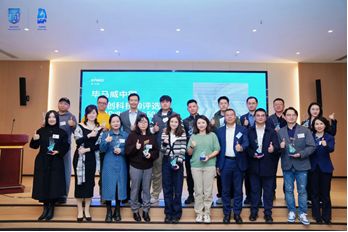
中经记者 杨让晨 石英婧 上海报道 ("文创科技50"评选颁奖典礼。受访者/图) 在数字经济浪潮席卷全球的今天,文化与科技的深度融合正以前所未有的速度重塑产业生态。"十五 五"规划建议明确强调,"十五五"期间,文化自信更加坚定,主流思想舆论不断巩固壮大,社会主义核 心价值观广泛践行,全民族文化创新创造活力不断激发,人民精神文化生活更加丰富,中华民族凝聚力 和中华文化影响力显著增强,国家软实力持续提高。 《中国经营报》记者注意到,当前文创产业已不再是单一的内容领域,通过与互联网、大数据、虚拟现 实等前沿技术深度融合,演进为推动文化自信、国家软实力与经济高质量发展的重要力量之一。 "数据显示,在北京、上海、成都等'塔尖'城市,文化产业GDP贡献率已超过10%,成为地方经济高质量 发展的重要引擎。"毕马威中国"文创科技50"评选主管合伙人李吉鸣表示,此次毕马威"文创科技50"评 选颁奖典礼的举办,不仅为"文旅体"领域的优质科技企业提供了展示创新实力的舞台,更以评选+文化 研学的模式,搭建起多方协同的交流桥梁,为文创科技产业的融合发展注入了新活力。 毕马威中国客户及业务发展主管合伙人江立勤表示,中国有着深厚的历史文化 ...
共同为世界和平稳定和人类发展进步作出更大贡献
Si Chuan Ri Bao· 2025-12-05 22:52
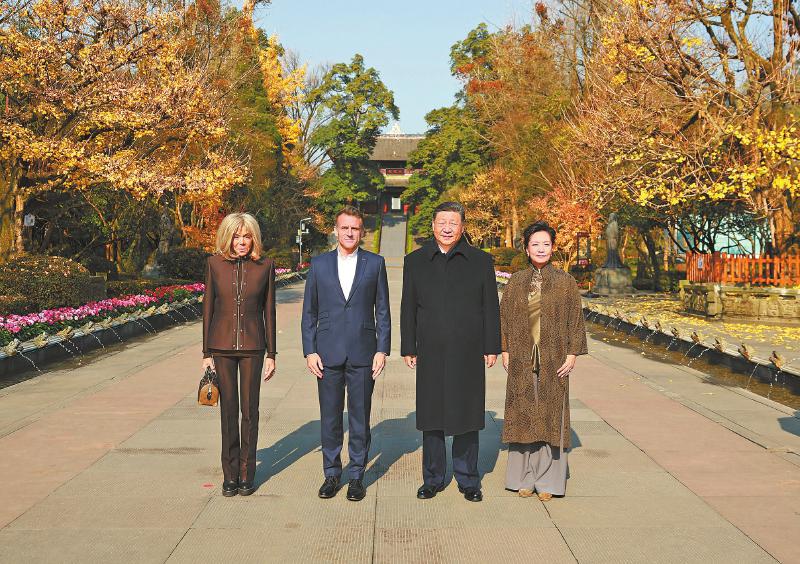
Core Viewpoint - The meeting between Chinese President Xi Jinping and French President Emmanuel Macron highlights the importance of cultural exchange and cooperation between China and France, emphasizing their shared values and historical significance in addressing global challenges [2] Group 1: Historical and Cultural Significance - The Dujiangyan irrigation system is the only ancient irrigation project still in use today, representing a successful practice of harmonious coexistence between humanity and nature [2] - Both China and France are distinguished representatives of Eastern and Western civilizations, with a shared spirit of independence rooted in their rich cultural heritage [2] Group 2: Cooperation and Global Challenges - The two leaders expressed a commitment to dialogue and cooperation in addressing global governance, climate change, and other international issues, aiming to contribute to world peace and stability [2] - A joint statement was issued regarding cooperation in nuclear energy, agriculture, and food exchanges, as well as discussions on the situations in Ukraine and Palestine [2]
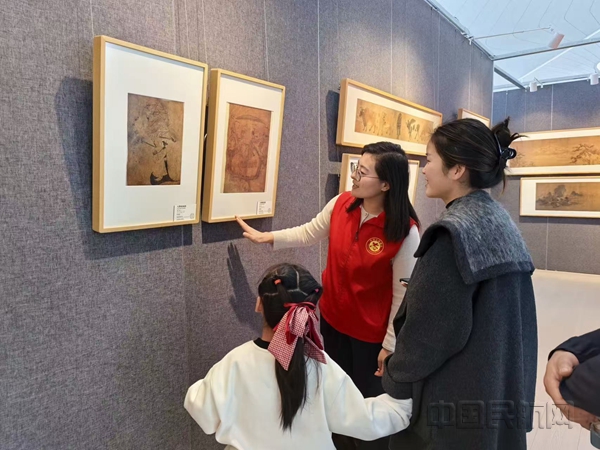
杭州机场“中国历代绘画大系”讲解志愿服务队向全球旅客递出“文化名片”
Zhong Guo Min Hang Wang· 2025-12-05 08:23
Core Insights - The article highlights a collaborative initiative between Hangzhou Airport and Zhejiang University Press to promote traditional Chinese culture through a volunteer service program that provides free explanations of the "Chinese Historical Painting Series" at the airport [1][3]. Group 1: Volunteer Service Initiative - The volunteer service began in November and will run until December 5, with over 100 travelers served so far, allowing them to engage with historical Chinese art during their travels [1]. - Volunteers provide free explanations every Friday at the exhibition, creating memorable interactions with travelers who pause to appreciate the art [1][3]. Group 2: Exhibition Details - The exhibition is located next to the "Lotus Valley" in Hangzhou Airport's T4 terminal, showcasing high-definition reproductions of significant Chinese paintings from various dynasties [3]. - The "Chinese Historical Painting Series" exhibition has been a national cultural project approved by Xi Jinping in 2005, with over 70 exhibitions held globally, attracting more than 10 million visitors [3]. Group 3: Volunteer Training and Composition - The volunteer team consists of members from Hangzhou Airport and Zhejiang University Press, including art students, corporate members familiar with international communication, and experienced volunteers [4]. - A comprehensive training program was implemented to enhance volunteers' knowledge and communication skills, enabling them to effectively share the stories behind the artworks [4]. Group 4: Cultural Impact - The initiative represents a fusion of cultural promotion and community service, aiming to instill cultural confidence among travelers and present a vibrant cultural image of Hangzhou [4].