无废城市

Search documents
留住老味道 塑造新面貌
Jin Rong Shi Bao· 2025-08-08 07:59
城镇化是现代化的"引擎"。中央城市工作会议提出,以建设创新、宜居、美丽、韧性、文明、智慧 的现代化人民城市为目标,走出一条中国特色城市现代化新路子。 近年来,建设银行充分发挥"因建而生、因建而兴"的特色传统优势,紧密结合城市发展需要,深刻 把握"五个转变""五个更加"重要原则,不断加大对民生改善、城市更新、产业升级、绿色治理等重点领 域的金融支持,以源源不断的金融活水推动城市发展迈上新台阶。 以人为本:微改造里的民生温度 重庆九龙坡民主村曾是典型的老旧社区,空中飞线交织如网,居民楼墙皮斑驳脱落,公共空间被杂 物侵占。2022年初,当地启动微改造,但30亿元资金缺口成为"拦路虎"。 建设银行重庆市分行主动牵头组建银团,推出"长期限+低成本"定制化融资方案,不仅破解了资金 困局,还引入建银咨询团队参与设计,实现"融资+融智"双重赋能。 从特色红砖房原貌保留到社区管网下地改造,从便民设施布局到公共空间活化——如今的民主村, 老厂房转型文创空间,斑驳墙壁绘满市井漫画,居民楼下的口袋公园成了邻里社交新场所。据了解,改 造首年,当地商户增长40%,周末客流量超万人次,昔日旧巷蜕变为承载幸福生活的民生地标。 集约高效:立体 ...

我省出台“无废细胞”建设指南
Hai Nan Ri Bao· 2025-08-07 01:44
Core Points - The "No Waste Cell" construction guidelines have been issued to promote waste reduction and resource utilization in various sectors [1][2] - The guidelines define 14 types of "No Waste Cells," including factories, parks, communities, and hospitals, among others [1] - Compliance with legal and environmental standards is mandatory for all construction units [1][2] Group 1 - The "No Waste Cell" construction units must provide relevant documentation to achieve a score of 90 or above for recognition [2] - Units previously recognized for environmental achievements may be directly acknowledged as "No Waste Cells" [2] - The construction process includes application, verification, and recognition phases [2] Group 2 - The validity of the "No Waste Cell" recognition is three years, with the possibility of extension upon re-evaluation [2] - If a recognized unit fails to meet standards during the validity period, the recognition may be revoked [2]
共护城市之绿 共享城市之美
Ren Min Ri Bao· 2025-08-05 22:01
Core Viewpoint - The central urban development strategy emphasizes building green and low-carbon beautiful cities, focusing on sustainable ecological systems and enhancing urban aesthetics [1] Group 1: Urban Development Strategy - The recent Central Urban Work Conference highlighted the importance of creating beautiful cities characterized by clean communities, lush parks, and vibrant water bodies [1] - A sustainable beautiful city should not only have a clean appearance but also establish a deep-rooted ecological system for sustainable development [1] Group 2: Current Initiatives and Challenges - Many cities are already implementing initiatives such as wetland parks and ecological corridors to increase urban greening and protect biodiversity, achieving a harmonious coexistence between humans and nature [1] - Despite progress, some cities still face challenges such as inefficient resource utilization and high energy consumption, indicating a need for further development of "waste-free cities" and a strong push for green manufacturing and services [1] Group 3: Future Directions - The urban development phase in China is shifting from large-scale expansion to improving existing stock, focusing on enhancing quality and efficiency [1] - The strategy aims to synergize pollution reduction, carbon reduction, and greening efforts, allowing citizens to share in the beauty of urban environments [1]
规范生态环境保护责任制,无废城市建设迎新机遇
GOLDEN SUN SECURITIES· 2025-08-04 03:05
Investment Rating - The report maintains a "Buy" rating for key companies in the environmental protection sector, including Huicheng Environmental, GaoNeng Environment, and HongCheng Environment [6]. Core Insights - The report highlights the acceleration of ecological environment protection responsibility system construction and the rapid development of waste-free city initiatives, which directly benefit the environmental protection industry and green technology application sectors [1][20]. - The implementation of the "Waste-Free Island" initiative in Hainan Province aims to establish a comprehensive waste management system by 2030, significantly increasing demand in environmental governance, ecological restoration, and environmental monitoring industries [1][21]. Summary by Sections Investment Views - The issuance of the "Regulations on the Responsibility System for Ecological Environment Protection of Local Party and Government Leaders" is expected to enhance the integration of environmental protection into development planning, benefiting sectors such as ecological restoration and environmental monitoring [9][20]. - The "Waste-Free Island" initiative in Hainan outlines a comprehensive plan for solid waste management, including the construction of 105 new construction waste treatment facilities by 2030, which will boost demand in waste treatment services and high-precision environmental monitoring [21][23]. Market Performance - The environmental protection sector underperformed compared to the broader market, with a decline of 1.29% during the week, while the Shanghai Composite Index fell by 0.94% [3]. - Key stocks in the environmental sector showed varied performance, with Anchek Testing leading with a gain of 12.69%, while Huicheng Environmental faced a decline of 6.81% [3]. Industry News - The report notes significant developments in the waste management sector, including the establishment of a smart organic waste treatment system by ShenGao Environment and the central government's economic deployment for the second half of the year [2][3].


废旧物资变“废”为“宝”有新招 循环经济发展空间广阔
Yang Shi Wang· 2025-08-02 09:47
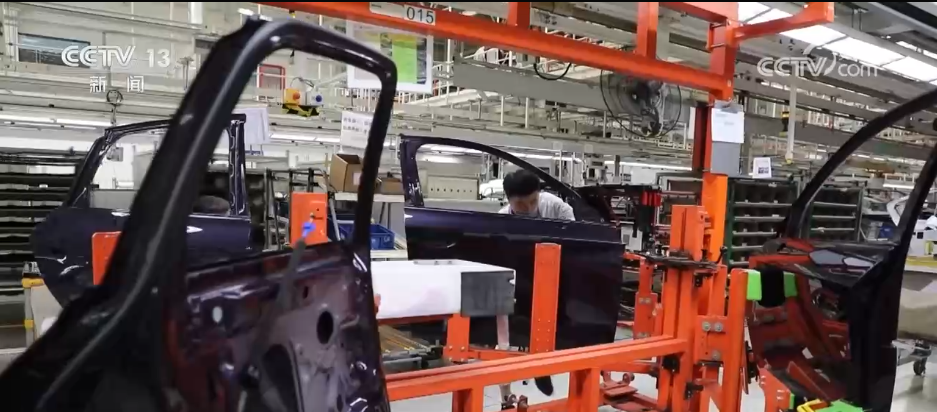
Core Viewpoint - The article highlights the significant benefits of the circular economy in various regions of China, particularly in Qingdao, where innovative technologies are being applied to transform waste into valuable resources [1] Group 1: Circular Economy Initiatives - Qingdao is actively exploring resource utilization to minimize the environmental impact of solid waste through market-oriented efforts [1] - A new "sludge drying and reduction" equipment has been installed in an automotive manufacturing plant to handle wet sludge waste generated during production [3] - The automotive company has developed a solvent salt separation technology to reduce hazardous waste by over 90% through chemical reactions [5] Group 2: Waste Reduction Achievements - The automotive company has invested 230 million yuan in 21 transformation projects, resulting in a 17% reduction in general industrial solid waste and a nearly 34% decrease in hazardous waste this year [8] - The company has saved 25 million yuan in solid waste treatment costs and reduced carbon dioxide emissions by 37,000 tons, achieving both environmental and economic benefits [8] Group 3: Household Appliance Recycling - In a recycling factory in Laixi, Qingdao, old household appliances like refrigerators and air conditioners are disassembled and recycled, achieving a 95% recovery rate [10] - The factory operates six customized intelligent disassembly lines, capable of dismantling 2 million appliances annually and generating approximately 30,000 tons of recycled materials [10] Group 4: Agricultural Waste Utilization - Qingdao has found new ways to address agricultural solid waste by converting discarded fruit wood into substrate materials for mushroom production, repurposing over 60,000 tons annually [13] - A mushroom production enterprise utilizes automated processes to transform waste wood into mushroom cultivation bags, showcasing a successful model of resource efficiency [15] Group 5: Future Developments - The local government plans to expand green recycling models to include remanufacturing of appliance parts, scrapping of old vehicles, and precious metal extraction, promoting large-scale, standardized, and clean development in the recycling industry [12][16]

东鹏控股:2025新品发布 人本设计驱动空间革命
Zheng Quan Shi Bao Wang· 2025-08-02 07:15
Core Viewpoint - Dongpeng Holdings is committed to human-centered design and sustainable development in the building materials industry, aiming to create innovative living solutions that enhance quality of life and align with national development strategies [1][2][3][4]. Group 1: Event Overview - The 2025 New Product Launch Conference was held in Foshan, Guangdong, gathering government representatives, industry leaders, and partners to discuss human-centered design and future industry upgrades [1]. - The event highlighted Dongpeng's role as a benchmark for green transformation in the building materials sector, emphasizing the importance of green materials in urban development [2]. Group 2: Strategic Initiatives - Dongpeng's core strategy, "Human-Centered Design," was officially announced, focusing on creating a "home energy field" that meets evolving consumer needs [3]. - The company introduced several new product lines, including the Zunshi·Huanyu series and others, integrating seven core technologies to transform spaces into emotional carriers [3]. Group 3: Sustainable Development - Dongpeng's new materials design director emphasized the concept of viewing local solid waste as a "second mine," promoting resource regeneration through innovation [4]. - The first results of this initiative include three new series aimed at fostering resource recycling and supporting the construction of "waste-free cities" [4]. Group 4: Future Vision - Dongpeng is responding to the national "Good Housing" strategy by launching a comprehensive product system that covers safety, comfort, green technology, and intelligence across six engineering sectors [4]. - The company aims to provide full-chain solutions for various sectors, including real estate, healthcare, education, and hospitality, through innovative materials [4].
深圳能源: 董事会八届三十六次会议决议公告
Zheng Quan Zhi Xing· 2025-07-23 12:21
Group 1 - The company held its 36th board meeting on July 23, 2025, with all nine directors present, and the meeting complied with legal and procedural requirements [2] - The board approved the proposal for the investment and construction of the Shantou Honghaiwan Offshore Wind Power Project, with a total investment of RMB 789.703 million, of which RMB 158.092 million will be funded by the company's own funds [3] - The board also approved the investment in the Shenshan Ecological Environment Technology Industrial Park Energy Ecological Park project, with a total investment of RMB 50.53106 million, where RMB 10.11202 million will be funded by the company's own funds [4][9] Group 2 - The Shenshan Energy Ecological Park project will have a processing capacity of 500 tons per day and will include a 500 tons per day incineration line and an 18 MW turbine generator [8] - The project aims to implement a comprehensive waste treatment strategy, aligning with the national "Zero Waste City" initiative, enhancing the company's environmental brand influence [9] - The company plans to mitigate risks related to insufficient waste volume and uncertain waste treatment fees through various strategies, including purchasing industrial waste [9] Group 3 - The company plans to increase its investment in Xinjiang New Energy Co., Ltd. by RMB 42.517 million to alleviate financial pressure and ensure the successful completion of the 450,000 kW multi-energy complementary project in Yili County [10][16] - Following the capital increase, Xinjiang New Energy's registered capital will rise from RMB 4.763 million to RMB 47.280 million, significantly reducing its debt ratio [16][17] - The financial data of Xinjiang New Energy shows total assets of RMB 726.097 million and total liabilities of RMB 490.745 million, indicating a solid financial foundation [12]

南京银行绿色金融赋能“无废城市”建设
Jiang Nan Shi Bao· 2025-07-21 07:22
Core Viewpoint - Nanjing Bank is actively supporting the construction of "waste-free cities" through various green financial initiatives, including project loans and innovative financial products aimed at environmental protection and resource utilization [1][2][5]. Group 1: Project Financing - Nanjing Bank issued a project loan of 38 million yuan to a certain environmental company in Jiangsu to support the comprehensive utilization of phosphorous slag, ensuring safe disposal and reducing environmental pollution [1]. - The bank provided a credit facility of 200 million yuan to a recycling company for a waste metal crushing project, enabling the processing of 300,000 tons of waste metals annually, thereby significantly reducing environmental pollution and energy consumption [2]. - A credit of 100 million yuan was granted for a construction waste resource utilization project, which processes over 1.8 million tons of construction waste annually, creating nearly 80 jobs and alleviating environmental issues [2]. Group 2: Green Financial Products - Nanjing Bank has developed a range of innovative green financial products, including "solid waste loans," "environmental protection loans," and "circular economy loans," to support the "waste-free city" initiative [3]. - The bank has issued 40 environmental protection loans totaling nearly 300 million yuan, ranking among the top in collaborative banks, to support ecological and environmental industry development [3]. - An environmental company received a loan of 10 million yuan through the bank's environmental protection loan product, which helped the company convert hazardous waste into valuable resources, achieving both economic and social benefits [3]. Group 3: Green Debt Financing - As of June, Nanjing Bank has issued nearly 20 billion yuan in green debt financing tools, focusing on energy structure optimization, ecological protection, and green infrastructure upgrades [4]. - The bank has pioneered several green financial instruments, including the first public green asset-backed notes and carbon-neutral asset-backed commercial notes in the country, continuously expanding its green debt financing tool scale [4]. Group 4: Strategic Collaborations - Nanjing Bank signed a strategic cooperation agreement with the Jiangsu Provincial Department of Ecology and Environment in 2022 to support the comprehensive financial service plan for "waste-free cities" [5]. - The bank has been collaborating with local governments, enterprises, and research institutions to enhance the "government-bank-enterprise" cooperation model, further developing the "waste-free city" ecosystem [5]. - The bank aims to strengthen green credit issuance and innovate financial service models to allocate more resources to key areas of green low-carbon transformation and "waste-free city" construction [5].

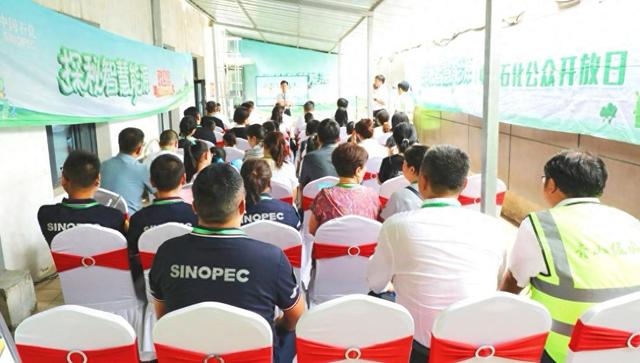
“油娃”深入加能站探秘智慧能源
Huan Qiu Wang· 2025-07-21 01:59
Core Viewpoint - The event organized by Sinopec Shaanxi Petroleum Company aimed to enhance employee families' understanding of the company's operations and its commitment to environmental protection and green energy initiatives [1][9]. Group 1: Event Overview - The open day event took place on July 19, allowing 15 employee families to explore the smart energy initiatives at the Taiyuan Road refueling station in Xi'an [1]. - Activities included educational sessions on identifying genuine fuel products and environmental knowledge quizzes, engaging children in learning about fuel safety and environmental protection [3]. Group 2: Environmental Initiatives - Sinopec Shaanxi Petroleum has invested 25 million yuan in upgrading oil storage facilities and conducting environmental monitoring at refueling stations [5]. - The company has established 101 solar power projects and created four carbon-neutral pilot refueling stations, generating 550,000 kilowatt-hours of green electricity and reducing carbon emissions by over 14,000 tons [5]. - The initiatives contribute to ecological protection efforts in the Yellow River and Yangtze River basins, as well as pollution prevention in the Qinling Mountains and Fenwei Plain [5]. Group 3: Community Engagement - The event aimed to strengthen the connection between employees' families and the company, fostering a sense of belonging and recognition of the company's efforts in promoting a green and low-carbon lifestyle [9]. - Participants engaged in activities promoting the "Waste-Free City" initiative, signing commitments to adopt sustainable living practices [9].

垃圾不够烧?变化如何发生的
Guan Cha Zhe Wang· 2025-07-18 14:42
Core Viewpoint - The rapid increase in waste incineration capacity in China is a significant advancement in the waste management industry, with many cities achieving zero landfill for original household waste and beginning the excavation of aged landfill waste for secondary treatment [1][19]. Group 1: Waste Management Progress - The implementation of waste classification and the encouragement of incineration plant construction have led to a notable improvement in waste management capabilities across China [1]. - The excavation of aged landfill waste is primarily driven by the need to manage the ash produced from incineration, as policies restrict the expansion of landfill areas [1][20]. - The shift from "waste siege" to "zero waste cities" reflects the heavy burden of waste management in China, with a historical reliance on imported waste materials [3][4]. Group 2: Waste Classification and Incineration - The introduction of mandatory waste classification aims to optimize waste processing by separating recyclable materials and hazardous waste, which enhances incineration efficiency [8][9]. - In Shanghai, the implementation of waste classification has resulted in a 20% reduction in the amount of combustible dry waste available for incineration, despite an increase in the overall recycling rates [10][12]. - The number of waste incineration plants is increasing, with a goal to have 80 million tons of daily incineration capacity by 2025, reflecting a significant investment in waste-to-energy infrastructure [14][16]. Group 3: Market Dynamics and Challenges - The rapid expansion of incineration capacity has led to reports of a "garbage shortage," prompting some regions to excavate old landfill waste to meet processing needs [19][20]. - The industry faces challenges such as subsidy reductions and stricter environmental regulations, which may lead to a market reshuffle and the closure of smaller, less efficient plants [25][26]. - Major companies are seeking to expand their market presence and improve operational efficiency through technological innovation and strategic partnerships, both domestically and internationally [27][28].