碳中和

Search documents
“在可再生能源领域,若还在犹豫要不要与中国合作,将越来越被甩进尘埃里”
Xin Lang Cai Jing· 2026-02-19 14:49
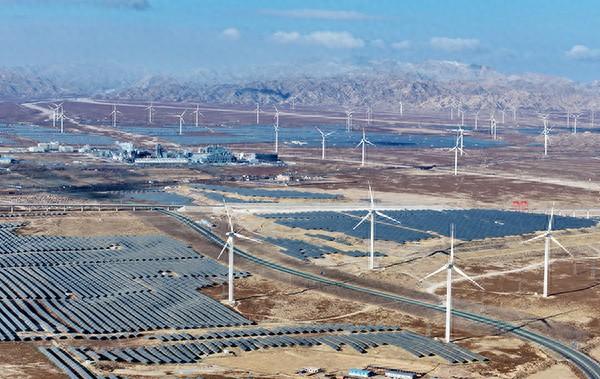
Core Insights - The article emphasizes China's leading position in the global renewable energy revolution, suggesting that countries hesitant to collaborate with China will fall behind [1][4]. Group 1: China's Renewable Energy Dominance - China has established a significant advantage in renewable energy and technology, making collaboration with China a necessity for other nations [1][4]. - According to the International Energy Agency, one in every seven solar panels globally is produced by a single Chinese factory, highlighting China's dominance in solar energy [1][4]. - China accounts for over 80% of the global solar supply chain and produces more than 70% of electric vehicles, with its clean technology exports reaching nearly every country [4][5]. Group 2: Cost Reduction and Market Impact - The cost of solar components has decreased by approximately 90% since 2010, while lithium-ion battery prices have dropped by 80% to 90%, making renewable technologies more affordable [5][6]. - China's solar power generation capacity has surged from 0.1 GW in 2010 to over 1063 GW today, showcasing rapid growth in large-scale solar installations [5][6]. Group 3: Global Energy Transition - China's clean energy development is seen as a crucial factor in reducing global carbon emissions, with exports of Chinese products contributing to billions of tons of emissions reduction [4][6]. - The construction of extensive renewable energy infrastructure in regions like Gansu and Xinjiang demonstrates China's unmatched scale in green energy development [6][7]. Group 4: Ecological Benefits - Large-scale solar installations in Inner Mongolia are contributing to ecological restoration, helping to combat desertification and improve soil conditions [7].

广州白鹅潭春节烟花汇演举行 超15万发烟花点亮羊城夜空
Xin Lang Cai Jing· 2026-02-17 23:49
Core Viewpoint - The 2026 Guangzhou Bai'e Lake Spring Festival Fireworks Show celebrates its 30th anniversary, featuring over 150,000 fireworks and a theme of "Fortune Horse Welcomes the New Spring, Bay Area Starts a New Journey" [2][9]. Group 1: Event Overview - The fireworks show took place on the first day of the Lunar New Year at 20:00, showcasing a blend of traditional Lingnan culture and modern technology through fireworks, light shows, projection, and drones [2][3]. - A total of 2,026 drones illuminated the sky, performing various displays including the "Aoyou" and messages like "Guangzhou Welcomes You" [3]. Group 2: Fireworks Display - The fireworks display included over 150,000 fireworks, with 10,728 high-altitude fireworks, marking an increase of approximately 2,000 from the previous year [9]. - The show was divided into four thematic chapters, each highlighting different aspects of Guangzhou's culture and aspirations, such as high-quality development and ecological harmony [6][7]. Group 3: Technological and Logistical Enhancements - The event featured an upgraded setup with four firing ships and ten floating platforms, expanding the firing width to 800 meters [9]. - The show was broadcasted through a multi-platform live stream, allowing for both online and offline viewing experiences, with around 180,000 spots available for citizens and tourists [9].

全球首个!13大化工新材料巨头联手
DT新材料· 2026-02-17 16:17
Core Viewpoint - Sony has established the world's first complete supply chain for manufacturing renewable plastics specifically for high-performance electronic products, in collaboration with 13 leading chemical and materials companies [2][3]. Group 1: Supply Chain Overview - The project, led by Sony and Mitsubishi Corporation, coordinates all aspects to ensure traceability of renewable attributes, covering the entire chain from raw materials to final products [3]. - The supply chain includes the production of renewable naphtha from waste cooking oil by Neste in Finland, which is then used to create various bio-based monomers and resins [3]. - Among the 14 companies involved, three are from China, including Qingdao Haier New Materials, which produces PC/ABS alloy materials [3]. Group 2: Technological Innovations - Sony's Hanamizuki bio-based television project is a significant initiative within this supply chain, achieving a breakthrough by using 100% bio-based and PCR materials for the entire plastic components of the device [3]. - The supply chain employs the Mass Balance Approach, allowing for the production of renewable plastics that match the quality and performance of virgin fossil-based plastics [5]. - The renewable plastics produced can meet the stringent requirements for flame retardancy and optical clarity necessary for high-performance applications [5]. Group 3: Environmental Impact - Using Neste's bio-based naphtha can reduce greenhouse gas emissions by approximately 85% compared to fossil-based products, supporting Sony's goal of achieving carbon neutrality across its value chain by 2040 [5]. - The supply chain enables companies to track and record greenhouse gas emissions data throughout the entire process, facilitating future carbon reduction efforts [5]. Group 4: Market Challenges - The price of bio-based naphtha is significantly higher than that of fossil-based alternatives, with a reported price of $1,875 per ton compared to a $605 per ton for fossil-based naphtha, which poses a challenge for widespread adoption [7]. - The supply chain alliance aims to stabilize costs through scale effects and technological advancements, addressing the high costs associated with bio-based chemicals [7]. Group 5: Industry Events - The 11th Bio-based Conference and Exhibition will feature discussions on industry trends, technological innovations, and the development of bio-based materials, highlighting the growing consumer demand for sustainable and environmentally friendly products [8].


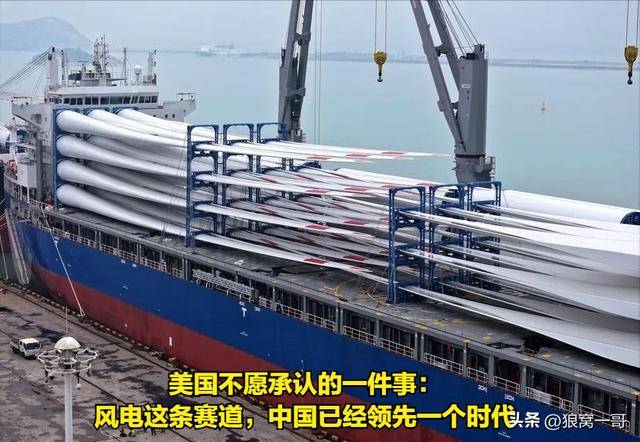
美国不愿承认的一件事:风电这条赛道,中国已经领先一个时代
Sou Hu Cai Jing· 2026-02-14 22:46
Group 1 - The core argument is that China has significantly advanced in wind energy, surpassing many countries and establishing a robust energy infrastructure that supports its growth in renewable energy [4][6][55] - In 2024 alone, China is expected to add 76 GW of new wind power capacity, which exceeds the total capacity of many countries over decades [6] - By the end of 2025, China's cumulative wind power capacity is projected to reach approximately 640 GW, more than three times that of the United States and accounting for nearly half of the global total [8] Group 2 - China's wind energy development is characterized as a national-level project rather than isolated initiatives, with significant concentration in the "Three North" regions [13][14] - Inner Mongolia alone has a technical potential for wind power exceeding 380 GW, indicating that wind energy is a primary power source rather than a supplementary one [14] - The integration of offshore wind, solar power, and energy storage is forming a new generation of renewable energy bases along the eastern coast [14] Group 3 - China's advantages in wind energy lie not in natural conditions but in its manufacturing capabilities, deployment, and sustained expansion [21][22] - China is the global leader in wind turbine manufacturing, allowing for simultaneous installation, cost reduction, and scale expansion [23][24] - The ability to mobilize infrastructure is a decisive factor, with China excelling in large-scale construction and system integration [25][27] Group 4 - Despite its advancements, China faces challenges in wind energy utilization, particularly issues related to grid construction and energy demand not keeping pace with installation rates [33][34] - The phenomenon of "curtailment" occurs in some northern and northwestern regions, where excess power generation cannot be transmitted due to infrastructure limitations [33][34] - The energy structure includes entrenched interests that can hinder the prioritization of renewable energy sources [37] Group 5 - China's long-term energy strategy is focused on restructuring its energy base, with wind power as a critical component [42][43] - The country aims to significantly increase the share of non-fossil energy sources by 2030 and achieve carbon neutrality by 2060 [44] - The differences in institutional conditions between China and Western countries lead to underestimations of China's renewable energy capabilities [43][56]
仅凭一个西藏,便能满足中国现在与未来,所有的能源需求!
Sou Hu Cai Jing· 2026-02-14 10:06
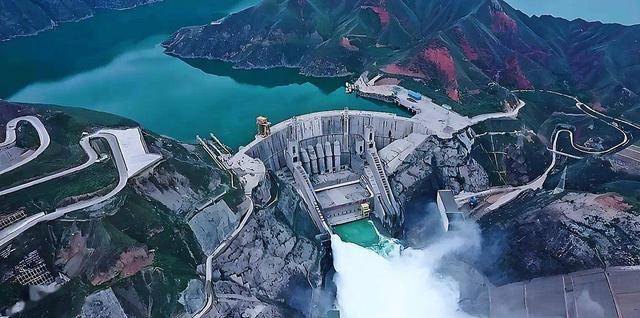
Core Insights - The article discusses China's significant investment in the Tibet region, particularly focusing on the construction of the Yarlung Tsangpo River hydropower project, which is expected to generate substantial clean energy and transform the region's economic landscape [1][3]. Group 1: Investment and Infrastructure - The total investment for the Yarlung Tsangpo hydropower project is estimated at 1.2 trillion yuan, which translates to approximately 170 billion USD, equating to about 850 yuan per person for China's 1.4 billion population [1][3]. - The project involves constructing a series of hydropower stations with a total installed capacity of 70-80 million kilowatts, expected to generate around 300 billion kilowatt-hours of electricity annually, equivalent to the output of three Three Gorges projects [3][5]. Group 2: Resource Potential - Tibet possesses the highest technical potential for hydropower resources in China, with over 370 rivers having a hydropower capacity exceeding 10,000 kilowatts, and the Yarlung Tsangpo River's hydropower density being three times that of the Yangtze River [7][9]. - Tibet also has the richest solar energy resources in China, with annual sunshine exceeding 3,000 hours, and the highest geothermal energy potential, exemplified by the Yangbajing geothermal field [9][11]. Group 3: Energy Transmission - Since 2011, four major "power highways" have been constructed to transmit electricity from Tibet to other regions, with the upcoming ±800 kV ultra-high voltage direct current project expected to facilitate the transfer of nearly 40 billion kilowatt-hours of clean energy annually to central China [17][20]. - Future plans include the construction of over ten ultra-high voltage transmission lines by the middle of this century, aiming to export more than 500 billion kilowatt-hours of electricity annually, significantly increasing the current export capacity [21][27]. Group 4: Economic Transformation - The development of low-cost hydropower in Tibet is expected to attract high-energy industries, such as aluminum processing and data centers, to the region, creating a complete industrial chain from raw materials to end products [24][26]. - The National Energy Administration has designated Tibet as a "clean energy transmission base," aligning with China's goals for carbon neutrality and sustainable energy development [27][28].
高质量发展新答卷|松原石化园区高位推进国家级零碳园区建设 领跑绿色转型新赛道
Xin Lang Cai Jing· 2026-02-14 09:16
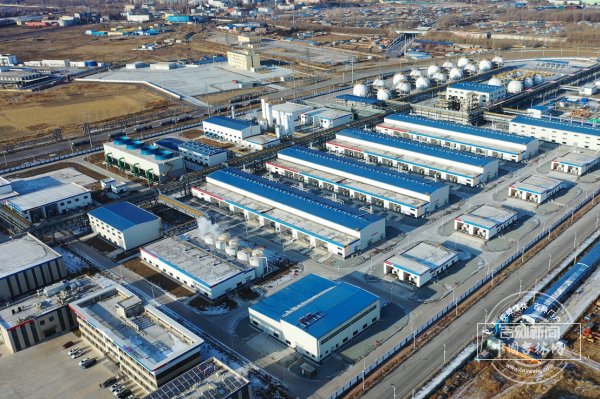
Core Viewpoint - The Songyuan Petrochemical Industrial Circular Economy Park is advancing its development strategy focused on green energy and zero-carbon initiatives, aiming to establish itself as a national-level zero-carbon park and a benchmark for high-quality development in the regional energy and chemical industry [1][8]. Group 1: Development Strategy - During the "14th Five-Year Plan" period, Songyuan City will implement the "1145" development strategy, positioning itself as a "National Comprehensive Demonstration Zone for Green Energy" and promoting the construction of a national-level zero-carbon park [1]. - The park aims to achieve a modern industrial system centered on green chemicals, new materials, and new energy, focusing on the integration of "green electricity + green hydrogen + green chemicals" and "green metallurgy + equipment manufacturing" [1][8]. Group 2: Zero-Carbon Achievements - Since 2021, the park has received seven significant qualifications, including being the first green electricity demonstration zone in Northeast China and a low electricity price demonstration zone [3]. - The park's renewable energy capacity includes one-third of the province's wind and solar power, with a total installed capacity exceeding 10 million kilowatts within a 100-kilometer radius [3]. - Currently, 14 industrial enterprises have settled in the zero-carbon park, with a total industrial output value of 1.816 billion yuan and a carbon emission total of 99,000 tons [3][4]. Group 3: Green Electricity Supply - To address the challenges of power generation and consumption, the park has established a new energy consumption system that allows green electricity to be directly supplied to chemical production facilities [4]. - The park has implemented a long-term power purchase agreement model between chemical enterprises and renewable energy producers, significantly reducing intermediary costs and ensuring stable green electricity supply [4]. Group 4: Green Hydrogen Integration - The park is focusing on the full chain of green hydrogen production, storage, transportation, and utilization, with the "Qing Hydrogen No. 1" project producing 45,000 tons of green hydrogen annually, which is about 20% of China's current green hydrogen production [7]. - The park aims to produce 420,000 tons of green hydrogen and 760,000 tons of green ammonia annually once all related projects are operational, contributing to significant reductions in carbon emissions [7]. Group 5: Future Goals - By 2030, the park aims to achieve near-zero carbon emissions and ensure that clean energy consumption accounts for over 95% of total energy use [8]. - The park's zero-carbon initiatives are positioned as a core engine for the green transformation of Songyuan's economy and a model for energy revolution and industrial upgrading in Jilin Province [8].
正式进入国家产业布局,全产业链加速,核聚变如何重塑万亿产业版图?
Xin Lang Cai Jing· 2026-02-14 06:12
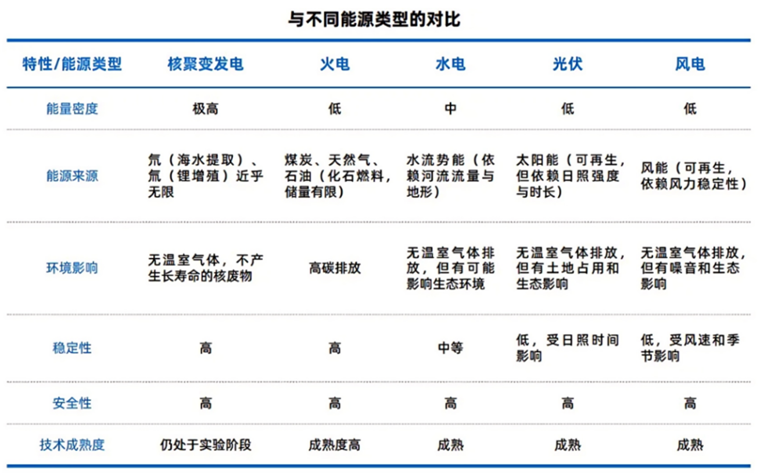
Core Insights - The article emphasizes that nuclear fusion is positioned as the ultimate energy source, crucial for the future of humanity and technology, particularly in the context of artificial intelligence and climate change [1][8][30] - China is strategically prioritizing nuclear fusion as a core direction in its national planning, marking a significant shift from experimental to industrial development [1][10] Group 1: Paradigm Shift - Nuclear fusion is becoming the leading "trillion-dollar track" due to its energy potential, technological breakthroughs, AI demands, and capital influx [3] - The energy potential of nuclear fusion is immense, with fuel sources being nearly infinite and the energy density being a million times that of fossil fuels [4][8] Group 2: Technological Breakthroughs - Recent advancements in nuclear fusion technology have validated its scientific feasibility, with significant milestones such as the U.S. achieving "net energy gain" in 2022 [7] - China's "EAST" facility continues to set world records in high-temperature plasma operation, indicating progress towards practical fusion energy [10] Group 3: AI and Climate Crisis - The dual pressures of AI growth and climate change are creating a pressing need for a stable, zero-carbon energy source, positioning nuclear fusion as the only viable solution [8][30] Group 4: Capital Influx - Investment in nuclear fusion has surged, with global funding increasing from $1.9 billion in 2021 to $9.7 billion in 2023, leading to a rapid rise in the number of related companies [9] - The global controllable nuclear fusion market is projected to grow from $331.49 billion in 2024 to $479.5 billion by 2029, with potential to exceed $1 trillion by 2050 if fully commercialized [9] Group 5: China's Advancements - China is transitioning from a follower to a leader in the global nuclear fusion race, with significant achievements in experimental devices and participation in international projects like ITER [10][12] - The development of nuclear fusion in China is supported by a unique "top-level design" approach, integrating national strategy with industrial and capital ecosystems [12][20] Group 6: Industry Ecosystem - The Chinese nuclear fusion industry is characterized by a vertically integrated supply chain, from core materials to system integration, ensuring a comprehensive ecosystem [12][13][14] - Geographically, three major clusters in Hefei, Chengdu, and Shanghai are forming a "fusion triangle," each specializing in different aspects of nuclear fusion technology [18][19] Group 7: Capital Ecosystem - China's capital ecosystem for nuclear fusion combines state-led initiatives with active private sector participation, creating a dual-driven model for investment [20] - A multi-layered capital matrix is emerging, encompassing government funding, venture capital, and local investment, supporting the entire nuclear fusion value chain [20] Group 8: Strategic Planning - The development of the nuclear fusion industry requires a systematic approach, focusing on long-term organizational capabilities and strategic positioning within the industry [23][24] - Local governments are encouraged to identify their strengths and strategically position themselves in high-value segments of the nuclear fusion supply chain [26][30]
中国碳中和(01372) - 补充公告- 1. 须予披露交易:财务资助;2. 终止框架协议及绿山协议...
2026-02-13 13:12
香港交易及結算所有限公司及香港聯合交易所有限公司對本公告之內容概不負責,對其準確性或完整 性亦不發表任何聲明,並明確表示,概不對因本公告全部或任何部分內容而產生或因依賴該等內容而 引致之任何損失承擔任何責任。 (股份代號: 1372) (於開曼群島註冊成立之有限公司) 補充公告 1. 須予披露交易:財務資助; 2. 終止框架協議及綠山協議;及 3. 加強治理及完善合規措施 茲提述中國碳中和發展集團有限公司(「本公司」,連同其附屬公司稱為「本集團」)日 期為二零二三年五月十一日和二零二三年九月十一日的公告(「該等公告」)。該等公告 所界定詞彙與本公告所用者具有相同涵義。 經與本公司審核委員評審後,並經計及綠山協議項下安排的內容後,董事會認為與啟迪科 技城框架協議的實施可能涉及未來的資本支出例如增加物業、設備和機械。儘管如此,綠 山協議卻是完全屬於收入性質其為就提供工程勘察和設計而立。透過其提供待執行工程所 需的諮詢為實施規劃奠定基礎。 終止框架協議及綠山協議 董事會謹此通知本公司股東及潛在投資者,經前期勘察、設計提出的方案由於涉及建築物 屋頂結構承重、朝向、美學及環境保護等各種條件的限制,並在勘察設計期間方案未 ...
北元集团调整关联交易及推进绿色技术研发
Jing Ji Guan Cha Wang· 2026-02-13 10:17
Core Viewpoint - The company is adjusting its related party transactions and advancing green technology research and carbon neutrality transformation. Group 1: Related Party Transactions - The company’s board approved an adjustment to the expected daily related party transactions for 2026, totaling 15.307 billion yuan, with the proposal submitted for shareholder review on February 11, 2026 [2]. Group 2: Project Advancement - The board has approved plans for technological upgrades, equipment renewal, technological innovation, and information technology projects aimed at enhancing production efficiency and facilitating low-carbon transformation, which may impact the company's medium to long-term competitiveness [3]. Group 3: Product Development Progress - The company is promoting the large-scale application of mercury-free PVC catalytic technology and is collaborating with research institutions to prepare for pilot testing of carbon dioxide hydrogenation to aviation kerosene technology, which could become a future business highlight [4]. Group 4: Industry Policy and Environment - The cancellation of the PVC export tax rebate policy in April 2026 is noted, with the company stating that its PVC export proportion is limited, and the overall impact is manageable, though industry supply and demand changes should be monitored [5]. Group 5: Future Development - The company is continuously exploring hydrogen coupling and green electricity substitution paths, with a 300MW photovoltaic project already in operation and ongoing research into energy storage technology to build an integrated "source-grid-load-storage" system [6].

已证中试!杨世辉教授&费强教授:生物乙醇经济生产新突破
合成生物学与绿色生物制造· 2026-02-13 09:43
Core Viewpoint - The article discusses the upcoming 2026 Bio-based Conference and Exhibition in Shanghai, focusing on the advancements in cellulosic bioethanol production using genetically engineered Zymomonas mobilis, highlighting its potential for sustainable energy and environmental benefits [1][2]. Group 1: Event Overview - The 2026 Bio-based Conference will take place from May 20-22 in Shanghai, featuring 11 thematic forums, 7 concurrent activities, 1000 new product displays, and an industry award ceremony aimed at promoting green transformation in the industry [1]. - The event will also host the 5th Bio-based Frontier Technology Young Scientist Forum, emphasizing visibility for young scientists with 80 presentations scheduled [1]. Group 2: Technological Advancements - Research led by Professor Yang Shihui and Professor Fei Qiang has successfully engineered Zymomonas mobilis to produce ethanol from agricultural waste, specifically corncob residues, demonstrating commercial viability and environmental benefits [2][5]. - The engineered strain ZET5 showed a 122% increase in ethanol yield compared to the control strain, with significant improvements in biomass and ethanol production rates [6][8]. Group 3: Process Validation - The study confirmed the stability of the enzymatic hydrolysis and fermentation processes across different scales (5 L, 50 L, and 30 m³), achieving consistent glucose concentrations and ethanol yields [9][10]. - The fermentation process using ZET5 in a 30 m³ pilot scale produced 1.29 tons of ethanol from 5.4 tons of dry corncob residues in just 16 hours, showcasing the efficiency and cost-effectiveness of the method [11]. Group 4: Economic and Environmental Analysis - A techno-economic analysis indicated that the minimum selling price of bioethanol could range from $0.58 to $0.79 per kg, making it competitive with fossil fuel ethanol priced at $1.08 per kg [14]. - Life Cycle Assessment (LCA) revealed a 57% reduction in greenhouse gas emissions compared to fossil gasoline, with potential carbon revenue enhancing economic competitiveness [16][17]. Group 5: Future Prospects - The ZET5 strain integrates energy-saving and protein stability strategies, proving its robustness in industrial fermentation settings, positioning Zymomonas mobilis as a viable platform for lignocellulosic biorefinery [20]. - The technology is applicable to other agro-industrial wastes, such as wheat straw and sugarcane bagasse, indicating its versatility across different regions and crops [21].