科技赋能

Search documents
国务院部署复制推广跨境贸易便利化措施 推动高水平对外开放
Chang Jiang Shang Bao· 2026-01-05 00:04
Core Viewpoint - The State Council's recent meeting emphasizes the importance of cross-border trade facilitation as a key measure to create a first-class business environment and promote high-level opening-up through institutional innovation and technological empowerment [1][3]. Group 1: Cross-Border Trade Facilitation - The meeting outlines systematic deployments to enhance cross-border trade quality, focusing on improving logistics efficiency by strengthening connections between transport modes and regions, thereby reducing logistics costs and increasing trade timeliness [1][2]. - New business models such as green trade and cross-border e-commerce are highlighted as key areas for development, with policies aimed at optimizing regulatory services to stimulate market innovation and expand trade opportunities [2][3]. - The emphasis on smart transformation includes enhancing smart customs and port services, promoting the "single window" for international trade, which has significantly improved customs efficiency [2][3]. Group 2: Safety and Quality Control - The meeting stresses the importance of strengthening joint prevention and control at ports to ensure the quality of import and export goods, balancing development with safety [2][3]. - Continuous efforts in cross-border trade facilitation have led to significant improvements in the business environment, with reduced customs clearance times and costs, enhancing the sense of gain for market participants [3]. Group 3: Institutional Innovation and Market Environment - The State Council's initiatives are seen as practical measures to lower barriers, enhance efficiency, and encourage innovation, ultimately benefiting enterprises and consumers while addressing global challenges [3]. - The ongoing promotion of cross-border trade facilitation actions aims to expand pilot cities and implement targeted measures, indicating that effective practices will benefit more regions and enterprises [3].
感悟发展的未来感(评论员观察)
Ren Min Ri Bao· 2026-01-04 22:25
Group 1 - The core viewpoint emphasizes the combination of ambitious goals and pragmatic work, instilling confidence in future development and providing certainty in an uncertain world [1][4] - The integration of technology in healthcare, such as the effective use of information technology in medical insurance and data resources, enhances the accessibility and affordability of medical services, leading to improved public satisfaction [1][2] - China's rapid development is characterized by advanced technologies like high-speed rail, mobile payments, and smart city initiatives, which have transformed from concepts into reality, showcasing a vibrant modern landscape [2][3] Group 2 - The strategic planning and execution capabilities of China are highlighted, with a focus on long-term goals and the ability to communicate these effectively to society and the world [3][4] - The concept of Chinese modernization is rooted in a rich historical context, emphasizing continuity and innovation without a complete break from tradition, which adds depth to its modernization efforts [3][4] - The development plans, such as the "14th Five-Year Plan," are designed to align national strategies with business opportunities and public welfare, ensuring that both enterprises and individuals can find their place within the broader vision [2][3]
2025物业行业总结与-十五五-发展展望
2026-01-04 15:35
Summary of the Property Management Industry Conference Call Industry Overview - The property management industry has undergone significant changes in 2025, with a shift in focus from real estate development to asset operation and property services. [3][5] - The share of property management companies' income in the real estate sector increased from 4.89% in 2013 to 8.78% in 2023, indicating a growing importance of property management within the industry. [3][5] Key Insights - The real estate market is contracting, leading to a heightened role for property management, with the number of property management companies rising from 105,000 to 375,000, accounting for over 36% of the real estate sector. [3][5] - The competition rules for property management companies need to shift from relying on developers to focusing on excellent service, enhancing project value, and leveraging technology. [6] - The industry is expected to grow significantly, with management scale projected to exceed 3,755 billion square meters by 2029, and total income for property management companies reaching 1.7 trillion yuan by the end of 2023. [7] Financial Performance - Revenue growth for leading property management companies is slowing, with an average growth rate of 3.52% in 2024, marking a historical low. [5][9] - The average gross profit margin for listed property companies fell to 19.87%, with net profit dropping below 5% for the first time. [5][9] - Basic service revenue remains resilient, with a 5.6% increase for top companies, while overall revenue growth is challenged by declining profit margins. [9][12] Policy Impact - National and local policies are crucial for promoting high-quality development in the property management sector, although central policies lack specific implementation details. [8] - Recent policies emphasize transparency in public revenue and the establishment of a credit evaluation system, which are essential for industry growth. [8] Market Dynamics - The management area for top companies grew by 2.18% in 2024, but the growth rate has significantly declined. [15] - The third-party management market share remains stable, indicating increased competition and operational challenges. [17] - The satisfaction score for property services has decreased, reflecting ongoing challenges in customer satisfaction and fee collection rates. [23] Technological Advancements - Technology plays a vital role in enhancing operational efficiency and service quality, with significant potential for cost reduction in the labor-intensive property management sector. [19][30] - The introduction of AI tools, such as the AI bidding agent, has improved bidding success rates for property companies, although overall technology investment remains low compared to other sectors. [20][30] Strategic Focus - Property companies are increasingly adopting conservative growth strategies, focusing on high-frequency, high-relevance services while exiting low-efficiency businesses. [14] - The emphasis on community value-added services has seen a decline, with many companies returning to core competencies. [12][13] Future Outlook - The property management industry is expected to continue evolving towards high-quality development, with a focus on enhancing service quality and operational efficiency. [7][9] - Companies are advised to carefully evaluate community value-added services and avoid overly optimistic projections in their strategic planning. [24][25] Conclusion - The property management industry is at a critical juncture, facing challenges from market contraction and changing consumer expectations. Companies must adapt their strategies to focus on core services, leverage technology, and respond to evolving regulatory frameworks to ensure sustainable growth. [21][22][30]
全城皆舞台 跨年盛典迎新
Bei Jing Wan Bao· 2026-01-04 06:04
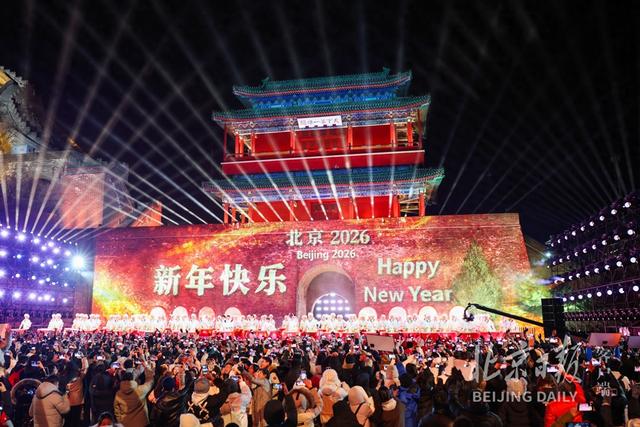
Core Insights - The New Year countdown event in Beijing featured a "dual main venue" approach, successfully engaging the entire city and achieving over 38 million live views and a total reach of 235 million [1] Group 1: Event Overview - The event marked a shift from a single main venue to a city-wide celebration, integrating various cultural, commercial, and tourism elements [1] - The countdown ceremony connected seven districts, creating a "2+7" network that highlighted significant cultural landmarks [2] Group 2: Economic Impact - During the New Year holiday, 60 key commercial districts in Beijing generated sales of 8.46 billion yuan, with a daily year-on-year growth of 5.6% [2] - Over three days, monitored sectors including department stores, supermarkets, and restaurants achieved cumulative sales of 4.04 billion yuan, with a daily year-on-year growth of 16.3% [2] Group 3: Technological Integration - The event utilized advanced technology, such as an AR light show at the Great Wall, enhancing the visual experience and modern appeal [3] - A dedicated mini-program, "Beijing Fan," was launched to provide citizens with access to various discounts and allow them to participate in the celebration virtually [3] Group 4: Global Connectivity - The countdown event connected with global cities, receiving video greetings from mayors of cities like London and Athens, and included representatives from various embassies [4] - The Beijing Cultural and Tourism Bureau launched a promotional video for inbound tourism, emphasizing Beijing as a welcoming city [4] Group 5: Operational Support - The event's success was supported by efficient operations from various city departments, including extended subway services and increased public transport capacity [5] - The transportation network saw significant passenger numbers, with nearly 500,000 people using taxis and ride-hailing services during the event [5]
从规模扩张到生态重构:中国宠物行业的高质量发展路径与未来趋势
Da Gong Guo Ji· 2026-01-04 05:12
Investment Rating - The report indicates that the Chinese pet industry is in a "golden development period" characterized by high growth and resilience, with a projected market size increase from 725 billion CNY in 2015 to 3,598 billion CNY by 2024, reflecting a compound annual growth rate (CAGR) of approximately 20.66% [2][4]. Core Insights - The Chinese pet industry is experiencing significant structural upgrades, with consumption shifting towards high-value areas such as medical care and smart products, driven by increasing pet ownership and consumer spending [1][2]. - The industry is characterized by a younger, highly educated, and middle-to-high-income demographic, with pet ownership becoming an integral part of family life [13][14]. - The report highlights the rapid rise of domestic brands leveraging local innovation and supply chain advantages, with a focus on high-end and global market expansion [1][19]. Market Structure - The market is expanding rapidly, with the urban pet population expected to exceed 124 million by the end of 2024, and average spending per pet increasing significantly [4][5]. - Pet food remains the largest market segment, accounting for 52.8% of total consumption in 2024, with notable growth in medical care spending, which rose from 19% in 2018 to 28% [7][9]. - The penetration rates for various pet categories are increasing, with pet food and medical services showing strong growth potential, while traditional grooming services face challenges [9][12]. Consumer Demographics - The pet consumer base is predominantly composed of individuals born in the 1990s and 2000s, who represent 66.8% of the market, indicating a shift towards younger pet owners [13][14]. - The report notes a significant increase in married pet owners, reflecting a change in the perception of pets as family members rather than mere companions [14][17]. - Online purchasing channels dominate, accounting for 68.1% of pet product sales, while offline channels are preferred for service-related purchases [18]. Industry Chain and Segmentation - The pet industry chain encompasses food, products, and services, with a clear trend towards brand specialization and lifecycle service upgrades [19][20]. - The pet food segment is projected to grow from 157 billion CNY in 2012 to 1,585 billion CNY by 2024, with a CAGR of 21.2%, indicating strong resilience and potential for growth [21]. - The smart pet products market is rapidly expanding, with significant increases in sales for smart feeding devices and health monitoring products [22][23]. Future Trends - The report anticipates a convergence of technology and emotional consumerism in the pet industry, with smart devices enhancing pet care experiences and emotional services becoming more prevalent [28][29]. - Globalization is expected to create new opportunities, with Chinese pet food exports projected to grow significantly, indicating a shift towards international markets [30]. - Cross-industry innovations, such as pet-friendly travel and integrated home designs, are expected to emerge, providing new growth avenues for the pet industry [31].
创出多项历史新高!2025期货业关键词,有这些!
证券时报· 2026-01-03 00:34
Core Viewpoint - The Chinese futures market is experiencing significant growth and transformation in 2025, marked by a historic increase in funding and client equity, innovative business models, and a shift towards high-quality development [1][3]. Funding Growth - In 2025, the total funding in the futures market surpassed 2 trillion yuan, with client equity also exceeding this milestone, reflecting a growth of over 30% compared to the end of 2024 [3]. - The trading volume reached 8.117 billion contracts and a turnover of 67.545 trillion yuan, with year-on-year increases of 14.74% and 20.19% respectively [3]. Product Expansion - The futures market has expanded its product offerings, with a total of 164 futures and options listed by the end of November 2025, including 18 new products such as aluminum alloy and pure benzene [5]. - New products have filled gaps in risk management tools for key raw materials, enhancing the market's service to the real economy [4][5]. Value Creation and Competition - The concept of "anti-involution" has emerged as a key theme, promoting healthy competition focused on value creation rather than price wars [7]. - New regulations have been introduced to curb unfair competition practices, fostering a shift towards service quality and professional value [7]. Industry Integration - The futures industry is increasingly integrating with the real economy, with a record number of companies announcing hedging strategies, indicating a shift from basic hedging to more complex risk management approaches [9][10]. - The demand for price risk management has risen significantly, leading to a transformation in the role of futures companies from mere brokers to comprehensive risk management service providers [10]. Rise of Proprietary and Asset Management - The overall profit of the futures industry increased, with proprietary trading and asset management becoming significant growth drivers, contributing to a net profit of 10.316 billion yuan, a 17.67% increase year-on-year [12][13]. - The scale of private asset management products reached 375.548 billion yuan, marking a 19.48% growth compared to the end of 2024 [12]. Internationalization - The futures market is advancing in internationalization, with the number of futures and options available to qualified foreign institutional investors expanding to 107 [16]. - The market has seen a 14% increase in effective clients, with notable growth in foreign clients, indicating a deeper integration into the global financial system [16]. Technological Empowerment - The industry is embracing advanced technologies such as big data and AI, enhancing its core competitiveness and service capabilities [18][19]. - AI is transforming trading execution and client services, making professional services more accessible and efficient [19]. Capital Increase Wave - A significant capital increase wave has occurred in the futures industry, with major brokerages leading the way, reflecting a restructuring of the industry landscape [21][22]. - The capital advantages of leading firms have been further enhanced, with top companies accounting for over 60% of net capital in the industry [22]. Market Differentiation - The futures market in 2025 has shown significant differentiation, with stark contrasts in performance across various commodity sectors, influenced by geopolitical factors and market dynamics [24]. - The performance of precious metals has been particularly strong, while traditional sectors like black commodities and agriculture have lagged, highlighting the need for refined risk management strategies [24]. Regulatory Improvements - The regulatory framework for the futures industry has been strengthened with new rules addressing various aspects such as internet marketing and risk management, promoting a more standardized development [26][27]. - Enhanced regulations aim to facilitate quality development in the industry, ensuring a safer and more effective market environment [27].


钟鼓齐鸣迎新年,全城同心启新程!2026北京新年倒计时活动精彩上演
Huan Qiu Wang· 2026-01-01 06:25
Core Viewpoint - The 2026 Beijing New Year Countdown event, themed "Bells and Drums Ringing Together, Beijing Colorful Journey," emphasizes cultural renewal, technological empowerment, citywide participation, and global resonance, showcasing Beijing's rich cultural heritage and modern vitality as it welcomes the new development chapter of the "15th Five-Year Plan" [1][15]. Group 1: Event Highlights - The countdown event began at 23:30, featuring multiple venues including the Great Wall at Juyongguan and the Bell Museum, with real-time interactions across various districts, creating a vibrant atmosphere for both residents and tourists [4][5]. - The event culminated in a symbolic moment at midnight with the ringing of the Yongle Bell, representing the historical and cultural significance of Beijing while expressing the collective hopes for the new year [6][5]. Group 2: Technological Integration - The event utilized AR technology to create a stunning visual experience at the Great Wall, blending traditional cultural elements with modern technology to enhance the celebratory atmosphere [8]. - The integration of online and offline participation allowed citizens and tourists to engage through a mobile app, offering interactive experiences and discounts, thereby enriching the cultural experience [11]. Group 3: Global Engagement - The event featured a global connection with mayors from cities such as London, Athens, and Stockholm sending New Year greetings, establishing Beijing as a cultural bridge to the world [11]. - The launch of the promotional video "Beijing Gets Me" aimed to invite global visitors to experience Beijing's historical depth and contemporary vibrancy [11]. Group 4: Cultural Significance - Since its inception in 2011, the Beijing New Year Countdown has become a vital part of global New Year celebrations, showcasing the city's image and cultural vitality [15]. - The event reflects Beijing's commitment to high-quality development and its role as an international consumption center, fostering a spirit of unity and shared dreams among participants [15].

江汉关跨年光影秀导演葛进军: “我爱武汉”深情告白与钟声光影共同定格
Chang Jiang Ri Bao· 2026-01-01 00:55
内容创作上的巧思让这场光影秀更有温度与深度。激光不再是单纯的炫技,而是贴合建 筑结构的"量身定制"——如同为百年江汉关穿上合身的衣服,所有光影图案都精准契合楼宇 结构,既传递丰富内容,又凸显建筑本身的美学特质。画面中,武汉的黄鹤楼、长江大桥等 城市地标轮番闪现,江城四季的流转、花城的绚烂与机器人、北斗等科技元素交织呈现,既 展现了武汉的自然之美,更凸显了"科技赋能"的城市特质。 最动人的莫过于情感的共鸣与互动。葛进军介绍,活动前期征集的30条市民新年愿望, 通过激光与建筑融合的立体泡泡形式在空中绽放,"我爱武汉"的深情告白与对家人、对国家 的真挚祝愿清晰呈现。这一环节看似复杂,却凭借中国光谷的技术实力,实现了软件与硬件 的完美协同,让语言快速转化为光影图案,让每个普通人的心愿都成为城市跨年的重要组成 部分。 "你好,2026"江汉关跨年光影秀陪伴全国游客一起倒计时,长江星河秀点亮两江四岸, 全城地标用光影秀共迎新年。"光成为城市新的表达",江汉关跨年光影秀导演葛进军解读光 影盛宴。 2025年的跨年光影秀全面升级,以更饱满的内容、更具特色的形式,让长江之畔的跨年 夜焕发全新仪式感。技术赋能让光影表达更具张力。 ...
钟鼓齐鸣!2026北京新年倒计时活动精彩上演
Xin Lang Cai Jing· 2025-12-31 17:56
Core Viewpoint - The 2026 Beijing New Year Countdown event, themed "Bell and Drum Resonance, Beijing Colorful Journey," emphasizes cultural renewal, technological empowerment, citywide participation, and global synchronization, showcasing a vibrant celebration that integrates historical landmarks with modern urban life [4][12]. Group 1: Event Highlights - The countdown event took place simultaneously at multiple locations, including the Great Wall at Juyongguan and the Bell Museum, with real-time interactions across various commercial districts and scenic spots in Beijing [4][6]. - The event featured a large-scale countdown with a symbolic "Bell and Drum Resonance" moment at midnight, marking the arrival of 2026 and reflecting the city's historical and cultural essence [6][7]. Group 2: Technological Integration - The event utilized AR technology to enhance the visual experience, showcasing the Great Wall with stunning light and shadow displays, merging traditional cultural imagery with modern technology [7][8]. - Online and offline participation barriers were broken down through live broadcasts and an interactive app, allowing citizens and tourists to engage in the festivities and access discounts at participating venues [8]. Group 3: Cultural Significance - The event included a collective performance featuring classic melodies from around the world, symbolizing unity and shared joy in welcoming the New Year, while mayors from various global cities sent their New Year greetings [10]. - The countdown has become a significant platform for showcasing Beijing's image to the world, promoting cultural exchange and tourism, and reinforcing the city's commitment to high-quality development and international collaboration [12].
A股医药板块的“火热”与“寒意”
Xin Lang Cai Jing· 2025-12-31 16:01
Core Viewpoint - The A-share pharmaceutical sector in 2025 exhibits structural differentiation, with innovative drugs and CXO sectors thriving due to overseas demand and business development, while traditional Chinese medicine, medical devices, and pharmaceutical commerce face performance pressures [3][20]. Summary by Category Overall Market Performance - The A-share pharmaceutical and biotechnology sector saw an overall increase of 25.64% from January 1 to December 30, 2025, despite a slight decline in revenue and a stabilization in profits, with total revenue of 18,544.52 billion yuan, down 1.42% year-on-year, and net profit of 1,407.32 billion yuan, down 1.65% year-on-year [4][21]. Innovative Drug Sector - The innovative drug sector was a standout performer in 2025, with the chemical pharmaceutical segment rising by 32.58% and the medical services segment by 32.91% [4][21]. - Companies like BeiGene (百济神州) reported significant growth, achieving revenue of 27.595 billion yuan, a 44.2% increase year-on-year, surpassing the total revenue of 27.21 billion yuan for 2024 [4][22]. Business Development (BD) Trends - The business development landscape for innovative drug companies is evolving, with significant partnerships such as the 11.4 billion USD deal between Innovent Biologics and Takeda, and a 12.5 billion USD collaboration between Hengrui Medicine and GlaxoSmithKline [5][22][24]. - The total value of business development transactions reached approximately 94.158 billion USD in the first three quarters of 2025, significantly exceeding the total for 2024 [25]. CXO Sector Performance - The CXO sector, driven by the demand for innovative drug research, achieved a 32.91% increase in 2025, with total revenue of 1,365.72 billion yuan, up 3.63% year-on-year, and net profit of 209.12 billion yuan, up 36.47% year-on-year [10][27]. - Leading companies like WuXi AppTec (药明康德) and Kanglong Chemical (康龙化成) returned to growth, with WuXi AppTec reporting a revenue increase of 18.61% and net profit growth of 84.84% [28][31]. Traditional Chinese Medicine and Medical Devices - The traditional Chinese medicine sector experienced a modest increase of 6.75% in 2025, with total revenue of 2,590.69 billion yuan, down 4.33% year-on-year, and net profit of 294.99 billion yuan, down 1.53% year-on-year [36]. - The medical device sector reported a revenue of 1,792.10 billion yuan, down 2.24% year-on-year, with notable performance differences among sub-sectors, where companies like Mindray Medical (迈瑞医疗) showed strong overseas revenue growth [33][34].