
供应链多元化

Search documents
中国订单暴涨300%!明明约定好互相减税,为何中国还是不买美国货
Sou Hu Cai Jing· 2025-05-18 23:50
Group 1 - The core point of the article is the unexpected outcome of the US-China trade agreement, where China significantly increased exports to the US, but did not reciprocate with increased purchases of American goods, leading to pressure on the Trump administration [3][5][10] - Following the announcement of the tariff reduction, Chinese exports to the US surged by nearly three times, with some sectors experiencing increases of 270% to 300% in orders within three days [6][8] - The overall tariff rate dropped from 145% to 30%, but concerns remain about the potential for tariffs to be reinstated after the 90-day "honeymoon period" [8][10] Group 2 - The historical context reveals that China's previous experiences with US agricultural imports have led to a cautious approach, particularly after the 2003 soybean crisis, which highlighted the risks of over-reliance on a single source [12][16][19] - China has diversified its supply chains, focusing on South America for agricultural imports, with projections indicating that by Q1 2025, 68% of China's soybean imports will come from South America, significantly outpacing imports from the US [21][23] - Investments in agricultural technology and seed development are part of China's strategy to enhance self-sufficiency and reduce dependency on US imports, with a goal of achieving self-sufficiency in major crops by 2030 [28][30] Group 3 - The article emphasizes that the current trade dynamics are not merely about whether to buy American goods, but rather about the strategic decision of whether there is a necessity to purchase them at all, given the competitive alternatives available [26][34] - The political landscape in the US complicates trade relations, as the Trump administration's policies are influenced by domestic political pressures, making them unpredictable and less appealing for long-term partnerships [32][34] - The shifting global resource allocation and the strategic adjustments by China indicate a significant transformation in trade relationships, moving away from reliance on the US towards a more independent and diversified trade network [34][35]


Otis Worldwide (OTIS) - 2025 FY - Earnings Call Transcript
2025-05-15 14:00
Financial Data and Key Metrics Changes - The company reported strong financial performance in 2024, attributed to operational excellence and effective strategy execution [3] - Approximately 89.6% of the voting power was represented at the annual meeting, indicating strong shareholder engagement [10] - The preliminary vote report showed that the advisory vote for executive compensation was approved by only 39.3% of the votes, suggesting potential concerns among shareholders [20] Business Line Data and Key Metrics Changes - The company maintains approximately 2,400,000 elevators and escalators globally, representing the largest service portfolio in the industry [3] - The new equipment business is primarily impacted by tariffs, with an estimated impact ranging from $45 million to $75 million for the remainder of the 2025 fiscal year [22] Market Data and Key Metrics Changes - The company serves customers in over 200 countries and territories, highlighting its extensive global reach [3] - The company is expanding its supply chain to mitigate tariff impacts, indicating adaptability to market conditions [22] Company Strategy and Development Direction - The company is focused on a results-driven, digitally focused, and service-oriented growth strategy to deepen customer relationships and enhance efficiency [2] - The transformational uplift program aims to optimize the organizational structure and drive efficiency at all levels [2][5] - The mission is to be a world-class customer-centric service-oriented company, aligning with global macro trends and new expectations [4][5] Management's Comments on Operating Environment and Future Outlook - Management acknowledged the complex and dynamic nature of the modern world, emphasizing the need for resilience and clarity of mission [5] - The company is actively working on mitigation plans with customers to protect against future tariffs [23] Other Important Information - The company has a strong workforce of 72,000 colleagues, including 44,000 field professionals [3] - The board unanimously recommended a vote against the shareholder proposal for transparency in political spending, indicating a strategic stance on corporate governance [18] Q&A Session Summary Question: What areas of Otis will be impacted by tariffs and what is being done to minimize the impact? - The new equipment business is primarily impacted by tariffs, with an estimated impact of $45 million to $75 million for the remainder of 2025 [22] - The company is expanding its supply chain to multiple suppliers and moving some operations to the United States to mitigate the impact [23]

刚刚!富士康获批在印度建芯片厂!
国芯网· 2025-05-15 13:29
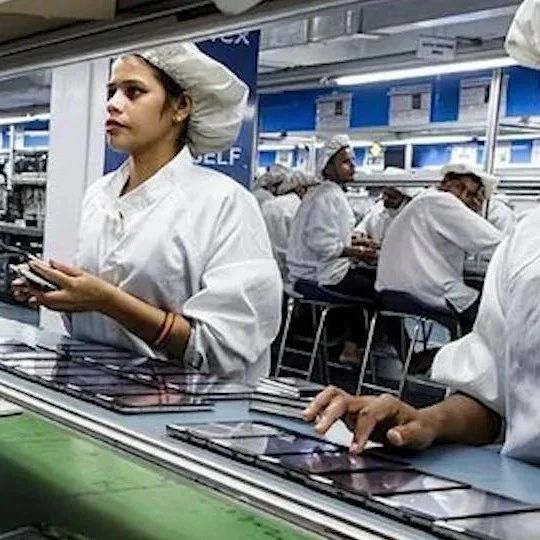
国芯网[原:中国半导体论坛] 振兴国产半导体产业! 不拘中国、 放眼世界 ! 关注 世界半导体论坛 ↓ ↓ ↓ 5月15日消息,据报道,全球最大电子代工商富士康已获得印度批准,将与HCL集团合资建设一座半导 体工厂,投资额达370.6亿卢比(约合31.235亿元人民币)。 根据印度信息技术部长阿什维尼·瓦什纳披露的规划,该项目将分两阶段推进:首期工程聚焦显示驱动 芯片的封装测试,计划2027年实现量产;二期将升级为完整的芯片制造工厂。 半导体公众号推荐 半导体论坛百万微信群 加群步骤: 第一步:扫描下方二维码,关注国芯网微信公众号。 第二步:在公众号里面回复"加群",按照提示操作即可。 建成后,该基地将具备月产2万片晶圆和3600万颗显示驱动芯片的能力,产品覆盖手机、汽车、PC等核 心电子设备。 这一战略投资与苹果供应链的深度调整形成共振。据Counterpoint Research最新数据,印度制造的iPhone 已占美国市场进口量的20%,较去年激增60%。 苹果管理层正加速推进供应链多元化战略,计划未来两年实现美国市场iPhone完全由印度工厂供应。作 为苹果最大代工厂,富士康此次半导体布局不仅响应了苹 ...

GlobalFoundries 2025年Q1收入同比增长2%;汽车与数据中心部门将引领2025年收入增长
Counterpoint Research· 2025-05-15 09:50
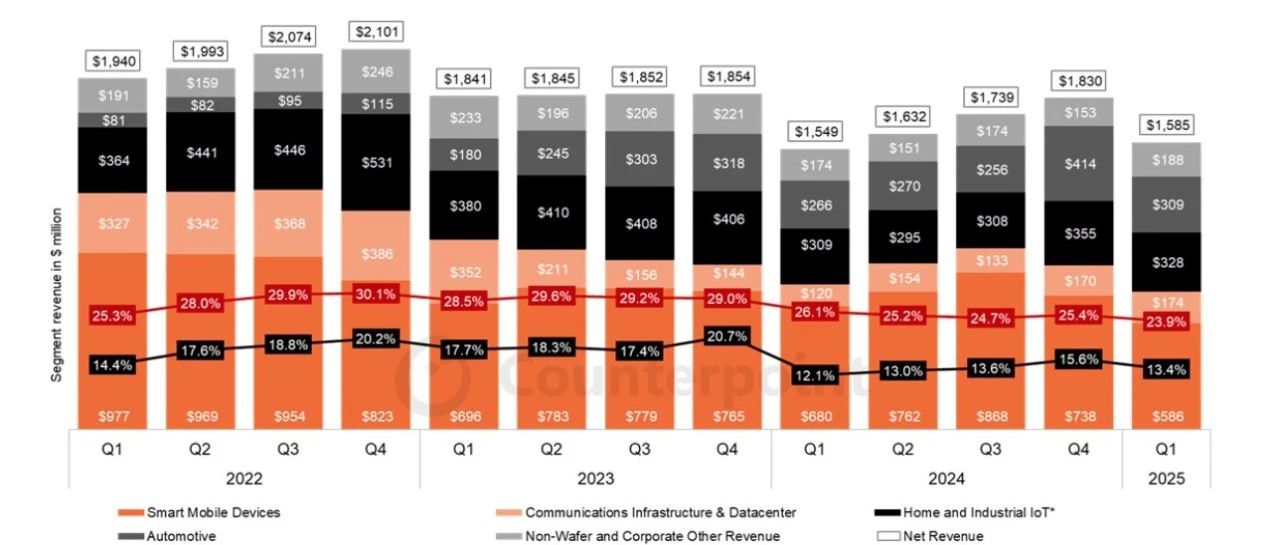
Core Viewpoint - GlobalFoundries (GF) reported a 2% year-over-year revenue growth in Q1 2025, reaching $1.59 billion, driven by contributions from communication infrastructure, data centers, home and industrial IoT, and automotive sectors [2][9]. Revenue Performance - Q1 2025 revenue growth was primarily supported by the automotive sector, which saw a 16% increase due to higher semiconductor content in vehicles and new design wins from key OEM customers [9][12]. - The communication infrastructure and data center segment experienced a significant 45% year-over-year revenue growth, fueled by increased investments in data centers and new design wins in satellite communications [12]. - The smart mobile devices segment faced a 14% decline in revenue year-over-year due to seasonal factors and customer inventory buildup, but is expected to recover with new design wins in audio, haptics, and display applications [12]. Strategic Initiatives - GF's COO emphasized the importance of manufacturing scale and technology diversification, with over $7 billion invested in facilities in the U.S., Germany, and Singapore since 2021 [2][3]. - Analysts noted that GF's diversified supply chain and global manufacturing footprint will help mitigate tariff impacts and provide customers with more options during macroeconomic uncertainties [3][4]. Future Outlook - The automotive and communication infrastructure sectors are projected to be the main revenue growth drivers in 2025, with expectations of double-digit growth in automotive due to market share gains and new design wins [12][14]. - The average selling price (ASP) is anticipated to decline in the mid-single digits percentage range in 2025 due to product mix changes [4][12]. - GF's gross margin is expected to improve to 30% in 2025, supported by enhanced capacity utilization, reduced depreciation costs, and structural cost optimization from diversified manufacturing and product line expansion [14].

特朗普施压库克:不希望苹果在印度建厂!
Hua Er Jie Jian Wen· 2025-05-15 07:58
特朗普"威胁"苹果印度制造计划,美印贸易谈判暗流涌动。 他声称,作为这次谈话的结果,苹果将"增加他们在美国的生产"。 "我对他说,我不希望你们在印度建厂。" 值得注意的是,苹果在本月的财报电话会上曾出乎意料地宣布,计划大部分销往美国的设备将从印度和 越南生产,以应对潜在关税压力。 特朗普叫停苹果印度扩张计划 特朗普的这番言论直接针对苹果公司近年来在全球市场的扩张战略。苹果一直在积极推动其供应链多元 化。 苹果第二财季的业绩虽勉强超出预期,但在特朗普关税政策的冲击下,其未来增长前景仍充满不确定 性。 在隔夜召开的财报电话会上,Tim Cook宣布,在即将到来的6月季度,"大多数"销往美国的iPhone将来 自印度,而"几乎所有"其他设备(包括iPad、Mac、Apple Watch和AirPods)将来自越南。这一战略转 变意在减轻特朗普政府关税政策对公司的冲击。 周四,媒体报道称,特朗普透露他已与苹果CEO Tim Cook进行了交谈,明确表示不希望苹果扩大在印 度的生产。 "我们很早以前就学到了一课,把所有东西都放在一个地方风险太大。" 此外,库克还表示,苹果正在从美国采购玻璃和Face ID模块,同时从1 ...
36氪出海·中东|全球贸易的战略枢纽,批发商如何把握迪拜商机?
3 6 Ke· 2025-05-15 06:41
Group 1: Core Insights - Dubai has emerged as a leading global hub for wholesale business development, offering strategic location, favorable tax policies, and a vibrant market environment for entrepreneurs seeking to expand globally [2] - The global wholesale market is projected to reach $68.1 trillion by 2028, with a compound annual growth rate (CAGR) of 7.1%, driven by sustained demand in sectors like food, electronics, and textiles [3] - The UAE's wholesale market has shifted significantly due to the rise of e-commerce, with online food sales exceeding 16% of the total market share during the pandemic [4] Group 2: Advantages of Dubai for Wholesale Business - Dubai serves as a strategic hub for global trade, providing access to over 2 billion people within a 6-hour flight radius, making it attractive for wholesalers [5] - The city offers a favorable tax environment with a low corporate tax rate of 9% and potential 0% tax rates in specific free zones, enhancing its appeal for international trade [6] - Dubai allows 100% foreign ownership of businesses, providing flexibility and control for investors [7] - The diverse population in Dubai, with over 90% expatriates, creates a stable demand for various products [8] Group 3: Common Challenges and Solutions for Wholesalers - Credit risk management is crucial, and trade credit insurance can protect businesses from non-payment risks [9] - Cash flow management can be improved by accelerating the credit-to-cash turnover and offering discounts for early payments [10] - Efficient inventory management is essential to maintain profitability in a low-margin industry [11][12] - Trade credit insurance can also facilitate easier access to financing by serving as collateral [13][14] - Diversifying supplier channels can mitigate supply chain risks and ensure competitive pricing [15][16] - Automating processes and investing in warehouse technology can help control operational costs [17][18] - Building strong customer relationships and brand differentiation are vital in a competitive market [19] Group 4: Steps to Establish a Wholesale Business in Dubai - Define the product type for wholesale, aligning with expertise and interests [21] - Choose a unique company name that reflects the business nature [22] - Select a business location in one of Dubai's free zones, which offer various benefits [23] - Submit necessary application materials, including passport copies and business plans [24] - Obtain a business license and open a bank account for financial management [25] - Collaborate with professional institutions like IFZA for streamlined business setup [26][28]

Aterian(ATER) - 2025 Q1 - Earnings Call Transcript
2025-05-14 22:02
Financial Data and Key Metrics Changes - For Q1 2025, net revenue was $15.4 million, down from $20.2 million in Q1 2024, reflecting a 24% decline primarily due to SKU rationalization and reduced consumer demand [7][26] - Adjusted EBITDA loss improved slightly to $2.5 million from $2.6 million year-over-year, indicating a focus on profitability despite revenue decline [7][29] - Operating loss narrowed to $3.7 million from $5.3 million in the previous year, an improvement of approximately 30% driven by cost-cutting initiatives [28][29] Business Line Data and Key Metrics Changes - The overall gross margin for Q1 decreased to 61.4% from 65.1% year-over-year, primarily due to product mix changes [27] - Contribution margin for Q1 was 13.4%, down from 14.1% in the previous year, reflecting the reduction in gross margin [28] - Launch revenue for Q1 was $400,000, consistent with the previous year, indicating stability in new product introductions despite broader challenges [26] Market Data and Key Metrics Changes - The company experienced softness in consumer demand, particularly in the latter part of the quarter, which may have impacted sales velocity [7][26] - Inventory levels increased to $18.1 million from $13.7 million at the end of Q4 2024, reflecting preparations for anticipated demand trends [30] Company Strategy and Development Direction - The company is focusing on four strategic initiatives: diversifying manufacturing, expanding into consumables, raising prices, and reducing fixed costs [9][21] - A new goal is to manufacture no more than 30% of goods in China by the end of 2025, accelerating previous targets [11] - The company has paused new product launches from Asia, particularly hard electronic goods, until clarity on the trade environment is achieved [14] Management Comments on Operating Environment and Future Outlook - Management expressed confidence in navigating the current macroeconomic environment and emphasized the importance of agility and resilience [8][20] - The company has withdrawn its 2025 guidance due to current volatility but believes actions taken will position it for growth and profitability beyond 2025 [19][31] - Management remains committed to preserving capital and does not foresee raising equity capital in 2025 [18][32] Other Important Information - The share repurchase program has been paused due to the current environment, but management believes the stock is undervalued [18][50] - The company is targeting $5 million to $6 million in annualized savings from fixed cost reductions, with a significant portion coming from headcount reductions [15][25] Q&A Session Summary Question: Can you talk about your inventory plans in the near and medium term given the China tariffs? - Management indicated that they have been proactive in managing inventory and are well-positioned to produce necessary products for 2025 despite tariff uncertainties [36][37] Question: How have consumers reacted to the pricing changes? - Management noted mixed results in consumer response to price increases, with some products maintaining strong rankings despite price adjustments [42][44] Question: Is there a way to speed up the diversification strategy in manufacturing? - Management committed to accelerating the diversification strategy while ensuring product quality, focusing on consumables and other regions [46]

2025稀土产业链研究-中美欧供应链博弈与地缘竞争杠杆
2025-05-14 05:08
Summary of Rare Earth Industry Research Conference Call Industry Overview - The report focuses on the rare earth industry chain, highlighting the geopolitical competition and supply chain dynamics between China, the US, and Europe [1][8] - Rare earth elements are critical in high-tech fields such as renewable energy, military, and electronics, with China controlling approximately 70% of global production and 90% of refining capacity [8][23] Key Points Global Supply Chain Dynamics - The US and Western countries are pushing for "de-China" strategies regarding rare earths, viewing it as a national security issue [8] - Policies are being implemented to explore domestic rare earth resources and establish refining capacities in countries like the US, Australia, and Canada [8][29] - The geopolitical tensions have highlighted the strategic value of rare earth resources in reshaping global power dynamics [8] China's Dominance in Rare Earths - China holds the largest rare earth reserves globally, with 44 million tons, accounting for about 48% of total global reserves [19][21] - In 2024, China's rare earth production is projected to reach 270,000 tons, representing 69% of global output [22][23] - The country has a complete rare earth industry chain, from mining to functional materials processing, maintaining a significant competitive advantage [23] Market Size and Growth - The rare earth industry in China had an estimated output value of approximately 900 billion yuan in 2018, with functional materials accounting for 56% of this value [41] - The revenue for China's rare earth refining and separation industry is expected to exceed 45 billion yuan in 2023 [42] - The market for rare earth functional materials has been growing rapidly, with a compound annual growth rate (CAGR) of 34.40% from 2017 to 2022 [43] Supply Chain Management and Regulations - China has implemented strict controls on rare earth mining and refining, with total production quotas set annually [30][35] - The establishment of the China Rare Earth Group in 2021 consolidated the industry, enhancing resource management and operational efficiency [32][33] Future Trends - The demand for rare earth materials is expected to grow significantly in high-tech applications, particularly in electric vehicles, wind power, and robotics [54][55] - The global market for rare earth permanent magnets is projected to continue expanding, with China maintaining a dominant position [51] Additional Insights - The integration of rare earth resources into national strategic reserves is becoming a priority for many countries, reflecting the increasing importance of these materials in global supply chains [8][29] - The ongoing geopolitical tensions and supply chain diversification efforts may lead to a restructuring of the global rare earth market, impacting pricing and availability [29][35]


a.k.a. Brands (AKA) - 2025 Q1 - Earnings Call Transcript
2025-05-13 21:32
Financial Data and Key Metrics Changes - The company reported net sales of approximately $129 million, reflecting a growth of about 12% on a constant currency basis and 10.1% year-over-year [7][30] - Adjusted EBITDA for the first quarter was $2.7 million, a significant increase from $900,000 in the same period last year, with an adjusted EBITDA margin of 2.1% compared to 0.7% [10][33] - Gross margin expanded by 100 basis points to 57.2% compared to 56.2% in the same period last year, driven by higher full-price selling and improved inventory position [31][32] Business Line Data and Key Metrics Changes - The U.S. business grew by 14% year-over-year, marking the seventh consecutive quarter of growth [7][30] - Australia and New Zealand region saw revenue growth of over 6%, attributed to strategic initiatives and improved macro conditions [8][30] - Princess Polly, the largest brand, continues to perform strongly, with double-digit revenue growth driven by trend-forward styles and successful marketing campaigns [17][20] Market Data and Key Metrics Changes - The active customer base increased by nearly 8% over the trailing twelve months, reaching 4.13 million by the end of the first quarter [8][30] - Average order value rose to $78, reflecting a 1.3% increase compared to the previous year [30] - The company reported a total of 1.66 million orders in the first quarter, a 9.2% increase year-over-year [30] Company Strategy and Development Direction - The company is focused on expanding its total addressable market through direct-to-consumer channels and physical retail investments [15][19] - A three-pronged approach to tariffs includes leveraging relationships with partners in China, diversifying the supply chain, and selectively increasing prices [10][11][44] - The company aims to streamline operations and strengthen its financial foundation while navigating the current macro environment [16][39] Management's Comments on Operating Environment and Future Outlook - Management expressed confidence in navigating the current macro environment and anticipates limited exposure to China by the fourth quarter [12][53] - The company expects solid demand trends to continue into the second quarter, with net sales projected between $154 million and $158 million [36][38] - Management believes the impact of tariffs will be transitory, with a return to normalized margins expected in the fourth quarter [47][48] Other Important Information - The company ended the first quarter with $26.7 million in cash and cash equivalents, an increase from $24.2 million a year ago [34] - Inventory at the end of the quarter was $94.4 million, a 3% increase compared to the previous year, well below the 10% net sales growth [35] - The company plans to open six additional stores in 2025, with three new stores expected in late Q2 [32][35] Q&A Session Summary Question: Can you provide insights on margins and the impact of tariffs? - Management discussed the diversified supply chain strategy and selective pricing actions to mitigate tariff impacts, expecting a return to normalized margins in Q4 [41][44][47] Question: What are the demand trends and growth expectations for the second half of the year? - Management indicated confidence in continued growth, particularly in the U.S., despite potential challenges in Australia due to tough comparisons [53][56] Question: How sustainable is the growth in the U.S. market? - Management expressed confidence in sustaining growth through new customer acquisition and expanding wholesale partnerships [61][64] Question: What are the long-term plans for store expansion? - Management confirmed that new stores are performing well and driving new customer growth, with plans to maintain current expansion pacing [72][73] Question: How is the company addressing cost profiles with new suppliers? - Management noted that while there may be slight differences in costs with new suppliers, they are confident in achieving competitive pricing and maintaining quality [67][69]

a.k.a. Brands (AKA) - 2025 Q1 - Earnings Call Transcript
2025-05-13 21:30
Financial Data and Key Metrics Changes - The company reported a net sales increase of approximately 12% on a constant currency basis to $129 million, marking the fourth consecutive quarter of growth [7][30] - Adjusted EBITDA for the first quarter was $2.7 million, a significant increase from $900,000 in the same period last year, with an adjusted EBITDA margin of 2.1% compared to 0.7% [9][33] - Gross margin expanded by 100 basis points to 57.2% compared to 56.2% in the same period last year, driven by higher full-price selling and improved inventory position [31][33] Business Line Data and Key Metrics Changes - The U.S. business grew by 14.2% year over year, while Australia and New Zealand saw a revenue growth of 6.2% [30][31] - The active customer base increased by 7.8% year over year, reaching 4.13 million by the end of the first quarter [30] - Princess Polly, the largest brand, continues to perform strongly, with double-digit revenue growth driven by trend-forward styles and successful marketing campaigns [15][16] Market Data and Key Metrics Changes - The company experienced a 9.2% increase in total orders for the first quarter, indicating strong customer demand [30] - The omnichannel expansion is on track, with Princess Polly opening its seventh store in SoHo, which was the strongest opening to date [8][15] - The company is diversifying its supply chain, anticipating minimal exposure to China by the fourth quarter, with production shifting to countries like Vietnam and Turkey [10][12] Company Strategy and Development Direction - The company laid out three key priorities for 2025: attracting and retaining customers through direct-to-consumer channels, expanding brand awareness through physical retail investments, and streamlining operations [14][15] - The strategic focus includes leveraging a test and repeat model for inventory management and enhancing customer connections through innovative marketing [9][14] - The company aims to build a robust supply chain to mitigate tariff impacts and enhance long-term competitiveness [10][13] Management's Comments on Operating Environment and Future Outlook - Management expressed confidence in navigating the current macro environment and believes the impact of tariffs will be transitory [28][36] - The company anticipates continued solid demand trends in the second quarter, with net sales expected to be between $154 million and $158 million [36][38] - Management remains focused on building durable and resilient fashion brands while delivering value to stakeholders [39] Other Important Information - The company ended the first quarter with $26.7 million in cash and cash equivalents, an increase from $24.2 million a year ago [34] - Inventory at the end of the quarter was $94.4 million, a 3% increase compared to the previous year, which is below the 10% net sales growth [35] - The company has a stock buyback program with approximately $1.1 million remaining in authorization [35] Q&A Session Summary Question: Can you provide insights on guidance for revenues and adjusted EBITDA, particularly regarding tariffs? - Management discussed their approach to tariffs, emphasizing a diversified supply chain and selective pricing actions to mitigate impacts [41][43][44] Question: Will the company be completely out of China by the fourth quarter? - Management confirmed that they expect to be predominantly out of China by Q4, while maintaining some relationships for servicing other regions [51][52] Question: What are the demand trends expected for the second half of the year? - Management indicated positive growth in Australia and continued strong performance in the U.S., with expectations for growth to resume in Q3 [53][55] Question: How sustainable is the growth in the U.S. business? - Management expressed confidence in the sustainability of growth, supported by strong customer metrics and new store openings [60][62] Question: What are the long-term plans for store openings and wholesale partnerships? - Management highlighted the success of new stores in driving customer acquisition and expressed optimism about expanding wholesale partnerships, particularly with Dillard's [70][74]