
公司治理

Search documents
股权转让频现叠加多家分支机构被罚,国任保险“内外压力”待解除
Bei Jing Shang Bao· 2026-01-08 14:05
Core Viewpoint - The recent announcement of share transfer by China Railway Construction Investment Group from Guoren Property Insurance has brought attention to the company, indicating a trend of state-owned shareholders exiting their stakes due to strategic adjustments and compliance requirements [1][4][5]. Shareholder Changes - China Railway Construction plans to transfer its entire 4.991% stake in Guoren Insurance, which amounts to 200 million shares, marking a complete exit from the shareholder list [4][5]. - Other shareholders, such as Beijing Dongcheng State-owned Capital Operation Co., have also signaled intentions to exit, with a similar stake of 4.991% being offered for transfer [5]. - The trend of shareholders wanting to exit has been ongoing, with Guoren Insurance's previous shareholder, Guoji Finance, transferring its 0.499% stake to Guoji Asset Management [6]. Reasons for Shareholder Exit - The motivations behind the exits include internal strategic focus and external regulatory pressures. China Railway Construction's investment in an insurance company may not align with its core infrastructure investment business [7]. - The insurance sector's long investment cycles and unsatisfactory returns have led some financial shareholders to rationally decide to exit [7]. - Regulatory pressures, such as the "second generation of solvency" requirements, may also compel state-owned shareholders to divest from financial institutions to optimize their financial statements [7]. Governance Challenges - Guoren Insurance has faced governance challenges, evidenced by significant opposition votes during shareholder meetings, indicating potential instability in governance [9][11]. - The frequent occurrence of opposition votes raises concerns about the company's governance image and may signal underlying conflicts among shareholders [11][12]. - The company has acknowledged the importance of communication with shareholders and is working to address their concerns [10]. Financial Performance - For the first three quarters of 2025, Guoren Insurance reported insurance business revenue of 9.341 billion yuan, a decrease from 10.275 billion yuan in the same period last year [13]. - The net profit for the same period was approximately 337 million yuan, an increase from 218 million yuan year-on-year [13]. - The comprehensive cost ratio for the company was 102.8%, up nearly 3 percentage points from 99.82% the previous year, indicating underwriting losses [13]. Strategic Focus and Compliance - Guoren Insurance is undergoing a strategic transformation towards high-quality value development, focusing on high-value business and adjusting its business structure [14]. - The company has shifted its focus to non-auto insurance, which now accounts for over 50% of its total premium income, aligning with industry trends [14]. - Recent regulatory changes require enhanced management of non-auto insurance, which Guoren Insurance views as an opportunity for refined management and competitive differentiation [15]. Compliance Issues - Guoren Insurance has faced compliance challenges, with several branches receiving fines for regulatory violations, including a 120,000 yuan fine from the Yunnan regulatory bureau for prohibited business practices [16]. - The company is committed to rectifying these issues and has implemented measures to ensure compliance and prevent future violations [16].


星基智造IPO:未分配利润为负仍向实控人定向分红 毛利率大幅波动但三个版本解释各不相同
Xin Lang Cai Jing· 2026-01-08 08:03
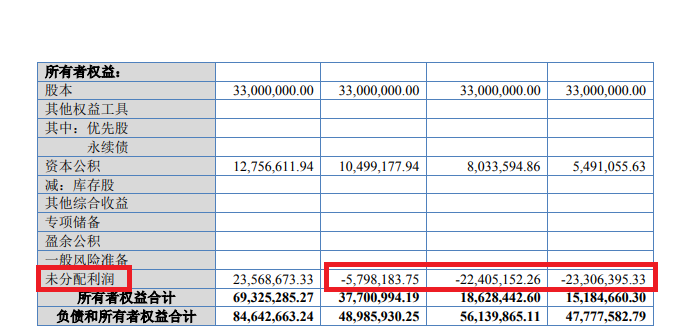
Core Viewpoint - Jiangsu Xingji Intelligent Manufacturing Technology Co., Ltd. (referred to as "Xingji Intelligent Manufacturing") has had its application for listing on the Beijing Stock Exchange accepted, with Caitong Securities as the sponsor. The company plans to distribute a targeted cash dividend of 9.7 million yuan to its actual controller and related enterprises despite having negative retained earnings for three consecutive years, raising questions about the legality and governance of such actions [1][22][24]. Financial Performance - Xingji Intelligent Manufacturing's main business involves the research, production, and sales of intelligent cable equipment and digital smart factory solutions, with revenues showing a growth trend from 129 million yuan in 2022 to 236 million yuan in 2024 [2][23]. - The company reported net profits of 19 million yuan, 28 million yuan, and 47 million yuan for the years 2022, 2023, and 2024, respectively, indicating an overall upward trajectory in performance [2][23]. Dividend Distribution Concerns - The company decided to distribute dividends of 9.7 million yuan in February 2024, despite having negative retained earnings of -23.31 million yuan, -22.41 million yuan, and -5.80 million yuan at the end of 2022, 2023, and 2024, respectively [4][24][26]. - The distribution raised concerns regarding compliance with the Company Law, which stipulates that dividends can only be distributed from profits after covering losses and allocating statutory reserves [5][28]. Gross Margin Fluctuations - Xingji Intelligent Manufacturing's gross margin has shown significant volatility, with rates of 39.41%, 34.65%, 41.22%, and 43.71% for the years 2022 to 2025, respectively, compared to industry averages of 34.98%, 37.45%, 35.03%, and 36.35% [10][30]. - The company has provided varying explanations for its gross margin differences across three versions of its announcements, indicating potential inconsistencies in reporting [17][34]. Inventory Turnover and Export Revenue - The company's inventory turnover rates were significantly lower than industry averages, with rates of 0.70, 1.03, and 1.16 for the years 2022 to 2024, compared to an industry average of 1.84, 1.42, and 1.53 [19][42]. - However, export revenue has increased substantially, with figures of 23.67 million yuan, 23.10 million yuan, 90.92 million yuan, and 48.21 million yuan for the respective years, indicating a growing share of exports in total revenue [21][43].
公司快评|实控人被罚没3754万元,宝新能源治理与合规发展如何并行?
Mei Ri Jing Ji Xin Wen· 2026-01-08 03:41
Core Viewpoint - The administrative penalty imposed on the actual controller of Baoneng New Energy, Ye Huane, due to violations related to undisclosed shareholding arrangements and illegal share reductions, has raised concerns about the company's governance and compliance management, despite no direct impact on its fundamentals [1][2]. Group 1: Governance Issues - Ye Huane's violations began with a shareholding arrangement in 2017, where Baoneng's controlling shareholder transferred 111 million shares to Ning Yuanxi for holding, which was not disclosed, violating the Securities Law [1]. - In December 2021, part of the held shares was illegally reduced, involving an amount of 141 million yuan, further breaching regulations regarding shareholder disclosures [1]. Group 2: Compliance Management - The penalty highlights potential gaps in Baoneng's governance and compliance management, necessitating improvements to ensure transparency and adherence to regulations [2]. - Baoneng should enhance its internal governance structure, strengthen oversight of the actual controller and executive team, and establish a robust internal audit mechanism to review shareholding structures and transactions regularly [3]. - The company must improve communication with regulatory bodies, enhance its information disclosure system, and implement strict approval processes for sensitive matters like share changes to comply with the Securities Law [3].

独家|梦洁股份“持续异议董事”陈洁:投出15次反对票,卸任后继续保护股民权益
Zhong Guo Jing Ying Bao· 2026-01-08 02:08
Core Viewpoint - The ongoing internal conflict at Hunan Dreamjie Home Textile Co., Ltd. (Dreamjie) involves a board restructuring and allegations of misconduct against key executives, particularly Chairman Jiang Tianwu and Secretary Li Jun, amid a backdrop of declining financial performance and governance issues [3][4][6]. Group 1: Board Restructuring - Dreamjie announced a reduction in its board size from 11 to 7 members, with non-independent directors decreasing from 7 to 4 and independent directors from 4 to 3 [5][6]. - The restructuring aims to align the board composition with the company's governance structure and avoid a governance vacuum, ensuring continuity in decision-making [5][6]. - Chen Jie, a board member who has consistently opposed the restructuring, argues that the changes will consolidate power in Jiang Tianwu's hands, undermining board independence [5][6]. Group 2: Allegations and Conflicts - Chen Jie has publicly accused Jiang Tianwu and Li Jun of various misconducts, including contract fraud and violations of disclosure regulations, leading to significant tensions during board meetings [7][8]. - Chen claims that Jiang's continued board membership is detrimental to the company's governance and investor interests, especially following regulatory penalties against him [6][7]. - The conflict has escalated to the point where Chen has threatened to continue her allegations even after her departure from the board [4][7]. Group 3: Financial Performance - Dreamjie has faced significant financial challenges, with revenues declining from 2.463 billion to 1.715 billion yuan between 2021 and 2024, and consecutive net losses of 156 million and 448 million yuan in 2021 and 2022, respectively [12]. - Despite a slight recovery in the first three quarters of 2025, with revenues of approximately 1.099 billion yuan (down 7.97% year-on-year) and a net profit of about 26.52 million yuan (up 28.69%), the sustainability of this profit is under scrutiny [12][13]. - The company's shift towards a high-end strategy has not met expectations, contributing to its financial struggles [12].

东方时尚驾驶学校股份有限公司关于2026年第一次临时股东会增加临时提案暨股东会补充通知的公告
Shang Hai Zheng Quan Bao· 2026-01-06 17:20
Group 1 - The company will hold its first extraordinary general meeting of shareholders in 2026 on January 16, 2026 [2] - The shareholder, Dengtou Holdings Group Co., Ltd., which holds 3.57% of the company's shares, proposed to add four temporary proposals for discussion at the meeting [2][8] - The board of directors has agreed to submit the proposed temporary resolutions for review at the extraordinary general meeting [5] Group 2 - The first temporary proposal is to dismiss Mr. Xu Jinsong from his position as a non-independent director due to alleged serious violations of the obligations of loyalty and diligence as stipulated in the Company Law and the company's articles of association [8][9] - The second temporary proposal is to dismiss Ms. Wang Hongyu from her position as a non-independent director for similar reasons [9] - The third and fourth temporary proposals involve the election of Ms. He Liming and Mr. Xing Zhewei as non-independent directors to enhance the company's governance structure [10][11] Group 3 - The board's nomination committee expressed concerns about the qualifications of the proposed candidates due to the short review time and the ongoing restructuring process of the company [3] - The independent directors have confirmed their compliance with relevant laws and regulations during their tenure and have actively participated in board meetings [6][7] - The company has implemented corrective measures regarding information disclosure violations related to operational risks [6][7]

“百年鞋企”深陷控制权之争 父子反目后应让规则上位
Mei Ri Jing Ji Xin Wen· 2026-01-06 12:40
Core Viewpoint - The control struggle within the century-old company, Double Star Mingren Group, has escalated dramatically, with the founder, Wang Haifa, publicly severing ties with his son and daughter-in-law, accusing them of betrayal and misconduct [1][2]. Group 1: Background of the Dispute - The conflict intensified at the end of 2025, marked by a series of public statements and accusations between Wang Haifa and his family members [1]. - The root of the dispute lies in a 2022 equity change, where Wang Haifa's son and daughter-in-law gained majority control of the company, leading to Wang Haifa's diminished stake [1][3]. Group 2: Legal and Governance Implications - Wang Haifa's declaration to sever familial ties lacks legal validity, as parental rights and obligations cannot be dissolved through a statement [3]. - The legitimacy of the board's decision to remove Wang Haifa as chairman hinges on whether the meeting was convened lawfully, as major shareholders can dictate company governance under Chinese corporate law [3][4]. - Control of the company is not determined by possession of the company seal and business license, which are merely operational documents, not indicators of ownership [4]. Group 3: Impact on the Company - The ongoing internal conflict has severely damaged the brand image of the century-old company, leading to doubts among partners and a decline in employee morale [2]. - The family feud represents a cautionary tale about governance, highlighting the need for clear responsibilities and rules in corporate management, free from familial ties [2].
《中国上市公司董责险市场报告(2026)》发布
Zheng Quan Ri Bao Wang· 2026-01-06 10:48
Core Insights - The report titled "China Listed Companies D&O Insurance Market Report (2026)" was released, highlighting the growth and future direction of the D&O insurance market in China [1] - The penetration rate of D&O insurance among A-share listed companies reached 32% by the end of 2025, reflecting a 4 percentage point increase from 2024 [1] Group 1: Market Growth - As of December 2025, 1,753 listed companies in the A-share market announced plans to purchase D&O insurance, a 16% increase from 1,509 companies at the end of 2024 [1] - In 2025, 643 A-share listed companies disclosed plans to purchase D&O insurance, representing a 19% year-on-year increase from 2024 [1] Group 2: Claims and Legal Trends - Since 2021, 85 listed companies that had previously purchased D&O insurance have faced lawsuits from investors, indicating a clear upward trend [2] - In 2025, at least 22 companies with D&O insurance were sued by investors, while in 2024, insurance companies paid out on 26 claims totaling 390 million yuan [2] - The total amount of disclosed D&O insurance claims from Q1 2022 to Q3 2025 exceeded 850 million yuan [2] Group 3: Expert Insights - Experts discussed the advantages and constraints of D&O insurance, emphasizing its role in risk management and corporate governance [2] - The need for improved disclosure obligations regarding D&O insurance was highlighted by a professor from Shanghai University of Finance and Economics [2] Group 4: Company Initiatives - The company has evolved from a niche player to a mainstream provider of D&O insurance, focusing on risk management, legal practice, and technological empowerment [3] - The collaboration among the company, law firms, and technology firms aims to enhance risk prevention systems for listed companies [3] - The company is committed to promoting a rational and stable development of the D&O insurance ecosystem in response to ongoing reforms in the Chinese capital market [3]
YZi Labs v/s CEA Industries: CZ’s YZi Labs Take On Failing BNB Treasury Bet
Yahoo Finance· 2026-01-06 09:53
Core Viewpoint - A governance dispute has emerged within CEA Industries (BNC), involving YZi Labs, as the latter seeks changes to the board amid concerns over the company's strategic execution and stockholder rights [1][2][3]. Group 1: Governance Dispute - YZi Labs is reviewing CEA Industries' recent decisions, including a stockholder rights plan and tightened consent rules, as it pushes for board changes [1]. - The dispute centers on whether CEA has effectively delivered on its strategic plan to establish a substantial BNB treasury [2]. - YZi Labs has initiated a consent solicitation to advocate for changes in the board and governance structure, framing it as a fundamental rights issue due to significant equity value loss [4]. Group 2: Financial Performance - CEA Industries secured a $500 million private placement, with the potential to raise up to $1.25 billion if all warrants are exercised [2]. - BNC's stock price has significantly declined, closing at $6.41 on January 5, down approximately 92% from its 52-week high of $82.88 [3]. - CEA reported holdings of 515,554 BNB valued at roughly $464.6 million as of December 4, indicating ongoing commitment to its BNB treasury strategy [6]. Group 3: Company Responses - CEA's board views the stockholder rights plan as a standard measure to prevent control by any group without fair compensation [4]. - The updated bylaws include new procedures for consent solicitations, such as a required record date and a 60-day completion window [6]. - CEA has pushed back against YZi's criticisms, asserting its commitment to the BNB treasury strategy despite the ongoing governance dispute [6].
《中国上市公司董责险市场报告(2026)》发布 市场趋势与法律风险双维解读引关注
Zhong Guo Jing Ji Wang· 2026-01-06 07:06
Core Insights - The release of the "China Listed Companies D&O Insurance Market Report (2026)" marks a significant development in the D&O insurance sector, highlighting trends and future directions in the market [1][3] Group 1: Market Trends - As of December 2025, a total of 1,753 listed companies in the A-share market have announced plans to purchase D&O insurance, representing a 16% increase from 1,509 companies the previous year [3] - In 2025, 643 A-share listed companies disclosed plans to purchase D&O insurance, a 19% increase compared to the previous year, with a penetration rate of 32% among all listed companies [3] - The number of listed companies that faced lawsuits from investors after purchasing D&O insurance has risen, with 85 companies involved over the past four years, indicating a clear upward trend [3] Group 2: Claims and Financial Data - In 2024, there were 26 claims made against D&O insurance policies, totaling 390 million yuan, while in the first three quarters of 2025, 13 claims were made, amounting to 89.47 million yuan [3] - The total disclosed claims amount for D&O insurance from Q1 2022 to Q3 2025 has exceeded 850 million yuan [3] Group 3: Professional Insights - The report was collaboratively developed by legal, insurance, and technology professionals, utilizing advanced data analysis techniques to provide a comprehensive view of the D&O insurance landscape [1][4] - The importance of D&O insurance as a risk management tool and its role in enhancing corporate governance was emphasized, alongside a call for improved disclosure obligations regarding D&O insurance [4][6] Group 4: Future Outlook - The collaboration between Mingya, Jianwei Law Firm, and Xianlv Technology aims to enhance the D&O insurance ecosystem, promoting rational and stable development in the market [8]
十五五期间中小银行最紧迫的五件大事
Jin Rong Jie· 2026-01-06 03:19
Core Viewpoint - The five most urgent tasks for small and medium-sized banks during the 14th Five-Year Plan period are risk resolution, corporate governance, digital transformation, differentiated operations, and capital replenishment, which collectively drive high-quality development [1]. Risk Resolution: Establishing a Safety Bottom Line for Survival and Development - During the 14th Five-Year Plan, the number of high-risk banking institutions was significantly reduced through mergers and restructuring, but small and medium-sized banks still face challenges such as difficulty in disposing of non-performing assets and high reliance on real estate and local government financing platforms [2]. - Lessons from the U.S. and Japan highlight the importance of early warning systems and market-based risk resolution methods, such as asset securitization and targeted credit allocation [2]. - Key measures for the 15th Five-Year Plan include reducing the number of legal entities, categorizing strategies for non-performing asset disposal, strengthening concentration and liquidity management, and improving risk warning and disposal mechanisms using AI and big data [3]. Corporate Governance: Strengthening the Foundation of Modern Banking Systems - The 14th Five-Year Plan saw the removal of over 3,600 illegal shareholders, but issues such as suboptimal equity structure and weak internal controls persist in small and medium-sized banks [4]. - U.S. community banks utilize a "small but refined" equity structure and independent directors to enhance checks and balances, while Japanese local banks leverage stable equity structures and external supervision [4]. - The 15th Five-Year Plan's core initiatives include optimizing equity structure, standardizing corporate governance operations, strictly controlling related transactions, and improving incentive mechanisms [5][6]. Digital Transformation: Building Core Competencies for Efficient Operations - The 14th Five-Year Plan accelerated the cloud transformation of core systems, but challenges such as fragmented technology investment and weak data governance remain [7]. - U.S. community banks effectively deploy digital tools through partnerships with fintech companies, while Japanese local banks create regional fintech alliances to develop specialized digital products [7]. - Key initiatives for the 15th Five-Year Plan include building a centralized digital infrastructure, enhancing scenario-based applications, improving digital risk control and operational capabilities, and establishing a compliance system for digital operations [8]. Differentiated Operations: Creating Competitive Advantages - The 14th Five-Year Plan encouraged banks to focus on their core businesses and local markets, yet many still engage in homogeneous competition with large banks, leading to weak profitability [9]. - U.S. community banks focus on relationship-based financing for small businesses and local residents, while Japanese local banks bind closely with local industries to enhance customer loyalty [9]. - The 15th Five-Year Plan emphasizes defining market positioning, innovating specialized products and services, deepening regional ecosystem integration, and establishing differentiated risk control systems [10][11]. Capital Replenishment: Strengthening the Capital Foundation for Sustainable Development - During the 14th Five-Year Plan, small and medium-sized banks faced challenges in capital replenishment compared to large banks, with pressures on capital adequacy ratios [12]. - U.S. community banks enhance market confidence through deposit insurance and various capital replenishment methods, while Japan supports capital tool issuance through government initiatives [12]. - The 15th Five-Year Plan's core measures include broadening external capital replenishment channels, strengthening internal capital accumulation, and improving capital utilization efficiency [13]. Supporting Measures - To ensure the implementation of the above tasks, policy coordination, resource integration, and talent cultivation are essential [14].