
民生保障

Search documents
2026,哪些事情将点亮你的生活
Xin Lang Cai Jing· 2026-01-01 00:18
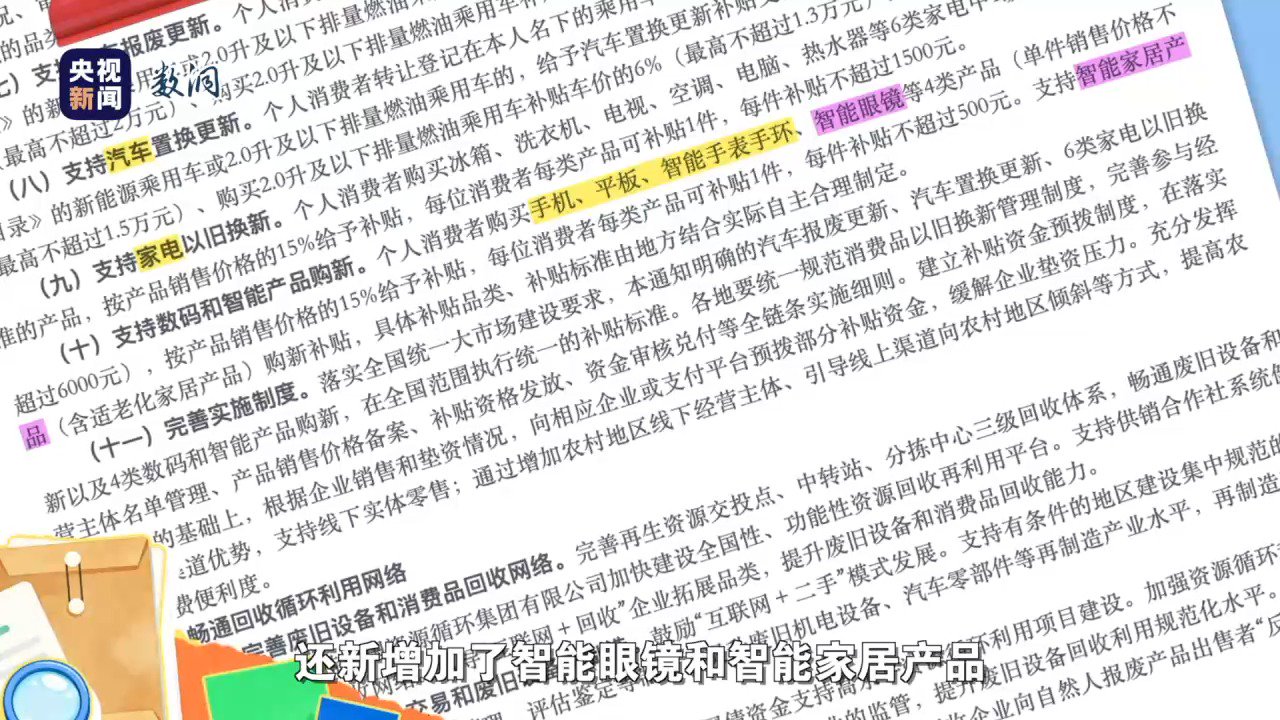
Group 1: Consumer Goods and Services - In 2026, the government will continue to promote large-scale equipment updates and a trade-in policy for consumer goods, expanding beyond traditional products like cars and home appliances to include smart glasses and smart home products [1] - By the end of 2025, over 100 municipal and county-level business departments have begun to solicit or publicize participating companies in the trade-in program, with many regions emphasizing the need to "expand subsidy scales" and "involve more consumers" [1] Group 2: Healthcare and Insurance - The National Healthcare Security Administration announced that in 2026, personal accounts for employee medical insurance will fully realize cross-provincial mutual aid, allowing funds to be transferred to close relatives for medical expenses and insurance payments [3] - Starting January 1, a new medical insurance catalog will be implemented, adding 114 new drugs that cover key areas such as cancer, chronic diseases, and mental health [3] Group 3: Legal and Regulatory Changes - Over 200 new laws and regulations will come into effect in 2026, including a revised cybersecurity law that will enhance legal responsibilities in the cybersecurity field and significantly increase the maximum administrative penalties for related operators to 10 million yuan [5] - Local regulations will also address the protection and development of local specialties and enhance the construction of urban parks [5] Group 4: Sports Events - Major sports events in 2026 include the Milan Winter Olympics in February, the FIFA World Cup in June and July, followed by the Asian Games and Youth Olympic Games in the fall, providing ample opportunities for sports enthusiasts [7] Group 5: Future Planning and Development - 2026 marks the beginning of the 14th Five-Year Plan, which emphasizes the integration of artificial intelligence with public welfare and increased government funding for social security, indicating a shift from planning to implementation [9] - Significant advancements in space exploration are anticipated, with missions like the unmanned test flight of the Dream Chaser and the Chang'e 7 mission to the Moon's south pole [9]

韧行不止 向阳出发
Xin Lang Cai Jing· 2025-12-31 21:06
Core Viewpoint - The articles emphasize the transition from the "14th Five-Year Plan" to the "15th Five-Year Plan" for Shenyang, highlighting the importance of resilience, innovation, happiness, and unity as key themes for future development [1][2][3][4][5][6][7][8][9][10] Group 1: Resilience - Resilience is described as a foundational quality and a strategic determination that allows Shenyang to thrive in adversity and change [3] - The city aims to balance stability and progress while actively seizing opportunities and avoiding pitfalls [3] - The focus is on strengthening the real economy and fostering innovation while being aware of the challenges that come with transformation [3] Group 2: Innovation - Innovation is positioned as a driving force that requires a rethinking of existing development paradigms, extending beyond mere technological advancements [4][5] - Shenyang is encouraged to break free from comfort zones and embrace new production capabilities as a means to stimulate growth [4] - The integration of ecological values into economic and social frameworks is highlighted as essential for sustainable development [5] Group 3: Happiness - The ultimate goal of development is framed around enhancing the quality of life for citizens, with a focus on public service and community well-being [6] - Shenyang has been recognized as one of the "most livable cities in China" for four consecutive years, which serves as both an acknowledgment and a motivation for continued improvement [6] - Efforts will be made to address community needs, such as upgrading old neighborhoods and ensuring quality education and environmental sustainability [6] Group 4: Unity - Unity is portrayed as a collective strength that emerges from diverse identities and aspirations within the city [7] - The importance of fostering communication, equitable opportunities, and an inclusive culture is emphasized to achieve common goals [7] - The narrative suggests that individual contributions to the city's development should resonate with the broader vision of progress [7]
乌兰察布市财政局2026年新年贺词
Xin Lang Cai Jing· 2025-12-31 16:02
Core Insights - The article reflects on the achievements and challenges faced by the Ulanqab financial sector in 2025, emphasizing growth and resilience amidst a complex economic environment [2][10]. Group 1: Political Commitment - The financial sector prioritized political construction, deepening theoretical education, and implementing the "first agenda" system to ensure alignment with central government directives [3][11]. - The integration of the "two safeguards" into the financial work process has been emphasized to maintain the correct direction of fiscal development [4][11]. Group 2: Economic Performance - The general public budget revenue growth ranked among the top in the region, with stable and high-quality tax revenue [11][12]. - Significant achievements in securing funding through new bonds and special long-term bonds have injected strong momentum into development [11][12]. Group 3: Innovation and Development - The focus on high-quality development has been supported by bond funds that bolster industrial cluster growth and policies that stimulate consumer markets [5][12]. - Continuous optimization of the financing structure and improvement of the business environment have been highlighted, with the expansion of the "credit ease" program [5][12]. Group 4: Social Welfare - Over 80% of fiscal resources have been allocated to social welfare, improving education, healthcare, and social security [12][13]. - The implementation of the rural revitalization strategy and the high replacement rate of social security cards have been noted as significant achievements [12][13]. Group 5: Safety and Reform - The financial sector has successfully managed hidden debts, exited financing platforms, and cleared overdue payments to enterprises, exceeding targets [12][13]. - A comprehensive reform of the fiscal and tax system has been initiated, focusing on modern governance frameworks and performance management [13][14].

海南产经新观察:九个“扎实”推进自贸港建设
Xin Lang Cai Jing· 2025-12-31 10:40
Core Viewpoint - The establishment of the Hainan Free Trade Port (FTP) marks a significant transition from policy pilot to institutional arrangement, presenting both opportunities and challenges for development, with a general consensus that opportunities outweigh challenges [1]. Group 1: Development Strategy - The Hainan FTP aims to achieve a "good start" in its first year of operation post-closure, focusing on the effective implementation of policies and attracting global quality resources [2]. - A modern industrial system will be constructed to enhance the synergistic effects of the FTP's operations, promoting the development of key industries and high-value manufacturing [2]. - The strategy includes expanding effective demand to leverage China's large market, integrating various policies to stimulate consumption and investment, and fostering a virtuous cycle [2]. Group 2: Open Economy and Reforms - High-level openness will be expanded to contribute to the national development framework, with initiatives aimed at meeting new demands from regional industrial upgrades [3]. - Key reforms will be implemented to create a first-class business environment, focusing on state-owned enterprises, financial systems, and optimizing mechanisms for business engagement [3][4]. - Urban-rural integration and regional collaboration will be promoted, enhancing new urbanization and rural revitalization efforts [3]. Group 3: Social and Environmental Focus - Measures will be taken to ensure social welfare, including employment initiatives, education services, healthcare improvements, and social support systems [4]. - Environmental protection will be prioritized, with strict oversight on ecological conservation and the implementation of national ecological civilization projects [4]. Group 4: Commitment to High-Quality Development - The Hainan FTP will embody a spirit of innovation and determination, aiming for high-quality development and a proactive approach to challenges in the upcoming year [5].
“小确幸” 汇聚“大幸福” 一项项暖心举措“藏”在百姓衣食住行的变化里
Yang Shi Wang· 2025-12-31 06:41
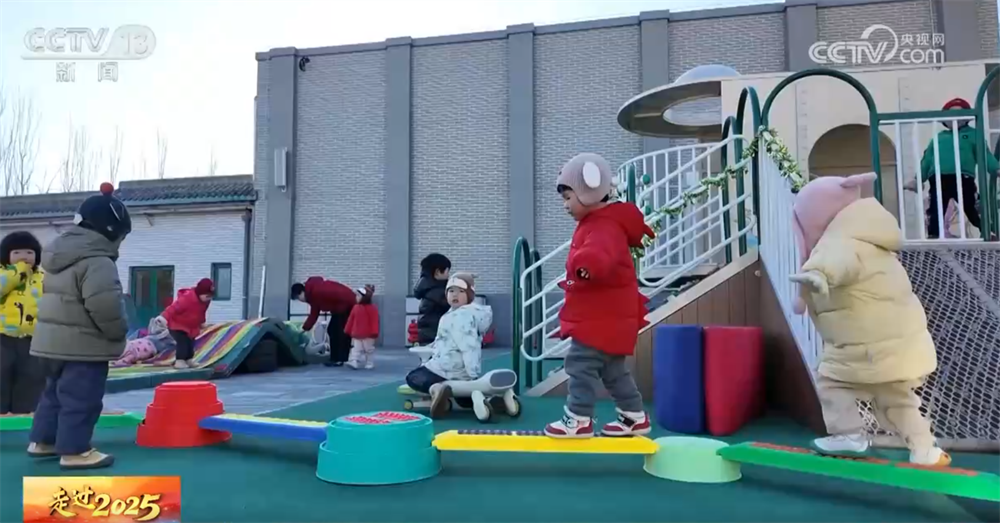
Group 1 - The core message emphasizes the implementation of various warm-hearted initiatives that enhance the quality of life for citizens, particularly in housing, employment, and education by 2025 [1] - A series of supportive policies for early childhood education are set to be enacted, benefiting families with children aged 0-6, including the introduction of affordable childcare services [2][6] - The establishment of over 890,000 new inclusive childcare spots is planned, alongside the introduction of a childcare service law to ensure quality improvements [7] Group 2 - The education sector is seeing significant advancements, with the construction and renovation of 22,000 schools and kindergartens, adding 7.9 million quality educational spots [9] - High school education reforms are underway to provide quality resources to over 16.7 million students in rural areas, with an expansion of ordinary high school capacities [11] - The enrollment rate for disabled children in compulsory education is projected to exceed 97%, with special education extending to preschool and high school levels [13] Group 3 - Financial support for students is increasing, with average annual grants for high school and vocational students rising by 300 yuan, and graduate scholarships increasing by 2,000 yuan [15] - The government is focusing on elderly care, enhancing services such as day care centers and smart monitoring for elderly individuals, ensuring they are well cared for [18][20] - A three-year initiative for integrated medical and elderly care is set to begin, aiming for 80% coverage of family doctor contracts for elderly individuals with special needs by 2027 [22] Group 4 - Urban renewal projects are transforming living conditions, with 25,800 old urban residential areas undergoing renovation and the addition of community service facilities [25] - The narrative highlights the collective efforts of individuals and communities in fostering a supportive environment, showcasing the importance of kindness and collaboration in society [26]
这份温暖厚实的2025年“民生答卷”,请查收
Zheng Zhou Ri Bao· 2025-12-31 00:45
Core Insights - The report highlights the successful completion of 10 key livelihood projects with 38 initiatives in Zhengzhou, enhancing citizens' sense of well-being and security [1] Group 1: Education and Employment - A total of 19 new primary and secondary schools were built, adding 20,700 student places [1] - The city attracted 270,100 college graduates to stay and work in Zhengzhou, indicating improved policies for young talent [1] - Urban employment increased by 130,200, while 32,600 rural laborers found employment through transfer [1] Group 2: Social Welfare and Support - Home modifications for 2,063 elderly households were completed, and 10 town elder care centers were transformed into regional service centers [2] - Rehabilitation assistance was provided to 5,375 disabled children, with monthly living subsidies of 300 yuan for 1,716 "three-no" disabled individuals [2] - Over 470,000 workers received "secondary medical insurance" subsidies from grassroots unions [2] Group 3: Infrastructure and Public Services - 63,900 households switched from private wells to municipal water sources, with 49.22 kilometers of water supply pipelines and 38.56 kilometers of heating pipelines constructed or upgraded [2] - 40 new or optimized bus routes were introduced, and traffic signal timing was optimized at 239 major intersections [2] - A total of 3,213 new public charging stations were established [2] Group 4: Health and Safety - Food safety inspections were conducted on 53,900 batches, and 177 smart agricultural product rapid testing rooms were established [3]
中国优化税率激活产业新动能 将对935项商品实施进口暂定税率
Chang Jiang Shang Bao· 2025-12-30 23:21
Core Viewpoint - The 2026 Tariff Adjustment Plan aims to enhance economic development through targeted tariff reductions on 935 items, focusing on "nurturing new growth," "green transition," and "benefiting the public" [1][2][4] Group 1: Tariff Adjustments - The adjustment includes a temporary import tariff lower than the most-favored-nation (MFN) rate for 935 items, expanding the total number of tariff items to 8,972 [1][2] - Key components such as numerical control hydraulic pads for pressure machines will see a reduction in import tariffs to 6%, which is 6 percentage points lower than the MFN rate, thereby reducing costs for domestic manufacturing [2] Group 2: Green Transition - Tariff reductions on resources like regenerated black powder for lithium-ion batteries support the circular economy, with estimates indicating that importing 10,000 tons of regenerated black powder could reduce primary mineral extraction by approximately 500,000 tons and carbon emissions by 25,000 tons [3] - The addition of new tariff items such as intelligent bionic robots and bio-aviation kerosene aligns with technological advancements and industry upgrades, contributing to a total of 8,972 tariff items [3] Group 3: Economic and Trade Cooperation - The tariff adjustments serve as a "barometer" for industrial development and a "warm-hearted" measure for improving public welfare, while also acting as a "declaration" for further opening up to international trade [4] - The plan includes zero tariffs on most finished medicines and certain cancer drugs, aiming to alleviate the medical burden on patients [4] - Continued commitment to multilateral cooperation is evident, with zero tariff treatment for 100% of products from 43 least developed countries and preferential rates for certain goods from ASEAN members like Bangladesh and Laos [4]
聚焦暖心服务撑起民生保障网
Xin Lang Cai Jing· 2025-12-30 22:18
Group 1 - The core idea of the article highlights the initiatives taken by Benxi City to provide warm services to its residents during winter, emphasizing community engagement and support [1] - The "This Winter is Warm as Spring" campaign includes various activities such as opening party-mass service centers, creating "Love Stations," conducting health clinics, and organizing reading clubs [1] - The party-mass service centers serve as warm support points throughout the city and rural areas, enhancing the social safety net and ensuring residents feel the warmth of community services [1] Group 2 - The next steps for Benxi City involve continuing to utilize party-mass service centers to deliver services directly to the community, uphold responsibilities, and promote cultural enrichment [1]
今年973件代表建议全部按期办结
Xin Lang Cai Jing· 2025-12-30 19:09
Core Viewpoint - The Beijing Municipal People's Congress has actively engaged in addressing public concerns by processing 973 suggestions from representatives, with a high completion rate of 91.06% for actionable suggestions [1][2]. Group 1: Suggestion Overview - A total of 973 suggestions were submitted, with 946 during the third session of the sixteenth congress and 27 during the recess [3]. - The suggestions were categorized as follows: 320 related to urban and rural construction (32.89%), 338 to social development (34.73%), 215 to comprehensive economy (22.10%), 49 to legal construction (5.04%), 36 to administrative management (3.70%), and 15 to religious and party organizations (1.54%) [3]. Group 2: Implementation and Monitoring - 886 suggestions were incorporated into work plans, representing 91.06% of the total, while 87 suggestions (8.94%) were noted for their reference value or were unresolvable due to legal or practical constraints [2]. - The Municipal People's Congress has emphasized the importance of monitoring and integrating suggestions into legislative oversight, with 93 key suggestions being prioritized for follow-up [4][5]. Group 3: Government Response and Initiatives - The Beijing Municipal Government has focused on enhancing capital functions, implementing urban renewal, and improving public services based on the suggestions received [6][8]. - Specific initiatives include promoting technological innovation, supporting the establishment of national laboratories, and enhancing consumer confidence through various actions [7][8].
办好民生实事 不断提升人民幸福成色
Xin Hua She· 2025-12-30 15:07
Group 1 - The core viewpoint emphasizes that achieving the people's aspirations for a better life is the starting point and goal of Chinese-style modernization, with a focus on improving people's livelihoods and ensuring equitable access to development benefits [1] - The Central Economic Work Conference highlighted the importance of prioritizing people's livelihoods and implementing practical measures to enhance public welfare [1][3] - Various local governments are investing significantly in policies aimed at improving people's livelihoods, thereby increasing the sense of gain, happiness, and security among the populace [1] Group 2 - Employment is identified as the most fundamental aspect of people's livelihoods, with the government prioritizing job stability amid external and internal challenges [3] - From January to November, 12.1 million new urban jobs were created, with an average urban survey unemployment rate of 5.2%, indicating overall stability in the employment situation [4] - The number of college graduates in 2026 is projected to reach 12.7 million, an increase of 480,000 from the previous year, prompting initiatives to enhance job placement services for graduates [4] Group 3 - Local initiatives, such as free childcare training programs, are being implemented to enhance skills and provide stable income opportunities for residents [5][6] - The government plans to introduce more training programs that align with market demand to boost employment prospects for various demographics [6] - Policies aimed at stabilizing employment for key groups, including college graduates and migrant workers, are set to be strengthened in 2026 [6] Group 4 - The implementation of long-term care insurance and the cancellation of advance payments for outpatient services are part of a broader effort to enhance health security for citizens [8] - The government is focusing on optimizing the supply of affordable housing to meet the basic housing needs of various vulnerable groups [8][9] - A significant allocation of 4.44 billion yuan in emergency relief funds aims to support those affected by disasters and ensure their basic living conditions during winter [10] Group 5 - Urban renewal projects are transforming underutilized spaces into community resources, enhancing the quality of life for residents [11] - The establishment of support facilities for drivers, such as "Driver's Homes," is part of a broader initiative to improve working conditions and rights for gig economy workers [11][12] - The government is actively promoting policies to support families, improve educational resources, and enhance elderly care services, reflecting a commitment to addressing diverse community needs [13]