
港股IPO

Search documents
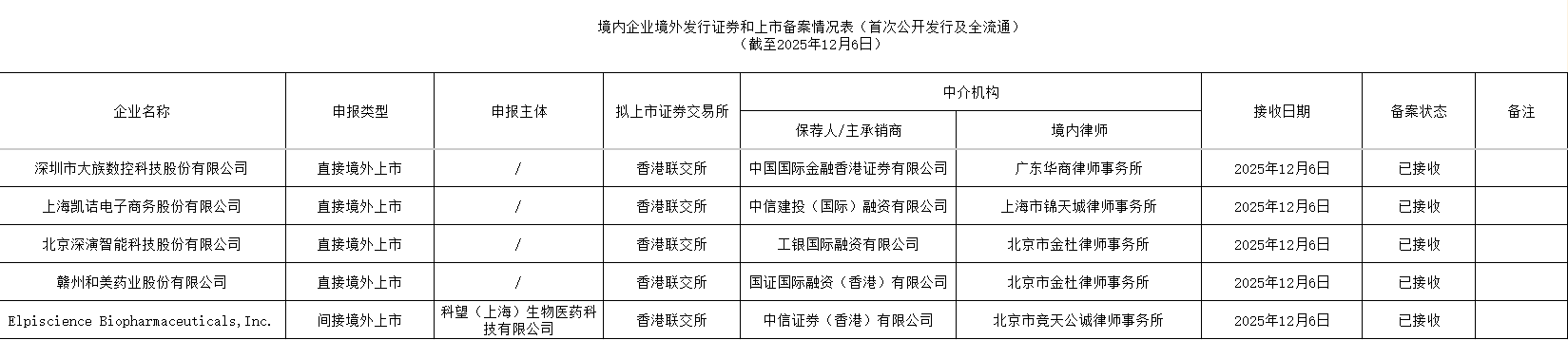
大族数控、凯诘电商等拟港股IPO已获中国证监会接收材料
Zhi Tong Cai Jing· 2025-12-08 06:14
Core Insights - The China Securities Regulatory Commission (CSRC) has accepted the IPO applications of several companies for listing on the Hong Kong Stock Exchange from December 1 to December 6, 2023 [1] Group 1: Company Summaries - Dazhu CNC Technology Co., Ltd. specializes in PCB (Printed Circuit Board) production equipment solutions, serving various downstream industries such as server and data storage, automotive electronics, mobile phones, computers, and consumer electronics [3] - Shanghai Kaijie E-commerce Co., Ltd. provides comprehensive and customized digital retail solutions to brand owners, helping them establish e-commerce infrastructure and enhance operational efficiency across the entire e-commerce ecosystem [4] - Beijing Shenyuan Intelligent Technology Co., Ltd. is a decision-making AI technology company, ranked first in China's marketing and sales decision-making AI application market with a market share of 2.6% as of 2024 [4] - Ganzhou Hemei Pharmaceutical Co., Ltd. is a biopharmaceutical company focused on discovering and developing small molecule drugs for autoimmune diseases and tumors, with expertise in Psoriasis, Behçet's Disease, Inflammatory Bowel Disease, and chemotherapy development [4]

新股消息 | 晶合集成拟港股IPO 中国证监会要求就历次股权变动是否合法合规出具明确结论性意见
Zhi Tong Cai Jing· 2025-12-08 06:02
智通财经APP获悉,12月6日,中国证监会公布境外发行上市备案补充材料要求公示(2025年12月1日— 2025年12月5日)。证监会要求晶合集成(688249.SH)补充说明设立及历次股权变动是否合法合规出具明 确结论性意见。据港交所9月29日披露,晶合集成向港交所主板提交上市申请书,中金公司为其独家保 荐人。 招股书显示,晶合集成是一家全球领先的12英寸纯晶圆代工企业。自2015年成立以来,始终致力于研发 并应用行业先进的工艺,为客户提供覆盖150nm至40nm制程、多种应用的工艺平台晶圆代工业务,并 稳定推进28nm平台发展。 同时,证监会要求其进一步说明发行人境内子公司是否存在《境内企业境外发行证券和上市管理试行办 法》第八条规定的不得境外发行上市的情形。说明发行人募集资金用途涉及境外投资所履行的相关审 批、核准或备案程序情况。说明发行人及下属公司经营范围和实际业务经营是否涉及《外商投资准入特 别管理措施(负面清单)(2024年版)》外资禁止或限制准入领域。 ...

新股消息 | 晶合集成(688249.SH)拟港股IPO 中国证监会要求就历次股权变动是否合法合规出具明确结论性意见
Zhi Tong Cai Jing· 2025-12-08 06:00
招股书显示,晶合集成是一家全球领先的12英寸纯晶圆代工企业。自2015年成立以来,始终致力于研发 并应用行业先进的工艺,为客户提供覆盖150nm至40nm制程、多种应用的工艺平台晶圆代工业务,并 稳定推进28nm平台发展。 同时,证监会要求其进一步说明发行人境内子公司是否存在《境内企业境外发行证券和上市管理试行办 法》第八条规定的不得境外发行上市的情形。说明发行人募集资金用途涉及境外投资所履行的相关审 批、核准或备案程序情况。说明发行人及下属公司经营范围和实际业务经营是否涉及《外商投资准入特 别管理措施(负面清单)(2024年版)》外资禁止或限制准入领域。 智通财经APP获悉,12月6日,中国证监会公布境外发行上市备案补充材料要求公示(2025年12月1日— 2025年12月5日)。证监会要求晶合集成(688249.SH)补充说明设立及历次股权变动是否合法合规出具明 确结论性意见。据港交所9月29日披露,晶合集成向港交所主板提交上市申请书,中金公司为其独家保 荐人。 ...
H股、红筹、A+H怎么选?A股企业港股IPO路径拆解
Sou Hu Cai Jing· 2025-12-06 23:30
Core Viewpoint - The article discusses the various pathways for A-share companies to list on the Hong Kong Stock Exchange (HKEX), emphasizing the importance of Hong Kong as a global capital link and the simplified processes under the new regulatory framework [1]. Group 1: IPO Structures - The article outlines three main IPO structures for companies looking to list in Hong Kong: H-shares, Red-chip structures, and A+H simultaneous listings [3]. - H-shares are for mainland companies that meet specific regulatory requirements and are approved by the China Securities Regulatory Commission (CSRC) [4]. - Red-chip structures involve setting up an offshore holding company to list in Hong Kong, suitable for new economy enterprises [8]. - A+H listings allow companies to issue shares simultaneously in both A-shares and H-shares, commonly used by large state-owned enterprises [12]. Group 2: Key Characteristics of Each Structure - H-shares separate domestic and H-shares, requiring compliance with both mainland and Hong Kong regulations [4]. - Red-chip structures allow for natural full circulation of shares and often utilize Variable Interest Entity (VIE) models for compliance with foreign investment restrictions [9]. - A+H listings provide dual financing platforms, attracting both domestic and international investors but involve complex compliance requirements [12]. Group 3: Motivations for A-share Companies to Issue H-shares - Companies aim for global strategic positioning by leveraging Hong Kong's status as an international financial center to attract global capital [15]. - Supportive policies from both mainland and Hong Kong authorities facilitate the listing process for qualified companies [17]. - The availability of diverse financing tools and a flexible refinancing mechanism in Hong Kong enhances capital operations [17]. Group 4: Core Listing Conditions - Mainboard companies must meet specific financial metrics, including a market capitalization of at least HKD 500 million and cumulative profits of HKD 80 million over three years [19]. - GEM (Growth Enterprise Market) requires two years of operating history and a minimum market capitalization of HKD 150 million [21]. - Special industry exemptions exist for innovative companies, such as biotech firms, with different financial requirements [23]. Group 5: Listing Process Overview - The listing process involves thorough due diligence, preparation of necessary documents, and compliance checks to ensure adherence to Hong Kong regulations [28]. - Companies must submit their listing applications to both HKEX and CSRC, with a streamlined approval process allowing completion within six months [26]. - The final steps include investor roadshows, pricing, and the official listing of shares on the exchange [30]. Group 6: Legal and Regulatory Considerations - Companies must ensure synchronized financial disclosures between A-shares and H-shares, including compliance with different accounting standards [32]. - Governance structures must align with both A-share and H-share requirements, necessitating adjustments to board composition and committee structures [34]. - Companies face challenges in managing price differences between A-shares and H-shares, often leading to strategies to mitigate impacts on share pricing [37].

(机遇香港)11月港股IPO“量增质优” 年末上市热度持续攀升
Sou Hu Cai Jing· 2025-12-05 12:13
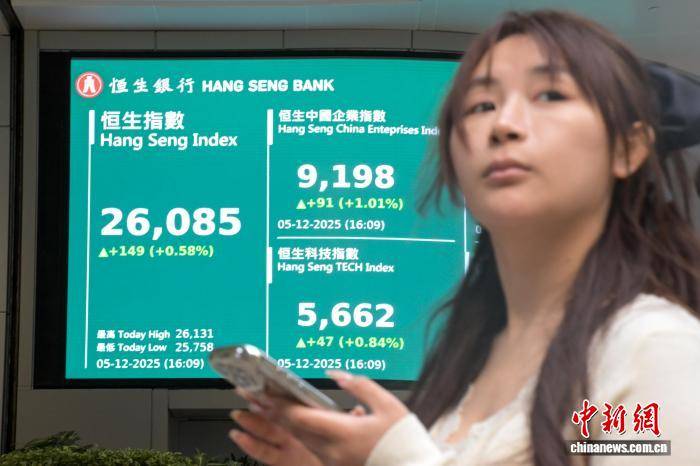
Market Performance - The Hong Kong stock market showed a rebound on December 5, with the Hang Seng Index returning to the 26,000-point mark, significantly boosting market sentiment [1] - The Hang Seng Index closed at 26,085.08 points, up by 149.18 points, representing a 0.58% increase, with a total trading volume of 210.473 billion HKD [3] - The Hang Seng Technology Index rose by 0.84% to 5,662.46 points, while the National Enterprises Index increased by 1.01% to 9,198.3 points, indicating active trading in technology and non-ferrous metal sectors [3] IPO Market Activity - In the first 11 months of 2025, there were 93 new listings in the Hong Kong securities market, a 52% increase from 61 in the same period last year, with IPO fundraising amounting to 259.4 billion HKD, up 228% from 79.1 billion HKD [3] - The total fundraising amount exceeded 259.8 billion HKD, marking a significant year-on-year increase of 228% [3] - The IPO pipeline consists of 306 companies, with 14 having passed the hearing, indicating a sustained interest in new listings as the year ends [3] Sector Analysis - The leading sectors for IPOs towards the end of the year include new energy vehicles, biomedicine, and high-end manufacturing, with 6 out of the top 10 IPOs coming from A-share listed companies [4] - The dual engines driving the IPO activity in Hong Kong are new consumption and hard technology [4] Future Outlook - According to a report by Ernst & Young, the IPO activities in mainland China and Hong Kong are showing growth on a global scale, with a diversified base of cornerstone investors reflecting the international appeal of Hong Kong stocks [4] - A recent survey by the Australian Institute of Chartered Accountants indicated that 66% of respondents expect an increase in new stock activities in 2026, while 63% anticipate continued economic growth in Hong Kong [4] - It is projected that the new stock fundraising amount in Hong Kong will exceed 300 billion HKD next year, solidifying its position as the leader in global new stock fundraising [5]

天域半导体、遇见小面双双破发!11月港股IPO近半数破发
证券时报· 2025-12-05 04:45
Core Viewpoint - The newly listed stocks Tianyu Semiconductor and Yujian Xiaomian both experienced significant declines on their debut, indicating a trend of new stocks underperforming in the Hong Kong market [1][10]. Group 1: Stock Performance - Tianyu Semiconductor (2658) dropped by 24.97%, closing at 43.52 HKD with a market capitalization of 171 billion HKD and a price-to-earnings ratio of -32 [2]. - Yujian Xiaomian (2408) fell by 27.27%, closing at 5.12 HKD with a market capitalization of 36 billion HKD and a price-to-earnings ratio of 42.6 [3]. - Both stocks had poor performance in the dark market prior to their official listing, with declines exceeding 14% [3]. Group 2: Subscription and Demand - Yujian Xiaomian had an oversubscription rate of 425.97 times, while Tianyu Semiconductor had a lower rate of 60.63 times, indicating weaker demand for the latter [4][6]. - The allocation for retail investors was limited to 10% for both companies, which theoretically supports stock price stability [8]. Group 3: Investor Backing - Tianyu Semiconductor is backed by prominent investors including Huawei and BYD, while Yujian Xiaomian has a diverse group of investors including industry players like Country Garden and Jiumaojiu [4][9]. - Both companies attracted cornerstone investors, with Tianyu Semiconductor raising 1.2 billion RMB and 30 million HKD from two cornerstone investors, while Yujian Xiaomian secured 2.2 million USD from six cornerstone investors [8][9]. Group 4: Fundraising and Market Trends - Tianyu Semiconductor raised a net amount of 1.673 billion HKD, while Yujian Xiaomian raised 617 million HKD [10]. - The trend of new stocks breaking below their issue price is increasing, with 7 out of 15 newly listed stocks since November experiencing this fate, indicating a nearly 50% breakage rate [10].

今年6月发行可转债募资约10.92亿元“充电宝龙头”安克创新拟赴港IPO
Mei Ri Jing Ji Xin Wen· 2025-12-04 13:29
Core Viewpoint - Anker Innovations has submitted its IPO application to the Hong Kong Stock Exchange, aiming to raise funds for product innovation, market strategy enhancement, and supply chain management improvements [1][3]. Group 1: IPO Details - Anker Innovations filed its IPO application on December 2, 2025, with CICC, Goldman Sachs, and JPMorgan as joint sponsors [1]. - The funds raised will be used for product iteration, R&D, global market strategies, supply chain upgrades, brand influence enhancement, and working capital [1]. Group 2: Financial Performance - The company reported steady revenue and net profit growth, with revenues reaching 24.71 billion yuan and net profits at 2.21 billion yuan in 2024 [5]. - However, in the first three quarters of 2025, the company experienced a significant cash outflow of -865 million yuan, attributed to aggressive inventory accumulation in anticipation of future sales [5]. Group 3: Inventory and Cash Flow Concerns - Anker Innovations' inventory surged over 90% from 32.33 billion yuan at the end of 2024 to 61.47 billion yuan by the end of Q3 2025, with inventory turnover days increasing to 107.8 days [5]. - The company’s net debt ratio rose to 7.7% by Q3 2025, with bank loans nearly doubling from 8.81 billion yuan at the end of 2023 to 17.25 billion yuan [5]. Group 4: Market Position and Product Lines - Anker Innovations operates major global brands including Anker, eufy, and soundcore, holding a 5% market share in the global mobile charging products market as of 2024 [3]. - The majority of the company's revenue comes from overseas markets, particularly North America, which accounted for 50.9%, 47.9%, 48.1%, and 45.2% of total revenue during the reporting periods [4]. Group 5: R&D and Marketing Expenditure - Despite claiming a focus on "extreme innovation," Anker's R&D spending has been less than half of its sales and distribution expenses in recent years [1][7]. - The company has a strong reliance on third-party manufacturing partners, which has led to quality control issues and product recalls [7].
港股IPO募资2600亿港元登顶全球,中资券商主导市场格局
Sou Hu Cai Jing· 2025-12-04 10:23
来源:环球总财 #港股IPO##资本市场# 【#港股IPO募资2600亿,引爆全球资本市场#】 临近岁末,香港首次公开募股(IPO)市场的火热势头丝毫未减,行业普遍预期这股强劲活力将至少延续至2026年。 数据显示,今年前11个月,港股市场共有91家企业成功上市,得益于一系列大型IPO项目的驱动,合计募集资金高达 2598.89亿港元。这一数字不仅标志着港交所时隔四年,IPO筹资额再度突破2000亿港元大关,更使其一举超越全球其 他交易所,登顶2025年全球IPO募资额榜首,创下历史新高度。其中,宁德时代、紫金黄金国际、三一重工和赛力斯 等巨头均跻身今年全球十大IPO项目之列。 在这场资本盛宴中,中资券商的角色愈发举足轻重,已然占据港股IPO承销市场的主导地位。今年以来,共有38家保 荐机构参与香港新股发行,其中超过半数为中资背景。中金公司、中信证券和华泰证券强势占据承销榜单前三名,其 保荐项目数量显著领先于传统外资大行,重塑了市场格局。 五大特征勾勒市场全貌,巨量IPO与万倍认购同现 其次,从发行节奏看,港股IPO呈现明显的季节性特征,每年3月至6月及9月至11月为传统发行旺季,这两个时间段上 市的企业合计 ...



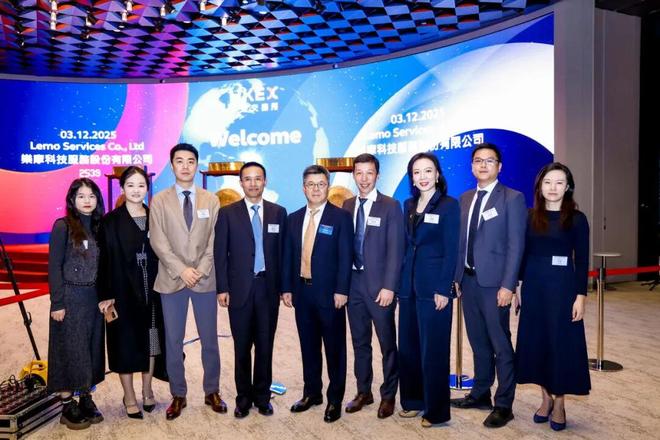
申万宏源香港保荐全国排名第一的机器按摩服务提供商乐摩科技成功登陆港交所
Xin Lang Cai Jing· 2025-12-04 04:04
Core Insights - LeMo Technology Service Co., Ltd. successfully listed on the Hong Kong Stock Exchange on December 3, 2025, with a share price of HKD 40.00, raising a total of HKD 222 million [3][4] - The company is recognized as the leading provider of machine massage services in China, with over 48,000 service points and more than 533,000 massage machines deployed across 31 provincial-level regions and 337 cities [3][4] - The public offering received significant market interest, with a subscription rate of 7,324.29 times, allowing the company to achieve a high-end pricing within the offering range [3][4] Company Highlights - LeMo Technology launched the "LeMo Bar" brand in 2016, focusing on providing machine massage services in commercial complexes, cinemas, and transportation hubs [3] - The company has served over 174 million identifiable consumers, solidifying its market position [3] - According to Frost & Sullivan, LeMo Technology ranks first among all machine massage service providers in China by transaction volume for three consecutive years from 2022 to 2024 [3] Project Highlights - Shenwan Hongyuan played a crucial role in the successful IPO by leveraging its comprehensive financial services and extensive experience in the Hong Kong market [3][4] - The project team customized a marketing strategy and organized high-quality investor meetings to effectively communicate the company's investment value [4] - The successful issuance reflects Shenwan Hongyuan's strength in the Hong Kong IPO market and its commitment to serving the real economy [4]

摩根大通刘伯伟:2026年港股IPO市场活跃度有望延续 优质供给与制度优势成关键
Zheng Quan Ri Bao Wang· 2025-12-03 12:45
Core Insights - The Hong Kong IPO market is experiencing a significant surge, with increased activity expected to continue into 2026, driven by attractive listing regulations and ample liquidity [1][4]. Group 1: Market Dynamics - The market is witnessing a shift in international investor participation, with a diverse range of investors including public funds, private equity, strategic investment funds, hedge funds, and sovereign wealth funds [2]. - The turning point for the market began around early 2025, influenced by successful IPOs of leading companies like CATL, which restored investor confidence after a period of losses [2][3]. - The average daily trading volume in the Hong Kong market reached a record high of 286.4 billion HKD in Q3 2025, with September seeing daily trading surpassing 300 billion HKD for the first time [5]. Group 2: Investor Preferences - International investors show a clear preference for industry leaders, as evidenced by the premium pricing of H-shares compared to A-shares for companies like CATL [3]. - While there is interest in high-growth tech companies, international investors are cautious and prefer those with clear business models and defined growth paths [3]. Group 3: A-Share Companies Going Public - The trend of A-share companies listing in Hong Kong is expected to continue, with over 100 companies currently in the process of H-share listings [4]. - The narrowing of IPO discounts and the robust performance of newly listed stocks have increased the attractiveness of the H-share platform for high-quality companies, particularly in sectors like biotechnology [4]. Group 4: Regulatory Environment - The Hong Kong Stock Exchange has implemented market reforms that enhance the certainty of institutional investors' allocations during IPOs, fostering a healthier market environment [5]. - The regulatory framework aims to maintain high standards of quality for listed companies, ensuring investor confidence and attracting more quality enterprises to the market [6].

